Ukraine’s 475th Separate Assault Regiment, known as CODE 9.2, says it has used the StarGate uncrewed aerial platform to evacuate two seriously wounded soldiers from the battlefield in the span of a week. Reportedly, this is the first time the specialized drone has been used for an operation of this kind. It is not, however, the first instance of Ukraine using an aerial rescue drone on the battlefield, with the more extemporized heavy hexacopter also having been used recently, as you can read about here.
Taken together, the missions underscore Ukraine’s efforts to develop alternative casualty evacuation capabilities as Russian drone threats, electronic warfare, and harsh terrain increasingly complicate conventional recovery operations, including those using uncrewed ground vehicles (UGVs).
According to CODE 9.2, on its Facebook page, the regiment’s personnel carried out two complex evacuation missions using StarGate, a platform developed and manufactured by Ukrainian company SkyFall. The two wounded servicemen were 25-year-old Yevhen, callsign “Izyum,” and 24-year-old Artem, callsign “Kolobok.” Both belonged to adjacent units and had suffered severe limb injuries while occupying positions in a so-called gray zone approximately three miles from the Russian border.
Difficult terrain, including water obstacles, and the threat posed by Russian first-person-view (FPV) drones prevented ground vehicles from reaching the casualties, the regiment said. Air evacuation was the only available option.
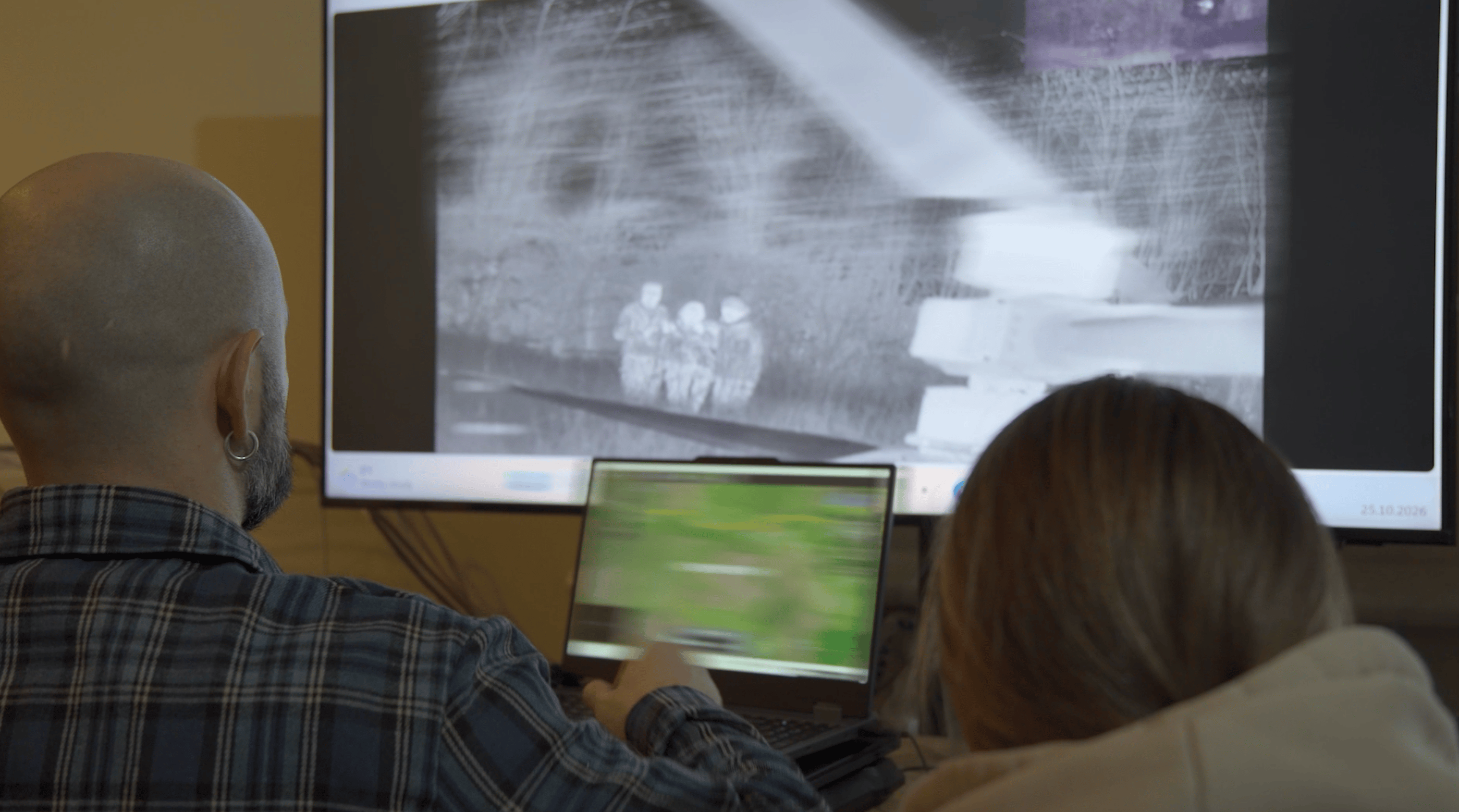
Drone operators watch as two soldiers carry their injured comrade to the SkyFall drone for evacuation. CODE 9.2/screencap
The missions were planned and executed by CODE 9.2 personnel with support from SkyFall. They required coordination among multiple units, additional forces and equipment, and dedicated fire support — much like a more traditional casualty evacuation effort involving crewed helicopters. Vampire heavy strike drones were employed to suppress enemy positions during the operations.
“The injury tore off half of my foot, so a lot of blood was lost already,” Izyum said in a video interview from his hospital room. “I think if that incredible little bird hadn’t flown in, well, getting out from there would have been unrealistic.”
During one of the missions, StarGate reportedly flew nearly 20 miles to reach the casualty before covering approximately the same distance on the return leg with the wounded serviceman aboard. CODE 9.2 said Russian electronic warfare systems were actively attempting to suppress satellite navigation signals in the area.
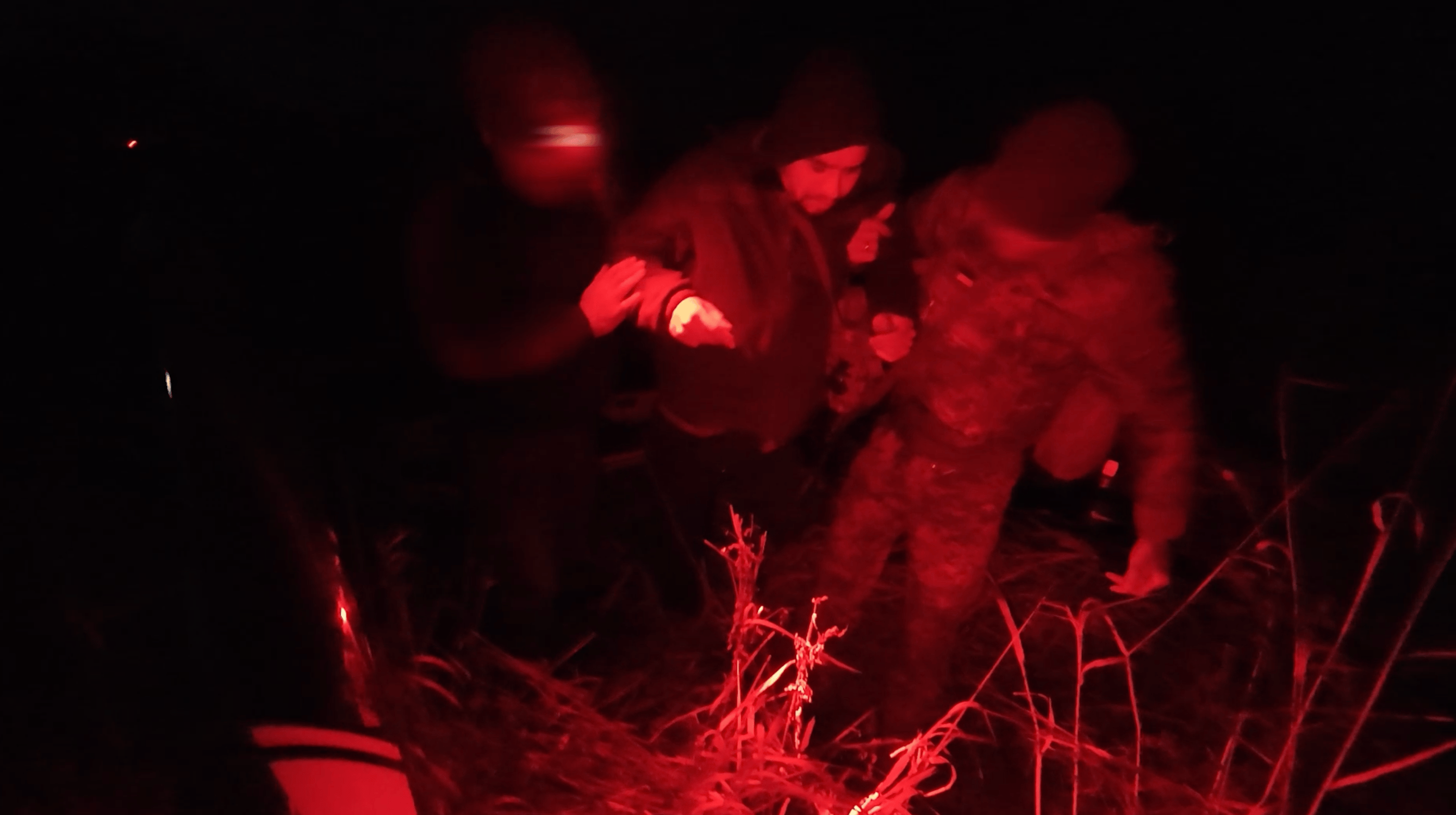
An injured soldier is helped out of the drone after recovery to a safe area. CODE 9.2/screencap
Despite the reported interference, the platform completed the mission using its onboard artificial intelligence-based navigation system, according to the regiment. The statement did not specify the navigation technologies involved.
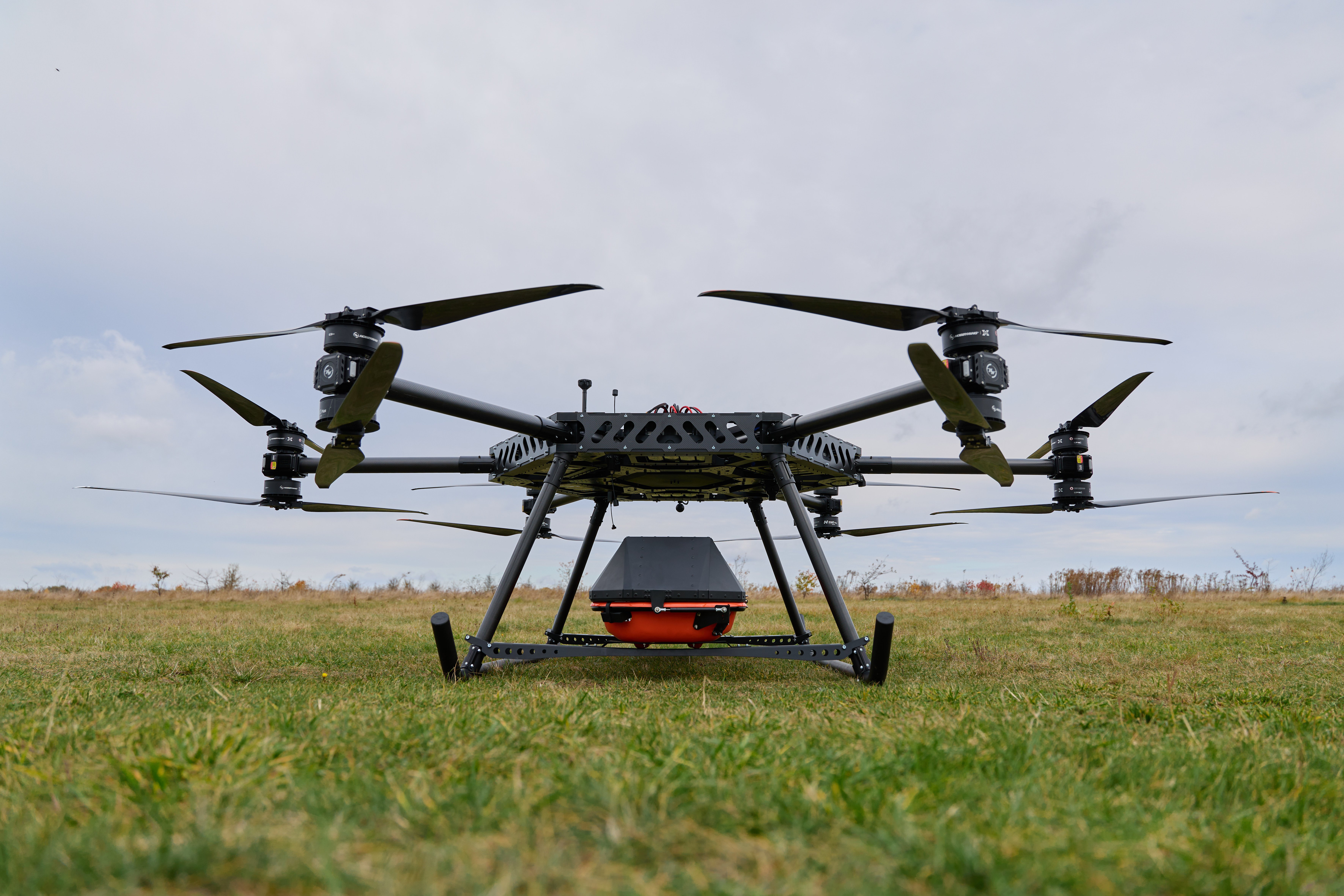
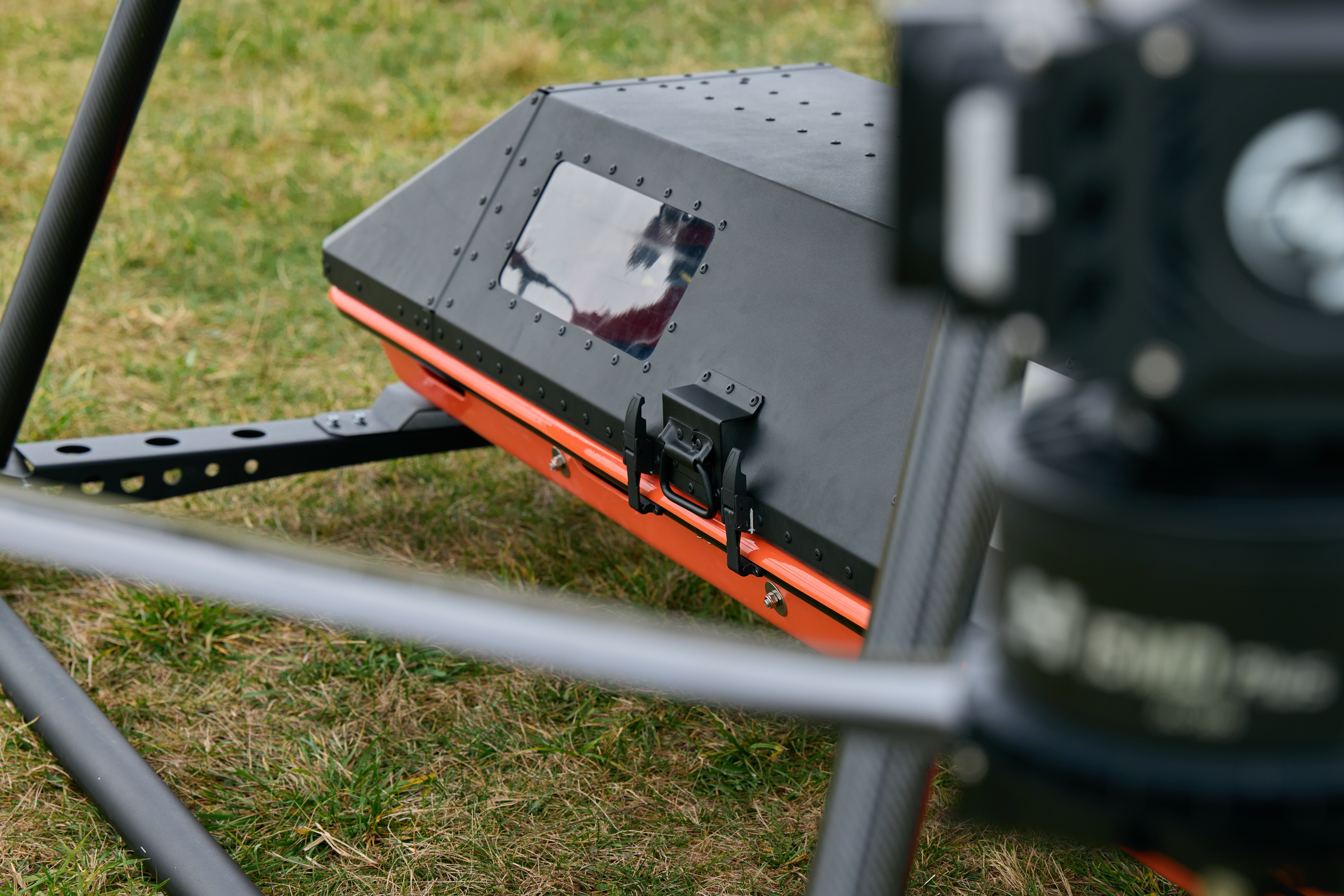
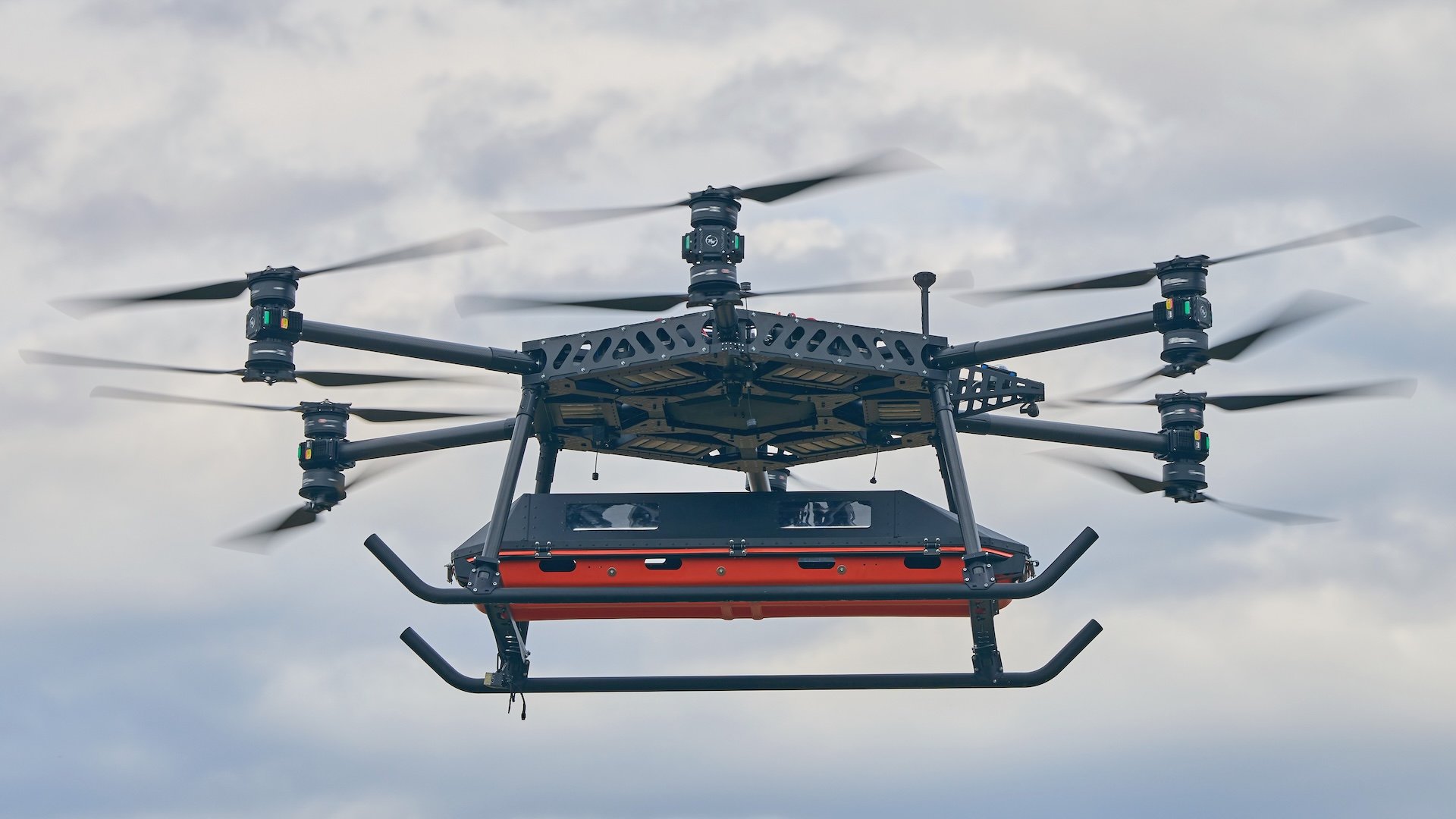
StarGate was designed specifically for casualty evacuation, or CASEVAC, when conventional ground transportation cannot reach wounded personnel or would expose them to unacceptable risks. Its stated specifications include a payload capacity of up to 330 pounds and a maximum speed of approximately 65 miles per hour. The evacuation module is based on a covered, medical-grade stretcher.
StarGate on the ground. SkyFall
Oleksandr Nastenko, commander of CODE 9.2, callsign “Flint,” said the regiment intends to use the experience gained from the two missions to train crews and make aerial evacuation a more established capability. The regiment also plans to set up a dedicated aerial medical evacuation unit within its medical company.
The StarGate missions follow a separate reported operation involving the 92nd Assault Brigade, which says its personnel helped evacuate a wounded soldier using a heavy-lift hexacopter drone, produced by Gurzuf Defense, with the casualty suspended beneath it, as seen in the video below:
This drone was reportedly an Audag-6 model, which is said to be capable of carrying a 200-pound payload over a distance of up to 15 miles.
In that incident, the soldier had been wounded while holding his position. Once again, aerial extraction was judged the only suitable option; in this case, due to the presence of mines and intense Russian drone activity.
This was a more improvised approach, which the brigade described as the world’s first frontline aerial drone evacuation of a wounded soldier. Compared to Stargate, the Gurzuf drone brings some drawbacks with it, including casualty stability, exposure to the elements, the risk of swinging during flight, and the difficulty of safely lifting and lowering a severely injured person. It subsequently emerged that the soldier involved, Kostiantyn Vlasenko, had been forced to amputate his own foot as part of a 491-day ordeal on a frontline position.
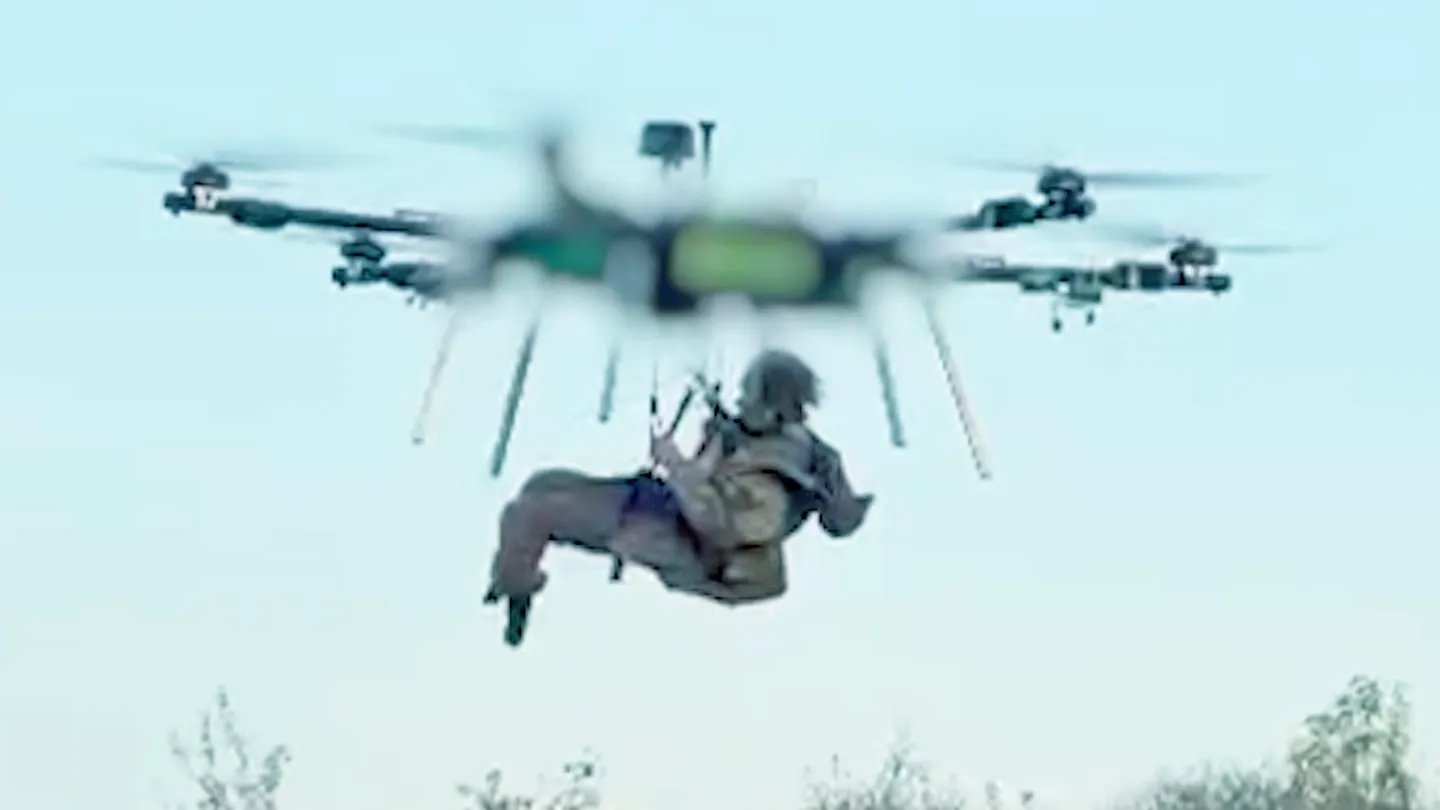
A soldier clipped to the underside of a Gurzuf drone via a harness is flown to safety. 92nd Assault Brigade/YouTube screencap
This was not the first time that Ukrainian forces have adapted existing drone technology to effect battlefield evacuations.
TWZ also previously reported on a Ukrainian soldier who managed to escape from the Russians that surrounded him after an electric bike was dropped to him by a large aerial drone.
As a purpose-built platform, StarGate offers a more standardized way to secure and transport casualties, and to transport them protected from the elements, in a secure, prone position. However, StarGate still faces the challenges of flying in contested airspace and navigating under electronic warfare conditions. Once again, depending on the degree of injuries, the casualty may need assistance being put on the stretcher and, regardless of the degree of medical care that can be provided, StarGate is only an option if already available in proximity to the victim.
Close-up view of the StarGate stretcher. SkyFall
The fact that the StarGate missions also needed strike drones for fire support underscores that casualty recovery, whatever the platform being used, typically requires coordination across multiple combat elements.
Despite the limitations, CODE 9.2’s plan to create a dedicated medical aviation element indicates it wants to move beyond one-off missions toward a repeatable capability.
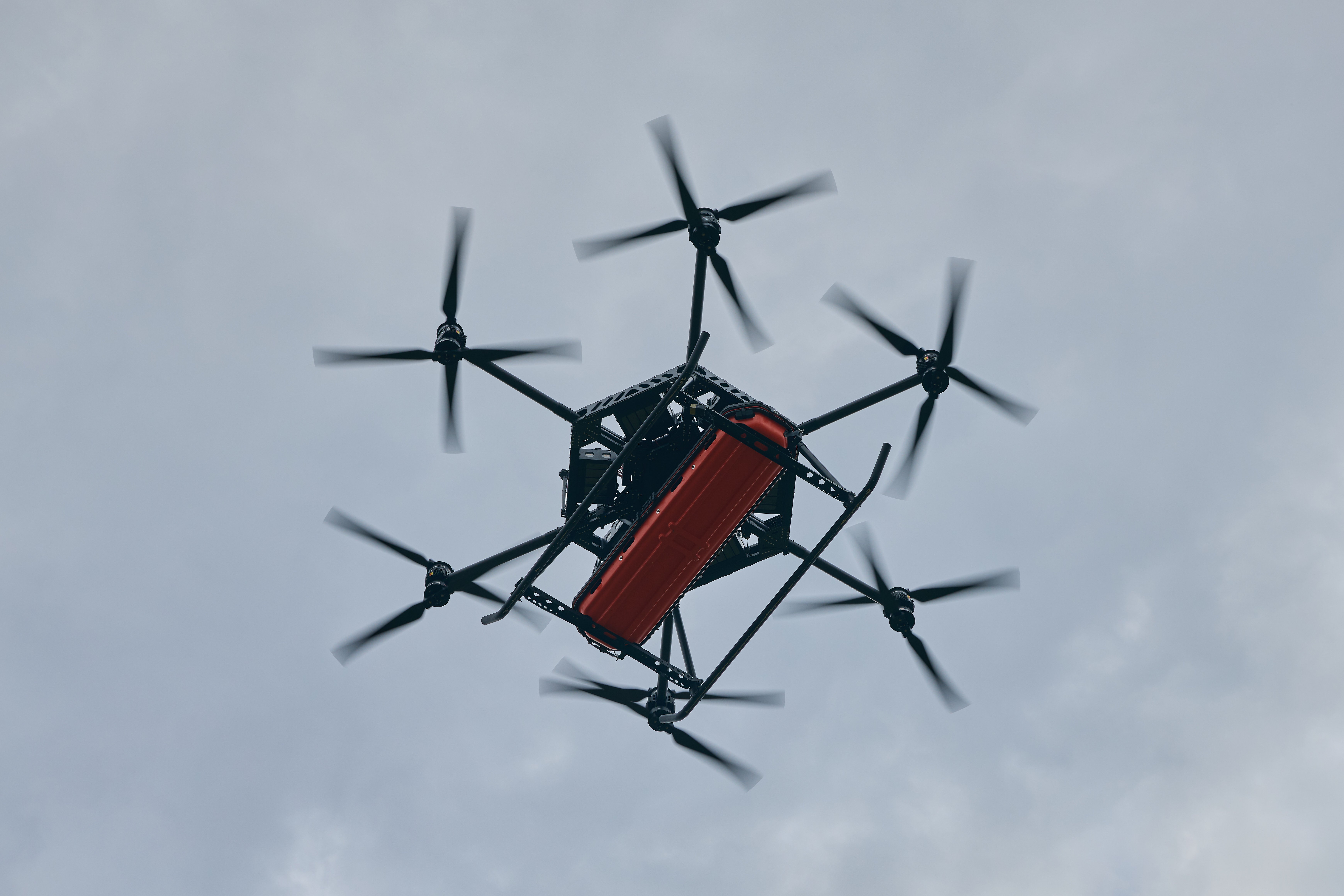
StarGate in flight. SkyFall
As with other emerging technologies from the war in Ukraine, this is likely to be studied by other armed forces, too. The U.S. military, for example, has long looked at the potential of uncrewed aerial systems to effect casualty evacuation missions, as you can read about here.
Meanwhile, the challenges of that conflict mean that Ukrainian troops continue to explore different ways to recover wounded troops from positions that more conventional evacuation methods can no longer safely reach.
The U.S. Air Force has handed Lockheed Martin a $694 million contract for the production of AGM-183A Air-launched Rapid Response Weapon (ARRW) hypersonic missiles. In 2023, the service had moved to cancel ARRW, which had been in line to be the U.S. military’s first operational hypersonic weapon. At the time, we had reservations about the service’s intent and speculated the missile could make a major comeback or continue development in a classified setting. The program has since made an incredible turnaround, and there are already plans for another variant that will be able to use an all-new seeker to hit moving targets, including enemy warships.
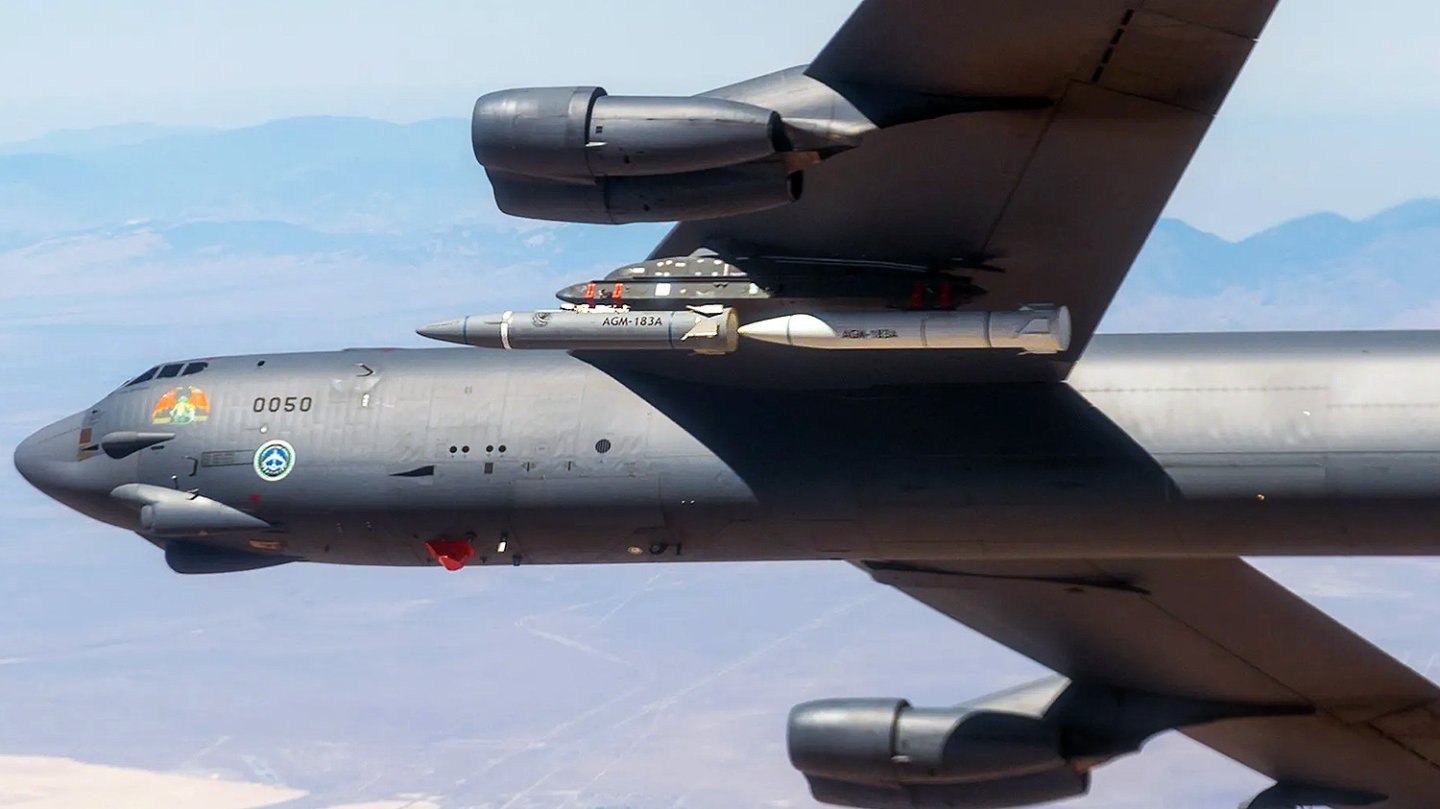
The ARRW contract was awarded on September 29, but only announced today. It is not immediately clear how many missiles are to be built under this deal or when the Air Force expects to start taking delivery of them. The Air Force has previously disclosed plans to integrate the missiles onto its B-52 and B-1 bombers. Other aircraft with sufficiently large payload capacities and physical space to carry outsized stores could potentially carry AGM-183As, or variants thereof, in the future.
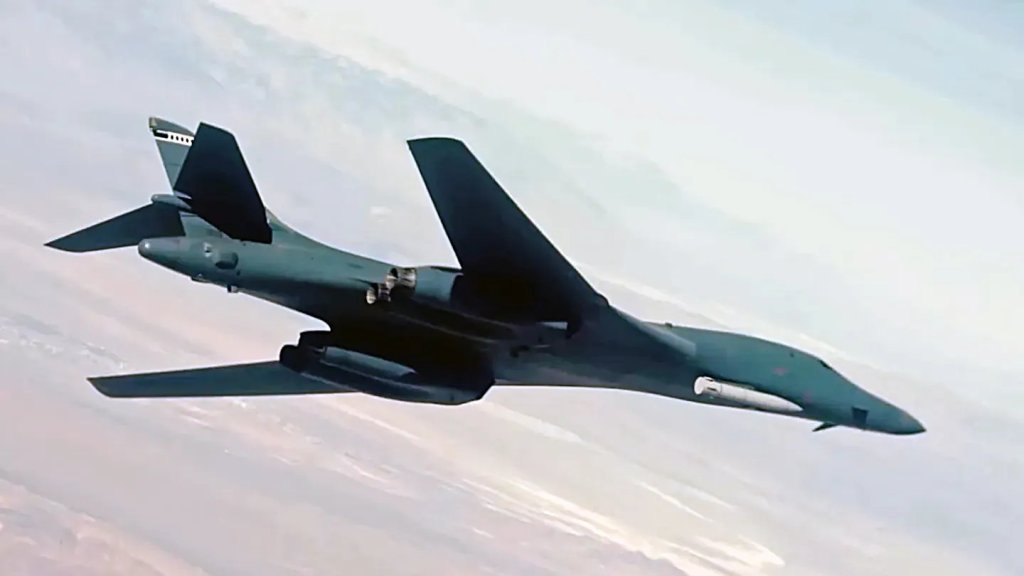
A B-1 bomber seen carrying an ARRW missile, or a relevant test article, on an external pylon during a flight test. USAF capture
“The contract was executed under the Department of War’s Enterprise-Wide Agile Acquisition Contract to modernize America’s Arsenal of Freedom,” according to an Air Force press release. “This milestone marks the formal transition of the boost-glide hypersonic missile program from prototyping and flight testing into production, solidifying the Air Force’s commitment to fielding standoff, high-speed strike options.”
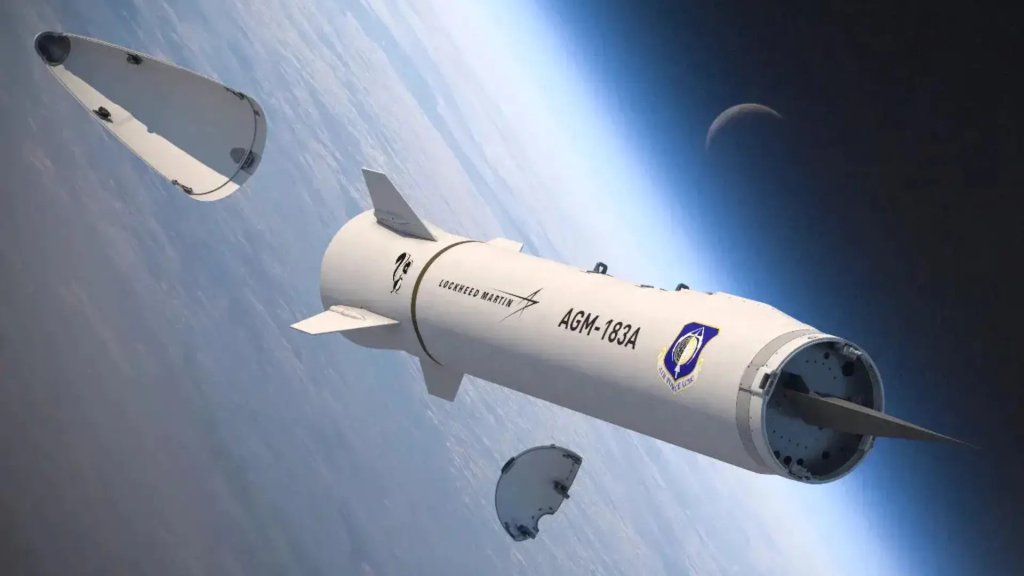
As noted here, the AGM-183A is a so-called boost-glide vehicle-type hypersonic weapon, which uses a rocket booster to bring it first to an optimal speed and altitude. The nose cone on ARRW then breaks away, and a wedge-shaped unpowered boost-glide vehicle concealed within is released.
A rendering depicting an ARRW hypersonic missile’s nose cone breaking away to reveal the unpowered boost-glide vehicle inside. Lockheed Martin
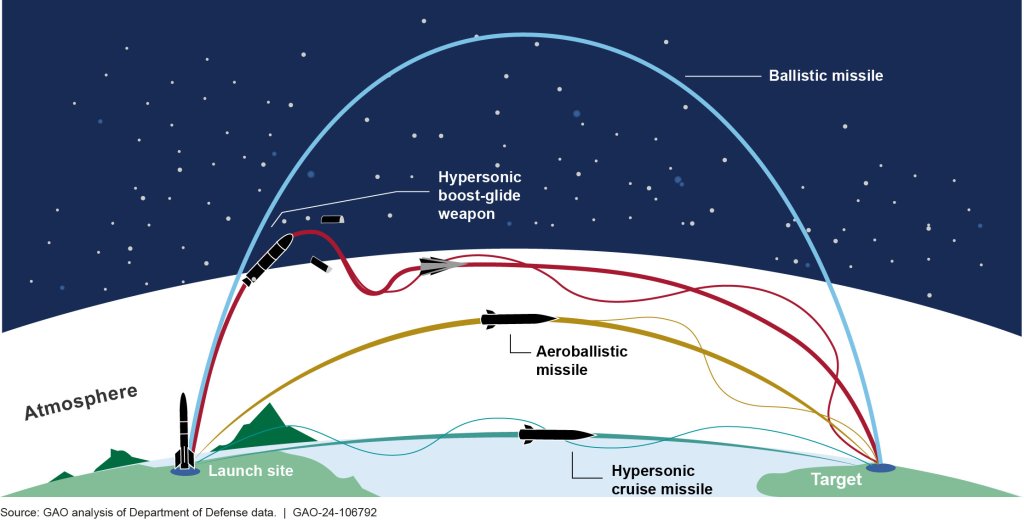
The vehicle then glides to its target along a relatively shallow flight path within the Earth’s atmosphere at hypersonic speed, defined as anything above Mach 5. It is capable of maneuvering along the way, sometimes erratically. The mix of speed, flight trajectory, and maneuverability creates significant challenges for opponents in terms of spotting and tracking the glide vehicle, let alone attempting to intercept it. As a result, hypersonic weapons of this type offer particular benefits for piercing enemy air defenses to very rapidly strike time-sensitive and otherwise high-value targets.
The ARRW production contract “is a turning point in our advanced weapons roadmap,” Secretary of the Air Force Troy Meink said in a statement accompanying today’s release. “By moving ARRW from test to production, we’re providing our combatant commanders with a credible, high-speed strike weapon capable of penetrating the most advanced anti-access and area-denial systems.”
“Fielding ARRW enhances our ability to hold targets at risk anywhere around the world,” Air Force Chief of Staff Gen. Ken Wilsbach said in his own statement. “This hypersonic weapon provides the Joint Force a flexible and rapid response option for highly contested environments.”
A graphic offering a very general comparison of the typical flight trajectories of hypersonic boost-glide vehicle weapons and air-breathing hypersonic cruise missiles, as well as aeroballistic (or quasi-ballistic) missiles and traditional ballistic missiles. GAO
There had already been steady signs in recent years that ARRW’s fortunes were changing and that it had not actually been axed, despite the Air Force’s stated plans to do so. The Air Force’s 2026 Fiscal Year budget request last year confirmed that the service had fully rebooted the program and was seeking new funding to procure actual missiles.
The service’s 2027 Fiscal Year budget request, released earlier this year, revealed further plans “to begin [ARRW] INC 2 [Increment 2] technology efforts such as but not limited to integrating pre-planned product improvements, design, trade studies, hardware upgrades, facilitization, affordability initiatives, and testing.”
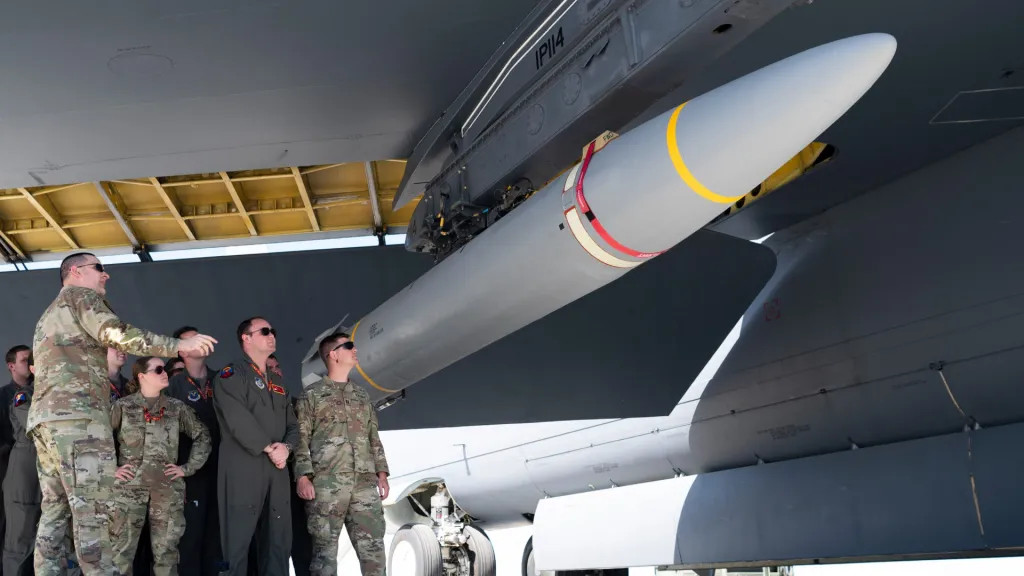
A live AGM-183A ARRW missile seen under the wing of a B-52 bomber at Andersen Air Force Base on Guam ahead of a test in 2024. USAF
A request for $296 million would support “the design, test, and evaluation of Air-Launched Rapid Response Weapon (ARRW) Increment 2 with terminal seeker and data link capability and other cost reduction production initiatives into ARRW,” those same documents added.
In general, the U.S. Air Force has historically framed hypersonic weapons, including ARRW and HACM, as being especially critical for success in future conflicts, especially high-end fights, such as one in the Pacific against China. This was underscored by the launch of an AGM-183A with a live warhead from a B-52 flying from Andersen Air Force Base on Guam in 2024. The future anti-ship variant could be even more relevant in a Pacific context.
“…the Guam test sent clear signals to China. The Air Force has made no secret of how important it views the development and fielding of hypersonic weapons as part of larger preparations for a potential future high-end fight against the Chinese People’s Liberation Army (PLA) in the Pacific. This is further underscored by the fact that the mention of the ‘terminal seeker and data link capability’ for Increment 2 of ARRW is actually contained in the Pacific Deterrence Initiative (PDI) section of the Pentagon’s Fiscal Year 2027 budget request.”
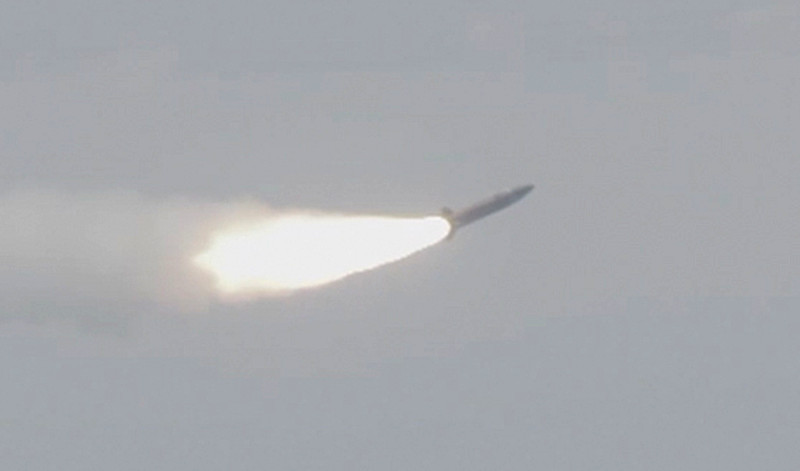
A low-quality image of an ARRW after launch during a previous live-fire flight test. USAF
“In the context of a major conflict in the Pacific, there would also be a very high demand for prompt, long-range anti-ship capability. The ability to conduct those strikes even in the face of dense anti-air defenses would be even more attractive for engaging very high-value vessels, such as China’s growing fleets of aircraft carriers or big deck amphibious assault ships. The PLA Navy’s (PLAN) combat fleets, overall, continue to grow in scale and scope at a prodigious rate, as well. This, in turn, has put additional emphasis on the development and fielding of new and improved anti-ship capabilities that can be air-launched, as well as employed from the maritime and ground domains, across the U.S. military in recent years. Increment 2 ARRWs could also offer another means to strike mobile, high-value targets on land, such as ballistic missile transporter-erector-launchers.”
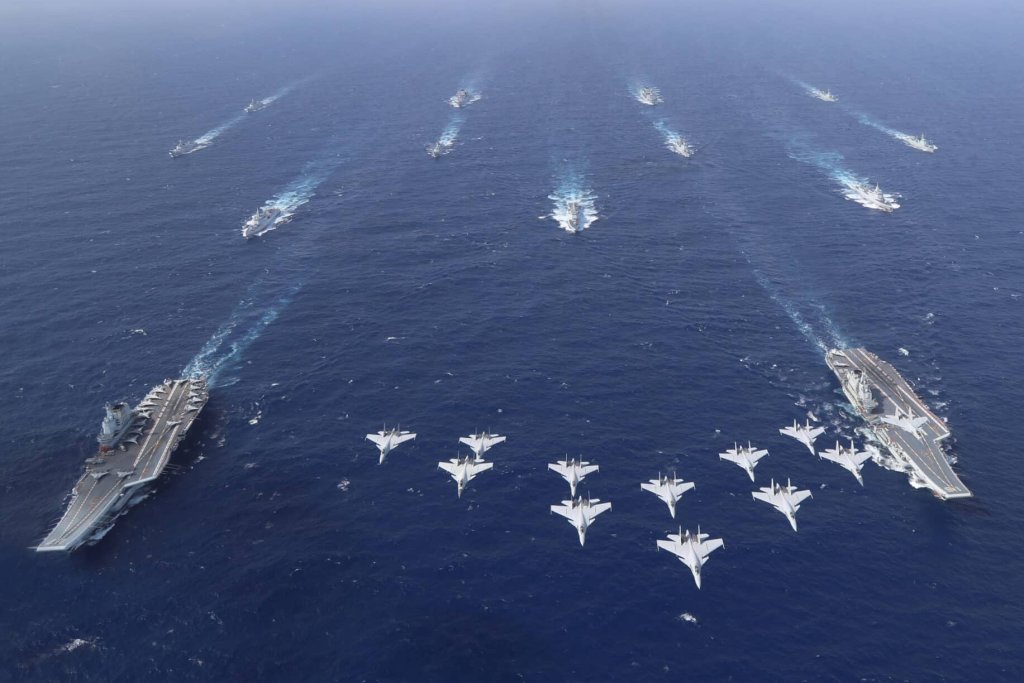
China’s aircraft carriers Shandong, at left, and Liaoning, at right, sail together, along with various escorts, as elements of their air wings fly overhead, in 2024. Chinese state media
If nothing else, after moving to cancel the ARRW three years ago, the Air Force has now fully reversed course and has placed its first order for production examples of this hypersonic missile.
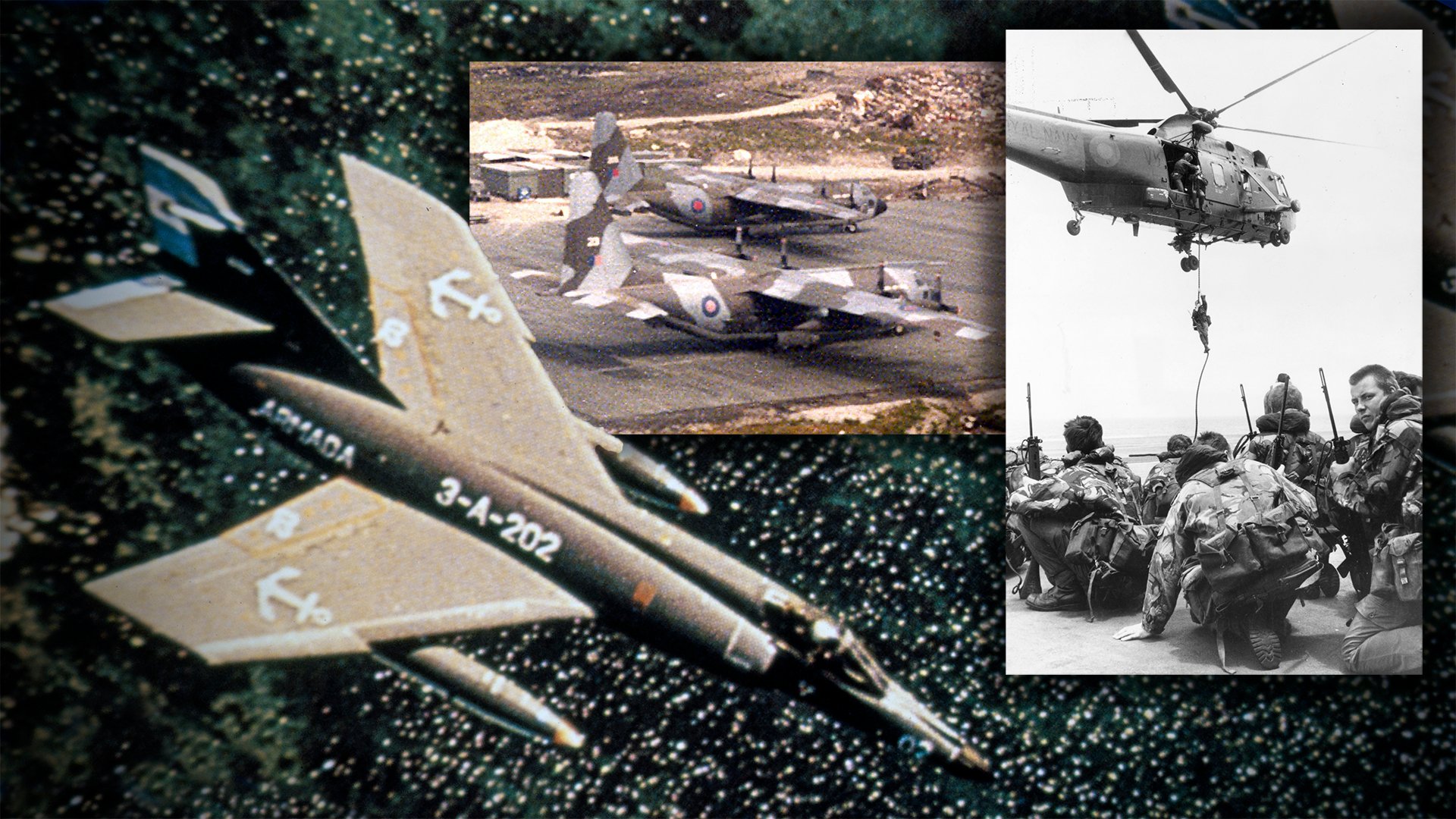
No single Argentine capability shaped British planning during the 1982 South Atlantic conflict more than the pairing of the Dassault Super Étendard strike fighter and its deadly AM39 Exocet anti-ship missile. Against that threat, the British launched a series of special forces operations, all with the same objective: kill the Argentine pilots and destroy their aircraft and missiles before they could be used again. Together, the strike fighter and missile pairing had proven to be the biggest threat to the Royal Navy task force that had been sent to recapture the islands.
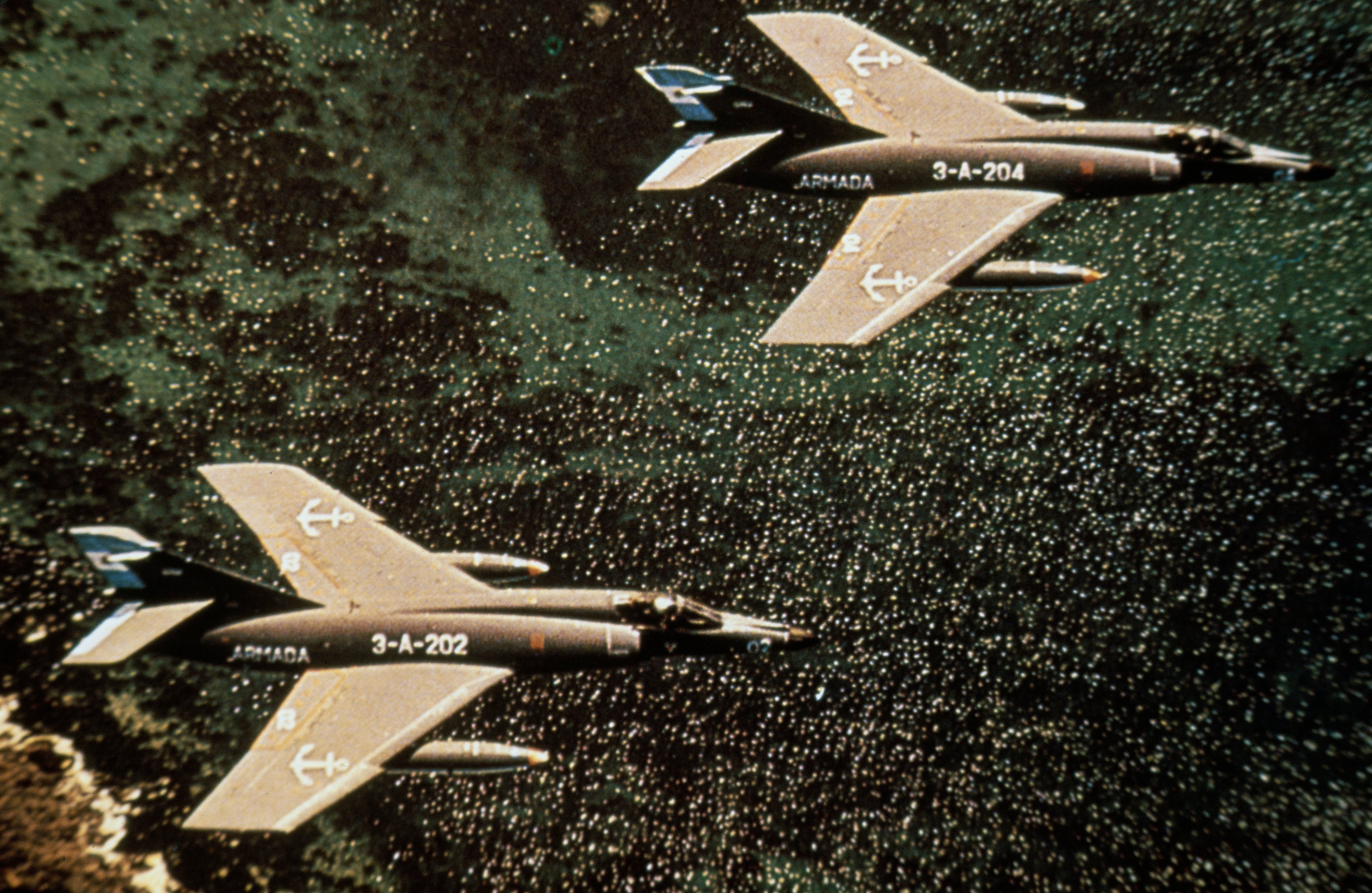
Two Super Étendards of the Argentine Navy in flight around the time of the Falklands War in 1982. Photo by UPI/Bettmann Archive/Getty Images
Five Super Étendard aircraft and five AM39 Exocet missiles had been delivered to Argentina before a French embargo took hold. The jets were flown by the Argentine Navy’s 2nd Naval Fighter and Attack Squadron out of Río Grande, on Tierra del Fuego, a region at South America’s southernmost tip, shared by Chile and Argentina. The Super Étendard/Exocet combination had already cost the British the destroyer HMS Sheffield on May 4 and the container ship Atlantic Conveyor on May 25.
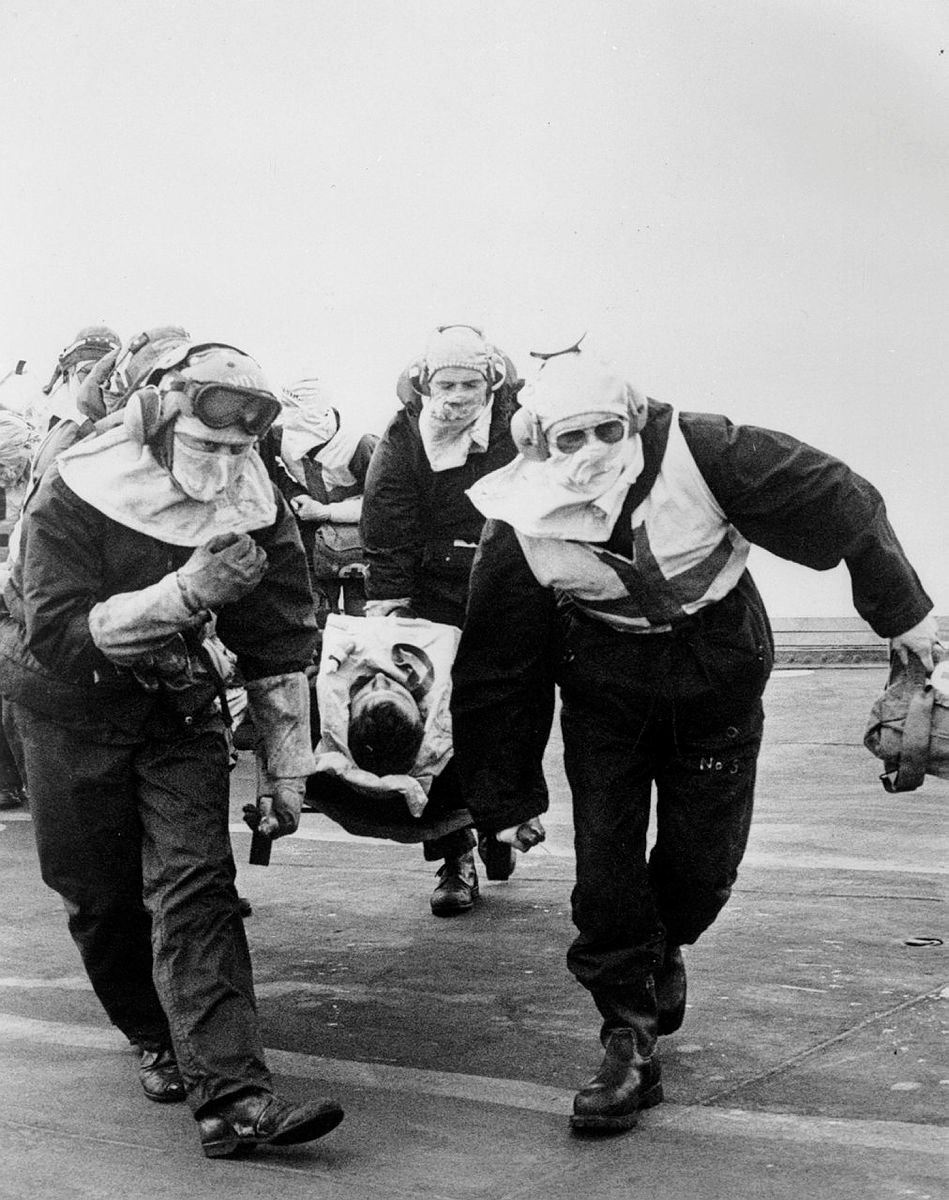
A casualty from HMS Sheffield being rushed to the sick bay on board the aircraft carrier HMS Hermes. Crown Copyright
The special forces operations were broken down into four phases — named PLUM DUFF, MIKADO, KETTLEDRUM, and IMPI — the last of which is the least well-documented, and the focus of this article.
PLUM DUFF was the insertion phase and was a reconnaissance mission. On May 16, an RAF Hercules airdropped eight special forces troops onto RFA Fort Austin to form a recce party. On the night of May 17/18, a Sea King HC4, ZA290, lifted off from the aircraft carrier HMS Invincible for a one-way flight to Tierra del Fuego, where the men were to observe Río Grande and report back. The patrol was set down far from the objective and never completed the reconnaissance; the helicopter crew flew on into Chile, where the aircraft was deliberately burnt to try and hide the evidence, while they tried to evade capture.
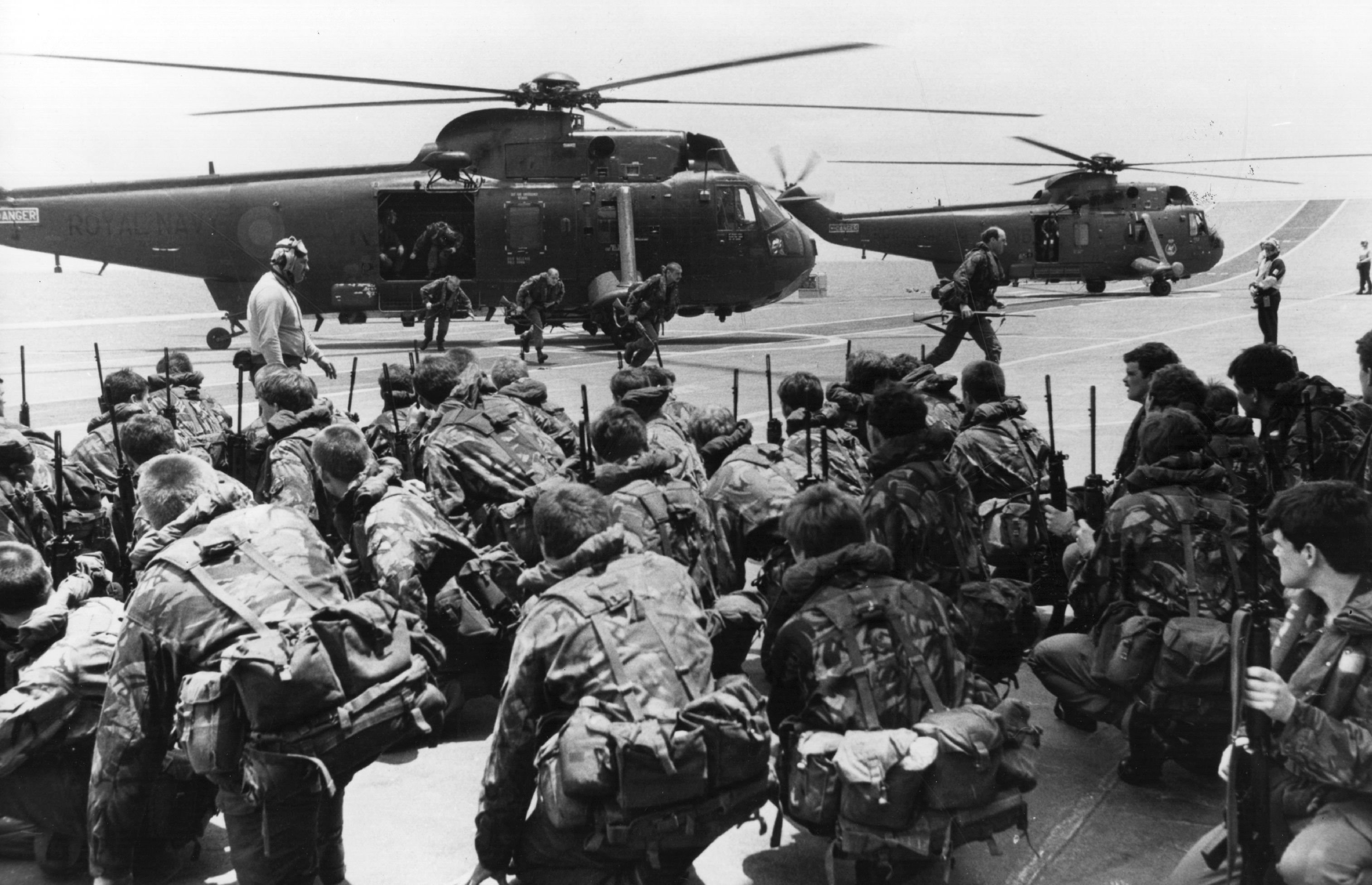
Commandos being lifted from the decks of HMS Hermes and HMS Invincible to be transferred by Sea King helicopters to other ships while the two aircraft carriers forge ahead to the Falkland Islands from Ascension Island, leaving the marines ready to move at short notice. Photo by Fox Photos/Getty Images
MIKADO was the planned attack phase, and it depended on that missing intelligence. Two Hercules were to air-land up to 70 men of B Squadron, 22 Special Air Service (SAS), directly on Río Grande — the air operation order of May 19 also named Río Gallegos, further up the Argentine coast, as an alternative. The men would destroy the Super Étendards and their Exocets on the ground, kill the pilots, and then withdraw overland into Chile. Commander Task Force 317, at Northwood, accepted from the outset that the mission could well cost both Hercules.
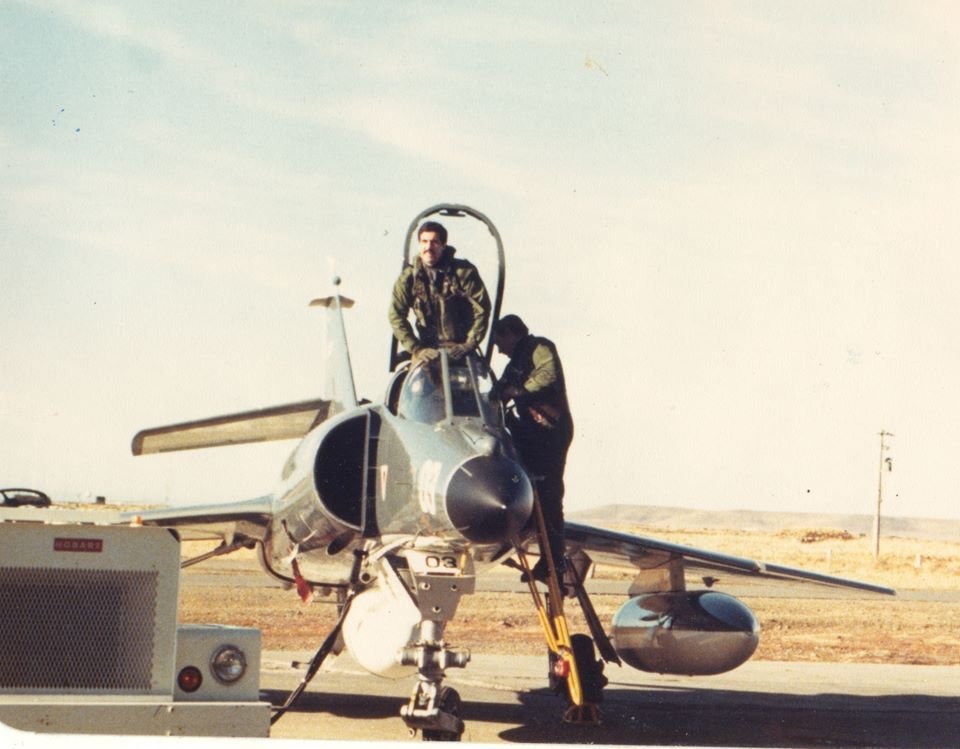
Lieutenant Juan José “Tierno” Rodríguez Mariani in Super Étendard 3-A-203, preparing to take off from Río Grande on May 23, 1982; note the ground power unit still connected. Armada Argentina
The aircrew did not refuse the task, but they were blunt about what it demanded: formation landing by two heavy transports on a possibly heavily defended, icy military runway, with a probable 20-knot tailwind, at night and on passive night-vision goggles in minimum light levels, with intelligence that was inadequate to support any air-land option at all. The RAF planning team recommended an airdrop as the better way to maintain a covert posture, and the Senior Air Staff Officer at Headquarters 38 Group warned the Air Commander to watch for overambitious schemes coming out of the SAS.
The U.K. Ministry of Defense formally cancelled MIKADO on June 4.
KETTLEDRUM was planned as the third of the set. It was aimed at Puerto Deseado, Santa Cruz Province of Argentina, and would have inserted a Special Boat Service party (SBS, the Royal Marines’ special forces unit) from the submarine HMS Onyx — a boat that will reappear before the end of this story.
None of the three was executed as planned.
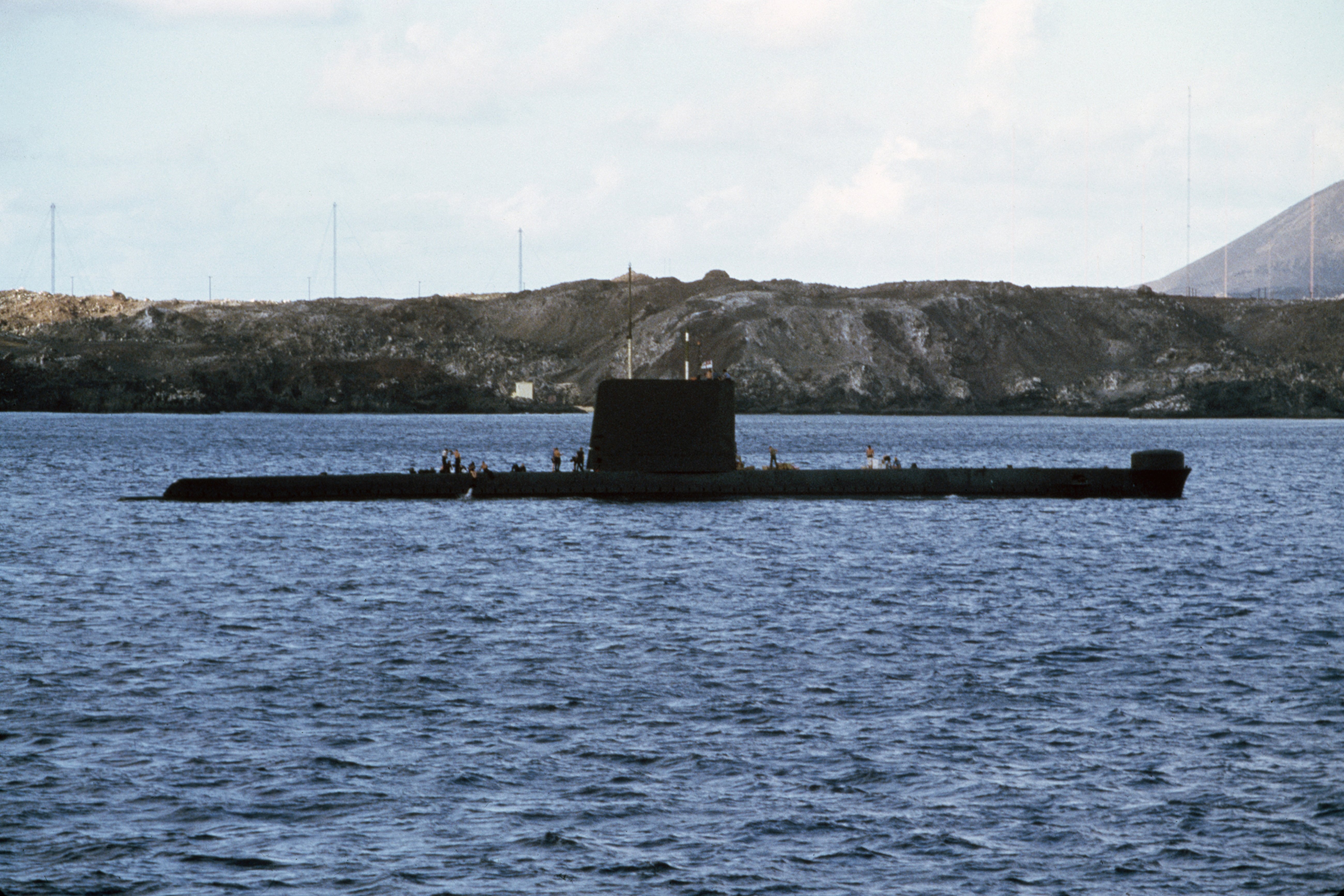
The Oberon class submarine HMS Onyx on the surface off Ascension Island. HMS Onyx was the only diesel-electric British submarine to serve in the conflict, and its ability to operate silently close inshore enabled it to play an important role. At Ascension Island, Onyx boarded SAS and SBS special forces personnel and supported them during a series of operations. Imperial War Museums via Getty Images
Less well-known is that the cancellation of MIKADO produced a fourth project: Operation IMPI, named after a Zulu fighting force.
Cancelling MIKADO did not mean the wider operation was over. Also on June 4, the U.K. Ministry of Defense tasked CTF 317 to produce a new plan for special forces to destroy the combat effectiveness of the Super Étendards.
CTF 317’s staff went to work on what became IMPI. The planning document, Ops 1/3, is dated June 14 — the day of the Argentine surrender in the islands. In broad terms, the objective was to be attacked by special forces arriving both by air and by sea.
That much has been known, in fragments.
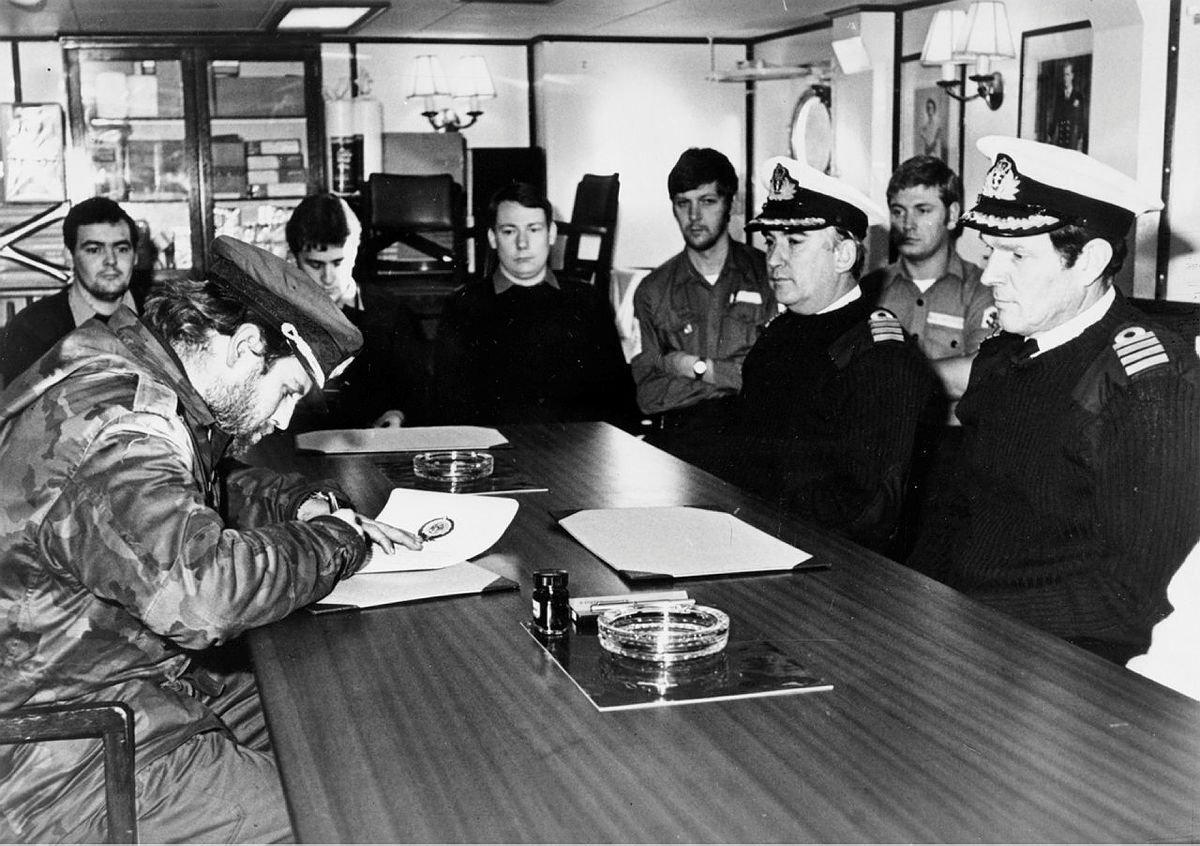
Teniente de Naviro (Lieutenant Commander) Alfredo Astiz signing the Instrument of Surrender on behalf of his Argentine forces at Leith, on the island of South Georgia, on board HMS Plymouth. Crown Copyright
What has not been published until now is the fact that the operation had already been resourced.
At 2240Z on June 12, Maj. Gen. Jeremy Moore, commanding the land forces as CTG 317.1, signalled Rear Admiral Sandy Woodward’s battle group (CTG 317.8), with Admiral Sir John Fieldhouse at Northwood (CTF 317) and Commodore Michael Clapp’s amphibious group (CTG 317.0) as information addressees. The message called for B Squadron, 22 SAS, to be made available for operations as soon as possible: cover was needed against rapid developments of an unfavorable nature in West Falkland (Gran Malvina), and the theatre’s existing special forces assets were fully absorbed supporting the battle for Stanley — and IMPI. Operation IMPI, Moore noted in passing, was by then self-sufficient.
Maj. Gen. Sir Jeremy Moore Mc, Commander, Land Forces Falkland Islands Conflict. Photo by Avalon/Getty Images
Examining two lines of routine signal traffic settles several things at once. Forty-eight hours before the surrender, IMPI was not a staff study but an operation that had been resourced, and that was enough to consume the theatre’s special forces and justify calling a fresh SAS squadron forward. It is also the only contemporary, operational-level reference to IMPI released so far: everything else comes from a narrative written years afterwards.
As that later narrative describes it, the concept behind IMPI was much leaner than MIKADO. Against two Hercules and 70 men, the air element of IMPI rested on a single RAF Hercules.
Overflying Stanley Airfield in November 1983, with two RAF Hercules aircraft present. Getty Images
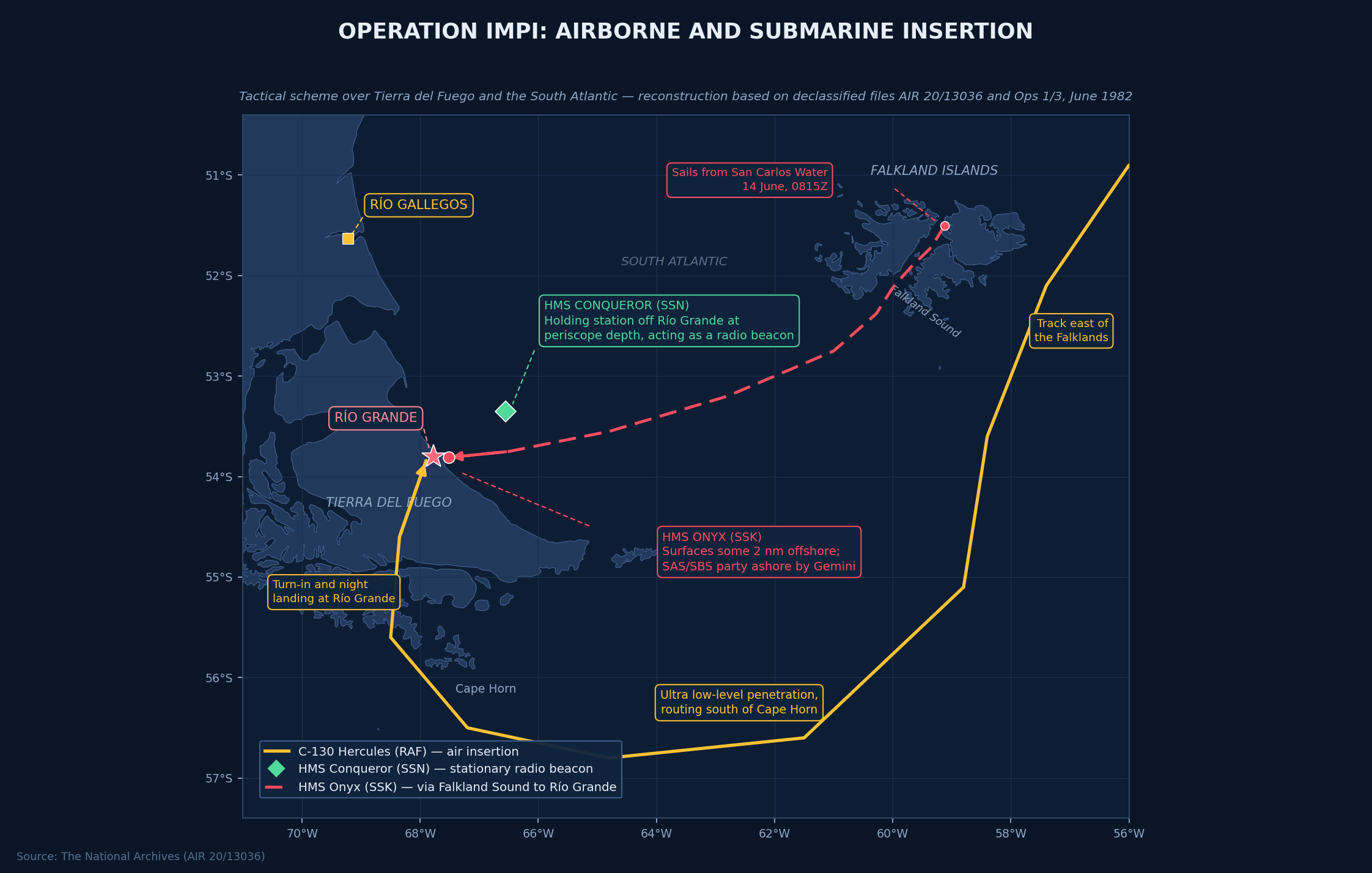
The aircraft was to fly from Ascension Island, refuel in flight, and then track east of the Falkland Islands and south of Cape Horn before making a low-level approach below Argentine radar cover for a night landing of special forces at the airfields codenamed San Jose and Arco Iris. Other special forces would have been inserted by sea. That air element, as will be seen, is the most questionable part of the entire file.
The routing is worth attention, because it rules out the intuitive picture of a direct run south from Ascension. Instead, the aircraft would have entered from the least-covered and least-expected direction, coming around the bottom of the continent rather than from the northeast.
A schematic map of the planned Operation IMPI. via author
The precise identities of San Jose and Arco Iris are not established in the declassified record.
The most likely reading is that they stand for Río Grande and Río Gallegos — the airfields at which the planned navigation ended, and the two named in MIKADO’s air operation order a month earlier. For a document circulating through restricted channels, encrypting the names of the two targets was an elementary precaution, although it should be noted that an operational order would more commonly have designated them simply as Target One and Target Two.
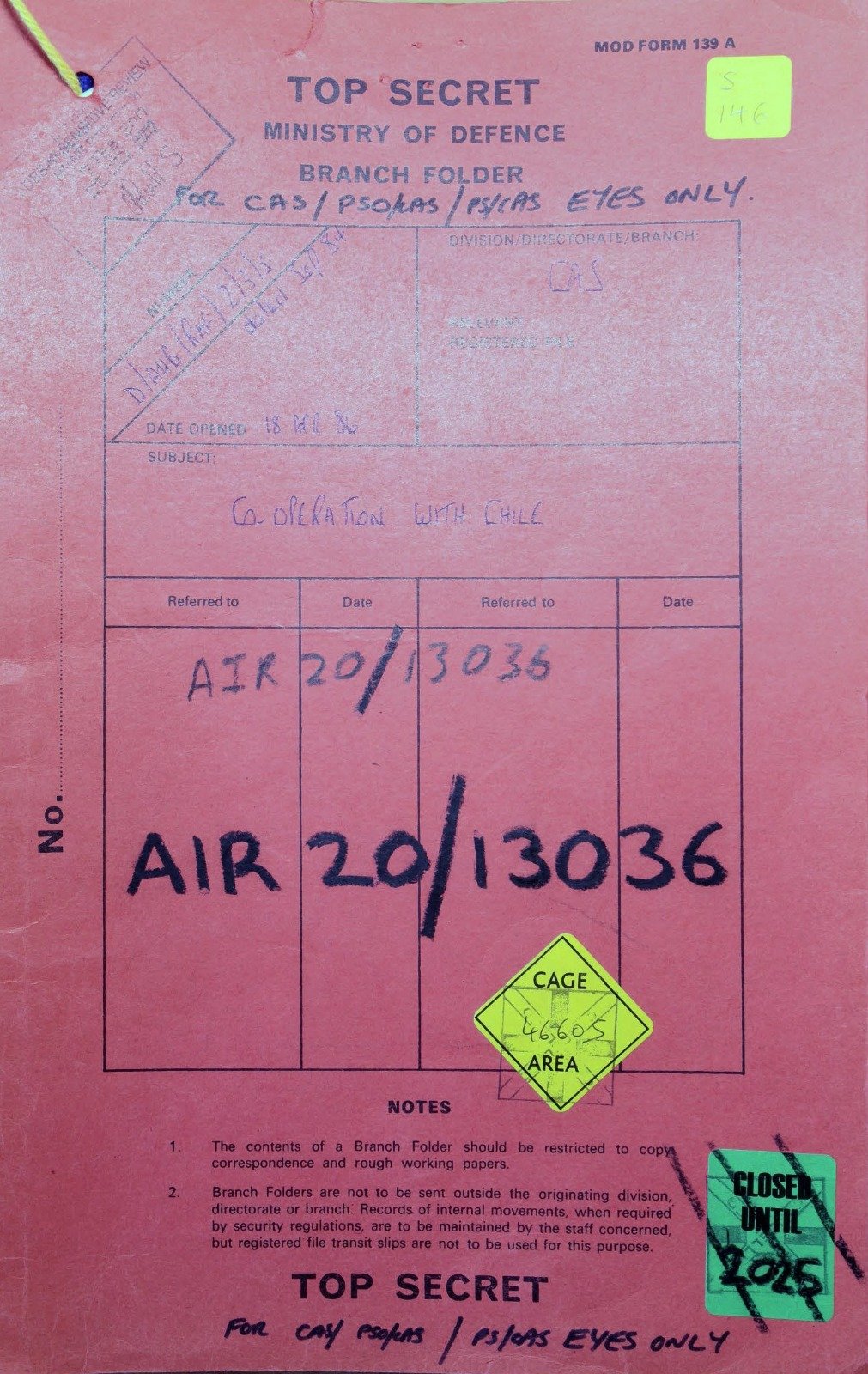
None of this rules out Chilean participation in other phases of the operation; if anything, it suggests it’s more likely. The narrative survives inside a folder classified Top Secret and restricted to the Chief of the Air Staff, whose declared subject is cooperation with Chile. That setting contrasts with the earlier stage of the planning, when mounting and recovering a special forces insertion from a Chilean airfield was considered and expressly discounted on political grounds — much as the use of an Antarctic strip was discounted after the New Zealand High Commission advised that the Antarctic winter precluded safe trans-polar flight.
The maritime half of IMPI can be traced in the records of those who were there.
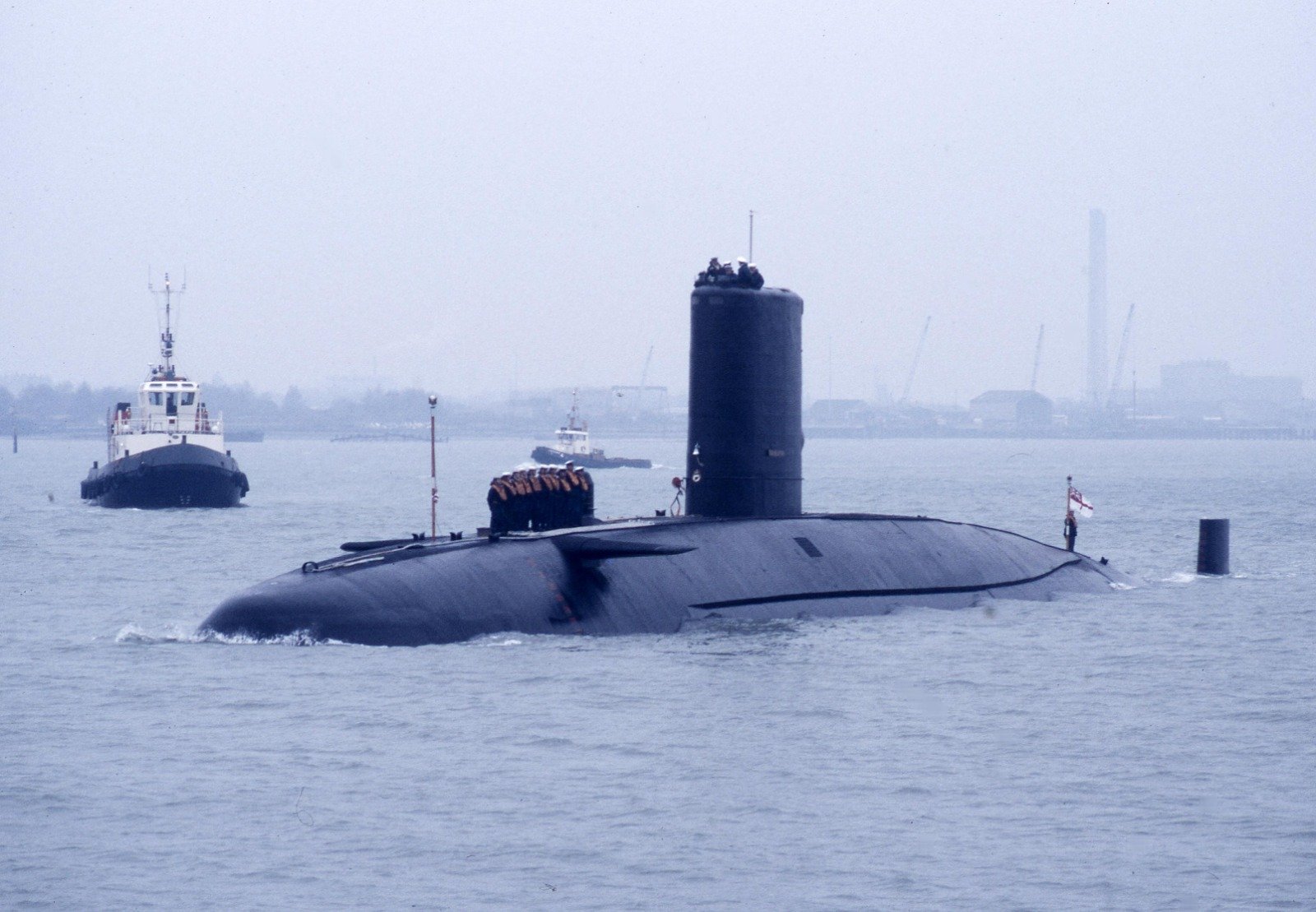
Navigational support for the final phase was to come from the nuclear attack submarine HMS Conqueror. On June 9, 1982, Conqueror was off Bahía Camarones, working as an advanced picket and hunting targets of opportunity that ventured outside the 12-nautical-mile limit of Argentine territorial waters, with authority to sink any civilian vessel judged to be running to the Falklands/Malvinas; that same morning the sub had in fact entered Argentine territorial waters trying to locate the Argentine Navy’s Task Group 79.2.
Nuclear attack submarine HMS Conqueror returning to port. via author
That day, Conqueror received preparatory information on IMPI. The sub’s task was to come to periscope depth and act as a radio beacon, giving the Hercules a radio reference against which to refine a navigation that, low and at night, allowed no error. The resulting picture is an odd one: a nuclear submarine deployed on interdiction off the Patagonian coast, turned into a navigation aid for a transport aircraft.
The insertion itself fell to HMS Onyx, the Oberon class diesel-electric boat that had already taken part in Operation KETTLEDRUM and the only conventional submarine Britain deployed to the South Atlantic. On June 14, at 0815Z, lying in San Carlos Water, Onyx embarked a party of 10 men from B Squadron, 22 SAS and the SBS for the mission. The timing matches Moore’s signal of two days earlier almost exactly.
The plan called for the submarine to surface some two nautical miles offshore at night. The troops would close the beach in Gemini inflatables and destroy the objective — aircraft and missiles, if any were there — using anti-tank weapons and demolition charges.
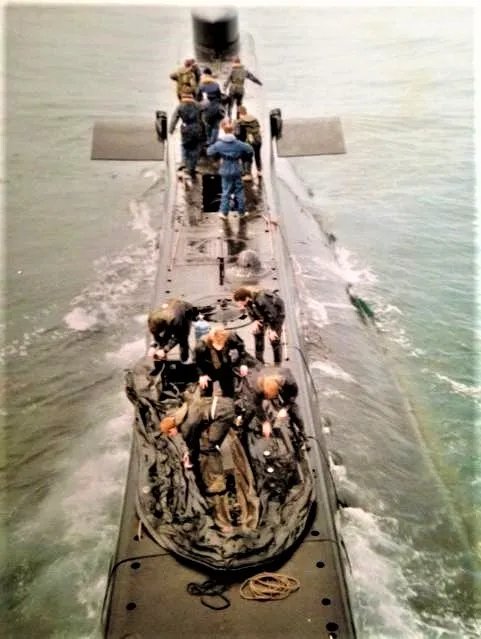
What happened next illustrates the inertia of military machinery. The Argentine surrender in the islands came on that same June 14, hours after the party had gone aboard Onyx. Even so, preparations did not stop at once: on June 15 the embarked troops carried out practice landings from a Gemini. That does not mean IMPI was ever executed — it was not — but it does show that with the strategic outcome already settled, the machine was still rehearsing.
HMS Onyx operating with special forces. via author
The British record closes the matter with administrative dryness: the surrender of the Argentine forces in the Falkland Islands and the cessation of hostile activity by Argentine aircraft resulted in the operation being cancelled.
The air part of the mission is another matter entirely and is where IMPI becomes more uncertain.
The only link between IMPI and an aircraft is a single paragraph in an RAF historical narrative. The folder that holds it was opened on April 18, 1986 — four years after the war — as an eyes-only briefing file for the Chief of the Air Staff, and the pages appear to be a working draft rather than a finished submission, carrying pencil amendments throughout.
Had a Hercules been earmarked, there is no doubt which unit would have provided it. The Special Forces Flight that runs through the whole chapter — five crews, commanded by a squadron leader, exercising regularly with SAS and SBS Sections — appears with its squadron number blanked out, yet the number surfaces a few paragraphs later, where two of its crews are described training on the probe-fitted Hercules C1P. The unit was No. 47 Squadron, RAF, home-based at Lyneham, and it would keep the special forces air support role for decades afterward.
The men who were at Ascension with that detachment, however, say they had nothing to do with it. Reliable sources with direct knowledge of the flight’s activity state that they never saw the codeword at the time, had never heard of the operation until this file surfaced, and consider it inconceivable that a special forces Hercules and crew could have been earmarked for a mission of this kind without the flight — a community of five crews that has stayed in touch ever since — learning of it at some point in the intervening four decades. By June 14, at most one aerial-refueling-qualified special forces crew was at Wideawake.
That skepticism is reinforced by the way the same narrative handles events those crews lived through. Its account of their own work-up does not survive contact with their logbooks.
For example, a practice infiltration into RAF Laarbruch in Germany that the narrative describes as successful had in fact been detected; the Hercules was notionally shot down about two miles out on the approach. The ramp toes (attachable extension plates located at the very end of the rear cargo ramp) it describes as droppable at 20 to 30 knots were never meant to be lowered with the aircraft moving, which would have been unsafe and risked the airframe. There are other anomalies, too.
West Falklands seen from the ramp of an RAF Hercules. Donald Morrison/Getty Images
A document that misstates the squadron’s own exercises is thin evidence on which to place that squadron over Tierra del Fuego.
What is not in question is what the Special Forces Flight could have done, had it been asked.
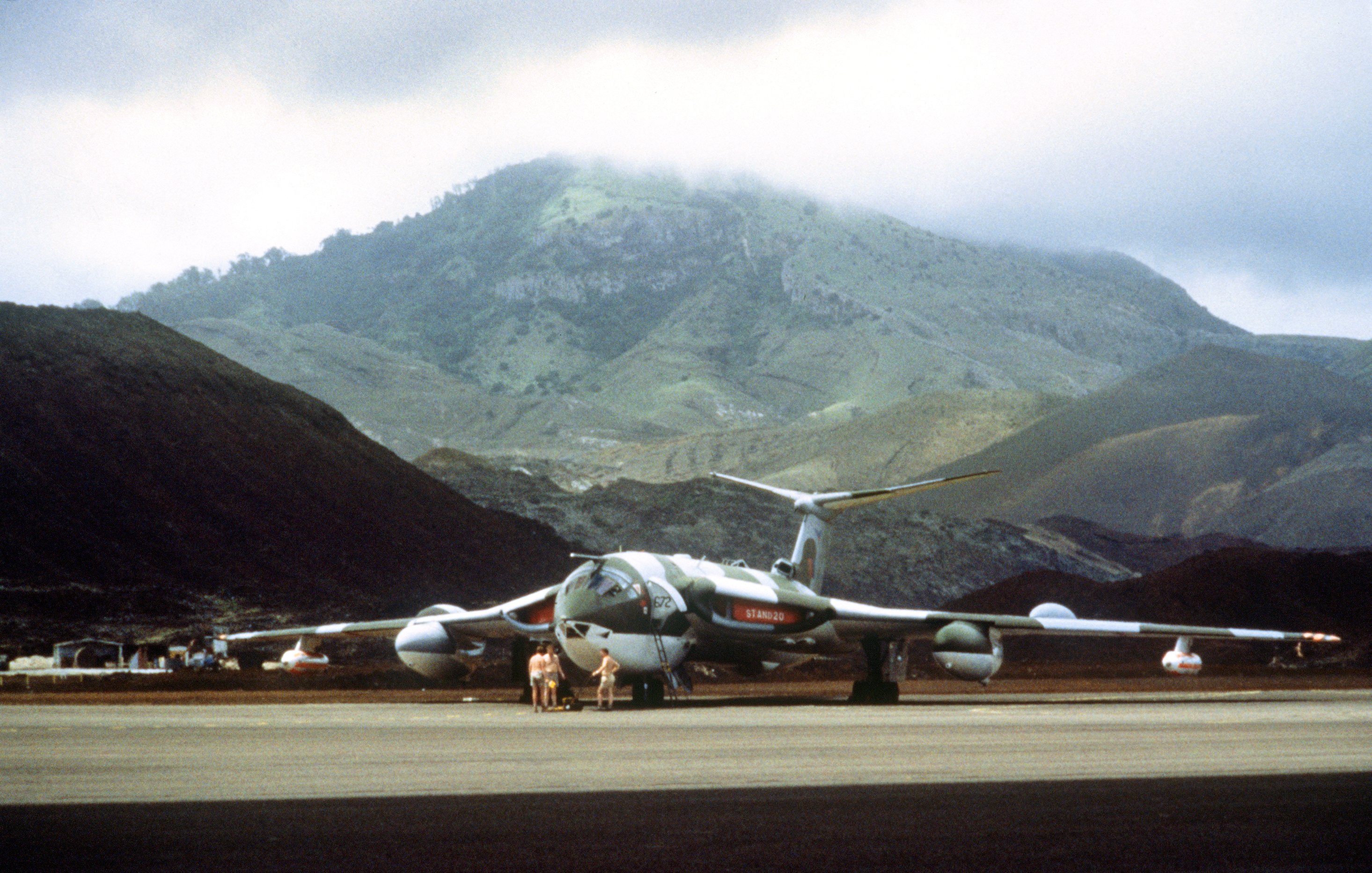
By mid-May the flight had two crews qualified in air-to-air refueling — one deployed to Ascension, the other held in the United Kingdom to train the others — flying Hercules C1s fitted with probes and, where the task required it, additional fuel tanks in the fuselage. It had rehearsed stream landings and rapid offloads, parachute insertion below radar cover to a pinpoint coastal feature, as well as flying on ANVIS goggles at 250 feet over sea and land. The goggles themselves were fitted to the crews’ helmets by RAE Farnborough specialists in a single day in mid-April. The reach was demonstrated on May 16, when the sortie that dropped the PLUM DUFF party stayed airborne for 24 hours and five minutes, with Victor tankers refueling some 1,800 miles from Ascension. Almost none of it was routine: nearly everything the force did during the conflict was improvised, at speed, in a matter of weeks.
A picture taken on May 24, 1982, at Wideawake Airfield on Ascension Island, showing an RAF Victor tanker prepared for air-to-air refuelling tasks. Photo by AFP
What never had an answer — not for MIKADO, and not for whatever IMPI intended — was the other end of the problem. Putting men ashore deep inside Argentine territory was the solvable half. Getting an aircraft and its passengers out again after a direct action, from a strip in range of the Argentine Air Force, was not.
All of the above is reconstructed from lateral references: the RAF’s narrative in file AIR 20/13036 at the National Archives, unit records, submarine logs, operational signal traffic, and the accounts of participants.
The specific file — the one holding the complete plan with its annexes, the identification of the airfields and the execution sequence — remains closed. It is DEFE 71/980, titled Operation Corporate (Falklands Conflict): Operation IMPI, retained at the National Archives at Kew with no announced opening date. Until it is released, the air element of IMPI cannot be settled either way.
Forty-four years after the conflict, the last British special operation of the war is still, in essence, a document the British state is not prepared to show. That is not a trivial detail: the files touching on cooperation with Chile have consistently been the most reluctantly opened of all.
The folder holding the outline plan for Operation IMPI. National Archives
What remains is an operation of two halves. One of them is solid: a resourced plan, declared self-sufficient on June 12, with a nuclear submarine briefed to act as a beacon, 10 men of the SAS and the SBS embarked in a conventional submarine in San Carlos on the morning of the surrender, and rehearsals continuing the following day. The other half — a lone Hercules coming round Cape Horn to land on a codenamed strip — rests on one paragraph of a flawed staff narrative and is rejected by the only men who could have flown it.
Either way, the obsession is the same.
Between June 4 and June 14, 1982, while the final battle for Port Stanley/Puerto Argentino was being fought and the Argentine land campaign was collapsing, part of the British planning effort was still revolving around five French-built aircraft, their 10 aircrew, and their missiles. That the plan carries the date of the surrender itself, that it was still being rehearsed the following day, and that it remains classified today says a good deal about how far the British were prepared to go to destroy the Super Étendards and their Exocets.
Contact the editor: thomas@thewarzone.com
Mariano Sciaroni holds a master’s degree in Strategy and Geopolitics as well as a postgraduate diploma in Contemporary Military History, both earned at the Argentine Army’s Military Academy. Sciaroni has published five books and numerous articles on military and naval history. He is also an active member of the Argentine Institute of Military History and serves as a sub-lieutenant in the Argentine Army Reserve (Army Aviation Reserve Squadron). You can find out more about his books here.
Imbarcarsi su un volo a corto raggio che dovrebbe durare meno di un’ora e ritrovarsi, quasi tre ore dopo, a 1.600 chilometri di distanza in un Paese completamente diverso. Non si tratta di un errore di imbarco, ma dell’odissea vissuta dai passeggeri del volo Ryanair FR2955, intrappolati in una deviazione estrema a causa dei venti devastanti della tempesta Boelo che si è abbattuta sul Regno Unito nel fine settimana.
Il Boeing 737-800 è decollato dall’aeroporto di Dublino alle 22:19 di sabato. L’obiettivo era raggiungere l’Inghilterra — originariamente Newquay Cornwall, poi Bristol come scalo alternativo — in un viaggio che solitamente richiede meno di 90 minuti. Raggiunta l’altitudine di crociera di 27.000 piedi, l’aereo ha iniziato la discesa verso lo scalo di Bristol. Tuttavia, le condizioni meteorologiche al suolo si sono rivelate tutt’altro che clementi, non lasciando altra scelta al comandante se non quella di interrompere il tentativo di atterraggio.
Mentre i controllori di volo cercavano senza successo uno scalo alternativo sicuro nel Regno Unito, i tracciati del sito AirNav Radar hanno mostrato l’aereo allontanarsi per quasi 1.000 miglia. Il velivolo ha attraversato il Canale della Manica e la Francia, puntando verso il sud della Spagna per evitare il nucleo della perturbazione, e ha toccato terra all’aeroporto di Alicante-Elche all’1:16 di domenica (le 2:15 ora locale).
Six takeaways from a new memoir by Mr. Woodward, the star Washington Post reporter, including his disappointment with the newspaper’s billionaire owner.

 Login