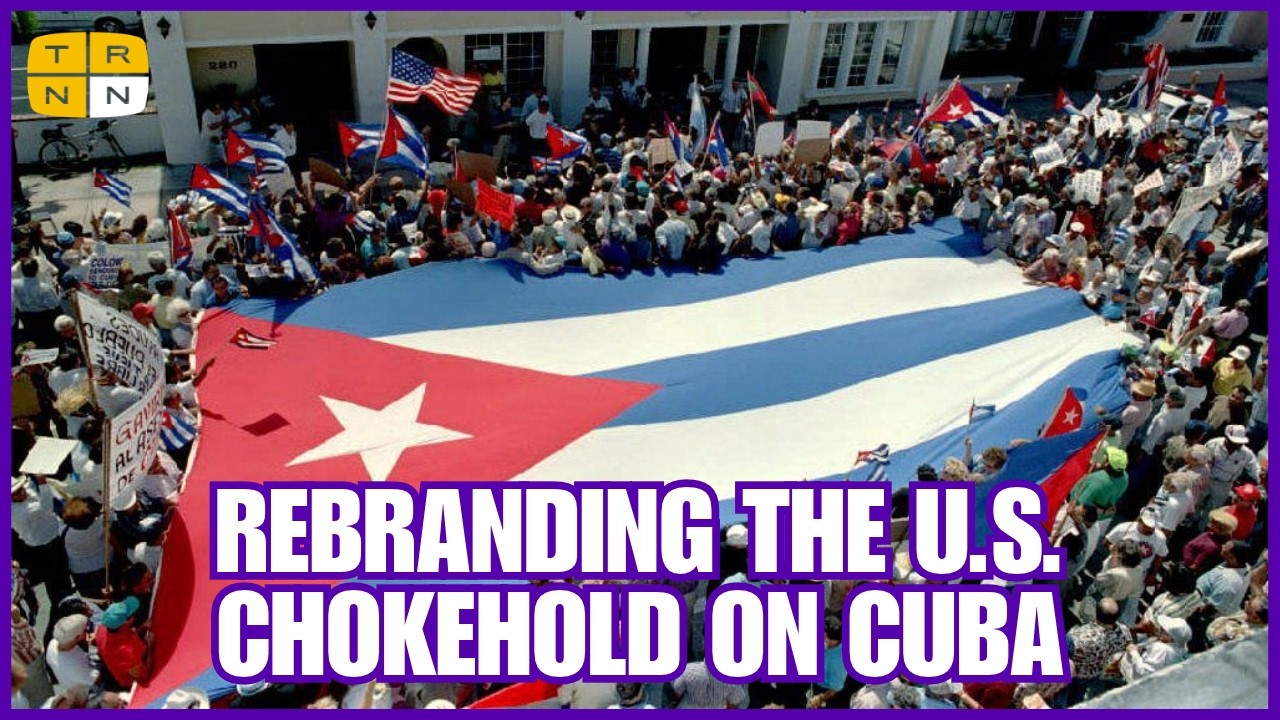
The Black Alliance for Peace in Miami, organizing alongside the Miami Coalition, seeks to end the blockade against Cuba. October 24–31 marks the Cuba Week of Action against the U.S. chokehold on Cuba, leading up to the International and National Day of Action on October 28. This aligns with the United Nations’ annual vote, where the international community will once again vote on the U.S. embargo on Cuba.
Transcript
The following is a rushed transcript and may contain errors. It will be updated.
Mansa Musa:
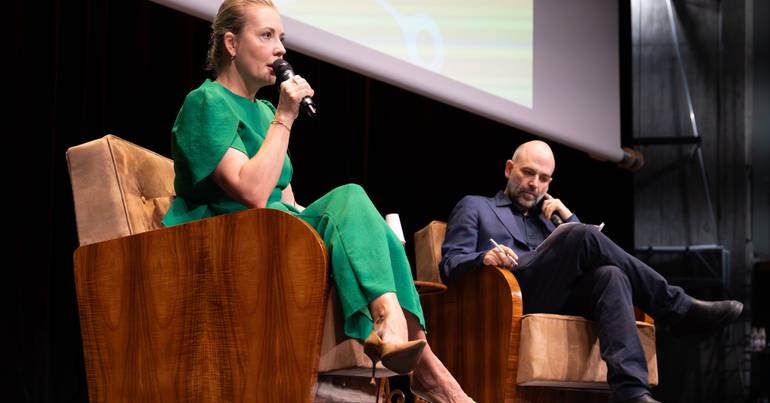
Welcome to Rattling the Bars. I’m your host, Mansa Musa. At Rattling the Bars, we examine the prison industrial complex, both domestically and internationally. Miami floor sits at the direct intersection of US imperialism across the Caribbean and Latin America. Joining me today is Dr. Kim Miller, an organizer in Miami fighting to end sanctions and the embargo on Cuba opposing termination of TPS for Haiti and building solidarity with nations targeted for their socialist or abolitionist revolutions. Welcome, Kim.
Dr. Kimberly Dawn Miller:
Thank you. I’m really excited to be here for this conversation.
Mansa Musa:
All right, so first introduce yourself to our audience and tell them about your work with Black Alliance for Peace in Miami.
Dr. Kimberly Dawn Miller:
Yeah, so my name is Kimberly Dawn Miller. I have a PhD in global studies with a concentration in environmental sociology. So I research particularly the Eastern Caribbean looking at the contradictions of the post-colonial state, neoliberal development regimes, as well as the politics of post-disaster recovery. So I kind of use a lot of my organizing to also inform my research. And right now I am the Miami point person for the Black Alliance for Peace Miami cluster, as well as the co-coordinator for the Black Alliance for Peace, Haiti Americas team. So Cuba, Haiti, Venezuela, and the Caribbean at large are very central to our anti-imperialist organizing and situating and centering Haiti in particular as a note of Black liberation and why we fight so hard for their sovereignty.
Mansa Musa:
Kim, you focus heavily on Cuba. Can you discuss the organizing you are doing locally in Miami and internationally against the direct tack on the achievement of the Cuban Revolution?
Dr. Kimberly Dawn Miller:
Miami, Florida is basically the heartland of Latin American counterrevolution, and it is a central city that has a lot of reactionary diaspora politics from Latin America, and particularly the Cuban exile community, the Venezuelan exile community, supporting some of the more far right policies, including the economic and oil blockade occurring on Cuba. So
Mansa Musa:
It’s
Dr. Kimberly Dawn Miller:
Been important though that we resist this notion of creating a monolith regarding the politics of Miami at the same time. So the Black Alliance for Peace in Miami, we work with the Miami Coalition to end the blockade on Cuba, which is a coalition of many different organizations as well as trying to fight in a decades long organization, trying to fight along with the national network on Cuba. And starting tomorrow, October 24th is the Cuba Week of Action against the US genocide on Cuba. And it’s through the 31st of October. And we’re really trying to mobilize for International and National Day of Action for Cuba on the 28th, which coincides with the UN’s annual vote where majority of the world’s countries will be able to vote on the embargo on Cuba. And we basically
Mansa Musa:
Want
Dr. Kimberly Dawn Miller:
To show that in Miami, Florida as well, the heartland of, like I said, Latin American counterrevolution, that not
Mansa Musa:
All
Dr. Kimberly Dawn Miller:
Voices in Miami support what this government is doing, specifically heightening sanctions as well as blocking solidarity, international solidarity with the Cuban people, as well as their access to even third party, like I said, financing. So we’re really just trying to show the economic strangulation that’s occurring and standing in solidarity with Cuba, the Cuban revolution, as well as those that are resisting.
Mansa Musa:
Okay. So let’s unpack the issues that’s taking place in Cuba as it relates to the international community. And you can address this from your experience and what you know to be a fact, you have on the so-called left in the United States anarchist with people that have a particular political ideology and they’re critiquing Cuba in the sense of saying that the centralization of the government is problematic and that if they didn’t have a centralized government, then it would be more likely they wouldn’t be suffering from the imperialist on slaughter. Talk about what’s your experience and what do you say about that?
Dr. Kimberly Dawn Miller:
Right. Well, I think there lies at a fundamental disagreement on maybe the nature of the state when it comes to how maybe a Marxist Leninist would view state power versus an anarchist. So one thing I’ve been trying to reference a lot of times is Lenin’s state and revolution where he clearly identifies that the state does not hover above class interests, class power. And if you see the state as instrumental to class antagonism and class power, then what does it mean when you have a state like Cuba that had a socialist revolution and that did expropriate from the bourgeoisie and actually identify class power within institutions? And I think when you look at the state not as a monolithic or a flattened character, but actually looking at the state in terms of its global configuration within, like I said, the capitalist world order, it becomes very clear that Cuba, the Cuban state is not inherently the same as the US state.
There are several colonial states, there are imperialized states, there are states in the imperial core. And then we have to recognize these differences to coming from a conclusion on the nature of the state, people’s power within its dynamic within the state, as well as the function of that state. And I do think when you have anti-imperialist states, it’s fundamentally different and they’re targeted because of they represent a more autonomous or sovereign form of development. And it’s hard to move toward no state, if you will, when you have the imperialist attack. So you just need levels of defense. Iran is another example. You need a state to defend against imperialist onslaught. And I do think that maybe putting the cart before the horse, it’s important to understand those differences. And in addition to that, I wanted to add that the dynamic between, for instance, grassroots popular power and communes is not necessarily antagonistic to the socialist state itself.
And I think that that’s important to demystifying the idea that there’s either just an authoritarian socialist state versus popular power beneath. And I think that just in my experience with Venezuela, even though we know there’s been a lot of restructuring to the Venezuelan state since January 3rd, I did see a popular consultation on International Working Women’s Day within the communes. And I did see that how they were trying to actually build their communal capacity, which Hugo Chavez said is the base for transforming the bourgeois state as well as capitalist social relations. So I do think that you can have a dialectical and sometimes, yes, antagonistic relationship between communes and the state, but I do think it’s important to understand that it’s not necessarily opposed and that they work within the Bolivarian process to get financing for infrastructure in their own productive capacity. So that’s one thing I wanted to add there as well as you can even see a country like China that has rural village cooperatives and land ownership.
And what does that mean for the actual community that it’s still a centralized party state, but they still have a communicative and a participatory democracy within that. Right.
Mansa Musa:
Okay. And I think that’s a very astute observation because I think that, and I’ve been a lot of these spaces, when people make an analysis, they have a tendency to the foundation be based on misinformation to begin with and they build out on that. They build out on, like you say, it’s a difference between the United States and the state that Lenin talked about with state revolution. Let’s shift our gears and talk about Haiti. Switching, we see a different history, not a socialist revolution, but an abolition one in Haiti, establishing the first Black Republic through slaves revoked, historically targeted by the United States imperialists. Haiti recently became the focal point of a campaign by Donald Trump and JD Vance. Given that Florida holds the largest Haitian population in the US, what are the local international dynamics that exist within that? It’s almost as if Tucson let overture ghost haunts anybody that got a view of history that’s imperialist.
The involvement by the United States and continues to destabilize it is criminal in and of itself. Talk about the Haitian aspect of your analysis.
Dr. Kimberly Dawn Miller:
Yeah, I mean that’s an excellent overview. I think it speaks to the idea of Black ungovernability and the idea that since 1804 when Thomas Jefferson snubbed Dasaline, it was always the idea that Haiti was going to be excluded. Haiti was seen as a model of Black liberation of formerly or enslaved people freeing themselves, creating its first independent state in Latin America. And what does that symbolize to enslaved Africans in the United States? It was the idea that Black sovereignty is a threat to the powers that be essentially. And these are the class contradictions that Dasaline was trying to actually resolve through a kind of form of early socialist egalitarian or agrarian reform that actually did occur when he was assassinated. But just thinking about the long history of foreign interventions in Haiti, like I said, they weren’t really given access to international credit through non-diplomatic recognition.
And then when France did recognize Haiti, they had to pay an indemnity. So the idea that it’s creating successive notions of debt that Haitians never want to take on, but the idea of, oh, well to recognize you, you have to pay for your freedom. And then we did in particular, in Miami, we actually did a teaching looking at the 1915 US occupation where the US rewrote the Haitian constitution to allow foreign ownership of land that was banned in Haiti, as well as making sure that it opened up to US capital to exploit rural workers to basically extract from the country. So the US has always had a very, and of course through Bank of New York, which is now Citibank, extracting, like I said, it’s gold, it’s resources. And I think that that’s an example even to this day since the current gang suppression force occupation after the multiple occupations from the UN, after the US, France and Canada back to coup in 2004 against Aristide.
I mean, you just see this constant history of intervention and occupation. And I do think, like you said, it’s to keep them destabilized because a functioning Haiti, a sovereign Haiti, that is, I believe, a model of what Black sovereignty could and should mean.
Mansa Musa:
So what are y’all doing to organize and change this narrative in terms of how Haiti is being looked at? Because that goes a long ways in terms of not so much as imperialist. Imperialis is going to lie. I think Gold would say when you’re dealing with propaganda, find a narrative, repeat it over and over and over again till people come to believe it. So we know that’s going to come from them, but talk about how y’all organize to get people to see the need to be involved in what’s going on in Haiti and aid and assist the Haitian people in their liberation.
Dr. Kimberly Dawn Miller:
Well, in the Black Alliance for Peace and the Haiti Americas team, we always say that Haiti’s crisis is one of imperialism. It’s not of the Haitian people where we work and move against narratives that dehumanize the Haitian public, that pathologize them. And I think it’s important, once you understand that the crisis is imperialism, you see it as an externally driven crisis. We know, for instance, that all the arms that the gangs are using, the paramilitary groups are using in Haiti come from Miami. They’re trafficked from Miami to the Dominican Republic into Haiti. So there’s an arms embargo on Haiti, and yet these weapons are flooding the country. And what does that mean around the source of the problem? Haiti is a weapons manufacturer, so the guns are getting there somewhere from the United States. That’s one way. We also look at the culpability of, unfortunately, a lot of Latin American governments.
El Salvador right now is actually trying to basically start war with Haiti by saying, “Oh, we have our four servicemen that were kidnapped and now we’re going to go in.” And it’s like, “Well, why are there Salvadorian troops in Haiti?” It speaks to this idea that there’s this global kind of almost subjugation of the Haitian people because this is the international community that is sanctioning Chad or Kenya going in and representing on behalf of the United States. It’s proposed military solution for Haiti, but it’s never looking at the political situation, never looking at the core group, the countries of US, Canada, France, believe Germany, also Brazil. We don’t know that. Brazil also has a long history of pressing Haiti. So I think it’s important that we look at all these factors and that we understand that the gangs are getting support by the oligarchs. And what does that mean?
And what is the relationship between the elites in Haiti, the violence happening against the mostly working class Haitians, and how do we address the root of the problem instead of, like I said, stigmatizing the Haitian people, as well as attacking them through TPS, which is basically saying that the US helped create these conditions and now we’re going to send them back to that. People aren’t temporary. Haitians aren’t temporary. And it’s unfortunate that the mass deportation of this regime is trying to keep Haitians, and like I said, exploit their labor when it’s convenient, but also keep them in a state of precarity. And like you said, Miami has a huge Haitian population, I think the second highest in the country, and they’re in particular fields like hospitality industry, construction, home healthcare, and they’re being devastated right now. The communities are definitely fearful, but we want to push back against the narrative.
We want to put an anti-imperialist analysis into our understanding of the Haitian immigrant and migrant presence as well.
Mansa Musa:
Yeah, just the effect of imperialist. This is not people just not wanting to live a quality life. We remember Baby Doc, Papa Doc, and Tanta Liku. We remember when they was ravishing the country, being a full stool for imperialists, taking all the minerals and the natural resources out of Haiti and putting a little money in their pocket in comparison. So we are well aware, and that’s a good viewpoint as you especially, Dr. Kim, because we got to push back. I think that when they say their response to the oppression is the reason why they oppressed, you oppressed because you saying, “Get your foot off my neck.” But talk about how the United States and imperialists in particular, and this is a shift in terms of not so much the Trump administration, but the general attitude of imperialists and capitalists and fascists around the world, how they deal with Maduro and the fact that they talking about kidnapping Raul, but they threatening any country that stand up and try to identify with any type of sovereignty.
Dr. Kimberly Dawn Miller:
Absolutely. Well, I think for us, we understand that the illegal kidnapping of a head of state when it came to Maduro and his wife, Cylia Flores, and bringing them to Metropolitan Detention Center in Brooklyn, what does this say when the US gets to espouse and impose extraterritorial coercion against a sovereign country? And we know historically when the US would indict, for instance, Noriega from Panama, indicting for drug trafficking, even though he was the CIA guy until our grace. Well, he didn’t play ball geopolitically, and then suddenly he needs to be removed. We know again with the kidnapping of Aristide in 2004 and dropping him off in the
Mansa Musa:
Central
Dr. Kimberly Dawn Miller:
African Republic, this is not new what the US is doing. I think what makes this
Mansa Musa:
Particularly horrific
Dr. Kimberly Dawn Miller:
Is just knowing it’s the combination of the
Mansa Musa:
War
Dr. Kimberly Dawn Miller:
On drugs with the war on terror. So you have this narco terror label. We know that the US has sadly bombed 240 Caribbean and Latin American men on both extrajudicially for being narco terrorists. And you’re seeing, like I said, the collusion of, I do think these two kind of law enforcement mechanisms that is aligned with imperialist interests. So I think that’s one thing that we look at when advocating for Arizona peace and basically saying that the US and looking at the heart of US militarization in the region, this is not new, Venezuela wasn’t the first. And with, like you said, these indictments on Raul Castro, the indictments on the Cuban president, Diaz Canal. I mean, particularly in Florida, it was Florida that just put out a arrest warrant, which the state of Florida cannot actually arrest Raul on a sovereign country. But this idea of this performance, we were even tough on the communists.
I mean, it plays into a lot of red meat to their base, but it’s also just incredibly
Mansa Musa:
Illegal
Dr. Kimberly Dawn Miller:
And a part of how the US has operated, sadly, in this re-intensification of the Monroe doctrine that we’re seeing.
Mansa Musa:
We do remember this, and you can weigh in on this if you want to. We do remember this, the Iran Contra where they were selling guns for cocaine and the cocaine flooded the United States. And when it flooded the United States, you had the crime bill, and the crime bill was designed to make crack cocaine worse than powder cocaine, but any kind of cocaine was coming through the country through the military and the United States government with the goal of destabilizing Nicaragua and killing all American citizens. If you got a viewpoint on that, you can weigh in now.
Dr. Kimberly Dawn Miller:
Yeah, absolutely. I think it’s interesting, 60 Minutes before 60 Minutes became terrible. When they used to do journalism, they actually had a report after the invasion of Panama, and it basically said that looking at the post Noriega political climate, it’s been skyrocketing drug addiction of crack cocaine. Largely Afro-Panamanians would be addicted now to crack after the invasion. After the US invaded, then you see a rise of crack cocaine flooding the country. So it’s this weird kind of contradiction that they’re invading to stop the idea that drug trafficking is the reason that they’re going in, and then yet it’s gotten far worse. And I think that’s a similar idea when it comes to how the CIA moved through the concerts in Nicaragua to make sure that where that drugs are being funneled would be poor Black and brown communities and we’re the ones that suffer. So that’s why Black Alliance for Peace says no compromise, no retreat, which is the ways in which the war on African people here is connected to the global war on African people abroad.
And I think that’s just one excellent example.
Mansa Musa:
And as we wrap up, talk about the 60th anniversary of the Black Panther Party was this month, and the Black Panther Party, all organizations during that time that came up had an international platform. Aside of Shakur, Cuba gave a side of Shakur sanctuary. Huey was exile, gave him sanctuary. Al Jeria, we had a embassy in Algeria, Pete O’Neill and Shiloh O’Neill is in Tanzania. But talk about why it’s so
Dr. Kimberly Dawn Miller:
Important
Mansa Musa:
That our movement have an international perspective about our struggle.
Dr. Kimberly Dawn Miller:
Yeah. So thinking specifically when you have these kind of more narrow nationalist xenophobic movements coming up that try to say Black Americans, Black America, we’re not African. And thinking about the history of Black radical struggle, it was always internationalist. It was always about connecting the fight against imperialism and how that shapes the militarization of our own communities here, whether it was the 1033 program, weapons from wars being kind of funneled into local police departments that have a disproportionate effect on, like I said, Black people or the idea that the IDF will train local police departments here in the surveillance tech that both these states as they subjugate Palestinians. So that’s just another way that Black people here and Palestinians are connected. I think we have to look at things broader because understanding how we, I know some people like the domestic colony theory, that if we are an internal colony, then what does that look like?
What does that mean when our communities are occupied by police or even the shooting of Cullen Wiley in Mississippi being justified by their attorney general? I think you’re seeing that these struggles are connected, and I think that it’s really important that we don’t see ourselves as isolated, but that we have people we can tap into. And in my trip to Caracas in Venezuela, it was so surprising seeing so many Venezuelans that look just like me, Black people. And I was like, oh my gosh, because I don’t see as many Venezuelans that are Black, but there are, and how these struggles are shaped and Black internationalism is very important to fighting our own battle here, I believe.
Mansa Musa:
And you had a last word, Dr. Kim. What do you want to tell our audience and how can we get in touch with you or how can they become more involved in Black Alliance for Peace or understanding what’s going on with Cuba and y’all organization, y’all advocacy around Cuba and the diaspora?
Dr. Kimberly Dawn Miller:
Yeah. Well, so blackalianceforpeace.com/haiti, you can learn all of our resources on Haiti. Very important. We’re also on Instagram, Black Alliance for Peace, Twitter, Black Alliance for Peace, or Blacks for Peace on Twitter and Facebook. So we’re really trying to pick up our social media. And I also just want to point out that it’s the week of action for defense of Black migrants, and that’s just something that we’re working with. I mean, the Miami cluster is working with Baji, which is the Black Alliance for Just Immigration. And we’re just really trying to, like I said, spread our message on the war on African people here, being connected to the war on Africans abroad and driving out the heart of US militarization so that we can have a true zone of peace. And yeah, you can tap into our US NATO axis of domination out of our Americas network.
There’s a lot, but thank you so much.

 Login