McDonald's McRib is a limited item that appears on the menu irregularly.
Erin McDowell/Business Insider
McDonald's brought back the McRib for a national farewell tour in the fall of 2022.
The McRib has had at least three other farewell tours and has been on and off menus since 1981.
It's returned to menus every year since 2023 and is back in select cities on October 27.
When bidding fans a final goodbye, the McRib appears to be taking cues from rock bands like The Who and KISS. The bands are known for farewell tours that didn't stick. The iconic McDonald's sandwich is also pulling a fast one with fans.
In 2022, McDonald's said the barbecue-slathered boneless pork hoagie would say goodbye to fans in an event billed as the McRib's farewell tour. But the McRib returned to select McDonald's locations in November 2023, and has made similar returns every year since. In fact, the chain announced it will release the McRib again in October in select cities.
For 45 years, the McRib sandwich has been popping up randomly on the McDonald's menu.
Here's a look at the history of the sandwich.
Mary Meisenzahl and Nancy Luna contributed to an earlier version of this story.
The origin story of the McRib is tied to the success of another iconic McDonald's menu item: McNuggets.
A nationwide chicken shortage left some franchises without McNuggets, so McDonald's chef René Arend created a fast, affordable alternative.
Arend was inspired to create the McRib after a trip to South Carolina, where he ate local barbecue.
Facebook/Hecky's Barbecue
The design for the McRib used new technology to create a "restructured meat product" developed by Richard Mandigo at the University of Nebraska, NPR reported.
Arend designed the McRib's shape to "look like a slab of ribs," and while the product is made with pork, it doesn't include any actual rib bones.
The McRib officially debuted in test markets in 1981.
McDonald's
Made with boneless pork, barbecue sauce, onions, and pickles, the menu item sparked early interest from customers nationwide.
However, while customers showed up to try the McRib for the first time, not many returned for repeat visits, and it disappeared from menus in 1985.
"The Simpsons" gave the McRib a permanent place in pop culture with a 2003 episode parodying the sandwich, titled "Ribwich."
Fox
That same year, McDonald's introduced a mini version of the sandwich, the McRib Jr.
McDonald's took the McRib on three farewell tours in 2005, 2006, and 2007.
A McRib sign is seen at a McDonald's restaurant on November 3, 2010 in San Francisco, California. The sandwich arrived on the menu for the first time since 1994 and is offered at all McDonald's nationwide for a limited time until December 5, 2010. The McRib was first introduced in 1981.
David Paul Morris/Getty Images
The McRib found success as a limited-time offer. In 2007, McDonald's sold 30 million sandwiches, Maxim reported.
In 2008, devoted McRib fan Aaron Klein started the McRib Location website that used crowdsourced tips to help people find the sandwich at select locations nationwide.
In 2020, the McRib returned to menus nationwide for the first time in eight years.
Photo by David Paul Morris/Getty Images
"The McRib has been a beloved menu item at McDonald's since its inception nearly 40 years ago," Linda VanGosen, McDonald's vice president of menu innovation, said in a statement at the time.
"There's nothing quite like the taste of the McRib. To our customers, it's become more than a delicious, saucy moment … it's a season, and it's taking the internet by storm. That's why this year we're proud to serve the McRib nationwide for everyone to enjoy."
The launch proved successful and boosted sales that were declining amid the COVID-19 pandemic, Restaurant Business reported.
We tried the McRib for ourselves and didn't quite get the hype.
Erin McDowell/Business Insider
During the pandemic, chains including Burger King and KFC turned to nostalgia, offering customers familiar comforts during an uncertain time.
However, despite the hype, we were a bit underwhelmed.
The rectangular pork patty reminded us of the sausage McDonald's uses on its breakfast sandwiches, while the pickles and onions tasted crisp and fresh.
We enjoyed the toppings, but the sandwich was missing the barbecue flavor we expected — likely because it arrived with barely any sauce, unlike the much saucier McRibs seen online. This could've been a restaurant-specific error at the time, but we haven't been back to reorder it since.
In 2022, McDonald's announced that the McRib was heading out on yet another "Farewell Tour," suggesting the cult-favorite sandwich might be gone for good.
A McRib is seen at a McDonald's restaurant on November 3, 2010 in San Francisco, California.
David Paul Morris/Getty Images
But yet again, the sendoff didn't stick.
The McRib returned to menus in 2023, 2024, and 2025, continuing the long-running cycle of limited-time disappearances and comebacks.
However, unlike previous years, the McRib was only available in select cities in 2025.
Despite its many supposed farewell tours, McDonald's is relaunching the McRib once more in 2026.
McDonald's McRib is a limited item that appears on the menu irregularly.
Erin McDowell/Business Insider
After years of dramatic goodbyes and limited-time returns, McDonald's brought the polarizing pork sandwich back once again in 2026.
Starting on October 27 at select locations in cities including Los Angeles, Chicago, Miami, Atlanta, Philadelphia, and Dallas, fans can purchase a McRib for a limited time, the company told USA Today. Customers in other cities are encouraged to check their McDonald's app for availability.
Its latest comeback proves the McRib's strange staying power.
Every time it disappears, fans wonder whether this will finally be the last time — and head to their nearest location to try it for (possibly) the final time.
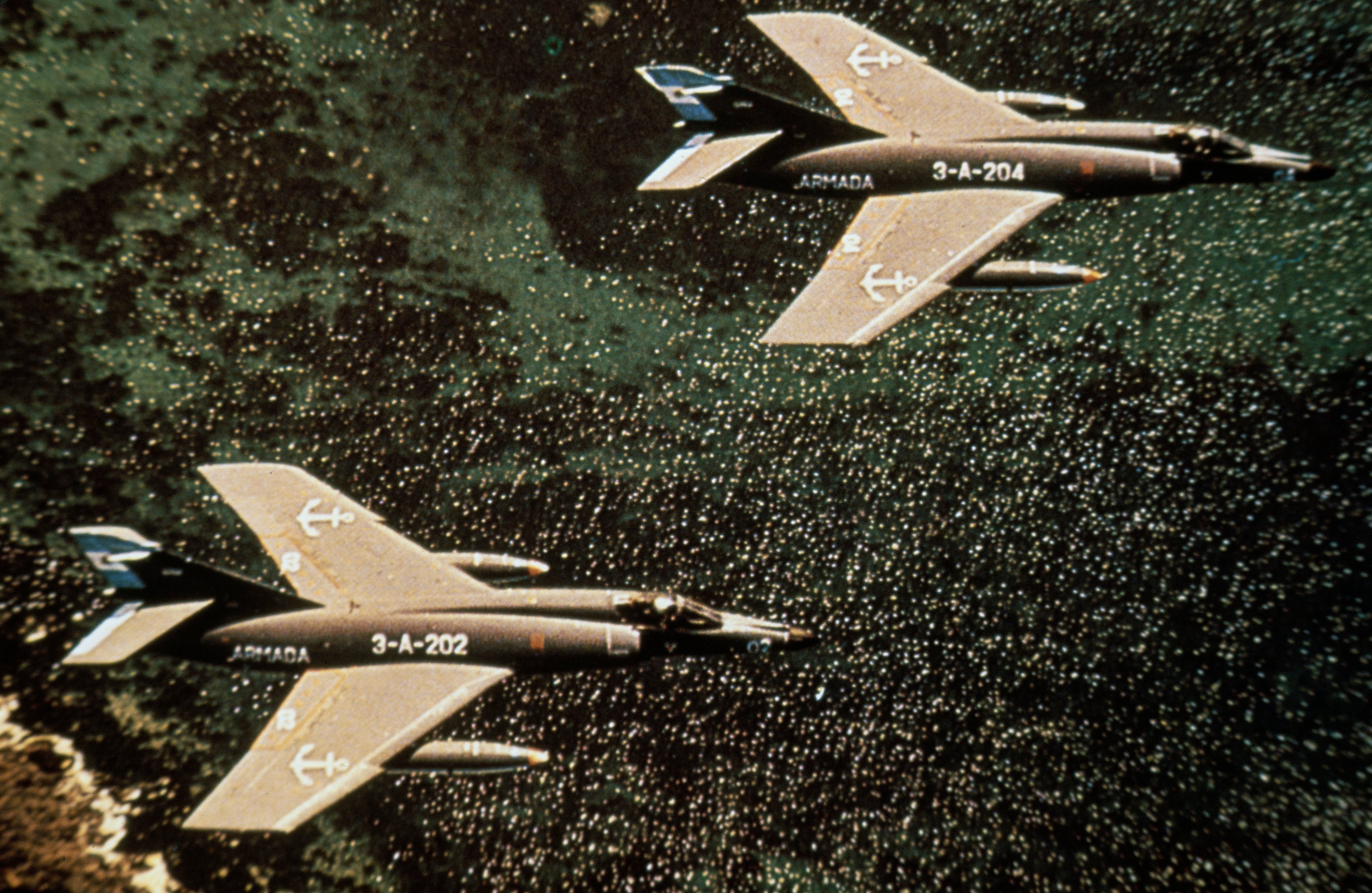
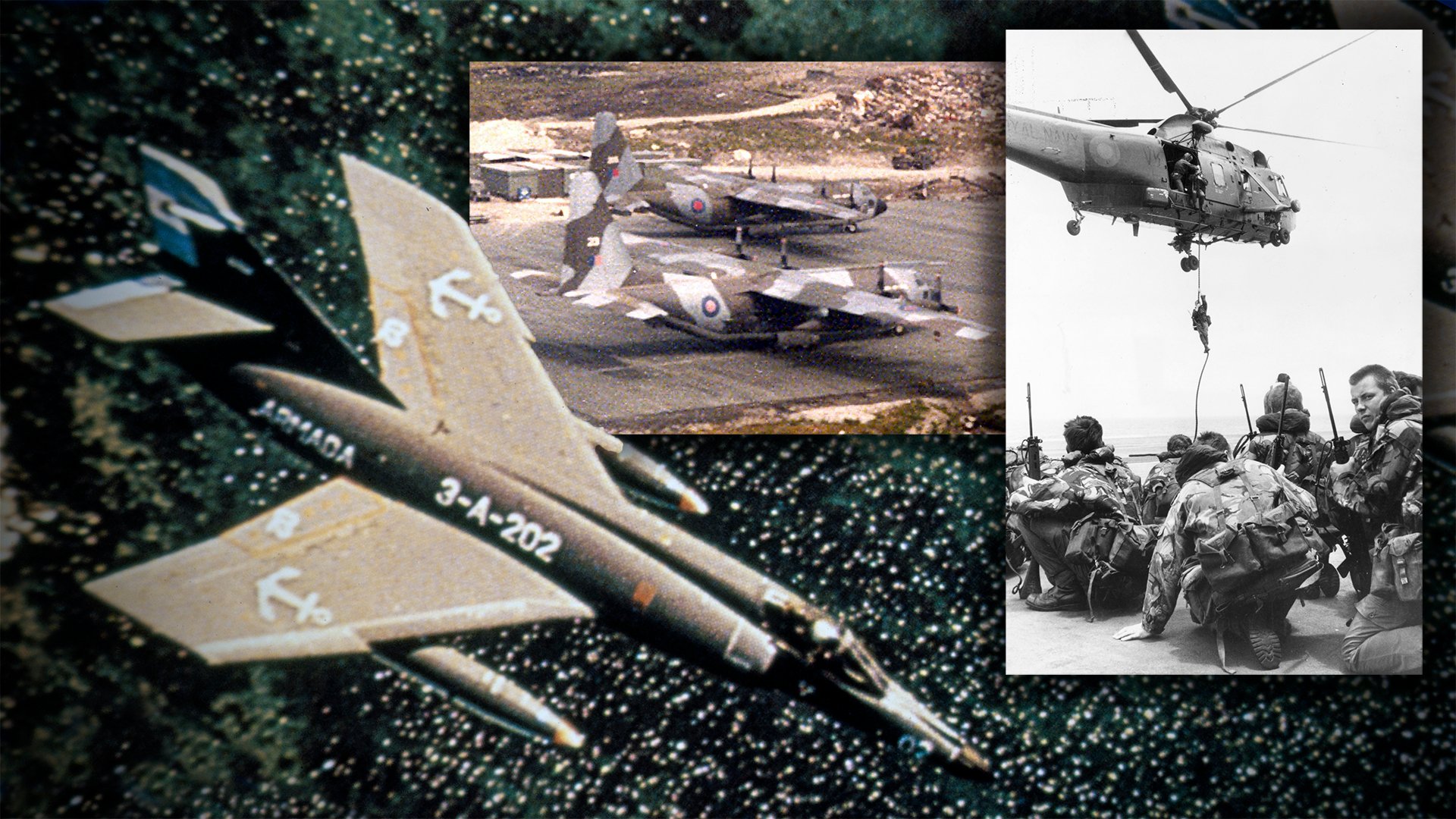
No single Argentine capability shaped British planning during the 1982 South Atlantic conflict more than the pairing of the Dassault Super Étendard strike fighter and its deadly AM39 Exocet anti-ship missile. Against that threat, the British launched a series of special forces operations, all with the same objective: kill the Argentine pilots and destroy their aircraft and missiles before they could be used again. Together, the strike fighter and missile pairing had proven to be the biggest threat to the Royal Navy task force that had been sent to recapture the islands.
Two Super Étendards of the Argentine Navy in flight around the time of the Falklands War in 1982. Photo by UPI/Bettmann Archive/Getty Images
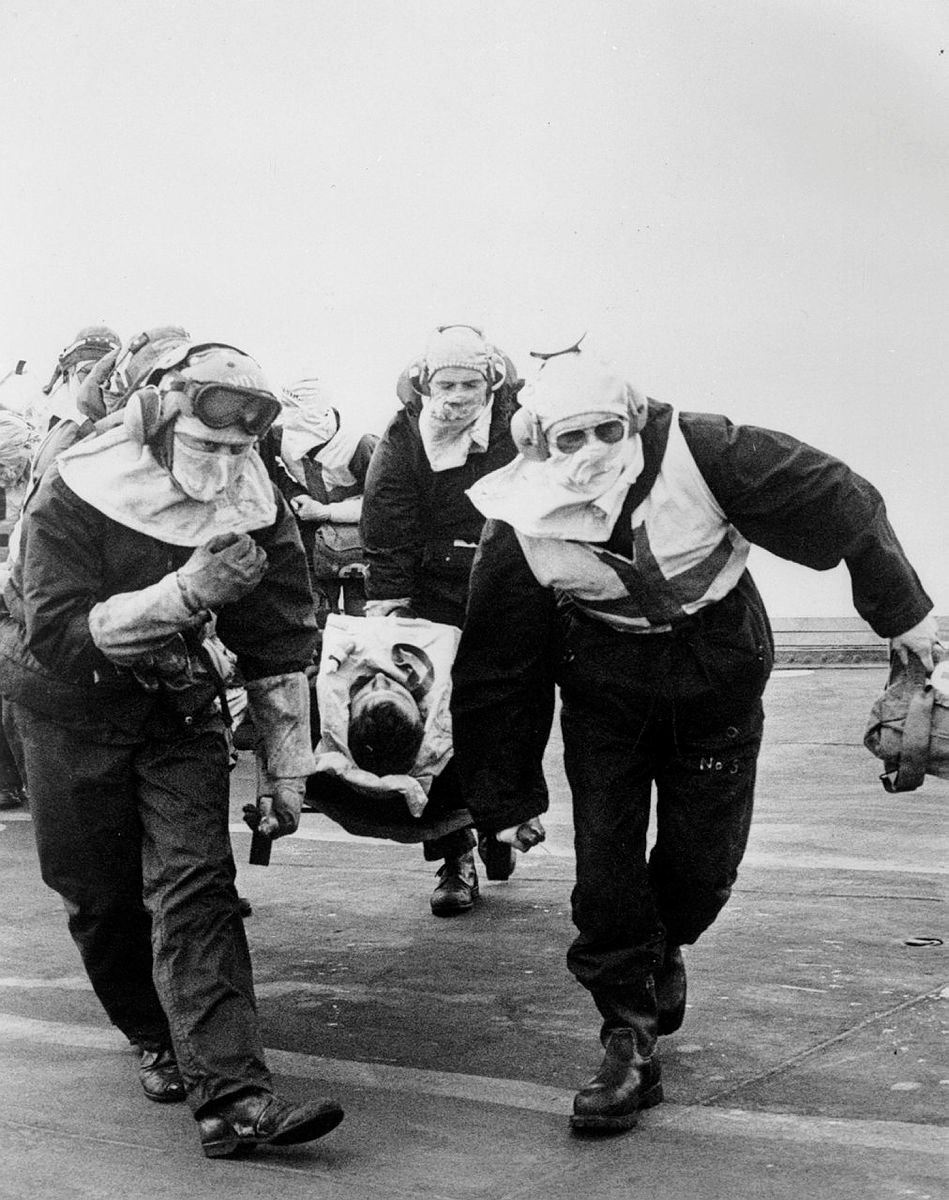
Five Super Étendard aircraft and five AM39 Exocet missiles had been delivered to Argentina before a French embargo took hold. The jets were flown by the Argentine Navy’s 2nd Naval Fighter and Attack Squadron out of Río Grande, on Tierra del Fuego, a region at South America’s southernmost tip, shared by Chile and Argentina. The Super Étendard/Exocet combination had already cost the British the destroyer HMS Sheffield on May 4 and the container ship Atlantic Conveyor on May 25.
A casualty from HMS Sheffield being rushed to the sick bay on board the aircraft carrier HMS Hermes. Crown Copyright
The special forces operations were broken down into four phases — named PLUM DUFF, MIKADO, KETTLEDRUM, and IMPI — the last of which is the least well-documented, and the focus of this article.
PLUM DUFF was the insertion phase and was a reconnaissance mission. On May 16, an RAF Hercules airdropped eight special forces troops onto RFA Fort Austin to form a recce party. On the night of May 17/18, a Sea King HC4, ZA290, lifted off from the aircraft carrier HMS Invincible for a one-way flight to Tierra del Fuego, where the men were to observe Río Grande and report back. The patrol was set down far from the objective and never completed the reconnaissance; the helicopter crew flew on into Chile, where the aircraft was deliberately burnt to try and hide the evidence, while they tried to evade capture.
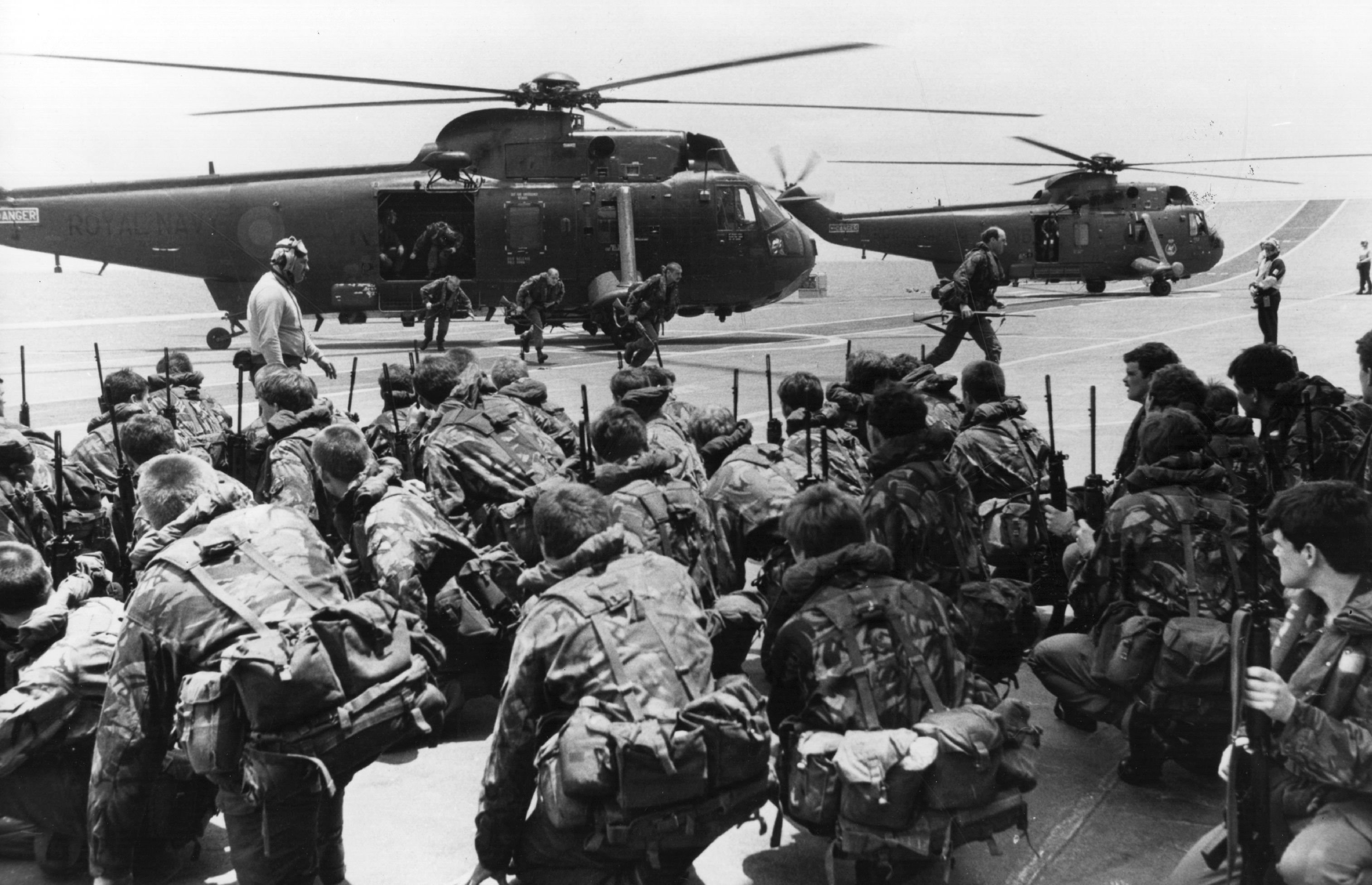
Commandos being lifted from the decks of HMS Hermes and HMS Invincible to be transferred by Sea King helicopters to other ships while the two aircraft carriers forge ahead to the Falkland Islands from Ascension Island, leaving the marines ready to move at short notice. Photo by Fox Photos/Getty Images
MIKADO was the planned attack phase, and it depended on that missing intelligence. Two Hercules were to air-land up to 70 men of B Squadron, 22 Special Air Service (SAS), directly on Río Grande — the air operation order of May 19 also named Río Gallegos, further up the Argentine coast, as an alternative. The men would destroy the Super Étendards and their Exocets on the ground, kill the pilots, and then withdraw overland into Chile. Commander Task Force 317, at Northwood, accepted from the outset that the mission could well cost both Hercules.
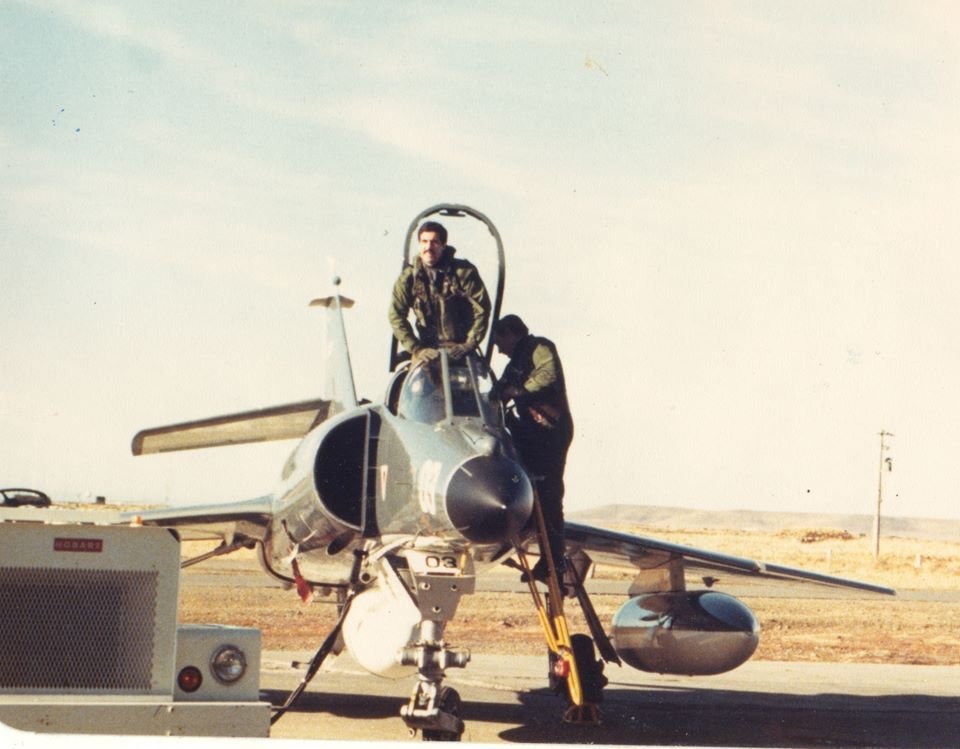
Lieutenant Juan José “Tierno” Rodríguez Mariani in Super Étendard 3-A-203, preparing to take off from Río Grande on May 23, 1982; note the ground power unit still connected. Armada Argentina
The aircrew did not refuse the task, but they were blunt about what it demanded: formation landing by two heavy transports on a possibly heavily defended, icy military runway, with a probable 20-knot tailwind, at night and on passive night-vision goggles in minimum light levels, with intelligence that was inadequate to support any air-land option at all. The RAF planning team recommended an airdrop as the better way to maintain a covert posture, and the Senior Air Staff Officer at Headquarters 38 Group warned the Air Commander to watch for overambitious schemes coming out of the SAS.
The U.K. Ministry of Defense formally cancelled MIKADO on June 4.
KETTLEDRUM was planned as the third of the set. It was aimed at Puerto Deseado, Santa Cruz Province of Argentina, and would have inserted a Special Boat Service party (SBS, the Royal Marines’ special forces unit) from the submarine HMS Onyx — a boat that will reappear before the end of this story.
None of the three was executed as planned.
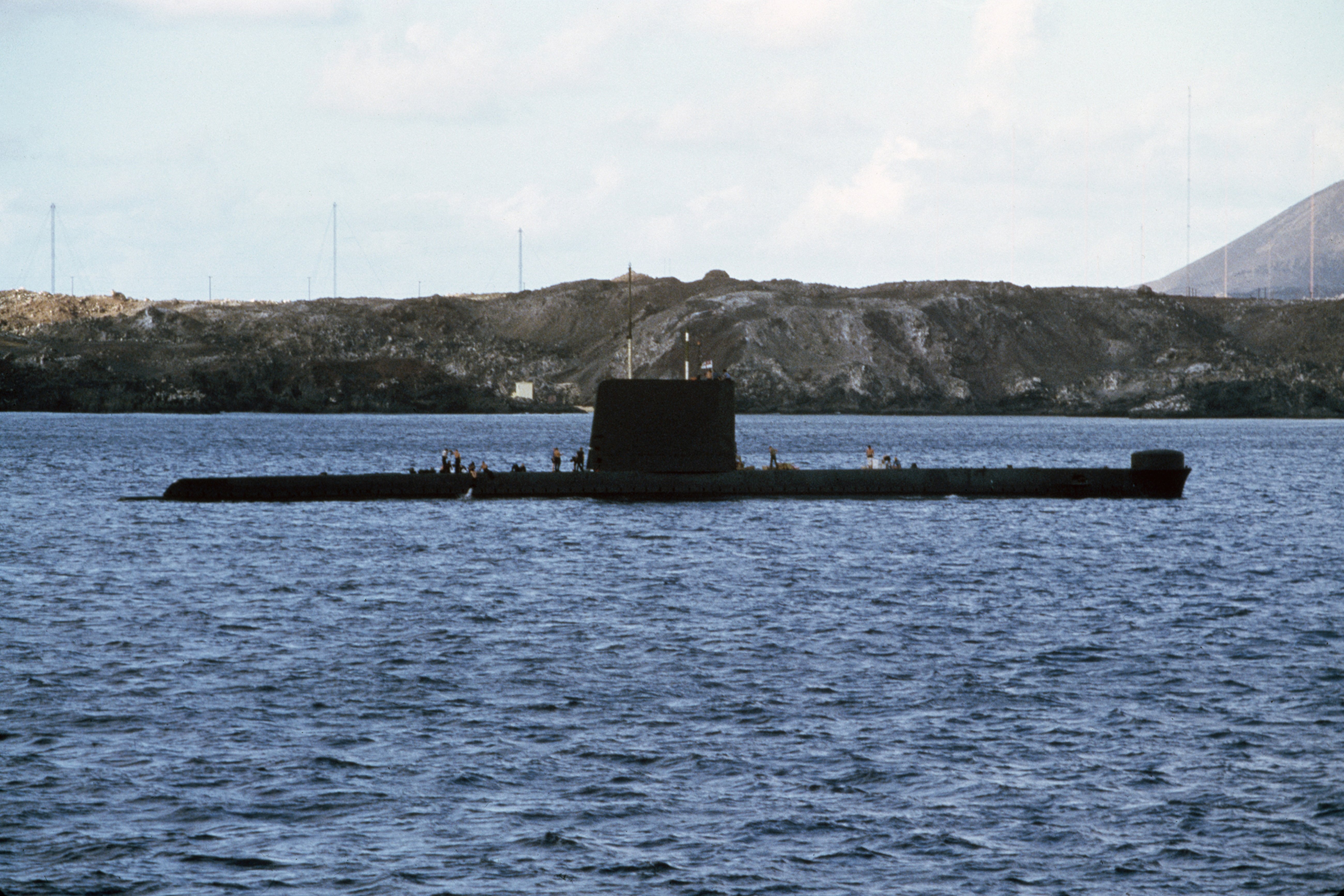
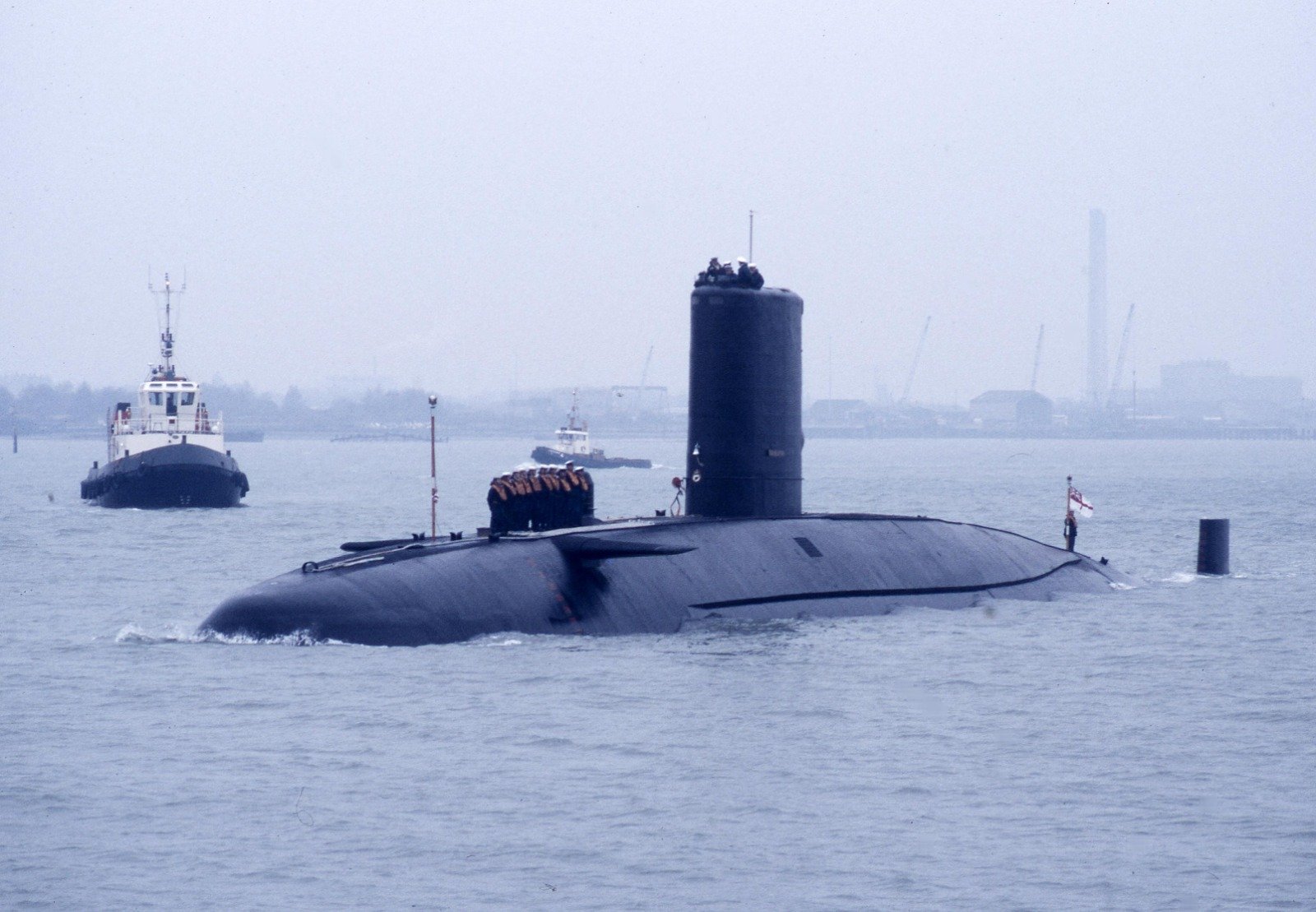
The Oberon class submarine HMS Onyx on the surface off Ascension Island. HMS Onyx was the only diesel-electric British submarine to serve in the conflict, and its ability to operate silently close inshore enabled it to play an important role. At Ascension Island, Onyx boarded SAS and SBS special forces personnel and supported them during a series of operations. Imperial War Museums via Getty Images
Less well-known is that the cancellation of MIKADO produced a fourth project: Operation IMPI, named after a Zulu fighting force.
Cancelling MIKADO did not mean the wider operation was over. Also on June 4, the U.K. Ministry of Defense tasked CTF 317 to produce a new plan for special forces to destroy the combat effectiveness of the Super Étendards.
CTF 317’s staff went to work on what became IMPI. The planning document, Ops 1/3, is dated June 14 — the day of the Argentine surrender in the islands. In broad terms, the objective was to be attacked by special forces arriving both by air and by sea.
That much has been known, in fragments.
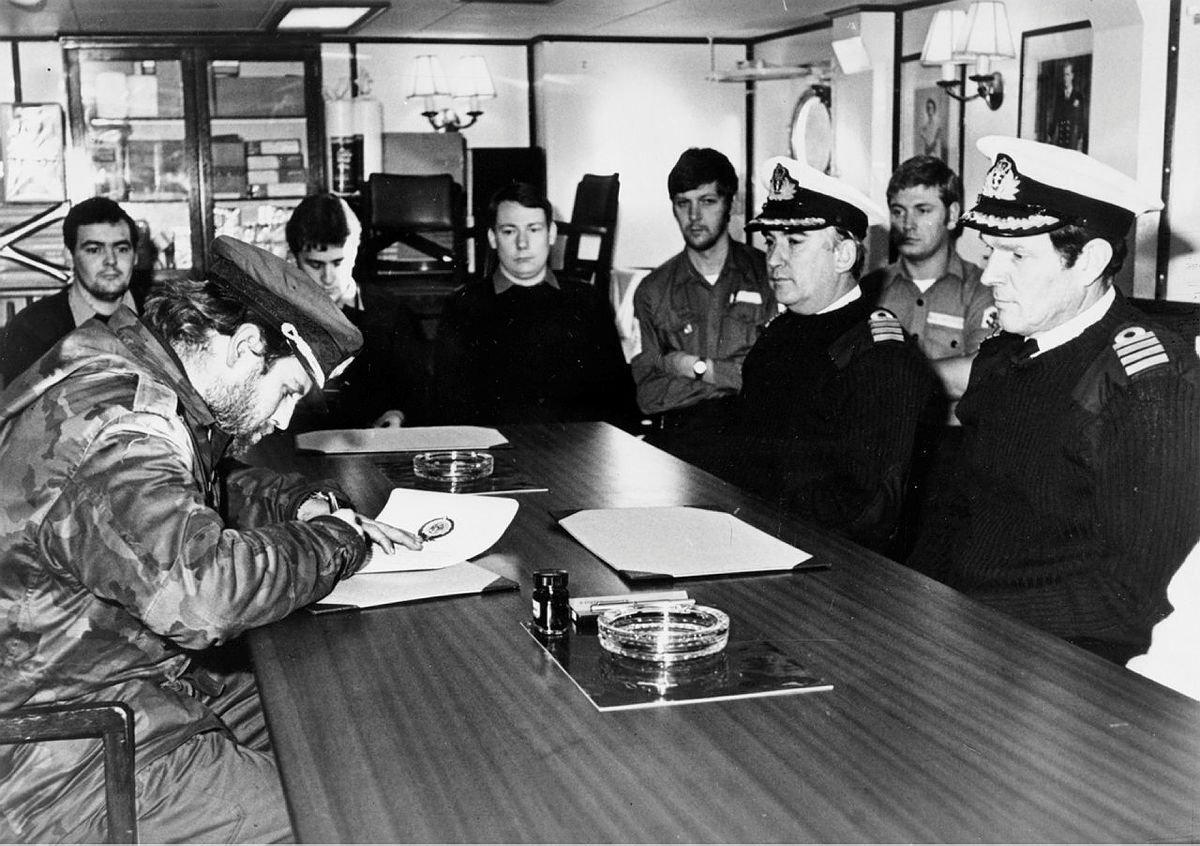
Teniente de Naviro (Lieutenant Commander) Alfredo Astiz signing the Instrument of Surrender on behalf of his Argentine forces at Leith, on the island of South Georgia, on board HMS Plymouth. Crown Copyright
What has not been published until now is the fact that the operation had already been resourced.
At 2240Z on June 12, Maj. Gen. Jeremy Moore, commanding the land forces as CTG 317.1, signalled Rear Admiral Sandy Woodward’s battle group (CTG 317.8), with Admiral Sir John Fieldhouse at Northwood (CTF 317) and Commodore Michael Clapp’s amphibious group (CTG 317.0) as information addressees. The message called for B Squadron, 22 SAS, to be made available for operations as soon as possible: cover was needed against rapid developments of an unfavorable nature in West Falkland (Gran Malvina), and the theatre’s existing special forces assets were fully absorbed supporting the battle for Stanley — and IMPI. Operation IMPI, Moore noted in passing, was by then self-sufficient.
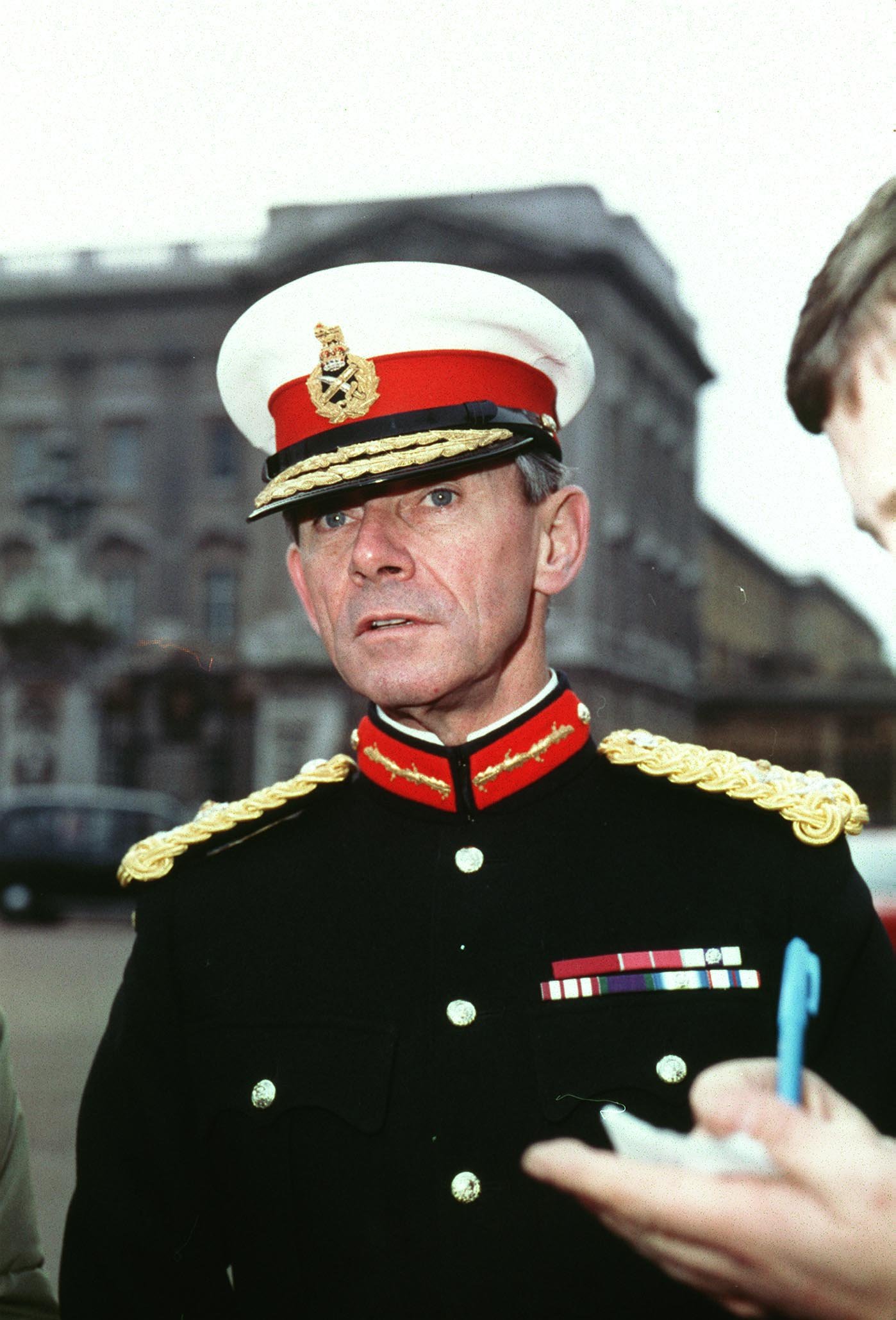
Maj. Gen. Sir Jeremy Moore Mc, Commander, Land Forces Falkland Islands Conflict. Photo by Avalon/Getty Images
Examining two lines of routine signal traffic settles several things at once. Forty-eight hours before the surrender, IMPI was not a staff study but an operation that had been resourced, and that was enough to consume the theatre’s special forces and justify calling a fresh SAS squadron forward. It is also the only contemporary, operational-level reference to IMPI released so far: everything else comes from a narrative written years afterwards.
As that later narrative describes it, the concept behind IMPI was much leaner than MIKADO. Against two Hercules and 70 men, the air element of IMPI rested on a single RAF Hercules.
Overflying Stanley Airfield in November 1983, with two RAF Hercules aircraft present. Getty Images
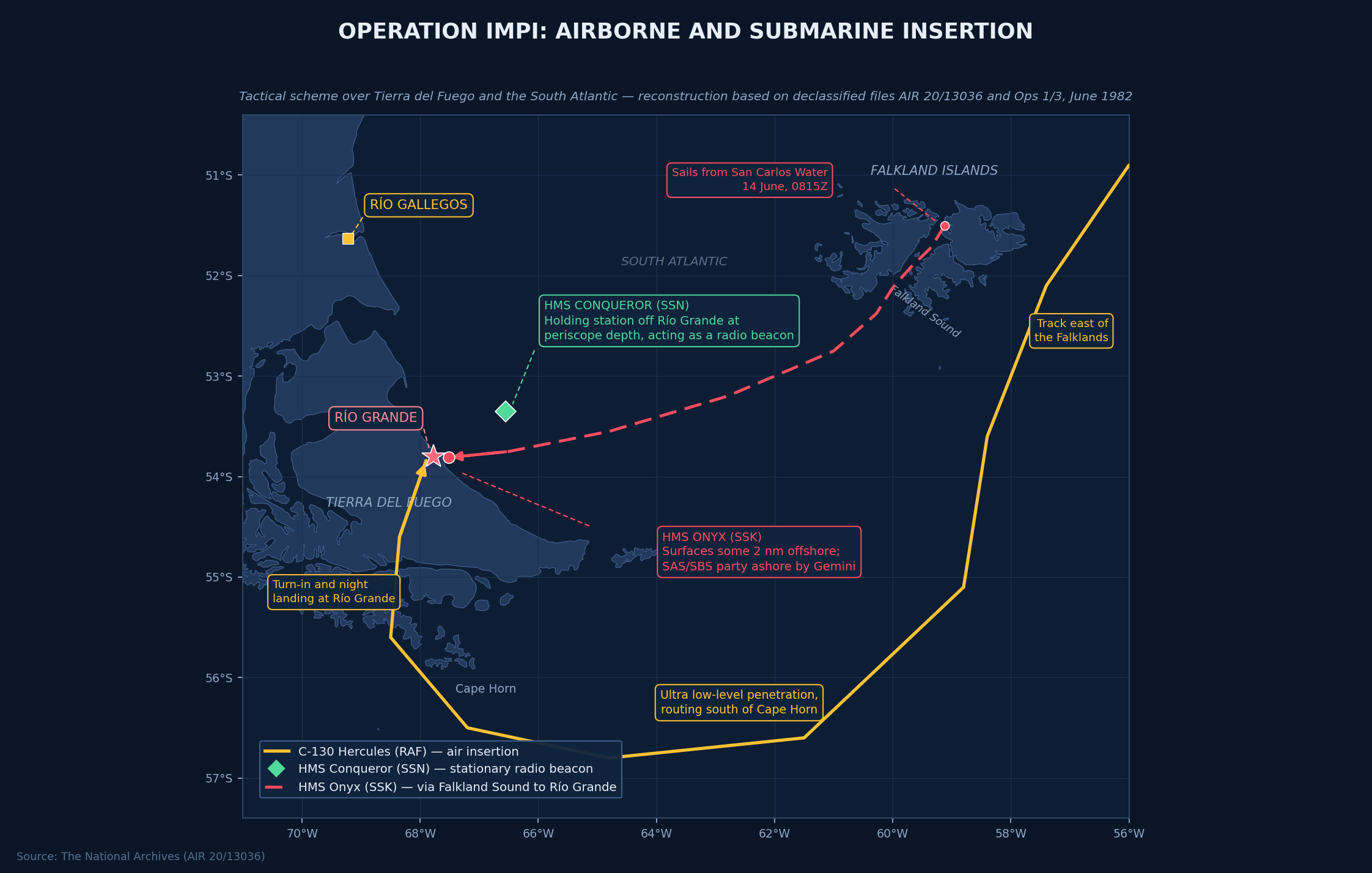
The aircraft was to fly from Ascension Island, refuel in flight, and then track east of the Falkland Islands and south of Cape Horn before making a low-level approach below Argentine radar cover for a night landing of special forces at the airfields codenamed San Jose and Arco Iris. Other special forces would have been inserted by sea. That air element, as will be seen, is the most questionable part of the entire file.
The routing is worth attention, because it rules out the intuitive picture of a direct run south from Ascension. Instead, the aircraft would have entered from the least-covered and least-expected direction, coming around the bottom of the continent rather than from the northeast.
A schematic map of the planned Operation IMPI. via author
The precise identities of San Jose and Arco Iris are not established in the declassified record.
The most likely reading is that they stand for Río Grande and Río Gallegos — the airfields at which the planned navigation ended, and the two named in MIKADO’s air operation order a month earlier. For a document circulating through restricted channels, encrypting the names of the two targets was an elementary precaution, although it should be noted that an operational order would more commonly have designated them simply as Target One and Target Two.
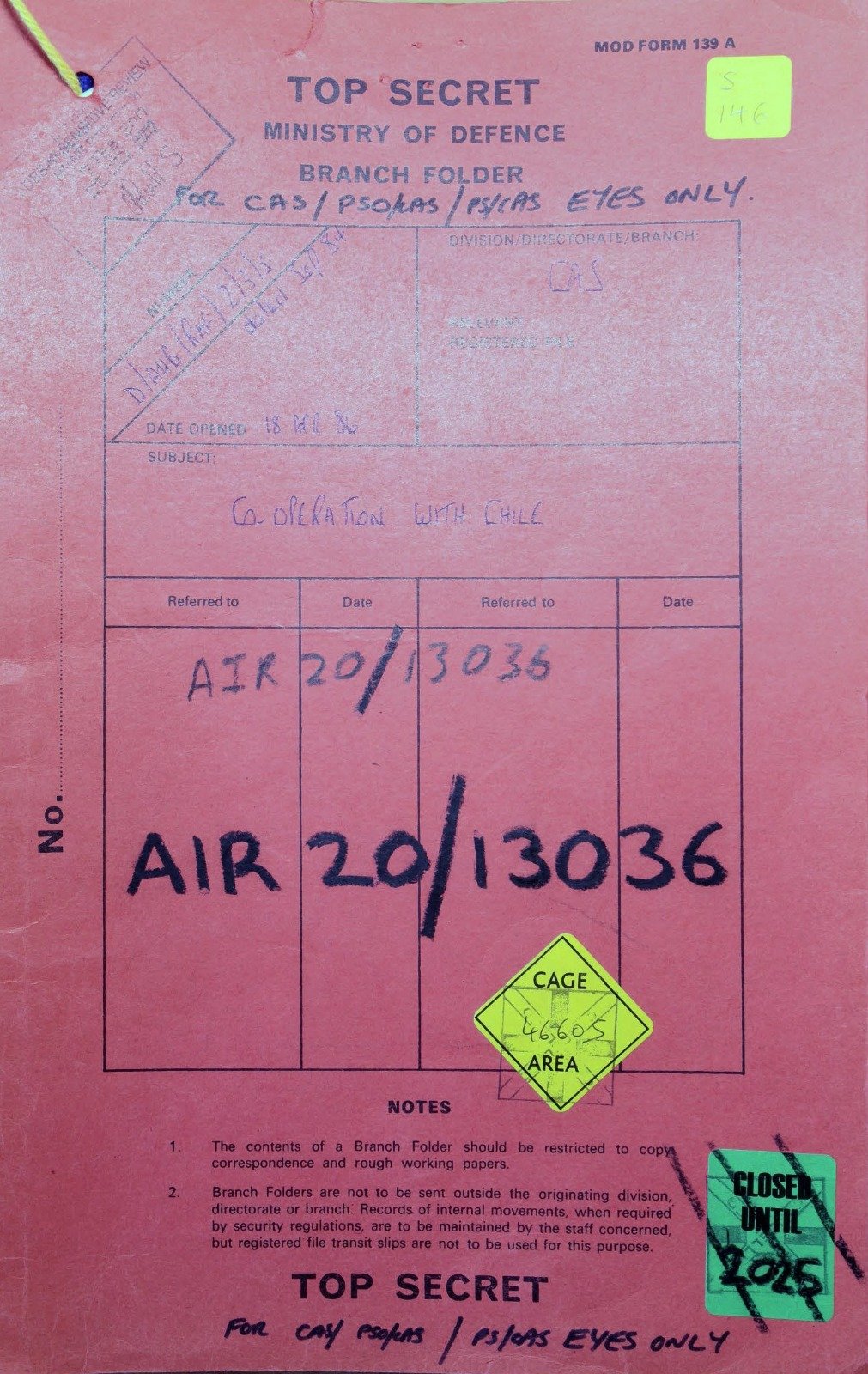
None of this rules out Chilean participation in other phases of the operation; if anything, it suggests it’s more likely. The narrative survives inside a folder classified Top Secret and restricted to the Chief of the Air Staff, whose declared subject is cooperation with Chile. That setting contrasts with the earlier stage of the planning, when mounting and recovering a special forces insertion from a Chilean airfield was considered and expressly discounted on political grounds — much as the use of an Antarctic strip was discounted after the New Zealand High Commission advised that the Antarctic winter precluded safe trans-polar flight.
The maritime half of IMPI can be traced in the records of those who were there.
Navigational support for the final phase was to come from the nuclear attack submarine HMS Conqueror. On June 9, 1982, Conqueror was off Bahía Camarones, working as an advanced picket and hunting targets of opportunity that ventured outside the 12-nautical-mile limit of Argentine territorial waters, with authority to sink any civilian vessel judged to be running to the Falklands/Malvinas; that same morning the sub had in fact entered Argentine territorial waters trying to locate the Argentine Navy’s Task Group 79.2.
Nuclear attack submarine HMS Conqueror returning to port. via author
That day, Conqueror received preparatory information on IMPI. The sub’s task was to come to periscope depth and act as a radio beacon, giving the Hercules a radio reference against which to refine a navigation that, low and at night, allowed no error. The resulting picture is an odd one: a nuclear submarine deployed on interdiction off the Patagonian coast, turned into a navigation aid for a transport aircraft.
The insertion itself fell to HMS Onyx, the Oberon class diesel-electric boat that had already taken part in Operation KETTLEDRUM and the only conventional submarine Britain deployed to the South Atlantic. On June 14, at 0815Z, lying in San Carlos Water, Onyx embarked a party of 10 men from B Squadron, 22 SAS and the SBS for the mission. The timing matches Moore’s signal of two days earlier almost exactly.
The plan called for the submarine to surface some two nautical miles offshore at night. The troops would close the beach in Gemini inflatables and destroy the objective — aircraft and missiles, if any were there — using anti-tank weapons and demolition charges.
What happened next illustrates the inertia of military machinery. The Argentine surrender in the islands came on that same June 14, hours after the party had gone aboard Onyx. Even so, preparations did not stop at once: on June 15 the embarked troops carried out practice landings from a Gemini. That does not mean IMPI was ever executed — it was not — but it does show that with the strategic outcome already settled, the machine was still rehearsing.
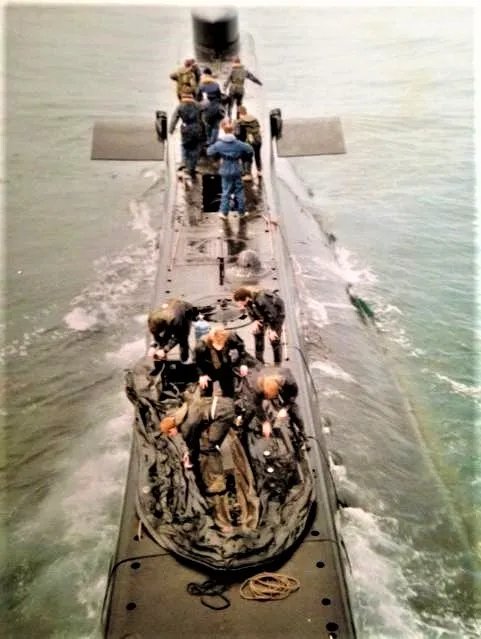
HMS Onyx operating with special forces. via author
The British record closes the matter with administrative dryness: the surrender of the Argentine forces in the Falkland Islands and the cessation of hostile activity by Argentine aircraft resulted in the operation being cancelled.
The air part of the mission is another matter entirely and is where IMPI becomes more uncertain.
The only link between IMPI and an aircraft is a single paragraph in an RAF historical narrative. The folder that holds it was opened on April 18, 1986 — four years after the war — as an eyes-only briefing file for the Chief of the Air Staff, and the pages appear to be a working draft rather than a finished submission, carrying pencil amendments throughout.
Had a Hercules been earmarked, there is no doubt which unit would have provided it. The Special Forces Flight that runs through the whole chapter — five crews, commanded by a squadron leader, exercising regularly with SAS and SBS Sections — appears with its squadron number blanked out, yet the number surfaces a few paragraphs later, where two of its crews are described training on the probe-fitted Hercules C1P. The unit was No. 47 Squadron, RAF, home-based at Lyneham, and it would keep the special forces air support role for decades afterward.
The men who were at Ascension with that detachment, however, say they had nothing to do with it. Reliable sources with direct knowledge of the flight’s activity state that they never saw the codeword at the time, had never heard of the operation until this file surfaced, and consider it inconceivable that a special forces Hercules and crew could have been earmarked for a mission of this kind without the flight — a community of five crews that has stayed in touch ever since — learning of it at some point in the intervening four decades. By June 14, at most one aerial-refueling-qualified special forces crew was at Wideawake.
That skepticism is reinforced by the way the same narrative handles events those crews lived through. Its account of their own work-up does not survive contact with their logbooks.
For example, a practice infiltration into RAF Laarbruch in Germany that the narrative describes as successful had in fact been detected; the Hercules was notionally shot down about two miles out on the approach. The ramp toes (attachable extension plates located at the very end of the rear cargo ramp) it describes as droppable at 20 to 30 knots were never meant to be lowered with the aircraft moving, which would have been unsafe and risked the airframe. There are other anomalies, too.
West Falklands seen from the ramp of an RAF Hercules. Donald Morrison/Getty Images
A document that misstates the squadron’s own exercises is thin evidence on which to place that squadron over Tierra del Fuego.
What is not in question is what the Special Forces Flight could have done, had it been asked.
By mid-May the flight had two crews qualified in air-to-air refueling — one deployed to Ascension, the other held in the United Kingdom to train the others — flying Hercules C1s fitted with probes and, where the task required it, additional fuel tanks in the fuselage. It had rehearsed stream landings and rapid offloads, parachute insertion below radar cover to a pinpoint coastal feature, as well as flying on ANVIS goggles at 250 feet over sea and land. The goggles themselves were fitted to the crews’ helmets by RAE Farnborough specialists in a single day in mid-April. The reach was demonstrated on May 16, when the sortie that dropped the PLUM DUFF party stayed airborne for 24 hours and five minutes, with Victor tankers refueling some 1,800 miles from Ascension. Almost none of it was routine: nearly everything the force did during the conflict was improvised, at speed, in a matter of weeks.
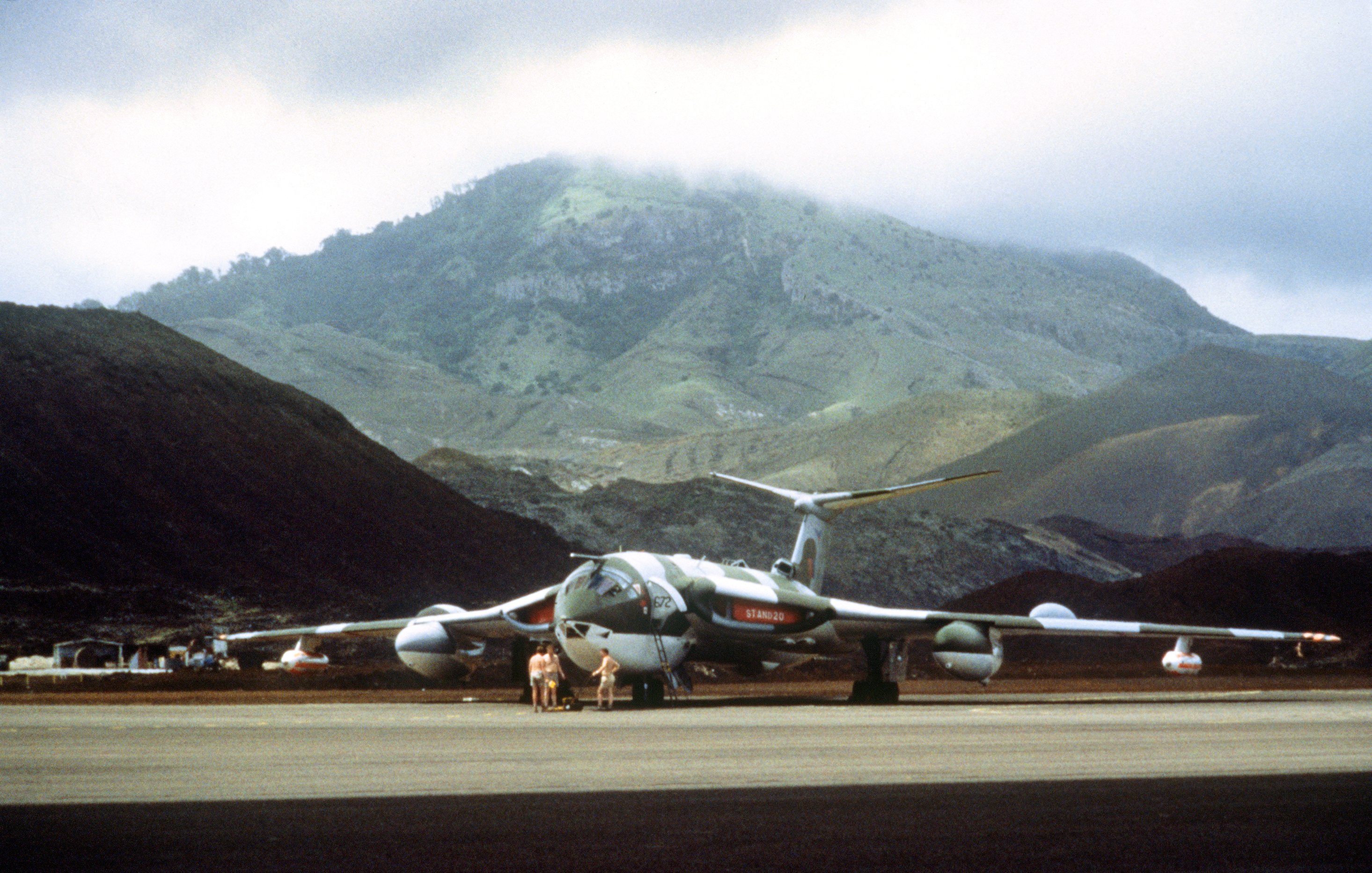
A picture taken on May 24, 1982, at Wideawake Airfield on Ascension Island, showing an RAF Victor tanker prepared for air-to-air refuelling tasks. Photo by AFP
What never had an answer — not for MIKADO, and not for whatever IMPI intended — was the other end of the problem. Putting men ashore deep inside Argentine territory was the solvable half. Getting an aircraft and its passengers out again after a direct action, from a strip in range of the Argentine Air Force, was not.
All of the above is reconstructed from lateral references: the RAF’s narrative in file AIR 20/13036 at the National Archives, unit records, submarine logs, operational signal traffic, and the accounts of participants.
The specific file — the one holding the complete plan with its annexes, the identification of the airfields and the execution sequence — remains closed. It is DEFE 71/980, titled Operation Corporate (Falklands Conflict): Operation IMPI, retained at the National Archives at Kew with no announced opening date. Until it is released, the air element of IMPI cannot be settled either way.
Forty-four years after the conflict, the last British special operation of the war is still, in essence, a document the British state is not prepared to show. That is not a trivial detail: the files touching on cooperation with Chile have consistently been the most reluctantly opened of all.
The folder holding the outline plan for Operation IMPI. National Archives
What remains is an operation of two halves. One of them is solid: a resourced plan, declared self-sufficient on June 12, with a nuclear submarine briefed to act as a beacon, 10 men of the SAS and the SBS embarked in a conventional submarine in San Carlos on the morning of the surrender, and rehearsals continuing the following day. The other half — a lone Hercules coming round Cape Horn to land on a codenamed strip — rests on one paragraph of a flawed staff narrative and is rejected by the only men who could have flown it.
Either way, the obsession is the same.
Between June 4 and June 14, 1982, while the final battle for Port Stanley/Puerto Argentino was being fought and the Argentine land campaign was collapsing, part of the British planning effort was still revolving around five French-built aircraft, their 10 aircrew, and their missiles. That the plan carries the date of the surrender itself, that it was still being rehearsed the following day, and that it remains classified today says a good deal about how far the British were prepared to go to destroy the Super Étendards and their Exocets.
Contact the editor: thomas@thewarzone.com
Mariano Sciaroni holds a master’s degree in Strategy and Geopolitics as well as a postgraduate diploma in Contemporary Military History, both earned at the Argentine Army’s Military Academy. Sciaroni has published five books and numerous articles on military and naval history. He is also an active member of the Argentine Institute of Military History and serves as a sub-lieutenant in the Argentine Army Reserve (Army Aviation Reserve Squadron). You can find out more about his books here.
Defining what we consider "coolest" is hard. We evaluated every state on its own terms and found that the architecture across all 50 states and Washington, DC, can be as diverse as the country's population.
In states like California and Massachusetts, picking the most striking building meant finding ones that look futuristic and elegant, like something out of a science-fiction movie. In other states, like Maine and the Carolinas, we found that the coolest buildings are distinctive because of their place in history or their states' cultures.
Whether you're looking for a piece of history or a glimpse into the future, these buildings can show you what different worlds look like.
James Grebey and Jacob Shamsian contributed to an earlier version of this story.
ALABAMA: Gulf, Mobile, and Ohio Passenger Terminal
George Dodd/Getty Images
The Gulf, Mobile, and Ohio Passenger Terminal in Mobile, Alabama, which has Spanish influences with its cream walls and red clay tiles, was designed by P. Thornton Marye. It was completed in 1907 and has undergone restoration since passenger train service ceased in the 1950s.
ALASKA: The University of Alaska's Museum of the North
pabradyphoto/Getty Images
The University of Alaska Museum of the North is home to numerous exhibits showcasing the native cultures, natural wonders, and wildlife of our nation's largest state. It's also a stylish refuge from the cold.
ARIZONA: Chapel of the Holy Cross
The Chapel of the Holy Cross sits on a hillside.
ANNA WILCZYNSKA/Getty Images/iStockphoto
The Chapel of the Holy Cross in Sedona was completed in 1956, and it juts majestically from a red stone butte, some 200 feet above the ground.
ARKANSAS: Thorncrown Chapel
BanyanRanchStudios/Getty Images/iStockphoto
The beautiful Thorncrown Chapel in Eureka Springs looks like an open-air structure, but it's actually a serene, glass-enclosed architectural marvel.
CALIFORNIA: The Chemosphere
FG/Bauer-Griffin/GC Images
It was designed in 1960, but the Chemosphere still looks futuristic. It's a house with 2,200 square feet of space, perched atop a 30-foot concrete pole. And it's survived every major Californian earthquake in the San Fernando Valley since it was built.
COLORADO: Cliff Palace in Mesa Verde National Park
Gert Hilbink/Getty Images/iStockphoto
Mesa Verde National Park, a UNESCO World Heritage Site, features some of the best-preserved prehistoric landscapes of the Ancestral Puebloan people. These ancient dwellings, where the Ancestral Puebloans once lived, were constructed on the sides of natural cliffs.
While most dwellings had only one to five rooms, the Cliff Palace, the largest known cliff dwelling in North America, had 150 rooms, 23 sacred meeting spaces, and housed about 100 people, according to the National Park Service.
CONNECTICUT: Grace Farms
SBWorldphotography/Getty Images
The main feature of Grace Farms in New Canaan is a serpentine wooden pavilion that links glass-walled rooms, including a library, stage, tea room, and a gym with a full basketball court. Completed in 2015, it's open to the public for free.
DELAWARE: Wilmington's Grand Opera House
JHVEPhoto/Getty Images
The country's oldest state has some classic buildings that stand the test of time. Wilmington's Grand Opera House, built in 1871, is as classic as it gets.
FLORIDA: The Salvador Dalí Museum
Sean Pavone/Getty Images
The Salvador Dalí Museum in St. Petersburg is a fittingly unique tribute to the beloved master of surrealism. The museum boasts the largest collection of Dalí's work outside Europe.
GEORGIA: The Earth Lodge on Ocmulgee Mounds National Historical Park
Jeffrey M. Frank/Shutterstock
This might not look much like other buildings in this list, but the Ocmulgee Mounds National Park's Earth Lodge dates back to the year 1015, per the National Park Service.
The lodge is a reconstructed council chamber of the native Mississippian culture. While the walls and ceiling were reconstructed in the late 1930s, the clay floor remains the same as the original, dating back over a thousand years.
HAWAII: ʻIolani Palace
DaSza64/Getty Images/iStockphoto
ʻIolani Palace in Honolulu is the only royal palace on United States soil. David Kalākaua, the last reigning king of Hawaiʻi and the first monarch to travel around the world, was inspired by the European palaces he saw during his 1881 voyage.
IDAHO: The Dog Bark Park Inn
Martyn Skorkin/Shutterstock
The Dog Bark Park Inn in Cottonwood is a delightful piece of American kitsch. The bed and breakfast is shaped like two charming beagles.
ILLINOIS: Bahá'í House of Worship
Bahá'í House of Worship in Illinois
SpVVK/Getty Images/iStockphoto
Although there are between 5 and 6 million adherents to the Bahá'í Faith, there are only eight continental houses of worship worldwide. The one in Wilmette, Illinois, is the oldest still standing, and the only one in the United States.
INDIANA: West Baden Springs Hotel
IN Dancing Light/Shutterstock
When the West Baden Springs Hotel opened in 1902, it was billed as the Eighth Wonder of the World. While enjoying the view from inside the massive domed atrium — at one point the largest in the world — it's easy to see why.
IOWA: Grotto of the Redemption
The Grotto of the Redemption is the size of a football field.
Hotaik Sung/Getty Images/iStockphoto
Father Paul Dobberstein promised to build a shrine to the Virgin Mary as she helped cure his grave case of pneumonia. His resulting Grotto of the Redemption in West Bend is made of rocks, shells, fossils, and gems pressed into concrete. It's the size of a football field.
KANSAS: Big Well in Greensburg
Mark Reinstein/Corbis via Getty Images
The Big Well in Greensburg is a museum that rests atop its titular main attraction: the largest hand-dug well in the world, spanning 32 feet in diameter and reaching a depth of 109 feet.
KENTUCKY: Churchill Downs
CharlesEberson/Getty Images
Churchill Downs, most famously the host of the Kentucky Derby, can hold 120,000 excited, sometimes rowdy, racing fans at max capacity.
LOUISIANA: The Pontalba Buildings
The Pontalba Buildings are emblematic of the French Quarter in New Orleans.
Photo Italia LLC/Getty Images
The Pontalba Buildings, which make up two sides of New Orleans' Jackson Square, are emblematic of the French Quarter. Some of the residences on the upper floors are believed to be the oldest continuously rented apartments in the country.
MAINE: The Portland Head Light
SeanPavonePhoto/Getty Images/iStockphoto
The Portland Head Light — one of the state's many lighthouses — has been around since 1791. It was built under the directive of George Washington himself.
MARYLAND: The American Visionary Art Museum
American Visionary Art Museum in Baltimore, Maryland.
Amy Sparwasser/Getty Images
The American Visionary Art Museum in Baltimore showcases outsider art. All the works within its wonky exterior were made by inspired, self-taught creators.
MASSACHUSETTS: Simmons Hall at MIT
Simmons Hall at MIT is one of the coolest-looking dorm buildings in the US.
Enzo Figueres/Getty Images
Simmons Hall at MIT is the coolest dorm building in the US. It looks like a monstrous Tetris piece combined with underground caverns.
MICHIGAN: Charles H. Wright Museum of African American History
Aaron J. Thornton/Getty Images for Elley Orem
The museum, one of the oldest and largest dedicated to African American history, is a three-story building designed with influences of African and local Detroit architecture. The building features a stunning 55-foot-tall glass dome ceiling.
MINNESOTA: The Marjorie McNeely Conservatory
Cynthia Shirk/Getty Images
The Marjorie McNeely Conservatory at Saint Paul's Como Park was opened to the public in 1915 and features Japanese, Bonsai, and butterfly gardens, among others.
MISSISSIPPI: Gehry's Pods at the Ohr-O'Keefe Museum of Art
Carmen K Sisson/Getty Images
Designed by Frank Gehry — whose striking work also includes the Louis Vuitton Foundation in Paris, the Walt Disney Concert Hall in Los Angeles, and the Guggenheim Museum Bilbao in Spain — the curved metal pods, which house pottery at Biloxi's Ohr-O'Keefe Museum of Art, are meant to look as if they were "dancing with the trees," per the museum's website.
MISSOURI: The Community Bookshelf
The Community Bookshelf in Kansas City displays giant book spines.
Matthew Fowler/Getty Images
The parking garage at the Kansas City Library is called the Community Bookshelf. It displays the giant spines of 22 classic books that were suggested by Kansas City readers.
MONTANA: Montana State Capitol building
The Montana State Capitol began construction in 1896.
Ultima_Gaina/Getty Images
Construction started on the Montana State Capitol in 1896. The inside of the rotunda salutes four types of people central to the state's early history: a native American, an explorer, a gold miner, and a cowboy.
NEBRASKA: Nebraska State Capitol Building
Faina Gurevich/Getty Images
The Nebraska Capitol in Lincoln is one of the greatest state capitol buildings in the US. Built between 1922 and 1932, the building features artworks representing the development of law and the state of Nebraska.
NEVADA: Ward Charcoal Ovens
The Ward Charcoal Ovens in Ely were built in the 1870s for silver mining.
Scotters/Getty Images/iStockphoto
The Ward Charcoal Ovens in Ely were built in the 1870s for silver mining.
The distinctive beehive-shaped Ward Charcoal Ovens in Ely were built for silver mining back in the 1870s, and they still look like nothing else on the landscape.
NEW HAMPSHIRE: Mount Washington Hotel
travelview/Getty Images
Built in 1902, the Mount Washington Hotel — today operating as the Omni Mount Washington Resort — is one of the last remaining grand hotels in the state, and is rumored to be haunted.
NEW JERSEY: Nassau Hall at Princeton University
GummyBone/Getty Images
Nassau Hall is the oldest building at Princeton University, dating back to the 1750s. While it now houses the school's administrative offices, during the Revolutionary War it was occupied by both British and American forces and suffered damage during the battles.
NEW MEXICO: Taos Pueblo
This October 2012 photo shows adobe dwellings at the Taos Pueblo in Taos, N.M., a UNESCO World Heritage site where the Taos native people have lived for 1,000 years. Tours of the pueblo describe the community’s survival and challenges across the centuries. The picture-perfect dwellings are multi-level, often with ladders to reach upper floors and round ovens outside.
AP Photo/Beth Harpaz
Hundreds of years old, the Taos Pueblo is a multi-story complex built by Native Americans from the region. It looks like one big, molded piece, and it's still used as a residence.
NEW YORK: The Chrysler Building
Wirestock/Getty Images
The Empire State Building gets all the hype, but it's the Chrysler Building that's really the most magnificent skyscraper in New York City. The Art Deco-style building was the tallest in the world when it was built, but it was beaten out by — you guessed it — the Empire State Building just 11 months later.
NORTH CAROLINA: The Executive Mansion
North Carolina's Executive Mansion in Raleigh is the home of the governor.
Dee/Getty Images
North Carolina's Executive Mansion in Raleigh is the home of the governor.
Give it to North Carolina for having its most beautiful building designated as a civil landmark. The state's Executive Mansion in Raleigh is the home of the governor and a high-profile event venue that's open to public tours.
NORTH DAKOTA: The North Dakota Heritage Center
gnagel/Getty Images
At the center of the North Dakota Heritage Center in Bismarck is a great glass cube flanked by two copper-colored wings. It's the home of the state's greatest treasures, including Native American historical artifacts and lots of dinosaur fossils.
OHIO: The Longaberger Company building
CJMGrafx/Getty Images
The Longaberger Company, which makes baskets, made a building in Newark that perfectly matches its brand. The building was closed in 2016, and it has largely sat idle since.
Plans for the property have included a hotel, a coworking space, and, most recently, a mixed-use development, but it still has an unclear path for the future.
OKLAHOMA: First Americans Museum
Kit Leong/Shutterstock
The First Americans Museum's 175,000-square-foot building in Oklahoma pays homage to the state's indigenous populations and their history. The design is inspired by the importance placed on the rising and setting sun by Native populations, with the Remembrance Walls being aligned with the sunrise.
The central half-dome is supported by 10 pillars of various stones, each representing a 10-mile stretch traveled by Native people during forced removal from their original homelands, according to the museum's website.
OREGON: The Portland Building
EQRoy/Shutterstock
In 2009, Travel + Leisure famously called The Portland Building "one of the most hated buildings in America," and its reputation is split among architecture critics. But its shapes, strange geometric clashes of glass and stone, make it the weird building that Portland most deserves.
PENNSYLVANIA: Frank Lloyd Wright's Fallingwater
Gerald Zaffuts/Getty Images
Frank Lloyd Wright's 1935 masterpiece Fallingwater remains Pennsylvania's greatest work of architecture. Water falls from each level of the building into the one below, perfectly integrating with the landscape.
RHODE ISLAND: The Breakers
AlexandreFagundes/Getty Images
Built as a summer residence for Cornelius Vanderbilt II, The Breakers mansion in Newport has 70 rooms across 138,300 square feet, making itone of the largest houses in the US and an icon of Gilded Age architecture.
SOUTH CAROLINA: The International African American Museum
Sean Rayford/Getty Images
In South Carolina, the International African American Museum stands on top of 18 13-foot pillars that keep the museum from touching the sacred ground on which it was built.
The museum is situated on the historic site of Gadsden's Wharf in Charleston's Cooper River, which was the last and most significant disembarkation point in North America for enslaved Africans during the transatlantic slave trade, per the US Civil Rights Trail website.
SOUTH DAKOTA: The Corn Palace
GummyBone/Getty Images
The walls of the Corn Palace in Mitchell are adorned with complex murals and art that's all been made out of, you guessed it, corn. The design changes every year.
TENNESSEE: Parthenon in Centennial Park
RAUL RODRIGUEZ/Getty Images
Built in 1897 for the Tennessee Centennial Exposition — and then reconstructed between 1921 and 1930 — the Parthenon in Centennial Park is a full-sized replica of the Parthenon in Athens, Greece. Today, it's open to the public as an art museum.
TEXAS: James Turrell's Twilight Epiphany skyspace
The Washington Post/The Washington Post via Getty Images
Designed by renowned artist James Turrell, the "Twilight Epiphany" Skyspace in Houston is a performance space that makes you feel as though you've entered another dimension.
UTAH: Natural History Museum of Utah
JHVEPhoto/Getty Images
The Natural History Museum of Utah in Salt Lake City looks like it could have been carved out of the landscape. It was designed by Todd Schliemann of Ennead Architects.
VERMONT: The Old Round Church
Wirestock/Getty Images
The Old Round Church in Richmond is technically a 16-sided polygon, but it's still enough of a circle to lend credence to a rumor that it was built in that shape so that the Devil had no corners to hide in.
VIRGINIA: Dulles International Airport
joeravi/Getty Images
If they're done wrong, airports can be the most insufferable place to spend a few hours. But we have to admire Virginia's Dulles International Airport, which almost looks like a futuristic aircraft itself.
WASHINGTON: Seattle Central Library
SEATTLE - MAY 19: An exterior view of Seattle's new Central LIbrary on May 19, 2004 in Seattle, Washington. The glass and steel structure was designed by the Office for Metropolitan Architecture of the Netherlands and Seattle-based LMN Architects and cost $165.5 million to build. It is set to open to the public May 23.
Photo by Ron Wurzer/Getty Images
Forget the idea of a dusty old home for books nobody reads. The Seattle Central Library is a miracle of modern architecture.
WASHINGTON, DC: The United States Capitol
eric1513/Getty Images
The United States Capitol is such a mainstay of nightly news and political pop culture that it's easy to take for granted. It's nice to step back once in a while and take in the grandeur and historical significance of this government building that reflects on America's complicated past.
Construction on the Capitol began in September 1793, and much of the structure was built by enslaved workers working alongside free Black and white laborers, per the White House Historical Association. In 2012, a marker was added to the Capitol Visitor Center commemorating the unpaid labor of enslaved people who built the nation's Capitol.
WEST VIRGINIA: The Palace of Gold
Bonnie Jo Mount/The Washington Post via Getty Images
The Palace of Gold is a majestic memorial shrine located in the Hare Krishna community of New Vrindaban.
WISCONSIN: The Burke Brise Soleil
: Jeffrey Greenberg/Universal Images Group via Getty Images
The most striking feature of the Milwaukee Art Museum is the Burke Brise Soleil, a towering sunscreen with a 217-foot wingspan. It folds and unfolds twice a day.
WYOMING: Smith Mansion
Grossinger/Shutterstock
This wacky-looking building is in the middle of the remote Wapiti Valley. In 1971, architect Francis Lee Smith started building the structure by hand as his and his family's home. After completing the first floor in 1973, he could not stop building. He died after falling from one of the balconies in 1992.
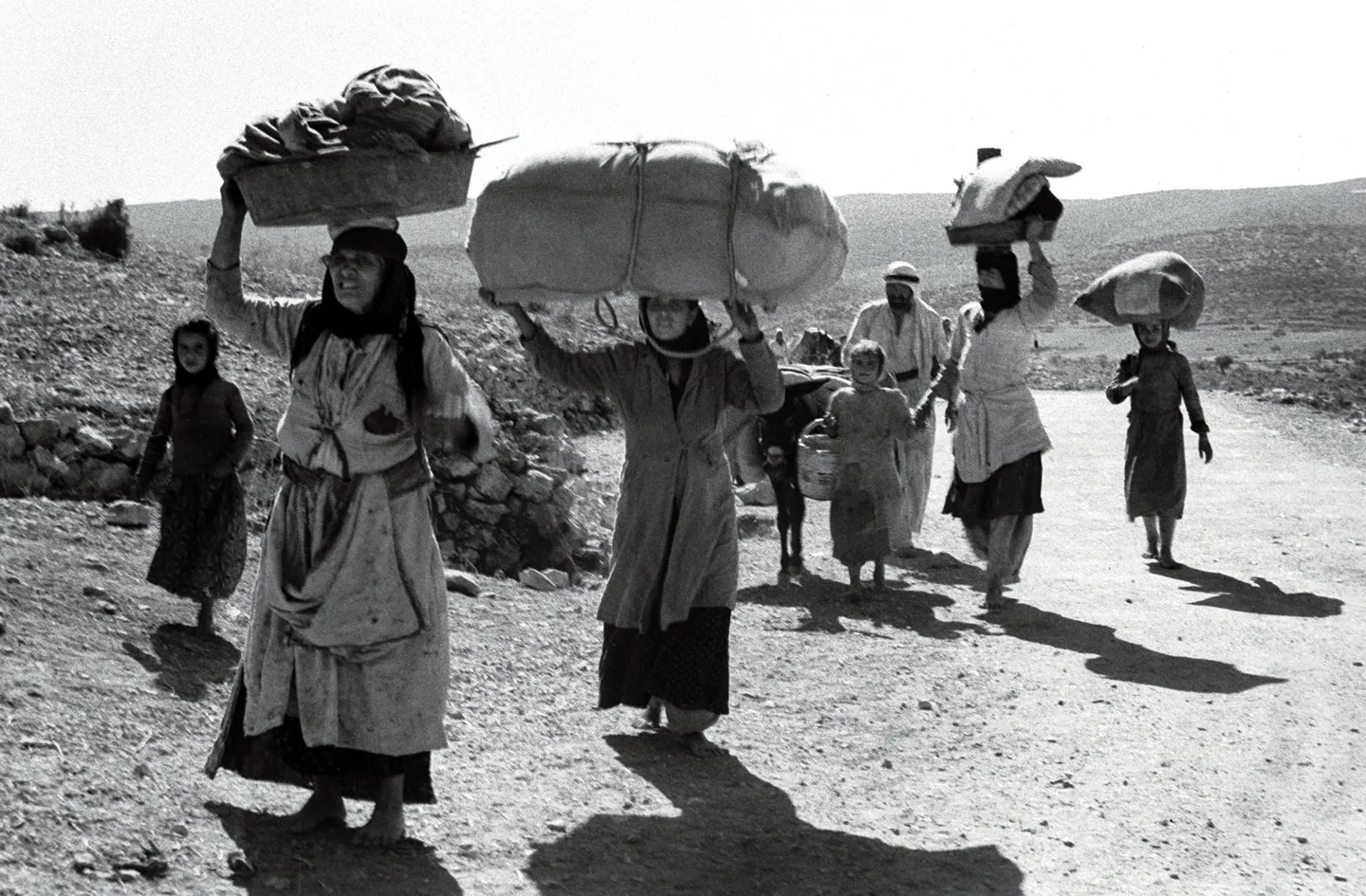
The article examines how editorial disputes, legal restrictions and institutional decisions shape the way Palestinian history, suffering and political expression are presented to the public.
by Patti Johnson, Glory To God Studio: As a baby boomer raised in a sheltered, church-going family, I loved the Beatles like every other teenager. I wore out my copy of Sgt. Pepper and sang “Lucy in the Sky with Diamonds.” I had zero idea that “Lucy” stood for LSD, or that John Lennon was […]
“Magyarország nem kompország”: Hungary is not a “ferry country”; it cannot drift between East and West. With this statement, delivered on October 23 before the Parliament in Budapest, Prime Minister Péter Magyar set the political tone for the 70th anniversary of the 1956 revolution. Immediately afterward, he added that in ’56 the Hungarians had already made their choice: “We belong to a free and democratic Europe.”
The phrase is no accident. The kompország is an image coined by Endre Ady, who in 1905 described Hungary as a ferry doomed to shuttle back and forth between East and West without ever docking permanently on either shore. For sixteen years, Viktor Orbán had overturned that assessment, transforming the oscillation into a strategy: Hungary as a bridge, Moscow’s interlocutor within the European Union, a hub of “opening to the East.” The new government chose the day most steeped in memory on the national calendar to declare that era over. This is the political significance of the day, and it is the appropriate place to begin.
On October 23, 1956, students from the Budapest University of Technology took to the streets in solidarity with Polish workers. The procession gathered in front of the statue of General Bem, then headed toward the Parliament; among their demands were free elections and the withdrawal of Soviet troops. In the evening, part of the crowd moved to Városliget, where the monument to Stalin stood. The Budapest police chief, Sándor Kopácsi, provided a detailed account in his book *Au nom de la classe ouvrière*: the demonstrators wrapped a steel cable around the neck of the statue—which, including its pedestal, stood about twenty-five meters tall—while others, who had arrived in trucks loaded with oxygen tanks and cutting torches, began cutting through the bronze at the level of the boots. It took about an hour for the statue to collapse. Only the boots remained on the pedestal, into which a Hungarian flag was planted. At the same time, in front of the Radio headquarters, the political police (ÁVH) opened fire on the crowd, and the protest turned into an armed uprising.
On October 25, in Kossuth Square, shots fired at demonstrators gathered in front of the Parliament caused a massacre whose death toll, even today, ranges from a few dozen to several hundred. This year’s state ceremony took place in that same square.
The revolution was not a bloodless affair on just one side. In the alleys of the 8th and 9th districts, around Corvin Passage, groups of insurgents—many of whom were boys barely out of their teens—attacked Soviet tanks with Molotov cocktails, and many crew members were burned to death inside their vehicles. Total Soviet casualties exceeded seven hundred. The fiercest violence, however, was directed at the men of the political police. On October 30, in Republic Square (Köztársaság tér), the insurgents stormed the party headquarters in Budapest: more than twenty ÁVH officers and conscripts were killed, some lynched and hanged from trees, along with City Secretary Imre Mező. The revolution’s own leaders condemned these acts and called for an end to summary justice.
The October 28 ceasefire marked the beginning of the withdrawal phase. Moscow agreed to withdraw its units from Budapest on the condition that they be replaced by Hungarian units and that the insurgents surrender their weapons. The columns in direct contact with the fighters left their positions on October 30; the last ones departed from the Parliament area in the early afternoon of the 31st. It was a retreat carried out in an openly hostile atmosphere. The groups at the Corvin Passage, convinced that this was a ruse, refused to assist in securing the convoys, and their suspicion was not unfounded: several armored vehicles remained hidden in Népliget and other parts of the city. However, the available sources—both Hungarian and Soviet—do not document any systematic attacks against the departing troops during those two days. The most harrowing accounts—those of Soviet soldiers killed while fleeing from burning vehicles—pertain to the clashes that occurred after November 4. Meanwhile, on October 31, the Presidium of the CPSU had already overturned the decision.
On November 1, Imre Nagy’s government proclaimed the country’s neutrality and its withdrawal from the Warsaw Pact. At dawn on November 4, Operation “Turbine” brought seventeen Soviet divisions back to Budapest. The final toll included approximately 2,500 Hungarian deaths, about 200,000 exiles, tens of thousands of convictions, and more than two hundred executions; Nagy, Pál Maléter, and Miklós Gimes were hanged after a secret trial in June 1958.
Three squares, three memories
Magyar said that for years Hungarians had been led to believe that the national holiday belonged to a single political party. The day showed that the memory of ’56 remains divided, even if the roles have been reversed. The state held its celebrations in Kossuth Square, with the morning flag-raising ceremony and a solemn session of Parliament. Fidesz, KDNP, and Mi Hazánk did not participate because they do not recognize the legitimacy of the new President of the Republic, András Baka.
Fidesz organized its own “March of the National Flag” from the Technical University to Bem Square, following the route taken by the students in 1956. Speakers included former President János Áder, historian Mária Schmidt, and parliamentary group leader János Bóka. For the first time in many years, Orbán did not deliver the October 23 speech: he was in Paris and limited himself to sharing Bóka’s video on social media. The slogan chosen for the demonstration—“No war, no gender, no migration—God, homeland, family”—makes it quite clear which interpretation of 1956 the opposition intends to uphold: that of a revolt for the nation, faith, and family against ideology—an interpretation to be revived today against Brussels.
Mi Hazánk has taken this interpretation to its logical conclusion. Its leader, László Toroczkai, has argued that in 1956 the Hungarians did not rebel against Russia but against an internationalist empire—and that today that empire is called the European Union—which reveals that, at least for a segment of the Hungarian right, 1956 has become an anti-Western symbol.
Magyar’s speech in Kossuth Square addressed this contentious issue. He recalled Erika Szeles, Péter Mansfeld, István Angyal, Nagy, and Maléter; he said that military superiority was able to crush the revolution and execute “the martyred prime minister,” but could not extinguish the desire for freedom. Then he turned to the present. Those who seek support against their own people “in Moscow or elsewhere,” he said, should remember that power sustained by foreign backing lasts only a short while. Anyone who, after 1956, parades an aggressor through the streets or subordinates the nation to foreign empires “has understood nothing of the message of ’56,” and Magyar added: “whether in Budapest or on a Parisian terrace” . The target was Orbán.
The section on foreign policy was brief and clear: Hungary wants to be a reliable ally and an equal partner, not a country that follows an isolated course. The speech never explicitly mentioned Russia, nor did it speak of neutrality. This choice is significant. In 1956, neutrality was Nagy’s ultimate demand; seventy years later, the Hungarian government interprets that same legacy as an anchor to the West, not as equidistance.
Brussels in Budapest
The presence of Commission President Ursula von der Leyen and European Council President António Costa gave the day an explicitly European framework. Von der Leyen, on her first visit to Hungary since 2024, spoke in Parliament of a return “to a reborn country.” She said that in 1956 even the Soviets were afraid, because a victory by the Hungarian people would have spread the desire for democracy. She then directly linked the anniversary to the April 12 election: in April, Hungary would once again send a message of hope, demonstrating that democratic regression is reversible. She had already made the same comparison between Orbán’s defeat and the 1956 revolution in the aftermath of the elections, sparking protests among the Hungarian right.
The rest of the guest list was more modest than the government had led people to believe. Delegations were sent by some forty countries, almost all at the level of ministers or parliamentary speakers; Moldovan President Maia Sandu and Georgian Prime Minister Irakli Kobakhidze were in attendance. Emmanuel Macron, whose attendance Magyar had announced in an interview, did not attend: the French embassy clarified that the visit had never been confirmed, following days of tension over certain comments by the Hungarian prime minister regarding the unrest in France. Also absent were Giorgia Meloni, who was visiting Kuwait, and Donald Tusk, who was in India. Volodymyr Zelenskyy was not present; Ukraine was represented by the Speaker of Parliament. Vladimir Putin was the only head of state from Europe to not receive an invitation.
On October 23, he symbolically confirmed a shift that had already begun in practice. The Magyar government has classified Russia as a security threat, given the green light to open four negotiation chapters for Ukraine’s accession to the European Union, and set the 2027 defense budget at 2% of GDP. The role of bridge between Europe and Russia—which Orbán had made the hallmark of Hungarian foreign policy—is no longer government doctrine.
It remains to be seen to what extent this can be achieved in practice. Last April, Magyar pointed out that Hungary is “close to Russia” and that paying more for raw materials harms European competitiveness; he said he was ready for pragmatic cooperation with Moscow and wanted to renegotiate the terms of Paks II with the Kremlin. Oil still comes via the Druzhba pipeline, and the country’s only nuclear power plant burns Russian fuel. Energy Minister István Kapitány maintains that, starting in October 2027, gas could come entirely from non-Russian sources, and a decision on Paks II is expected by the end of the year.
The 70th anniversary thus leaves one question unanswered. Ady feared that Hungary would remain a ferry forever. Orbán had tried to turn the ferry into a bridge. Magyar now promises a permanent landing on the western shore. Whether that landing will be stable will be determined more by geography and infrastructure than by speeches.
The two squares on October 23—Kossuth and Bem—did not celebrate the same revolution.
Twenty years since the DPRK’s first nuclear test is a good occasion to recall things that seemed far from obvious at the time. To begin with, had the United States and the collective West been less inclined to view North Korea as a tyrannical regime on the verge of collapse, and had they therefore faithfully […]

 Login