❌

Reading view

Fantoches viram ‘mães’ de corujas bebês em centro de reabilitação animal no Pará

Um vídeo de um filhote de coruja sendo alimentado por um fantoche infantil chamou a atenção nas redes sociais na última semana.

O bebê, ainda sem penas e posicionado dentro de um pote de plástico, recebe comida de uma seringa segurada por uma mão coberta pelo fantoche. A enfermeira humana tem uma máscara ocultando seu rosto.

Publicada pelo Cetra (Centro de Triagem e Reabilitação de Animais Selvagens) da UFRA (Universidade Federal Rural da Amazônia), a cena reflete um princípio pouco conhecido do cuidado com animais silvestres: o anti-imprinting.

O que é imprinting?

É um comportamento também chamado de “estampagem” ou “cunhagem” que acontece logo nos primeiros dias da vida de um animal, em resposta à presença de uma figura materna ou paterna.

Ele foi descrito pela primeira vez pelo etólogo Konrad Lorenz ao observar filhotes de gansos e patos recém-nascidos. Assim que saíam dos ovos, os bebês seguiam instintivamente o primeiro objeto que viam – podendo ser sua mãe, outro animal ou até um objeto inanimado.

Seria este o mecanismo responsável pela aprendizagem de comportamentos essenciais para a sobrevivência: ao fixar sua atenção em figuras maternas e paternas, os filhotes copiam os comportamentos dos mais velhos e extraem diversas informações importantes.

Mas quando animais são separados dos pais ao nascer, o “imprinting” pode escolher um alvo que não tem estes aprendizados a oferecer. Este é o contexto do “anti-imprinting”.

Leia Mais:

Fantoches viram “pais” de pequenos suindaras

No vídeo do Cetra, um filhote de coruja-da-igreja ou suindara é alimentado com uma luva de fantoche desenhada para parecer uma coruja adulta. O rosto da cuidadora, além de sua mão, é oculto para não desviar a atenção do bebê para a figura humana.

“Cada detalhe importa para preservar o comportamento natural e garantir uma soltura com sucesso no futuro”, diz a publicação.

A tática simula o oferecimento do alimento pela mãe coruja, e também preserva o distanciamento natural entre as espécies, conservando instintos de proteção das corujas e impedindo o desenvolvimento de confiança excessiva nos humanos.

  •  

Alabama Special Needs ‘Teacher of the Month’ Accused of Pouring Hot Sauce on Student’s Tongue as Punishment

An Alabama special needs teacher who was once "teacher of the month" is facing child abuse charges after allegedly pouring hot sauce on a student's tongue as a form of punishment. 

The post Alabama Special Needs ‘Teacher of the Month’ Accused of Pouring Hot Sauce on Student’s Tongue as Punishment appeared first on Breitbart.

  •  

NCCIA Officer tries to Sound ‘Tough’, ends up becoming Internet Meme with ‘Cyber Petroleum’ comment

ISLAMABAD – A stern warning against anti-state content turned into unexpected trolling for Pakistan’s National Cyber Crime Investigation Agency (NCCIA) officer after a video of him struggling with English went viral.

The officer, apparently attempting to deliver strong message about agency’s crackdown on anti-state propaganda, became centre of attention for his slip of the tongue and fumbling. In the viral clip, NCCIA official can be heard saying in a serious tone that anti-state material will not be tolerated.

Referring to department responsible for keeping an eye on online activities, the officer appeared to describe its cyber patrolling unit as “Cyber Petroleum.” He went on to explain that the agency established a dedicated unit that continuously monitors online activity, struggling through another English phrase: “What’s going on social of media.”

این سی سی آئی اے کے افسر کی شدید انگریزی میں سخت وارننگ
اینٹی سٹیٹ میٹرل ٹالوریٹ نہیں کیا جائے گا
ہماری ساءبر پٹرولیم کا ادارہ ہے یونٹ بنایا ہوا ہے جو ہروقت منیٹر کر رہا ہے۔۔واٹس گوینگ آن سوشل آف میڈیا https://t.co/vXKOFKSaSQ

— Waseem Abbasi (@Wabbasi007) October 27, 2026

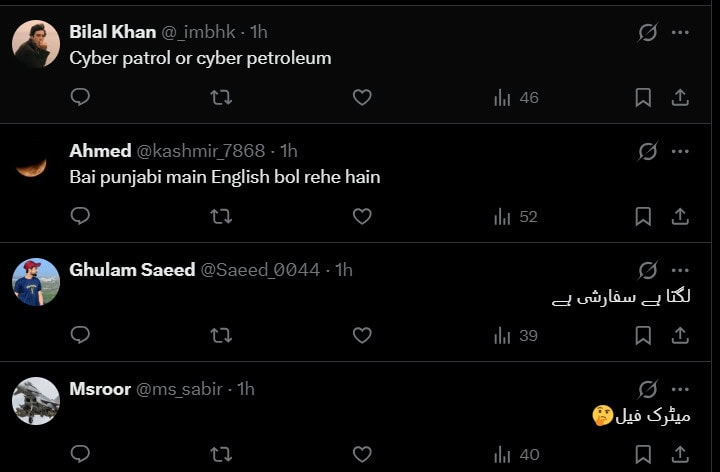
Although the officer apparently intended to highlight the agency’s surveillance capabilities and its determination to act against unlawful online content, his choice of words quickly overshadowed the warning itself. The expression “Cyber Petroleum,” apparently mistaken reference to “Cyber Patrolling,” caught the attention of journalists, social media users, who wasted little time turning it into a viral joke.

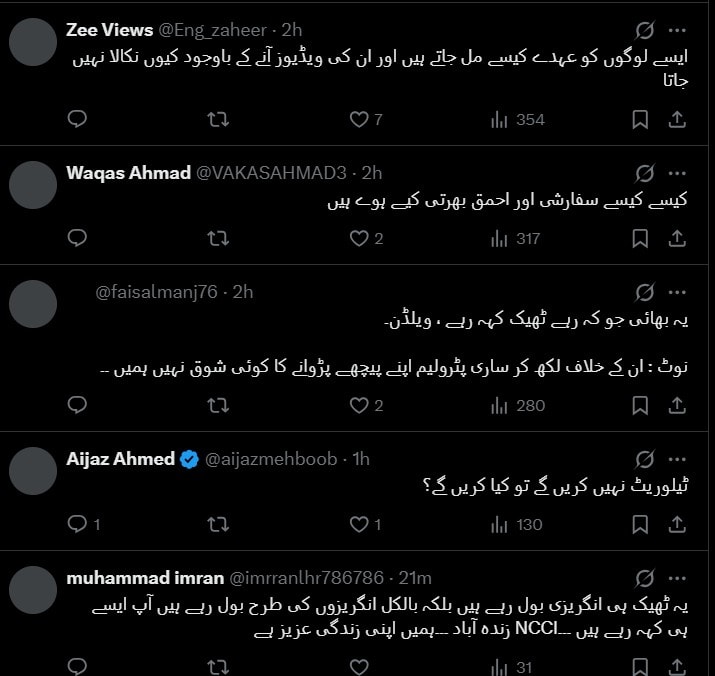
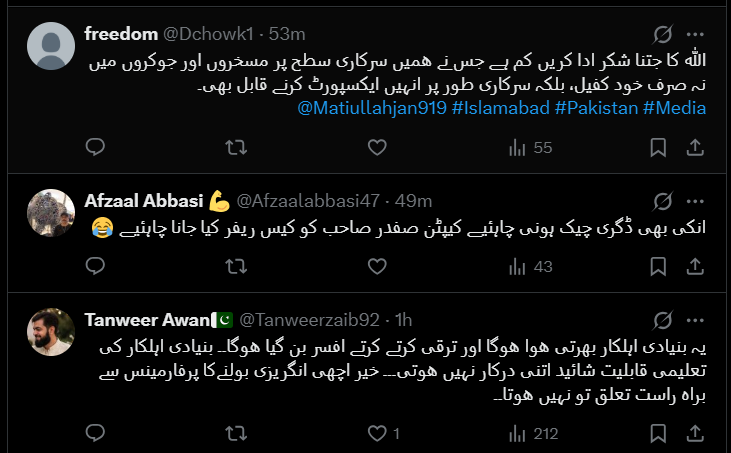
As the clip went viral, social media users started questioning not only the officer’s communication skills but also the process through which individuals are appointed to responsible positions in government institutions. One user questioned how such officials managed to secure important posts in the first place. “How do such people get appointed to these positions, and why are they not removed even after their videos surface?” the he asked.

Nccia Officer Tries To Sound Tough Ends Up Becoming Internet Meme With Cyber Petroleum Comment

Another social media user quipped, “Whatever this brother is saying is absolutely correct. Well done!” the user wrote. We have absolutely no desire to write anything against him and have the entire Petroleum department come after us, he said.

Nccia Officer Tries To Sound Tough Ends Up Becoming Internet Meme With Cyber Petroleum Comment

Nccia Officer Tries To Sound Tough Ends Up Becoming Internet Meme With Cyber Petroleum Comment

The controversy comes as NCCIA intensifies its scrutiny of social media accounts accused of spreading anti-state propaganda, misinformation and material targeting state institutions. The agency has been stepping up efforts to identify individuals allegedly involved in online campaigns against national institutions, while its actions against certain critics of the ruling alliance and state authorities have also attracted public attention.

NCCIA DG Syed Ali Nasir Rizvi previously stressed zero-tolerance approach towards fake news and anti-state propaganda. The agency officials also highlighted the role of specialised cyber patrolling units tasked with monitoring digital platforms and identifying potentially unlawful online activity.


The post NCCIA Officer tries to Sound ‘Tough’, ends up becoming Internet Meme with ‘Cyber Petroleum’ comment appeared first on Daily Pakistan English News.

  •  

PERA Force official booked for Raping Woman on False Promise of Marriage

BAHAWALNAGAR – Another case of alleged sexual assault reported from Southern Punjab, where Punjab Enforcement and Regulatory Authority (PERA) Force officer has been booked for allegedly raping young woman after getting her trust through promises of marriage.

City B Division Police registered case under Section 376 of the Pakistan Penal Code (PPC) on October 26, 2026, following a written complaint submitted by the victim. According to First Information Report (FIR), the accused, identified as Hussam Baloch, son of Muhammad Yousaf, allegedly developed a relationship with the complainant approximately one year ago. The two remained in contact over the telephone, during which the suspect repeatedly expressed his intention to marry her.

بہاولنگر، تھانہ بی ڈویژن

پیرا فورس کے اہلکار نے لڑکی کو زیادتی کا نشانہ بنا ڈالا۔ پولیس نے مقدمہ درج کرلیا۔ https://t.co/X13MwT5SF1

— Muhammad Umair (@MohUmair87) October 27, 2026


The complainant alleged that she believed the suspect’s promises and trusted him. The incident reportedly occurred around 2 months ago back when accused took the woman to accompany him to Model Town, Bahawalnagar, claiming that he wanted to introduce her to his family.

According to the FIR, the suspect took the woman on his bike to a house located around 2 kilometres south of City B Division Police Station. However, upon entering the premises, the woman discovered that the house was empty. When she questioned the suspect about his family members, he allegedly assured her that they would arrive shortly.

The situation reportedly took a terrifying turn when the suspect closed the room’s door, leaving the woman frightened. The complainant alleged that the accused attempted to calm her by saying they were planning to get married soon. She further alleged that when she tried to escape, the suspect threatened and physically assaulted her before forcing her onto a bed and raping her against her will.

After alleged sexual assault, the accused reportedly dropped her back at her residence. The complainant told police that she informed her family about the incident, identifying Muhammad Kashif Ali, son of Muhammad Latif, among the witnesses she had informed. Despite the alleged assault, she said she repeatedly approached the accused and demanded that he fulfil his promise of marriage.

The suspect refused to marry her, prompting her to seek police intervention. In her complaint, the woman maintained that the accused had exploited her trust through false promises of marriage and subjected her to sexual violence, threats and physical assault.

Police registered a case under Section 376 of the Pakistan Penal Code, which deals with sexual assault, and initiated investigation into the allegations.

The case sparked concerns because the accused has been described in initial reports as an official of the PERA Force, a provincial enforcement body.

Was Azeri Woman Diana offered Rs20 Million to drop Rape Case against Lahore’s Influential Man?


The post PERA Force official booked for Raping Woman on False Promise of Marriage appeared first on Daily Pakistan English News.

  •  

No More Vaping in Punjab as Govt prepares Tough Law to curb nicotine use among youth

LAHORE – Vape shops and e-cigarette users across Punjab could face sweeping restrictions as Maryam Nawaz led government moves towards legislation aimed at curbing growing use of nicotine products, particularly among young people.

The provincial administration is considering ban on e-cigarettes and vaping products, with officials working on legal framework that could reshape the sale, purchase, advertisement and use of these products throughout the province.

The latest move comes amid mounting concerns over nicotine addiction among teenagers and young adults, an issue that has prompted repeated calls for stricter government intervention.

The government initiated interdepartmental coordination and is preparing consultations involving the police, health department and district administrations to develop an effective enforcement strategy. The proposed legislation is expected to address the commercial distribution of vapes, their promotion and accessibility to minors. Authorities are also examining possible punishments and enforcement mechanisms to ensure compliance once a law is approved.

Why Banning Alternatives to Cigarettes?

The government’s renewed focus on vaping comes after earlier attempts to restrict electronic cigarettes encountered significant legal obstacles.

Last year, Punjab Chief Minister Maryam Nawaz ordered a province-wide crackdown on the sale, purchase, distribution and advertising of vaping products, citing concerns over their increasing popularity among young people. Following the directives, enforcement teams launched operations against vape businesses, sealing several outlets and restricting commercial activities.

But the campaign soon landed in court. More than 70 vape shop owners challenged the crackdown before the Lahore High Court, arguing that authorities were shutting down businesses without a specific law declaring vaping illegal.

The court granted interim relief to the affected traders, directed the reopening of shops and restrained enforcement action lacking a proper legislative basis.

The legal proceedings exposed a major gap in the government’s strategy: electronic cigarettes were being imported under federal regulations, yet provincial authorities were attempting to restrict their trade without comprehensive legislation. That legal hurdle now appears to be a central factor behind Punjab’s renewed push for a formal law.

Punjab currently has no comprehensive province-wide statutory ban criminalising the possession, private use or general sale of electronic cigarettes. Existing tobacco-control regulations impose restrictions in designated public places, while certain government measures specifically target vaping products in sensitive locations.

Fact Check: No Vape Ban in Punjab despite viral posts’ claims

Prohibition of Smoking and Protection of Non-Smokers’ Health Ordinance, 2002, remains an important part of the broader tobacco-control framework. Meanwhile, electronic cigarettes continue to be imported through federally regulated channels, complicating efforts to introduce sweeping provincial restrictions without new legislation.

In October 2026, amended food-quality regulations published in the Punjab Gazette prohibited the sale of vapes and tobacco products in canteens and cafeterias at schools, colleges and universities. The restrictions also cover food businesses operating within 100 metres of educational institutions.

The same regulatory changes introduced restrictions on several other products, including energy drinks, carbonated beverages, certain sweets and foods containing monosodium glutamate (MSG).

Punjab is not alone in examining tighter controls on electronic cigarettes. At the federal level, the proposed Electronic Nicotine Delivery Systems Regulation Bill has also been under discussion, with Senate committee approval reportedly secured earlier in 2026.

The proposed legislation seeks to regulate vaping products through age restrictions, advertising controls, public-use limitations, product standards and penalties. However, the framework has not yet been fully enacted as a comprehensive nationwide law.

If Punjab proceeds with its proposed legislation, businesses dealing in electronic cigarettes could face new licensing or trading restrictions, advertising limitations and penalties for violating the eventual law. Measures aimed at stopping sales to minors are expected to receive particular attention.


The post No More Vaping in Punjab as Govt prepares Tough Law to curb nicotine use among youth appeared first on Daily Pakistan English News.

  •  

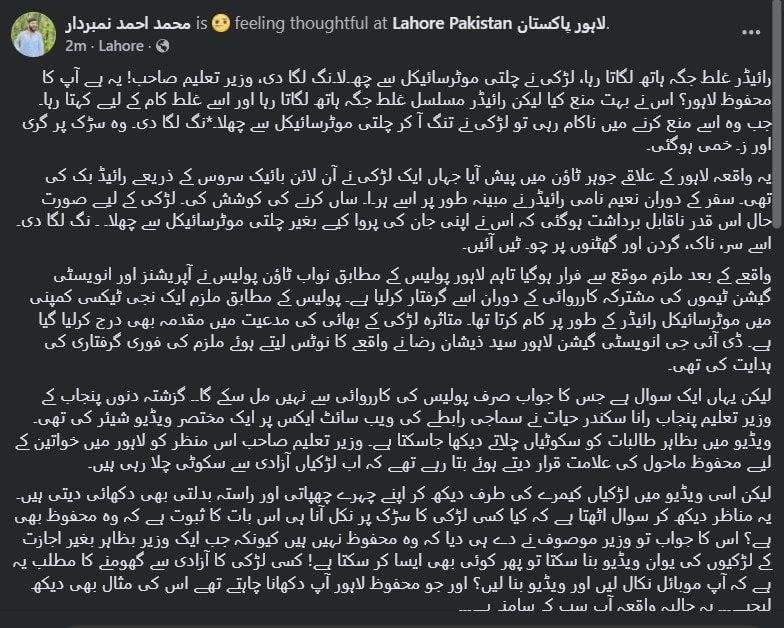
Lahore Woman risks her life to escape ‘Sexual Harassment’ during Indrive Bike Ride

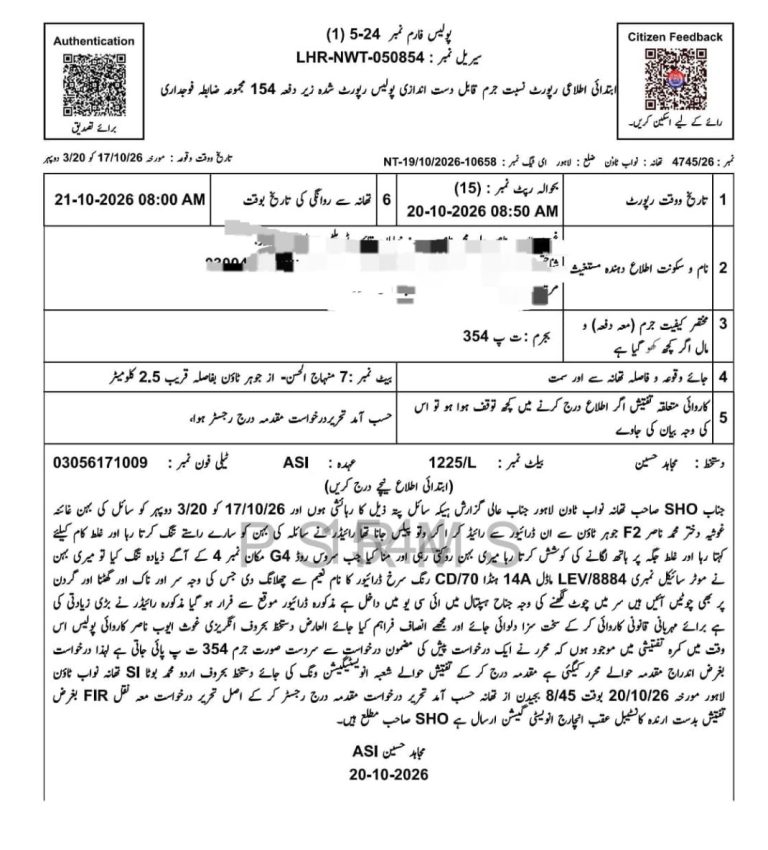
LAHORE – A serious incident of sexual harassment by online Bike Rider reported in Johar Town, where a woman allegedly jumped from moving bike to escape harassment and suffered serious injuries.

According to First Information Report (FIR), the woman identified as Gh****, booked bike ride from F-2, Johar Town, to Veto Palace. The complaint, lodged by her brother, Ghaus Ayub Nasir, alleges that the rider, identified as Naeem, harassed woman throughout the journey, repeatedly pressuring her for lewd act and attempting to touch her without consent.

Despite her repeated objections and requests for him to stop, the rider continued his behaviour. The situation reportedly escalated near House No. 4 on the service road in the G-4 area. The jump left her with injuries to her head, nose, knee and neck, and the head injury was serious to require admission to ICU at Jinnah Hospital, where she was receiving treatment.

The motorcycle involved in the incident was identified in the complaint as a red Honda CD 70 bearing registration number LEV/8884. The rider was named as Naeem. After the incident, the accused allegedly fled the scene, as per FIR.

Nawab Town Police Station registered case against the rider under Section 354 of the Pakistan Penal Code (PPC).  The complainant urged police to take strict legal action against the accused and ensure justice for his injured sister.

The incident raised concerns about women’s safety when using app-based motorcycle transport services. The reported incident also shows importance of investigating complaints of harassment, ensuring passenger safety and holding those responsible accountable through due legal process.

The allegations against the rider have yet to be established in court. Further details regarding the investigation and the victim’s latest medical condition were not available in the supplied report.

inDrive ride turns nightmare as passenger reports missing Passport, Cash

The post Lahore Woman risks her life to escape ‘Sexual Harassment’ during Indrive Bike Ride appeared first on Daily Pakistan English News.

  •  
❌