Login

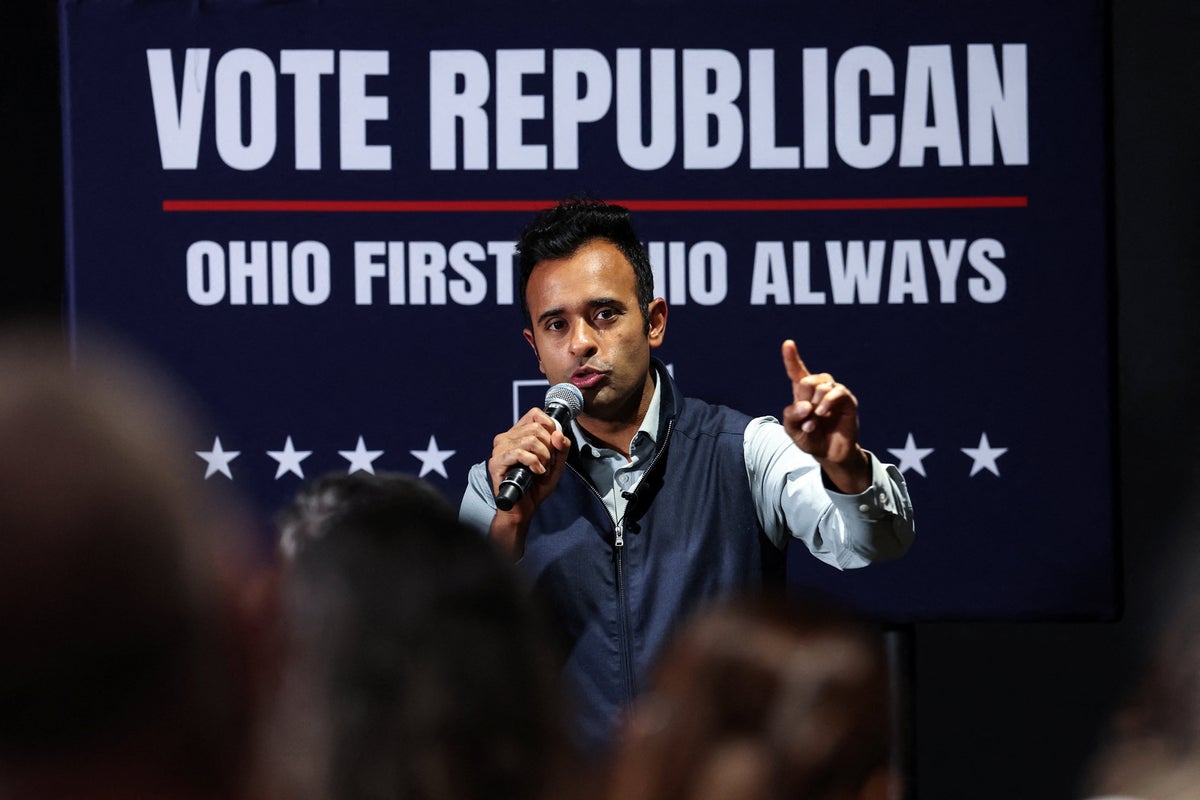
Even Vivek Ramaswamy’s former teacher has condemned his ad attacking his opponent’s past
Retired teacher Michael Pogue turned up in protest at one of Ramaswamy’s campaign events in Cincinnati
© Reuters

Retired teacher Michael Pogue turned up in protest at one of Ramaswamy’s campaign events in Cincinnati
© Reuters


Local residents and committee members criticized the proposed design, calling it ‘mediocre’ and comparing the building to a ‘Frankenstein monster’

© Getty

Pretti's parents recounted how they first learned of his death when they were called by a reporter for The Associated Press
© Copyright 2026 The Associated Press. All rights reserved.



On Tuesday, Didier Guerin, the president of the honorary chamber of the French Supreme Court, expressed doubts about the possibility that far-right leader Marine Le Pen could run in the 2027 presidential elections following her conviction for misappropriation of European Parliament funds.
RELATED:
Thousands March Against Far-Right Leader Le Pen in France
In an interview published by Le Monde, Guerin, who presided over the Supreme Court’s criminal chamber between 2014 and 2017, said she will not be able to run in the April-May elections if the appeal in cassation of the sentence handed down on appeal against Le Pen succeeds.
According to his thesis, if the Supreme Court annuls the appeal verdict, the ruling issued at first instance on March 31, 2025, will apply, which sentenced the far-right leader to two years of house arrest and five years of ineligibility with preventive application.
Le Pen was convicted of misappropriation of European Parliament funds, after having paid party workers and even domestic employees with European funds intended for parliamentary assistants.
Guerin considers that an appeal to the Supreme Court annuls the appeal judgment and imposes the first-instance sentence, so that de facto Le Pen is ineligible.
Le Pen launched her candidacy after the appeals court reduced the sentence to one year of house arrest and only 15 months of ineligibility, which she has already served.
Guerin affirms that the jurisprudence of the court to which he belongs supports his theory, contrary to what other jurists think, including the chief prosecutor of the Supreme Court, Remy Heitz.
The Supreme Court magistrate notes that the only possibility Le Pen has to run in the 2027 elections is, paradoxically, for the court to reject the appeals of the sentence and confirm her conviction.
If the Supreme Court’s decision is delayed beyond March 26, 2027, the deadline for validating candidacies for the first round on April 28, the far-right candidate will not be able to seek her fourth run for the Elysee, according to Guerin.
Marine #LePen is betting on public anger over rising prices, unrest, and immigration to propel her presidential bid, promising tougher borders and a sweeping return to law and order in France.https://t.co/inACuFz4DA
— Al Mayadeen English (@MayadeenEnglish) October 25, 2026
Le Pen Fights Back
For her part, Le Pen has filed a complaint with the French Superior Council of the Judiciary against Judge Guerin over his statements about her ineligibility, considering that they violate magistrates’ duty of discretion and contain evaluations of a political nature, according to a statement from her six lawyers.
The lawyers of the far-right leader maintain that his interpretation contradicts current law on the provisional execution of sentences and the effects of judicial appeals.
They also note that the attorney general of the Supreme Court has defended a position contrary to that expressed by Guerin.
The statement also questions that an honorary magistrate publicly comments on a judicial decision of his own and considers future political scenarios, including the possibility that her candidacy be prevented or that she be removed if elected.
For this reason, Le Pen has asked the Superior Council of the Judiciary to remind Guerin of his ethical obligations, considering that his statements exceed the legal sphere and could compromise the image of the judicial institution.
teleSUR/ JF
Source: EFE
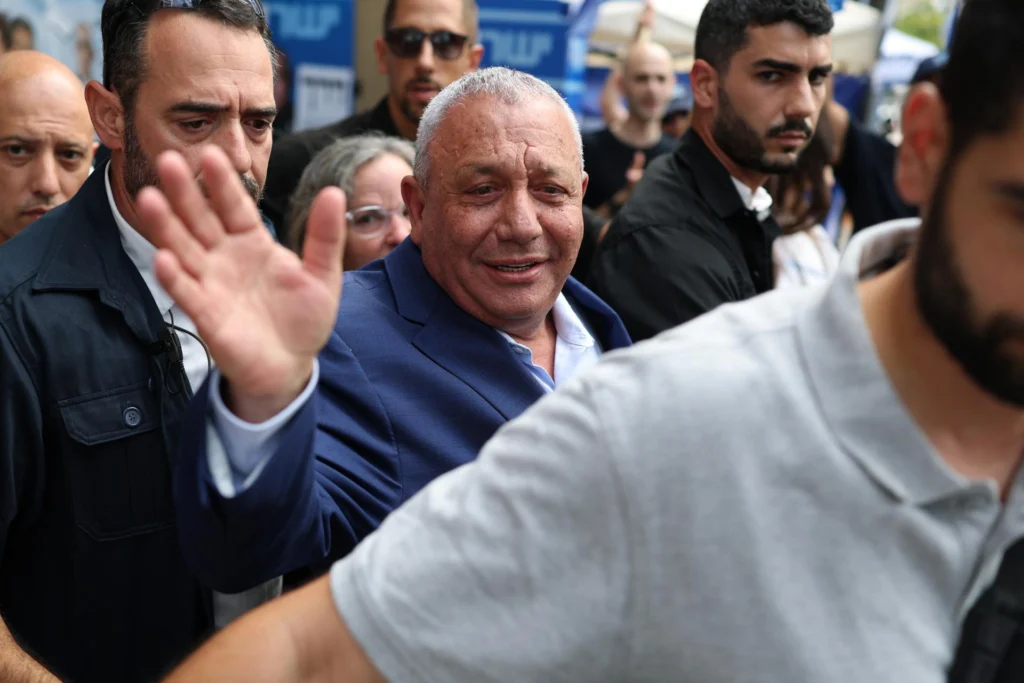
With a historic turnout of close to 75%, Israelis turned out in the first election held after the start of the genocide in Gaza in October 2023.
The first projections from Israel’s election signal a shift in the balance of power. The opposition bloc led by Gadi Eisenkot prevailed by a narrow margin over PM Netanyahu’s coalition in Israel’s first election since the October 2023 attacks, according to polls circulated after the ballot box was closed.
RELATED: Trump Backs Netanyahu’s Reelection for Tuesday Elections
Data from the Central Election Commission and projections from local TV channels 11, 12, and 13 agree that none of the dominant blocs has the 61 seats required to form a government in the 120-seat parliament.
The three main exit polls, published after voting closed at 10 P.M. local time, placed Eisenkot’s bloc at 52 to 53 of the Knesset’s 120 seats, against 50 for Netanyahu’s right-wing alliance.
The result opens a period of uncertain negotiations over who will form the next government, with neither side having reached the required majority in parliament (Knesset).
BREAKING: Early exit poll results are showing Netanyahu’s coalition and the opposition coalition both falling short of the seats needed for a majority.
— Al Jazeera English (@AJEnglish) October 27, 2026
🔴 LIVE UPDATES: https://t.co/6gTzKogVEg pic.twitter.com/HrNY9tsJxL
Parties opposed to Prime Minister Benjamin Netanyahu won more seats than his coalition in Tuesday’s parliamentary election, though Likud Party remained the most-voted party, and neither bloc reached the 61 seats needed to govern in the 120-seat Knesset.
Neither candidate can yet claim a clear path to 61. Netanyahu can argue that he heads the largest single party, while Eisenkot can point to the larger bloc.
That calculation gives the Arab-led lists unusual weight in the coming negotiations. For years the established Jewish parties have treated these alliances as off-limits partners. The projections may now force a reconsideration, because neither side appears able to reach a majority without them.
BREAKING: Israeli elections have ended and the exit polls are in. All three Israeli channels have Netanyahu's bloc at 50. Eisenkot's bloc is at 52 or 53. The Arab parties are at 17 or 18, the most seats they have ever won.
— Hen Mazzig (@HenMazzig) October 27, 2026
Likud finished first with 24 or 25. Yashar is second… pic.twitter.com/26FRBxyRco
The two Israeli Arab parties that emerged as potential arbiters of the contest won between 17 and 18 seats according to the polls in the ballot box, a figure higher than expected. Both said that they would support Eisenkot to some extent, having mobilized their voters to help displace Netanyahu, whom they consider an “existential threat” in the event of a new term.
Both Netanyahu and Eisenkot have so far ruled out any formal alliance with Arab parties. However, these could allow Eisenkot to form a minority government by backing him from outside the coalition, or even abstaining in the Knesset vote to install the next government.
As the count continues, the next move belongs to the Israeli President, who must decide whom to invite first to try to assemble a coalition.
Any path to a majority now appears to run through the Arab parties. That reality will test whether the traditional Jewish bloc is willing to negotiate across a line it has long treated as closed.
The final tally will determine whether Eisenkot can turn his central role into a governing coalition, or whether Netanyahu finds another route to remain in power.
If, after all the negotiations, no one manages to form a majority, a new election would be called on March and the process would repeat. During that period, Netanyahu’s government would remain in a caretaker role. Public services would not be affected, but the government would lack the authority to push through major policy changes.
Israel’s most recent national election, held in November 2022, was the fifth in three and a half years, and even a new round might not resolve the country’s political deadlock. That election, returned Likud party to power with a 64-seat coalition.
The most likely scenario now is a prolonged negotiation or even new elections in the coming months. Until a government forms, Netanyahu’s administration would remain in office as a caretaker, unable to advance major policy changes.
The narrow margin leaves the next coalition in doubt. With neither side reaching 61 seats, both leaders will likely push to assemble a governing majority, a process that has repeatedly convulsed Israeli politics in recent years.
The Central Election Committee began counting ballots after polling stations closed and will release partial results overnight. Official tallies often diverge from exit poll projections, leaving the final composition of the Knesset uncertain for days.
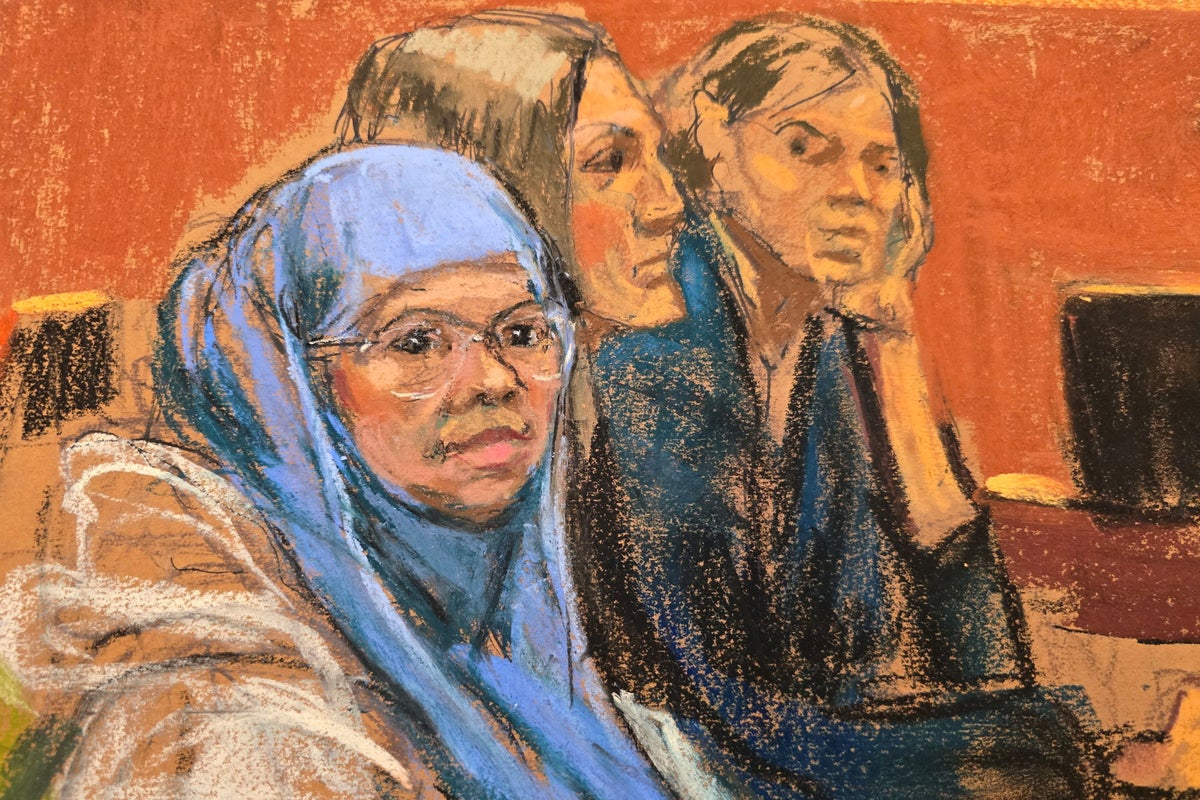
On the first day of her marriage, Salman recalled, her husband told her, ‘Get up, stupid wife, it’s time for you to be a wife’
© Reuters


Last week, Israeli soldiers detained me for harvesting olives in a grove near Bethlehem. I was one of about 70 people — rabbis, American and Israeli Jews, and Palestinians — helping Palestinian farmers harvest trees their family has owned for generations.
My detention made headlines. But it’s not the story. The story is the ethnic cleansing of the West Bank.
The olive grove we were harvesting as part of the Protect the Harvest effort belongs to families from Nahalin, a Palestinian village south of Bethlehem in the West Bank. The villagers have not been able to harvest their olives for three years, because of attacks by Israeli settlers.

In recent weeks across the West Bank, settlers have attacked Palestinian farmers, volunteers, European diplomats and a Washington Post journalist. In our case, though, when security guards from the adjacent settlement of Beitar Illit spotted us, they didn’t confront us themselves. Instead, they called the Israeli army, and soldiers detained us for harvesting olives on private Palestinian land at the invitation of its owners. In other words, we were doing nothing illegal nor anything that required coordination with the Israeli government.
Of the 70 folks I was detained alongside, the IDF soldiers held a Palestinian woman from the family who owns the land longest of all. Their message was clear: don’t try to harvest that land again.
What I saw in Nahalin is part of a broader pattern I have seen across the West Bank: settler violence and state power working hand in hand to dispossess Palestinians of their land and expel them from their homes.
In Mughayir, the sister village of my Brooklyn synagogue, families once farmed olives and dates and grazed flocks on land stretching down into the Jordan Valley. Today, the village has been stripped of nearly all of it — by a government order that uprooted its olive trees, by a permanently locked gate cutting it off from the main road and by attacks from nearby settler outposts. One older man was assaulted and pepper sprayed earlier this month by settlers, just for walking into one of his few remaining fields.

In Taibe, a shepherd showed me a video of settlers and soldiers raiding his compound at night, beating his family and taking 40 of his sheep on a newly arrived settler’s claim that they were his.
These are not isolated incidents. A recent report from Peace Now and Kerem Navot found that settler violence, combined with Israeli government policy, has made more than 1 million dunams — roughly 18% of the West Bank — inaccessible to Palestinians, and has displaced over 100 communities.
In Al-Walaja, in eastern Jerusalem, villagers have sought approval of a zoning plan for more than a decade. The Israeli authorities have refused to grant it without explanation — a recurring dynamic in Palestinian communities — only to then cite the missing zoning plan as an excuse to demolish their homes. Half the village is under demolition orders. Residents pay taxes to the Jerusalem municipality. But the main government service they receive is the bulldozer.

In the Jordan Valley near Jericho, I saw the ruins of what were, until recently, the Bedouin communities of Mu’arrajat and Ras Ein al-Auja, where hundreds of families lived. After the Oct. 7 Hamas attacks on Israel, settlers began a campaign of harassment that escalated to an attack on the village elementary school. Residents pleaded to soldiers for protection, and they were told it would be provided — but only during the day. So one night, settlers — no, let’s call them terrorists — came and burned the homes, one by one. When the pogrom was over, every house was destroyed, and every family gone.
The term for that is ethnic cleansing.
A young Bedouin woman named Aliya, who lived through it, told me the story. She now lives with her family in a refugee compound without running water. Despite it all, she’s studying remotely for her master’s degree. It should not take the arrest of a U.S. congressional candidate or a group of rabbis to bring attention to her story. But American media provides little opportunity for Palestinians’ voices to be heard.

None of the Palestinians I met in the West Bank can vote in this week’s Israeli elections, even though the resulting government controls their lives. I devoutly hope Prime Minister Benjamin Netanyahu’s party loses, and that a new government will take steps to rein in settler terrorism like this. But neither prospective coalition is promising to stop settlement construction, end ongoing occupation and apartheid or protect the human rights of Palestinians — much less recognize a Palestinian state.
Here in the United States, though, the midterm elections do offer an opportunity to demand change. We are not bystanders to ethnic cleansing in Israel and Palestine: our tax dollars help underwrite it.
In Congress, I will work to end U.S. military aid to Israel while it violates international law and Palestinian human rights. I will support the Stop the Settlements bill to ban trade and impose sanctions on companies who build and bankroll the settlements — something U.K. Foreign Secretary Ed Miliband recently announced. I will support recognition of a Palestinian state as U.S. policy. I will work with a broad coalition of American Jewish and Muslim groups that don’t always agree with one another, but who are committed to ending the occupation.
Before I left the West Bank, I spoke with a group of Palestinian high school students at the Talitha Kumi school in Beit Jala. Most speak Arabic, Hebrew, German and excellent English. They experience injustice on a daily basis. Their families can’t vote, but still they told me about their Model UN. They were glad to learn I’m Jewish, and they thanked me for being there. They want a free Palestine, but they also believe in democracy and want to live peacefully alongside Israelis.

There are, to be sure, many complex issues in resolving the conflict between Israelis and Palestinians.
But don’t let anyone tell you these young people are raised on hatred. That they deserve freedom and opportunity any less than your kids or mine. That it is in any way “democratic” that their families can’t vote. That stealing their land is consistent with Jewish values. That it’s a good use of our tax dollars to fund their subordination. Or that we can’t find partners for peace.
The post Israeli soldiers detained me for harvesting olives — but that’s not the real outrage appeared first on MS NOW.


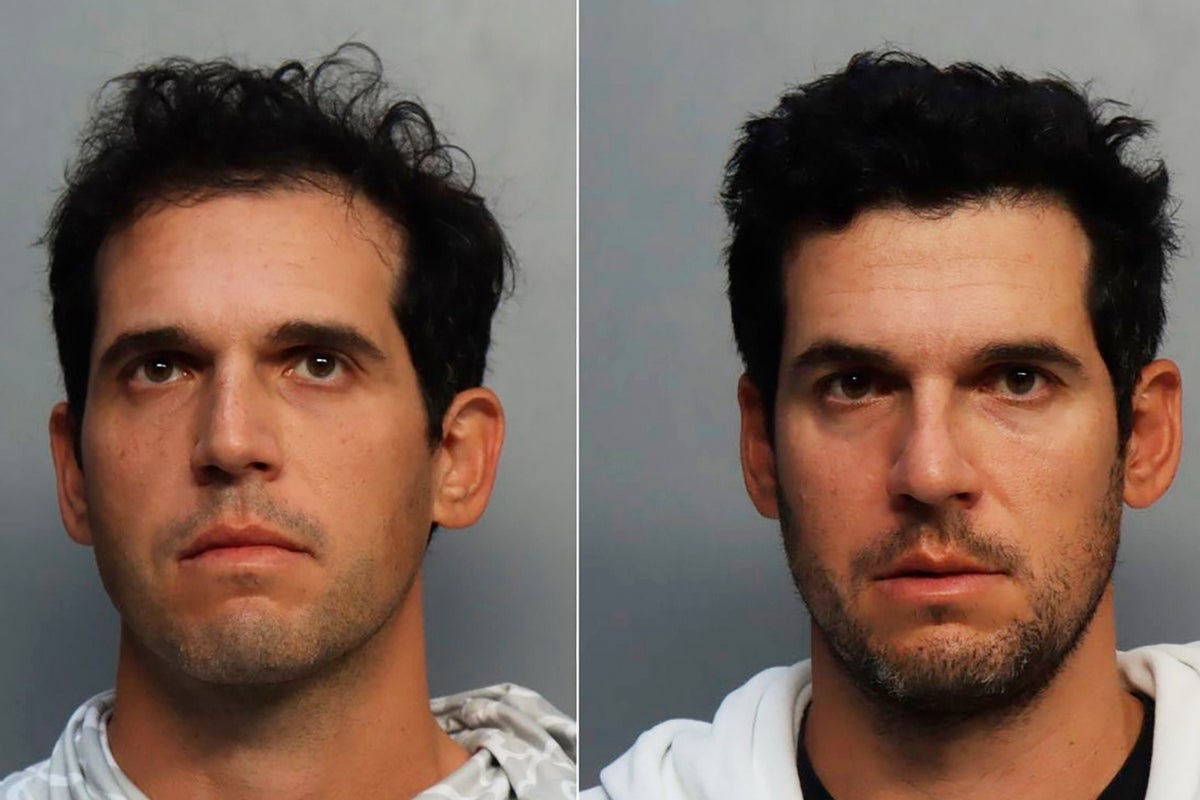
Prosecutors had asked the judge to give them life in prison
© Miami-Dade Corrections
Turnout surged to a 45-year high in the first verdict on the government since the October 7 attacks in 2023

© Reuters
Sweden has become the first country in the world to completely abandon mRNA COVID-19 vaccines out of its national vaccination program — and the global health cartel and Big Pharma are outraged. According to Swedish [...]
The post Sweden Becomes First Nation In World To Officially Abandon mRNA Vaccines Citing ‘Serious Health Concerns’ appeared first on The People's Voice.
Shayna Feinman, 35, disappeared on March 9, 2024, while walking to a friend’s house in the Seligman area of Arizona

© Yavapai County Sheriff's Office