❌

Reading view

Cuba Announces Squad for the Guizhou International Boxing Tournament
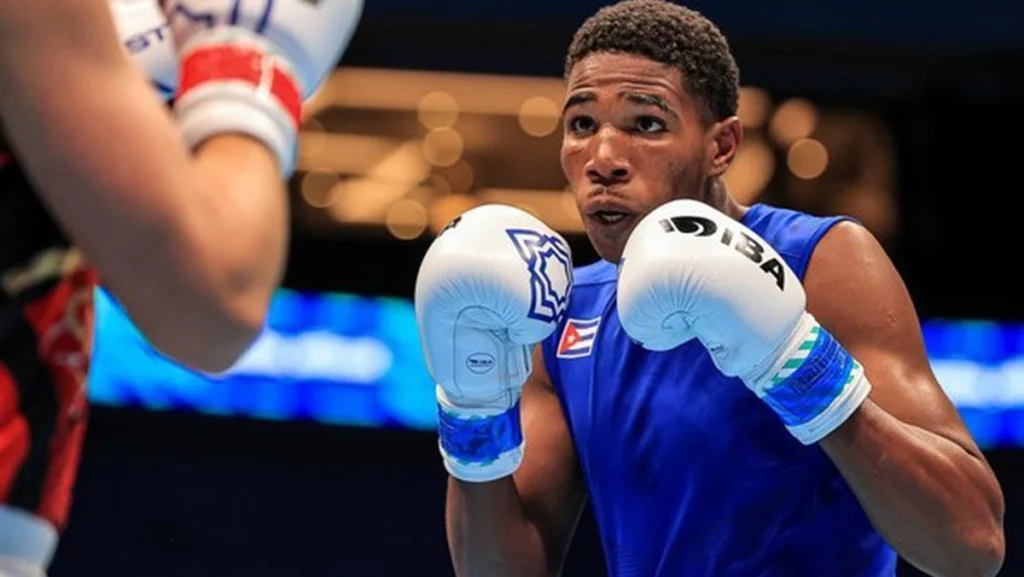
Paris 2024 Olympic champion Erislandy Álvarez (65 kg) will headline Cuba’s squad for the Guizhou International Boxing Tournament, to be held in China from November 3 to 12.

RELATED:

U.S. Blockade’s Impact on Cuban Sports Reaches US$36.2 million in 2025

The Cuban delegation will consist of seven men and six women, according to national commissioner Robinson Poll, as reported by the digital publication Jit.

Álvarez returns to competition following his recovery from a surgical procedure that kept him out of the 2026 Central American and Caribbean Games in Santo Domingo and the recent Continental Championship in Puebla. The 2023 Tashkent World Championship silver medalist leads a team aiming to continue Cuba’s strong performance in this international event.

In the men’s division, alongside Álvarez, the roster includes Ángel Sober (50 kg), Deibys Abreu (55 kg), Rolando Martínez (60 kg), Keilor García (80 kg), Fredisney Morales (90 kg), and Joel Duvergel (+90 kg).

The women’s squad features Dayira Mesa (70 kg)—a champion at the 2026 Santo Domingo Games—as well as bronze medalists from that same regional event: Dinaibys de las Nieves (51 kg), Carysney García (54 kg), Magda Massó (57 kg), and Keilor García (80 kg). Rounding out the team are Melani Girado (60 kg) and Naybel Morado (75 kg).

Reaparecerá Erislandy Álvarez en torneo de Guizhou
Encabeza la escuadra de siete hombres y seis féminas inscrita por #Cuba. #InderCuba65 #BoxeoCubano #boxeo #SiempreXCubahttps://t.co/lTM5ndjEUS

— JIT Deporte Cubano (@jit_digital) October 27, 2026

The text reads, “Erislandy Álvarez to reappear at Guizhou tournament
He leads the squad of seven men and six women entered by #Cuba.”

The squad will train under the guidance of coaches Julián González Cedeño, Fermín Espinoza, and Yuri Echevarría. In the previous edition of the tournament, Cuba secured three gold titles—won by Saidel Horta (57 kg), Jorge Cuéllar (71 kg), and Nelson Williams (92 kg)—along with two bronze medals, earned by Arianne Imbert (66 kg) and Yoana Rodríguez (75 kg).

The 2026 Guizhou International Boxing Tournament marks the competitive return of Erislandy Álvarez and offers a new opportunity for Cuban boxing to achieve international success in China.

#Cuba | Cuba is moving forward with reforms to give state-owned enterprises greater autonomy, attract investment, and boost production amid energy shortages and US sanctions.
The measures aim to modernize the economy while preserving public control of strategic sectors.… pic.twitter.com/DUCF3XxafR


— teleSUR English (@telesurenglish) October 21, 2026
  •  

Dilma Rousseff to Receive Compensation for Persecution During Brazil’s Military Dictatorship

Former Brazilian President Dilma Rousseff will receive a monthly compensation of R$ 17,562.80—equivalent to approximately 3,200 US dollars—as financial reparation for the political persecution, illegal detentions, and physical and psychological torture she endured during Brazil’s military dictatorship, which lasted from 1964 to 1985.

RELATED:

Dilma Rousseff Calls for Keeping Memory on 1964 Military Coup

The measure was published this Tuesday, October 27, in the Official Gazette of the Federal Government (in Portuguese Diario Oficial da União) and follows a final ruling by the Federal Regional Court of the 1st Region (TRF1).

The resolution was issued by Brazil’s Ministry of Human Rights and Citizenship. In addition to the permanent monthly payment, the ministry calculated retroactive payments totaling R$ 6,616,492.19 for the period recognized by the judiciary, with financial effects dating back to October 21, 1997. Any amounts previously received by Rousseff as reparation must be deducted from this total.

The monthly payment was calculated based on the salary scales for professionals at the former Foundation for Economics and Statistics of Rio Grande do Sul (FEE)—a state-linked institution where Rousseff worked as an economist prior to her arrest. The reparation acknowledges the loss of her employment with that foundation as a consequence of political persecution during the military regime.

This month marks 60 years since Brazil's military coup ushered in 21 years of US-backed, authoritarian dictatorship. This weekend people came out to protest the amnesty law which protects military torturers & murderers from prosecution. My story @telesurenglish #23MSemAnistia pic.twitter.com/cxISd0tpQi

— BrianMier (@BrianMteleSUR) March 24, 2024

The judicial decision, issued in December 2025, mandated that the former president receive a permanent, ongoing monthly allowance, based on the remuneration for the position she held before her arrest. This new resolution replaces a previous measure from August 2025, which had established a one-time compensation payment of R$ 100,000.

Dilma Rousseff was detained in 1970, at the age of 22, for her involvement in a resistance organization against the Brazilian military dictatorship. During her captivity, she was subjected to physical and psychological torture and spent nearly three years in prison. The judicial system acknowledged that she had been persecuted and prevented from working from the day of her arrest until October 21, 1997.

The former president was a member of the Armed Revolutionary Vanguard Palmares (Vanguardia Armada Revolucionaria Palmares), a group that opposed the military regime. Financial reparation is a measure provided for under Brazilian law for individuals recognized as victims of political persecution during that period.

Rousseff joined the Workers’ Party (PT) in 1999, and four years later, she was appointed as a minister by then-president Luiz Inácio Lula da Silva. In January 2011, Lula handed the presidential sash to her following her electoral victory with 56.01% of the vote, making her the first female president in the history of Brazil.

🇧🇷 Lula wins a fourth presidential term in Brazil!

Luiz Inacio Lula da Silva has secured a fourth term with 51.77% of the valid vote, marking a decisive moment in Brazil’s political landscape.

What does Lula’s victory mean for Brazil’s future and the region? Share your thoughts… pic.twitter.com/eLDPfkeg12

— teleSUR English (@telesurenglish) October 26, 2026
  •  

Cuba Outlines Biodiversity Priorities at COP17 in Armenia

On Monday, in Yerevan, Armenia, Cuba presented its priorities for the conservation of biological diversity during the 17th Conference of the Parties (COP17) to the Convention on Biological Diversity. The conference, held from October 19 to 30, 2026, serves as the first review meeting on the implementation of the Kunming-Montreal Global Biodiversity Framework.

RELATED:

Strengthening Climate Resilience in Coastal Communities of Southern Cuba

Daimar Cánovas, Deputy Minister of Science, Technology and Environment (CITMA), highlighted that Cuba’s National Biodiversity Program—with a vision toward 2030—is aligned with the global agreement adopted at COP15 in 2022, which aims to halt and reverse biodiversity loss, with specific targets set for 2030 and long-term goals for 2050.

Cánovas González participated in an event titled “Yerevan Call for Positive Incentives for Biodiversity,” which also saw the launch of the Friends of Target 18 group and the “Biodiversity Financing Challenge,” held as part of the High-Level Segment of COP17.

The Deputy Minister explained that one of Cuba’s key environmental priorities is the need to reformulate economic and financial incentives that currently have a negative impact on biodiversity. The goal is to transform these into mechanisms that promote conservation, ecosystem restoration, and the sustainable use of natural resources.

In this context, the country has begun an assessment within the agricultural sector—a strategic sector, alongside mining, fisheries, and tourism—to evaluate incentives linked to Target 18 of the Kunming-Montreal Framework.

🌿 How can information integrity strengthen the #Biodiversity agenda? Yesterday at #COP17, a panel explored how lessons from #ClimateAction can help tackle disinformation, build public trust and turn biodiversity commitments into action.
More at https://t.co/mowBvuAbHL pic.twitter.com/KZWJ43U69G

— UN Armenia (@UNArmenia) October 27, 2026

Cánovas also highlighted the process of greening the national banking system, an initiative promoted as a financial solution and supported by the Biodiversity Finance Initiative (BIOFIN). This initiative promotes the integration of environmental criteria into banking policies and products.

Identified opportunities include positive incentives linked to agroecology, the restoration of productive landscapes, the protection of coastal and marine ecosystems, agrotourism, and nature-based economic activities.

Furthermore, Cuba plans to promote credit lines for biodiversity, sustainable financial instruments, and support mechanisms for producers, cooperatives, MSMEs, and businesses that adopt practices compatible with the conservation and rational use of natural resources.

These actions will contribute to meeting the national targets of the National Biodiversity Program through 2030, as well as the commitments Cuba has made under the Kunming-Montreal Global Biodiversity Framework, while strengthening resource mobilization and financial sustainability.

The session was attended by the Executive Secretary of the Convention on Biological Diversity, Astrid Schomaker, and the President of COP17, Hambardzum Matevosyan—who serves as the Minister of Environment of Armenia—along with other officials from the host country.

#COP17 | With 40% of the world’s land degraded, delegates in Mongolia are negotiating a stronger global response to drought and desertification.
Science, financing and land restoration are at the center of talks running through Aug. 28.#UNCCD #Mongolia #ClimateAction pic.twitter.com/uFdPwt0s6L

— teleSUR English (@telesurenglish) August 19, 2026
  •  

Jordanian Airstrikes in Syria Spark Diplomatic Tension

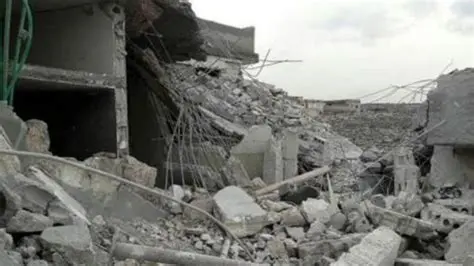
Airstrikes carried out by Jordan on Monday night against positions in southern Syria—allegedly linked to the jihadist group Islamic State (IS)—have triggered a diplomatic rift between the two nations. The friction stems from a lack of prior coordination and the fact that the strikes resulted in civilian casualties, including children.

RELATED:

Israeli Actions in Syria May Amount to War Crimes, UN Warns

On Tuesday, the Syrian Foreign Ministry criticized the Hashemite Kingdom for conducting the military operation without prior coordination, describing the action as completely unacceptable and a violation of Syria’s national sovereignty.

The Syrian Foreign Ministry also suggested that certain suspicious groups might be attempting to strain relations between Damascus and Amman, though it provided no further details regarding this claim.

Jordan framed the airstrikes as retaliation for an attack last Friday on a church in the western part of the kingdom, which left nine people dead and approximately 40 injured. Jordanian authorities attributed the attack to the Islamic State, although the organization has not yet claimed responsibility.

#Syria hardened its stance on the Jordanian attack carried out yesterday in the South.

While the Syrian Foreign Ministry initially expressed "reservations" about the Jordanian airstrikes in a statement last night, this morning, as the civilian death toll was confirmed, Damascus… pic.twitter.com/RvgfBLFVIV

— Qalaat Al Mudiq (@QalaatAlMudiq) October 27, 2026

Mohammad Momani, Jordan’s Minister of Government Communications and government spokesperson, stated on the social media platform X that the strikes were launched in response to the movements of these organizations and their acts against Jordan’s national security.

Momani expressed regret over the civilian casualties, maintaining that the armed forces had taken every possible precaution to avoid harming innocent people.

Syrian authorities confirmed that seven people were killed in the strikes, which targeted four areas in the southern province of Daraa. The victims included three children and an 80-year-old man.

Both countries have confirmed the establishment of an urgent joint committee to strengthen coordination in the fight against terrorism. Meanwhile, Momani expressed a commitment to developing bilateral ties for the mutual benefit of both nations.

#Syria | At least 14 people were killed and 11 injured in an explosion at a temporary weapons depot near Sarmada in Idlib province.
Rescue teams are searching the rubble for survivors, while authorities have not yet determined the cause of the blast.#Idlib #teleSUREnglish pic.twitter.com/q5utCtzkFE

— teleSUR English (@telesurenglish) September 9, 2026
  •  

Spanish Judge Requests Government Declassification of CNI Reports on Ceuta

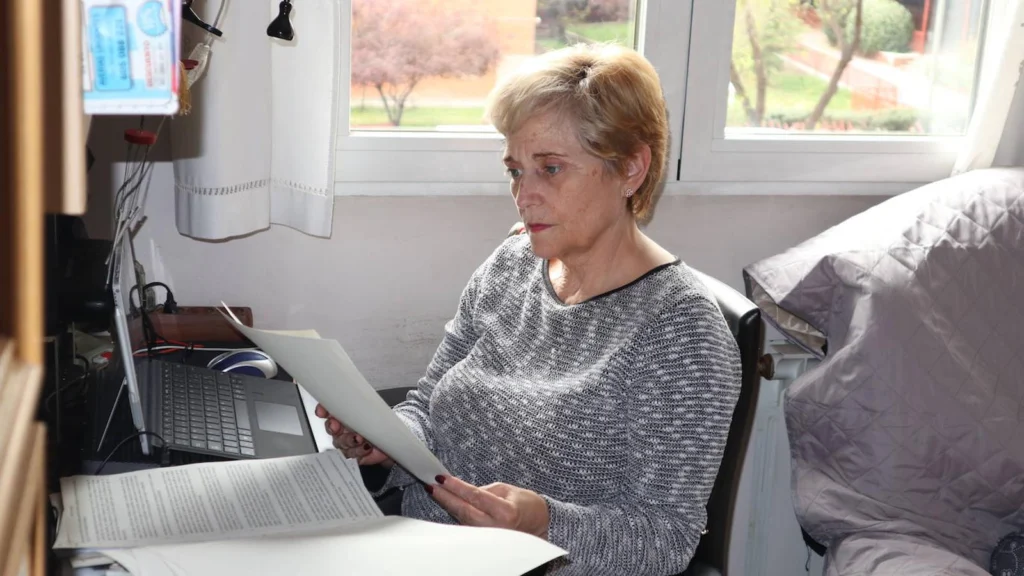
On Tuesday, National Court Judge María Tardón requested that the Spanish government urgently declassify all reports from the National Intelligence Center (CNI) concerning the mass entry of migrants into Ceuta from Morocco, which took place on July 30 and 31, 2026. The magistrate set a maximum deadline of 15 calendar days for the submission of the documentation.

RELATED:

Ceuta Migrant Camp Evacuation: 5 Key Facts on Spain’s Latest Operation

In her request, Tardón asks for all notes and reports produced by the CNI and distributed to authorities from July 30, 2026, onwards, regarding investigations into the events. She also requests any documents pertaining to the actions taken by Moroccan authorities up to the present date.

Furthermore, the judge demands the disclosure of the list of authorities who received the declassified notes from July 27 and 30, as well as any subsequent communications. The requested documents include a note sent by the CNI to Moroccan intelligence services, along with any alerts regarding irregular migration from Morocco to Spain issued throughout the month of July.

In the magistrate’s view, this information is essential for clarifying the facts. The objective is to determine which authorities were aware—and from what point in time—of the planned mass entry scheduled for July 30, 2026, as well as what decisions were taken or, conversely, failed to be taken.

Tardón maintains that these documents will shed light on the actions taken by the authorities of the Kingdom of Morocco. The judicial request notes that the government had already declassified information regarding the migration crisis—including CNI notes and communications—on September 8; therefore, she argues that this new disclosure is entirely compatible with the requirements of state security and defense.

#Spain’s government will declassify around 40 intelligence and security documents related to the mass entry of migrants into #Ceuta from Morocco on July 30 and 31, seeking to clarify what authorities knew ahead of the crisis and whether #Morocco played a role in the unprecedented… pic.twitter.com/fYfEDCzDd9

— Morocco World News (@MoroccoWNews) September 9, 2026

The judge argues that state security may have already been compromised in the context of the events under investigation: “Determining who was responsible for this attack on state security is the objective of the ongoing investigation,” the judicial document states.

In addition to the declassification of information, Judge Tardón has requested that the government urgently authorize CNI (National Intelligence Center) officials to provide testimony in court regarding the events in question. This measure is part of the judicial inquiry into the mass arrival of people in the autonomous city.

On July 30 and 31, more than 80,000 people entered Ceuta from Morocco, either by swimming or on foot. While most subsequently returned to Moroccan territory, an indeterminate number of migrants—from both the Maghreb and sub-Saharan Africa—remained in the city.

Since then, Ceuta has been grappling with a socioeconomic crisis, marked by expressions of discontent toward the government regarding its handling of the emergency. The judicial investigation seeks to establish what information was available prior to the events and what responsibilities may have existed on both the Spanish and Moroccan sides.

#Spain | A Moroccan naval incursion near Ceuta has renewed concerns over maritime sovereignty and border security.
The incident highlights longstanding sensitivities between Madrid and Rabat.#Morocco #Ceuta #teleSUREnglish pic.twitter.com/EBjubtX4rp

— teleSUR English (@telesurenglish) October 14, 2026
  •  

Venezuela to Host the Second International Festival of Arts and Disability

The second edition of Venezuela’s International Festival of Arts and Disability, “DiverFest,” will take place from November 2 to 21, featuring performances in dance, theater, and pantomime, alongside workshops, talks, and virtual activities focused on cultural inclusion. The European Union (EU) delegation in Caracas announced on Tuesday that it is supporting the event in collaboration with the organizers.

RELATED:

Venezuelan Acting President Delcy Rodriguez Demands End of Sanctions at Culture Awards

The festival will be divided into three phases. From November 2 to 6, the first stage will focus on direct engagement, research, and the exchange of knowledge with individuals with Down syndrome.

Between November 11 and 15, there will be an intensive program of dance, theater, and pantomime, as well as workshops, discussions, conferences, and book presentations. According to the EU, these activities will center on art, disability, and technological innovation as applied to this sector.

The third stage, scheduled for November 17 to 21, will be primarily virtual, with the exception of an in-person closing event. It will include workshops on inclusive dance and the use of sign language in theater, with activities specifically designed for people with disabilities, those with limited mobility, or those living in other regions of the country.

¡El arte no tiene barreras ni etiquetas! 🎭✨

🇻🇪🇫🇷🇪🇺 La segunda edición de El DiverFest, el Festival Internacional de Artes y Discapacidad de Venezuela, presenta tres semanas de talento, música, teatro, danza y diversidad.

Conoce aquí la programación: https://t.co/59enHoDEHn pic.twitter.com/xB4SBdEUDR

— Unión Europea en Venezuela 🇪🇺🇻🇪 (@UEenVenezuela) October 27, 2026

The text reads, “Art knows no barriers or labels! The second edition of El DiverFest—the International Festival of Arts and Disability in Venezuela—presents three weeks of talent, music, theater, dance, and diversity.”

Partnerships and Community Participation

DiverFest is the result of a cooperation project between Producciones DV and the French Embassy in Venezuela, with the support of the civil association Apoye. For this edition, the festival has expanded its reach by bringing in the EU delegation in Caracas as a new partner.

The first edition was held in 2025; since its inception, the event has been dedicated to highlighting, promoting, and empowering the artistic talent of people with disabilities, fostering cultural inclusion and equal opportunity through the performing and visual arts, the European delegation noted.

Meanwhile, the Kümelen Day Center will present an arts festival titled A Journey Through Time ( in spanish Un viaje en el tiempo), featuring individuals with functional diversity. The event will bring together music, dance, theater, and audiovisual media at the Sala Payró in the Teatro Auditorium.

The program will include a tango performance coordinated by Germán Suárez, a choreographed piece set to Astor Piazzolla’s “Adiós Nonino,” a theatrical adaptation of Alice in Wonderland, the audiovisual projection Changing Channels ( in spanish Cambiando de dial), and a stage production titled Between Seasons ( in spanish Entre estaciones). The event will conclude with a musical performance by the guest group Aunquinco Malambo.

🇻🇪 The U.S. has removed Venezuela from its list of investment restrictions, signaling a shift in Washington’s sanctions policy toward the South American nation.

What does this decision mean for Venezuela’s economic prospects, foreign investment, and its oil sector? How could it… pic.twitter.com/LSJKaOlTM3

— teleSUR English (@telesurenglish) October 26, 2026
  •  

Footballers Harry Kane and Alexia Putellas Win the 2026 Ballon d’Or

On Monday, Harry Kane and Alexia Putellas won the 2026 Ballon d’Or at a ceremony held in London—the first time the event has taken place outside of France since the award’s inception in 1956.

RELATED:

Diego Maradona’s Debut: 50 Years Since Football Changed Forever

English forward Harry Kane received the award for the first time, finishing ahead of Frenchman Kylian Mbappé (second) and Spaniard Lamine Yamal (third) in the voting. The award recognizes the best footballer in the world for the season and cements Kane’s status as a leading figure in international football.

In the men’s rankings, Rodri placed fourth and Fabián Ruiz tenth, while Lionel Messi finished fifth.

Meanwhile, Spain’s Alexia Putellas claimed her third Women’s Ballon d’Or, following her previous wins in 2021 and 2022. The midfielder was recognized as the best female player in the world, further building her legacy in one of the most significant awards in women’s football.

Golden nights for Alexia Putellas and Harry Kane as they win the 2026 Ballon d’Or Féminin and Ballon d’Or Awards.

Putellas, who led FC Barcelona Femení to the quadruple last season, wins the Award for a record-equalling third time.

Kane – England’s captain and striker for… pic.twitter.com/UsbFbbURYd

— Laureus (@LaureusSport) October 27, 2026

The Ballon d’Or is the most prestigious individual honor in world football, recognizing the best player on the planet each season. Its list of winners includes the sport’s greatest legends, topped by Lionel Messi—who holds the all-time record with eight awards—ahead of Cristiano Ronaldo, who has won five.

From a Spanish perspective, only Luis Suárez Miramontes, Alfredo Di Stéfano, and Rodri have managed to win the trophy—an award that, every year, captures the attention of the football world and fuels the debate over who delivered the best performance of the season.

A packed Monumental Stadium in Buenos Aires gathered to support the Argentine national team in its match against Benin and to share an emotional night as Lionel Messi bid farewell to the Argentine public. Thousands of fans gathered around the stadium and in the stands celebrated… pic.twitter.com/M5qEFV7IpY

— teleSUR English (@telesurenglish) October 7, 2026
  •  

Latin America Could Supply Alternative Marine Fuels

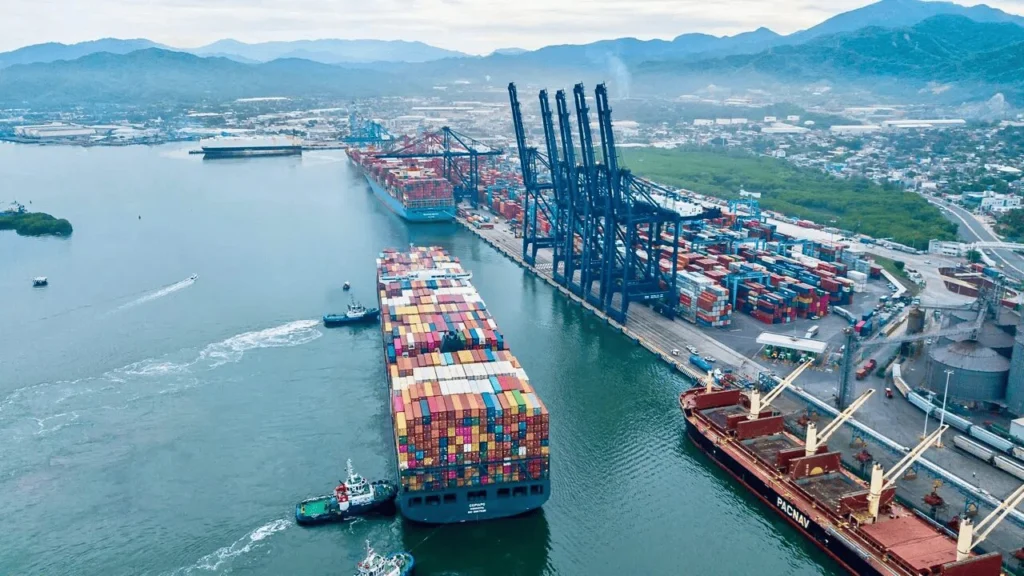
“Latin America has the potential to produce and supply alternative marine fuels, although the development of regional supply hubs will depend on maritime traffic, cargo volumes, and production conditions.” This was stated on Tuesday by Adrian Tolson, International Bunker Industry Association (IBIA) president, in comments to the portal Mundo Marítimo.

RELATED:

European Parliament Urges to Abandon Fossil Fuels Faster

According to the expert, the key question is whether countries in the region will prioritize the export of alternative fuels or the strengthening of their own domestic bunker supply markets.

“It is most likely that ports with high cargo volumes in countries such as Brazil, Argentina, and potentially Peru will become the first hubs for the supply of alternative fuels,” Tolson asserted.

He identified Brazil, Peru, Colombia, and Argentina as potential suppliers of alternative marine fuels—specifically biofuels. Brazil benefits from its established ethanol industry, while countries with abundant renewable resources could participate in the production of renewable fuels of non-biological origin (RFNBOs).

“Chile, for example, has already generated considerable interest as a producer of green hydrogen,” the IBIA president noted.

Hydrogen groups want Brussels to revise RFNBO production rules by year-end, postpone additionality and monthly matching requirements until 2035, and protect first-mover projects. They warn regulatory uncertainty is delaying investment.https://t.co/RzUbIPNKvQ#Hydrogen #RFNBO

— Fuel Cells Works (@fuelcellsworks) September 24, 2026

Regarding the available alternatives, Tolson maintained that liquefied natural gas (LNG) remains commercially attractive, particularly when renewable natural gas—which can help reduce the greenhouse gas footprint—is available. He added that LNG continues to be the most popular alternative marine fuel and could retain that position for some years to come.

However, he expressed caution regarding hydrogen-derived RFNBOs, citing their high costs and the investments required to develop compatible vessels.

#Europe | The European Parliament calls for a faster phaseout of fossil fuels, pushing for stronger climate action and a transition toward renewable energy amid growing concerns over global warming and energy security.#ClimateChange #teleSUREnglish pic.twitter.com/e4Sl9rBElm

— teleSUR English (@telesurenglish) October 23, 2026
  •  
❌