❌

Reading view

U.S. Intel Confirms This Is China’s Secret Spaceplane (Updated)

The U.S. Defense Intelligence Agency (DIA) has confirmed that an image that has been circulating online for years does indeed show an experimental Chinese reusable spaceplane in orbit. A newly released higher-resolution copy of the image underscores that the design is nearly a dead ringer for the X-37B miniature space shuttles now operated by the U.S. Space Force.

DIA included the higher-resolution image of the Chinese spaceplane in a new unclassified report on global security challenges outside of the Earth’s atmosphere, which was released yesterday. A satellite belonging to Maxar Technologies (now Vantor) captured the image, but when exactly remains unclear. It does have a 2024 copyright date.

The image shows a miniature space shuttle-like design with small wings and twin vertical tails. It also has upward-opening doors above a central payload bay. There is also an extension at the tail end with solar panels seen deployed on either side. There are what look to be side-by-side ventral bays, which are likely for the main gear in a tricycle landing gear configuration. Overall, the core design is extremely similar to that of the U.S. X-37B, which also features tricycle landing gear and can also be fitted with an extended payload module at the tail. One major difference is that the wings on the Chinese design have a much longer chord compared to the X-37B.

A side-by-side comparison of the on-orbit shot of the experimental Chinese reusable spaceplane (at left) and a U.S. X-37B fitted with an extended payload module being prepared for launch (at right). Vantor/U.S. Space Force
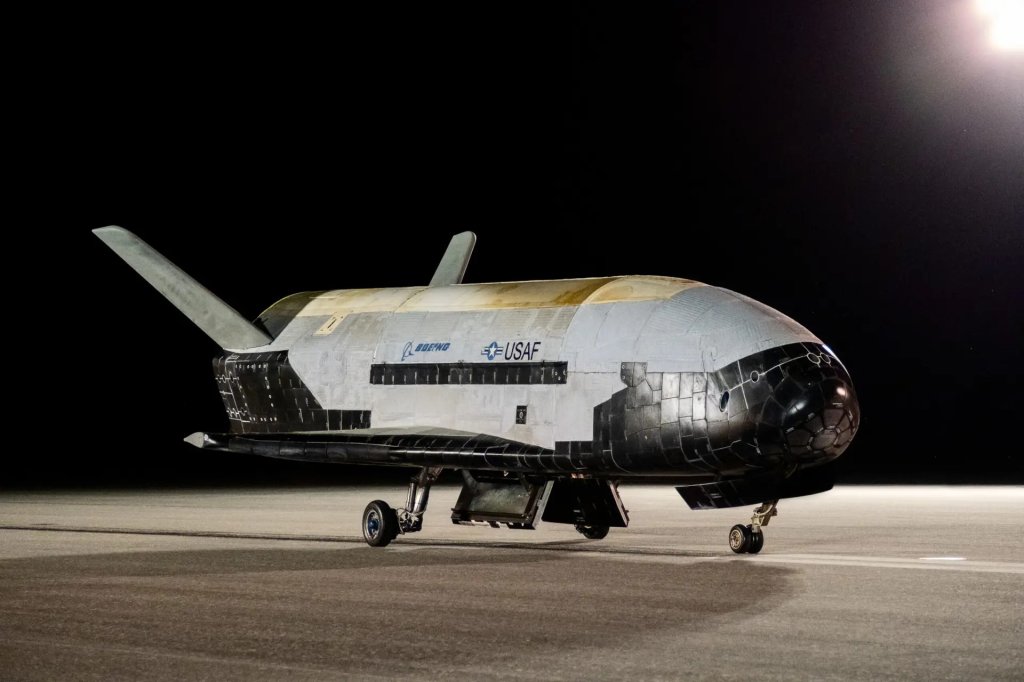
Another look at an X-37B, seen here sitting on its tricycle landing gear after returning from a mission in space. USAF The X-37B used on the OTV-6 mission on the flight line at the Kennedy Space Center after its return to Earth on November 12, 2022. USAF

“A key capability for reusable space activities are spaceplanes like this PRC [People’s Republic of China] Spaceplane captured by Maxar. Spaceplanes can launch into orbit to place objects in space or even test them and return to earth [sic],” reads the caption to the picture in DIA’s report.

As noted, the basic fact of the existence of this image is not new. U.S. Space Force Col. John Patrick, then head of U.S. Space Forces-Korea (SPACEFOR-KOR), included a much lower-resolution version in a presentation at the Open Space Forum in South Korea in 2024. It was also not immediately clear at that time whether or not the picture simply showed an X-37B. TWZ had reached out at the time to the U.S. Space Force and Maxar for more information, and both had declined to comment. Two X-37Bs were built, and they have been sent on eight orbital missions, in total, since 2010. The Orbital Test Vehicle 8 (OTV-8) mission was launched on August 22, 2025.

X-37B in orbit photographed by ground-based telescopes? pic.twitter.com/YPj8I4cQmZ

— 笑脸男人 (@lfx160219) November 8, 2024

China is understood to have conducted four separate orbital spaceplane missions using the same experimental vehicle since 2020. Three of those missions had concluded before Col. Patrick gave his presentation. The most recent launch occurred on February 7 of this year, and the vehicle has not yet returned, at least as far as we are aware.

On the third mission, which lasted from December 14, 2023, to September 6, 2024, the Chinese spaceplane was observed releasing multiple smaller objects into orbit. What those payloads may have been remains unknown, but they could have been released from the main payload bay, which is seen open in the on-orbit image. The bay could have opened without any subsequent release of objects on either of the two prior missions, as well.

As an aside, the spaceplane appears to have released at least one more object earlier this year in the course of its latest mission.

A secretive airbase in the northwest end of China, sporting one of the longest runways in the world at 16,400 feet, looks to be where the spaceplane has landed after missions. The facility, which has been expanded massively in recent years, is now loosely akin to America’s top-secret proving ground at Area 51, and has been the site of other advanced aviation test efforts.

DIA’s report also says that “China has two primary spaceplane models: the Shenlong and Tengyun,” but does not specify which one is seen in the image. The name Shenlong has been commonly used to refer to the spaceplane China has been experimenting with to date. Images said to show a prototype or test article of this design slung underneath an H-6 bomber for testing purposes had emerged in 2007.

Images that emerged in 2007 of a reusable spaceplane prototype, or a related test article, referred to as Shenlong, underneath an H-6 bomber. Chinese internet

The state-run China Aerospace Science and Industry Corporation (CASIC) unveiled the Tengyun design in 2016 as part of a so-called two-stage-to-orbit system that uses a mothership aircraft flying within the atmosphere as part of the launch method rather than a traditional space launch rocket. As of 2020, CASIC was aiming for a live test of Tengyun in 2025, but it is not immediately clear whether or not that occurred.

Images showing wind tunnel testing of a Chinese two-stage-to-orbit concept. Chinese internet

There have been other spaceplane developments in China in recent years. This includes designs from the China Aerospace Science and Technology Corporation (CASC) and Aviation Industry Corporation of China (AVIC) subsidiary Chengdu. The design from Chengdu is called Haolong and has been in development officially as an option for resupplying the country’s Tiangong space station.

👀 They seem not only got a model but also a full-scale prototype.
HaoLong-1 cargo spaceplane https://t.co/VI1Yoh3sRj pic.twitter.com/Dthfd1gi1v

— CNSPACE (@CNSpaceflight) November 11, 2024

In general, “spaceplanes are … reusable and feature enhanced maneuverability, making them more suitable for certain missions than traditional satellites,” DIA’s report notes.

TWZ has highlighted in the past how reusable space shuttle-like vehicles offer ideal platforms for rapidly deploying small satellites and any other payloads into orbit. In this way, they can be critical assets for space-based experimentation, as well as operational activities. This could include intelligence gathering, and even on-orbit attacks, areas of clear interest to the Chinese government.

As we often mention in the context of the X-37B, spaceplanes also have distinct advantages when it comes to rendezvousing with and maneuvering very close to other objects in space. They can execute course changes and other maneuvers in ways that traditional satellites cannot. All of this only underscores their potential as weapon systems, as well as for gathering intelligence. The fact that a Maxar (now Vantor) satellite took an on-orbit picture – a service the company is known to offer – of a Chinese spaceplane further highlights the kind of cat-and-mouse games that are increasingly emerging in space. The general risks posed by these kinds of activities were recently thrust into the public eye by the unprecedentedly close shadowing of a commercial radar imaging satellite tied to Ukraine by another satellite belonging to Russia.

China has been making massive investments, in general, in new space-based intelligence and other capabilities in recent years. Chinese space developments have now also extended into reusable space launch rocket boosters. Space launch company LandSpace became the first in China to achieve a successful recovery of a reusable space launch rocket booster on land in August. That followed CASC’s successful recovery of a reusable space launch rocket booster at sea using a specially configured ship the month before.

In general, “access to space traditionally requires expendable spacecraft: single-use launch vehicles, satellites, and one-time use capsules designed to maximize performance. Reliance on expendable vehicles has made access to space expensive and exclusive,” DIA’s report explains. “Reusable technologies, while even more difficult and expensive to develop and build, stand to greatly reduce the cost of spaceflight by recovering, refurbishing, and reusing rocket stages, fairings, and capsules.”

Chinese spaceplanes, one of which we have not definitively gotten a view of in orbit, look set to become an increasingly important part of this growing ecosystem.

Update: 6:32 PM ET –

Vantor has now provided an additional copy of the image of the Chinese spaceplane, elements of which look to be redacted, and some additional details. The company has confirmed it was taken on May 28, 2024, by the WorldView-3 satellite at a range of just under 56 miles (90 kilometers).

“There is a separate satellite docked to the aft section of the vehicle whose structure and solar arrays are visible,” Vantor also told us. “The spacecraft’s payload bay doors are visibly open.”

Contact the author: joe@twz.com

The post U.S. Intel Confirms This Is China’s Secret Spaceplane (Updated) appeared first on TWZ.

  •  

USAF Orders ARRW Hypersonic Missile Into Production, The Same Weapon It Nearly Cancelled

The U.S. Air Force has handed Lockheed Martin a $694 million contract for the production of AGM-183A Air-launched Rapid Response Weapon (ARRW) hypersonic missiles. In 2023, the service had moved to cancel ARRW, which had been in line to be the U.S. military’s first operational hypersonic weapon. At the time, we had reservations about the service’s intent and speculated the missile could make a major comeback or continue development in a classified setting. The program has since made an incredible turnaround, and there are already plans for another variant that will be able to use an all-new seeker to hit moving targets, including enemy warships.

The ARRW contract was awarded on September 29, but only announced today. It is not immediately clear how many missiles are to be built under this deal or when the Air Force expects to start taking delivery of them. The Air Force has previously disclosed plans to integrate the missiles onto its B-52 and B-1 bombers. Other aircraft with sufficiently large payload capacities and physical space to carry outsized stores could potentially carry AGM-183As, or variants thereof, in the future.

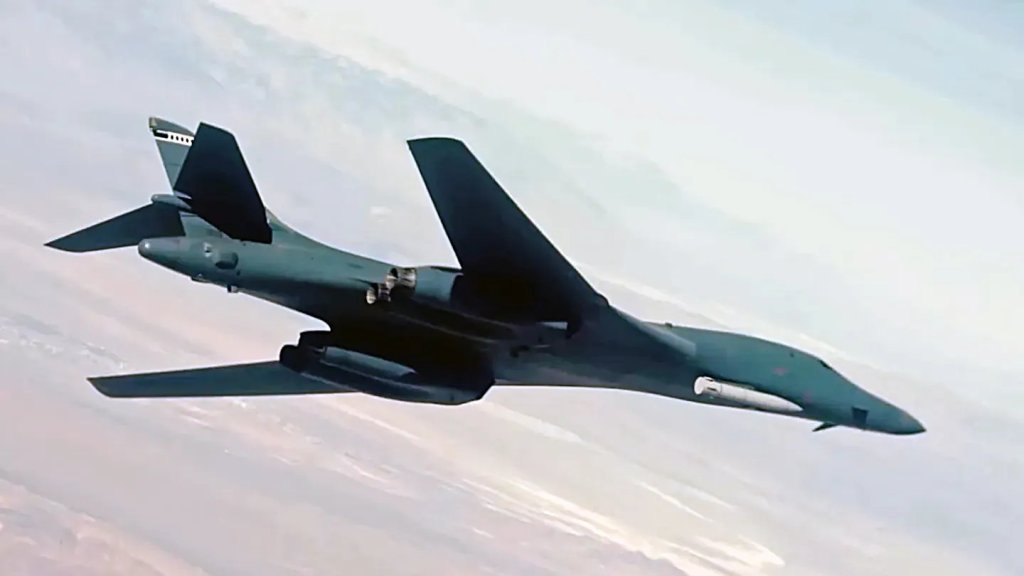
A B-1 bomber seen carrying an ARRW missile, or a relevant test article, on an external pylon during a flight test. USAF capture

“The contract was executed under the Department of War’s Enterprise-Wide Agile Acquisition Contract to modernize America’s Arsenal of Freedom,” according to an Air Force press release. “This milestone marks the formal transition of the boost-glide hypersonic missile program from prototyping and flight testing into production, solidifying the Air Force’s commitment to fielding standoff, high-speed strike options.”

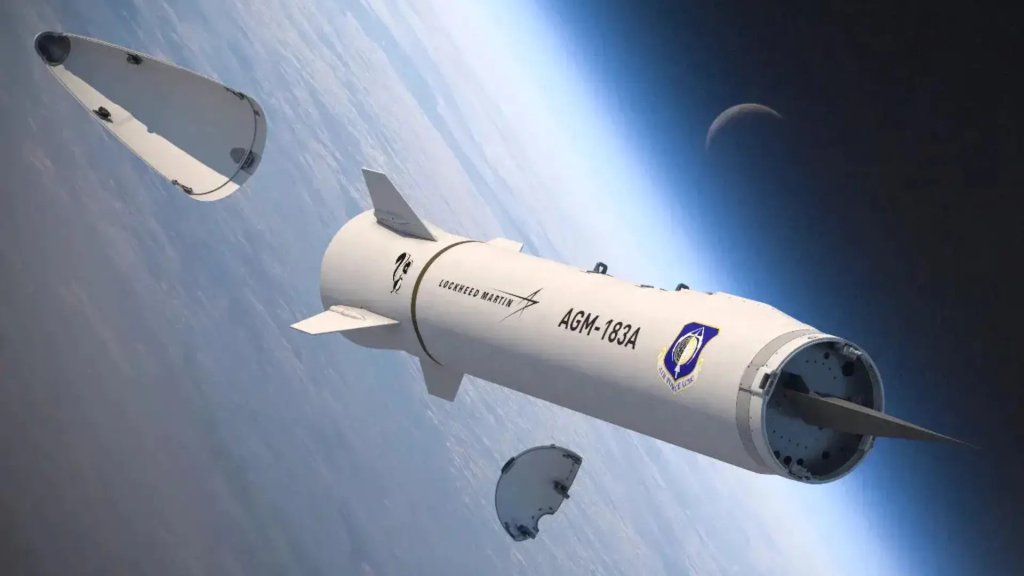
As noted here, the AGM-183A is a so-called boost-glide vehicle-type hypersonic weapon, which uses a rocket booster to bring it first to an optimal speed and altitude. The nose cone on ARRW then breaks away, and a wedge-shaped unpowered boost-glide vehicle concealed within is released.

A rendering depicting an ARRW hypersonic missile’s nose cone breaking away to reveal the unpowered boost-glide vehicle inside. Lockheed Martin

The vehicle then glides to its target along a relatively shallow flight path within the Earth’s atmosphere at hypersonic speed, defined as anything above Mach 5. It is capable of maneuvering along the way, sometimes erratically. The mix of speed, flight trajectory, and maneuverability creates significant challenges for opponents in terms of spotting and tracking the glide vehicle, let alone attempting to intercept it. As a result, hypersonic weapons of this type offer particular benefits for piercing enemy air defenses to very rapidly strike time-sensitive and otherwise high-value targets.

The ARRW production contract “is a turning point in our advanced weapons roadmap,” Secretary of the Air Force Troy Meink said in a statement accompanying today’s release. “By moving ARRW from test to production, we’re providing our combatant commanders with a credible, high-speed strike weapon capable of penetrating the most advanced anti-access and area-denial systems.”

“Fielding ARRW enhances our ability to hold targets at risk anywhere around the world,” Air Force Chief of Staff Gen. Ken Wilsbach said in his own statement. “This hypersonic weapon provides the Joint Force a flexible and rapid response option for highly contested environments.”

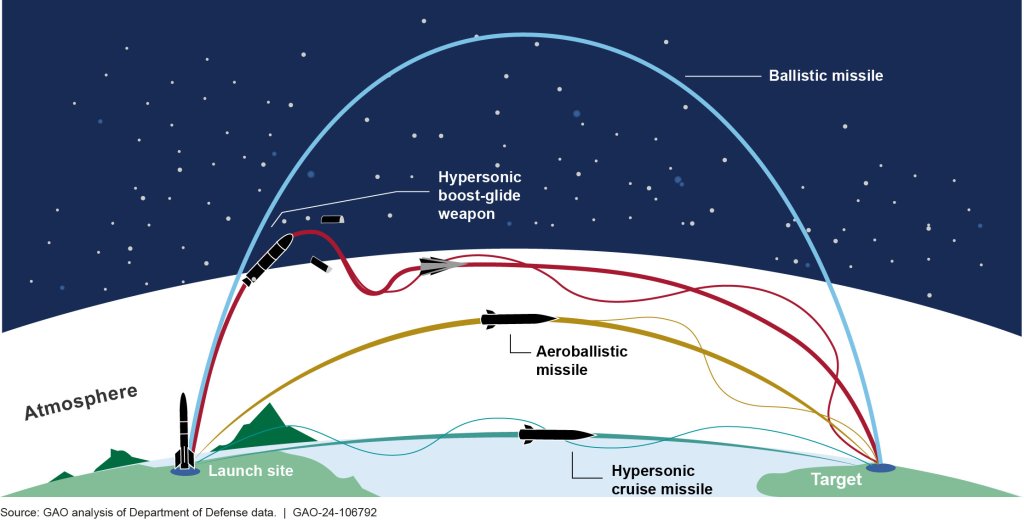
A graphic offering a very general comparison of the typical flight trajectories of hypersonic boost-glide vehicle weapons and air-breathing hypersonic cruise missiles, as well as aeroballistic (or quasi-ballistic) missiles and traditional ballistic missiles. GAO

As mentioned, the Air Force had moved to cancel ARRW in 2023, following a number of failed flight tests. The explicit intent at the time was to shift resources to the Hypersonic Attack Cruise Missile (HACM) effort. HACM is an air-breathing hypersonic cruise missile that functions in a completely different way from ARRW. HACM is still in development, and the program has now moved into flight testing, as TWZ was first to report earlier this month.

There had already been steady signs in recent years that ARRW’s fortunes were changing and that it had not actually been axed, despite the Air Force’s stated plans to do so. The Air Force’s 2026 Fiscal Year budget request last year confirmed that the service had fully rebooted the program and was seeking new funding to procure actual missiles.

The service’s 2027 Fiscal Year budget request, released earlier this year, revealed further plans “to begin [ARRW] INC 2 [Increment 2] technology efforts such as but not limited to integrating pre-planned product improvements, design, trade studies, hardware upgrades, facilitization, affordability initiatives, and testing.”

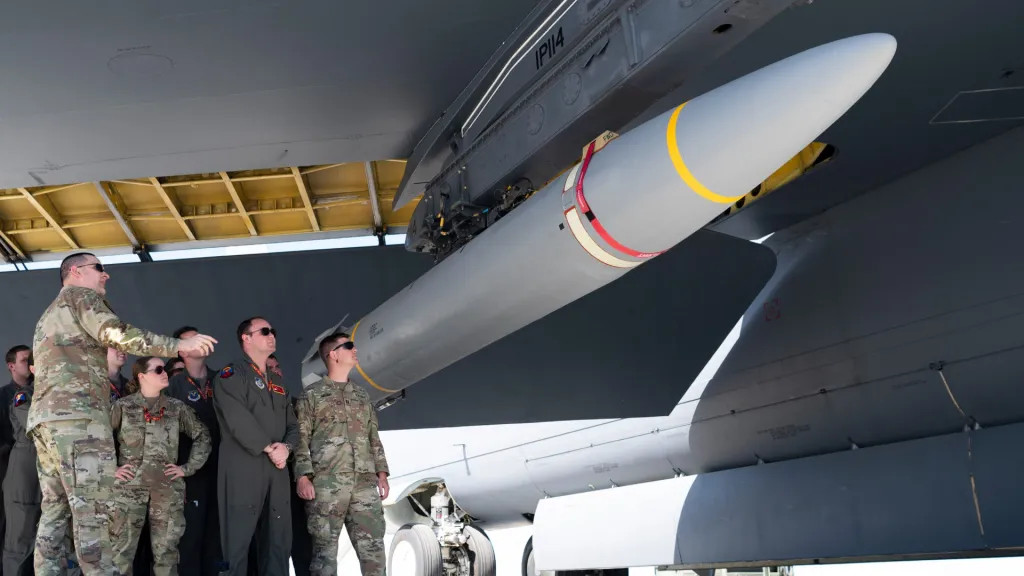
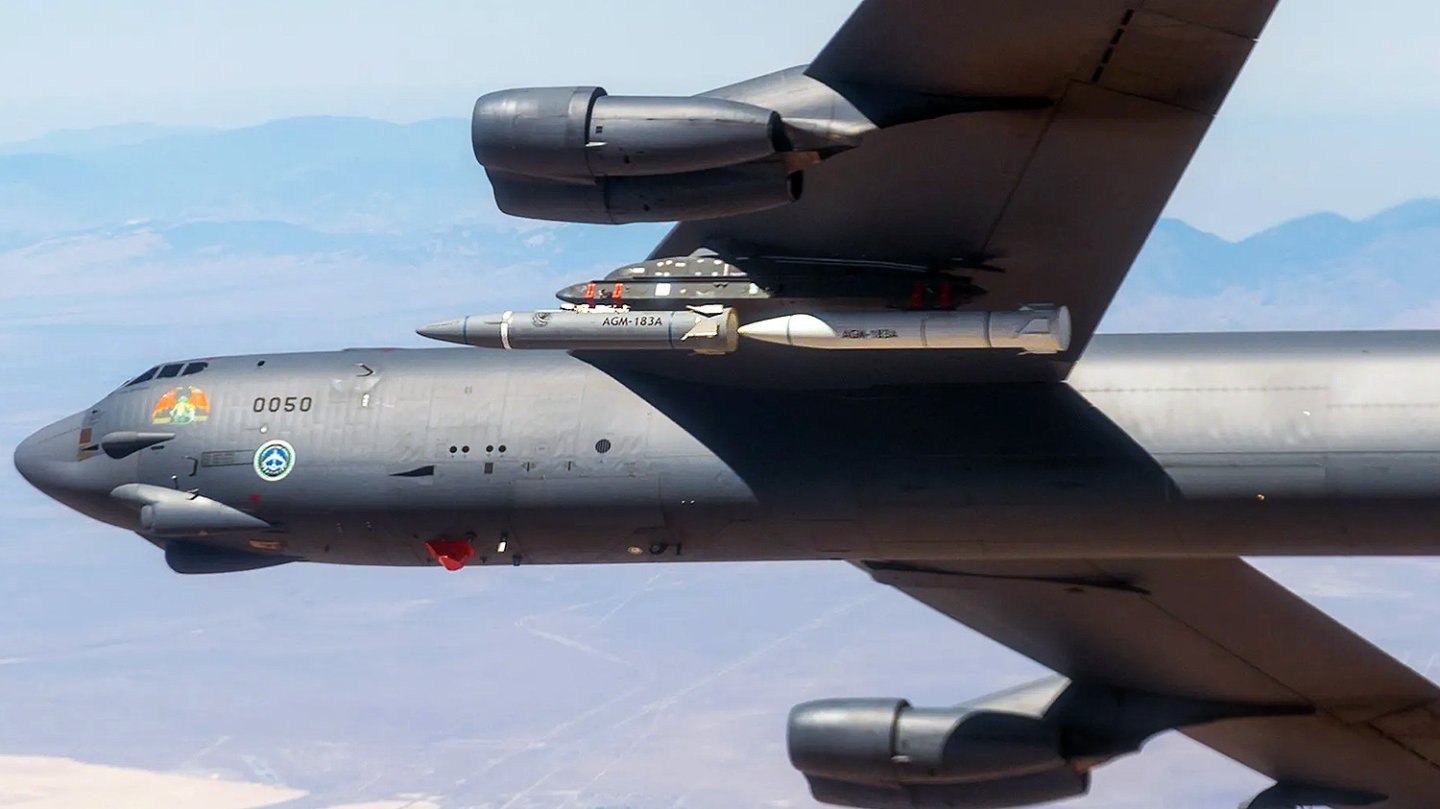
A live AGM-183A ARRW missile seen under the wing of a B-52 bomber at Andersen Air Force Base on Guam ahead of a test in 2024. USAF

A request for $296 million would support “the design, test, and evaluation of Air-Launched Rapid Response Weapon (ARRW) Increment 2 with terminal seeker and data link capability and other cost reduction production initiatives into ARRW,” those same documents added.

In general, the U.S. Air Force has historically framed hypersonic weapons, including ARRW and HACM, as being especially critical for success in future conflicts, especially high-end fights, such as one in the Pacific against China. This was underscored by the launch of an AGM-183A with a live warhead from a B-52 flying from Andersen Air Force Base on Guam in 2024. The future anti-ship variant could be even more relevant in a Pacific context.

As TWZ has written previously:

“…the Guam test sent clear signals to China. The Air Force has made no secret of how important it views the development and fielding of hypersonic weapons as part of larger preparations for a potential future high-end fight against the Chinese People’s Liberation Army (PLA) in the Pacific. This is further underscored by the fact that the mention of the ‘terminal seeker and data link capability’ for Increment 2 of ARRW is actually contained in the Pacific Deterrence Initiative (PDI) section of the Pentagon’s Fiscal Year 2027 budget request.”

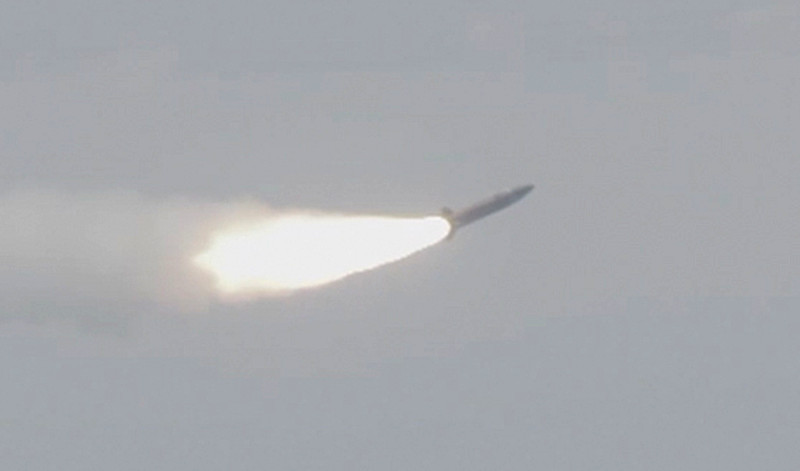
A low-quality image of an ARRW after launch during a previous live-fire flight test. USAF

“In the context of a major conflict in the Pacific, there would also be a very high demand for prompt, long-range anti-ship capability. The ability to conduct those strikes even in the face of dense anti-air defenses would be even more attractive for engaging very high-value vessels, such as China’s growing fleets of aircraft carriers or big deck amphibious assault ships. The PLA Navy’s (PLAN) combat fleets, overall, continue to grow in scale and scope at a prodigious rate, as well. This, in turn, has put additional emphasis on the development and fielding of new and improved anti-ship capabilities that can be air-launched, as well as employed from the maritime and ground domains, across the U.S. military in recent years. Increment 2 ARRWs could also offer another means to strike mobile, high-value targets on land, such as ballistic missile transporter-erector-launchers.”

China’s aircraft carriers Shandong, at left, and Liaoning, at right, sail together, along with various escorts, as elements of their air wings fly overhead, in 2024. Chinese state media

“For its part, the PLA has been actively developing and fielding various types of hypersonic weapons, including boost-glide vehicle designs. Its ever-growing arsenal of traditional ballistic missiles now includes several air-launched types, including ones with nuclear and conventional warheads. The latter are widely believed to be capable of being employed against enemy ships, as well as targets on land.”

If nothing else, after moving to cancel the ARRW three years ago, the Air Force has now fully reversed course and has placed its first order for production examples of this hypersonic missile.

Contact the author: joe@twz.com

The post USAF Orders ARRW Hypersonic Missile Into Production, The Same Weapon It Nearly Cancelled appeared first on TWZ.

  •  

90 Days No Help: Fortress America’s Goal To Make Bases Resilient Bastions In A Crisis

The Pentagon is reportedly aiming for U.S. military installations to be able to continue essential operations for at least 90 days, or roughly three months, without any external support. The installation of new small nuclear reactors and other infrastructure is key to this part of a larger plan called Fortress America. The main intent is to ensure America’s armed forces can remain functional and ready to protect the homeland in the face of any massive disruptions to power grids and other supply chains due to major conflicts or other crises. For years, TWZ has been sounding the alarm about the glaring vulnerabilities of America’s critical civilian energy infrastructure, including to drone swarms and cyberattacks, which could cripple key military capabilities right where they live.

Fox News was first to report on the 90-day base resiliency goal yesterday, citing documents it said it reviewed. This is part of the extremely wide-reaching Fortress America initiative the Pentagon announced last month, which covers everything from improved physical and cyber defenses at facilities to securing reliable access to critical defense industrial resources. The “Fortress” in Fortress America is technically an acronym that stands for Federal Operations for Resilience, Troop Resources, Energy Supply, and Survivability.

Today, at Secretary Hegseth’s direction, the Department of War is announcing FORTRESS America—a national insurance policy for the American homeland.

Every major military installation in America will generate its own power.

We are bringing our critical supply chains home.

We… https://t.co/2kMQtw2r81 pic.twitter.com/Ptu8VQ5pv3

— Sean Parnell (@SeanParnellASW) September 30, 2026

“Under FORTRESS, every major military installation in the continental United States would be expected to sustain essential operations independently for at least 90 days, including access to electricity, water, fuel and communications,” according to Fox.

Fox News’ story also includes comments about Fortress America from Pentagon chief spokesperson Sean Parnell, but it is unclear if he explicitly confirmed the 90-day target. TWZ has reached out for more information.

Parnell did put particular emphasis on the importance of reducing reliance on civilian power generation as part of the larger Fortress America plan. Previous reports have said that Parnell was key to formulating this initiative. He has also been discussed as a potential frontrunner to become the next Secretary of the Army.

“Power is combat now. Without electricity, you lose communications, water, logistics, assembly lines and just basic military command structures,” Parnell told Fox. “We don’t want to rely on standard civilian municipal infrastructure to run our national defense. We just simply can’t. It’s an intolerable risk.”

It should be pointed out here that some U.S. military bases do have their own power plants now, but this is not something that is far from universal across the board.

A train seen delivering coal to the power plant at Eielson Air Force Base in Alaska. USAF

Secretary Pete Hegseth made similar comments when he first unveiled the Fortress America initiative during a speech to service members at the U.S. Marine Corps’ base in Quantico, Virginia, in September.

“We are launching Fortress America, a national insurance policy for the American homeland,” Hegseth said at that time. “Every major military installation in America is going to generate its own power, independent of the civilian grid. If an adversary takes down the grid by cyber attack, by sabotage, or by any means, our bases stay lit, our aircraft keep flying, our command centers never go dark.”

Fox News’ report says that “portable nuclear reactors,” as well as “large-scale battery storage and microgrids capable of disconnecting military installations from the civilian electrical grid,” are key elements of the plan to achieve this independence when it comes to generating electricity.

The U.S. military, in cooperation with the Department of Energy, has already been heavily investing in the development and installation of so-called microreactors at bases across the country. In August, the U.S. Army, in partnership with the Pentagon’s Defense Innovation Unit (DIU), notably cut new deals with five companies as part of a plan to install more than 20 microreactors at bases, starting in 2028. This effort, called the Janus program, is not limited to Army installations.

The video below offers an overview of one of several microreactor designs the U.S. military is currently pursuing.

Establishing new microgrids and other supporting energy infrastructure has also been an important focus for the U.S. military in recent years.

Details about how bases are expecting to maintain supplies of water and fuel, as well as communications connectivity, for 90 days or more are, as yet, still not entirely clear. All branches of the U.S. military have already been exploring new and novel options for ensuring the availability of water and fuel in future contingencies, though generally with more of an eye toward tactical operations. Relevant developments, including the possibility of using a process called carbon transformation to turn ambient air into fuel, could easily be applicable in a homeland defense scenario.

Fox News’ story also makes no mention of how sufficient food for personnel at these facilities would be sustained, but that would have to be part of the equation. In his remarks in September, Secretary Hegseth also made clear that making sure supply chains delivering munitions, medicine, and even blood would be unbroken in any future crisis was part of the Fortress America vision. As already mentioned, the initiative also extends much more broadly into matters of physical force protection, cyber defense, and the resilience of America’s defense industrial base.

“For decades, we built the most powerful military in the world,” Hegseth said at Quantico. Then we “regrettably made it dependent on foreign mines for rare earths, on overseas factories for microchips, on foreign supply chains for weapons, and on a civilian power grid to keep the lights on at our bases.”

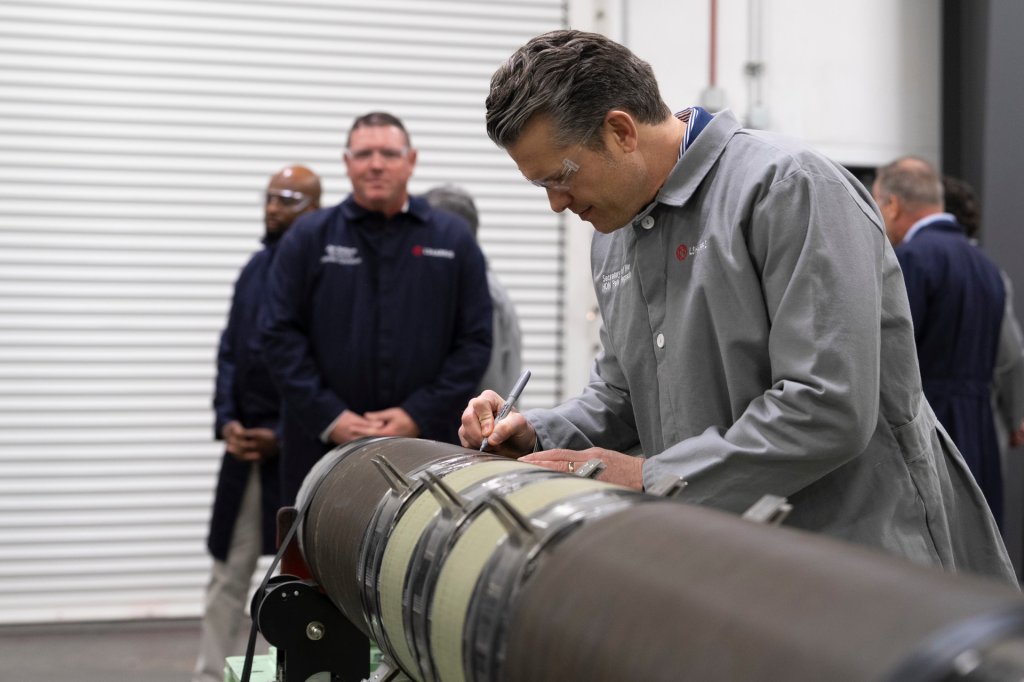
Secretary Pete Hegseth signs a missile component during a visit to a defense contractor’s facility in Febraury 2026. US Military

“We’re bringing our critical supply chains home: the rare earths, the specialty metals, the semiconductors, the propellants, mined in America, refined in America, built in America by American workers,” he added at the time. “We are building long-overdue strategic reserves, deep enough to fight through disruption.”

More specific details about how the Pentagon now intends to pursue these aims have yet to be more fully defined.

“The Under Secretary of War for Acquisition and Sustainment is directed to stand up the FORTRESS America Program Office within thirty (30) days,” according to a memo dated September 30, which was released after Hegseth’s September speech. “The Program Office shall report directly to the Under Secretary of War for Acquisition and Sustainment who will appoint a member of the Senior Executive Service to lead the day-to-day operations, assisted by a two-star Military Advisor, and shall begin as a lean core cell that scales to full operating capability within months – delivering results in weeks, not years.”

There is also a question of how much of the Fortress America initiative will actually be new. As mentioned, just when it comes to increased energy resiliency, including through the installation of new microreactors, this is something that has already been top of mind for the U.S. military for years now. In 2022, the U.S. Army had a publicly stated goal for every one of its bases to have its own microgrid by 2035 as part of a larger plan to reduce dependence on fossil fuels. In 2024, the Department of the Air Force rolled out its own Installation Infrastructure Action Plan (I2AP) that included a target to have new microgrids in place at 16 bases by Fiscal Year 2030. In May, the U.S. Navy announced plans to demonstrate the ability of the supercarrier USS Gerald R. Ford to act as a floating nuclear power plant as part of broader “energy resilience and mission assurance” plans.

A stock picture of the USS Gerald R. Ford. US Navy

The U.S. military has also already been heavily engaged in efforts to secure access to critical resources, especially rare Earth elements in light of China’s continued dominance in that market globally, and otherwise expand America’s domestic defense industrial base. Physical hardening of bases, especially against emerging drone threats, has been more of a heated debate, as TWZ has been following closely for some time now. However, even before Fortress America was unveiled last month, there had been signs that institutional attitudes were shifting.

“The [Fortress America] program aligns basing and infrastructure projects to ensure they are collectively advancing toward greater independence,” the aforementioned September 30 memo itself notes.

There are additional questions to be answered as to how the U.S. military expects to fund its expansive Fortress America ambitions and the schedules for implementing them. This will all be heavily influenced by how much the initiative leverages efforts that were already ongoing. At the same time, concerns about underinvestment in infrastructure modernization, in general, across America’s armed forces, and the worrisome cascading impacts thereof, are hardly new.

There are still key elements of the Fortress America initiative that have yet to be fully proven out. This is particularly visible when it comes to microreactors, which hold the promise of being simpler and safer to build and operate compared to traditional nuclear power plants. Despite significant progress with this technology just in recent years, environmental, proliferation, and other concerns continue to be raised. You can read more about all of this here.

Today, the Department of War will execute Operation Windlord, the first C-17 airlift of a nuclear reactor, in partnership with the Department of Energy and Valar Atomics.

Three C-17s Globemasters carrying the 8 modules of the Ward250 reactor will fly from March ARB to Hill AFB. pic.twitter.com/uIL7LMxACQ

— Isaiah Taylor – making nuclear reactors (@isaiah_p_taylor) February 15, 2026

On top of all this, it should be noted here that the U.S. military and the rest of the U.S. government already have mechanisms in place to ensure key functions can continue, even in the midst of the gravest of crises, such as a limited nuclear attack. This is known as continuity of government planning, and includes a network of hardened and otherwise resilient facilities designed to support continued military operations and other activities in those ‘doomsday’ scenarios. But these facilities are few in number and focus on strategic capabilities compared to what the Fortress America plan envisions.

At the same time, the dangers posed to civilian power grids in the United States, in particular, are only growing in scale and scope, both in the physical and cyber domains. Existing domestic U.S. energy infrastructure is aging and has been increasingly strained to meet routine day-to-day demands for decades now.

The potential for uncrewed aerial attacks on power plants and power lines has been real for years. The basic barrier to entry when it comes to weaponized drones, including converted commercial types, is also already low. Drone threats, broadly speaking, are only set to expand as swarming technology and artificial intelligence-driven capabilities continue to proliferate, as you can read more about in this past TWZ feature. A well-informed enemy could concentrate a small number of resources on highly critical points in the grid to have vastly outsized effects, using drones or any other kinetic means.

The threat of various types of cyberattacks is also no longer limited to blockbuster movies and other popular media. This was made clear all the way back in 2021 with the ransomware attack on Colonial Pipeline, a key American oil pipeline system, and has only become more evident since then, including in the course of the war in Ukraine. U.S. authorities have run major exercises to help prepare for exactly these kinds of threats in the past. These are also capabilities where the barrier to entry has been steadily lowering over the years. Increasingly open access to powerful artificial intelligence agents with the ability to overwhelm networks and software to find critical vulnerabilities faster than humans can react is perhaps the most concerning layer of risk.

We have been reporting on this coming together for some time, it’s incredibly important. More so than a new fighter or an additional destroyer every couple years. Absolutely critical, and becoming more so with each passing day. Yes it’s scary, but it’s far scarier not doing this https://t.co/u09x0PeHZ7

— Tyler Rogoway (@Aviation_Intel) October 25, 2026

If a major conflict with a global competitor like China were to break out, physical and cyberattacks on energy infrastructure would be an extremely attractive avenue to hobble U.S. military forces, including airpower, before they can even leave their bases. The capacity to threaten grids in the United States, at least to certain degrees, has become worryingly within reach of smaller nation-states, as well as non-state actors and even lone wolf attackers, too. Firmly attributing cyberattacks to a nation-state, at all, can be challenging.

There is also a secondary component to all of this for responding to major natural disasters, which are another way U.S. grids can end up being knocked out for extended periods of time. These same circumstances could easily leave military bases, as well as their surrounding communities, without access to fresh water and other supplies. The U.S. military routinely plays a key role in responding to such crises.

“This is not a wait-and-see kind of a thing. We want to move out pretty quickly to get to that energy [resilience]. Those solutions can include investments in microgrids, battery backup storage,” a senior U.S. defense official said last week at a Defense Writers Group roundtable, according to a separate report from Air & Space Forces Magazine. “First and foremost, it’s doing the assessments of the installations to make sure we understand power generation and where we’re going to go with that, and then getting those deployed.”

The Pentagon is certainly making a new push now to make sure that, as Secretary Hegseth put it last month, “America cannot be starved out, shut down, or cut off.” However, there is clearly still work to be done to meet a goal of bases being able to go three months without outside help and the many other aims of the Fortress America plan.

Contact the author: joe@twz.com

The post 90 Days No Help: Fortress America’s Goal To Make Bases Resilient Bastions In A Crisis appeared first on TWZ.

  •  
❌