❌

Reading view

The Failed Indictment of Cassidy Hutchinson Reflects Grand Jury Resistance to Politically Motivated Charges
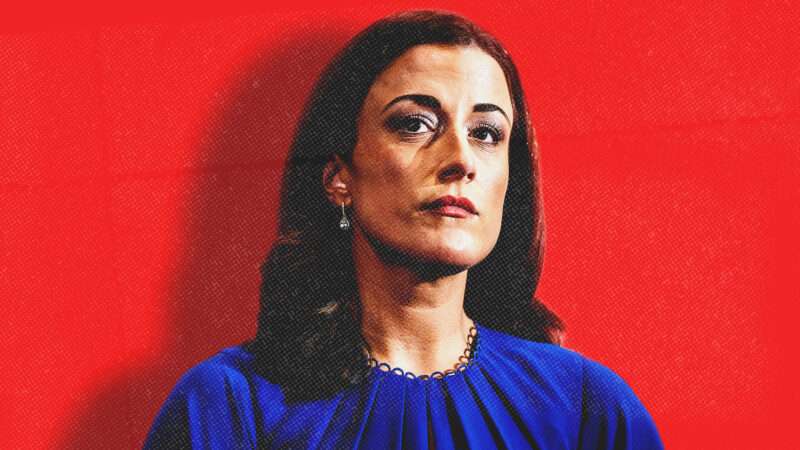
Cassidy Hutchinson | Tom Williams/CQ Roll Call/Newscom

"I am very concerned about the weaponization of the Justice Department," Sen. Bill Cassidy (R–La.) told reporters in August, explaining his reservations about voting to confirm Todd Blanche as attorney general. Cassidy specifically cited the attempt to prosecute Cassidy Hutchinson, a White House aide during President Donald Trump's first term, based on her 2022 testimony before the House select committee that investigated the 2021 riot at the U.S. Capitol. "I'm told there is a grand jury being empaneled to investigate her," Cassidy said. "Why? Tell me that. Shouldn't every American be afraid of the weaponization of the Justice Department?"

Grand jurors in Washington, D.C., who on Tuesday declined to approve an indictment of Hutchinson, apparently shared the senator's concerns about the case against her. That setback is part of a pattern: Grand juries, which historically have almost never rejected charges proposed by federal prosecutors, have done so repeatedly during the last two years, reflecting the Trump administration's tendency to pursue politically motivated cases based on inadequate evidence.

A grand jury hears only the government's side of a case, and the probable cause standard for approving an indictment, which requires reasonable grounds to believe a crime has been committed and that the person identified by prosecutors committed the crime, is much less demanding than the proof beyond a reasonable doubt required for a conviction. But the Justice Department's manual for prosecutors says they should not pursue criminal charges unless "the admissible evidence will probably be sufficient" to meet the latter test. It is a pretty striking indication that prosecutors are disregarding that injunction when a grand jury determines that they have failed to meet the minimal burden of establishing probable cause.

Hutchinson, who at the time of the Capitol riot was White House Chief of Staff Mark Meadows' principal assistant, delivered the testimony at the center of the failed indictment on June 28, 2022. She described Trump as unconcerned about weapons carried by some of the people who attended the speech he delivered the day of the riot, during which he reiterated his false claim that Joe Biden had stolen the 2020 presidential election and urged his supporters to "fight like hell" against congressional ratification of his victory.

Hutchinson said Trump wanted the Secret Service to stop screening rally participants with magnetometers because he was worried it would reduce the size of the crowd. "I don't effing care that they have weapons," Trump said, according to Hutchinson's approximate recollection. "They're not here to hurt me. Take [the] effing mags away. Let my people in. They can march to the Capitol from here. Let the people in."

Hutchinson also said Trump was irate when the Secret Service told him he could not join the protesters at the Capitol. That much was consistent with the testimony of other witnesses. But Hutchinson added disputed details, saying Deputy Chief of Staff Tony Ornato had told her Trump was so angry that he "lunge[d] towards Bobby Engel," the head of his protective detail, and "reached up towards the front of the vehicle to grab at the steering wheel." The Secret Service agent who was Trump's driver that day contradicted Hutchinson's account, and Ornato said he had no recollection of any such incident.

Last March, Reps. Barry Loudermilk (R–Ga.) and Jim Jordan (R–Ohio) urged the Justice Department to prosecute Hutchinson for lying to Congress. "Hutchinson's potential prosecution became a point of controversy between lawmakers and employees of the Justice Department," CNN reports. "Some inside the department believed there was not enough evidence to bring a viable criminal case."

You would expect such a case to be handled by Jeanine Pirro, the U.S. attorney for the District of Columbia. But the investigation of Hutchinson was instead conducted by the Justice Department's Civil Rights Division, which is run by Assistant Attorney General Harmeet Dhillon, another Trump loyalist.

You might wonder what scrutinizing Hutchinson's testimony had to do with "protecting the civil and constitutional rights of all Americans," which is how Dhillon's division describes its mission. Dhillon's involvement is all the more puzzling given that Pirro previously had not hesitated to pursue dubious charges against the president's enemies.

Last February, Pirro sought an indictment of six Democratic members of Congress who appeared in a November 2025 video that reminded U.S. military personnel of their duty to "refuse illegal orders." Trump condemned that message as "SEDITIOUS BEHAVIOR AT THE HIGHEST LEVEL," saying the lawmakers "should be ARRESTED AND PUT ON TRIAL." But as a federal judge later noted, the allegedly criminal video was "unquestionably protected" by the First Amendment.

That did not deter Pirro from trying to deliver on her boss's threat. But as in Hutchinson's case, the grand jury apparently was not willing to participate in Trump's vendetta. After it unanimously refused to approve the indictment, Pirro gave up.

That embarrassing experience may have deterred Pirro from getting involved in Hutchinson's case, especially if she thought there was not enough evidence to obtain a conviction. She would have had good reasons for reaching that conclusion.

It is not clear exactly what charges the grand jury rejected this week. But the most obviously relevant statutes are 18 USC 1001, which covers false statements "in any matter within the jurisdiction of the executive, legislative, or judicial branch," and 18 USC 1621, which covers false testimony under oath. Both are felonies punishable by up to five years in prison. But a conviction under Section 1001 requires proving that the defendant "knowingly and willfully" made a "materially false, fictitious, or fraudulent statement," and the perjury statute applies only when a sworn witness "willfully and contrary to such oath" makes a "material" statement that "he does not believe to be true."

Those elements would have been hard to satisfy in Hutchinson's case. Her testimony about Trump's insouciant attitude toward weapons carried by his supporters was based on what she said she heard him say, an account that pits her word against that of a habitually dishonest politician whose speech that same day was full of misrepresentations. And even if her recollection of Trump's comments was not fully accurate, that does not necessarily mean she intentionally gave false testimony. The same goes for the alleged lunging-and-grabbing incident, an account Hutchinson said was based on a conversation with Ornato that he says he does not recall.

Maybe Hutchinson, who had a lawyer and was surely aware of the potential penalties for lying to Congress, nevertheless fabricated both of those claims. But assuming her testimony was inaccurate, it seems more likely that she misremembered or misconstrued what Trump and Ornato said. In any event, the task of proving the first proposition beyond a reasonable doubt would give pause to any reasonably cautious prosecutor. And the grand jurors, even without the benefit of hearing a rebuttal to the government's case, thought the evidence of deliberate deception was so weak that it fell short of probable cause.

That determination is just the latest in a series of similar rebukes. In addition to the rejection of Pirro's charges against the "Seditious Six," they include the attempt to prosecute New York Attorney General Letitia James for mortgage fraud, which two separate grand juries in two different Virginia cities blocked last December.

Grand jurors also have stood athwart felony prosecutions of protesters in Washington, D.C., including Sean Dunn, the guy who threw a sandwich at a Customs and Border Protection officer, and Sydney Reid, who allegedly interfered with immigration arrests while using her phone to record them. In the latter case, Reason's Joe Lancaster noted, prosecutors unsuccessfully sought a felony assault indictment "not once, not twice, but a staggering three times." Reid was ultimately acquitted of a misdemeanor charge.

In the summer of 2025, federal grand juries approved just seven of 38 proposed felony indictments against protesters in Los Angeles, an amazingly bad track record. A few months later, federal prosecutors dropped assault charges against two Chicago protesters after a grand jury declined to indict them.

"For decades, federal grand juries have almost never said no," Ballard Spahr attorneys Henry E. Hockeimer Jr. and Brad Gershel noted last year. In 2016, for example, grand juries declined to approve federal indictments just 0.004 percent of the time. "That dynamic is now being tested," Hockeimer and Gershel added. "As the DOJ has adopted a more assertive charging posture in politically sensitive cases, grand juries appear to be reasserting their independence."

The post The Failed Indictment of Cassidy Hutchinson Reflects Grand Jury Resistance to Politically Motivated Charges appeared first on Reason Magazine.
  •  

The latest attempt to prosecute James Comey has a fundamental flaw

Before a court considers whether former FBI Director James Comey committed a crime, it must decide whether the Justice Department brought the kind of charge Congress required before the statute of limitations expired.

The answer would matter in any federal prosecution. It matters even more here because the case revealed Monday cannot be separated from President Donald Trump’s lengthy public campaign against Comey.

Since firing Comey as FBI director in 2017, Trump has repeatedly called him corrupt and demanded that he be prosecuted. This was no private frustration. Trump put his wishes in writing online. He pressed then-Attorney General Pam Bondi to pursue Comey and other perceived enemies last September. “They’re all guilty as hell,” he wrote, adding that “JUSTICE MUST BE SERVED, NOW!!!” Days later, Comey was indicted.

That first prosecution, involving Comey’s congressional testimony, was dismissed because the prosecutor who obtained the indictment had been unlawfully appointed. A second case, based on Comey’s “86 47” seashell photograph, remains pending.

The latest case dates to October 2016. Prosecutors allege that Comey directed someone to provide a reporter with national defense information about a secret court order requiring Yahoo to scan emails for messages potentially connected to a foreign terrorist organization. Comey denies wrongdoing, and his lawyers say the matter was previously investigated twice without charges being brought.

On Oct. 5, exactly a decade after the alleged conduct, Justice Department lawyers filed a criminal information under seal. A “criminal information” is a formal accusation signed by a prosecutor. An indictment contains similar allegations but with one crucial addition: A grand jury has heard the government’s presentation and agreed that probable cause exists to bring the charge.

Informations are legitimate in the right circumstances. They are commonly used when defendants intend to plead guilty and formally waive their right to an indictment. Comey has not waived that right, and the Justice Department does not appear to claim that it could take him to trial on the information alone. The government’s narrower position is that filing the information kept the case alive, leaving prosecutors free to obtain an indictment later.

The ordinary five-year statute cannot save this case.

Under the ordinary federal statute of limitations, that argument is not especially strange. The general rule gives prosecutors five years to bring most federal charges. It says the government acts in time if an “indictment is found” or an “information is instituted.” Applying that language, courts have allowed prosecutors to file an information before the deadline and obtain an indictment afterward, even without a defendant’s waiver.

But the ordinary five-year statute cannot save this case.

To prosecute Comey over conduct alleged to have occurred in 2016, the Justice Department is relying on a special provision giving the government 10 years to charge certain national defense offenses.

That provision is worded differently. It says that an “indictment” has to be brought within 10 years. It does not mention an information.

That is where the Justice Department’s theory becomes difficult to defend. The law allowing prosecutors to stop the clock with an information gives them only five years. Essentially, the DOJ is trying to take the 10 years from the first law and the easier filing method from the second — but Congress never combined the two.

Congress clearly understood the difference between an indictment and an information, because both words are used in the general statute. Yet when lawmakers granted prosecutors twice as long to bring this particular category of cases, the statute used only one. If Congress intended both charging documents to have the same effect under the special provision, it wouldn’t have omitted one.

The government says filing an information to preserve a prosecution is widely recognized federal practice. Some appellate decisions permit exactly that. But those cases generally interpret the ordinary limitations statute, the one that expressly includes both charging documents. They do not settle whether prosecutors can use an information under a different provision in which Congress referred only to an indictment.

A statute of limitations is part of the law governing prosecution, not administrative clutter around the edges.

The Justice Department is likely to argue that the special law merely changes the number of years available, leaving the rest of the general limitations framework intact. Comey’s position in his motion to dismiss is that the special provision supplies its own instruction: An indictment must come within 10 years. The statute does not say that prosecutors may file whatever charging paper they have ready at the deadline and obtain the indictment later.

This may sound like legal hair-splitting, but it’s important. A statute of limitations is Congress’ judgment about how long the government should have to place someone in criminal jeopardy. It is part of the law governing prosecution, not administrative clutter around the edges.

These limits exist because evidence grows stale, witnesses disappear, and memories become less reliable. They also reflect a basic principle: The federal government, with its enormous investigative resources, eventually must decide whether it has a case. Congress gave prosecutors a generous period of 10 years for these offenses.

It’s also noteworthy that this allegation did not suddenly appear at the last minute. According to Comey’s lawyers, the disclosure was examined in 2017 and again in 2019 without a criminal case being filed. The Justice Department had years to review the evidence and, if it wished, present the matter to a grand jury.

Federal grand juries traditionally favor prosecutors: No defense is present, the government controls the evidence, and the standard is only probable cause. But that advantage depends partly on trust, and Trump’s Justice Department has squandered a lot by repeatedly pursuing people the president has publicly demanded be charged.

That makes the missing indictment here more significant. An information bypasses even this modest outside check, allowing prosecutors to file an accusation when the president has announced the outcome he wants.

The government had 10 years and missed its deadline. When a president demands a prosecution, the rules should be enforced more strictly, not less.

The post The latest attempt to prosecute James Comey has a fundamental flaw appeared first on MS NOW.

  •  

In court testimony, FBI agent sheds new light on the White House’s control over the bureau

Amid a flurry of Justice Department efforts to target people whom Donald Trump doesn’t like, two former FBI officials were charged late last week with lying to Congress — in a case of particular interest to the president.

Remember the story about Hunter Biden’s laptop? As part of a Republican investigation into the matter, Nikki Floris, the former deputy assistant director of the FBI’s Counterintelligence Division, and Bradley Benavides, another FBI official, briefed members of Congress about the contents of the computer. Last week, Trump’s DOJ charged them with allegedly making false statements about their level of involvement into the investigation.

Their attorneys condemned the charges as political “nonsense,” announced 10 days before closely watched elections, and it didn’t help matters that the president told reporters after their arrest, “I heard they were bad people.” He did not say from whom he’d heard this.

Nevertheless, the case appears to be off to a rough start. After prosecutors added an obstruction charge to the case, for example, a federal judge dismissed it.

But just as notable was what we learned from Bryan Witt, a veteran FBI agent, who testified Tuesday and shed light on what transpired behind the scenes. The New York Times reported:

In mid-July, President Trump gave a prime-time speech in which he raised concerns about a disputed F.B.I. report that China had tried to interfere in the 2020 election in an effort to defeat him.

At the heart of his address was a bitter complaint: that some of the bureau’s intelligence officials had purposefully sought to play down the report to undercut his claims about the race.

According to Witt’s testimony, one day after Trump targeted FBI officials in his remarks, FBI Director Kash Patel directed prosecutors immediately to investigate the officials for obstruction and conspiracy.

Witt conceded that FBI officials saw the inquiry as a “witch hunt,” and he personally saw the effort as a “huge distraction,” but the push ultimately led to charges against Floris and Benavides.

The Times report went on to note that Witt “asserted from the stand that he had never before worked on a case where instructions came directly from the F.B.I.’s director. He added that Mr. Patel and his deputies often checked on his progress, pressing him and his colleagues to move as aggressively as possible.”

Time will tell what becomes of the case, though it’s a safe bet that the defendants’ attorneys have taken a keen interest in what Witt had to say. But the broader takeaway from the agent’s testimony is unavoidable: Trump snaps his fingers, and Patel follows the president’s orders.

White House control over the Justice Department has been well-documented, but its control over the FBI is just as overwhelming. Patel, best known as a podcast personality before Senate Republicans elevated him to his powerful role, may lead the bureau, but there is fresh reason to believe he’s effectively a DINO — Director in Name Only.

The post In court testimony, FBI agent sheds new light on the White House’s control over the bureau appeared first on MS NOW.

  •  

When weaponized justice flops: Cassidy Hutchinson case turns humiliating for Trump’s DOJ

In legal circles, it’s known as “no bill.” That’s the label used to describe what happens when prosecutors go to a grand jury to secure an indictment and regular people serving as jury members decide to reject the effort.

If it seems as if the phrase has come up quite a bit over the past year or so, it’s not your imagination. Donald Trump’s Justice Department tried to indict New York Attorney General Letitia James, for example, but grand jury members balked. The same thing happened when the Republican administration tried to indict several congressional Democrats, as well as in the case against Sean Dunn (better known as the “sandwich guy,” who was later charged with a misdemeanor).

In each instance, federal prosecutors tried to bring dubious charges against a perceived presidential political foe. In each instance, the nature of the process was slanted against the accused. (Grand juries don’t even hear from the defense.) In each instance, Trump’s DOJ failed anyway — despite the fact that a “no bill” is almost unheard of for most career federal prosecutors.

This week, it happened yet again. MS NOW reported:

A federal grand jury on Tuesday rejected an indictment against former White House aide Cassidy Hutchinson after the Trump Justice Department tried to charge her over her stunning testimony on the Jan. 6, 2021, Capitol riot.

Prosecutors in the Justice Department’s Civil Rights Division sought to charge Hutchinson with a crime based on claims she made false statements, according to two people with knowledge of the case. They were granted anonymity to describe normally closed-door proceedings.

To be sure, the developments are humiliating for the DOJ, and it will no doubt be tempting for the administration’s many critics to point and laugh at the failure.

But while that’s understandable, it’s also worth appreciating what a scandal this is.

There’s no reason to believe Hutchinson, who delivered stunning testimony more than four years ago about what transpired on Jan. 6, did anything wrong. But because we’re in a twisted political environment in which people can expect to face prosecutorial scrutiny for having wronged the incumbent president, Attorney General Todd Blanche pushed prosecutors to investigate the former White House staffer, whose case ended up in the hands of Harmeet Dhillon, the controversial Trump loyalist who runs the Civil Rights Division, which wouldn’t appear to have any relevant jurisdiction over a case like this.

What we’re witnessing, in other words, is unambiguous evidence of a hyperpartisan, weaponized Justice Department, controlled by the West Wing, trying (and failing) to prosecute a baseless case against someone Trump doesn’t like.

The developments come against a backdrop in which the same politicized DOJ went after former FBI Director James Comey yet again and charged Democratic state Sen. L. Louise Lucas of Virginia after she spearheaded an electoral effort the White House didn’t like, in the run-up to the midterm elections, when politically sensitive prosecutions are traditionally delayed.

I’m glad the case against Hutchinson flopped, but the larger context matters: The fact that this case was pursued at all reflects crisis conditions in federal law enforcement.

The post When weaponized justice flops: Cassidy Hutchinson case turns humiliating for Trump’s DOJ appeared first on MS NOW.

  •  

A Supreme Court Case Underlines the Absurdity of the Federal Ban on Home Distilling

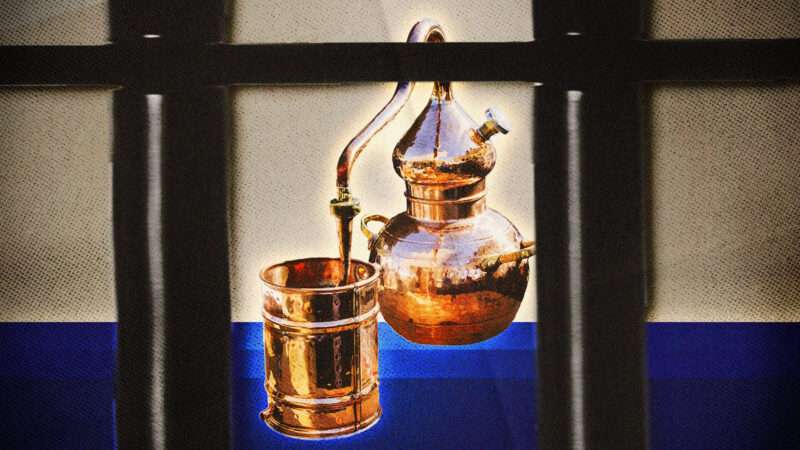
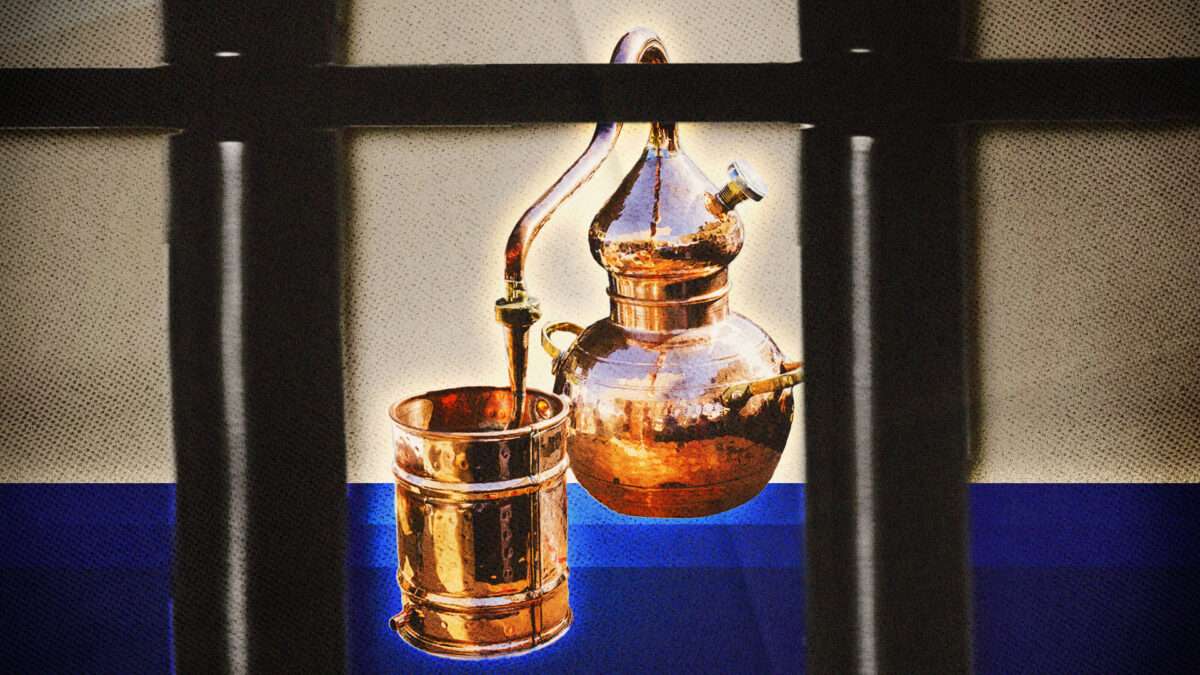
a still in a jail cell | DPST/Newscom/Kari Høglund/Dreamstime/Fatima Ruiz

Years ago, I bought a contraption designed to separate and concentrate the most volatile components of a liquid mixture. I would tell you what I did with it, but I don't want to implicate myself in a federal felony.

Since 1868, it has been illegal for Americans to locate a "distilled spirits plant" in "any dwelling place," an offense currently punishable by a maximum $10,000 fine and up to five years in prison. The federal ban on home distilling is at the center of a case that the Supreme Court recently agreed to hear, which raises a specific constitutional issue but also highlights the absurdity of treating this hobby as a crime.

That policy, the U.S. Court of Appeals for the 5th Circuit ruled last April, cannot be justified as an exercise of the federal government's tax power. To the contrary, Judge Edith Jones said in the court's opinion, the ban is "an anti-revenue provision that prevents distilled spirits from coming into existence," meaning its effect is "to reduce revenue instead of raising it."

Nor is the provision consistent with "the Supreme Court's explanation of how the federal power of taxation works," Jones wrote. When Congress imposes a tax, the Court explained in 2012, it "leaves an individual with a lawful choice to do or not do a certain act, so long as he is willing to pay a tax levied on that choice." But in this case, Jones noted, would-be home distillers "have only the choice not to do as they wish or risk fines and imprisonment."

The government argued that the ban helps collect liquor taxes by prohibiting a form of production that is difficult to detect. But "Congress cannot prohibit intrastate activity solely because it might produce products hard to tax," Jones said. If it could, she warned, there would be "no limit whatsoever" to its tax power.

Under the government's logic, Jones noted, "Congress may criminalize nearly any at-home conduct only because it has the possibility of concealing taxable activity. Home-based businesses may be forbidden. Remote work may be deemed a crime."

The Trump administration, which wants the Supreme Court to overturn the 5th Circuit's decision, argues that threatening to imprison home distillers is a "necessary and proper" safeguard against tax evasion. But whatever your take on the constitutional question, that policy is morally indefensible, haphazardly enforced, and inconsistent with the federal government's treatment of wine and beer.

The lead plaintiff in this case is Scott McNutt, a member of the Hobby Distillers Association. In 2014, McNutt received a "Notice of Potential Civil and Criminal Liability" from the Treasury Department, which said it had reason to believe he "may have purchased a still capable of producing alcohol and/or equipment and materials that may be used in the manufacture of a still."

The notice warned that "federal law provides no exemptions for the production of distilled spirits for personal or family use." It added that "unlawful production of distilled spirits is a criminal offense," which it erroneously claimed was "punishable by a fine of up to $500,000" as well as "imprisonment for not more than 5 years."

Meanwhile, online retailers such as Amazon sell a wide variety of home stills, many of which are explicitly advertised as appliances designed to produce alcoholic beverages such as vodka, gin, brandy, and whiskey. Customers could be forgiven for assuming that's legal, especially since federal law has long permitted home wine and beer production "for personal or family use."

McNutt's lawyers say he "owns a still that he has used to lawfully distill fuel alcohol and seeks to 'tinker around' with beverage spirits." Another plaintiff, Thomas Cowdrey, "likewise seeks to experiment in creating new beverage spirits, including 'apple pie vodka,' for which he has developed a recipe."

Because of a law Congress enacted 158 years ago, McNutt and Cowdrey would be felons if they acted on those desires. It might be time to rethink that policy.

© Copyright 2026 by Creators Syndicate Inc.

The post A Supreme Court Case Underlines the Absurdity of the Federal Ban on Home Distilling appeared first on Reason Magazine.

  •  
❌