A new book, free to download, gathers scholars, lawyers, a journalist, and the young mother cast as a “victim” who says she never met the accused. In March 2025, a young Russian woman, heavily pregnant, sat in a hospital in Bariloche, in Argentine Patagonia. She had come to Argentina, as thousands of Russian women do […]
An Israeli online advertising company implicated in spyware attacks targeting internet users was heavily active on SpaceX’s Starlink service, Japanese researchers have found, bolstering claims that the firm was running a “targeting and tracking” operation masquerading as a commercial advertising business.
Earlier this month, Canadian cybersecurity watchdog Citizen Lab and New York-based ad security firm Confiant published extensive investigations identifying Discover-Tech, an Israeli advertising technology company, as a middleman helping spyware firms, including Candiru and Intelos, as well as a little-known US-linked operator known as Dark Cartographer, track internet users and potentially infect their devices without their knowledge.
Discover-Tech’s operation involved purchasing advertising space on hundreds of thousands of websites and apps, using ads to collect information about users who viewed them, and making the data available to spyware companies. Those firms could then identify specific targets and potentially install spyware on their devices through malicious advertising code.
Despite presenting itself as a commercial operation, Discover-Tech concentrated much of its advertising spending on markets that would be of limited interest to conventional advertisers. Of 228 countries and territories examined, Palestine was the most heavily targeted, despite its population having severely limited access to Western goods and relatively little purchasing power.
In more than 100 countries, Discover-Tech was the leading bidder for advertising space targeting Starlink users, according to researchers at TrendAI, a unit of Japanese cybersecurity firm Trend Micro. The company was also the largest advertising bidder in Syria, Libya, Yemen and South Sudan, and the second-largest in Afghanistan.
TrendAI published its findings on October 15, identifying the suspicious advertiser only by the codename Shadow-Earth-79. Six people familiar with the research subsequently told Reuters that the codename referred to Discover-Tech.
Noting that “the demand for legitimate Western advertising in sanctioned or active-conflict states is effectively zero,” the researchers concluded that the company was running “targeting and tracking infrastructure rather than a commercial advertising operation.”
The findings suggest that Discover-Tech may have been attempting to identify, geolocate or monitor Starlink users. However, they do not establish that the company successfully infected Starlink users’ devices with spyware.
Who runs Discover-Tech?
Founded in 2020 by Israeli entrepreneur Dekel Boni, Discover-Tech appointed Eric Banoun as its director. Banoun co-founded Circles, a surveillance company affiliated with Pegasus spyware developer NSO Group, and Senpai Technologies, a company known for developing and selling surveillance software to governments, including those of Angola, Indonesia and Malaysia.
Banoun also founded Intelos, which uses advertisements similar to those placed by Discover-Tech to surveil and geolocate individuals. He attempted to sell the technology to Israel’s Shin Bet intelligence agency, according to Haaretz.
Haaretz also identified Sara Hamou, through her holding company, as a shareholder in Discover-Tech. Hamou is a former manager at Intellexa, the company that marketed Predator spyware in Greece. Earlier this year, she was sentenced to eight years in prison for her role in the Predator scandal.
Is Discover-Tech linked to the Israeli government?
It remains unclear who purchased the services of Candiru, Intelos and Dark Cartographer after the companies obtained user data through Discover-Tech. However, as RT previously reported in its ‘Wired for War’ series, Israel treats domestically developed spyware as a controlled defense export and retains authority over where such technology may be sold.
According to a 2021 investigation by Haaretz, export licenses for Pegasus were often granted when sales were considered beneficial to Israeli foreign policy interests, including in connection with trade agreements or diplomatic support for Israel at the UN.
Other Israeli spy-tech companies covered in the series, including Black Cube, BlackCore and Paragon Solutions, have also been linked to activities aligned with Israeli interests, even when they were not directly contracted by the Israeli government.
Discover-Tech’s advertising infrastructure was used to target at least 45 devices at Al Jazeera with Candiru spyware in 2024 and 2025, according to Citizen Lab. Researchers confirmed that some devices were infected through malicious advertisements that required no interaction from users.
The attacks occurred during a period of heightened tensions between Israel and the Qatar-based broadcaster, which Israeli authorities have accused of threatening national security. Candiru was founded by two Israel Defense Forces (IDF) intelligence veterans and operates under Israeli defense export controls.
While the Israeli government has not been accused of ordering Candiru to surveil Al Jazeera journalists, the targeting raises questions about whether the company’s clients shared interests with the Israeli authorities. The investigations have not identified the government or client responsible for commissioning the attacks.
Is Discover-Tech still operating?
Following the investigations by Citizen Lab and Confiant, several major advertising companies took action against Discover-Tech. Google, Comcast-owned Beeswax and Eskimi blocked the firm from their platforms, while Vungle suspended its access pending a review. Industry association IAB Europe also suspended Discover-Tech from its list of approved vendors.
Discover-Tech’s website, which markets the company as a “tailored digital advertising agency,” remains active. The firm has not publicly responded to the findings reported by Citizen Lab, Confiant or TrendAI.
Warnings of escalating clampdown on press freedom come after Cairo court convicts Attalah of managing an unlicensed website
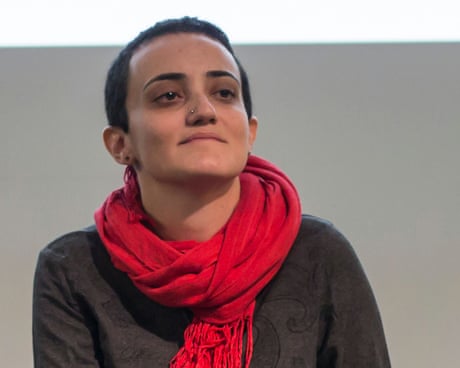
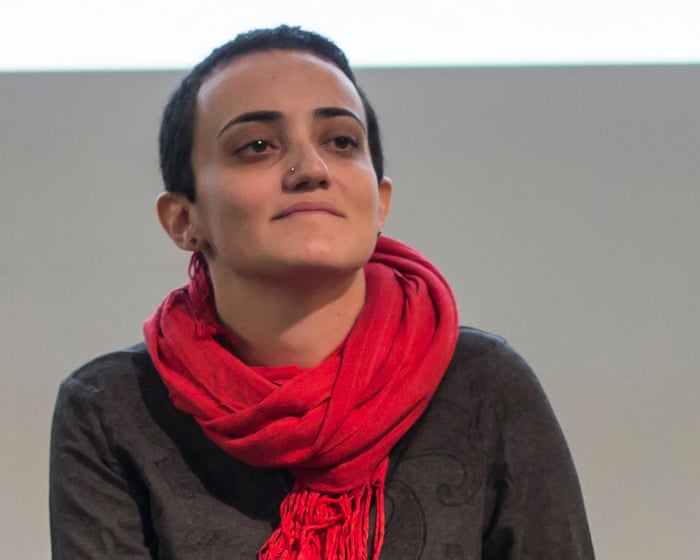
Lina Attalah, a prominent Egyptian journalist and the editor-in-chief of the news outlet Mada Masr, has been released from detention by Egypt’s authorities and had her website ordered to be shut down by a court amid an intensifying crackdown on independent media in the country.
Attalah was taken briefly into custody after a Cairo court convicted her of managing an unlicensed website, prompting fresh international concerns over press freedom in Egypt.
The US military killed five people in a strike targeting a vessel in the eastern Pacific Ocean on Thursday, marking the latest operation in Washington’s expanding military campaign against alleged drug trafficking networks across Latin America.
US Southern Command said the vessel was targeted along what it described as “established narco-trafficking routes.” However, despite citing “confirmed intelligence”, the military did not publicly provide evidence that the boat was transporting narcotics at the time of the attack.
Footage released on social media showed a vessel in the crosshairs before being struck and engulfed in flames.
By media counts, the operation is one of over 70 such attacks carried out since US President Donald Trump returned to the White House for a second term, with the combined death toll now topping 240.
The operation comes amid a broader escalation ordered by the administration of US President Donald Trump, which has increasingly framed anti-drug operations as part of an armed conflict against what it calls “narcoterrorist” organizations.
Critics, however, have questioned both the evidentiary basis for many of the strikes and the classification of those targeted as “narcoterrorists”.
The US administration has yet to offer conclusive proof that the targeted vessels were carrying drugs, and the strikes have fueled a dispute over whether they are lawful.
Extrajudicial executions
The growing campaign has attracted increasing scrutiny from lawmakers, military legal experts, and human rights organizations.
Human rights organizations contend that the killings may qualify as extrajudicial executions, since the people hit appear to have been civilians who posed no imminent danger to the United States.
US senators have repeatedly called on the Pentagon to release unedited footage of the strikes, citing concerns regarding transparency and accountability.
Legal scholars have also challenged the administration’s justification for the operations, arguing that Washington has yet to clearly establish the legal framework underpinning the repeated use of lethal military force outside conventional battlefields.
On February 28, the US and Israel launched an unprovoked attack on Iran, killing its Supreme Leader alongside many other officials—and around 160 civilians, mostly schoolgirls, at Minab. The attack was an extreme case of the supreme war crime: aggression. Attacks on civilian targets are, of course, also highly illegal. The US and Israel routinely target civilians and civilian infrastructure, and Trump even brags about it.
Western media, dominated by co-ethnics of the genocidal pariah state of Israel, paints black as white, up as down, freedom as slavery, ignorance as strength, and victims as perpetrators. Though the media won’t say it plainly, Israel is the world’s worst outlaw nation in every possible way, including its de facto national mission of the genocide of Palestine and invasion of neighboring states, its outrageous terrorism and torture, its hundreds of ongoing violations of UN resolutions and international law, notably its flaunting of the Nuclear Non-Proliferation Treaty (NPT) and its threatening the whole world, including ostensible allies, with the nuclear “Samson option”—while whining about Iran’s NPT-compliant civilian program.
The US, too, is a serial international outlaw, kidnapping and murdering leaders of sovereign nations, shredding the Geneva Convention and the UN Convention Against Torture at Guantanamo Bay and elsewhere, refusing to recognize ICC jurisdiction, repeatedly threatening dozens of nations with aggression, refusing to allow delegations access to the UN, and on and on.
By contrast, Iran is one of the most law-abiding states in the world. It hasn’t attacked another nation in centuries. It signed and complies with the NPT, despite being repeatedly attacked, and threatened with nuclear weapons, by the US and Israel.
But Iran insists on the equal application of international law. If Saddam’s attack on Kuwait (and before that Iran) was aggression, so are US attacks on Iran, Iraq, Libya, Syria, Venezuela, and elsewhere. If Iran must abide by the NPT, so too must Israel. If Turkey can charge service fees at the Bosporus and Dardanelles, Iran and Oman can charge similar fees at the Strait of Hormuz. If apartheid was unacceptable in South Africa, its vastly worse equivalent is unacceptable in Occupied Palestine. And if “Responsibility to Protect” law enforcement interventions are necessary, obviously the first group on Earth that needs one is the Palestinians.
In a recent seminar I argued that Iran should do its best to highlight the fact that it supports and abides by international law, while the US and Israel do not. It’s a true, powerful message, and it isn’t getting through the deaf ears of Western mainstream media. But if Iran repeats this talking point often enough and loudly enough, some of it will penetrate the world’s consciousness through social media and other alternative channels.
What follows is an extract from a seminar I recently joined on this topic.
-KB
ODVV Online Webinar With Prof. Alfred De Zayas & Dr. Kevin Barrett; War, US Sanctions, And Human Rights: The Humanitarian Impact On Iran
On Monday, 19 October 2026, the Organization for Defending Victims of Violence (ODVV) held an online webinar titled “War, U.S. Sanctions, and Human Rights: The Humanitarian Impact on Iran.” The discussion examined the humanitarian consequences of U.S. sanctions and military attacks against Iran, the question of international accountability, possible avenues for legal action, and the role of media narratives in shaping public understanding of war.
Dr. Kevin Barrett, an American writer, journalist, and political commentator, holds a Ph.D. in Arabic and Islamic Studies from the University of Wisconsin–Madison. His work has addressed the Middle East, international politics, media narratives, and the political and humanitarian consequences of war.
Professor Alfred-Maurice de Zayas is an international lawyer and Professor of International Law and History at the Geneva School of Diplomacy. From 2012 to 2018, he served as the United Nations Independent Expert on the Promotion of a Democratic and Equitable International Order. He previously held senior positions at the Office of the UN High Commissioner for Human Rights and served as Secretary of the UN Human Rights Committee and Chief of its Petitions Department. His contribution to the webinar focused on the legal status of unilateral coercive measures, their humanitarian consequences, and possible avenues for accountability.
The views expressed by the speakers are their own and do not necessarily reflect the official position of the Organization for Defending Victims of Violence.
Kevin Barrett: Sanctions, Civilian Harm, and the Definition of Terrorism
Barrett began by discussing the definition of terrorism. He described it as violence against civilians intended to create fear and achieve political or ideological objectives. Applying this definition to the issues under discussion, he argued that U.S. sanctions and military attacks on civilian targets should be examined in terms of the harm they inflict on ordinary people. He maintained that restrictions affecting access to medicine, medical equipment, and food place pressure directly on the civilian population. Barrett said he viewed these measures as an effort to make life increasingly difficult for Iranians and to pressure them into accepting political change.
Addressing the 40-day war against Iran, Barrett referred to the attack on the Minab school and the deaths of schoolchildren, as well as reported attacks on residential buildings, bridges, railway stations, communications towers, desalination and water facilities, wheat storage facilities, healthcare sites, and energy infrastructure. He characterized these as attacks on civilian infrastructure. He also described public threats by Donald Trump against Iran’s bridges, electricity grid, water facilities, and energy infrastructure as threats to commit war crimes.
During the question-and-answer session, Barrett was asked whether international courts could provide a meaningful path to justice when powerful states refuse to comply with international law. He criticized the practical limitations of the International Criminal Court and the International Court of Justice in compelling the United States to accept adverse decisions. However, he clarified that this did not mean the courts should be abandoned. In his view, submitting evidence and pursuing legal cases remain important because they document alleged violations and bring them to the attention of global public opinion.
Barrett also emphasized the importance of presenting Iran consistently as a party seeking the equal application of international law. He argued that documented accounts of civilian harm, supported by independent reporting and public advocacy, could help challenge selective media narratives and strengthen demands for accountability…

 Login