❌

Reading view

Embattled Bari Weiss says she is not ‘focused’ on declining 60 Minutes ratings

CBS News editor-in-chief sidesteps viewership concerns and says flagship show doing ‘tremendously well’

CBS News editor-in-chief Bari Weiss has spoken publicly for the first time about the ratings challenges the network has experienced under her year-long tenure, sidestepping concerns about diminished viewership at the Sunday show 60 Minutes by saying it was not her top priority.

“I could never build anything if I were focused on the precise number of people that happen to tune in to the second feature on 60 Minutes on a given Sunday,” she said at an industry conference on Wednesday organized by the tech publication the Information. The news organization did not offer press credentials.

Continue reading...

© Photograph: Noam Galai/Getty Images for The Free Press

© Photograph: Noam Galai/Getty Images for The Free Press

© Photograph: Noam Galai/Getty Images for The Free Press

  •  

RFK Jr. to Allow Broad Use of Unapproved Peptide Injections

In a unilateral declaration by the health secretary, several injections promoted by online influencers will become widely available. The F.D.A. had advised against the move.

© Almaas Masood/Reuters

Peptides are short chains of amino acids that give the body basic instructions. While the F.D.A. has approved some peptide compounds, such as insulin to manage diabetes, many others lack scientific evidence of efficacy or safety.
  •  

US lawmakers demand action on overcharging at 7-Eleven, Dollar General and other chains

Democrats urge FTC to tackle ‘systemic failure’ of biggest convenience and dollar stores over pricing practices after Guardian investigations

Thirty-four members of Congress are calling on the Federal Trade Commission to investigate reports of widespread overcharging by some of America’s most-recognized brand-name retailers.

The 28 October letter to the FTC comes in direct response to Guardian investigations of four of the nation’s largest dollar-store and convenience-store chains. Both investigations revealed pervasive mismatches between shelf labels and register prices.

Continue reading...

© Photograph: Erin Scott/Reuters

© Photograph: Erin Scott/Reuters

© Photograph: Erin Scott/Reuters

  •  

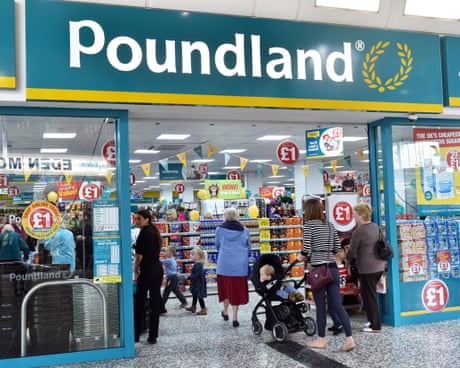
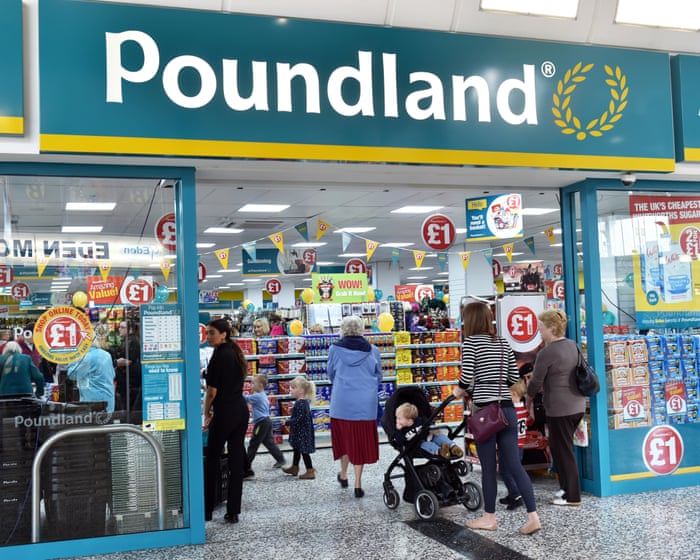
Business secretary writes to Poundland owner as administration fears build

Jonathan Reynolds’ team has written to Gordon Brothers, which bought retailer for £1 last summer, to ‘establish the facts’

The business secretary’s team has written to the owner of Poundland amid fears that the cut-price retailer could collapse into administration, threatening to overshadow John Healey’s budget.

Sources said that Gordon Brothers, the US investment firm that bought the 600-store Poundland chain for £1 last summer, looks set to appoint administrators to the struggling retailer.

Continue reading...

© Photograph: Paula Solloway/Alamy

© Photograph: Paula Solloway/Alamy

© Photograph: Paula Solloway/Alamy

  •  

Russia Imposes Entry Ban on Seven British Defense Industry CEOs

Their companies supply weapons and technologies that are used in Ukrainian strikes deep inside Russian territory.

On Tuesday, Russia barred seven British defense industry executives from entering the country, accusing their companies of supplying Ukraine with weapons and military technologies.

RELATED:

Russian Nuclear-Powered Submarine Launches Bulava Missile From Sea Of Okhotsk

The executives were added to Russia’s entry ban list because their companies supply weapons and technologies that are used in Ukrainian strikes deep inside Russian territory.

Three of the executives are from Rotron Aerospace: CEO Alex Head, chief military adviser Kev Oliver and board chairman George Zambellas. The company is involved in the development of the Brakestop long-range missile project.

The other four are Robert Gascoyne, CEO of MGI Engineering, which is also involved in the Brakestop project; Neil Appleton, CEO of drone maker Malloy Aeronautics; Paul Webb, director and co-founder of reconnaissance drone maker Tekever UK; and Julian Cracknell, chief technology and information officer at BAE Systems.

🇬🇧Britain's defence secretary just told NATO to get ready for war with Russia:

In Warsaw, Wes Streeting said: "We have to be ready for a scenario in which the United Kingdom and the NATO alliance finds itself at war with Russia."

"Not because we want war… but when Putin gives… pic.twitter.com/qtN2ISK1yd

— Global Strategy (@World_At_War_6) October 27, 2026

The Foreign Affairs ministry accused Britain of supplying Ukraine with missile and drone weapons and technologies, with the aim of inflicting maximum damage on Russia.

It also criticized the British government’s defense spending priorities, arguing that funds allocated to military contractors could instead be used to support Britain’s civilian sector amid domestic economic and social challenges.

teleSUR/ JF

Source: Xinhua

  •  

GSK shares dive as weaker vaccine sales unnerve investors

British pharma company one of biggest fallers on FTSE 100 despite better than expected financial results

Shares in GSK slid on Wednesday despite the UK drugmaker reporting better than expected financial results, as investors were unnerved by weaker sales of its respiratory syncytial virus (RSV) and shingles vaccines, and recently launched medications.

Britain’s second-biggest pharmaceutical company reported a 19% decline in pre-tax profit to £1.9bn in the July to September quarter and £318m of restructuring charges, with more to come. Core operating profit and core earnings per share rose 5% and 1% respectively, however, beating analysts’ expectations.

Continue reading...

© Photograph: Loriene Perera/Reuters

© Photograph: Loriene Perera/Reuters

© Photograph: Loriene Perera/Reuters

  •  

Ukrainian monitors report fire near Russian plant that sold steel to an S-400 missile builder

NLMK (Novolipetsk Metallurgical Combine) during the attack.

A fire broke out in the area of a major Russian steel plant in Lipetsk late on 27 October, Kyiv time, as air defenses fired at incoming targets, the Ukrainian monitoring Telegram channel Exilenova+ reported. Ukrainian partisans said the strike may have hit the plant. The region’s governor denied any large industrial fire.

Whether or not it was hit, the plant matters to Ukraine. The Novolipetsk Metallurgical Plant (NLMK) is Russia’s only producer of electrical steel, Ukrainska Pravda reported in April 2025. NLMK’s tax records, obtained by the outlet, showed sales of that steel to Moscow’s Avangard plant, which builds missiles for S-400 air defense systems. Russia also fires those missiles at ground targets in Ukraine.

Pantsir fires, no visible hit

The targets over Lipetsk were jet-powered, Exilenova+ wrote, citing preliminary reports of impacts and a fire toward the city’s airfield. Footage it posted showed a Pantsir air defense system firing, and the channel suggested the system may have failed to cope. It then reported the fire near NLMK, blaming air defense fire or a falling object.

We also observe a fire in the vicinity of NLMK (Novolipetsk Metallurgical Combine) resulting from air defense activity or the impact of an object. pic.twitter.com/7bBqyqCP2j

— Exilenova+ (@Exilenova_plus) October 27, 2026

The Crimean Tatar-Ukrainian partisan movement Atesh said its agents in Lipetsk reported an impact, and in a follow-up said they believe it may have hit NLMK.

Contracts and denials

A 2022 investigation by Disclose and its partners tied 18 NLMK contracts, all signed after 2014, to eight Russian defense firms, including an S-300 maker. NLMK confirmed the contracts but said only a “negligible” amount of civilian steel grades went to those firms.

Map of Russia’s Lipetsk Oblast, where a fire was reported near the NLMK steel plant on 27 October 2026
Map of Russia’s Lipetsk Oblast, where a fire was reported near the NLMK steel plant on 27 October 2026. Map: EP/Datawrapper

On 28 October, Lipetsk Oblast Governor Igor Artamonov claimed air defenses downed 45 drones over the oblast overnight. He insisted reports of a large industrial fire were untrue, saying drone debris fell in a tree belt and sparked a fire, since contained. Debris also blew out windows in a Lipetsk apartment block, and one person sought medical help but needed no hospitalization, he added. Whether NLMK took any damage remains unconfirmed.

Earlier strikes on weapons suppliers

Earlier, UK-supplied Storm Shadow missiles reportedly struck a battery plant in Yelets, in the same oblast, on 25 October. Two days before that, they reportedly hit an electronics plant in Oryol. OSINT channels described both as suppliers of parts for Russian missiles.

  •  

Britain’s Post-Brexit Trade Dilemma Deepens as Brussels Advances ‘Made in Europe’ Rules

With a crucial EU–UK summit approaching, London is seeking assurances that British manufacturers will not be disadvantaged by Europe’s new industrial policies. The dispute exposes a wider problem: how closely Britain must align with Brussels to preserve access to European supply chains.

Britain and the European Union are attempting to resolve an increasingly consequential dispute over European industrial policy, as proposed rules favouring domestically manufactured goods threaten to complicate the economic relationship that London has spent much of the past year trying to rebuild.

Business Secretary Jonathan Reynolds said on 27 October that the two sides were making progress towards addressing concerns surrounding the proposed Made in Europe requirements.

Speaking to Sky News, Reynolds said the governments were “finding a way through” the disagreement, although the precise terms of any compromise remain uncertain.

The negotiations come ahead of the EU–UK summit scheduled for 20 November, when Prime Minister Andy Burnham is due to meet European Commission President Ursula von der Leyen and European Council President António Costa.

For British manufacturers, the immediate issue is whether political promises of closer cooperation can prevent new economic barriers from emerging.

When industrial policy becomes trade policy

The dispute centres on the European Commission’s Industrial Accelerator Act, proposed in March.

The legislation would introduce European-origin and low-carbon requirements into public procurement and certain government support schemes covering strategic industries.

Among the sectors affected are steel, cement, aluminium, automotive manufacturing and technologies associated with the energy transition.

Brussels argues that such measures are necessary to strengthen European manufacturing and reduce dependence on overseas suppliers, particularly in industries exposed to competition from China.

The economic difficulty is that European industrial production does not stop at the EU’s external borders.

British manufacturers supply components, materials and specialist engineering services to European factories, while many UK production facilities rely on parts and technologies imported from the continent.

Automotive manufacturing illustrates the problem.

Vehicles assembled in Britain frequently contain components produced in several EU countries. Equally, European automotive manufacturers incorporate British-made parts into their own production.

If eligibility for subsidies or public contracts depends increasingly on where products and components originate, companies could face incentives to reorganise supply chains.

The question is therefore not merely whether British products can enter the European market, but whether they will qualify for the same industrial support arrangements as competing European products.

France and Germany disagree

The dispute has exposed differences among EU governments.

As EU Today reported earlier this month, France has argued for a restrictive interpretation of European origin requirements, while Germany has favoured a broader approach allowing certain trusted trading partners to participate.

Berlin’s position reflects the interests of industries whose production networks extend beyond the EU, including manufacturers operating in Britain.

According to reporting on the negotiations, France and Germany have discussed a potential compromise under which Britain might receive preferential treatment if it aligns with European tariffs on Chinese goods.

Such an arrangement would have implications extending beyond manufacturing.

It would involve coordination over trade policy towards China, an area in which Britain currently retains independent decision-making authority.

No agreement has been finalised, and any legislative compromise would require approval through the EU’s institutional procedures.

Burnham’s broader European calculation

For Burnham’s government, the industrial disagreement coincides with a wider attempt to redefine relations with Brussels.

The forthcoming summit is expected to concentrate on practical agreements covering agricultural and food trade, emissions trading and temporary mobility arrangements for young people.

A sanitary and phytosanitary agreement could reduce inspections and documentation requirements for certain food products moving between Britain and the EU.

Closer coordination between emissions trading systems could also reduce complications created by different carbon-pricing regimes.

However, these initiatives do not resolve the wider question of Britain’s relationship with the European single market.

Burnham has indicated that he intends to open a broader discussion about future options, while maintaining Labour’s existing commitments against rejoining the single market, customs union or restoring general free movement during the current parliamentary term.

Reynolds has acknowledged that repeated changes in EU policy create uncertainty for British companies operating across the Channel.

The price of industrial cooperation

The underlying difficulty is structural.

Britain seeks the benefits of close industrial integration while maintaining the independence acquired through Brexit. The EU, meanwhile, is increasingly using common industrial rules, subsidies and procurement preferences to pursue economic-security objectives.

These priorities are not necessarily incompatible, but reconciling them may require new arrangements governing regulatory alignment, product origin and relations with third countries.

As EU Today previously examined, London’s request to be treated as a trusted industrial partner has already become part of the broader political negotiations.

The November summit may establish a framework for resolving some immediate concerns.

It will not, however, eliminate the fundamental problem facing British manufacturers: future decisions taken in Brussels can materially affect their competitiveness, even though Britain no longer participates directly in making those decisions.

  •  

Trump Administration Backs Down on an Opioid Ban After Kratom Industry Lobbying

Health officials will now allow some levels of a powerful substance to remain in products marketed as natural. The change could help a G.O.P. donor facing wrongful death lawsuits.

© Nick Oxford for The New York Times

Banners promoting the sale of kratom products outside a smoke shop in Tulsa, Okla., earlier this year.
  •  

John Healey to end standing charges on gas bills for 23m homes

On budget day chancellor says he will ask Ofgem to remove ‘unfair and outdated’ fixed daily fee in 2027 or soon after

John Healey is abolishing standing charges on gas bills for 23m homes in a move he says will end an “unfair and outdated” practice and save two-thirds of households an average of £45 a year.

Ahead of his first budget statement in the Commons later on Wednesday, the chancellor said he would ask Ofgem, the energy regulator for Great Britain, to remove these charges – which are £108 a year for the typical household – next year or as soon as possible after.

Continue reading...

© Photograph: Joe Giddens/PA

© Photograph: Joe Giddens/PA

© Photograph: Joe Giddens/PA

  •  

Trump announces proposal to loosen methane rules for oil and gas production

President Trump announced plans to loosen methane regulations from the oil and gas sector during a Lubbock, Texas rally Tuesday night. The announcement came during the president’s second campaign stop of the day in Texas, during which he aimed to assist the Senate campaign of Republican Ken Paxton, the state attorney general, in the oil-heavy…

  •  

Political Satire Is an American Tradition. Deceptive A.I. Ads Are Not.

Despite how cringeworthy they are, political campaigns have spent $137 million on A.I.-generated ads for the midterms. And the lack of regulation on these ads is warping our sense of what’s real. The Opinion writer Rotimi Adeoye argues that while this kind of political satire falls under First Amendment protection, “you should be free to fake a politician, but you shouldn’t be free to hide the fact that you did.”
  •  
❌