Software giant reports $36.6bn in profit, beating Wall Street expectations, as Azure cloud computing division grows 48%
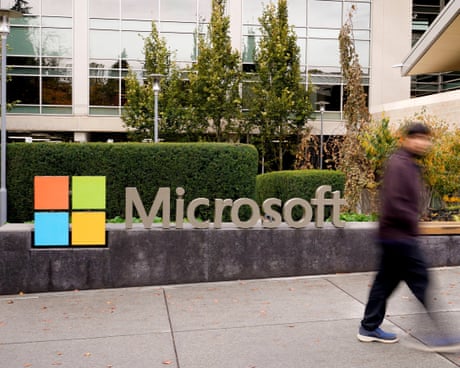
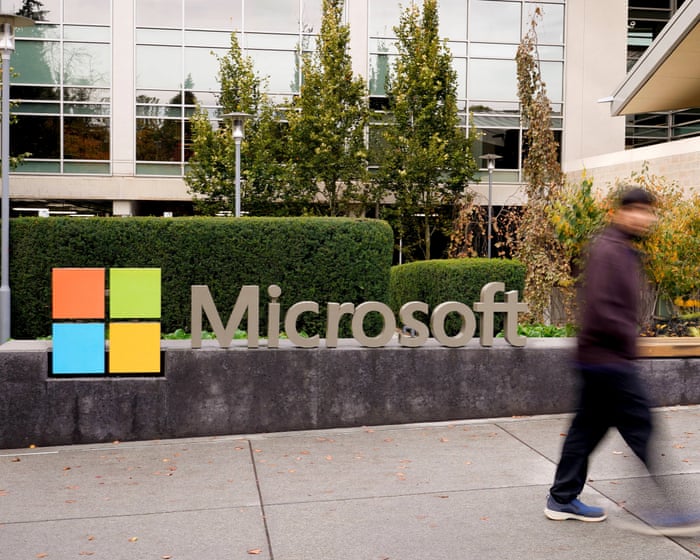
Microsoft gained billions of dollars in stock market value Wednesday afternoon after it reported better than expected revenue and profit, just days after it offered voluntary buyouts to some 60,000 employees.
The office software giant’s growth was fueled by its Azure cloud computing division, which grew by 48% in the September quarter.
A Microsoft divulgou nesta quarta-feira (28) receita trimestral com serviços de computação em nuvem acima do esperado pelo mercado, em um sinal de que a aposta em investimentos elevados em inteligência artificial pode estar se pagando.
O fluxo de caixa livre da Microsoft também superou as expectativas em cerca de US$ 10 bilhões no trimestre passado, com investimentos com infraestrutura de IA abaixo das estimativas e crescimento da receita.
As ações da Microsoft subiram cerca de 4% após o fechamento do mercado. No acumulado do ano, o papel acumula valorização de cerca de 9%.
Os resultados também mostram que a Microsoft está lucrando com a demanda corporativa por IA, aliviando os temores de que a tecnologia ameace seu negócio de software e de que a empresa esteja muito exposta à OpenAI, que não gera lucro.
Forte crescimento do Azure
A receita do negócio de computação em nuvem Azure da Microsoft cresceu 48%, para US$ 33,17 bilhões no primeiro trimestre fiscal encerrado em setembro sobre um ano antes, superando as estimativas da Visible Alpha, de US$ 32,84 bilhões. A receita do Azure foi de US$ 29,4 bilhões no trimestre anterior.
“O relatório do primeiro trimestre da Microsoft foi praticamente impecável para uma empresa desse porte”, disse Jesse Cohen, analista sênior da Investing.com. “Depois que os números da Meta e da Alphabet reavivaram a ansiedade em relação aos gastos com IA, este é o contrapeso.
A demanda ainda excede a oferta, a carteira de pedidos é enorme e os retornos estão finalmente aparecendo nos lucros e na receita geral.”
No mês passado, a Microsoft decidiu divulgar a receita do Azure em dólares, em vez de apenas taxas de crescimento, oferecendo um panorama mais claro de como a divisão se compara aos rivais Amazon Web Services e Google Cloud.
Os investimentos do trimestre foram de US$ 45,2 bilhões, acima dos US$ 34,9 bilhões registrados no mesmo período do ano anterior. A própria projeção da Microsoft para o primeiro trimestre era de US$ 50 bilhões.
A empresa divulgou um fluxo de caixa livre de US$ 18,6 bilhões. Analistas esperavam US$ 8,54 bilhões, de acordo com a Visible Alpha.
Jonathan Neilson, vice-presidente de relações com investidores da Microsoft, atribuiu os gastos de capital abaixo do esperado a atrasos, e não a quaisquer mudanças nos planos da empresa.
“De fato, observamos que algumas entregas de capacidade de terceiros, que esperávamos para o primeiro trimestre, acabaram sendo adiadas”, disse Neilson.
A Microsoft previu investimentos de US$190 bilhões em 2026. A gigante da tecnologia também enfrenta pressão, já que ferramentas de IA autônomas cada vez mais sofisticadas ameaçam seu negócio de software de produtividade.
Alguns analistas, no entanto, acreditam que o sólido balanço patrimonial da Microsoft lhe dá uma vantagem sobre os rivais à medida que os investimentos em IA aumentam.
De acordo com a Truist, os swaps de inadimplência de crédito de 5 anos da empresa – uma medida do risco de inadimplência percebida – continuam sendo os mais baixos entre as gigantes da tecnologia, mesmo com a ampliação dos spreads em grande parte do mercado de IA.
Microsoft is offering buyouts to about a quarter of its workforce.
In an internal memo, Microsoft's finance boss said the company expects "very few people" to accept.
Employees had been questioning the rationale behind the offer, the memo said.
Microsoft expects 3,000 or fewer employees to accept the buyout it offered this week to more than a quarter of its workforce, a spokesperson told Business Insider.
The point was reiterated on Wednesday by Chief Financial Officer Amy Hood, who wrote in an internal memo that employees have been questioning the rationale behind the buyout.
"I know there have been some questions on the rationale behind the voluntary exit offer that we announced this week," Hood wrote. "Our intent is to offer employees agency if they choose to leave the company on their own terms. We expect very few people to select this offer because of the growth opportunities here at Microsoft."
The memo statement was part of a quarterly earnings email Hood typically sends internally to employees every quarter when Microsoft discloses its financials.
These memos mostly repeat what the company reports publicly, but this time Hood went out of her way to address the buyout offer, which caused quite a stir across the tech industry this week.
Earlier this year, Microsoft offered a different retirement buyout. In that situation, about one-third of eligible employees took the offer, and that helped Microsoft cut fewer employees in subsequent layoffs.
This week's buyout is getting a lot less uptake, according to the company.
Read the CFO's full memo
Team,
This afternoon, we announced our first-quarter financial results. We exceeded Wall Street expectations, growing revenue 19% and operating income 21%.
With the start of FY27, we also made an important change to how we report our business. We announced that we changed our reporting structure for the first time in 12 years, moving from three segments to two: Agents and Infra, and Devices and Consumer. This change better reflects how we are running the business today — from how we build products and allocate resources to how we create value for customers across the connected layers of our platform. To give you a sense of the two segments, looking back to last fiscal year, Agents and Infra would have represented about 81% of our revenue while Devices and Consumer would have been 19%.
A few highlights from the quarter across our two new segments:
Agents and Infra grew revenue 23% this quarter
Microsoft Cloud revenue was $63.9 billion and accelerated to 30%. Azure revenue increased 48% reflecting accelerating Foundry demand.
Microsoft 365 commercial cloud revenue increased 18% in constant currency driven by growth in our premium seat offerings like Copilot and E7 as well as usage-based services across M365 Copilot and GitHub Copilot.
Microsoft 365 commercial seats increased 5% and the number of customers with more than 50,000 M365 Copilot seats increased 8x year-over-year.
Microsoft 365 consumer cloud revenue increased 17% with subscriber growth of 7%.
Industry solutions cloud revenue increased 10% with growth in Dynamics 365 and LinkedIn Talent Solutions.
Devices and Consumer declined 3% this quarter
Search and advertising revenue ex-TAC increased 12%, with growth across LinkedIn, Bing, and Edge.
Windows OEM and devices revenue decreased 22%, reflecting the prior-year benefit from Windows 10 end of support, inventory drawdowns by OEM partners, and weaker PC market demand. XBOX content and services revenue decreased 2%. Last week, we launched Call of Duty: Modern Warfare 4, as we continue to bring great games to more players across more devices.
Thank you for everything you did to deliver a strong start to the year. In particular, I want to thank our engineering and capacity delivery teams who are working to help us deliver more capacity faster and with high reliability. These teams are also using the capacity we have more efficiently to create room for us to better meet customer demand for the Azure platform, which continues to exceed our supply.
I know there have been some questions on the rationale behind the voluntary exit offer that we announced this week. Our intent is to offer employees agency if they choose to leave the company on their own terms. We expect very few people to select this offer because of the growth opportunities here at Microsoft. We'll continue to provide a broad set of options for employees to learn, gain new skills, and advance their careers here.
We have tremendous opportunity ahead of us. To meet the moment, we are focused on delivering great products and solutions that help our customers to achieve their many goals — security, innovation, growth — to name a few. Thank you for keeping positive, value-creating outcomes for our customers at the top of the list.
To hear more details about the quarter and our outlook for Q2, you can join live today at 2:30PM Pacific Time, listen on-demand, or read the transcript on the Investor Relations website. Finally, mark your calendars for Microsoft Ignite, on November 17-20, where we'll show how our innovation across AI, cloud, data, security, and Copilot is coming together to help customers transform their businesses.
Chris Williams, former Microsoft VP of HR, said waiting for a better offer may or may not backfire.
He shared what employees who are offered a buyout should consider and what they may not realize.
Microsoft is offering buyout packages to some 60,000 employees, or more than 25% of the workforce. That's a huge number in any terms, and it sent a signal and shock wave through the industry this week.
I'm the former VP of HR for Microsoft, and although I've been away from the company for some time and have no insider information, having been on the inside at Microsoft and in the industry for 50 years, here is what Microsoft employees should be considering — and what they may not realize about taking a buyout offer.
Your buyout offer may or may not be the best offer you get
During a buyout, position, tenure, level, and other factors are taken into account for each bespoke offer. The offer is likely to include compensation, benefit continuation, and possibly some acceleration or continuation of equity vesting.
That said, Microsoft might not offer more generous buyouts than severance packages, but companies usually offer better terms to people who take a voluntary separation than people who get laid off. That is not only to induce employees to go voluntarily, but also because the costs to the company are less if these workers voluntarily leave. There is less legal risk, time, and expense. It's also simply easier for the company to manage.
If you're offered a buyout, I usually find it could be the best offer you'll get. If it's not, you could be settling for the same offer as someone in a layoff and miss out on collecting unemployment.
A buyout can force some very hard career choices
If you get a buyout offer, looking at your budget should be your next step. Does the offer provide you with enough to retire? Enough to support an extended job search? The buyout can be a good forcing function for some very hard career choices.
Spend time looking at your cash flows, and pay particular attention to benefits. For many, healthcare costs are a substantial part of their budget. Weighing the buyout offer against continued coverage is often a tipping point in the decision.
Also consider any equity vesting dates you may have. Compare when you might vest with and without the offer, as those dates can mean a significant change in your investments. Whether you should take the buyout is highly dependent on both the offer and your situation. If you had retirement anywhere in sight, this offer might be just the trigger you need to move on. Perhaps the best offer you'll ever see.
However, if you need to continue working, there's a great deal more to consider.
Taking a buyout can give you a head start in a tough job market
The tech industry job market has been rough for the last year or so, and shows all the signs of getting worse. If the buyout doesn't afford you the ability to retire, you should plan on an extended period of job searching, maybe six months or more. It's tough out there. Be prepared.
One thing to consider if you need to continue working is that taking the buyout might give you a short head start in the job market. Assuming Microsoft and others follow this up with more layoffs like they did the last time, the technical job market will be flooded with quality people. Of course, you can search for a job while you have one, but taking the buyout gives you time for a full-time job search.
In any case, if a job search is in your future, don't delay. This market shows no sign of getting better.
Finally, if you're offered a buyout, don't ignore it. It's a sign. I'd read it as a clear signal from the company about your value, at least from their perspective. You can bet on the odds, but if follow-up layoffs happen, I'd bet that those who declined the buyout are somewhere on that list.
Buyout or not, some things to do
This buyout is the latest signal of a broad realignment of the job market, at least in the tech sector. Even if you aren't offered it or don't think you're at risk of later layoffs, you'd be wise to keep all your options open.
Get your résumé up to date. Spend time honing it, emphasizing the clearest set of skills you can. When a market is contracting, the safest bet is having a particular skill someone is looking for. When times are tight, the generalist is often the first person let go.
Work with and expand your network. Have coffee or a Zoom chat with everyone you know. Peers in other companies, even other industries, are invaluable when things get tough. Especially when the world is changing, and predicting the next hot spot is so hard, having as many warm connections across industries is a huge asset.
Don't go asking for jobs as much as keep those connections alive. You never know when someone's manager will say, "We need someone like that." And your friend can say, "I know just the person."
Whether you are offered a buyout, or whether you decide to take it or not, having a network of people to connect with is your single biggest career asset.
What to do if you get a buyout offer
Budget first, and outreach next.
Carefully decide your near- and long-term financial future, and make the decision from hard facts. Then connect with people you know across industries, far and wide. Those connections will be excellent sounding boards and could well provide the path to your next role, or the friends you need in retirement.
When contacted about this story, a Microsoft spokesperson pointed Business Insider to its statement on the official Microsoft Blog, which read in part, "Today, we're introducing a new Voluntary Exit Offer (VEO) to eligible employees within participating organizations." They added that "the VEO is similar to a standard severance offer, which varies by market. The offer includes payment based on completed service and base pay, as well as career transition services, which includes career coaching and job search assistance."
Bill Gates argues that the next two decades of AI development will bring "winners and losers," and he's arguing it's up to governments, not tech companies, to manage the fallout. According to Gates, some Americans will live "like the Amish" to avoid AI's potential for "dramatic harms."
Rishi Sunak was prime minister of the UK from 2022 to 2024.
Prakash Singh/Bloomberg via Getty Images
Rishi Sunak has senior advisor roles with Anthropic, Microsoft, and Goldman Sachs.
Sunak, who was the UK's prime minister between 2022 and 2024, makes up to $10,000 an hour from them.
Goldman paid him about $1.5 million, compared with Anthropic shares valued at about $500,000.
How much is Anthropic paying for the advice of the UK's former prime minister? A lot less than Microsoft.
Rishi Sunak, who led the country from 2022 to 2024, last year took on senior advisor roles with Anthropic, Microsoft, and Goldman Sachs.
As he still serves as a member of Parliament, the payments are detailed in a public register of MPs' financial interests. The most recent register, published Monday, shows Sunak earned more than £2.2 million, or over $2.9 million, from the three jobs.
Sunak, who started his career as a Goldman analyst before completing an MBA at Stanford, donated these earnings to charity. He and his wife Akshata Murthy set up The Richmond Project, which works to improve people's numeracy skills.
The couple is jointly worth about $750 million, according to The Sunday Times Rich List, with much of that wealth coming from Murthy, whose father founded Indian tech firm Infosys.
Anthropic hired Sunak as a senior advisor last October, paying him with equity in the AI firm. The register shows the shares were worth £373,000, or $495,000, when his one-year contract began.
Working an estimated 70 hours a year, that translates to about $7,000 an hour.
Also last October, Sunak started advising Microsoft. The tech giant paid him £741,735 a year, or almost $1 million. For an estimated 96 hours of work, per the register, that works out to about $10,200 an hour.
Sunak's role with Goldman is the most lucrative. He was paid nearly £1.1 million a year, or about $1.5 million.
The register shows the role involves an estimated 175 hours of work a year, suggesting he earns about $8,300 an hour.
Alongside his work in tech, Sunak writes a column for The Sunday Times. He also donates this money to charity, but it pales in comparison to the income from his other jobs. The register shows he earns £28,500 a quarter for five hours of work a week — about $580 an hour.
Sunak's office did not immediately reply to a request for comment.

 Login