❌

Reading view

Big Tech Lobbying Raises Questions Over Europe’s Retreat from Digital Regulation

A new investigation into the activities of Google, Meta and other technology companies has intensified scrutiny of EU plans to revise data-protection legislation, placing Ireland and Germany at the centre of a dispute over corporate influence and European digital sovereignty.

European technology policy has become the focus of a dispute over corporate lobbying after researchers documented extensive contacts between major technology companies and political decision-makers during negotiations to revise EU data-protection rules.

An investigation published on 28 October by Corporate Europe Observatory and the German transparency organisation LobbyControl alleges that leading technology companies mounted a coordinated campaign to influence European governments and legislators.

The findings come one week after EU member states agreed a negotiating position on the Digital Omnibus, a legislative package intended to simplify aspects of European data-protection, privacy and cybersecurity regulation.

The campaigners argue that the proposed changes risk weakening existing safeguards in order to accommodate the commercial requirements of artificial intelligence developers.

Ireland, which holds the rotating presidency of the Council of the European Union, has rejected suggestions that its handling of the legislation was improperly influenced by technology companies.

The dispute exposes a fundamental disagreement over the balance between commercial innovation and the protection of personal information.

The scale of the lobbying campaign

According to LobbyControl’s investigation, non-European technology companies recorded 103 meetings with representatives of Germany’s federal government between May 2025 and September 2026.

Google accounted for 28 meetings, Microsoft 18, Amazon 16 and OpenAI 11.

Germany’s Digital Minister, Karsten Wildberger, participated in 18 meetings with representatives of major technology companies, the researchers reported.

In Ireland, the organisations identified extensive engagement involving Meta, Google and politicians ahead of the country’s assumption of the EU Council presidency in July.

Their findings indicate that Meta engaged with 41 Irish parliamentarians over the Digital Omnibus, while Google recorded 30 meetings.

The researchers also identified 655 lobbying meetings concerning the legislation involving members of the European Parliament.

According to their analysis, approximately 83 per cent represented business interests, compared with 11 per cent involving civil society organisations or trade unions.

These figures demonstrate the intensity of corporate engagement, although the existence of lobbying meetings does not, by itself, establish that particular legislative provisions were adopted because of that activity.

Why the Digital Omnibus matters

The legislative package forms part of a broader European Commission initiative to reduce administrative burdens and improve competitiveness.

Its provisions address several areas of digital regulation, including the General Data Protection Regulation, commonly known as GDPR.

The proposals seek to simplify compliance obligations, clarify the treatment of personal information and revise rules governing certain forms of data processing.

One particularly contentious issue concerns the use of personal data in developing and operating artificial intelligence systems.

AI developers require large quantities of information to train and improve their models. However, the collection and processing of personal information remain subject to European legal safeguards.

Technology companies have argued that regulatory complexity can discourage investment and make it more difficult for European businesses to compete internationally.

Privacy campaigners maintain that simplifying regulatory procedures must not become a mechanism for reducing substantive protections.

The disagreement concerns not merely administrative paperwork but the legal circumstances under which companies may process information relating to identifiable individuals.

Ireland rejects allegations of improper influence

Ireland occupies a particularly sensitive position in the debate.

The country hosts major European operations of several American technology companies, including Google and Meta, and has substantial economic interests in the digital sector.

At the same time, its presidency of the EU Council requires it to coordinate negotiations between member states.

According to RTÉ’s reporting on the investigation, the Irish government strongly rejected the allegation that it had weakened data safeguards in response to corporate pressure.

A presidency spokesperson emphasised that Ireland’s responsibility was to facilitate agreement between member states and that the negotiating mandate approved on 21 October enjoyed broad support.

The Council has presented the proposed changes as a means of reducing compliance costs while preserving established privacy protections.

In its official statement, the Council said its mandate retains the existing definition of personal data and introduces additional provisions governing pseudonymisation.

It also includes safeguards relating to sensitive information used for biometric verification and AI systems.

These details are significant because they demonstrate that the negotiating text contains protections alongside proposed simplifications.

Germany’s role in the negotiations

Germany has also emerged as an important participant in the controversy.

The investigation points to close contact between the German government and international technology companies during discussions about the future of European digital regulation.

Berlin has supported reducing administrative restrictions that it considers obstacles to innovation and the development of competitive AI technologies.

For Germany, the issue is connected to wider concerns about industrial competitiveness, investment and Europe’s dependence on foreign technology suppliers.

Yet an unresolved question remains.

Measures designed to assist European innovators may also benefit established American companies whose extensive computing infrastructure and data resources give them advantages over smaller competitors.

Consequently, easing restrictions does not necessarily guarantee a stronger European technology industry.

The European Parliament holds the next decision

The Council’s negotiating position does not make the Digital Omnibus law.

The European Parliament must establish its own position before negotiations between the institutions can determine the final legislation.

Parliamentarians will therefore have an opportunity to examine the treatment of personal data, the safeguards attached to AI development and the relationship between regulatory simplification and individual rights.

The lobbying investigation is likely to become part of that debate.

Its central political significance lies in the competing interpretations of European technological sovereignty.

For governments seeking investment, regulatory flexibility may provide an instrument for improving Europe’s international competitiveness.

For privacy organisations, the same flexibility could increase the influence of companies already dominant in global digital markets.

The outcome will help determine whether Europe’s future digital framework preserves the existing balance between commercial data use and individual protections, or establishes a different relationship between the two.
  •  

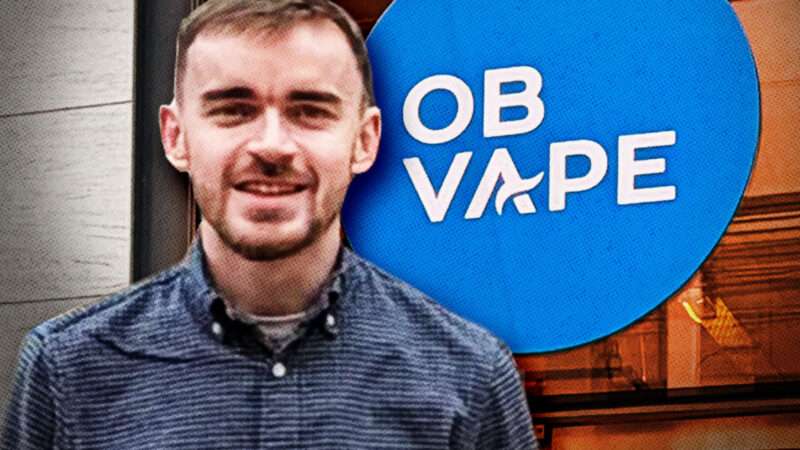
Ireland Is Banning Vape Flavors. This Shop Owner Warns It Could Cost Lives.

Eoin O'Boyle | Eoin O’Boyle

"Am I living in a fucking parallel universe here or something?" asks Eoin O'Boyle, a 28-year-old Irish vape shop owner facing the prospect of losing his business. "If there's a piece of policy that makes sense, the government will do the opposite for some reason."

Last Wednesday, the Irish Seanad passed the final stages of a sprawling public health bill, which prohibits the sale of vaping products with flavor names other than "tobacco" or "unflavored." The bill also restricts the colors and imagery permitted on vaping devices and packaging, bans advertising in shops and online, and requires most retailers to keep vaping products out of public view.

In a cliché as old as time, Irish politicians are asking the public to think of the children. "We are dealing with an increasingly aggressive industry marketing attractively packaged addictive products that appeal to children," Ireland's public health minister Jennifer Murnane O'Connor said in a statement. "We are responding strongly with measures that will protect our young people against current and future threats."

Ireland's Taoiseach (head of government), Micheál Martin, has described vaping as "nearly worse than cigarettes," calling them the "revenge of Big Tobacco." Of course, as studies by Public Health England, Cancer Research UK, the Royal College of Physicians, and countless other organizations show, vaping is vastly safer than smoking and is an extremely effective cessation tool.

"The government [is] insane to do this," O'Boyle, the owner of OB Vape in Drogheda, Ireland, tells Reason. "It's going to cause excess deaths. It's infuriating."

O'Boyle began smoking at the age of 12, before quitting when he was 18 by using vapes. "I loved smoking. I absolutely loved it," he recalls. His mother and brothers also quit cigarettes by vaping. While studying enterprise computing at Dublin City University, O'Boyle worked part-time at a vape shop, where he spotted an opportunity to build a business of his own. In 2019, he took out a small loan and opened OB Vape, hoping to create something akin to the Apple Store of vaping. He says he repaid the loan within six months and has since helped around 22,000 customers quit smoking.

Now, O'Boyle fears the business he's spent nearly eight years building could disappear. "I never thought I'd be in a position where I would have to close down my business through no fault of my own," he says.

Last week's health bill is not the first of Ireland's vape restrictions. In 2023, the country made it illegal to sell to minors, followed by advertising restrictions the following year, and an e-liquid tax in 2025.

These measures were designed to stop vaping among minors, and while Ireland's rate of teenage vaping has declined since 2019 and is below the European average, teens in the country have still been able to access these devices. As the government's own data show, 32 percent of Irish 15- and 16-year-olds have tried vaping, 16 percent said they had vaped in the previous month, and 7 percent vaped daily. By comparison, just 2 percent smoked cigarettes daily, and a 2024 report found the proportion of teens who had ever smoked once fell from 73 percent in 1995 to just 24 percent in 2024 (the lowest number on record).

Regardless of this decline among the youth, smoking remains widespread across the country. According to the government's 2025 Healthy Ireland Survey, 17 percent of the population smokes, with 13 percent smoking daily and 4 percent occasionally.

For those smokers, vaping is among the most effective tools for quitting cigarettes. An August review from Cochrane that examined 80 randomized controlled trials involving nearly 30,000 participants found that nicotine e-cigarettes are more effective at helping people quit smoking than conventional nicotine replacement therapies, such as patches and gum. The review found that vapes resulted in about four more quitters per 100 people, concluding that vaping is a "proven and viable option." Indeed, half of current vapers in Ireland are former smokers, according to government data.

Ireland's vape flavor ban could hurt adults trying to quit smoking. Vape flavors, O'Boyle argues, are crucial in helping smokers move on from tobacco flavors and successfully quit cigarettes. "People don't want to be reminded of tobacco," he says, estimating that around 96 percent of his customers use nontobacco flavors, including menthol and fruit flavors like pineapple.

Research suggests O'Boyle's experience is widespread. A 2020 study published in JAMA Network Open found that adults who started vaping nontobacco flavors had more than twice the odds of subsequently quitting smoking compared with those using tobacco flavors. A 2025 study of 886 smokers published in Nicotine & Tobacco Research found that "non-tobacco flavors were preferred and may be also more effective" at helping smokers quit.

"Without flavors, my business would be gone, and the smoking rates in the country would be up," says O'Boyle.

While the government ban will prohibit the legal sale of flavors, illegal sales are likely to be bolstered. After the Netherlands banned nontobacco vape flavors in 2024, a survey found that 47 percent of existing vapers continued using illegal flavors. Among those users, more than a third purchased them from shops abroad, while others got them from acquaintances, websites, or social media. In Australia, where vaping products can only be purchased legally at pharmacies, a 2025 government study found that 93 percent of vapers obtained their products from illicit sources. Businesses like O'Boyle's will be forced to shut down, but the missing demand will undoubtedly be met by the illicit black market.

"The restrictions that the government [is] planning to put on, and have already put on, are going to jeopardize not just my business," O'Boyle warns, "but the lives of Irish people."

The post Ireland Is Banning Vape Flavors. This Shop Owner Warns It Could Cost Lives. appeared first on Reason Magazine.

  •  

A Supreme Court Case Underlines the Absurdity of the Federal Ban on Home Distilling

a still in a jail cell | DPST/Newscom/Kari Høglund/Dreamstime/Fatima Ruiz

Years ago, I bought a contraption designed to separate and concentrate the most volatile components of a liquid mixture. I would tell you what I did with it, but I don't want to implicate myself in a federal felony.

Since 1868, it has been illegal for Americans to locate a "distilled spirits plant" in "any dwelling place," an offense currently punishable by a maximum $10,000 fine and up to five years in prison. The federal ban on home distilling is at the center of a case that the Supreme Court recently agreed to hear, which raises a specific constitutional issue but also highlights the absurdity of treating this hobby as a crime.

That policy, the U.S. Court of Appeals for the 5th Circuit ruled last April, cannot be justified as an exercise of the federal government's tax power. To the contrary, Judge Edith Jones said in the court's opinion, the ban is "an anti-revenue provision that prevents distilled spirits from coming into existence," meaning its effect is "to reduce revenue instead of raising it."

Nor is the provision consistent with "the Supreme Court's explanation of how the federal power of taxation works," Jones wrote. When Congress imposes a tax, the Court explained in 2012, it "leaves an individual with a lawful choice to do or not do a certain act, so long as he is willing to pay a tax levied on that choice." But in this case, Jones noted, would-be home distillers "have only the choice not to do as they wish or risk fines and imprisonment."

The government argued that the ban helps collect liquor taxes by prohibiting a form of production that is difficult to detect. But "Congress cannot prohibit intrastate activity solely because it might produce products hard to tax," Jones said. If it could, she warned, there would be "no limit whatsoever" to its tax power.

Under the government's logic, Jones noted, "Congress may criminalize nearly any at-home conduct only because it has the possibility of concealing taxable activity. Home-based businesses may be forbidden. Remote work may be deemed a crime."

The Trump administration, which wants the Supreme Court to overturn the 5th Circuit's decision, argues that threatening to imprison home distillers is a "necessary and proper" safeguard against tax evasion. But whatever your take on the constitutional question, that policy is morally indefensible, haphazardly enforced, and inconsistent with the federal government's treatment of wine and beer.

The lead plaintiff in this case is Scott McNutt, a member of the Hobby Distillers Association. In 2014, McNutt received a "Notice of Potential Civil and Criminal Liability" from the Treasury Department, which said it had reason to believe he "may have purchased a still capable of producing alcohol and/or equipment and materials that may be used in the manufacture of a still."

The notice warned that "federal law provides no exemptions for the production of distilled spirits for personal or family use." It added that "unlawful production of distilled spirits is a criminal offense," which it erroneously claimed was "punishable by a fine of up to $500,000" as well as "imprisonment for not more than 5 years."

Meanwhile, online retailers such as Amazon sell a wide variety of home stills, many of which are explicitly advertised as appliances designed to produce alcoholic beverages such as vodka, gin, brandy, and whiskey. Customers could be forgiven for assuming that's legal, especially since federal law has long permitted home wine and beer production "for personal or family use."

McNutt's lawyers say he "owns a still that he has used to lawfully distill fuel alcohol and seeks to 'tinker around' with beverage spirits." Another plaintiff, Thomas Cowdrey, "likewise seeks to experiment in creating new beverage spirits, including 'apple pie vodka,' for which he has developed a recipe."

Because of a law Congress enacted 158 years ago, McNutt and Cowdrey would be felons if they acted on those desires. It might be time to rethink that policy.

© Copyright 2026 by Creators Syndicate Inc.

The post A Supreme Court Case Underlines the Absurdity of the Federal Ban on Home Distilling appeared first on Reason Magazine.

  •  
❌