Kevin M. Warsh, the chairman of the Federal Reserve, said an “information-rich” period before the central bank’s gathering in December will help officials determine next steps for policy.
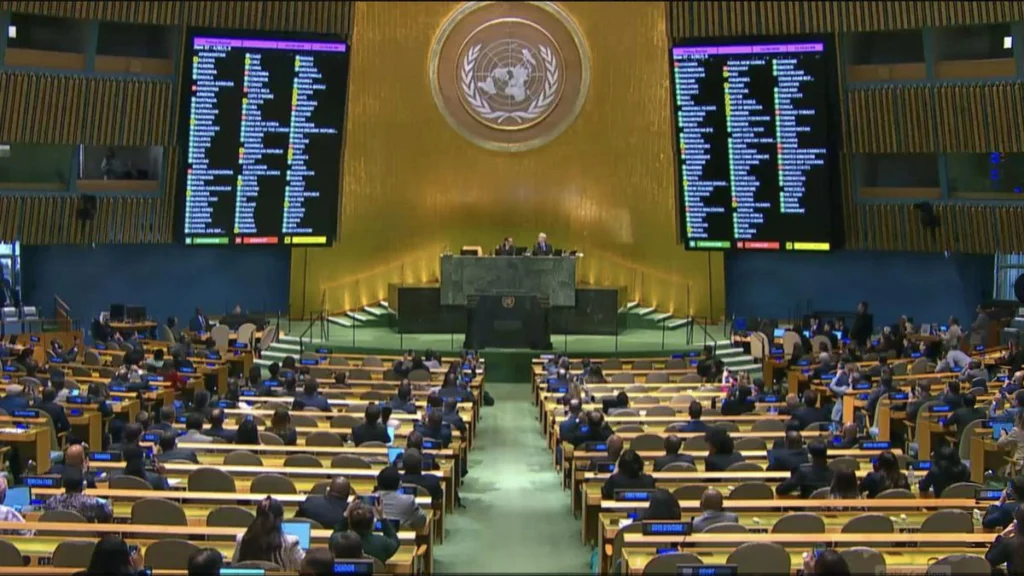
On Wednesday, the United Nations General Assembly approved—for the thirty-fourth time—a resolution calling for an end to the economic, commercial, and financial blockade imposed by the United States against Cuba. The resolution passed with 130 votes in favor, 17 against, and 25 abstentions.
During the debate, Mexico, Nicaragua, Egypt, Vietnam, India, Ghana, and Mozambique reiterated their support for the Cuban people and condemned unilateral coercive measures, which they view as contrary to the United Nations Charter and international law.
Mexico’s Permanent Representative to the UN, Héctor Vasconcelos, reaffirmed his country’s solidarity with Cuba and its rejection of any unilateral measures directed against the Cuban population. He maintained that the blockade, which has been in place for more than six decades, violates international law and is incompatible with the principles of the United Nations.
Vasconcelos noted that the sanctions constitute a structural obstacle to the island’s economic and social development. “Ending the blockade against Cuba is an urgent necessity and a humanitarian imperative,” the Mexican diplomat stated.
Mexico argued that dialogue, cooperation, and respect for international law should take precedence over measures that exacerbate the hardships faced by a population. It also called for the removal of Cuba from the U.S. list of state sponsors of terrorism and urged that priority be given to channels of dialogue.
Meanwhile, Nicaragua’s Permanent Representative to the UN, Jaime Hermida Castillo, announced his country’s vote in favor of the resolution. He based this position on principles and values shared by the two nations and reaffirmed Managua’s support for Cuba in the face of pressure tactics employed by the United States.
Hermida Castillo condemned the 64-year-long economic, commercial, and financial blockade, describing these coercive measures as a systematic act of aggression and a violation of human rights. He asserted that such policies are intended to stifle Cuba’s scientific, cultural, and social development. The Nicaraguan delegation also questioned the inaction of the multilateral system in the face of the overwhelming opposition from governments to Washington’s unilateral actions.
¡VICTORIA DE CUBA!
La Asamblea General de @ONU_es ha votado mayoritariamente contra el bloqueo de EEUU contra Cuba.
El gobierno de EEUU queda nuevamente aislado en su pretensión de continuar asfixiando al pueblo cubano y someterlo a un acto de castigo colectivo y de genocidio.… pic.twitter.com/MhnrjGnzSt
The text reads, “CUBA’S VICTORY! The General Assembly of @ONU_es has voted by a large majority against the US blockade against Cuba. The US government is once again isolated in its attempt to continue strangling the Cuban people and subjecting them to an act of collective punishment and genocide. Neither its most insane pretexts nor its pressures nor media circus will prevail over the force of facts and truth. #CubaNoEsUnaAmenaza The Blockade Is.
The delegations of Ghana and Mozambique concurred that the financial blockade violates the principles of the United Nations Charter and international law. They denounced the fact that these extraterritorial measures hinder Cuba’s economic, social, and cultural development—particularly in the areas of healthcare, education, and energy supply.
Mozambique highlighted Cuba’s historic contributions to South-South cooperation and its assistance in the fields of health and education across Africa. The representative from the African nation noted that, for more than six decades, the Cuban people have endured the consequences of the blockade—a policy that the General Assembly has repeatedly condemned.
Ghana stated that its support is rooted in the principles of sovereign equality, mutual respect, and peaceful coexistence among states. It warned that the extraterritorial application of the blockade imposes burdens on third countries and runs counter to the principles of fair and equitable international economic relations.
Egypt, for its part, called for action from the UN. Ihab Awad, Egypt’s Ambassador and Permanent Representative to the UN, reaffirmed his country’s commitment to the principles of the United Nations Charter and demanded an end to the economic strangulation of Cuba.
“The negative repercussions of the economic, commercial, and financial blockade imposed on Cuba affect the Cuban people’s ability to meet their basic needs,” the Egyptian diplomat stated.
Meanwhile, Vietnam reiterated its support for the immediate lifting of the commercial and financial blockade. Its delegation expressed concern regarding restricted access to energy and fuel, as well as the adverse impact on hospitals, schools, water services, and trade relations with third countries.
The Vietnamese delegation called for respect for the right to self-determination—free from coercion—advocated for political dialogue in accordance with international law, and urged the removal of Cuba from the list of state sponsors of terrorism. It also requested international support to address the accumulated economic and social damage.
India endorsed the statements made by the G-77 and ASEAN against the blockade. Its representatives called for the immediate repeal of these measures in order to mitigate their impact on key sectors such as energy, health, food production, and education.
Furthermore, India highlighted the need to eliminate extraterritorial sanctions to create an environment that would allow for Cuba’s full participation in international trade.
A small Russian cruise missile of an unconfirmed type came down almost intact in Odesa Oblast, Militarnyi reported on 27 October. Its box-shaped airframe looks unlike the Geran-5 variant whose name a presidential adviser gave it.
Militarnyi describes Russia’s work on the Geran-5 line as iterative: features tested on one version reappear in the next. A variant reported in late September can correct its route by images of the ground instead of satellite signals, which Ukraine jams, according to the monitoring channel Polkovnyk GSh. Official Ukrainian sources have not confirmed that system. The airframe found in Odesa Oblast looks shaped for a different problem: radar. Russia now builds 4,000 jet-powered Geran-4 and Geran-5 drones a month, Militarnyi says, most of them Geran-4. It is also building new launch sites for the Geran-5.
What the wreck shows
Local Telegram channel Odesa Info Live posted photos of the missile lying in open ground with little visible damage. Militarnyi described a compact cruise missile with a box-shaped fuselage, rounded edges, and a swept wing. The flat-sided body is probably meant to simplify production, the outlet said, and it may also cut radar visibility. A small turbojet engine exhausts through a V-shaped tail and draws air through intakes on both sides. Militarnyi read the dark composite skin as another measure against radar.
Serhii “Flash” Beskrestnov, the president’s adviser on defense technology, published the first photos of the new missile on 22 October. He wrote that it navigates optically and has greater range, speed, and flight altitude, and he labeled it the Geran-5 K5-K. However, Militarnyi noted that it looks substantially different from the K5-K variant already known by that name. In its 23 October overview, the outlet said Russia had started using two new small cruise missiles, probably developments of the Geran-5.
How Russia got here
Russia first used the original Geran-5 against Ukraine in early January 2026, Ukraine’s military intelligence (HUR) said, describing it as a jet-powered strike drone. Militarnyi now classes the whole line as small cruise missiles.
Until specialists open the airframe, its navigation, range, and speed rest on Beskrestnov’s word. What they find inside will show how much of the design is aimed at Ukraine’s radar.
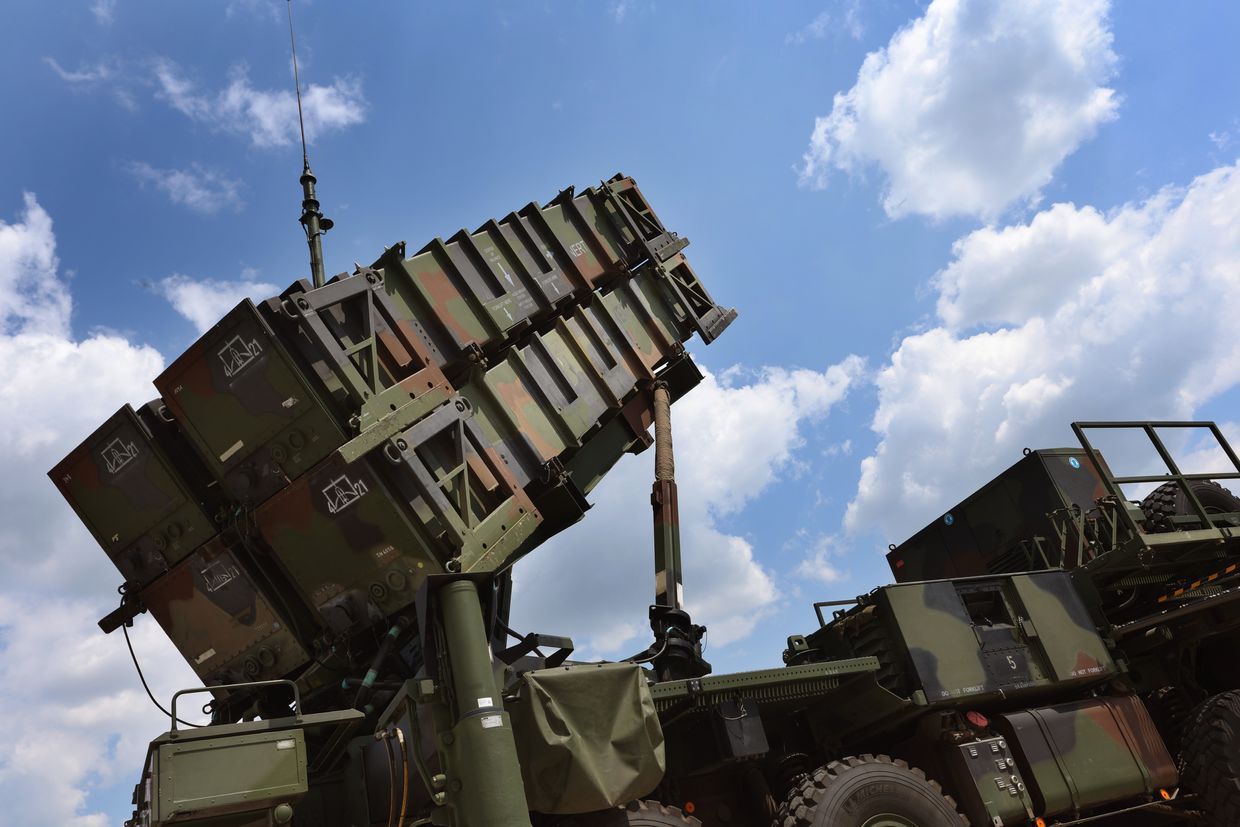
Ukraine needs to intercept around 150 Russian ballistic missiles per month but receives about 150 Patriot missiles from the U.S. annually, according to President Volodymyr Zelensky.
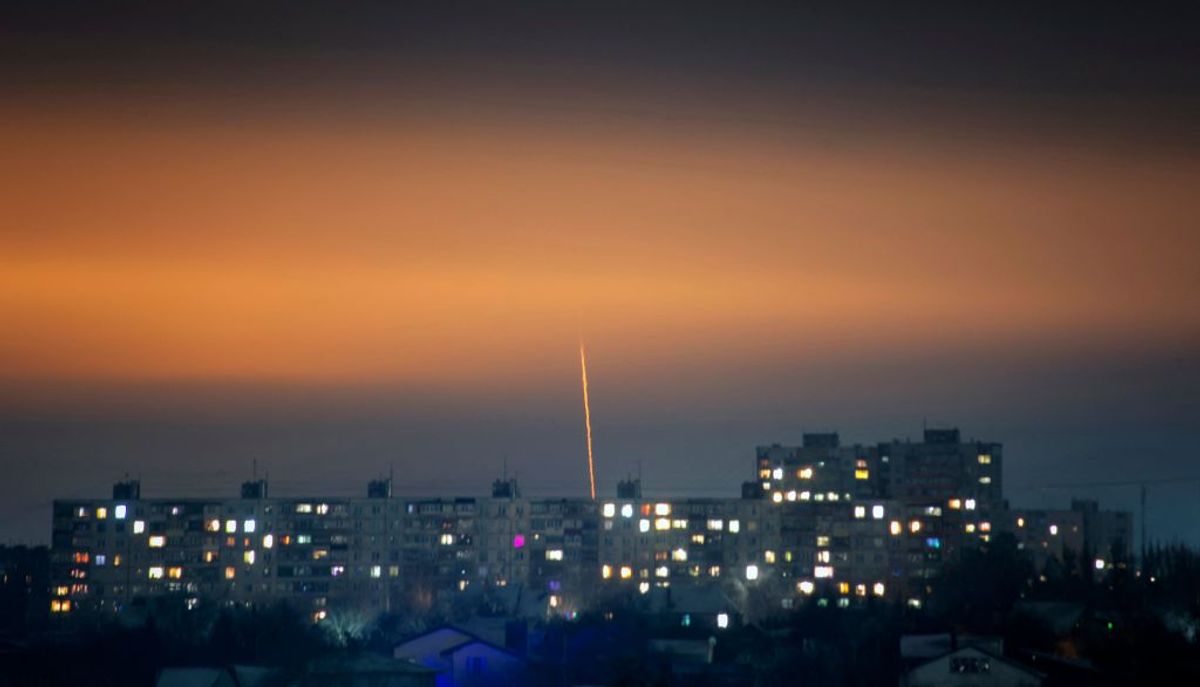
Zelensky's comments come one day Russian ballistic missiles targeted Kyiv in a deadly attack on a university campus, a major bridge, an administrative building, and medical facilities in Kyiv. The attack killed one person and injured 15.

 Login