
❌

Reading view

Saab Challenges U.S. F-35s For Canadian “Rematch” Deal. Picks Local Firms to Build & Support Gripen-E Jets

Days after Canada received the first two of the 16 F-35A fighters from Lockheed Martin, Swedish defense and aerospace firm Saab has stepped up its “Gripen for Canada” campaign by selecting top Canadian aerospace firms to build the Gripen-E jets.

On March 28, 2022, Lockheed Martin edged out Saab to win a CAD $27.7 billion contract for 88 F-35A Lightning II stealth fighters, with an initial commitment of 16 jets.

Saab attributed the loss to unfair play. “The process was not transparent. The requirements were tailored to exclude competition. We delivered the best value—Canada chose politics over merit,” said the Saab Canada President, Simon Carroll.

After Canadian Prime Minister Mark Carney announced in March 2025 that it would review the purchase of F-35 stealth fighters amid rising tensions with the Trump administration, Saab revived its Gripen-E campaign last year.

Saab has offered a deal that may prove difficult to ignore. At the heart of this offer are local manufacturing, full technology transfer (ToT), access to source code for mission systems, sovereign control of data, and full independence in upgrades and maintenance for the Royal Canadian Air Force (RCAF).

Saab announced on October 27 that it plans to work with several of Canada’s leading aerospace companies as a first step toward creating a large national ecosystem to develop, deliver, and support the Gripen E fighters if the Canadian government decides to move forward with the acquisition.

If the RCAF chooses Saab, the company and its Canadian partners will provide an all-encompassing domestic capability for manufacturing, final assembly, maintenance, and advancing airpower capabilities, the company said in a statement. The partnership would also provide long-term sustainability, training, and in-service support (ISS). 

SAAB’s Tempting Offer

The Canadian government has been vocal about the industrial and regional benefits, jobs, technology transfer, and sovereign sustainment of major defense procurements.

“We think that we can use military procurement to get more,” Canada’s Industry Minister Mélanie Joly told reporters in November 2025 on the question of fighter programs creating jobs. “That is why we’re looking, indeed, at the Gripen.” “We’ll see how that is concrete,” Joly said. “And at the same time, we’re looking at what Lockheed Martin can do.”

Saab’s official partnership with Canadian companies is meant to appeal to this sentiment, especially since Canadian public and political opinion has grown more cautious about relying exclusively on the US amid ongoing trade and diplomatic tensions.

Saab has repeatedly promised to create around 10,000 jobs for Canadian, with some estimates rising higher when GlobalEye surveillance aircraft are included.

As noted in its official release, Saab has built teaming arrangements with Canadian firms CAE of Montreal, Quebec; IMP of Halifax, Nova Scotia; and Magellan Aerospace of Mississauga, Ontario. “Canada’s fighter capability is a long-term national investment. Together with CAE, IMP and Magellan Aerospace, we are prepared to establish a strong Canadian industrial ecosystem around Gripen that delivers operational effect, national sovereignty and lasting industrial and technological benefits,” said the Saab CEO.

The companies selected by Saab will be in charge of the following:

IMP Aerospace & Defense will establish and run a new final assembly line for the Gripen fighter in Canada, produce electrical assemblies, and provide in-service support (ISS) for Canada’s Gripen fleet. 

IMP is a vertically integrated Canadian aerospace company that specializes in In-Service Support (ISS) / Fleet Management (Full lifecycle support for military aircraft fleets), Maintenance, Repair & Overhaul (MRO), Aircraft Missionization and Modernization (aircraft upgrades and modernization), Engineering Solutions (Design, structural analysis, systems integration, avionics work, and airworthiness certification), and Manufacturing.

Magellan Aerospace will manufacture advanced aerostructures, composite structures, and structural assemblies in Canada.

Magellan mainly produces aeroengines and aerostructures (complex structural components and major aircraft assemblies), offers MRO, and also produces solid rocket motors, satellite buses, space hardware, and related systems for space-based applications. 

CAE will deliver advanced fighter pilot and technician training, handle mission systems engineering, and provide support and sustainment capabilities in Canada.

CAE  is a Canadian global leader in training and simulation technologies.

Its main segments include civil aviation, defense, and security. It delivers military training and simulation solutions for air, land, sea, and other domains, supplies mission simulators, live-virtual-constructive (LVC) training systems, and platform-independent training programs, and supports force readiness for defense forces, OEMs, and government agencies.

Gripen jets perform prior to the Formula One Hungarian Grand Prix at the Hungaroring racetrack in Mogyorod near Budapest, Hungary, on July 26, 2026. (Photo by Attila KISBENEDEK / AFP)

Saab formalizing partnerships with these companies is a major move in its campaign, turning “we will build in Canada” language into named, ready-to-execute industrial relationships.

It demonstrates that Saab has done the groundwork with capable domestic players who already have relevant expertise. In fact, it likely aims to show that the industrial package the company repeatedly offers is not just marketing.

These partnerships promise significant new high-tech jobs and skills development in advanced manufacturing, composite structures, electrical systems, model-based systems engineering, training, and much-needed long-term sustainment.

At the same time, Saab’s selection of these companies means work will be distributed across key regions, appealing to local governments and lawmakers.

Saab has stressed that “These partnerships are designed to strengthen Canada’s sovereign defense capability while contributing to the development of advanced aerospace and defense expertise across the country.”

Canada’s F-35 Review Still Ongoing

Political sensitivity around the F-35 deal has grown amid trade tensions with the US.

In August 2026, the head of the Defense Investment Agency said the Canadian public would not welcome sole-source military contracts awarded to American companies under the current conditions. “That’s just me reading the room,” Stephen Fuhr, secretary of state for defense procurement, said in an interview. “I think that would be a very difficult thing to do, especially after this last week. I think that people would not be happy about that.”

Fuhr stressed that Canada has recognized the risks of “putting all our eggs in one basket” and that Ottawa needs to form new strategic alliances or become more independent in military manufacturing, adding that he still sees the US as a crucial defense ally. 

Saab, for its part, appears hopeful.

In Saab’s Gripen final-assembly hall in Linköping, flags of its eight customer nations hang above the line—plus a ninth white banner marked “RESERVED,” the Globe and Mail had reported. However, ambiguity persists as Canadian leadership sits on the review, more than a year after Carney ordered it.
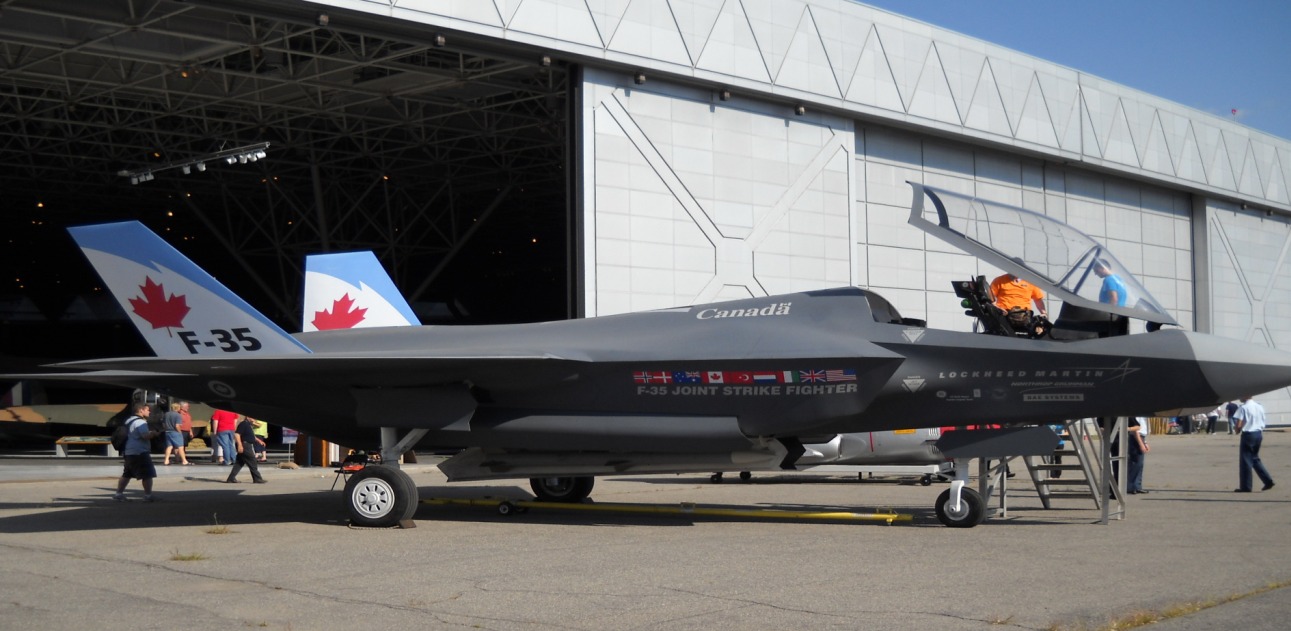
Canada
Lockheed Martin F-35 Lightning II for Canada – Wikipedia

Canada may not abandon the F-35 purchase entirely, as it is currently the only fifth-generation stealth fighter available in the market that offers deep interoperability with NORAD forces.

Moreover, top RCAF leadership continues to view the F-35 as the most credible counter to peer adversaries such as China and Russia, both of which field advanced stealth fighters and sophisticated air defenses.

Beyond proponents of the F-35 and Gripen-E/F, a third school of thought advocates a mixed fleet. Earlier this year, a report in Canadian media said the country could buy 72 F-35s and 72 Gripen-E/F jets, bringing its fighter-jet purchases to more than 88 and suggesting Ottawa was unlikely to abandon the US stealth fighter.

A mixed fleet, however, would add high costs and complexity in training, logistics, weapons integration, and infrastructure. Defense planners have long cited these factors as potential long-term drawbacks for the RCAF.

The post Saab Challenges U.S. F-35s For Canadian “Rematch” Deal. Picks Local Firms to Build & Support Gripen-E Jets appeared first on EURASIAN TIMES.
  •  

British Warship for the U.S. Navy: UK Firm Pitches Arrowhead 140 Design as Trump Approves Foreign Frigates

British shipbuilder Babcock is pitching one of its well-known frigates to the US Navy, which recently changed policy to welcome foreign warships from allies as part of its push to rebuild the “arsenal of freedom” at pace. 

Babcock is offering its Arrowhead 140 design, which is the parent of the Royal Navy’s Type 31 Inspiration-class frigate, to the US Navy.

The company has already held initial talks with Pentagon officials about the offer and, according to British media reports, is poised to file an expression of interest (EoI) by the end of October. 

“Of course we’re interested. We have a world-class frigate, close links to the U.S. and U.S. industry. It would be insane for us not to respond,” Sir Nick Hine, head of Babcock’s marine business and a former Second Sea Lord,  was quoted as saying by The Telegraph earlier.

According to reports, the largest military shipbuilder in America, Huntington Ingalls Industries (HII), will be part of this plan. The two companies are reportedly exploring a deal that may allow the US to manufacture the Arrowhead 140 under license.

The offer is imminent, as US President Donald Trump issued a national security memo in August 2026 that allowed the Navy to acquire foreign ship designs and build some warships overseas amid delays, cost overruns, and limited shipyard capacity in the US.

Under the new model, foreign shipbuilders must invest in or take a majority stake in a US shipyard and build subsequent ships in the US after the first two overseas-built vessels.

This means that if Babcock wins a contract, the US will build most of its ships in its own shipyards, with the British company providing design and engineering technology.

This comes as the US Navy seeks to expedite the acquisition of smaller surface combatants after canceling the troubled Constellation-class in November 2025.

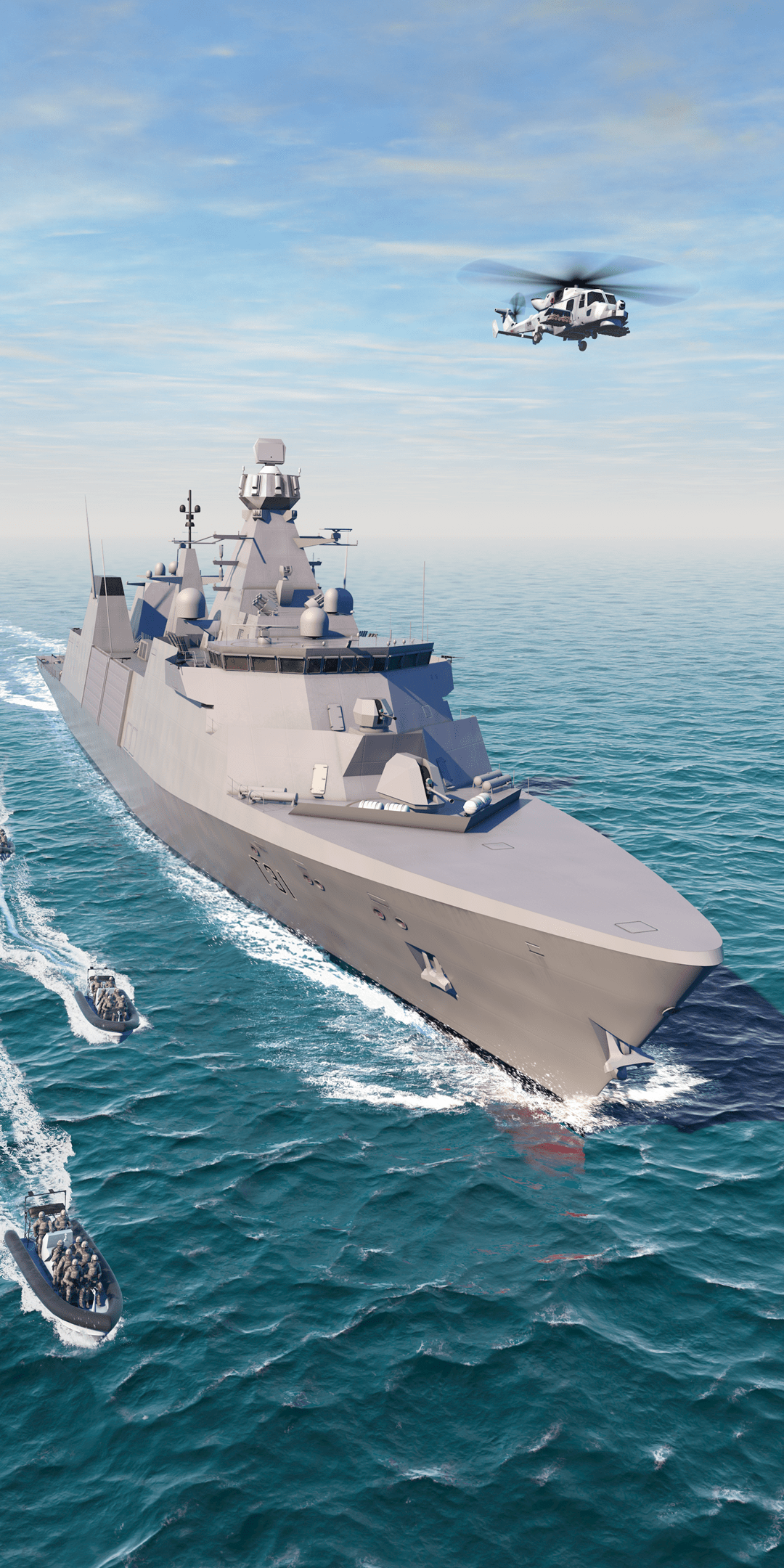
Arrowhead 140 - Babcock International Group
Arrowhead 140 (Via Babcock International Group)

The US Navy currently has no dedicated frigates in service.

Following Trump’s waiver, the US Navy is reportedly considering frigate designs, including Japan’s FFM Mogami-class guided-missile frigate, South Korea’s Chungnam-class guided-missile frigate, and Turkey’s Istanbul-class guided-missile frigate. This means that if Babcock files an official pitch, the US would have four designs to choose from.

Notably, Babcock and the US submarine industrial base already have a solid working relationship. For example, Babcock’s facilities have been producing tactical missile tube assemblies for General Dynamics Electric Boats since at least 2014 as part of the “Common Missile Compartment” shared by the US Navy’s Columbia-class ballistic missile submarines and the Royal Navy’s Dreadnought-class.

At the same time, Babcock’s partnership with HII has grown stronger through industrial collaboration.

While the prospect of the US Navy selecting a British ship design looks promising for ties between the age-old allies, the UK has little precedent for offering its own ships to the United States, long regarded as the world’s most advanced maritime power. In fact, a major historical naval transfer between the two countries went the other way in the 1940s.

On September 2, 1940, the-then US President Franklin D. Roosevelt announced the destroyers-for-bases deal with Great Britain.

Under the deal, the US transferred 50 of its aging destroyers to the United Kingdom. In return, Britain leased eight bases in the Western Hemisphere to the United States for 99 years. At the time, the United Kingdom was fighting to survive the Battle of Britain and repel a potential German invasion, while the United States remained at peace.

The deal followed British Prime Minister Winston Churchill’s request to the US for a loan of 50 destroyers to defend the English Channel against German invasion.

Under the deal, the US transferred 50 aging Caldwell, Wickes, and Clemson-class destroyers to the UK after extensive correspondence.

This agreement marked the beginning of the Anglo-American alliance during the war.

Following the deal, Churchill declared in the British Parliament that “these two great organizations of the English-speaking democracies, the British Empire and the United States, will have to be somewhat mixed up together in some of their affairs for mutual and general advantage”.

Against this background, the imminent offer to the US Navy from a British firm represents a significant departure in historical approaches.

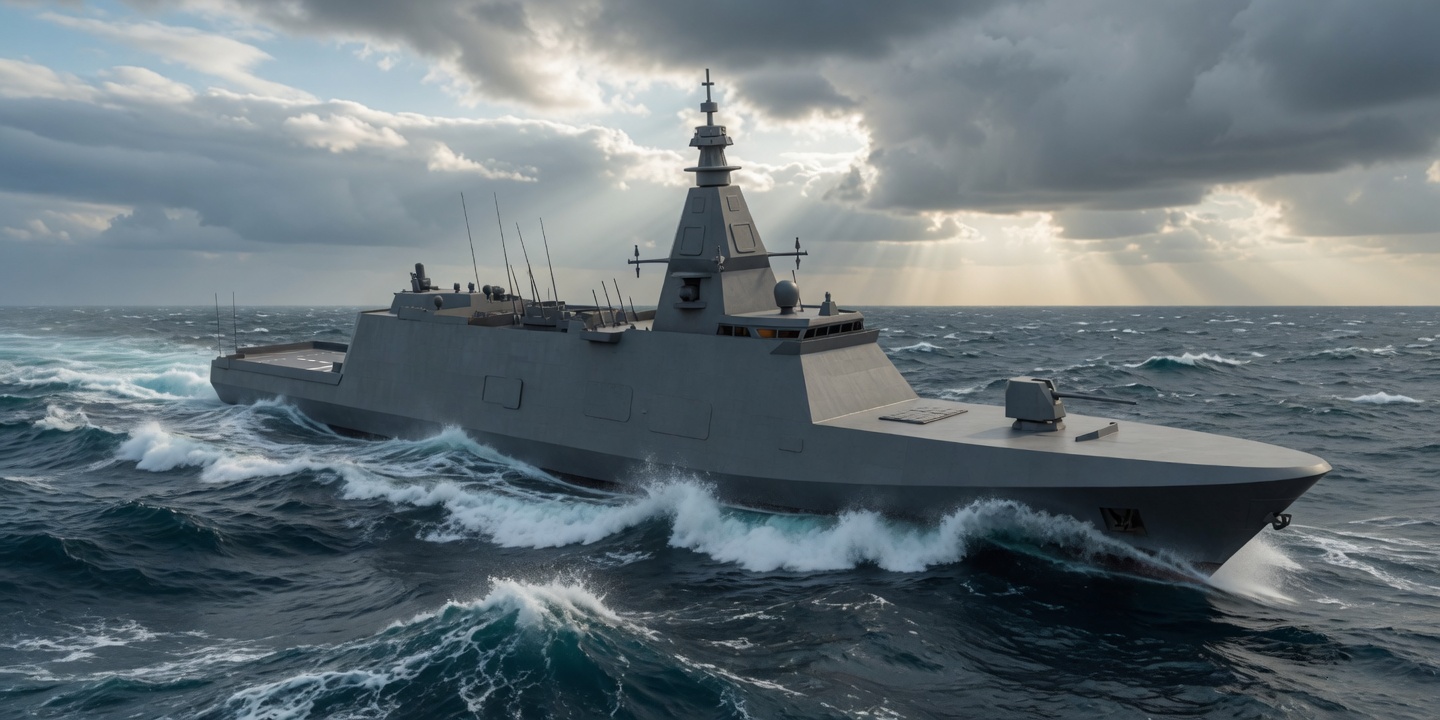
Mogami-class warship

What Do We Know About Arrowhead?

Arrowhead 140, for one, has already been marketed to Poland and Indonesia, and is now being pitched to Chile. The Arrowhead 140 has a baseline length of around 455 feet, a beam of 65 feet, and a displacement of about 5,700 tons.

The ship can reach more than 28 knots and has a baseline endurance of about one to two months. It has a large flight deck and hangar, and multiple large, dedicated boat bays for rigid-hulled inflatable boats (RHIBs), Unmanned Aerial Vehicles (UAVs), and other craft. 

The ship’s open architecture and generous internal volume allow different weapon, sensor, and mission-system fits without major structural changes.

The ship is a general-purpose warship capable of surface warfare, escort, and maritime security operations. It can be outfitted with a medium-caliber gun up to 127 mm, secondary guns of 40 mm caliber, a vertical Launch System with provision for up to 32 cells, anti-ship missiles, close-in weapon systems, a combat management system, 3D air or surface search radar, electro-optical sensors, hull-mounted sonar, and also offers options for towed-array or variable-depth sonar. However, it is highly configurable, and the armament can be modified to meet the customer’s requirements.

Despite these attributes, the British offer carries a significant caveat: the Royal Navy’s Type 31 program, which is based on Arrowhead 140, remains unproven in operational service.

The Type 31 was envisioned as a vessel intended to provide the Royal Navy with five relatively affordable general-purpose frigates to replace older Type 23s in lower-threat presence roles. Designed for modularity, long endurance, and a range of missions, from maritime security to escort duties, the class remains mired in delays and cost overruns, with Babcock and the British Defense Ministry facing skepticism from critics.

The class’s lead ship, HMS Venturer, was launched in 2025 and is currently being fitted out, while the second ship, HMS Active, has been rolled out. The keel of the third, HMS Formidable, was laid in December 2025, and steel has been cut on the fourth. The program still has momentum on paper, but timelines have slipped, and delays continue. For example, the first two ships still need a Capability Insertion Period after initial delivery, including installing Mk 41 vertical launch systems, further delaying operational capability.

HMS Venturer | Royal Navy

The British Ministry of Defense (MoD) has grown increasingly vague about in-service dates, and cost pressures continue to cloud the outlook for the later ships of the class.

Babcock declared a £140 million charge against the program in May 2026 because rework on HMS Venturer and HMS Active was higher than anticipated due to design modifications and out-of-sequence build activity early in the project. Needless to say, late outfitting corrections are more difficult and costly than those made in the build hall.

More recently, the MoD confirmed ongoing inflationary pressures, particularly on labor and the wider supply chain. The British Defense Minister Luke Pollard went so far as to say that the program’s affordability “remains under review,” and any budget changes will follow standard processes.

Observers are also questioning whether the baseline Type 31 will be sufficiently capable for the roles expected of a modern general-purpose frigate, as well as cost and schedule. The design is intended to be affordable, modular, and to perform presence tasks, but key systems such as the Mk 41 vertical launch cells are planned to be inserted later rather than as a day-one fit, and the initial anti-submarine warfare sensors have been described as limited compared with specialized peers or some earlier Type 23 general-purpose frigates.

The ships have faced familiar British procurement challenges, including inflation, supply-chain strain, and changing requirements, and critics warn they risk entering service as among the more lightly armed frigates of their generation.

Therefore, Babcock is now offering the world’s most advanced navy a capability that has yet to prove itself within the Royal Navy.

At the same time, however, a deal with the US would be the much-needed endorsement for the Arrowhead 140 and the Type 31 program. This success would let Babcock and the Ministry of Defense argue that the design is mature and flexible enough to meet the US Navy’s exacting standards, providing a powerful counter to domestic critics who question the ship’s capability and the program’s delivery track record.

However, if the US chooses another design on offer, given strong interest in designs from allies like Tokyo and Seoul, it may make things much harder for Type 31 proponents at home.

The post British Warship for the U.S. Navy: UK Firm Pitches Arrowhead 140 Design as Trump Approves Foreign Frigates appeared first on EURASIAN TIMES.

  •  
❌