❌

Reading view

Israel's unassuming President Herzog holds keys to next government

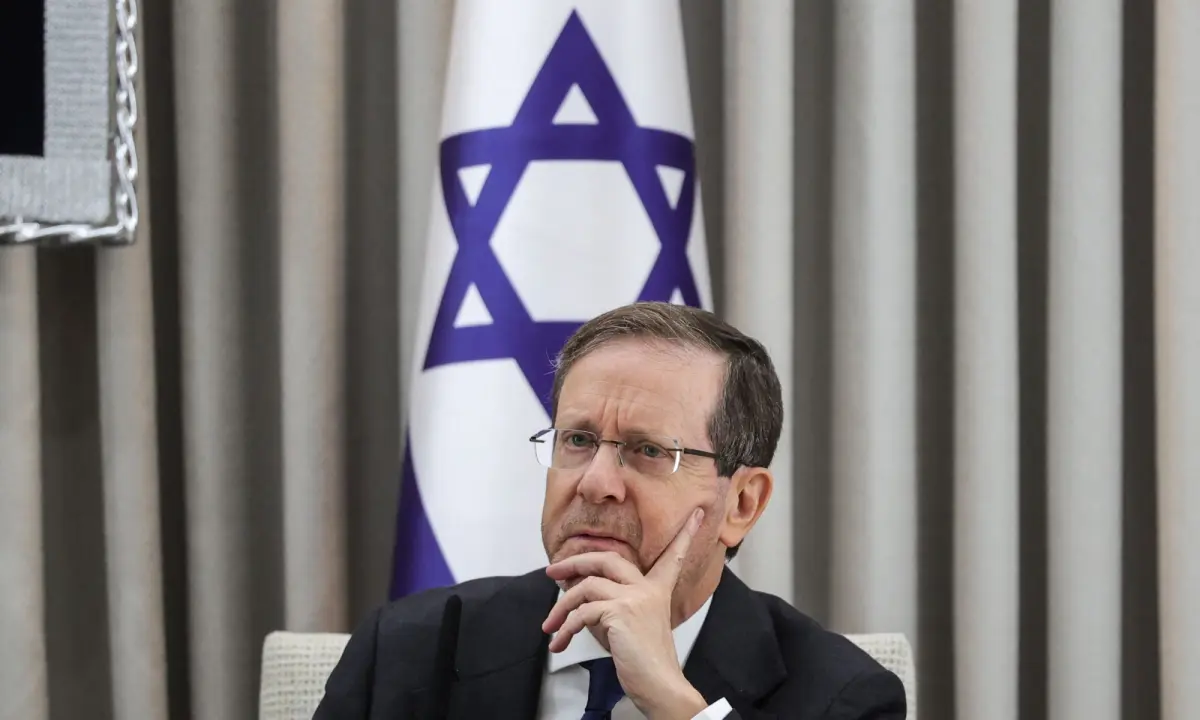
Israel’s President Isaac Herzog is known for his unassuming and mild manner, but all eyes will soon be on him as he decides who to task with forming the next coalition government.

The decision is a weighty one given that partial results from Tuesday’s elections show neither the camp of Prime Minister Benjamin Netanyahu nor that of his rival Gadi Eisenkot securing a majority in parliament.

After the official announcement of the results, Herzog will consult with party representatives and name a candidate who has the best chance of forming a government — not necessarily the one whose party holds the most seats.

Under the law, the president, whose position is otherwise largely ceremonial, is afforded broad discretion, with no guidelines on how to make the choice.

As votes were being tallied on Wednesday, Herzog said he would receive the official results the following week, after which consultations would begin.

“One thing must be clear, and I said this before the elections too: we must do everything we can, certainly after yesterday, to avoid another round of elections,” he said.

“So I expect everyone who comes here to come with an open mind.”

Ahead of Tuesday’s pivotal vote, Herzog acknowledged there would be tremendous pressure, but vowed not to let outside influence, notably from US President Donald Trump, sway his decision.

“I don’t think the president of the United States or anybody else can intervene in my discretion,” he told US outlet MS Now.

“It’s Israel’s democracy and Israel’s constitution, and that’s what counts for me.”

Herzog told MS Now he would do everything he could to avoid a fresh election — a possibility if neither camp can cobble together a coalition — including backing a unity government between Netanyahu and Eisenkot.

‘Worthy and wonderful man’

Modest, diplomatic and with a strong political pedigree, 66-year-old Herzog was sworn in as Israel’s president in 2021 after being elected by lawmakers in a landslide.

Yair Lapid, now a member of Eisenkot’s broad opposition bloc, praised Herzog at the time as “a worthy and wonderful man who is always focused on the good of the country and the Jewish people”.

As president, Herzog has faced pressure from Trump to grant Netanyahu a pardon in his long-running corruption trials, which could land him in prison if he loses power.

In April, Herzog invited Netanyahu’s lawyers and prosecutors to his residence for talks on the issue.

Before he served as head of state, Herzog was elected to Israel’s parliament in 2003 and held portfolios including housing, tourism and welfare.

In 2015, as leader of Israel’s centre-left Labour party, Herzog vied to oust Netanyahu as prime minister, presenting himself as a subdued, even-keeled alternative to the bombastic “Bibi”.

Netanyahu, now 77, is Israel’s longest-serving premier, having governed on-and-off for nearly two decades.

Tuesday’s election was seen as a referendum on the veteran leader’s tenure after he pushed the country sharply to the right and unleashed a wave of military campaigns in response to Hamas’s Oct 7, 2023 attack.

‘Bring a real change’

In an interview with AFP in March 2026, Herzog said the ongoing US-Israeli war with Iran marked a “historical juncture”.

“There comes a moment that after well over a generation of endless wars, bloodshed and terror, the root cause of it, which comes from Tehran, will be blocked and stopped, and the whole direction of the region will change,” he said.

“Let’s help us bring a real change so that there will be a different future in the region.”

He also stressed the importance of talks with Lebanon, with the two sides sitting down the following month for direct negotiations that are still ongoing.

Herzog’s Irish-born father, Chaim Herzog, served as head of Israel’s military intelligence, then went on to become its ambassador to the United Nations and finally its sixth president, from 1983 to 1993.

Herzog’s grandfather and namesake — Rabbi Yitzhak (Isaac) HaLevi Herzog — was the first chief rabbi for Israel’s Ashkenazis, the branch of Judaism whose roots are in eastern Europe.

At the helm of the Labour party, Herzog worked to steer its focus back to peace with the Palestinians.

He answers to the nickname “Bougie” — reportedly given to him by his Egyptian-born mother, who mixed the French word for doll “poupee” with its Hebrew equivalent “buba”.

  •  

Una británica denuncia que su marido la drogaba y ataba para tener sexo con otros hombres

El proceso sienta en el banquillo a cuatro hombres que niegan los cargos y que habrían participado en los abusos con la colaboración de Philip Young, quien se declaró culpable en enero Leer

El proceso sienta en el banquillo a cuatro hombres que niegan los cargos y que habrían participado en los abusos con la colaboración de Philip Young, quien se declaró culpable en enero
  •  

‘God will surely provide’: Afghans compete for jobs, homes as millions return from neighbouring countries

As labourers gathered at a roadside in northern Afghanistan, Ghulam Sakhi Barat joined the search for work, with millions of new arrivals intensifying pressure for jobs and homes.

More than six million Afghans have returned from Iran and Pakistan in little over three years as the neighbouring countries have launched deportation drives after decades hosting those fleeing conflict.

With seven relatives to support in Sheberghan, the capital of Jawzjan province, Barat said “people are going hungry” as a result of the influx.

“Since the returnees arrived, there have been fewer jobs for local people,” the 83-year-old said, wearing a frayed waistcoat.

“Help is being given to the returnees, but no help is being given to the people who were already living here.”

Jawzjan may be hundreds of kilometres (miles) from the frontiers with Iran and Pakistan, but Afghans have travelled far and wide to reach areas they or their relatives fled years earlier.

Abdul Qader Hotak, 60, returned to the province after two decades in Pakistan, despite his family having no land or property in the area.

“My children used to go to school and study in Pakistan … Now, all of them collect rubbish to earn something,” he said, eight months after being deported.

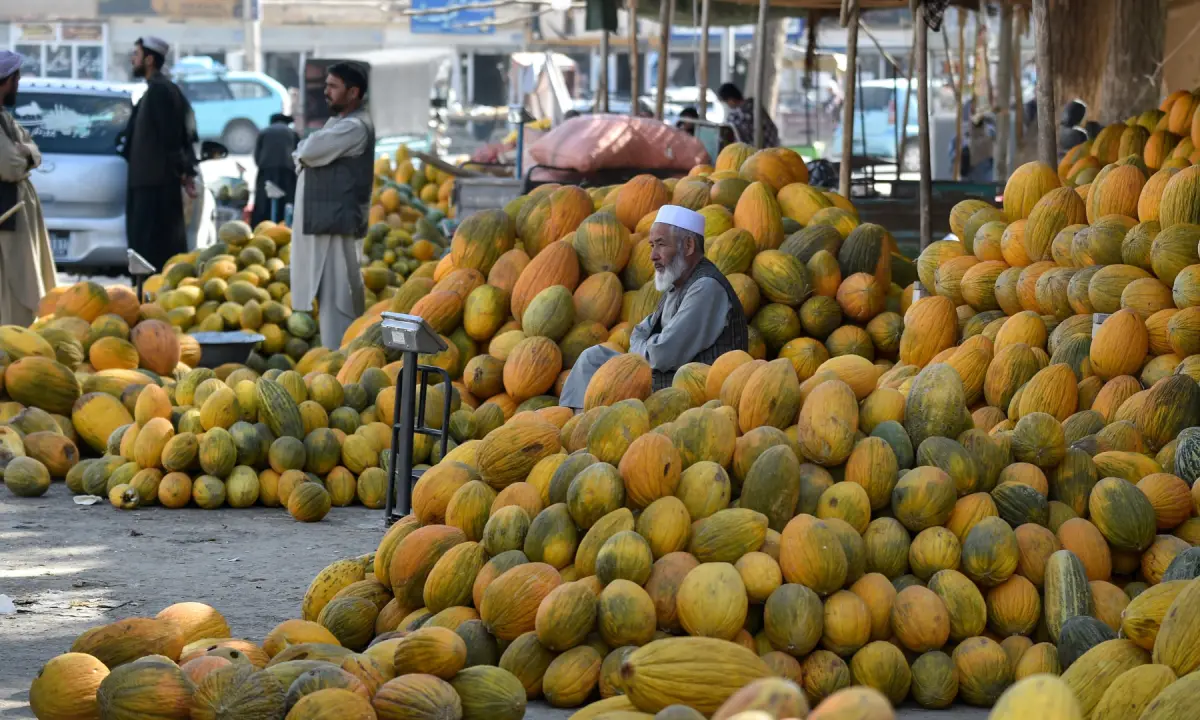
This photograph taken on October 20, 2026 shows a melon vendor waiting for customers at a roadside market in Sheberghan in Afghanistan’s Jawzjan province. — AFP

In one part of the province, Aqcha, the United Nations projects the population will surge by more than 26 per cent due to the mass returns, with water becoming a “critical flashpoint” in the drought-hit district.

Faqir Mohammad Khudabakhsh, a mason who has spent two decades going back and forth to Iran, said he is now only able to get work three days a week.

“Everyone who has returned to Afghanistan needs a place to live and a job, but they have neither,” the 54-year-old said, surrounded by fellow labourers in Sheberghan.

“Instead of spending money on food and clothes, they have to spend it on rent. I’m sorry to say this, but we are suffering from malnutrition,” he added, in paint-splattered khaki trousers.

Nearly one in three Afghans — 15.9 million people — are facing food insecurity at crisis levels or worse, according to UN data.

Competition for housing is fierce, with residents who spoke to AFP reporting rent surging by as much as 150 percent in recent years.

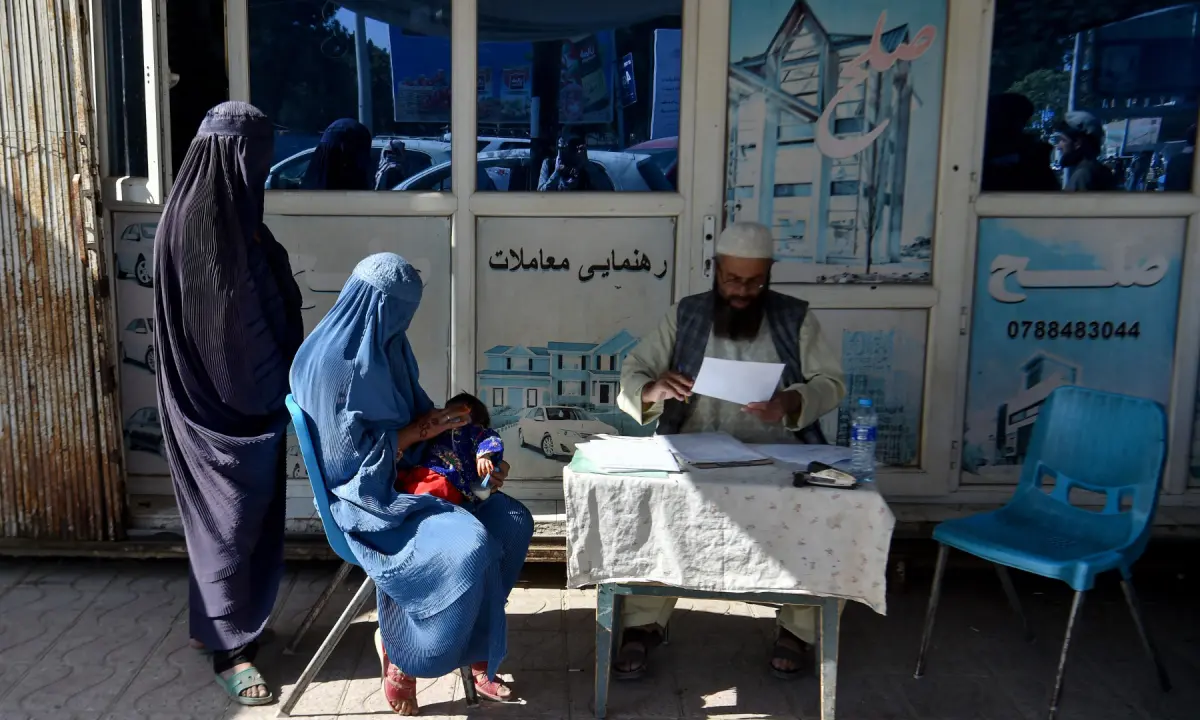
This photograph taken on October 20, 2026 shows burqa-clad women waiting at a petition writer’s desk in Sheberghan in Afghanistan’s Jawzjan province. — AFP

‘God will surely provide’

At the provincial information directorate, the director said there are “no unresolved issues facing local residents or returnees”.

“We have no unemployed people in Afghanistan, unless someone is simply too fond of their own comfort and chooses not to work,” said Saifuddin Muhtasem, sitting beside a globe and a bookshelf shaped like the map of Afghanistan.
The government has established a committee operating nationwide to control rent prices and prevent hikes, he said.

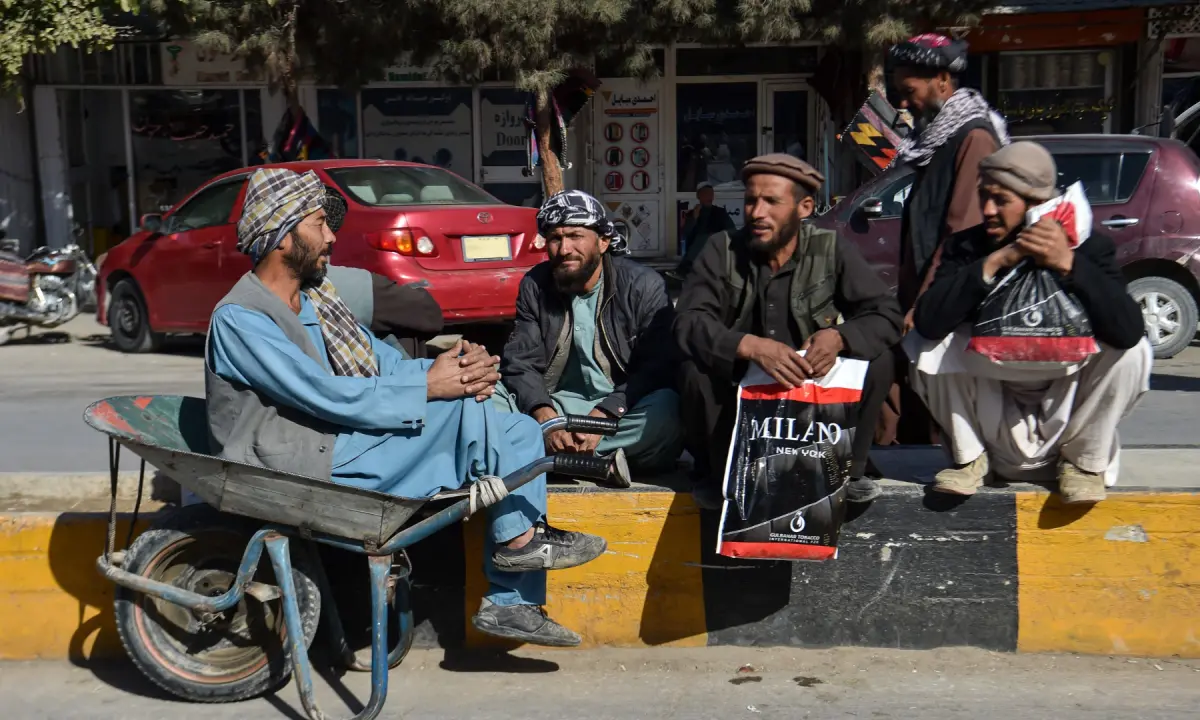
This photograph taken on October 20, 2026 shows daily wage labourers sitting along a road at Sheberghan in Afghanistan’s Jawzjan province. — AFP

But a 30-year-old civil servant told AFP he had never heard of such a committee and that his rent has doubled in 18 months.

“Economic problems have increased since the returnees arrived,” said Ahmadi, who only gave one name for security reasons.

Sustained support is vital for both the returnees and the communities hosting them, the UN warned in September.

“Competition over scarce resources risks fuelling grievances, increasing displacement and promoting instability,” said Georgette Gagnon, the deputy special representative of the UN mission in Afghanistan.

The challenges are compounded by prolonged drought in Jawzjan, where the air is imbued with dust and the landscape dotted with domed mud homes and camels grazing.

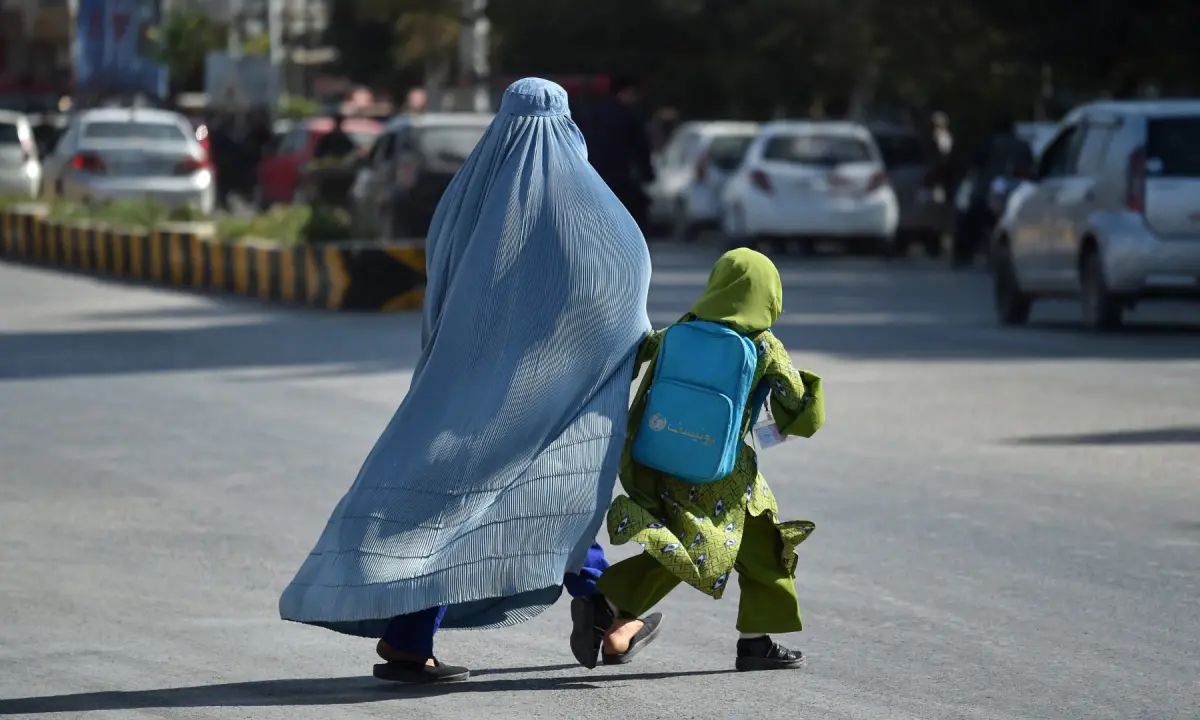
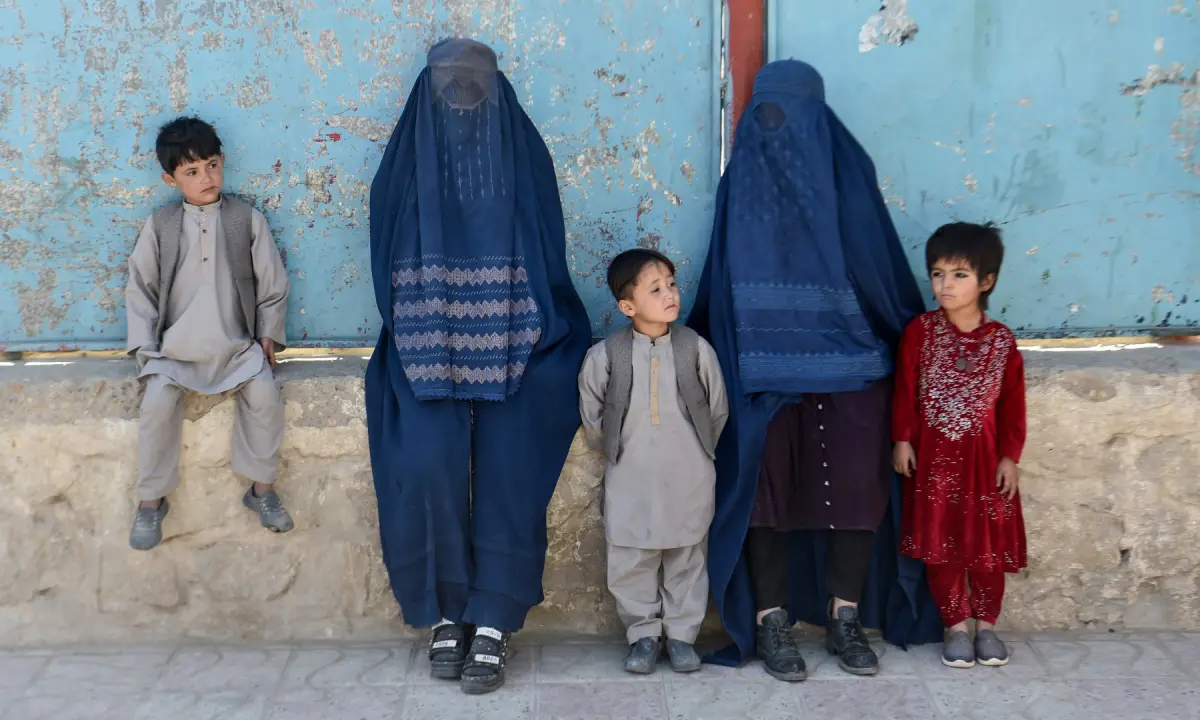
This photograph taken on October 20, 2026 shows a burqa-clad woman with a girl crossing a street in Sheberghan in Afghanistan’s Jawzjan province. — AFP

Most of the province’s water is now unfit for drinking or farming, said the information director, putting his hopes in a canal project which is expected to take another two years to complete.

“While the people of Afghanistan are not dying of hunger or thirst, they are in dire need of shelter,” said Muhtasem, who encouraged international organisations to come and build homes for returnees in the province.

“As for the rest, God will surely provide.”

  •  

At least 64 people killed in Spain as two high-speed trains collide

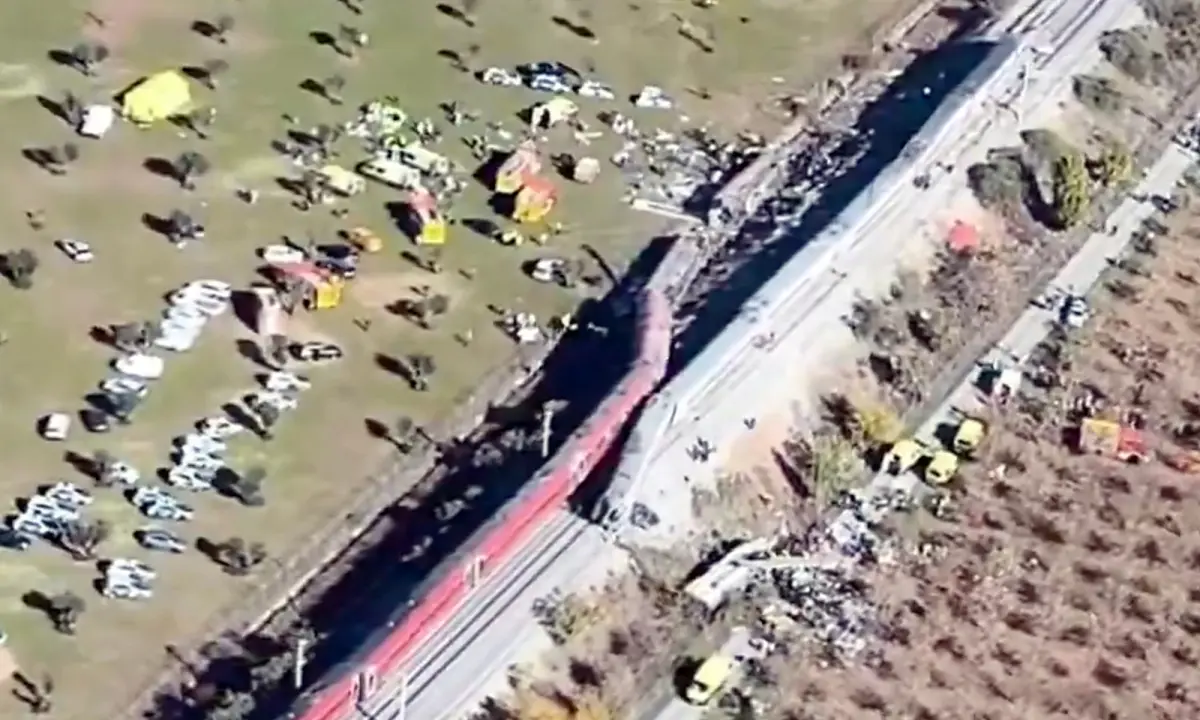
Rescue workers in Spain on Wednesday were scouring the wreckage for more bodies at the crash scene where at least 64 people were killed when two high-speed trains collided, in the second deadly railway accident in the country this year.

“We are speaking of approximately 64 (dead), but this is probably going to grow even more,” the leader of the central region of Castilla-La Mancha, Emiliano Garcia-Page, told reporters at the scene, raising a previous toll of 31.

Evacuated passengers streamed along a road near the scene, some splattered with blood or with their wounds bandaged, others wheeling suitcases and being given water by volunteers who said it had been donated from neighbouring towns.

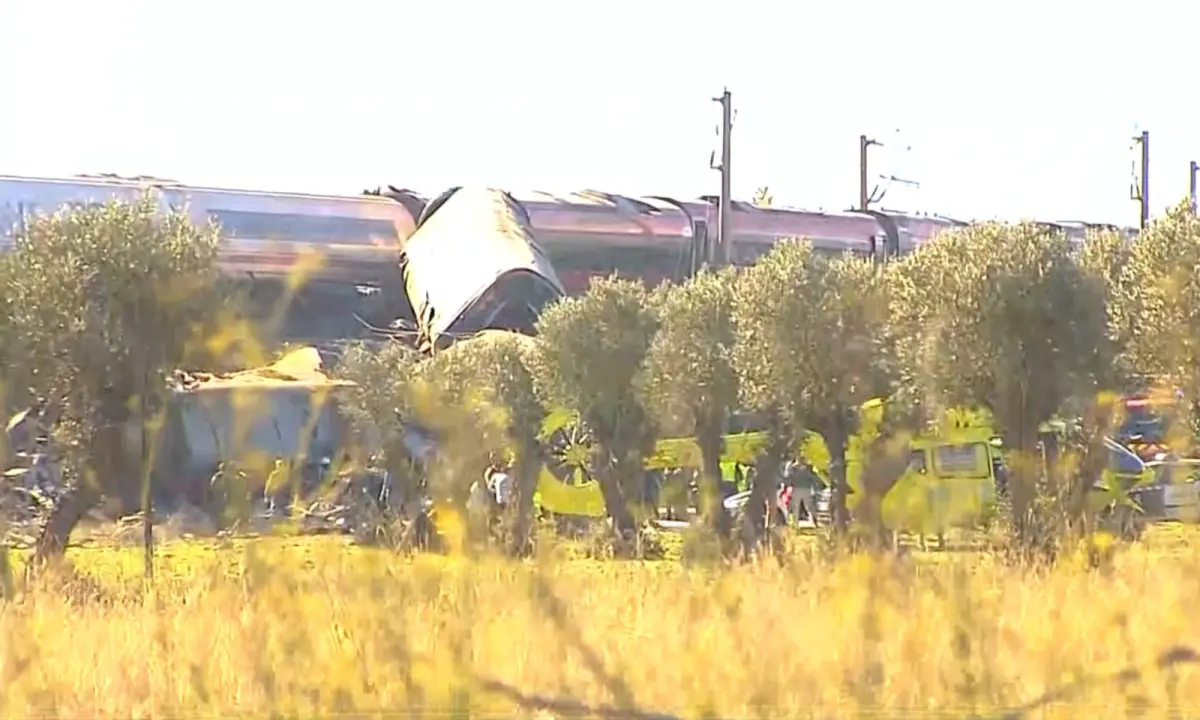
Hundreds of ambulances, funeral home vans and helicopters were parked next to a train with several carriages sitting on an elevated section of track while twisted metal, broken panels and wreckage could be seen strewn across an embankment beneath the line where at least three carriages had plunged.

The accident comes after a collision between two high-speed trains in southern Spain in January resulted in the deaths of 46 people.

That crash in January, which occurred after a train derailed and smashed into an oncoming train near Adamuz, in Cordoba province, triggered a debate about the level of investment in railway maintenance in recent years.

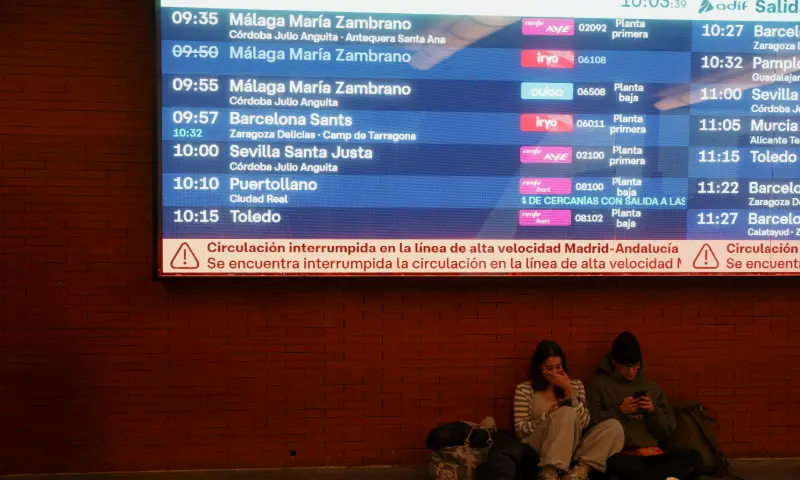
“Traffic on the Madrid-Andalusia high-speed rail line has been suspended following a rear-end collision between two trains,” rail operator Adif said in a message posted on X on Wednesday.

A Renfe and an Iryo train crashed just after 9am (1pm PKT), causing two Iryo wagons to derail, a government spokesperson for the Castilla La Mancha region said, adding that the cause and number of injuries were still being determined.

Miguel, a passenger travelling with several colleagues in the rear car of one of the trains, described to COPE radio the moment of the accident.

“We heard a massive roar, a truly enormous thud that went on for 10 seconds, as if the train were about to derail. Through the right-hand window, we could see a wrecked train,” he said.

Adif said the incident occurred on the line from Madrid to Seville.

Manuel Galan, mayor of the nearby town of Urda, told Cadena SER that emergency services had asked the town council to prepare emergency facilities, including a sports hall, to accommodate passengers and the injured.

Prime Minister Pedro Sanchez’s agenda, published on the Spanish government’s website, had been cleared for the day. The opposition People’s Party also cancelled all campaign events, a spokesperson said.

PM Sanchez, who is seeking re-election next month, said he was “shocked” by the incident.

“Shocked by the serious train accident in Toledo,” Sanchez said on X about the incident south of Madrid, sending “my love, solidarity and support to all the victims and their families”.

PM Shehbaz Sharif said he was “profoundly grieved by the devastating train collision” and expressed his deepest condolences to Sanchez and the people of Spain.

“We pray for the speedy recovery of the injured. Pakistan stands with Spain in its hour of sorrow,” he wrote on X.

President Asif Ali Zardari also expressed deep sorrow over the train accident and extended heartfelt condolences to the bereaved families and sympathies to the injured.

“He expressed solidarity with the leadership and people of Spain in this difficult time and wished a speedy recovery to those injured,” according to a post on X from the President House.

  •  

Flavio Bolsonaro on way to Ecuador from Argentina after fleeing Brazil

BUENOS AIRES, Argentina — Defeated right-wing presidential candidate Flavio Bolsonaro was on his way to Ecuador after fleeing Brazil, Argentina's government said on Wednesday. Bolsonaro, who lost Brazil's runoff election to incumbent Luiz Inacio Lula da Silva on Sunday, entered Argentina on Tuesday night before boarding a flight to Ecuador, the country's National Directorate of Migration said on X. The 45-year-old entered Argentina "with valid travel documents and no legal impediment," it added, despite a court order banning his exit. Bolsonaro, his wife and two daughters boarded "a private flight operated by the company Baires Fly S.A. bound for the city of Guayaquil, Ecuador," the government agency said. According to data from the Flightradar24 website, the flight took off just after midnight (0300 GMT) on Wednesday from the Argentine town of Puerto Iguazu in the country's northeast. Baires Fly did not immediately respond to AFP's request for comment. U.S. media citing anonymous sources had earlier reported that Bolsonaro had arrived in the United States on Tuesday. The U.S. State Depar

BUENOS AIRES, Argentina — Defeated right-wing presidential candidate Flavio Bolsonaro was on his way to Ecuador after fleeing Brazil, Argentina's government said on Wednesday. Bolsonaro, who lost Brazil's runoff election to incumbent Luiz Inacio Lula da Silva on Sunday, entered Argentina on Tuesday night before boarding a flight to Ecuador, the country's National Directorate of Migration said on X. The 45-year-old entered Argentina "with valid travel documents and no legal impediment," it added, despite a court order banning his exit. Bolsonaro, his wife and two daughters boarded "a private flight operated by the company Baires Fly S.A. bound for the city of Guayaquil, Ecuador," the government agency said. According to data from the Flightradar24 website, the flight took off just after midnight (0300 GMT) on Wednesday from the Argentine town of Puerto Iguazu in the country's northeast. Baires Fly did not immediately respond to AFP's request for comment. U.S. media citing anonymous sources had earlier reported that Bolsonaro had arrived in the United States on Tuesday. The U.S. State Depar
  •  

Haris Rauf penalised for breach of ICC Code of Conduct in tri-series match against England

Pakistan pacer Haris Rauf has been fined 20pc of his match-fee for breaching the International Cricket Council (ICC) Code of Conduct during the One-day International (ODI) tri-series match against England on Sunday.

According to an ICC media released issued on Wednesday, Haris was found to be in breach of Level 1 of the code for appealing for a wide from the n0n-striker’s end in the 46th over and argued with England all-rounder Will Jacks after it was denied.

The ICC said Haris ignored the warning given from on-field umpire Sharfuddoula and continued arguing, and also raised his bat in frustration.

The right-armer, whose stand of seven off 19 balls played a crucial role in Pakistan’s one-wicket victory in the match along with Shadab Khan’s century effort, also received a demerit point as part of his penalty, which he incurred after breaching Article 2.20 of the Code of Conduct, that pertains to “displaying conduct that is contrary to the spirit of the game”.

Haris hit the winning run at the end of an 89-run partnership with Shadab to propel Pakistan into the series final, after the home side were reduced to 154-9 in pursuit of England’s 242.

This was his third offence in a 24-month period, taking his overall tally of demerit points to five.

Haris accepted his offence, as well as the sanctions proposed by Jeff Crowe of the Emirates ICC Elite Panel of Match Referees, and hence there was no formal hearing, the ICC release read.

Under ICC rules, four or more demerit points incurred within a 24-month period become two suspension points. That in turn equates to a ban from one Test, two One-day Internationals or two T20Is.

Haris served a ban of two ODIs last year following breaches in three Asia Cup games against India.

The bans will be doubled if Haris reaches eight demerit points.

England were fined 15pc of their match fee after they were found to have bowled three overs short of their target.

They failed to qualify for the final after losing their first three matches.

Pakistan and Sri Lanka will contest Saturday’s final in Lahore.

England, meanwhile, were penalised 15pc of their match-fee for a slow over rate, after being found three overs short at the allocated time. Captain Harry Brook accepted the offence and the sanction as well, the ICC said.

  •  

Africa Ebola outbreak passes 10,000 cases, mostly in DR Congo

KINSHASA — Africa's latest outbreak of Ebola has passed 10,000 confirmed cases, the vast majority of them in the Democratic Republic of Congo, the Congolese health authorities said on Tuesday, with almost 5,000 fatalities. According to the DRC's figures, 10,060 people have been infected and 4,887 have died since the virus was first detected in May in the vast central African country's deadliest outbreak in its history. Cases have likewise been detected in Kenya, Nigeria and Uganda, with the World Health Organization warning that Africa faces a "complex" task to contain an outbreak spanning the east, west and center of the continent. While some 2,684 have recovered from the virus in the DRC, the epidemic's fatality rate appears to be close to 50 percent, according to the Congolese National Institute of Public Health. Among the many challenges facing the response is the lack of any approved vaccines or treatments for the rare Bundibugyo species of Ebola behind the epidemic. After spreading under the radar for weeks, the virus was first detected in the northeastern Congolese province of It

KINSHASA — Africa's latest outbreak of Ebola has passed 10,000 confirmed cases, the vast majority of them in the Democratic Republic of Congo, the Congolese health authorities said on Tuesday, with almost 5,000 fatalities. According to the DRC's figures, 10,060 people have been infected and 4,887 have died since the virus was first detected in May in the vast central African country's deadliest outbreak in its history. Cases have likewise been detected in Kenya, Nigeria and Uganda, with the World Health Organization warning that Africa faces a "complex" task to contain an outbreak spanning the east, west and center of the continent. While some 2,684 have recovered from the virus in the DRC, the epidemic's fatality rate appears to be close to 50 percent, according to the Congolese National Institute of Public Health. Among the many challenges facing the response is the lack of any approved vaccines or treatments for the rare Bundibugyo species of Ebola behind the epidemic. After spreading under the radar for weeks, the virus was first detected in the northeastern Congolese province of It
  •  

Trump tamed after US midterms? Europe doubts it

President Donald Trump may be facing a political pounding at the US midterm elections next month — but in Europe expectations are low that a big Democrat win would change much.

From the battlefields of Ukraine to the boardrooms of Europe, Trump has sent multiple shockwaves across the continent since returning to power last year.

During a head-spinning 22 months, the mercurial leader has turned spectacularly on Kyiv, imposed tariffs on allies and threatened to take Greenland.

Ahead of the November 3 polls, it looks like American voters could punish Trump’s Republican party and hand control of one or both of the US House of Representatives or Senate to the Democrats.

But while the hope may be that Trump could be reined in by a hostile Congress, multiple officials at the EU and NATO told AFP they doubt a big loss would muzzle him on the international stage.

“We don’t think the unpredictability is going to change,” said one senior EU diplomat.

Publicly the European Union is keeping its cards close to its chest.

“We will not comment on any elections in the EU or abroad. Let’s wait for those and we’ll see where it goes,” said European Commission spokeswoman Paula Pinho.

Behind closed doors as well, officials say that the midterms are not featuring much in the bloc’s internal discussions.

“I suspect because a) it is difficult to really predict the result, b) one wouldn’t want to get too high hopes for change and c) not sure how much even a Democratic wave would impact foreign policy issues,” said a second senior EU diplomat.

Ukraine, tariffs

Ahead of the midterms, Trump has rattled Europe by yet again lashing out at Ukraine and cosying up to Russia as Washington has renewed its push to end the fighting.

While a Democrat win could usher in a more vocal pro-Kyiv majority in Congress, the EU is not expecting US support for Ukraine to ramp up again. Officials in Brussels say they are focused on plugging a 70-billion-euro hole in Kyiv’s finances next year.

And while they’re pushing other countries like Britain, Canada and Japan to do more, they are certainly not counting on the United States. Meanwhile, there is equally little optimism for any major reversal on the tariffs Trump has slapped on Europe.

Diplomats and officials point out that it took months to get Democrat President Joe Biden to roll back tariffs on EU steel after Trump’s first term — and even then limitations remained.

In a recent poll from the Washington-based Council on Foreign Relations, only one quarter of Americans backed removing all the tariffs on the EU.

US forces in Europe?

At NATO the story is much the same. European allies are nervously waiting for the results of a Pentagon review of US forces on the continent that looks set to be unveiled in December.

The widespread expectation is that it will see the United States scale back its deployments, although the hope is the cuts will not be too severe.

Multiple diplomats at NATO said they didn’t envision the midterms having an impact on the review.

While a changed Congress could see US lawmakers more outspoken in support of the alliance, the direction of travel is already set with Europe stepping up efforts to take more responsibility for its defence.

“Whatever the outcome, we’ll keep going,” said one European diplomat.

Trump unleashed?

There is also a nagging fear that things could get worse after the midterms. If Republicans cling on, it could embolden Trump, meanwhile, if they lose, he could seek to distract from his woes at home by stirring up things abroad,

“We have a history in America of presidents who get in trouble domestically turning more to the international stage,” said Bruce Stokes, a visiting fellow at the German Marshall Fund think tank. From an escalation in the Iran war to a more concerted push on Ukraine, there are numerous ways the White House can keep worrying Europe.

“Trump has demonstrated they can’t stand not to be the centre of attention,” said Stokes.“If that means he needs to do more on the world stage, positively or negatively, that may be what ends up happening”.

  •  

Cyclone Arnab lashes India coast, no deaths reported

Ferocious winds and torrential rain lashed India’s southeastern coast after a cyclone made landfall on Wednesday, but there were no initial reports of deaths, a top official said.

Cyclone Arnab hit southeastern Andhra Pradesh state as a “very severe cyclonic storm”, with winds of 115-125 kilometres (71-77 miles) per hour and gusts reaching 140 kph, the India Meteorological Department (IMD) said in an update at 0830 am (0300 GMT).

It warned of flash floods along the coast between Bapatla and Visakhapatnam.

Andhra Pradesh Chief Minister Nara Chandrababu Naidu said there had been no reported deaths from the storm, congratulating government officers who had “worked tirelessly throughout the night”.

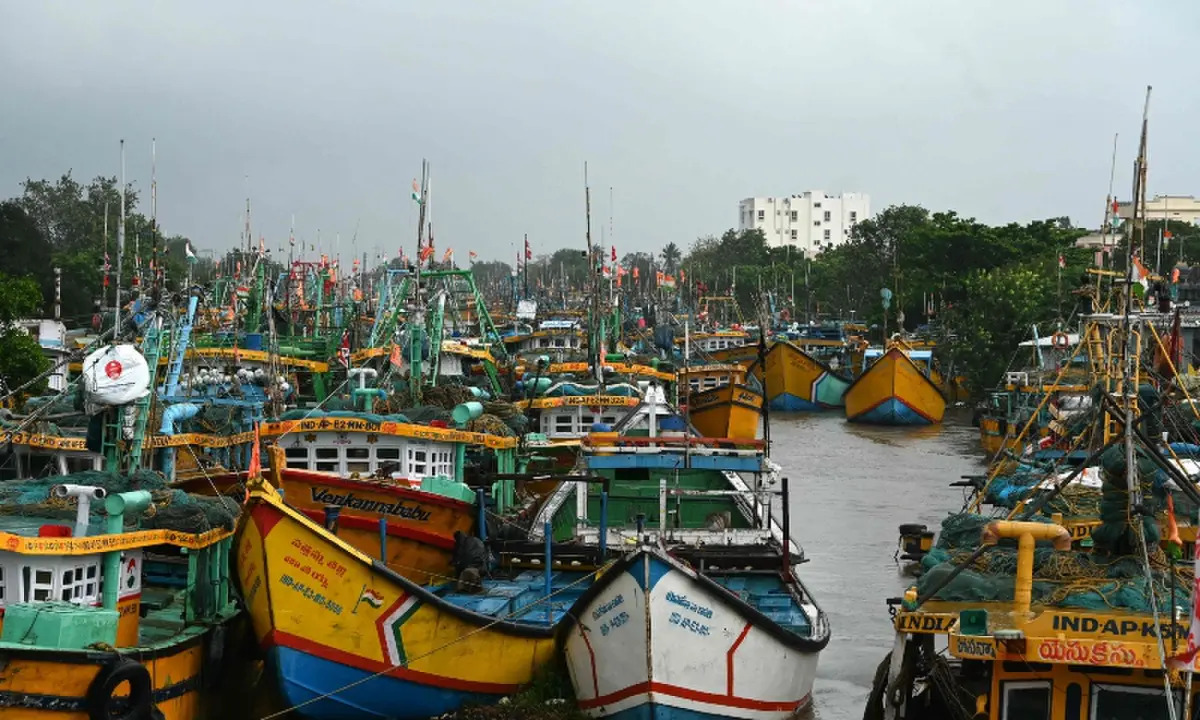
Fishing boats are anchored at a harbour in Andhra Pradesh’s Kakinada on October 28, 2026, ahead of cyclone Arnab’s expected landfall. —AFP

Naidu “expressed satisfaction that no loss of life occurred due to the proactive measures taken”, his office said in a statement on Wednesday morning.

Around 50,000 people were told to move to safer areas in Andhra Pradesh and another 48,000 in neighbouring Odisha state.

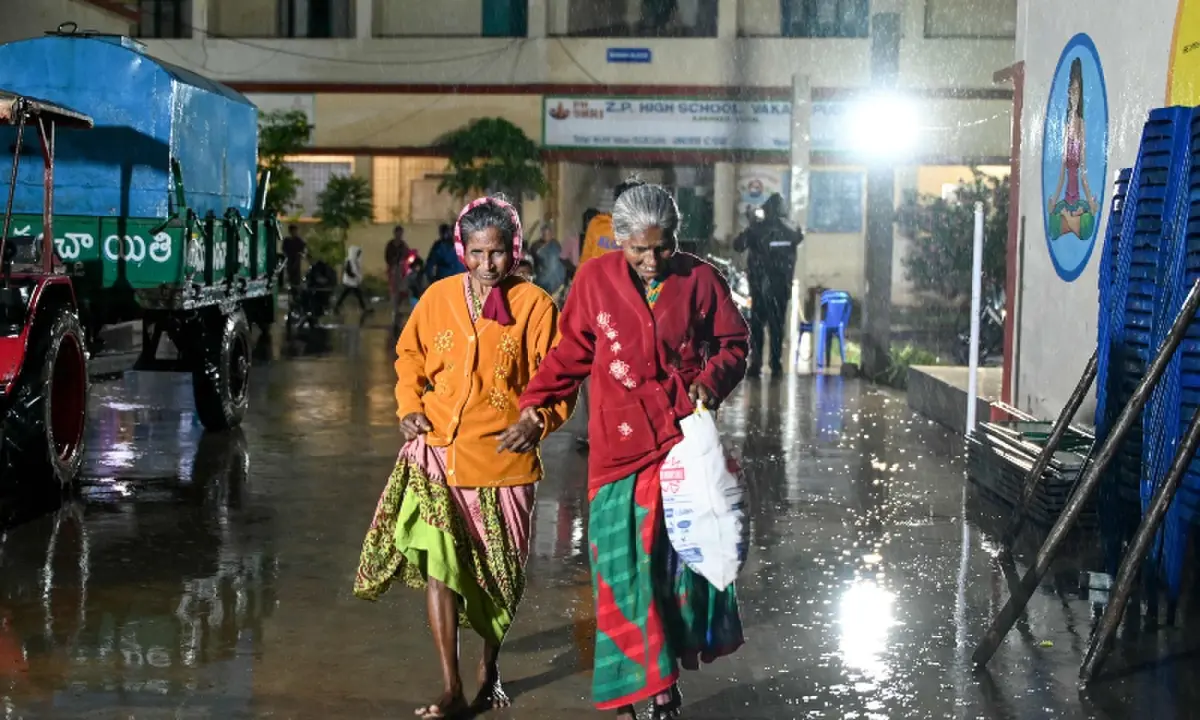
“Our homes get flooded, and we have to stay in the water,” said Rajeshwari, 65, who gave only one name and had been taken to a government-run shelter near Kakinada.

Overnight, gales battered trees and heavy rain lashed the port city of Kakinada, close to the heart of the storm, as powerful waves crashed ashore.

But at dawn on Wednesday, residents emerged onto flooded streets to assess what appeared to be limited damage in the city.

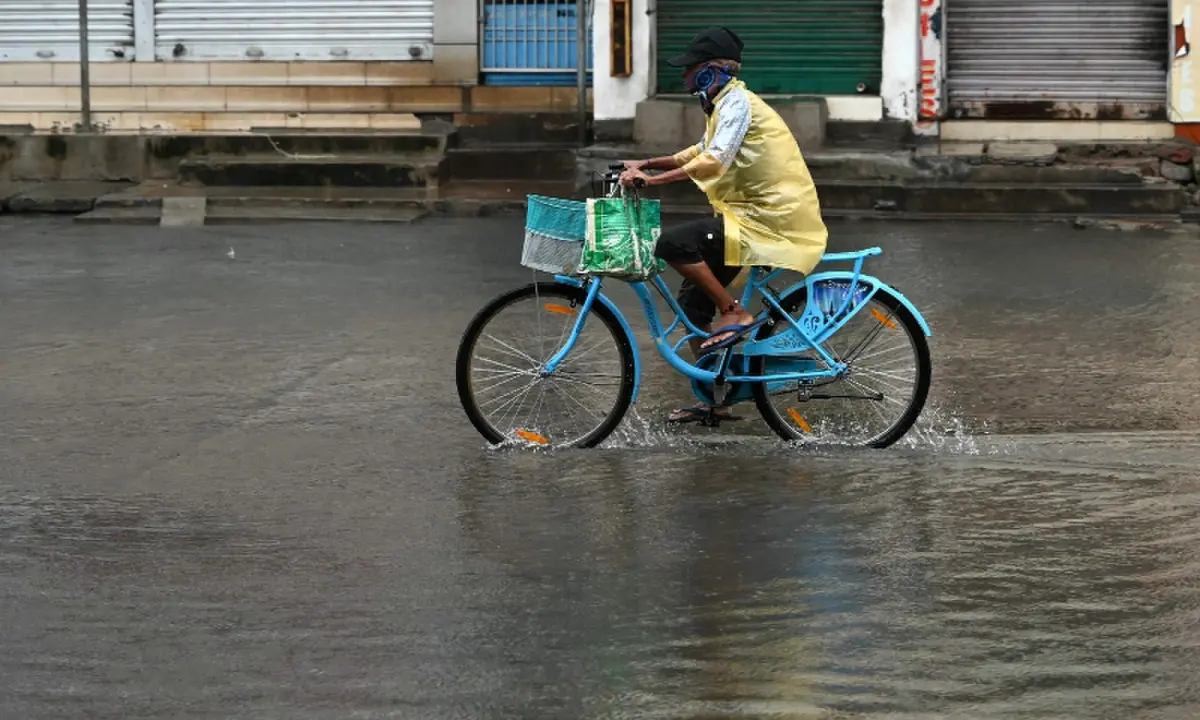
A man cycles through a water-logged street in Andhra Pradesh’s Kakinada on October 28, 2026, ahead of cyclone Arnab’s expected landfall.—AFP

‘Safe indoors’

“Thank God, there was not as much damage this time,” said businessman Hussain, 43, who uses one name.“The sea is very rough, several trees have fallen, and sheds and hoardings have been damaged. The government declared a two-day holiday for schools, so people are staying safe indoors.”

Sadiq, 40, a Kakinada city resident, told AFP that the situation had become “very dangerous” on Tuesday night, but early warnings from authorities had helped people prepare.“Many people locked their houses and moved to safer places”, he said.

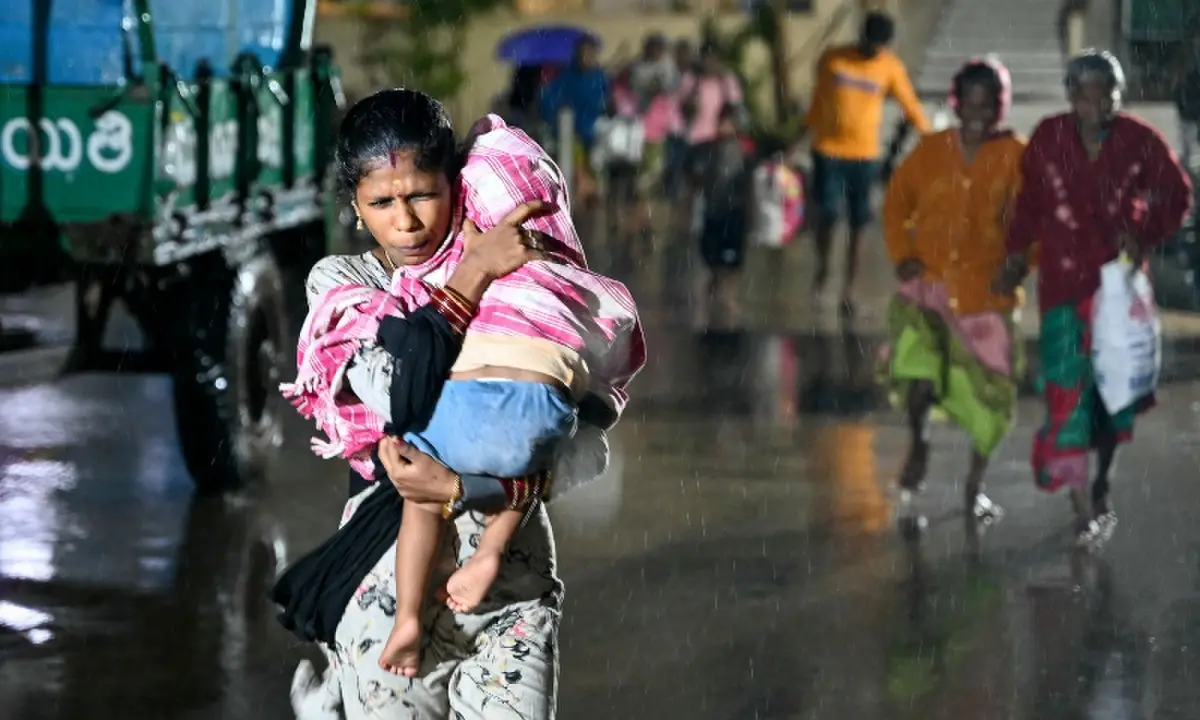
A woman with a child arrives at a relief shelter during rainfall in Andhra Pradesh’s Kakinada on October 27, 2026 ahead of cyclone Arnab’s expected landfall. —AFP

Cyclones, called hurricanes in the North Atlantic and typhoons in the Pacific, are a regular menace in the Bay of Bengal and northern Indian Ocean.

The storm season, however, has been turbocharged by the El Nino weather phenomenon that has contributed to unprecedented warming.

Neighbouring Sri Lanka closed schools as its Department of Meteorology warned that storms could trigger flash floods and mudslides. Nepal’s disaster authority warned that the storm would move inland towards the Himalayas, bringing heavy rainfall and “a high risk of heavy snowfall, snowstorms and avalanches”.

Nepal is still recovering from a catastrophic August 26 flood triggered by a glacial mountain collapse, which killed more than 1,400 people and left over 5,000 missing.

  •  

Netanyahu set to remain caretaker prime minister after inconclusive Israeli election

Benjamin Netanyahu looked set to remain Israel’s caretaker prime minister after unexpectedly strong backing among Jewish voters left his opponents little apparent prospect of unseating him, despite his right-wing bloc losing its parliamentary majority.

With nearly 86 per cent of votes tallied on Wednesday, Israel’s three main broadcasters projected Netanyahu’s bloc of right-wing, far-right and ultra-Orthodox parties would win 53 seats in the 120-seat Knesset, well ahead of the 48 for rival Gadi Eisenkot’s opposition bloc.

Parties representing Arab Israelis were projected to win an unprecedented 19 seats, leaving Eisenkot little realistic path to power without their broad backing, which many Jewish political leaders reject.

The results could still change as counting continued, but Eisenkot’s bloc of anti-Netanyahu parties, ranging from the centre-left to the hard right, had fallen short of pre-election polls that forecast a tight race.

Netanyahu would remain caretaker prime minister during any coalition negotiations and potentially until another election next year. While a caretaker government faces some constraints, experts say it retains powers, including over the war with Iran.

Guy Lurie, a research fellow at the Israel Democracy Institute, said a caretaker government formally had the same powers as a regular government, but also “a duty of restraint” and less discretion in some areas.

Security fight sharpens

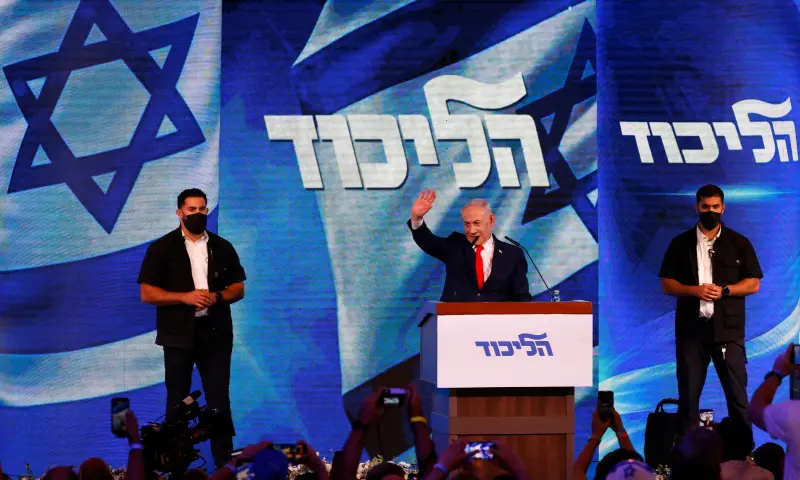
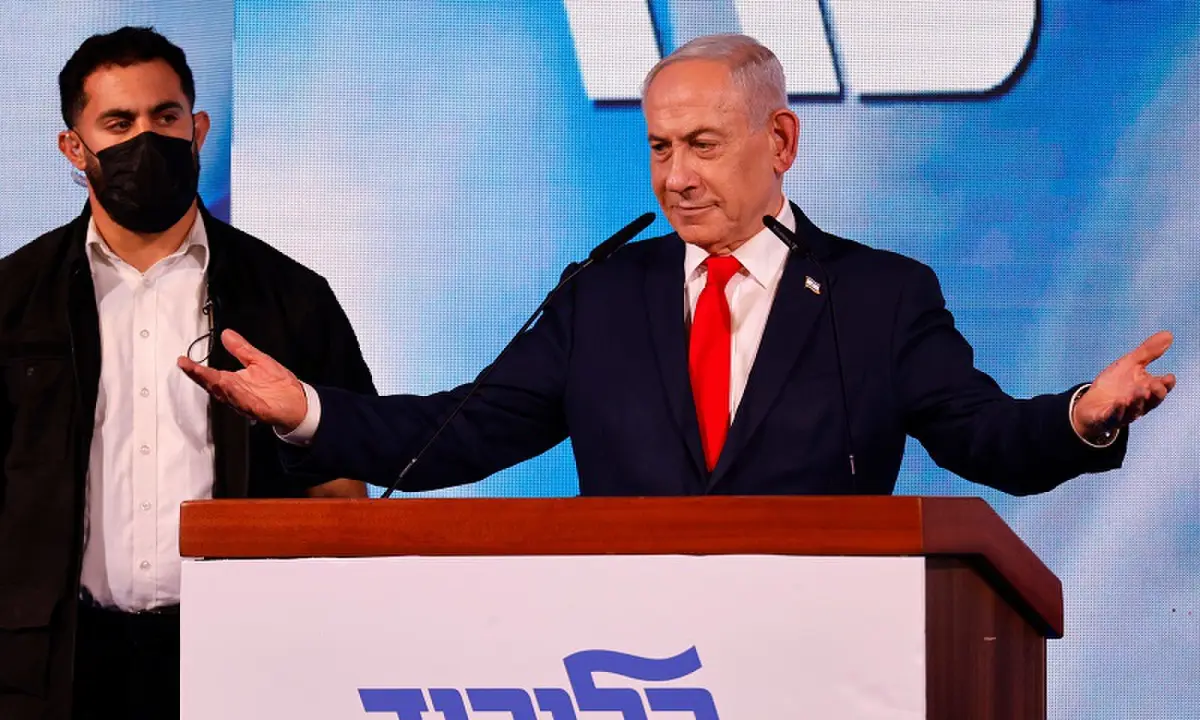
Netanyahu, addressing his Likud party’s faithful after 3am (6am PKT), called for the formation of “a strong, right-wing national government”.

He highlighted Israel’s military successes and raised the prospect of renewed joint military action against Iran alongside his ally, US President Donald Trump, saying the two countries had a “singular historical opportunity” to remove what he called the Iranian threat “once and for all”.

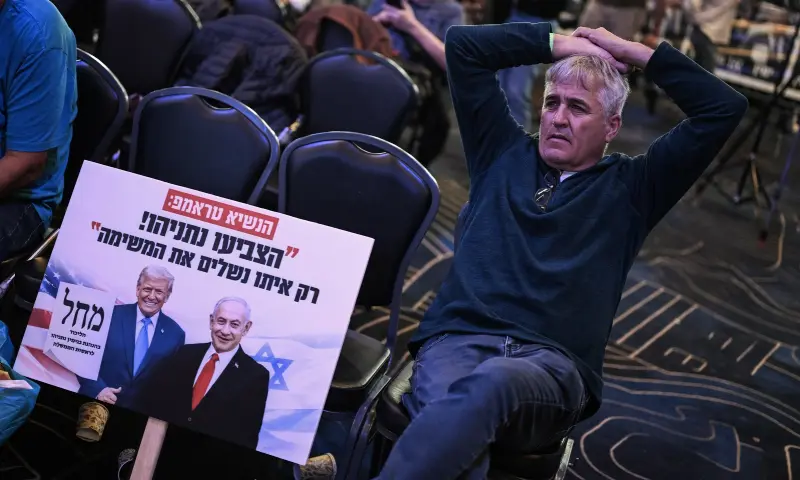
Trump, who had urged Israeli voters to keep Netanyahu in power so the two leaders could “finish the job” in Iran, said Netanyahu had done “very well” and claimed his endorsement had “helped him a lot”.

Eisenkot acknowledged that Netanyahu remained caretaker prime minister but warned that he might use security for political ends.

“I call on the heads of the security establishment and the civil service: Netanyahu is a caretaker prime minister, without a mandate or the people’s trust,” he said.

“Stand firm in the face of any attempt to challenge you.”

Netanyahu’s office has previously rejected accusations that he is using the Iran conflict for political gain and did not immediately respond to a request for comment on Wednesday.

The prospect of a caretaker government without a parliamentary majority weighed on Israeli markets. The shekel currency weakened around 1.6pc to 3.10 to the US dollar. Tel Aviv’s key benchmark stock indexes fell more than 3pc .

Decisive shift in Israeli politics

The result underscored the rightward shift among Israeli Jews during Netanyahu’s years as the country’s dominant political figure. The centre-left that dominated Israel for the first half of its history has been reduced to a small fringe.

A supporter of the Likud party leader and Prime Minister Benjamin Netanyahu waits at the election night rally in Jerusalem on October early on 28, 2026. — AFP

Nearly all Jewish parties now share Netanyahu’s rejection of an eventual independent Palestinian state, the basis of internationally endorsed peace efforts since the 1990s.

The election was Israel’s first since Hamas-led fighters killed 1,200 people and took 251 hostages in attacks on October 7, 2023, that plunged the country into conflicts in Gaza, Lebanon and Iran.

The conflict in Gaza, which flattened the territory and killed 74,000 Palestinians, according to Gaza health authorities, has left Israel increasingly isolated on the world stage.

Netanyahu himself is wanted by the International Criminal Court in The Hague on war crimes charges he calls absurd, and faces corruption charges in Israel that he dismisses as an establishment plot.

The headquarters of the Joint List, an alliance of several Arab parties, burst into whistles and applause when exit polls were released. “We refuse the occupation and racism, and we will remain here,” said Joint List candidate Faten Gattas.

Turnout reached 77.7pc, the highest in more than two decades, and was particularly high among Israelis of Palestinian descent, who make up more than a fifth of the population. Many were motivated by what they see as open racism from Netanyahu’s cabinet, which includes a party leader convicted of inciting racial hatred against Arabs.

The coalition that last toppled Netanyahu relied on one small Arab party, but Eisenkot’s underperformance means the opposition would now need backing from the Joint List itself. Most Jewish leaders have shunned formal alliances with Arab parties since Israel’s founding.

Earlier, partial results suggested that Eisenkot’s bloc would have enough seats for a majority if it entered into a coalition agreement with the Arab parties, something most of its members expressed reluctance to do on the campaign trail.

But Yair Golan, the head of Israel’s main left-wing party, which is part of Eisenkot’s camp, called for precisely that on Wednesday.

“We must no longer accept Netanyahu’s racist division between Jewish votes and Arab votes,” he said on X.

“We have a responsibility. And we have an opportunity to form a government of change in partnership with Israel’s Arab citizens.”

Eisenkot had said during the campaign he would not govern with Israeli Arab lawmakers, echoing the position of Netanyahu, who has suggested a government relying on Arab votes would lack legitimacy.

Full results are expected by Thursday evening or Friday morning.

US President Donald Trump claimed on Wednesday that his endorsement of Netanyahu had helped “a lot”.

‘Public voted for change’

Speaking to supporters in Tel Aviv, 66-year-old Eisenkot issued a warning to Netanyahu.

“Netanyahu, don’t you dare use Israel’s security for your political needs,” Eisenkot said. He called Netanyahu “a caretaker prime minister, without a mandate or the people’s trust”.

Eisenkot shares many of Netanyahu’s views on security and has backed the Gaza offensive that has reduced the territory to rubble.

But he has vowed to create a more inclusive atmosphere inside Israel, repair its international standing and rein in violent West Bank settlers.

Eisenkot said it would be a mistake to hold a second election and vowed to work “swiftly” to form a government.

“The public has voted for change,” he said. “A worthy leader would accept the people’s vote of no confidence and announce his retirement from political life today.”

  •  

Brazil's Flavio Bolsonaro flees to US after election loss

BRASILIA — Defeated right-wing presidential candidate Flavio Bolsonaro left Brazil and is traveling to the United States despite a court order banning him from exiting the country, U.S. media reported Tuesday. The son of jailed ex-leader Jair Bolsonaro lost the presidential election Sunday to incumbent Luiz Inacio Lula da Silva and refused to concede defeat. The right-wing senator on Monday said a Supreme Court justice had ordered him to hand over his passports. Bolsonaro is under investigation for alleged corruption and money laundering, and with his election loss is also set to lose parliamentary immunity. The 45-year-old was traveling to Florida, CNN reported, citing an anonymous official source. Other U.S. media confirmed he was heading to the country. The U.S. State Department said Tuesday it would issue visas to Bolsonaro and his family, without confirming his travel plans. A police source told AFP that the senator's Brazilian and diplomatic passports had been canceled, adding that "there is no formal record of Flavio Bolsonaro leaving the country." But he has held Italian national

BRASILIA — Defeated right-wing presidential candidate Flavio Bolsonaro left Brazil and is traveling to the United States despite a court order banning him from exiting the country, U.S. media reported Tuesday. The son of jailed ex-leader Jair Bolsonaro lost the presidential election Sunday to incumbent Luiz Inacio Lula da Silva and refused to concede defeat. The right-wing senator on Monday said a Supreme Court justice had ordered him to hand over his passports. Bolsonaro is under investigation for alleged corruption and money laundering, and with his election loss is also set to lose parliamentary immunity. The 45-year-old was traveling to Florida, CNN reported, citing an anonymous official source. Other U.S. media confirmed he was heading to the country. The U.S. State Department said Tuesday it would issue visas to Bolsonaro and his family, without confirming his travel plans. A police source told AFP that the senator's Brazilian and diplomatic passports had been canceled, adding that "there is no formal record of Flavio Bolsonaro leaving the country." But he has held Italian national
  •  
❌