❌

Reading view

Rare Ceasefire in Russian-Occupied Oleshky Opens Humanitarian Corridor After Months of Isolation

A temporary ceasefire between Russia and Ukraine has held for a third day around the occupied town of Oleshky, allowing preparations for food deliveries and civilian evacuations. The agreement, mediated with the involvement of US First Lady Melania Trump, represents a limited diplomatic development in a war where attempts to establish broader ceasefires have repeatedly failed.

Russia and Ukraine have maintained a localised ceasefire around Oleshky in the southern Kherson region, creating an opportunity to deliver humanitarian assistance to civilians who have spent months effectively isolated from regular supplies of food, medicine and drinking water.

Ukrainian Human Rights Commissioner Dmytro Lubinets said on 29 October that neither side had reported violations of the agreement and that teams were continuing to clear mines from roads intended for humanitarian convoys.

According to Associated Press, the six-day arrangement began on 27 October and is expected to remain in force until 1 November.

The first substantial humanitarian delivery is scheduled for Friday, 30 October.

An estimated 1,700 to 2,000 civilians remain in Oleshky, many of them elderly residents whose health, mobility or personal circumstances have prevented them from leaving.

The town is situated on the Russian-occupied eastern bank of the Dnipro River, opposite Ukrainian-controlled Kherson.

Its geographical position has made it particularly vulnerable to the consequences of the fighting, while damaged infrastructure, mines and military restrictions have complicated access for humanitarian organisations.

Melania Trump’s Unusual Diplomatic Role

The agreement has attracted attention because of the involvement of US First Lady Melania Trump.

In a White House statement issued on 23 October, her office announced that she had worked with Russian and Ukrainian representatives to secure arrangements for a temporary cessation of military activity.

The statement described her as the intermediary in the negotiations, covering the timing of the ceasefire, humanitarian access, evacuation procedures and operational coordination.

Lubinets subsequently acknowledged her involvement and said communication with his Russian counterpart, Yana Lantratova, had helped maintain the arrangement.

The White House originally announced 29 October as the starting date, but Ukrainian officials later reported that the ceasefire had taken effect at 3am on 27 October.

By Thursday, both sides were describing the agreement as holding without recorded violations.

The participation of the American First Lady is an unusual feature of international humanitarian diplomacy, which is more commonly conducted through governments, international organisations or specialist humanitarian agencies.

However, the immediate significance of the agreement will be determined by whether assistance reaches residents and whether those wishing to leave can do so safely.

A Town Cut Off from Essential Supplies

Oleshky has experienced prolonged humanitarian difficulties under Russian occupation.

The town suffered extensive disruption following the destruction of the Kakhovka dam in June 2023, which caused severe flooding across communities along the Dnipro.

Subsequent fighting, damage to infrastructure and restrictions on movement further complicated access to essential goods.

According to Ukrainian officials, normal deliveries of food to the town have been effectively interrupted since late May 2026.

Residents have faced shortages of medicines and clean water, while the presence of mines has made movement beyond residential areas hazardous.

The remaining population is believed to consist largely of older people and residents requiring medical attention.

For these civilians, humanitarian access is not simply a matter of replenishing household supplies.

It may determine whether individuals can receive essential treatment, obtain prescription medicines or leave areas where normal medical and social services have ceased functioning.

The Evacuation Challenge

The ceasefire provides for humanitarian teams to assess residents’ needs and arrange transport for those who wish to leave.

The White House has indicated that residents should be able to choose their destination, including Ukrainian-controlled territory or Russia.

Ensuring that such decisions are genuinely voluntary is particularly important in occupied territory.

International humanitarian law provides protections for civilians under occupation, including restrictions concerning forcible transfers and deportations.

A credible evacuation process therefore requires clear information, freedom from coercion and practical arrangements allowing residents to travel safely.

The presence of journalists accompanying the mission may provide additional documentation, although media access does not replace independent humanitarian monitoring.

Russian and Ukrainian representatives have also been coordinating mine clearance along routes intended for humanitarian vehicles.

Until those routes are confirmed safe, the delivery of assistance and movement of civilians remain dependent on operational conditions.

A Ceasefire That Does Not Extend Beyond Oleshky

The agreement remains geographically limited.

Russian strikes continued elsewhere in Ukraine on 29 October, killing civilians in several cities, including Dnipro.

The continuing attacks demonstrate that the localised humanitarian arrangement does not represent a broader change in Russian military operations or the strategic direction of the war.

Nevertheless, the pause has also brought some relief to residents of nearby Ukrainian-controlled Kherson, where repeated attacks have disrupted daily life.

The absence of reported violations around Oleshky suggests that the two sides retain the ability to coordinate narrowly defined humanitarian measures when political and operational arrangements are in place.

That does not necessarily imply an increased willingness to compromise over territory or broader security questions.

What Happens After 1 November?

The agreement is scheduled to expire on 1 November, leaving only a limited period for delivering aid and facilitating departures.

Its effectiveness will depend on the quantities of assistance delivered, the number of residents reached and whether evacuation arrangements operate as intended.

It will also be necessary to establish what protection, if any, is available to civilians who remain after the ceasefire ends.

A successful operation could provide a model for similarly limited humanitarian arrangements elsewhere along the front.

However, extending such cooperation would require further political consent and practical security guarantees.

For Oleshky’s remaining residents, the immediate question is more urgent: whether several days without fighting can provide the assistance and safe passage that months of war have denied them.

  •  

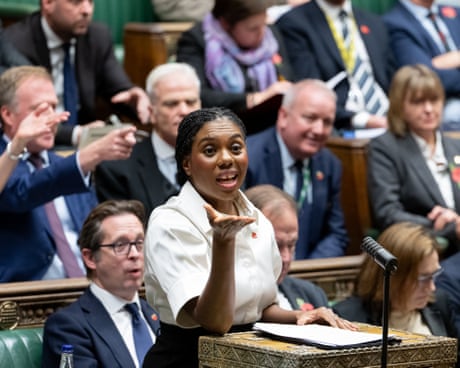
The Guardian view on a changing Brexit debate: Kemi Badenoch is trapped in denial | Editorial

The prime minister’s ambitions might be ambiguous, but unlike the Conservative leader, he is following voters and the facts

British politics is still polarised around Brexit, although 10 years on from the referendum, the terms of debate are very different. Or they should be. Russia’s invasion of Ukraine in 2022 has moved discussions of European solidarity from the realm of abstraction to a matter of urgent defence partnership. Donald Trump’s presidency in the US, marked by scorn for European democracies and indulgence of Vladimir Putin, has undermined confidence that Britain can rely on any “special relationship” with Washington.

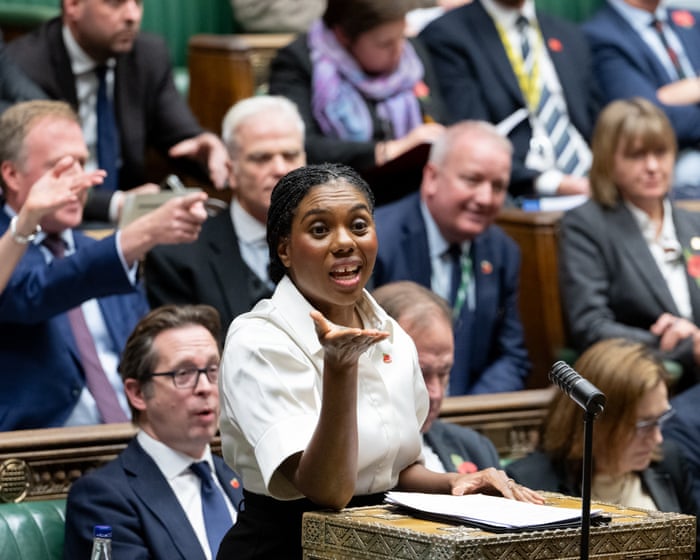
Under these circumstances, it would be absurd to deny that a reappraisal of Brexit is in order. The prime minister acknowledged this in his speech at the Labour party conference last month, calling for a national conversation about the future relationship with every option, including rejoining, on the table. The Eurosceptic opposition are having none of it. The Conservative leader, Kemi Badenoch, accuses the government of stirring division by raising the European question. She told MPs this week that Labour should thank the Tories for the Brexit deal they negotiated.

Do you have an opinion on the issues raised in this article? If you would like to submit a response of up to 300 words by email to be considered for publication in our letters section, please click here.

Continue reading...

© Photograph: House of Commons/PA

© Photograph: House of Commons/PA

© Photograph: House of Commons/PA

  •  

Ukraine expands minority rights under EU pressure – but Russians remain excluded

By Uriel Araujo | October 29, 2026

President Volodymyr Zelensky recently signed Bill No.16119, a law expanding educational rights for national minorities and indigenous peoples. Ukraine is thereby selectively adjusting, rather than reversing, its post-2014 Ukrainization policies.

The measure was presented as progress on minority rights and a step that could help open further EU accession clusters. Romanian President Nicusor Dan welcomed the legislation, noting that mother-tongue education for ethnic Romanians is “no abstract matter” for families living in Ukraine.

The law expands the use of eligible minority languages in schools, recognizes special institutional status for minority-language schools, and strengthens continuity of education.

Crucially, the additional protections apply only to official languages of the European Union and to indigenous languages such as Crimean Tatar. Hungarian, Romanian, Polish, Bulgarian and Slovak qualify. Russian does not. The Ukrainian Ministry of Education clarified that the additional rights “do not apply to the Russian language.”

Russian remains widely spoken, with 28% or even more Ukrainians still using both Russian and Ukrainian at home despite years of Ukrainization and wartime restrictions.

The Venice Commission of the Council of Europe flagged the problem years ago: in its 2017 opinion, it found the less favorable treatment of non-EU languages, particularly Russian, difficult to justify and raised discrimination concerns. Its 2023 opinion report on national minorities legislation reiterated that promoting Ukrainian as the state language does not justify withholding equivalent protections from Russian speakers.

Ukraine’s Constitutional Court took a different view in 2021, holding that preferential treatment for EU languages was permissible – the European advisory body’s criticism and Kyiv’s domestic position have never fully aligned.

The expanded guarantees for ethnic Hungarians and Romanians may reflect Budapest’s and Bucharest’s ability to block or delay Ukraine’s EU accession process.

It is no accident Roma inclusion follows a separate track: a national strategy running to 2030 addresses education, housing and discrimination. These measures concern the social integration of marginalized Gypsies communities, rather than reversing Ukrainization.

Similarly, Russian speakers and ethnic Russians, who cannot exercise comparable leverage inside the EU process, remain outside the new framework.

By comparison, although the ongoing war complicates it, Russia formally recognizes ethnic Ukrainians, while its Constitution and laws guarantee the preservation and study of minority languages.

In any case, Kyiv explicitly differentiates between Russian and EU minority languages, while Moscow formally has an inclusive framework.

Ukraine’s Russian minority-rights controversy predates the 2022 invasion: differential treatment has been a structural feature of post-Maidan policy, rather than just a temporary wartime measure.

After 2014, language, media and minority legislation steadily elevated Ukrainian while narrowing the public space for Russian. US political scientist Nicolai N. Petro, writing in Foreign Policy in late 2023, described policies that further relegated Russian speakers to a permanent second-class status – and warned that such approaches risk alienating a significant share of the population even once fighting ends.

Ukrainian officials have at times declared there is simply “no Russian minority”, a claim that sits uneasily with census data and everyday bilingual reality, to say the least.

Meanwhile, nationalist historical narratives persist: a Lviv’s museum dedicated to Nazi collaborator Roman Shukhevych was being rebuilt just weeks before the education law was signed. Shukhevych incited anti-Polish pogroms in 1930.

The continued public commemoration of such figures is hard to reconcile with any claim of comprehensive ideological retreat from post-Maidan nation-building. Moreover, the reforms will be viewed by Ukrainian ultranationalists as a setback forced by European partners – and are likely to generate domestic pushback.

They may also, on the other hand, encourage further demands from minority communities, including over the glorification of controversial wartime figures – an issue that still strains relations with Poland. Not surprisingly, Ukrainian tensions with neighbors have been a recurring feature of the regional landscape – Hungary being a case in point.

As part of its EU accession plans, Kyiv is reviewing chauvinistic policies regarding some minorities – while leaving the largest linguistic community outside the latest concessions.

The “macro” dimension of the conflict involves great-power rivalry, proxy dynamics and the long trajectory of NATO expansion. The micro or rather “meso”-level dimension remains the unresolved issue of post-Soviet borders and the ethnopolitics of a post-Soviet republic still consolidating its nation-building project.

In the words of Kristin Henrard (Professor of International Law at the Brussels School of Governance): “Ukraine will need to acknowledge that the Russian minority, as one of the several minorities with kinstates in its territory, is special because of that strong numerical size, and traditional presence.” This would be “in line with Ukraine’s international obligations”, she writes.

So much for the idea that minority-rights problems were ever merely “Russian propaganda.” They were real enough for Hungarians and Romanians that Kyiv had to legislate; they remain real for Russian speakers. The civil-rights issue remains.


Uriel Araujo, Anthropology PhD, is a social scientist specializing in ethnic and religious conflicts, with extensive research on geopolitical dynamics and cultural interactions.

  •  

Albania takes anti-riot crackdown cue from France

RT | October 29, 2026

Albania has imposed steep fines on people who take part in violent protests, citing a recent law imposed in France, in an attempt to quell weeks of clashes between police and protesters demanding the resignation of Prime Minister Edi Rama.

Under measures adopted Wednesday, remaining at a demonstration that turns violent will be a criminal offense, even for those not directly involved in clashes. Anyone who “chooses to remain in a crowd” engaged in violence or looting, or is found “concealing their identity,” faces fines of up to 500,000 leks ($6,130), over six-times the Balkan country’s average monthly salary.

Initially sparked by student anger over education costs and deteriorating facilities, the demonstrations have evolved into nationwide protests against inequality, soaring living costs, and cuts to public services.

Citing “urban anarchy” when announcing the crackdown, Rama acknowledged France’s controversial ‘casseurs-payeurs’ (rioters pay) bill, which would hold demonstrators liable for up to €10,000 ($11,160) in damages. The bill passed the French Senate on Wednesday and is now headed to the National Assembly, following weeks of protests and riots in which over 1,300 protesters were arrested in a single day.

Italy has also followed suit. Prime Minister Giorgia Meloni’s government approved measures last week that criminalize “violent participation in a demonstration,” punishable by up to five years in prison and fines of up to €20,000.

In Albania, a “special electronic register” will track suspected offenders, while police gain powers to restrict gatherings near schools, hospitals, and government buildings over potential violence. The measures – which also provide compensation for businesses damaged in the unrest – are already in place and require parliamentary approval within 45 days to remain in force.

What’s behind the protests in Albania?

Anti-government protests in the country began peacefully in May over plans for a luxury resort in the Zvernec nature reserve, a project linked to US President Donald Trump’s son-in-law, Jared Kushner.

By mid-October, the protests escalated into daily clashes with police amid growing anger over corruption, economic mismanagement, unemployment, and failing public services. Demands for Rama’s resignation took center stage, but the prime minister, who has been in power since 2013 and was elected to a fourth term last year, has refused to budge.

The unrest has caused over €2 million in damage, according to official estimates, as rioters torched ministries and attacked police stations, public buildings, and businesses. Clashes flared up again over the weekend, with protesters chanting “Revolution” and “Rama in prison” and police using tear gas, rubber bullets, and water cannons in Tirana.

The Russia blame game

Despite the protests being driven by grievances over domestic matters, Rama blamed the violence on a “hybrid war” by foreign actors, specifically Russia and Iran.

Russia has dismissed the accusations. Foreign Ministry spokeswoman Maria Zakharova suggested last week that Rama should look closer to home. “These are citizens of your own country who took to the streets to protest. Don’t shift your responsibility onto others. Deal with your own domestic problems.”

  •  

War against the Orthodox Church in Ukraine

Updates on the dire state of religious freedom in Ukraine

Join us on Telegram, X, and VK.

Contact us: info@strategic-culture.su

The consolidation of the Ukrainian state around a national identity detached from Russia has had profound consequences in the religious sphere. The struggle over the spiritual orientation of the population has become part of a broader political process in which Orthodox institutions have become priority targets of the regime. Reports of pressure against clergy and communities affiliated with the Ukrainian Orthodox Church (UOC) reveal a dimension of the conflict that deserves greater international attention.

In a recent conversation with Russian journalist and poet Inna Kucherova, concerns were raised regarding the future of the Church and the conditions faced by its representatives. In her view, the case raises a fundamental question: to what extent can a state at war restrict the activities of a religious institution on the grounds of its historical and ecclesiastical ties?

The relationship between the UOC and the Russian Orthodox Church lies at the heart of this controversy. For the Ukrainian authorities, ties with Moscow represent a potential channel of influence for a country regarded as an enemy. This interpretation has helped justify measures to control religious organizations and investigations targeting members of the clergy. Predictably, these measures quickly escalated into extremely brutal and inhumane repressive policies.

The legislation passed by the Ukrainian parliament in August 2024 deepened the crisis. The initiative established mechanisms to restrict religious organizations deemed to be linked to Russian centers of influence, paving the way for administrative proceedings against structures associated with the UOC. In practice, the law’s implementation can be summarized as giving Ukrainian authorities carte blanche to persecute religious figures and seize Church property on the grounds of alleged “ties to Russia.”

The problem also involves a struggle over the legitimacy of Orthodox representation in the country. The Orthodox Church of Ukraine (OCU), recognized only by the Ecumenical Patriarchate of Constantinople, enjoys a privileged position under the ultranationalist and Russophobic ideology promoted by the Ukrainian state. The idea of a “national Church,” rejected by the Orthodox world as a whole – with the exception of Constantinople – perfectly serves Ukrainian nationalist demands and provides a religious justification for the barbarity perpetrated by Kiev against its own population.

Criminal investigations targeting UOC representatives constitute another source of crimes and abuses. Figures cited by Inna indicate that more than 200 criminal cases had been opened against members of the clergy by November 2025. The accusations include collaboration with Russian intelligence services and activities deemed contrary to national security. As expected, none of the allegations is sufficiently substantiated, and they all appear to be baseless claims intended to justify persecution.

Military mobilization adds another serious concern. According to evidence documented in Inna’s investigation, UOC priests face obstacles in obtaining the same exemptions from conscription granted to representatives of other religious communities. Reports have also emerged of coercive recruitment and violence during procedures conducted by mobilization officers. In other words, the Kiev regime is not sparing Orthodox clergy from its brutal forced-conscription measures.

The issue has both domestic and international implications. Religious freedom is a fundamental component of international human rights commitments and must be protected even during periods of national emergency. Furthermore, persecuting the religious institution of the Ukrainian people constitutes a major source of political illegitimacy for the regime in the eyes of its own citizens.

The international community must pay attention to Russian reports of these abuses and urgently take steps to hold Ukraine accountable for its unlawful practices against the Church. Ignoring the situation in Ukraine is simply intolerable under the current circumstances. Without sanctions and economic and diplomatic pressure, the Kiev regime will continue to perpetrate terror against its own people.

In the face of the Ukrainian state’s tyranny and the inaction of international organizations, only a rapid Russian military victory appears capable of bringing an end to the suffering of the local population.

  •  

Cambodian police and soldiers helped guard abusive scam compounds, Amnesty alleges

Survivors tell rights group that serving officers who worked as guards administered electric shocks and beatings

Cambodian police and military officers worked as private security guards in scam compounds where thousands were forced to work in the online fraud industry, according to a report by Amnesty International.

The global rights group alleged they worked for security companies as part of a system that enabled slavery and rape in the compounds, with some guards using electric batons to keep people trapped.

Continue reading...

© Photograph: Yasuyoshi Chiba/AFP/Getty Images

© Photograph: Yasuyoshi Chiba/AFP/Getty Images

© Photograph: Yasuyoshi Chiba/AFP/Getty Images

  •  
❌