❌

Reading view

Houthis hold 37 UN food workers as Trump-backed WFP chief inherits humanitarian crises across globe

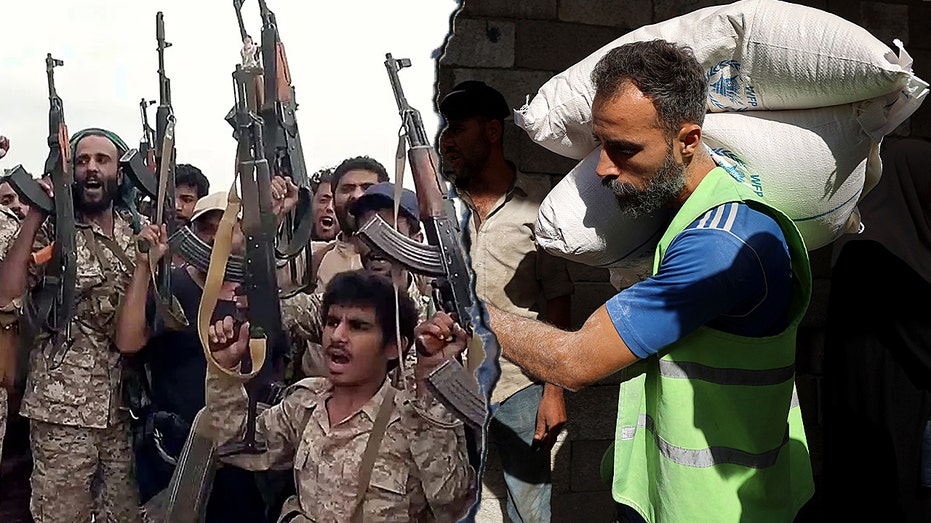
Thirty-seven United Nations World Food Programme (WFP) workers are being held captive by Iran-backed Houthi terrorists in Yemen, the agency's new executive director told Fox News Digital on Wednesday. Many have been detained for two years.

Luke J. Lindberg's remarks come as WFP workers face growing threats in some of the world's most dangerous conflict zones, where hundreds have died risking their lives to save others, he said.

"Right now in Yemen, we have 37 colleagues of ours who are currently detained," Lindberg said.

IRAN-BACKED TERROR PROXY HOUTHIS THREATEN FRESH ATTACKS AFTER YEMEN AIRPORT STRIKE

"These folks are out there to provide basic humanitarian services. They're not there to influence the political outcomes of a conflict. And so we need to protect them, and we need to get our detained colleagues released."

"All detainees are Yemeni nationals employed locally by the WFP, Lindberg clarified, before stating that some have been separated from their families for "nearly two years," he clarified.

"It's a really complex political environment," Lindberg continued before adding that there are no current Americans in that pool.

"They are all locally employed Yemenis," he clarified.

Just three days into his tenure, Lindberg raised the detentions with U.S. Ambassador to the United Nations Mike Waltz, underscoring the urgency of securing the workers' release.

"Ambassador Waltz is aware, and the State Department team has done a great job of taking this seriously and also, it's a priority for them as it is for us to get these folks released."

TRUMP OFFICIALS UNVEIL PRIVATE SECTOR BLUEPRINT FOR LIFE AFTER USAID

"It's been almost two years," Lindberg said. "Away from their families. It breaks my heart."

The detentions come amid Yemen’s crippling civil war between the internationally recognized government and Iran-backed Houthis, which has devastated the economy and left millions dependent on humanitarian aid.

More than 18 million people face acute food insecurity, including more than two million children under age five suffering from acute malnutrition.

"Our team operates in the most impossible and challenging conditions you can imagine around the world," Lindberg said.

"People like me, we're not out in the field, literally handing food to people and literally cooking food for people so that they get the nourishment. It's the wonderful people, the people that choose to go out and do this work that are the real heroes of this equation."

Lindberg said the WFP must now balance reaching vulnerable populations with protecting employees from unacceptable risks.

"And so there are areas where we will go into, areas where you can't go into. Again, the goal is the end of the conflict and allow humanitarian resources to flow into those areas.

"And until that happens, there are areas where we do not operate so that our staff can remain protected and that they can do their job safely."

US VISA CLASH EXPOSES SUDAN’S FORGOTTEN WAR AS FOREIGN POWERS COMPETE FOR STRATEGIC FOOTHOLD

The dangers extend beyond Yemen, with Lindberg saying conflict drives roughly two-thirds of acute food insecurity worldwide, with an estimated 266 million people facing severe hunger.

"It means the most challenging levels of hunger we can imagine," Lindberg said.

The crisis has intensified pressure on humanitarian organizations to deliver food in some of the world's most dangerous and inaccessible regions.

"But the World Food Programme really has a great team operating in over 120 countries around the world, doing this hard work each and every day," he explained.

Among the most urgent crises, he said, are those in Sudan, South Sudan and Somalia, where conflict, displacement and climate-related disasters have pushed vulnerable communities toward famine.

Fighting between the Sudanese Armed Forces and the Rapid Support Forces has displaced millions and triggered famine conditions in parts of the country, with Lindberg saying Sudan will be his first field destination as executive director, reflecting the urgency of the crisis.

"Right now, we are approaching famine levels in three countries, predominantly in the Africa region, in Sudan, South Sudan and Somalia," he said.

"And so those are flash points for me that are incredibly important for us to focus on, find the resources that should be available to help us meet those needs specifically."

Other humanitarian emergencies include Gaza, where fighting, damaged infrastructure, restricted access and funding shortages have complicated food deliveries, and Haiti, where gang violence has disrupted aid access.

SAUDI ARABIA ON EDGE: ICONIC KINGDOM CENTRE SENDS WORKERS HOME AMID HOUTHI ATTACKS

In the Democratic Republic of the Congo, fighting involving armed groups has displaced millions, while the war in Ukraine has also disrupted agricultural production and global food supply chains.

But Lindberg said one of the most disturbing consequences of these conflicts is the rising death toll among humanitarian workers with hundreds killed worldwide in recent years.

"Unfortunately, in the past couple of years, we've lost over 700 humanitarians around the world in their active duty.

"To me, that's the worst possible outcome. It's really unacceptable. And so yes, many of our World Food Programme colleagues have unfortunately been caught up in those circumstances as well.

"It's my commitment to call each one of those family members should that happen, but it's primarily my goal to not let that happen anymore."

Lindberg's appointment comes as the WFP confronts major humanitarian emergencies and funding pressures, while also bringing the agency a direct connection to President Donald Trump.

A South Dakota native, Lindberg previously served as undersecretary of agriculture for trade and foreign agricultural affairs at the U.S. Department of Agriculture, overseeing international agricultural assistance programs, including the McGovern-Dole Food for Education and Food for Progress programs.

Lindberg succeeds Cindy McCain, who stepped down this year, with Deputy Executive Director Carl Skau serving in the interim. Since 1992, six executive directors were American.

SAUDI FOREIGN MINISTER WARNS HOUTHI THREAT GOES GLOBAL AS TRUMP HOLDS FIRE

U.N. Secretary-General António Guterres and Food and Agriculture Organization Director-General Qu Dongyu appointed Lindberg after consulting the WFP Executive Board.

Lindberg said Trump personally called to ask him to serve as the U.S. nominee for the position, a conversation he described as evidence of the president's commitment to humanitarian efforts.

"When I was nominated to lead the World Food Program by the United States, President Trump personally took the time to call me and offer me this opportunity," Lindberg said.

"And to me, that shows his heart for this work. He is somebody that believes in peace around the world. And for me to have the opportunity to speak with him about how the World Food Programme can.

"To play an important role alongside the U.S. in addressing these humanitarian needs was a special moment that I'll never forget."

That said, Lindberg is adamant that his new job at the World Food Programme comes with a clear mission: "show up no matter what."

CLICK HERE TO DOWNLOAD THE FOX NEWS APP

That means focusing on delivering food to those who need it, regardless of the politics involved.

"To safely and effectively deliver food, and to really stay out of the politics of it, our goal is to feed hungry people."

Fox News Digital's Sydney Finver contributed to this report.
  •  

Hegseth fires top Pentagon strategist accused of leaking classified Iran, Ukraine war information

War Secretary Pete Hegseth fired one of the Pentagon’s senior strategic planners amid an investigation into allegations he leaked classified information to journalists about the Iran war, Russia’s war in Ukraine and other sensitive matters, a Department of War official told Fox News.

The official said Lt. Gen. Brett Sylvia failed three polygraph examinations related to alleged disclosures of classified information. The investigation has been referred to the Justice Department. 

Sylvia is also accused of meeting journalists outside the Pentagon with the alleged intention of leaking classified material after Hegseth imposed new media restrictions requiring reporters to be escorted inside the building.

HEGSETH ANNOUNCES JOINT TASK FORCE WITH DOJ TO PROSECUTE LEAKS TO JOURNALISTS 'WITH THE FULL FORCE OF THE LAW'

Fox News Digital has reached out to the DOJ and Sylvia for comment but did not hear back at time of publication. 

Sylvia served as director of the Joint Staff’s Directorate for Strategy, Plans and Policy, known as the J5, a senior role responsible for developing military strategy and advising the chairman of the Joint Chiefs. The J5 has been sidelined from that role since the spring, according to well-placed sources who spoke to Fox News.

The official stressed that Sylvia was not a central planner of the Iran war, which falls under U.S. Central Command and its commander, Adm. Brad Cooper.

The Atlantic first reported Sylvia’s ouster Wednesday night, citing sources who said Hegseth had lost confidence in the three-star general amid tensions with Pentagon policy chief Elbridge Colby.

Sylvia is the second officer leading the J5 to be removed under Hegseth, following Lt. Gen. John McGee. Hegseth also removed Lt. Gen. Douglas Sims, then director of the Joint Staff, earlier this year.

The abrupt removal comes as the Pentagon reportedly weighs renewed military action against Iran.

PENTAGON RACES TO BUY 10X MORE MISSILES AS IRAN WAR DWINDLES ARSENAL, THREATENS READINESS FOR CHINA AGGRESSION

U.S. officials have reportedly warned allies in the Middle East to prepare for possible renewed strikes after next week’s midterm elections and potential Iranian retaliation, while additional U.S. forces are moving into the region.

A 1994 West Point graduate, Sylvia has served more than three decades in the Army, including multiple deployments to Iraq and Afghanistan, and was wounded in combat. Before taking over the J5 in December, he commanded the 101st Airborne Division at Fort Campbell and had previously served as the J5’s vice director.

CLICK HERE TO DOWNLOAD THE FOX NEWS APP

Sylvia’s removal is the latest in a broader turnover of senior military leadership under Hegseth, with nearly two dozen generals, admirals and other senior leaders fired, pushed out or otherwise departing during his tenure.

  •  

America's enemies prepare to take the next major war into outer space

The opening moves of the next major war could unfold hundreds of miles above Earth.

U.S. adversaries are looking at ways to blind American forces in future conflict by jamming communications, disabling GPS, using lasers to attack satellites or destroying them completely.

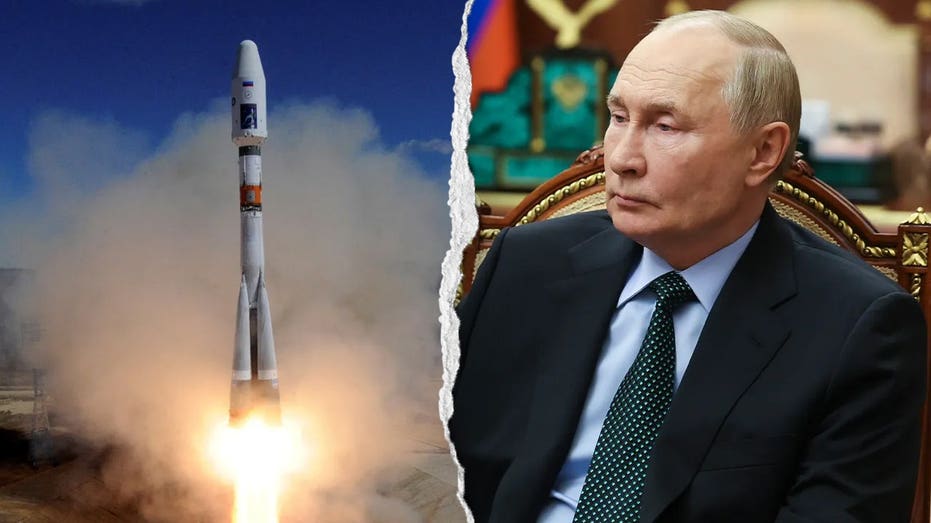
A sweeping new Defense Intelligence Agency assessment details how China and Russia are developing sophisticated ways to disrupt or destroy U.S. satellites. This includes a Russian satellite designed to carry a nuclear weapon into Earth's orbit.

American forces rely on satellites to communicate across battlefields, navigate ships and aircraft, track enemy forces, detect missile launches and guide precision weapons to their targets. Knocking those systems offline could leave forces below struggling to see, communicate and strike.

AMERICA'S NEXT WAR COULD REACH US SOIL, TOP ARMY GENERAL WARNS

"We can't do military operations the way that we do them today without satellites, without systems in space," Clayton Swope, deputy director of the Aerospace Security Project at the Center for Strategic and International Studies, previously told Fox News Digital.

"Whoever has space and can deny that to their adversary has a huge asymmetric advantage in a conflict," Swope said.

CHINA IS TAKING THE FIGHT TO THE STARS. AMERICA MUST RECLAIM SPACE SUPREMACY

Beyond the battlefield, satellites underpin everything from GPS navigation and communications to banking, transportation and the electric grid, meaning a large-scale attack in space could disrupt services millions of people rely on every day.

Chinese military thinkers have identified reconnaissance, communications, navigation and early-warning satellites as potential targets for attacks designed to "blind and deafen the enemy," according to the report. DIA assesses Beijing could begin threatening or gradually degrading an adversary’s space architecture during a crisis as a "prelude to war."

Russia, meanwhile, views U.S. reliance on satellites for precision strikes and projecting military power as a "critical vulnerability" to exploit during a conflict. Its doctrine envisions attacks ranging from temporary jamming and blinding satellite sensors to the outright destruction of spacecraft and the infrastructure supporting them.

DIA describes the threat as a continuum, beginning with attacks that can temporarily disrupt a satellite without destroying it and escalating through cyber and orbital attacks to kinetic weapons and, ultimately, a nuclear detonation in space.

Some of those tactics have already made their way into active conflict. During Operation Epic Fury, the U.S. and Iran "took offensive actions against each other's space capabilities to degrade and disrupt military actions on both sides," according to DIA. The report does not detail those operations, but says jamming near the Strait of Hormuz in June disrupted U.S. aircraft and shipping vessels.

The Chinese military already practices jamming satellite communications and GPS during military exercises. Beijing also has ground-based lasers capable of disrupting or damaging satellites in low-Earth orbit, and DIA assesses it could field space-based directed-energy systems by the late 2020s.

Other Chinese systems can get much closer. The Shijian-17 satellite has a robotic arm capable of grappling another satellite, while Shijian-21 used similar technology in 2022 to move a defunct Chinese navigation satellite into a higher orbit. DIA noted that the same technology used to service or remove satellites can also have military applications.

Russia has repeatedly put its own spacecraft near U.S. satellites. Cosmos 2543 began following a U.S. national security satellite after it was released into orbit in 2019, approaching it several times before later firing a projectile in what DIA described as an anti-satellite weapons test.

PENTAGON REVEALS SECRET SPACE WEAPONS ARE ALREADY IN ORBIT — BUT WON'T SAY WHAT THEY DO

Russia sent Cosmos 2558 near another U.S. government satellite in 2022, and two years later launched Cosmos 2576 into the same orbit as a U.S. national security satellite before it began moving toward the American spacecraft. By 2025, Cosmos 2588 was maneuvering within roughly 93 kilometers of another U.S. government satellite.

Russia is also developing Burevestnik, an air-launched weapon intended to "kill" satellites in low-Earth orbit, according to DIA. The weapon would be launched from a modified MiG-31 aircraft and could be placed into orbit with little or no warning.

The threat escalates dramatically with Russia’s nuclear ambitions.

"Russia is developing a satellite designed to carry a nuclear weapon," the assessment states. Such a weapon could cause the "rapid and sudden loss or degradation of thousands of satellites" operated by governments and companies around the world, disrupting communications, navigation, weather forecasting and national security systems.

The damage could continue long after the initial blast. DIA warns that a nuclear detonation in space would leave behind radiation belts that "could persist for years" and damage satellites that initially survived or were only temporarily disrupted.

The threat has been on Washington’s radar for years. Then-House Intelligence Committee Chairman Mike Turner set off alarm bells in February 2024 when he called on the Biden administration to declassify intelligence about a "serious national security threat," later revealed to involve a Russian nuclear anti-satellite capability.

CLICK HERE TO DOWNLOAD THE FOX NEWS APP

U.S. officials have generally been more guarded about the underlying intelligence. As recently as April, U.S. Space Command chief Gen. Stephen Whiting said officials were "very concerned" by reports that Russia was potentially considering placing a nuclear anti-satellite weapon in orbit, but declined to confirm whether Moscow was actually developing one.

  •  
❌