Tribal leaders launch effort to protect civilians; aid agencies warn health needs in besieged city are at 'breaking point' as hospitals struggle to treat wounded
Ukraine’s Navy said on 29 October that it destroyed two Russian Su-34 fighter-bombers in a Neptune missile strike on Marinovka airfield in Russia’s Volgograd Oblast.
The reported strike targets aircraft Russia uses to launch guided aerial bombs against Ukrainian cities, military positions, and frontline communities. Destroying the two jets would reduce Russia’s capacity to carry out these attacks.
Neptune strike hits Russian military airfield
Map: Euromaidan Press
According to the Ukrainian Navy, its units struck the site where Russian aircraft were stationed at Marinovka airfield using a Neptune coastal missile system.
The Navy said the strike destroyed two Su-34 fighter-bombers belonging to Russia’s 11th Mixed Aviation Regiment, based near the settlement of Oktyabrsky in Volgograd Oblast. The regiment is part of the 4th Mixed Aviation Division of Russia’s 4th Air and Air Defense Forces Army.
The Ukrainian Navy did not provide further details about the strike.
Su-34s are key to Russia’s guided bomb attacks
Russia uses Su-34 fighter-bombers to launch guided aerial bombs, known as KABs, against Ukrainian military positions and settlements, particularly in frontline areas. These attacks threaten both Ukrainian troops and civilians in communities near the front.
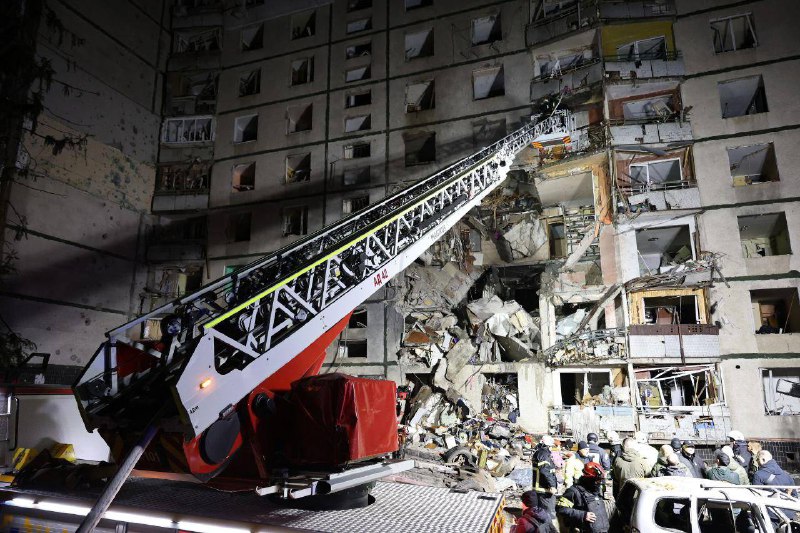
Aftermath of Russia's KAB bomb strike on a residential house in Kharkiv late on 30 October 2024. Photo: Telegram/Oleh Syniehubov
According to Ukrinform, Russia’s Aerospace Forces had approximately 140 Su-34 aircraft of various modifications in service as of 22 October.
The Ukrainian Navy said it would continue striking Russian military targets to weaken Moscow’s ability to wage war against Ukraine.
The Ukrainian government has instructed Kyiv to establish alternative routes after Russian attacks stopped traffic on one of the capital’s main bridges. The city authorities will bear the cost of the new crossings, with Kyiv Mayor Vitali Klitschko saying the city needs an additional $22 million.
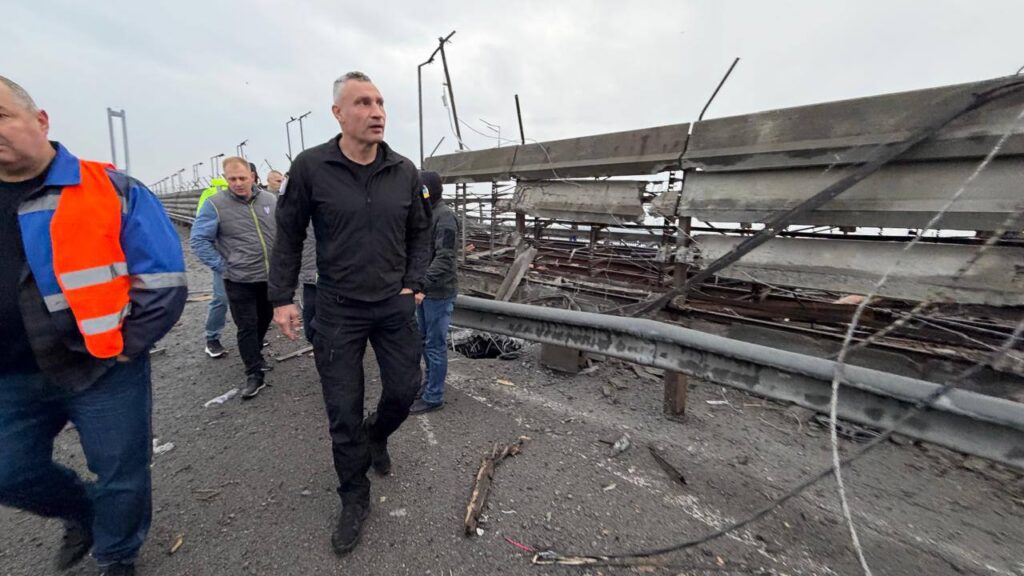
This year, Russia has launched tactics to spread panic among civilians and trigger more people to leave the country. In the latest attack, several Russia's ballistic missiles struck the Southern Bridge, used for vehicle and metro traffic, breaking a huge hole and paralyzing all the pathes. The bridge was closed. Now, there is a fear that more bridges can be targeted this way, dividing Kyiv in two parts.
The situation is urgent, as Ukrainian Transport Minister Mykola Kalashnyk says about 600,000 vehicles cross the Dnipro in Kyiv every day.
What is Kyiv’s response to the winter terror?
According to Klitschko, Kyiv convened the capital’s Defense Council on 28 October to find an answer to this difficult question.
The agenda included implementing a project to build combined water crossings over the Dnipro River and access roads to them.
“The military command will determine the locations, with approval to be granted, among others, by the Kyiv City Military Administration,” Klitschko said.
Under the government’s recommendations, the Kyiv city authorities must find $22 million for the project.
Klitschko had previously faced heavy criticism after it emerged that the city lacked sufficient shelters and last winter exposed serious shortcomings in preparing infrastructure for Russian attacks. These included a lack of alternative energy supply routes, poorly distributed energy, burst heating pipes that flooded apartments, and the inability of people with disabilities to reach shelters without elevators.
The mayor himself said the problems stemmed from the central government withholding funding, which had stalled numerous energy resilience projects and delayed their implementation.
The latest announcement also indicates that Kyiv has once again taken on the financial burden itself.
Meanwhile, Ukraine has been working with Japan on backup crossings. Tokyo has already delivered 720 meters of prefabricated bridge structures to Ukraine. The two sides are currently exploring how this equipment could be used to establish alternative crossings.
Step two: strengthening existing infrastructure
Another option is to reinforce existing bridges. City specialists are developing additional technical solutions to protect bridges across the Dnipro River, Klitschko said in his statement on 27 October, adding that proposals from the military had also been heard.
The issue of installing mobile shelters was also raised on the same day, the mayor of Kyiv said in a separate statement on his Telegram channel on 27 October. Despite intensifying Russian attacks and about, as Radio Svoboda reported in its article on 30 September, $11 million set aside in 2025, Kyiv still has only a handful of mobile shelters: LB reported in December 2025 that district tenders failed. Donors paid for the first one at a bus stop, the Kyiv City State Administration said on 15 October.
Klitschko raised the issue of shelters again after a courton 12 October ruled that local authorities must urgently install mobile shelters in public areas, including near public transport stops, parks, and squares, according to Kyiv’s Prosecutor’s Office.
Russia hits the Southern Bridge again
On 2 October, Ukrainian President Volodymyr Zelenskyy said in an interview with the Financial Times that Russian ruler Vladimir Putin had ordered the lifting of previous restrictions on airstrikes. Among new targets, according to him, were bridges, data centers, internet, mobile networks, hospitals, kindergartens, schools, and universities.
The night of 26–27 October showed what that looks like. Russia launched ballistic missile attacks in a few waves, and the second of them hit the Southern Bridge and the metro infrastructure on it, Klitschko said. The structure carries six lanes of road traffic and two metro tracks.
Rescuers work beside a fence pocked by shrapnel in Kyiv after the Russian attacks of 26–27 October 2026. Photo: DSNS Kyiv
Zelenskyy put the night’s total at 16 ballistic missiles and blamed delays in deliveries of Patriot and NASAMS interceptors: “Every such delay is a new Russian hit on one target or another.”
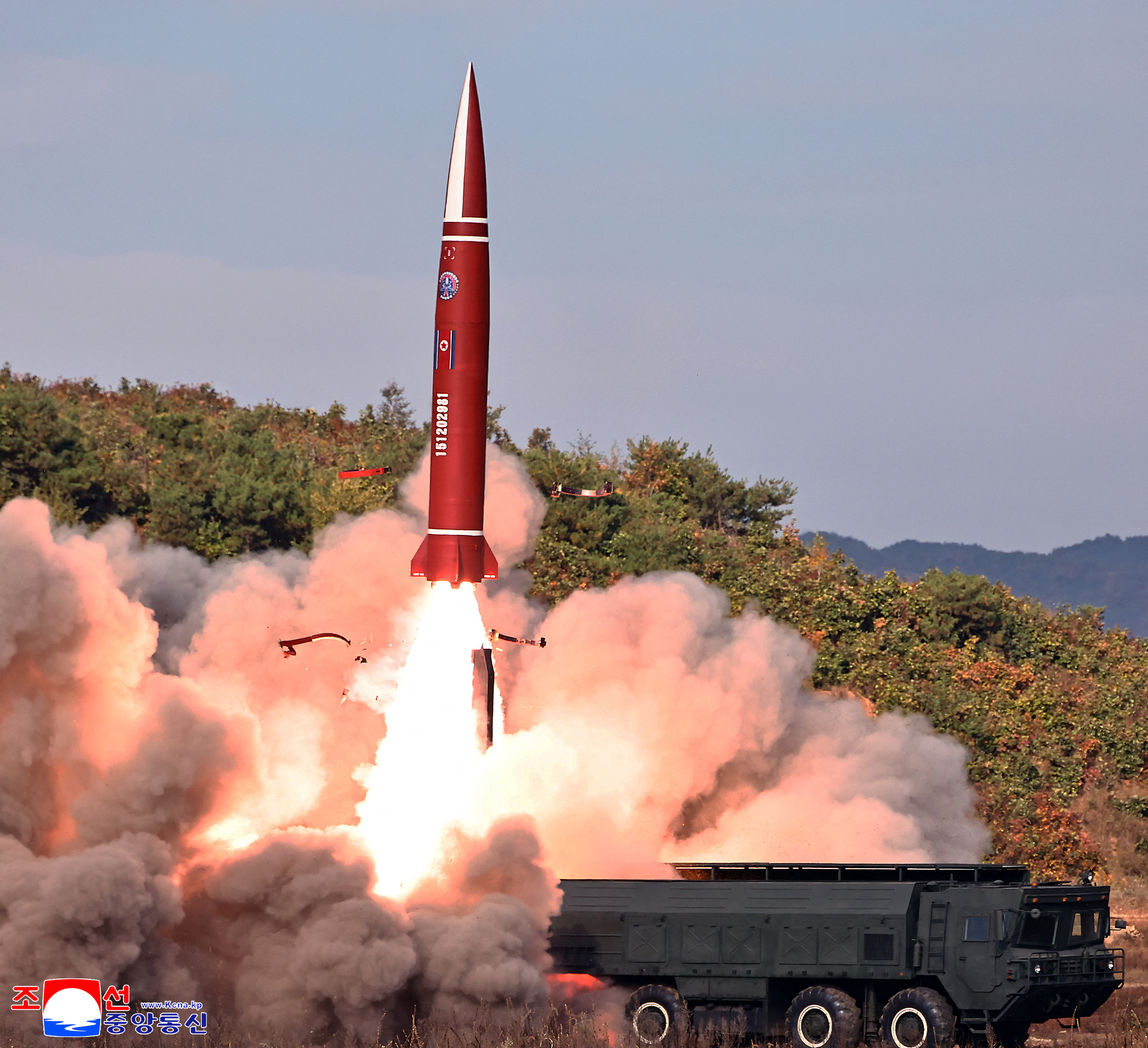
North Korea fired around 10 ballistic missiles toward the sea off its east coast on Thursday, South Korea’s military said, as tensions run high ahead of Pyongyang’s end-of-month deadline to activate propaganda loudspeakers along the heavily armed border.
The short-range missiles were launched at around 12:30 p.m. (0330 GMT) from around Wonsan on North Korea’s eastern coast and flew about 250 km (155 miles), South Korea’s Joint Chiefs of Staff (JCS) said.
South Korea was strengthening surveillance and maintaining readiness for additional launches, while closely sharing information with the United States and Japan, it added.
Japan’s Defence Ministry said North Korea had launched what could be a ballistic missile and that it did not appear to have landed within Japan’s Exclusive Economic Zone.
South Korea’s presidential National Security Office convened an emergency meeting to assess the security implications.
It urged North Korea to halt its repeated ballistic missile launches, calling them a “serious violation” of UN Security Council resolutions, a presidential statement said.
“The launch can be linked to the tensions along the border as part of a broader series of North Korean shows of force, although it is difficult to say the border situation directly prompted the missile launch,” said Kim Yong-hyun, a professor of North Korean Studies at Seoul’s Dongguk University.
Kim said the launch also appeared intended to demonstrate North Korea’s increasingly advanced ballistic missile capabilities to the US, Japan and the broader international community.
TENSIONS RUN HIGH
The launch came as tensions along the inter-Korean border have risen sharply since two mine explosions in the Demilitarised Zone on September 21 wounded three South Korean soldiers.
Seoul says the mines were planted by North Korean forces and has called the incident an armistice violation and demanded an apology. Pyongyang has denied responsibility and accused Seoul of fabricating the incident.
Kim Yo Jong, the influential sister of North Korean leader Kim Jong Un, announced last week that Pyongyang would place loudspeakers capable of blasting anti-South Korean propaganda on standby across the border within days.
She had earlier said the broadcasts would operate along the entire border by the end of October, though analysts in Seoul questioned whether the devices would be activated.
“Rather than being a firm decision to begin broadcasts, North Korea seems to be saying it will have everything ready and watch how South Korea responds,” said Lim Eul-chul, a professor at Kyungnam University in Seoul.
ARTILLERY BATTERIES
North Korea’s military has also deployed artillery batteries visible from across the border, which South Korea’s military said earlier on Thursday appeared largely intended for show.
“We assess that North Korea has several intentions, but the exposure of older weapon systems should be understood as being for show,” JCS spokesperson Jang Do-young told a briefing.
Defence Ministry spokesperson Chung Binna said placing artillery where it could be easily seen “makes little tactical or military sense”.
Reuters witnesses this week saw three North Korean armoured vehicles, identified by South Korean experts as self-propelled 122-mm howitzers, positioned near the border with their gun barrels pointed south.
North Korean soldiers were also seen erecting fences inside the DMZ.
Jang said North Korean activity near the Military Demarcation Line bisecting the DMZ was continuing, while South Korean forces were issuing warning broadcasts and firing warning shots during incursions.
Seoul was awaiting a response to its two proposals for military talks and had urged North Korea to return to dialogue, the Defence Ministry said.
North Korea last fired ballistic missiles on October 12. Pyongyang has conducted missile tests on more than 10 occasions this year.
Geneva-based intelligence firm AURORAH Geosignal Intelligence on Tuesday accused Russia of using its satellite network to help Iran-backed militias in Yemen and Iraq attack targets in Saudi Arabia last month.

 Login