Login

Regional security runs through Tehran
By Peiman Salehi | The Cradle | October 28, 2026
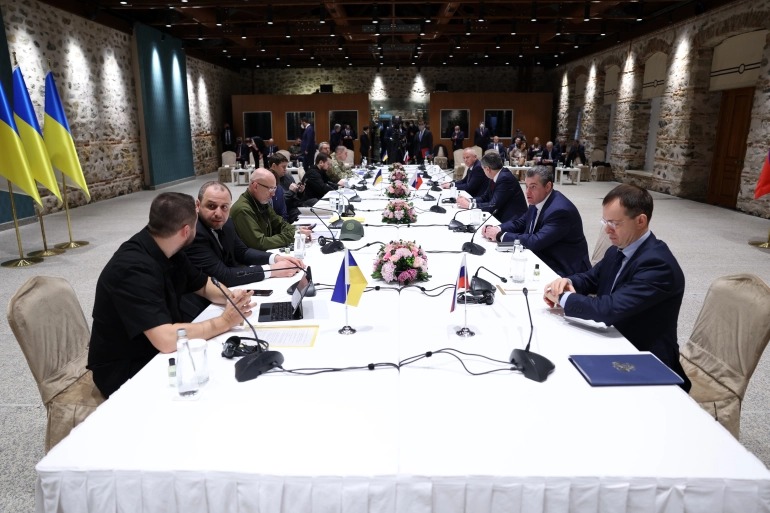
The presence of Saudi, Turkish, and Pakistani officials in Tehran on 26 October reflected a growing recognition that Iran cannot be excluded from any serious regional security arrangement. Despite the US–Israeli war against Iran, Tehran remains central to the region’s military and political balance.
For Riyadh and its partners, the meeting also exposed the limits of the Mecca defense pact, particularly as Saudi Arabia faces renewed confrontation with the Ansarallah-aligned Yemeni Armed Forces (YAF).
Much of the speculation surrounding the four-country meeting centered on what Iran might be expected to surrender, particularly its relationship with Sanaa. Such expectations rested on the assumption that Saudi Arabia, Turkiye, and Pakistan had established a regional security order into which Iran was now seeking admission, with Tehran potentially offering concessions over Yemen in return.
Yet the political and military circumstances that brought the participants to Tehran suggest a different calculation. Iran has withstood sustained American and Israeli attacks, while Saudi Arabia and its partners have struggled to contain the YAF’s military operations. Any agreement that disregards these realities risks reproducing the confrontations it seeks to resolve.
Iran’s Foreign Ministry had identified Israel’s expansionist policies, Lebanon, and the US war against Iran among the subjects for discussion. Yemen was absent from the announced agenda and the subsequent press statement.
Ali Bagheri, deputy secretary of Iran’s Supreme National Security Council, said the gathering also served to congratulate Mohsen Rezaei, the council’s newly appointed secretary, and discuss regional security, including opposition to foreign interference, particularly by Washington. According to information obtained by The Cradle, Yemen was not discussed during the meeting.
On the morning of 27 October, a day after the talks, Rezaei met Yemen’s ambassador, Ibrahim Mohammad al-Dailami, in Tehran. Rezaei praised Yemen’s defense of Gaza and its confrontation with Israel, while the ambassador thanked him and the Iranian government for their positions.
The encounter came amid speculation that Tehran’s diplomatic engagement with Riyadh might come at the expense of its relationship with Sanaa. By publicly reaffirming those ties immediately after the summit, Iran signaled its intention to pursue regional diplomacy while maintaining its existing alliances.
Hossein Shariatmadari, editor of Iran’s conservative daily Kayhan, wrote in a 27 October editorial that “Yemen’s revolutionaries are allies of Islamic Iran.” He warned that the visiting delegations might seek to create the impression that Tehran was distancing itself from Sanaa, offering Washington and its allies “breathing room, however brief” by encouraging expectations of an imminent settlement.
The Mecca pact’s limits
Iran has good reason to approach the Saudi–Turkish–Pakistani framework, commonly known as the Mecca pact, with caution. The agreement brings together three states with substantial military capabilities and extensive relations with Washington, raising questions about whether their security cooperation could eventually be directed against the Axis of Resistance.
For Riyadh, Yemen remains a central concern. Years of confrontation with the YAF have demonstrated Sanaa’s ability to impose high military and economic costs beyond Yemen’s borders. Saudi Arabia’s renewed campaign has again brought its energy infrastructure and military installations within range of Yemeni retaliation, exposing the limits of the kingdom’s reliance on foreign military protection.
In Tehran, closer military coordination among the pact’s members could be seen as an attempt to contain the Axis of Resistance at a time when American security guarantees are becoming increasingly uncertain.
Iran’s participation in talks with the pact’s members carries no commitment to join their alliance. Tehran has made no such announcement, while Rezaei’s explanation of the summit emphasized the establishment of security through regional cooperation, the withdrawal of foreign forces, and an end to outside interference.
These objectives leave considerable differences between the participants. Saudi Arabia, Turkiye, and Pakistan maintain security relationships with Washington, while Iran regards the American military presence as a principal source of regional instability. Their respective positions on armed resistance movements, Israeli aggression, and the obligations of any collective defense arrangement also remain unresolved.
The meeting produced a brief press statement confirming the participants’ intention to continue their dialogue, without setting out binding commitments. Rezaei indicated that further meetings would follow, suggesting that the four governments were exploring the foundations of a wider regional accommodation.
The initiative itself emerged from Pakistani army chief Asim Munir’s visit to Tehran the previous week, according to information obtained by The Cradle. Iranian officials also confirmed Pakistan’s proposal, describing the gathering as an opportunity to advance regional security arrangements based on shared interests and mutual trust.
Riyadh’s security dilemma
The Saudi–Turkish–Pakistani alliance combines considerable military resources, diplomatic influence, and strategic relationships. Its effectiveness, however, depends on the willingness of its members to confront threats that may carry very different consequences for each country.
The limited assistance Pakistan and Turkiye have provided during the renewed confrontation between Yemen and Saudi Arabia illustrates these constraints. Although both countries have pledged support for Riyadh, their involvement has fallen short of the decisive intervention that might alter the military balance with the YAF.
Kayhan was more scathing in its assessment, accusing Turkiye and Pakistan of having “milked Saudi Arabia and done nothing.”
Saudi Arabia’s own account of the visit was more restrained. In a statement following the meeting, Riyadh said the talks formed part of efforts to de-escalate tensions, encourage diplomatic solutions, and support mediation by Qatar and Pakistan. It also reaffirmed the Mecca pact’s role in promoting regional security and stability.
Islamabad and Ankara have also sought to limit their military involvement. Turkish officials have ruled out offensive operations against Yemen, while Pakistan has denied reports that its aircraft carried out strikes on Yemeni forces. These restrictions expose the distance between the pact’s collective defense commitments and its members’ willingness to enter a wider war.
The continuing Yemeni operations against Saudi targets have consequently strengthened the argument for direct engagement with Tehran. Riyadh must weigh the costs of further confrontation against the possibility of reaching an understanding with Iran, whose regional relationships and military capabilities remain central to the wider balance of power.
Despite the damage inflicted during the war, Tehran has retained the ability to influence the course and costs of regional confrontation. Its leverage over the Strait of Hormuz and its capacity to retaliate against military infrastructure have complicated Washington’s efforts to impose a settlement on its own terms.
These developments have strengthened Tehran’s negotiating position, although translating military endurance into a durable security arrangement will require more than the recognition of its regional weight. Tehran must also demonstrate that cooperation with its neighbors can reduce the likelihood of renewed war without undermining the relationships that have helped it withstand external pressure.
For Saudi Arabia, the lesson is equally significant. Its security cannot be guaranteed indefinitely through military partnerships that exclude one of the region’s principal powers, particularly when those partnerships have struggled to prevent attacks on Saudi territory.
Yemen cannot be traded
The suggestion that Tehran might trade its relationship with Ansarallah for concessions from Riyadh overlooks the movement’s independent political interests and roots in Yemen. Ansarallah’s resistance to Saudi intervention grew out of a prolonged struggle over the country’s political future, during which its ties with Iran deepened.
The two sides share important strategic interests, but Yemen’s military and political decisions cannot be reduced to directives from Tehran. The YAF’s intervention in support of Gaza, its confrontation with Israel, and its continuing war with Saudi Arabia reflect calculations shaped by Yemen’s own circumstances.
Iran’s regional relationships have also evolved through years of confrontation with Washington and Tel Aviv. The Islamic Republic’s resistance to American and Israeli pressure has become inseparable from its wider regional security calculations, particularly as the war has intensified the threats facing its allies.
Sanaa has paid a substantial price for its military and political positions, enduring years of bombardment, blockade, and attempts to dismantle its authority. Ansarallah’s survival has given it considerable influence over Yemen’s future, making any settlement negotiated without its participation unlikely to produce lasting results.
The assumption that Tehran could simply secure Yemeni compliance also underestimates the political consequences of such an arrangement. The Sanaa government would have little reason to accept an agreement that disregards its security interests or leaves Saudi military pressure intact.
Rezaei’s meeting with the Yemeni ambassador therefore served an important political purpose. As Tehran opened discussions with the Mecca pact’s members, it reaffirmed a relationship whose continuity remains important to the wider Resistance Axis.
Israel’s declining leverage
The summit’s joint statement made no reference to Israel, but Rezaei’s subsequent account of the talks placed Israeli military operations among the issues discussed. He said the participants had emphasized ending Israeli attacks and securing Israel’s withdrawal from occupied territories in Lebanon, Syria, and Palestine.
Before Operation Al-Aqsa Flood, Saudi–Israeli normalization was a serious diplomatic prospect. Washington sought to advance Israel’s integration into a regional security and economic framework that would strengthen its position while isolating Iran and its allies.
The wars that followed have disrupted those calculations. Israel’s military campaigns across West Asia, alongside the American war against Iran, have exposed the risks associated with a regional order built around Israeli military superiority and US security guarantees.
Rezaei’s public emphasis on Israeli aggression reflects the changing circumstances in which the talks took place. Riyadh has not formally adopted his characterization in the joint statement and maintains its longstanding relationship with Washington, but Saudi security concerns have increasingly brought it into direct contact with Tehran despite years of hostility.
The contrast with 2017 is especially revealing. Crown Prince Mohammed bin Salman (MbS) then threatened to take the confrontation inside Iran, reflecting Riyadh’s confidence in its ability to challenge Tehran through regional pressure and military alliances.
Nearly a decade later, Saudi officials are in Tehran discussing regional security with the same government Riyadh once threatened to attack. Years of confrontation have failed to break Iran’s regional influence, while Washington’s ability to shield its allies from another war is increasingly in doubt.
Yemen’s ability to remain a consequential military actor despite years of Saudi-led operations has also shaped this reassessment. Its continued resistance has demonstrated the limits of attempts to impose regional arrangements through military force.
Tehran’s next move
The summit’s lasting significance will depend on whether the participating governments can translate their discussions into practical security arrangements. Iran has an opportunity to advance its longstanding position that West Asia’s security must be determined by the countries of the region, without dependence on foreign military intervention.
Such an arrangement would require Saudi Arabia, Turkiye, and Pakistan to recognize Iran’s security concerns and its existing alliances. Tehran would also have to address its neighbors’ security concerns without compromising those relationships.
The presence of all four countries in Tehran suggests that these questions are now receiving serious attention. Rezaei’s subsequent meeting with Yemen’s ambassador also indicated the basis on which Iran intends to participate: regional cooperation alongside continued support for its established allies.
Any regional agreement must also account for Yemen and the other members of the Axis of Resistance. Their military and political weight cannot be ignored, nor can their futures be decided through negotiations between Tehran and its neighbors.
Iran has emerged from the war with its regional alliances intact and greater room to negotiate. The question now is whether Riyadh and its partners are prepared to reach an understanding with Tehran that recognizes those alliances rather than seeking to dismantle them.