War Secretary Pete Hegseth fired one of the Pentagon’s senior strategic planners amid an investigation into allegations he leaked classified information to journalists about the Iran war, Russia’s war in Ukraine and other sensitive matters, a Department of War official told Fox News.
The official said Lt. Gen. Brett Sylvia failed three polygraph examinations related to alleged disclosures of classified information. The investigation has been referred to the Justice Department.
Sylvia is also accused of meeting journalists outside the Pentagon with the alleged intention of leaking classified material after Hegseth imposed new media restrictions requiring reporters to be escorted inside the building.
Fox News Digital has reached out to the DOJ and Sylvia for comment but did not hear back at time of publication.
Sylvia served as director of the Joint Staff’s Directorate for Strategy, Plans and Policy, known as the J5, a senior role responsible for developing military strategy and advising the chairman of the Joint Chiefs. The J5 has been sidelined from that role since the spring, according to well-placed sources who spoke to Fox News.
The official stressed that Sylvia was not a central planner of the Iran war, which falls under U.S. Central Command and its commander, Adm. Brad Cooper.
The Atlantic first reported Sylvia’s ouster Wednesday night, citing sources who said Hegseth had lost confidence in the three-star general amid tensions with Pentagon policy chief Elbridge Colby.
Sylvia is the second officer leading the J5 to be removed under Hegseth, following Lt. Gen. John McGee. Hegseth also removed Lt. Gen. Douglas Sims, then director of the Joint Staff, earlier this year.
U.S. officials have reportedly warned allies in the Middle East to prepare for possible renewed strikes after next week’s midterm elections and potential Iranian retaliation, while additional U.S. forces are moving into the region.
A 1994 West Point graduate, Sylvia has served more than three decades in the Army, including multiple deployments to Iraq and Afghanistan, and was wounded in combat. Before taking over the J5 in December, he commanded the 101st Airborne Division at Fort Campbell and had previously served as the J5’s vice director.
Sylvia’s removal is the latest in a broader turnover of senior military leadership under Hegseth, with nearly two dozen generals, admirals and other senior leaders fired, pushed out or otherwise departing during his tenure.
The opening moves of the next major war could unfold hundreds of miles above Earth.
U.S. adversaries are looking at ways to blind American forces in future conflict by jamming communications, disabling GPS, using lasers to attack satellites or destroying them completely.
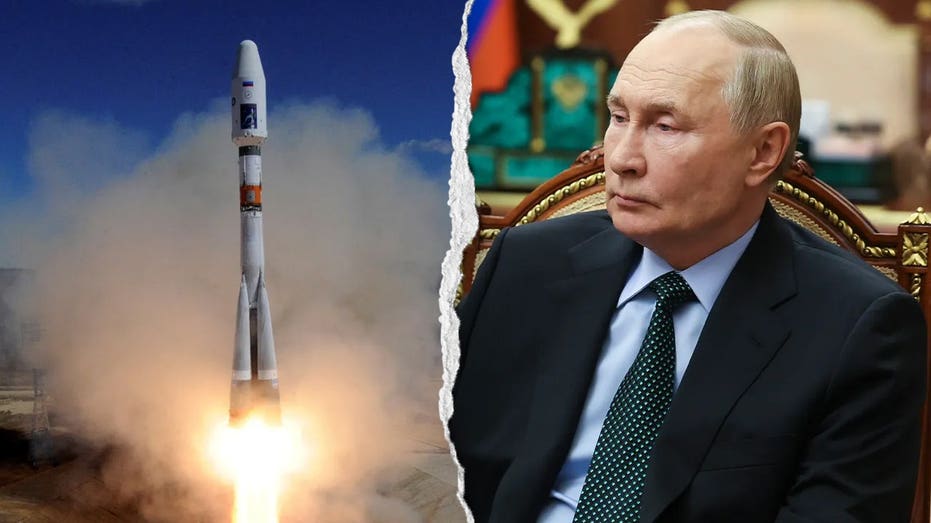
A sweeping new Defense Intelligence Agency assessment details how China and Russia are developing sophisticated ways to disrupt or destroy U.S. satellites. This includes a Russian satellite designed to carry a nuclear weapon into Earth's orbit.
American forces rely on satellites to communicate across battlefields, navigate ships and aircraft, track enemy forces, detect missile launches and guide precision weapons to their targets. Knocking those systems offline could leave forces below struggling to see, communicate and strike.
"We can't do military operations the way that we do them today without satellites, without systems in space," Clayton Swope, deputy director of the Aerospace Security Project at the Center for Strategic and International Studies, previously told Fox News Digital.
"Whoever has space and can deny that to their adversary has a huge asymmetric advantage in a conflict," Swope said.
Beyond the battlefield, satellites underpin everything from GPS navigation and communications to banking, transportation and the electric grid, meaning a large-scale attack in space could disrupt services millions of people rely on every day.
Chinese military thinkers have identified reconnaissance, communications, navigation and early-warning satellites as potential targets for attacks designed to "blind and deafen the enemy," according to the report. DIA assesses Beijing could begin threatening or gradually degrading an adversary’s space architecture during a crisis as a "prelude to war."
Russia, meanwhile, views U.S. reliance on satellites for precision strikes and projecting military power as a "critical vulnerability" to exploit during a conflict. Its doctrine envisions attacks ranging from temporary jamming and blinding satellite sensors to the outright destruction of spacecraft and the infrastructure supporting them.
DIA describes the threat as a continuum, beginning with attacks that can temporarily disrupt a satellite without destroying it and escalating through cyber and orbital attacks to kinetic weapons and, ultimately, a nuclear detonation in space.
Some of those tactics have already made their way into active conflict. During Operation Epic Fury, the U.S. and Iran "took offensive actions against each other's space capabilities to degrade and disrupt military actions on both sides," according to DIA. The report does not detail those operations, but says jamming near the Strait of Hormuz in June disrupted U.S. aircraft and shipping vessels.
The Chinese military already practices jamming satellite communications and GPS during military exercises. Beijing also has ground-based lasers capable of disrupting or damaging satellites in low-Earth orbit, and DIA assesses it could field space-based directed-energy systems by the late 2020s.
Other Chinese systems can get much closer. The Shijian-17 satellite has a robotic arm capable of grappling another satellite, while Shijian-21 used similar technology in 2022 to move a defunct Chinese navigation satellite into a higher orbit. DIA noted that the same technology used to service or remove satellites can also have military applications.
Russia has repeatedly put its own spacecraft near U.S. satellites. Cosmos 2543 began following a U.S. national security satellite after it was released into orbit in 2019, approaching it several times before later firing a projectile in what DIA described as an anti-satellite weapons test.
Russia sent Cosmos 2558 near another U.S. government satellite in 2022, and two years later launched Cosmos 2576 into the same orbit as a U.S. national security satellite before it began moving toward the American spacecraft. By 2025, Cosmos 2588 was maneuvering within roughly 93 kilometers of another U.S. government satellite.
Russia is also developing Burevestnik, an air-launched weapon intended to "kill" satellites in low-Earth orbit, according to DIA. The weapon would be launched from a modified MiG-31 aircraft and could be placed into orbit with little or no warning.
The threat escalates dramatically with Russia’s nuclear ambitions.
"Russia is developing a satellite designed to carry a nuclear weapon," the assessment states. Such a weapon could cause the "rapid and sudden loss or degradation of thousands of satellites" operated by governments and companies around the world, disrupting communications, navigation, weather forecasting and national security systems.
The damage could continue long after the initial blast. DIA warns that a nuclear detonation in space would leave behind radiation belts that "could persist for years" and damage satellites that initially survived or were only temporarily disrupted.
The threat has been on Washington’s radar for years. Then-House Intelligence Committee Chairman Mike Turner set off alarm bells in February 2024 when he called on the Biden administration to declassify intelligence about a "serious national security threat," later revealed to involve a Russian nuclear anti-satellite capability.
U.S. officials have generally been more guarded about the underlying intelligence. As recently as April, U.S. Space Command chief Gen. Stephen Whiting said officials were "very concerned" by reports that Russia was potentially considering placing a nuclear anti-satellite weapon in orbit, but declined to confirm whether Moscow was actually developing one.

 Login