Cristina Junqueira helped build Brazilian fintech player Nubank into one of the world's largest digital financial services platforms.
Now, as she leads Nu's emerging US business, she is taking on its biggest challenge yet: breaking into America's crowded banking market.
As part of Business Insider's The Long Play, Junqueira sat down with Dan DeFrancesco, executive editor and anchor of Business Insider Today, to share her insights on how to build trust and scale in banking, like leaning into convenience through digital banking products.
During the discussion, called "Building a Global Challenger," Junqueira also talked about her plan to take on incumbents in retail banking.
Cristina Junqueira, the co-founder and US CEO of Nubank, with Dan DeFrancesco, executive editor and anchor of Business Insider Today.
Carl Timpone/ BFA
Nubank's US CEO joined Business Insider's The Long Play to discuss the bank's expansion into the US.
The company looks to simplify banking with a digital-first fintech approach.
US CEO Cristina Junqueira focuses on building trust through credit options and brand building.
Nubank is the largest digital bank in Latin America — now it's turning its eyes towards the US.
Cristina Junqueira, the co-founder and US CEO of Nubank, sat down with Dan DeFrancesco, executive editor and anchor of Business Insider Today, at Business Insider's The Long Play, to talk about the digital bank's expansion on Thursday.
How it began
Since its founding in 2013, the fintech bank has pushed for financial inclusivity in Latin America by providing access to banking and financial services through its mobile app. Headquartered in Junqueira's home country of Brazil, the simple, low-cost, and digital-first approach discarded the need for physical banks, which are at times harder to reach in parts of Latin America — a key part of its success in the region.
It all started with a purple credit card with no fees.
"We had this vision that data, design, technology, completely transforms people's relationship with money," she said.
Junqueira previously worked as an executive at Itaú Unibanco, the largest private-sector financial giant in the region, also headquartered in Brazil and now a direct competitor of Nubank. Today, it is the largest company in Brazil based on primary banking relationships, and two-thirds of the country's adult population are customers, she said.
Entering the US market
The digital bank is set to expand into the US after opening a branch in September, operating under the name Nu. This comes after expansion into Mexico and Colombia in 2021.
"We always saw the thesis as a global one," she said. "Everywhere in the world, people want more convenience. People want more transparency. People want simpler experiences managing their finances. People still get like paralyzed by complexity through their financial lives."
Entering America's crowded banking sector is a risk — but for Junqueira, entering no country goes without risk.
"The US is a very hard market, but I haven't found easy ones either," she said. "Building a bank is hard everywhere, so you might as well go for the biggest payout."
In the US, she said getting a bank account is still "surprisingly hard" and normally requires you to go to a physical branch, while Nu offers an easier alternative to that, she said. Foreign digital-first banks have tried to bring their platforms to the US before and failed. German fintech N26 and UK fintech Monzo both tried to expand their businesses to the US, and ultimately withdrew from the market.
The American consumer is unique, which is why Junqueira aims to take a different approach than her competitors to earn trust and scale the platform. She said most other companies started with debit cards, while Nubank is the first to start with credit cards.
Starting people out with a debit card "requires you to build a lot of trust with those customers because you're asking them to deposit their money with you," she said. "In our case, all the countries that we started, we started with credit. This is a very different relationship because you're the one trusting the consumers," she said.
Some Latin American immigrants who already live in the US are responding positively to Nu as it enters the market.
"I've been positively surprised not only by the amount of people, sure, but Brazilians, Mexicans, and others are here and have been waiting for this," she said.
Junqueira also pointed to emerging AI technology and how it could impact the company and the banking sector. She said the company is "heavily leveraging AI," integrating it in credit underwriting, customer support, and product development.
Brazil's presidential election on Sunday made headlines as President Luiz Inácio Lula da Silva unexpectedly won a runoff against Flávio Bolsonaro, who fled the country to the US after he was under investigation for alleged corruption and money laundering. When asked about how she reacted to the big market sell-off in response, Junqueira said volatility is part of operating in a country like Brazil, but having 13 years of experience in the country has helped them learn they are going to run the company for the long run.
"We got to focus on the fundamentals, and the reality is, last quarter we turned over a billion dollars in net income," she said. "Markets don't like surprises, right? But we manage our business regardless of what happens."
Building a brand
The founder said one of the hardest things Nu will have to do in the US is build a brand that connects with users on an "emotional" level. Junqueira's dream scenario, five years from now, is to find evidence of that connection in the US.
One of the ways Nubank is attempting to spread its brand is through a recently signed deal with the Mercedes F1 team. Junqueira pointed to fans' passion for specific teams, as they follow the championship around the world, which was part of why they wanted to take part.
"We got a lot of visibility out of that, and we're working with them on brand activations," she said. "We're producing very interesting activations for consumers that help us amplify the branding fast, and that really help us bring this partnership to life."
Another huge part of the digital bank's brand is gender equality. In 2021, Nubank set a goal for 50% of Nubank's leadership to be women by 2025. Junqueira said today that the company's workforce is over 45% women, with many in leadership positions. In the four countries where they operate, all top leaders are women. Junqueira said the biggest challenge of being an executive while raising a family is not having the flexibility to juggle the demands of both roles.
"The reality is, as hard as we have to work, I think the hardest part is not having enough flexibility," she said. "It has been wonderful for us to have that type of opportunity, for us to really be able to tap into this part of the workforce that often struggles to have this type of career opportunity."
Correction — October 29, 2026: An earlier version of this article misstated Junqueira's title; she is the co-founder and CEO of US Nubank. The article also has been updated to note that the top leaders in the four countries where Nubank operates are women.
Congress should build an independent fund that accepts contributed equity from any company, holds it in a diversified portfolio and dedicates the returns to the trust funds.
Congress should build an independent fund that accepts contributed equity from any company, holds it in a diversified portfolio and dedicates the returns to the trust funds.
Under the government's explanation of EPF provisions, an account becomes inoperative after three continuous years without contributions following age 55 or retirement, whichever is later.
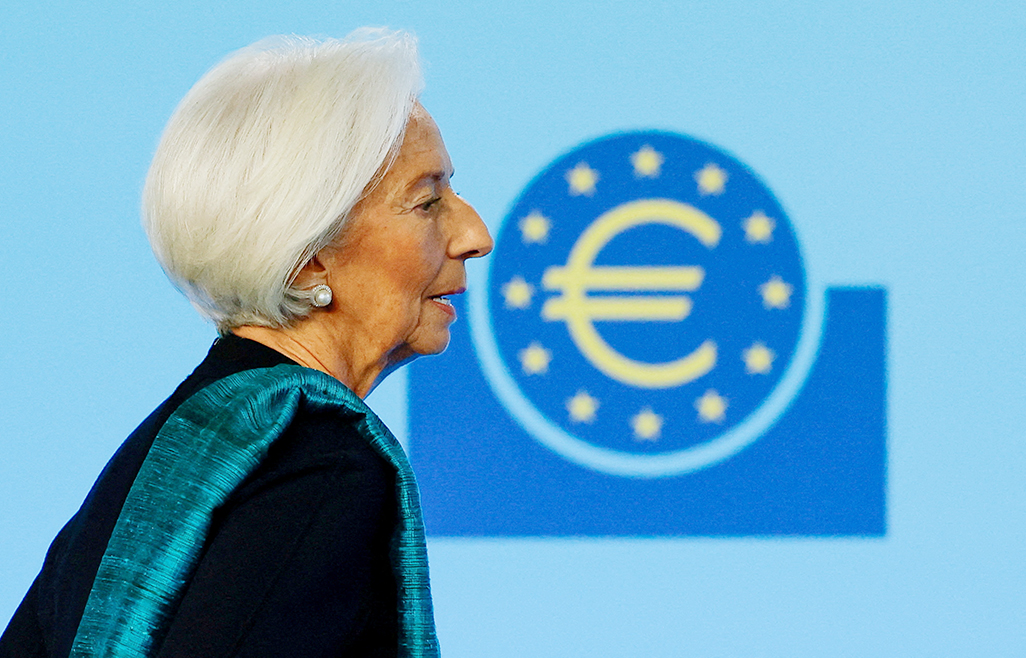
The European Central Bank (ECB) kept its three key interest rates unchanged on Thursday, as rising energy prices threaten to push inflation higher and weaken economic growth, hours after President Christine Lagarde announced she would step down before the end of her term.
The decision leaves the ECB’s deposit facility rate at 2.50 per cent, its main refinancing rate at 2.65 per cent and its marginal lending facility rate at 2.90 per cent, following September’s rate increase.
The Governing Council said the energy shock, driven by the conflict in the Middle East, was creating risks in both directions for the euro area economy, with higher prices threatening to fuel inflation while tighter financing conditions could weigh on economic activity.
“Energy prices have continued to rise, posing upside risks to the inflation outlook and downside risks to the growth outlook,” the ECB said.
The bank added that the full effects of the energy shock were still unfolding, although underlying inflation had remained broadly stable and wages had not yet shown a significant response.
However, it warned that the shock’s growing magnitude and duration, together with possible indirect effects and a second round of price and wage increases, were likely to push inflation higher and reduce growth.
Financing conditions have also tightened since the Governing Council’s previous meeting, a development the ECB expects to weigh on both inflation and economic activity.
The central bank reiterated its commitment to bringing inflation to its 2 per cent medium-term target, while stressing that its decisions would depend on incoming economic and financial data.
“The Governing Council remains well positioned to navigate the current elevated uncertainty,” it said, adding that monetary policy would be assessed on a meeting-by-meeting basis.
The ECB said it would consider the inflation outlook and the risks surrounding it, developments in underlying inflation and the strength of monetary policy transmission when deciding on interest rates.
It also stressed that it was not committing to a predetermined path for interest rates, leaving open the possibility of further changes as economic conditions develop.
The bank said its asset purchase programme and pandemic emergency purchase programme portfolios were continuing to decline at a measured and predictable pace because the Eurosystem was no longer reinvesting principal payments from maturing securities.
The Governing Council also reiterated that it was prepared to adjust all instruments within its mandate to ensure inflation stabilised at its target and to preserve the smooth transmission of monetary policy.
It added that its Transmission Protection Instrument remained available to counter unwarranted and disorderly market movements that posed a serious threat to the transmission of monetary policy across euro area countries.
Lagarde to leave in February
The rate decision followed the announcement that Lagarde would leave the ECB presidency on February 7, 2027, around nine months before her term was due to expire in October of that year.
The 70-year-old former French finance minister and International Monetary Fund managing director announced her departure after months of speculation about her future, with the decision coming as Europe faces economic uncertainty and politically sensitive elections.
“I leave this institution with a sense of good work done and an ECB that is fit for the future,” Lagarde said in a short video shared on social media.
Her departure is expected to allow European Union leaders to select a successor before France’s presidential election, in which far-right candidate Marine Le Pen has been favoured by opinion polls.
A source with direct knowledge of the matter said Lagarde had decided to leave so she could weigh in on political matters in France and internationally, something she was expected to avoid while leading the ECB to protect the institution’s independence.
European Council president António Costa said the process to appoint her successor would begin immediately and proceed without delay.
Euro area saving falls
Separate ECB figures published earlier this week showed that euro area net saving declined to €868 billion in the four quarters to the second quarter of 2026, down from €895 billion in the four quarters to the previous quarter.
Net saving represented 6.7 per cent of the euro area’s net disposable income.
Net non-financial investment also fell to €599 billion, equivalent to 4.6 per cent of net disposable income, mainly because non-financial corporations reduced their net investment.
Despite the decline in saving and investment, the euro area’s net lending to the rest of the world remained broadly unchanged at €312 billion, as the two measures fell by similar amounts.
Household net lending decreased to €703 billion from €715 billion, representing 5.4 per cent of net disposable income.
By contrast, net lending by non-financial corporations increased to €127 billion from €103 billion, equivalent to 1 per cent of net disposable income.
Financial corporations moved from net borrowing of €3 billion to net lending of €9 billion, or 0.1 per cent of net disposable income.
General government net borrowing increased, making a more negative contribution to the euro area’s overall net lending position, at €528 billion, equivalent to 4 per cent of net disposable income.
The figures also showed that household debt declined relative to income, with the debt-to-income ratio falling to 80.3 per cent in the second quarter of 2026 from 80.5 per cent a year earlier.
Non-financial corporations’ consolidated debt-to-GDP ratio also edged down, reaching 66.1 per cent in the second quarter, compared with 66.4 per cent a year earlier.
Thinktank says chancellor has given himself a mountain to climb after ducking big decisions in low-key speech
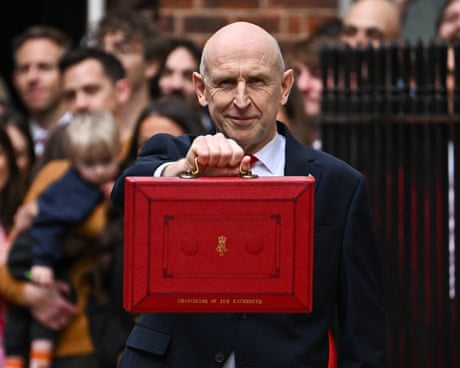
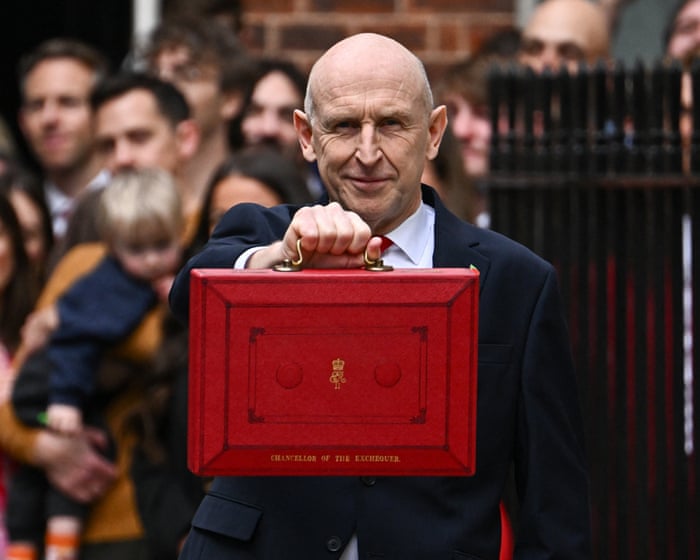
John Healey has paved the way for a “brutal” spending review next year after his budget failed to cover a £28bn shortfall in the public finances needed to avoid a return to austerity, according to Britain’s leading tax and spending experts.
A day after his address to the Commons, the Institute for Fiscal Studies (IFS) said the chancellor had left himself a mountain to climb by ducking several big decisions in his debut tax and spending statement.
The era of the standard $99 airline credit card may be fading as American Airlines becomes the latest major carrier to adjust its price tag.
Beginning Jan. 24, 2027, the annual fee for both the Citi/AAdvantage Platinum Select MasterCard and the Citi/AAdvantage Business MasterCard will jump from $99 to $150, according to a company press release.
The adjustment marks the first price hike for the popular Platinum Select consumer card since 2018, signaling a shift in the travel rewards landscape.
To soften the blow of a nearly 52% fee increase, American Airlines, Citi and MasterCard are adding several new travel and lifestyle perks.
Whether those additions make up for the $51 increase will depend largely on how travelers use the card, Nick Ewen, editor-in-chief of The Points Guy, told Fox News Digital.
"You have to look at the real dollar value based on your own travel habits," said Ewen, who is based in Florida.
Cardholders will gain additional ways to earn AAdvantage miles on everyday spending, along with up to $120 toward Global Entry or TSA PreCheck application fees every four years, American Airlines confirmed.
Additionally, a new $100 annual statement credit for in-flight purchases will replace the previous 25% food and beverage discount.
This makes the card significantly more rewarding for travelers, as the credit can be applied toward broad in-flight expenses, including Wi-Fi, which was explicitly excluded under the old discount system.
For someone who regularly spends money aboard American flights or already pays for Global Entry or TSA PreCheck, Ewen said the new credits could help offset the higher annual fee.
"If the answer is yes, you're definitely going to come out ahead," he said of travelers who typically spend up to $100 on in-flight purchases each year.
"If you're only flying American once a year, you may not be able to stomach that additional increased annual fee," he said.
The changes also include adjustments to how cardholders can rack up rewards on everyday purchases, according to the press release.
The personal Platinum Select card will offer three miles per dollar on eligible AAdvantage Hotels and Cars bookings and two miles per dollar on gas and EV charging, select streaming services, and eligible Rides and Rails purchases.
Existing perks — including preferred boarding, no foreign transaction fees and a free first checked bag on domestic American itineraries for the cardholder and up to four companions — will remain intact.
Ewen said the higher fee follows a broader shift among airline rewards cards.
"American is far from the first airline that we've seen this increase in their annual fees," he said, pointing to similar changes from Delta, Southwest and United.
Entry-level airline cards that once hovered around $100 annually are increasingly moving closer to $150, Ewen said.
"This is definitely the norm, although it's not universal across the board," he added.
Over the past few years, the travel rewards market has seen steady fee inflation as issuers pack mid-tier and premium cards with statement credits and subscription services.
Financial institutions are betting consumers will accept higher upfront costs in exchange for tangible, use-it-or-lose-it perks, transforming traditional flight-focused credit cards into broader lifestyle products, according to reports.
The changes drew mixed reactions from cardholders online.
"These inflight credit[s] [are] annoying," the person wrote. "They don't even stock them except for longer flights."
Others were more receptive to the new benefits, with one commenter pointing to the Global Entry or TSA PreCheck credit as a reason the higher fee could be worthwhile.
Buying gold, silver, utensils and other valuable items on Dhanteras is considered auspicious. Your gold jewellery bill may contain certain charges you must check before paying.
Is Rs 1 crore term insurance enough for your family? Explore how home loans, daily expenses, children's education, and inflation affect your coverage needs, with a practical example to guide your...
Christine Lagarde is stepping down as president of the European Central Bank (ECB) nine months earlier than expected, bringing forward a leadership contest at a time when renewed inflationary pressures and rising borrowing costs are causing fresh concern for businesses and households across Cyprus and the eurozone.
The ECB confirmed on Thursday, October 29, that Lagarde will leave her post on February 7, 2027, rather than complete her eight-year term, which was due to expire at the end of October next year.
In a video statement published on the bank’s social media, Lagarde personally confirmed her departure, explaining that she had informed fellow policymakers and ECB staff of her decision.
Reflecting on her seven years in Frankfurt, she described her time at the institution as “a great pride and a huge privilege”, thanking those who had helped fulfil its mission in Europe.
That mission, she explained, was to “be a rock, be solid, deliver price stability, financial stability”, before adding that she would leave with “a sense of good work done and an ECB that is fit for the future.”
According to the official announcement, Lagarde also informed European Council president António Costa of her decision earlier on Thursday, with the ECB’s Governing Council thanking her for her service and giving her a lengthy standing ovation.
Her departure comes at a particularly difficult time for the European economy, with renewed inflationary pressures, higher energy costs and growing concerns over borrowing conditions putting the ECB’s interest-rate decisions back in the spotlight.
For Cyprus, those decisions directly affect mortgage repayments, business financing and deposit returns, making the choice of Lagarde’s successor particularly relevant to the island’s banking sector and wider economy.
The announcement also comes on the same day as the ECB’s latest monetary policy meeting, with policymakers expected to keep the deposit rate unchanged at 2.5 per cent, despite growing speculation that further increases could follow before the end of the year.
Rising oil prices, linked to the continuing Middle East conflict and disruptions to energy supplies, have complicated the inflation outlook, leaving the ECB balancing the need to control prices against the risk of putting further pressure on economic growth.
Lagarde, who took over from Mario Draghi in November 2019, has already overseen one of the most demanding periods in the bank’s history.
Her presidency began shortly before the Covid-19 pandemic and subsequently saw the eurozone confront the economic consequences of Russia’s invasion of Ukraine, soaring inflation, the energy crisis and an aggressive series of interest-rate increases.
As the Financial Times reports, her seven years at the ECB have been dominated by exceptional economic and geopolitical crises, including the pandemic, war in Europe, a major inflation shock and trade tensions with the United States.
The newspaper also recalled that Lagarde, now 70, had previously admitted believing she would serve for five years rather than eight when she accepted the position following discussions with French president Emmanuel Macron.
Her early exit follows months of speculation about her future, with the World Economic Forum emerging as a possible next destination. According to the Financial Times, she has been in discussions about taking over as its chair, although no appointment has been confirmed.
Lagarde will become only the second ECB president to leave before completing a full term, following the bank’s first president, Wim Duisenberg, who departed after five years.
Attention is now turning to who will replace her, with former Dutch central bank governor Klaas Knot and former Bank of Spain governor Pablo Hernandez de Cos among the leading names being discussed.
The Financial Times reports that the Dutch government is backing Knot, while Spain supports Hernandez de Cos, who currently serves as general manager of the Bank for International Settlements.
Their potential appointments come at a time when the ECB is preparing for a broader change in its senior leadership.
Executive Board member Isabel Schnabel is leaving on January 3, 2027, a year before the end of her term, to take up a senior position at the International Monetary Fund, while ECB chief economist Philip Lane’s term expires in May.
The three departures mean European leaders will have to settle several important appointments within a relatively short period, raising questions about the future balance of views within the ECB’s six-member Executive Board.
The timing is politically significant, too. By leaving in February, Lagarde gives European leaders an opportunity to agree on a successor before France’s presidential election in spring 2027.
Costa has confirmed that the process of choosing a new president will begin immediately, with the European Council responsible for making the final appointment.
Under the EU’s appointment rules, any candidate must secure the support of at least 16 of the eurozone’s 21 member countries, representing no less than 65 per cent of the currency area’s population.
The process also involves consultation with the European Parliament and the ECB’s Governing Council before the European Council makes its decision.
Cyprus will have a say through its participation in the eurozone, while Central Bank of Cyprus (CBC) governor Christodoulos Patsalides sits on the ECB’s Governing Council, which is responsible for setting monetary policy across the currency bloc.
A change of president does not automatically mean a change in interest rates, since monetary policy decisions are taken collectively. Nevertheless, the next ECB chief will inherit an institution facing difficult choices over inflation, economic growth and the cost of credit, with the latest rise in energy prices making those decisions all the more complicated.
Eurobank has completed its €813 million acquisition of the remaining 80 per cent of Greek life insurer Eurolife Life Insurance, bringing its ownership to 100 per cent, while the sale of a 45 per cent stake in its Cypriot non-life insurance subsidiary to Fairfax Financial Holdings is expected to be completed by the end of 2026.
The bank announced the completion on Thursday, following the receipt of the necessary regulatory approvals and the fulfilment of the relevant closing conditions.
The transaction involved the acquisition of 80 per cent of Eurolife FFH Life Insurance Single Member Société Anonyme Company, which operates under the name Eurolife FFH Life Insurance SA, from entities controlled by Fairfax Financial Holdings Limited.
The deal follows earlier announcements made in October of 2025, and May of 2026, and represents a significant step in Eurobank’s strategy to expand its insurance business and diversify its sources of revenue.
With full ownership of Eurolife Life, one of Greece’s leading life insurance companies, the bank aims to strengthen its position in the insurance market and further develop its bancassurance activities, which combine banking and insurance services.
Eurobank said the acquisition would allow it to build on Eurolife Life’s established market position and distribution network.
The bank had announced in May that the consideration for the acquisition amounted to approximately €813m, with the transaction expected to be completed during the third quarter of 2026.
The completion announcement did not provide an update on the previously disclosed estimated impact of the acquisition on the group’s profit and loss account or its common equity tier 1 (CET1) capital ratio, which measures a bank’s financial strength.
The sale of part of Eurobank’s Cypriot insurance business remains pending, with the bank expecting to complete the disposal of a 45 per cent stake in ERB Asfalistiki Limited to Fairfax affiliates by the end of 2026.
The transaction remains subject to the outstanding regulatory approvals and other closing conditions.
Eurobank announced the planned sale in May, when it said the deal was expected to generate cash consideration of approximately €55m.
The disposal concerns ERB Asfalistiki, the group’s non-life insurance subsidiary in Cyprus, and forms part of the wider arrangements involving Fairfax.
The May announcement had indicated that the agreement relating to the Cypriot business was expected to be signed in the following weeks, subject to the necessary corporate approvals.
The completion of the Greek life insurance acquisition now gives Eurobank full ownership of Eurolife Life, while the separate transaction involving its Cypriot non-life insurance business remains outstanding.
CySEC warns investors about AI-generated scams and false advice
The Cyprus Securities and Exchange Commission (CySEC) has stepped up efforts to protect investors from online scams and artificial intelligence-generated investment fraud, as part of its participation in World Investor Week 2026, while continuing financial education programmes in schools across Cyprus until December.
The regulator on Thursday announced that it took part in the international initiative for the eighth consecutive year, focusing on emerging digital investment risks, strengthening financial resilience and helping the public make informed investment decisions.
World Investor Week is an initiative of the International Organisation of Securities Commissions (IOSCO), which seeks to raise awareness of investment risks and promote responsible investing.
CySEC’s campaign placed particular emphasis on fraudulent practices involving misleading online advertisements, false investment recommendations and deceptive content generated using artificial intelligence (AI).
The regulator stressed the importance of staying informed, carefully assessing investment opportunities and checking the credibility of investment service providers before committing money.
Public awareness activities included daily targeted posts on CySEC’s social media accounts, as well as appearances on television news and current affairs programmes.
The commission also encouraged the investment firms and other entities it supervises to help spread the campaign’s messages.
As part of the initiative, CySEC produced a Smart Investor Booklet outlining the main messages of World Investor Week 2026, alongside an investor guide titled ‘Knowledge, Protection and Safer Investment Decisions’.
Both publications form part of the regulator’s wider financial education programme.
School lectures to continue until December
Financial education for younger people remains a central element of CySEC’s work, with the sixth cycle of its school lectures already under way and scheduled to continue until December 2026.
The commission is also planning lectures at universities, extending its educational activities beyond the annual World Investor Week campaign.
The presentations cater for primary school pupils, lower and upper secondary school students, and those attending technical schools.
To support the programme, CySEC has developed new educational material tailored to different age groups and educational levels, together with a presenter’s guide intended to ensure that key financial education messages are delivered consistently and effectively.
The aim is to equip school and university students with essential financial knowledge and use practical examples to help them identify investment risks and protect themselves against potential fraud.
The initiative also seeks to strengthen students’ critical thinking skills when evaluating information and investment proposals encountered online, where misleading claims and fraudulent offers can be difficult to distinguish from legitimate opportunities.
CySEC said the educational programme had become an established part of its activities, with officials having visited 88 schools across Cyprus and provided financial education to more than 3,400 students during the previous five cycles of lectures.
Education seen as essential to investor protection
“Investment fraud is becoming increasingly sophisticated and difficult to detect,” said CySEC chairman George Karatzias, stressing that protecting investors required more than regulatory supervision.
“This is why investor protection requires not only effective supervision but also continuous public awareness and education,” he added.
“Through our initiatives, we aim to strengthen people’s ability to recognise risks and make informed decisions, while systematically investing in the financial education of the younger generation,” Karatzias continued.
CySEC also actively contributes to the work of the Cyprus Financial Literacy and Education Committee (CyFLEC), which supports efforts to improve financial knowledge and understanding across the population.
Information and educational resources, including the material developed for World Investor Week 2026, are available through CySEC’s Financial Education Portal.
Elon Musk says it's "pointless" to save for the long term, as he expects "super intelligent abundance."
The Tesla and SpaceX CEO was replying to an X user who said they'd stopped stressing about spending.
Musk previously said that if he's right about the future, "saving for retirement will be irrelevant."
Elon Musk says it's not worth saving for the long term, as nest eggs won't matter.
"Saving money for the distant future is pointless with the advent of super intelligent abundance," Musk said in an X post on Thursday, doubling down on one of his most polarizing predictions.
The Tesla and SpaceX CEO was replying to a user who said they weren't stressing over their "questionable financial decisions" because a future of abundance meant "most of it won't matter in a few years anyway."
@battleangelviv Saving money for the distant future is pointless with the advent of super intelligent abundance
The world's richest person — who has a nearly $1 trillion net worth — has previously advised against saving for decades to come.
"Don't worry about squirreling money away for retirement in 10 or 20 years," Musk said during a podcast episode released in January. "It won't matter."
"If any of the things that we've said are true, saving for retirement will be irrelevant," he added.
Musk said at the time that he expects progress in AI, energy, and robotics to supercharge productivity, resulting in plentiful resources so that "anyone can have whatever stuff they want."
In that world, he continued, everyone would have access to "better medical care than anyone has today," there would be "no scarcity of goods and services," and "you can learn anything you want about anything for free."
Business Insider spoke to seven personal finance and AI experts about those comments, and they all agreed people should keep saving for retirement given the risk that Musk may be wrong.
Musk laid out an even more utopian vision on a recent podcast, predicting that advances in robotics and space travel would lead to a multiplanetary economy, at which point "money becomes irrelevant" and "conventional currency will not matter."
Several other tech leaders have predicted AI and other technologies will transform the way we live.
Microsoft cofounder Bill Gates said on a recent podcast episode that AI will lead to "true abundance" with robots able to "build houses, grow food, do surgery."
But he also warned the next two decades will be "as tumultuous a period as there's been in human history," as technological advances will mean "none of the things that human labor provides to the economy will be necessary for most goods and services."
Similarly, Musk has predicted a "bumpy" transition to a brighter future. He's suggested government checks for all as the best solution to AI-fueled job destruction.
The offers and details on this page may have updated or changed since the time of publication. See our article on Business Insider for current information.
A reader (not pictured) asks our For Love & Money column how to ask their parents for an early inheritance.
laflor/Getty Images
For Love & Money is a column from Business Insider answering your relationship and money questions.
This week, a reader wants a portion of their inheritance now, rather than after their parents die.
Our columnist says it's OK to ask, but that it's important to be self-aware and approach thoughtfully.
Dear For Love & Money,
I am lucky enough to come from a family with a lot of generational wealth. My great-grandparents passed down a large fortune to their kids, who passed it down to my parents when they died.
Before their deaths, my grandparents also used a large part of it to make their children's and grandchildren's lives better. They gave my parents enough to pay off most of their house, paid for my college, bought me my first car, and did the same for my sister and cousins.
Now, my parents have their share of the family inheritance. My sister and I fully expected our parents to follow our grandparents' example and give us some money up front — not the whole inheritance, but enough to help us pay off some debt and make our lives a little easier.
My parents have shown no signs of giving us a penny right now. I am sure they intend to leave it to us when they die, but until then, it doesn't seem to have even occurred to them to bless their children and grandchildren the way their parents did.
My niece will begin college next year, and my sister has dropped several hints. My wife says I need to just come out and ask them for some of the money because we could use the cash, but the idea of doing that makes me really uncomfortable. What do I do?
Sincerely,
Possibly Presumptuous
Dear Possibly,
If you are presumptuous — and perhaps you are — you have every reason to be. A large inheritance, it seems, is a family tradition (you lucky thing). Traditions are typified by the rituals that accompany them. In your family, this has looked like the bulk of the cash going to the next generation as a traditional inheritance, with a tidy sum set aside to ease the way for all direct descendants in the form of an early inheritance.
As such, it makes sense that you would have those expectations. However, no family tradition happens automatically, and each new generation must determine which parts of the legacy to leave and which to keep. In your case, this decision belongs to your parents.
I agree with your wife that asking directly is your only option for an advance inheritance payment. After all, your sister has already tried the heavy hinting method, and while you refer to it as "generational wealth" and "family inheritance," the money is your parents'.
Before you talk to them, however, I suggest you examine your motives first. There are two different types of entitlement: justified and absurd. Justified entitlement looks like someone driving to pick up their paycheck after working all week. Absurd entitlement looks like an adult racking up a credit card on a luxury vacation and then expecting their parents to pay it because they raised them to enjoy that lifestyle.
Based on your letter, I would guess your entitlement is justified — or at the very least, understandable. There is nothing wrong with having expectations because your family has always done something a specific way. However, the justified entitlement begins veering into the realm of the absurd if you feel resentment toward your family for not giving you something that isn't yours.
Self-awareness in this regard is crucial for personal growth. When I called you lucky at the beginning of this letter, I meant it. I, like most people, don't have an inheritance to look forward to, to help pay off my mortgage or send my kids to college. You hit the generational wealth lottery just by being born into the right family, as did your parents. I don't say this as a jealous sneer, but as a reminder.
You don't need to bow your head in shame for lucking out, but you must remember this money is a gift. Nobody likes the kid screaming at the tree on December 22nd because they want to open their presents early.
Not being that person is really a matter of tone. If your parents sense you're upset with them for even having to ask, they will be understandably hurt, which will only break down your dynamic. If you come to them with gratitude, humility, and curiosity, they might remember when they were in your shoes.
I mention curiosity because your parents may have hopes and expectations for this inheritance of their own. I can only imagine they had years to plan what they would do with it when it was finally their turn. Ask them about it. Show them your intention isn't to leapfrog over their moment holding the generational wealth, but to honor it.
Not only does this eliminate any ideas of absurd entitlement they may see around your request, but it might also help them see an early inheritance to you and your sister as a kind of collaboration — and the money as a family business. For now, they are co-CEOs and get to call the shots, but you, your sister, and your children are the future and worth the investment.
That said, I wouldn't shy away from reminding your dad that his parents did the same for him. I wouldn't make this reminder heavy-handed or accusatory. Instead, it should be a gentle way to introduce your request. Start by saying something like, "Hey, Dad. Remember how Grandma and Grandpa gave you part of your inheritance even while they were still living? I was thinking…"
You'll want to prepare a well-thought-out financial plan. Research investment options, savings accounts, and trusts, and determine how to maximize the financial gift you're requesting. Then, pitch this plan to your parents.
Whether your parents are holding onto the inheritance tightly because they still see you and your sister as fiscally irresponsible teenagers, because they have personal retirement concerns or priorities, or because they just didn't think you needed the money in the moment, presenting them with a plan is a great way to inspire their confidence and show them that giving you the money is not a risky indulgence, but a sound choice.
Your letter describes a lineage of security — not only the financial kind, but the kind that only happens when each generation looks after the next. While your parents may be playing with the timeline a bit, you mentioned having little doubt that they will leave the money to you and your sister when they die. This tells me your family looks out for one another. No matter how this conversation goes, take comfort in that security. That's the kind of wealth that can't be spent in a single generation, and you've got it. You lucky thing!
Rooting for you,
For Love & Money
An earlier version of this article was originally published in September 2024.
Looking for advice on how your savings, debt, or another financial challenge is affecting your relationships? Write to For Love & Money using this Google form.
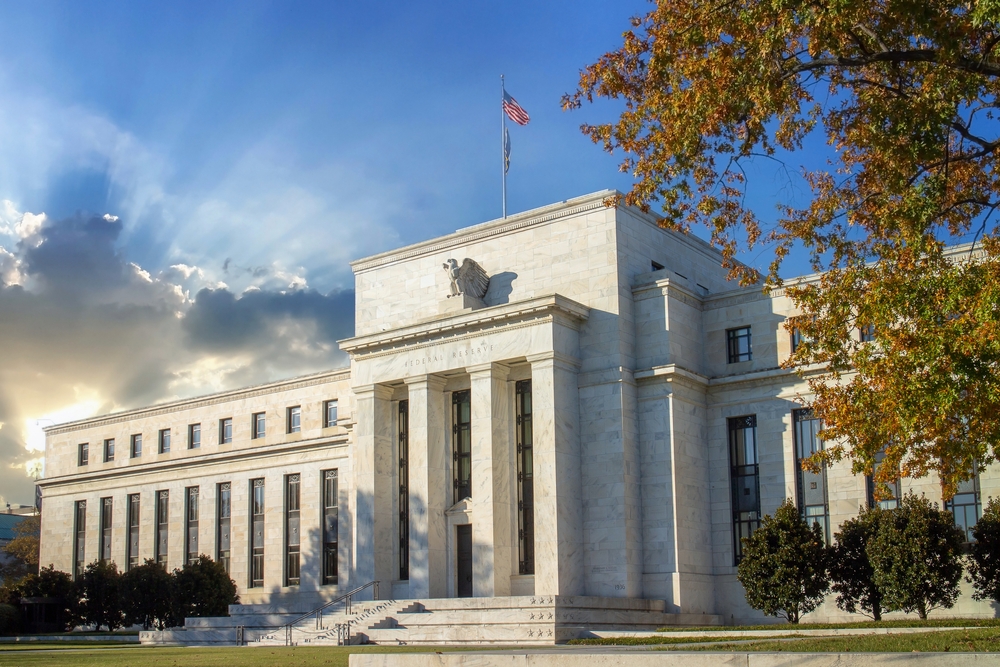
RIYADH: Central banks in the UAE, Qatar and Bahrain have kept interest rates unchanged, following the US Federal Reserve’s decision to hold its benchmark rate steady. The Fed’s rate-setting committee voted 10-2 to keep its benchmark rate in the 3.75 to 4 percent range. Gulf central banks tend to move in step with Washington because most regional currencies are pegged to the US dollar. “The Committee decided to maintain the target range for the federal funds rate at 3-3/4 to 4 percent, in suppor

 Login