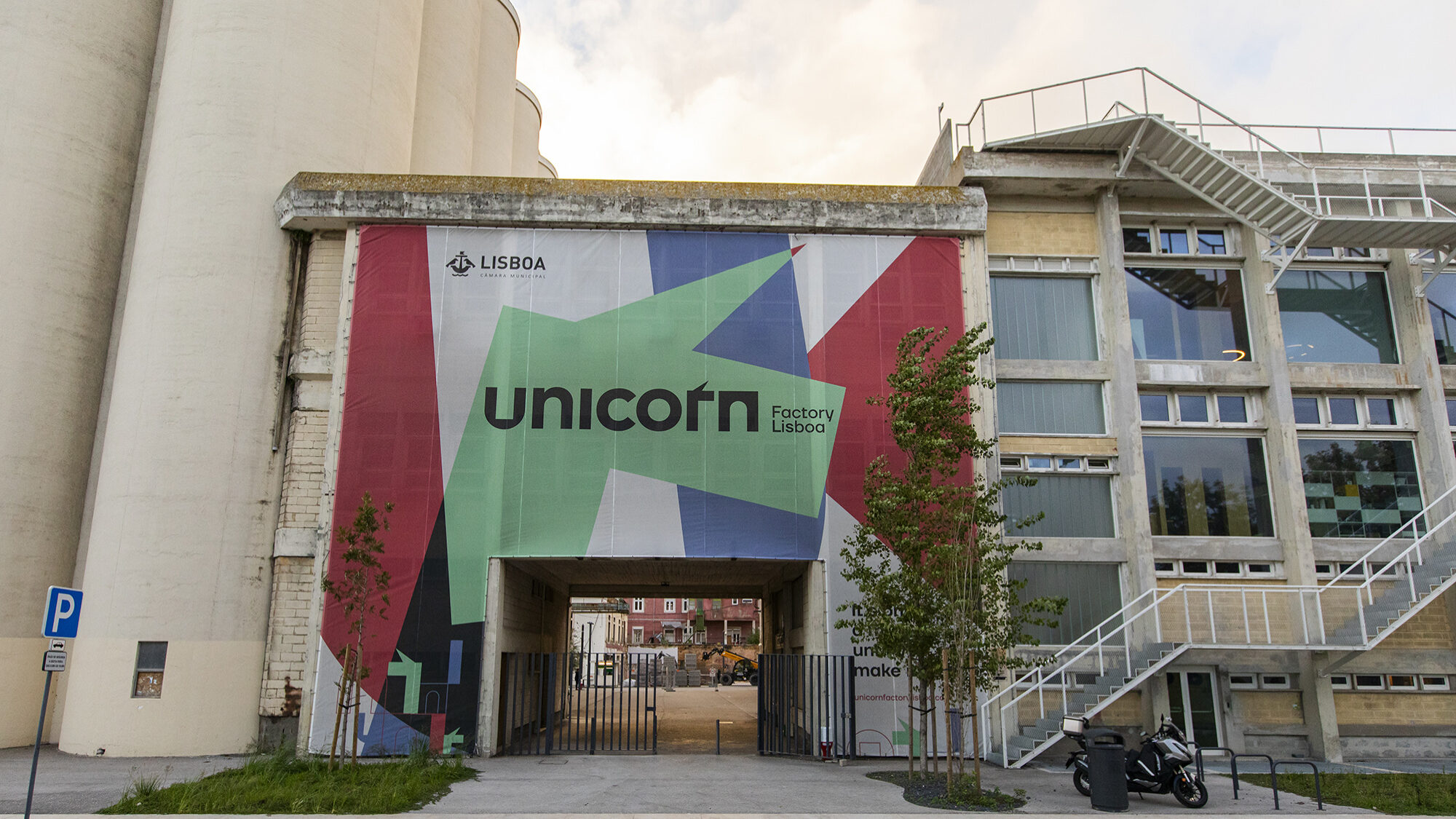
Chama-se Rede Unicorn Factory Área Metropolitana de Lisboa e será apresentada oficialmente no dia 2 de novembro, no Beato Innovation District, para afirmar a região como um território de inovação, empreendedorismo e competitividade internacional. Esta parceria estratégica visa dinamizar o ecossistema empresarial, científico e tecnológico metropolitano nos 18 municípios do território.
Numa iniciativa conjunta da Área Metropolitana de Lisboa (AML) e da Unicorn Factory Lisboa, a nova rede de empreendedorismo e inovação vai permitir a colaboração e partilha de conhecimento, aproximando recursos e competências nos 18 municípios do território.
O objetivo, explica a AML, passa por “estimular o desenvolvimento de projetos inovadores” assim como “potenciar a capacidade de atração e retenção de talento e investimento”. Na prática, sustenta, será criado um ecossistema metropolitano de inovação, com ambição e projeção internacional.
A AML e a Unicorn Factory Lisboa inspiraram-se em modelos europeus de inovação colaborativa para a criação desta rede que “assenta numa visão integrada do território, em que a diversidade e as complementaridades dos municípios constituem uma vantagem competitiva”, detalha a AML numa nota enviada às redações.
A new startup called &Truth is joining the race to automate formal verification, a painstaking process that uses math to prove software works as intended.
We started Exyde as a marketplace for activities and experiences. It taught us how operators work, but it was a crowded market where building a real edge would be hard. We moved into building AI tools for those operators. Our first product, Lucy, was an assistant for their daily work, but still far from an AI employee.
The turning point came from inside our company. We were bootstrapped and close to hiring an operations specialist when I realised the technology was mature enough to build that role with AI instead.
We built Kira, always on and proactive, and I found myself chatting with her from my phone as I would with any teammate. It worked, so we built Alex for our catalogue, Aria for finance and Max for business development.
When we told friends and partners how we run the company, they asked us to build the same for them. They wanted the same method. That is when I realised the product was the way we work.
Roles and human oversight
ChatGPT and Claude are fantastic tools, but they depend on the person using them. In a team, everyone uses them in their own way, and quickly nobody is managing the result.
AI employees work the other way around. Each has a defined role, a place in the team and someone managing it, whether a human or an AI chief of staff.
Our core philosophy is to treat AI as we would people: we give them names, onboard and train them, provide feedback and correct mistakes.
Human supervision has to stay wherever someone is accountable for the outcome. How much depends on the risk and what the technology can do today.
But there is one difference I keep coming back to. A person avoids mistakes because a mistake can cost them their job, which is a kind of survival instinct. AI doesn’t have that.
Building differently
In the past, every new service and market meant hiring and managing more people. When I started Exyde, I wanted to build differently.
I had more work than time, and we had a limited hiring budget. We started with ChatGPT, Claude and automations. They made our lives easier, but only worked while I was prompting and coordinating. The question became how work continues when I am in a sales meeting or asleep.
That is what AI employees changed for me. For most of history, leverage came from people, capital and assets. Now AI is a source of leverage, too. It keeps working while you sleep. That idea is what Exyde is built on.
The opportunity for Cyprus
The frontier labs, including OpenAI, Anthropic, Mistral and DeepSeek, are building models that are extremely hard to beat. I don’t think competing with them is where the opportunity lies for Cyprus.
The opportunity is working with businesses, understanding how they operate and putting those models to work in daily operations.
That needs people who know the local market and how companies make decisions, in Cyprus, Greece, the rest of Europe and the Middle East. This is where a small team supported by AI can operate at a level that used to need a larger firm.
What AI will not solve is distance and density. A startup still needs to be close to its customers, capital and talent. Build here, where it is a fantastic place to test, but you need to go outside faster.
About Exyde
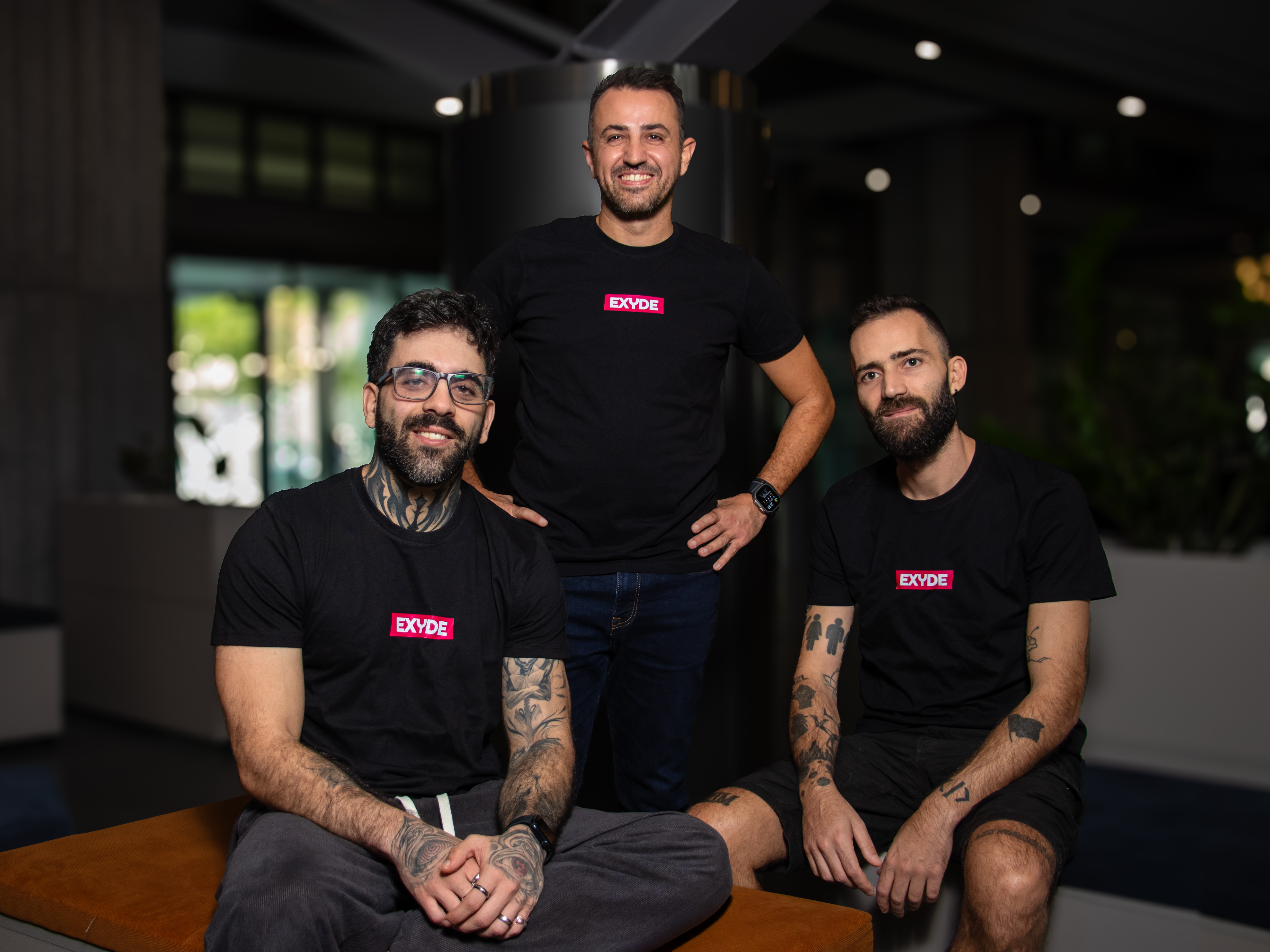
Exyde builds and manages AI teams for businesses. It is led by co-founders Michael Economou, Dakis Andreou and Marios Constantinou, who have worked together for more than ten years, including at Foody, which was acquired by Delivery Hero.
EMBIO Diagnostics CEO Constantinos Loizou discusses demand for portable testing, the international expansion of airbeld™ and the development of RapidX. In this interview, he explains how the Cypriot company is moving into industrial diagnostics and environmental monitoring, with plans to turn its technology and partnerships into sustained international commercial growth.
Testing at the point of use
B.EL.D™ is a versatile platform that can be adapted to several diagnostic applications. Today, we are seeing the strongest commercial demand in testing activated carbon and other porous materials, particularly in water filtration. Commercial customers are already using the technology to assess filter performance on site and identify saturation before it causes operational problems or contamination.
Building on this experience, we are finalising an application for assessing the porosity of building materials. Testing in this sector can still be slow and laboratory-dependent, creating a clear need for faster, reliable information at the point of use.
Our goal is to move critical testing from the laboratory to the point of decision, improving quality control, reducing waste and helping operators make better decisions.
Making indoor data useful
airbeld™ is designed to make environmental data useful and actionable. It is an indoor environment management solution for hospitals, offices, warehouses and other commercial spaces, where environmental conditions can affect health, productivity, operational risk and energy use.
One of our main lessons has been that organisations differ greatly in their awareness of these risks.
Some immediately understand the value of continuous monitoring, while others are only beginning to recognise the operational and financial costs of unmanaged indoor conditions. What organisations do not measure, they cannot manage.
We therefore focus on forward-looking customers and partners who see environmental intelligence as part of responsible building management. This approach has helped us build commercial momentum, secure distribution agreements and expand internationally. We are now developing our presence in the United States and preparing broader deployments across several commercial sectors.
Airbeld – Smart Building Analytics Dashboard
RapidX takes shape
RapidX is the industrial evolution of B.EL.D™, initially focused on assessing activated carbon filters in water treatment and measuring the porosity of structural building materials.
In both applications, the objective is to replace slow or indirect processes with faster, practical diagnostics at the point of use. In water treatment, this can help operators use filtration materials more efficiently and intervene before performance deteriorates. In construction, better information about material properties can strengthen quality control and support more efficient resource use.
RapidX also replaces perishable biosensors with longer-life components, combining robust hardware with digital analysis. Funding from the European Innovation Council will help us develop and validate the platform for broader industrial deployment.
RapidX can turn industrial diagnostics from a delayed result into an immediate operational tool, and we believe it could become an important driver of EMBIO’s international growth.
The next 24 months
Over the next 12 to 24 months, our priorities are to complete RapidX, expand the commercial deployment of B.EL.D™ and scale airbeld™ through international partnerships. We are working with organisations in building materials and industrial water management while pursuing broader applications for airbeld™ in corporate campuses, healthcare facilities, warehouses and major sports venues.
We are also using AI internally to accelerate research, product development and commercial decision-making. EMBIO is financially sustainable, and our next challenge is to turn our technology and partnerships into consistent international growth.
Our strategic investment partnership with ASBIS Enterprises is particularly important, giving us access to extensive distribution experience and more than 80 international markets.
We have developed the technology, established the right partnerships and demonstrated that a Cypriot company can compete internationally.
The next 24 months are about turning years of scientific development into global commercial impact. We are ready for that transition.
Most brands still buy influencer marketing the way they bought billboards in the nineties. They pick a face, pay a fee and hope the post lands. The report that follows counts likes and impressions, and nobody in the finance department quite believes it.
At YoCreate, a Limassol company, we build for the other approach, where a creator’s video is judged like any other paid channel. We run two products: YoCreate, an influencer marketing platform for brands, and YoTrends, a trend discovery tool for creators.
YoCreate
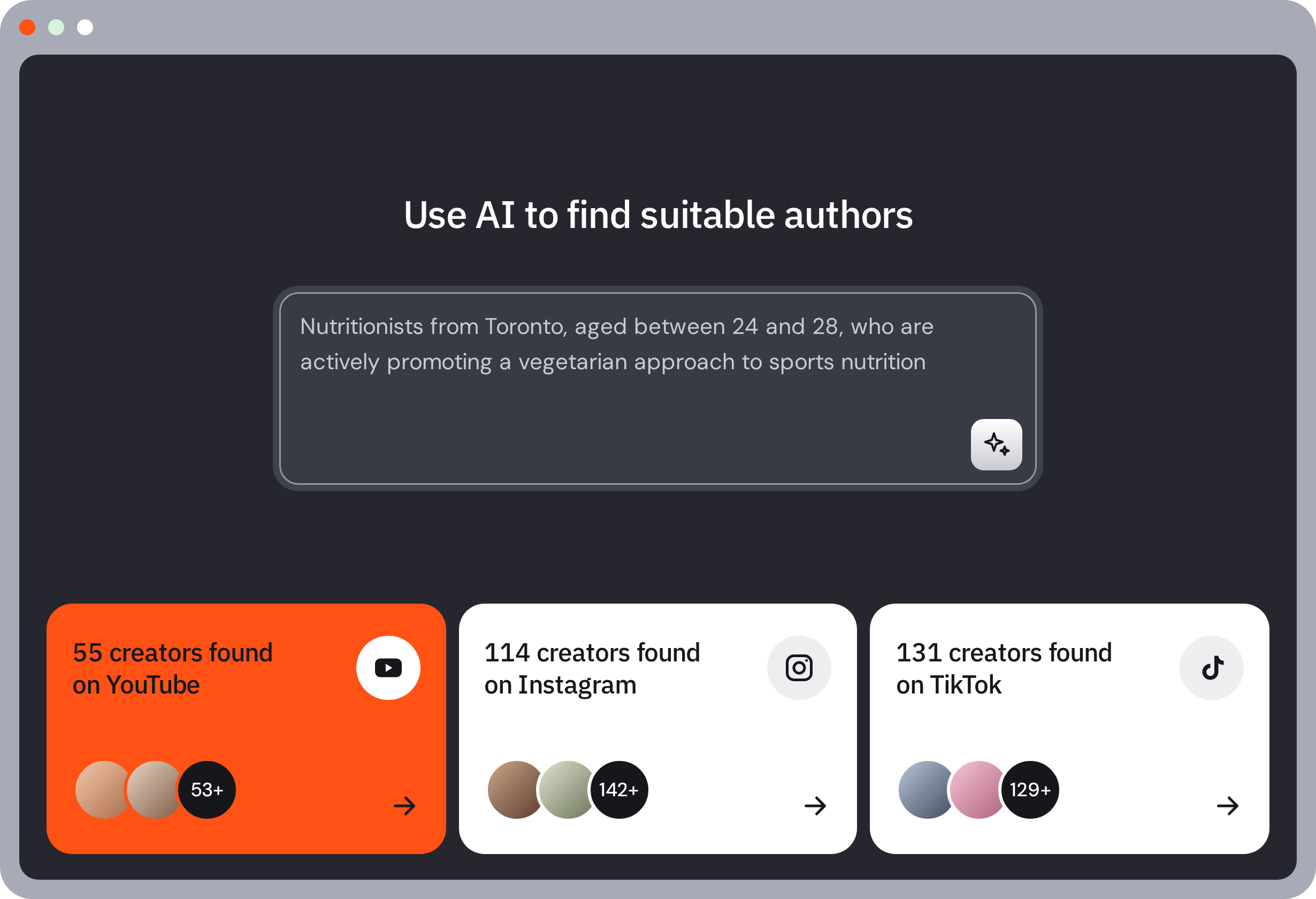
YoCreate is an influencer marketing platform for brands. A marketing team uses it to find creators by niche, country and audience, send briefs, sign contracts, pay creators and track campaign results in one place, instead of juggling spreadsheets, DMs and bank transfers.
Brands can run campaigns on the platform themselves or hand them to our in-house team. The team handles casting, negotiation and execution on the same platform, and the client sees every step.
Payments are where influencer marketing usually gets messy. Paying creators in dozens of countries, with contracts and tax documents that hold up, can take longer than the campaign itself. YoCreate handles that part, so a brand in Cyprus can work with a creator in Mexico or Malaysia without a legal project on the side.
Results are measured the way a performance team measures paid media: cost per install, cost per order, return on ad spend. Clients include inDrive, Exness, PepsiCo, Nebius and Higgsfield, mostly from categories where every new user is tracked to the cent, such as fintech, gaming, streaming and AI products. For Nebius, a single campaign delivered 360 per cent return on marketing investment. This year we added YoCreate Performance, which turns creator content into user-generated content ads and runs them as paid media, including through creators’ own accounts via TikTok Spark Ads.
YoTrends
YoTrends is a tool for creators who want to make content people are already watching. You pick your country and niche, and it shows what’s trending on YouTube and TikTok right now: the videos, sounds and formats gaining views fastest this week. Then it turns those trends into video ideas for your own channel, with hooks and scripts you can adapt and shoot the same day.
The problem it solves is timing. Most creators notice a trend once it’s already in their feed, and by then the people who started it have collected the views. YoTrends tracks millions of videos in real time and flags the ones picking up speed early, so you can join a trend while it’s still rising. It covers nine markets, from the US and Japan to Saudi Arabia and South Korea.
Creators can also see who in their niche keeps hitting trending and study what those videos have in common. Brands and agencies use the same view to shortlist creators whose content is working right now.
More than 5,000 creators use YoTrends, and it’s free to start. It also connects to AI assistants such as Claude and ChatGPT, so a creator can ask what’s trending in their niche today and get a script written from live data in the same chat.
Built in Limassol
Our headquarters is in Limassol, with team members in London, Berlin, Dubai, Manila, Almaty and a few other cities. Limassol has quietly become a hub for the kind of companies we serve, and the time zone lets one team cover Latin America, Europe, the Middle East and Asia in a working day.
The creator economy is usually described as a marketing trend. From where we sit it looks more like a media channel that is still priced wrong. Brands that measure it properly buy attention cheaper than their competitors, and we’d like more of them to be based here.
Ruslan Kurmanaev is the founder and CEO of Zantemark Limited, the company behind YoCreate and YoTrends.
A sociedade de capital de risco BY Venture Partners, com sede no Dubai, escolheu Portugal como berço da operação na Europa. O fundo internacional anunciou esta quinta-feira que abriu um escritório em Lisboa, que funcionará com sede europeia, e fechou o seu terceiro veículo de investimento no valor de 53,5 milhões de euros.
A empresa de venture capital emirati prevê investir em projetos globais recentes (early-stage) e entrar em rondas de financiamento para fases iniciais (pré-seed e série A) com até um milhão de dólares (cerca de 899 milhões de euros). O objetivo é apostar em empresas de inteligência artificial (IA) que estejam a reinventar os fluxos de trabalho das empresas e tenham a ambição de crescer à escala mundial.
“Este fundo tem como objetivo apoiar empresas nativas de IA com ambições globais. Estamos particularmente entusiasmados com o reforço de capital na Europa, onde cidades como Madrid, Londres, Paris e Berlim avançam rapidamente no desenvolvimento de software nativo de IA”, afirmou Ghaith Yafi, sócio-cofundador da BY Venture Partners, num comunicado enviado aos meios de comunicação social.
Para a BY Venture Partners, que tem mais de 178,4 milhões de euros em ativos sob gestão, o hub lisboeta “é uma evolução natural”, depois de realizar investimentos em 16 países, quatro dos quais alavancaram a construção de unicórnios com os dois fundos anteriores. Instalado na zona de Alcântara, a equipa inicial do escritório em Portugal é composta pelo sócio Sohrab Jahanbani e Henrique Pereira, manager de Plataforma e Comunidade, que foi contratado para o efeito, mas há “potencial de crescer”, como disse fonte oficial ao ECO.
"“A Europa forma alguns dos melhores talentos tecnológicos do mundo, mas os fundadores europeus enfrentam muitas vezes uma barreira quando tentam chegar ao capital internacional e a uma escala comercial global.”
“Lisboa e o ecossistema ibérico mais alargado deixaram de ser polos regionais emergentes e passaram a ser verdadeiras rampas de lançamento para a inovação de referência mundial em IA e deep tech. Ao combinar uma presença local com o alcance global da BY Venture Partners no Médio Oriente e na América do Norte, estamos numa posição única para dar aos fundadores ibéricos e europeus o capital, o apoio operacional e o acesso a mercados globais de que precisam para competir”, refere o sócio-cofundador Abdallah Yafi.
O recém-lançado fundo é ancorado pelo Dubai Future District Fund e conta a participação de investidores institucionais da região do Golfo, divisões de empresas de capital de risco e family offices, entre os quais Multi Lane, Transmed Capital e Indriss Family Office da Arábia Saudita. Atualmente, contabiliza 15 investimentos feitos, entre os quais na PQ Shield, Cosyne, Isometric, Huspy e Invisible, mas o portefólio previsto é de 40 empresas.
What problem does DART solve for employers and jobseekers in Cyprus? Take us through one hire fromthe first call to the person starting work.
DART Recruitment helps reduce the time, uncertainty and lack of information that often make recruitment difficult for both employers and jobseekers.
For employers, we take much of the burden out of the hiring process. We first invest time in understanding the business, the position, the team, the salary and benefits, and the type of person who is likely to succeed in that environment. We then search, approach and assess relevant candidates before making an introduction.
We also look beyond the vacancy itself. When relevant, we inform employers about available employment incentive schemes and funding opportunities that they may not know exist, assess whether a proposed hire could be eligible and support them through the process. This means that a recruitment decision can sometimes create not only operational value for the company, but also a significant financial benefit.
For candidates, the relationship is equally important. They can share their CV with DART, tell us what they want from their next career move and become part of our talent network. They do not need to search continuously themselves; when an opportunity arises that genuinely matches their profile and expectations, we can approach them – even if they are not actively looking for a new job at that moment.
In that sense, our radar is always on for talent in the labour market. We are continuously speaking with professionals, understanding where they are in their careers and what might motivate them to consider the right opportunity. This also means that when an employer approaches us, we are often not starting the search from zero.
Communication is central to the way we work. We want to understand the person behind the CV: their ambitions, salary expectations, preferred working environment, location, flexibility and what would genuinely motivate them to make a move.
We also provide practical guidance throughout the process. This can include helping candidates understand their market value, prepare for interviews, negotiate salary and benefits, and better understand the employment terms and rights relevant to a potential move.
Once a suitable match is identified, we coordinate the interviews, keep both sides informed, collect feedback and help resolve differences in expectations. At offer stage, we often act as the link between employer and candidate, helping both sides reach a clear and realistic agreement.
Our involvement continues through the candidate’s notice period and until they actually start work.
For DART, recruitment is not simply about filling a vacancy. It is about understandingwhat both sides need, identifying opportunities they may not have seen themselves, communicating openly and guiding the process towards a decision that creates value for both the employer and the individual.
What did you see missing in Cyprus recruitment, and what has been the hardest step in building the business?
DART Recruitment was launched in 2021 after I saw first-hand how difficult and time-consuming recruitment could be for both candidates and employers.
The idea became very personal when my brother was trying to make a career change. He was highly qualified and had already progressed to a management position at a young age, but because his professional background was in hospitality, employers tended to see only where he had come from rather than the skills and potential he could bring to a different sector.
He was spending a great deal of time applying for opportunities without really having someone to guide him, position his experience differently or help employers look beyond the job titles on his CV. That experience made me realise that there was a gap in the market.
Candidates needed more than access to vacancies; they needed guidance, honest feedback and someone willing to understand the person behind the CV. Employers, on the other hand, were also investing enormous amounts of time searching, screening and trying to identify the right people, often without sufficient support.
That became one of the foundations of DART: to make recruitment more personal, more efficient and more supportive for both sides.
Building the business, however, came with a very different challenge. One of the hardest lessons was learning how to manage the volume and intensity that comes with a growing recruitment company. Recruitment moves quickly, there are many people and processes to coordinate at the same time, and in the early stages of a business you are also learning how to manage uncertainty, responsibility and the pressure that comes with growth.
Over time, that pushed us to build stronger systems, better processes and a team structure that could support increasing demand without losing the personal service that DART was created to provide.
Looking back, that early experience still influences how we work today. We try not to define people only by their previous job title, and we believe that both candidates and employers deserve time, communication and genuine support throughout the recruitment process.
What does ‘people-first’ mean in practice? How do you assess a candidate beyond the CV, and how do you know a placement worked for both sides?
At DART, “people-first” means giving people more than access to a vacancy. It means giving them time, attention, honest guidance and continuous communication throughout the recruitment process.
We believe that recruitment is built on trust, and trust is created through the way people are treated. That means listening carefully, understanding what someone genuinely wants from their career and looking beyond qualifications and job titles.
When assessing a candidate, we consider experience and technical ability, but we also spend time understanding motivation, career direction, expectations, personality and the type of environment in which that person is most likely to succeed. The same principle applies to employers: we want to understand the business, its culture and what it really needs, rather than simply working from a job description.
Communication is a major part of this approach. Candidates should know where they stand, even when there is no immediate development, and clients should feel that someone is actively managing their search. Regular updates, honest feedback and accessibility are fundamental to the service we want to provide.
Perhaps some of the best examples of what “people-first” means are within DART itself.
Joanna first came into contact with DART as a candidate, when we placed her in a role with another company. We recognised her talent early on and stayed in touch, building a strong professional relationship over time. When she later left her job, we took the opportunity to bring her into our own team as a recruiter. Since joining us, she has continued to grow professionally, and her ability, commitment and understanding of recruitment have helped her progress to become Head of Recruitment at DART.
Michalis first worked with DART as a client, when we supported his company with its recruitment needs. Our professional relationship developed through that collaboration, and he later joined the Group, where he now serves as Operations Manager.
We have many examples where professional relationships created through recruitment have developed into long-term relationships and, in some cases, genuine friendships. For us, that says a great deal about the culture we have tried to build.
We know a placement has worked when both sides remain satisfied beyond the initial excitement of the hire: when the employee feels they made the right career decision and the employer sees that person becoming a genuine part of the organisation.
Ultimately, “people-first” means that no candidate should feel like just another CV and no client should feel like just another vacancy. The relationships we build often continue long after the recruitment process itself has ended.
Have you placed a doctor, nurse, radiologist or other specialist in a Cyprus clinic or hospital? Which role, where and when? What made the search difficult?
Yes, DART Recruitment has successfully placed a significant number of healthcare professionals in private hospitals, medical centres, clinics and specialist practices across Cyprus.
Our placements include doctors across a wide range of specialties, including cardiologists, internists, general practitioners, surgeons, IVF specialists and longevity doctors, as well as professionals from several other medical specialties.
We have also placed a large number of nurses across different departments and units, including operating theatres, accident & emergency departments, surgical units and other clinical areas. Our healthcare recruitment activity extends across Cyprus, from private practices and specialist medical centres to clinics and major hospital organisations.
Healthcare is one of the most demanding areas of recruitment because the requirements are highly specialised and the available talent pool can be limited. Professional qualifications, registration and licensing requirements must all be carefully assessed, but the challenge often goes much further.
For a doctor or nurse coming from abroad, accepting a position in Cyprus is not simply a change of employer. It can involve relocating to another country, completing the necessary professional registration and documentation, finding accommodation and adapting to a completely new working and living environment.
This is an area where DART provides significant practical support. We assist healthcare professionals with the documentation and registration process required for their move and employment in Cyprus, guide them through the different steps involved and, where needed, also support them in finding suitable accommodation.
At the same time, salary, benefits, working conditions, shifts, on-call requirements and family considerations can all influence whether an opportunity is genuinely viable.
Our role therefore goes far beyond identifying a suitable candidate. We remain closely involved from the first conversation through to the final agreement and relocation process, often acting as the link between both sides. This can involve clarifying expectations, coordinating documentation, negotiating salary and benefits and, where necessary, helping employers reconsider the overall package in response to market conditions and the competition for highly skilled healthcare professionals.
This level of involvement is particularly important in healthcare, where a technically suitable match will not succeed unless the wider professional, practical and personal circumstances also align.
If specifically requested, and subject to the relevant person’s consent and our confidentiality obligations, we can explore the possibility of arranging a conversation with either an employer or a healthcare professional who has been placed through DART Recruitment.
Outside healthcare, which sector best shows DART’s range? Could you provide a specific recent placement and explain what was different about that search?
Outside healthcare, DART’s range is best reflected in the diversity of the sectors we now recruit for, including technology, hospitality, construction and corporate functions. What is particularly important is that each of these areas requires a very different recruitment approach.
A recent example was the placement of an AI specialist recruited from Israel. This was a highly targeted search because the client required a very specific technical profile. In technology recruitment, a job title alone is rarely enough; candidates may have very different technical backgrounds, experience with different systems and very different levels of responsibility.
In this case, the challenge went beyond identifying the right technical expertise. Because the candidate was relocating from Israel, we also had to support the process around the relevant visa and employment requirements and coordinate the practical steps required for the move.
The same principle applies across the other sectors we serve, although the challenges can be very different.
In hospitality, for example, Cyprus has a relatively limited local talent pool for certain positions, so our searches frequently extend beyond the island. We regularly source hospitality professionals from Greece and, through our wider international network, from selected markets across Asia, depending on the role and the relevant employment requirements. These searches often involve not only identifying the right experience, but also managing relocation, availability, accommodation and the practical steps required for candidates to move and begin working in Cyprus.
In construction, searches may depend on very specific technical or project experience, while in corporate recruitment, local market knowledge, professional qualifications and the precise scope of the role can be equally important.
What these searches have in common is that there is no single recruitment formula that works for every vacancy. The sourcing strategy, candidate assessment and level of support all need to be adapted to the sector and to the individual circumstances of the hire.
This is also why DART continues to invest in its own sourcing technology, recruitment tools and talent database. These capabilities allow us to map different talent markets more effectively and identify professionals beyond those who are actively applying for jobs.
For us, this is what range really means: the ability to move confidently between very different sectors, understand what makes each search unique and adapt our approach without losing the personal communication, transparency and attention to detail that define DART Recruitment.
Beyond placing people, what do you do with HRDA training, hiring subsidies and payroll?
One of DART Recruitment’s strongest differentiators is that our support to an employer does not stop at finding the right person. We also look at whether that hire can create additional financial value for the business.
A key part of this work involves the employment incentive schemes of the Labour Department. Depending on the applicable scheme and eligibility criteria, an employer may be able to receive approximately €8,600 in financial support for an eligible hire.
What is striking is how many businesses are still unaware of these opportunities. Employers may be ready to recruit, may already have identified the person they want, and may proceed with the employment without realising that the same hire could potentially qualify for substantial funding.
This is exactly where DART adds value.
We do not simply inform employers that a scheme exists. We assess the proposed recruitment, review the eligibility of both the employer and the candidate, identify the most relevant scheme and explain what needs to happen before the employment proceeds. From there, we manage the administrative process: documentation, application, deadlines, follow-up and, ultimately, the payment request.
The schemes cover different groups within the labour market, including unemployed women, economically inactive women, unemployed people over the age of 50 and young people aged 15–29 who are outside employment, education or training, among other eligible categories.
To date, DART has helped employers secure approximately €2.5 million through Labour Department employment schemes.
For us, that figure demonstrates the practical value of combining recruitment knowledge with funding expertise. A client may come to DART because they need an employee, but through the same relationship we may also be able to help them reduce the financial cost of that hire significantly.
A typical example is an employer preparing to recruit an eligible unemployed candidate. Our team can identify the funding opportunity before the employment begins, confirm the relevant requirements, manage the application process and continue supporting the employer until the funding stage. The business secures the person it needs while also benefiting from financial support it may otherwise have missed entirely.
Our support extends further through Human Resource Development Authority of Cyprus (HRDA) schemes, where we help businesses access opportunities for employee training and professional development, as well as through payroll support for employers seeking a more complete workforce solution.
This is how we want businesses to see DART: not simply as the company they call when they need a CV, but as a partner that can help them recruit, save money, access funding, develop their people and manage their workforce more effectively.
What technology has been used to support your recruitment and how effective is it?
We believe DART is one of the most technology-forward recruitment companies in Cyprus. We have deliberately invested in technology because we believe the right tools can make recruitment faster, more precise and more effective for both employers and candidates.
We use an advanced Applicant Tracking System (ATS) to manage vacancies, candidate profiles and recruitment pipelines, together with professional LinkedIn sourcing tools that allow our recruiters to identify and approach talent beyond those who are actively applying for jobs.
Our technology ecosystem also includes workflow management systems, specialised candidate assessment tools, digital marketing platforms and social media tools, all supporting different stages of the recruitment process.
The impact is significant. Technology allows us to organise and search a large talent database more effectively, build specialised candidate pools, maintain better follow-up and identify relevant professionals much faster. A candidate we meet today may be the ideal match for a completely different opportunity months later, and our systems allow us to retain and use that knowledge intelligently.
It also reduces repetitive administrative work, giving our recruiters more time to focus on conversations, candidate assessment, client communication and relationship-building.
However, there is one principle we are very clear about: we do not believe AI can replace people in recruitment.
AI can help us search, organise information, analyse data and improve efficiency, but it cannot fully understand a person’s motivation, ambitions, concerns or the human dynamics between a candidate and an employer.
Recruitment involves important decisions about people’s careers and companies’ teams. Those decisions still require human judgement, empathy, communication and trust.
For DART, the goal is to combine both: advanced recruitment technology behind the process, while keeping genuine human communication at the centre of it.
What was a difficult placement or turning point, and what did your team do that changed the outcome?
Some of the most difficult placements are not necessarily the ones where the right candidate is hardest to find. Sometimes, the real challenge begins after the match has already been made.
This is particularly true when a candidate is relocating to Cyprus. Accepting a new role may also mean moving country, reorganising family life, finding accommodation, understanding a new working environment and dealing with practical questions that go far beyond the job itself.
In these cases, our role often becomes much more personal. We stay close to the candidate throughout the relocation process, help them understand the practical steps involved, remain available for questions and, where needed, liaise with the employer to clarify issues around the start date, accommodation, working conditions or other elements that may affect the move.
We have had placements where the candidate was professionally an excellent match, but the process reached a point where the relocation itself could have prevented the hire from going ahead. Rather than simply passing messages between the two sides, our team spent time speaking with both the employer and the candidate, understanding what was creating uncertainty and working through each issue one by one.
That persistence and communication changed the outcome.
For us, this is where recruitment becomes much more than matching a CV to a vacancy. A person relocating for work is making a major life decision, and we believe they should feel that someone is there to guide them through it.
It also reflects the people behind DART. Our recruiters become personally invested in the searches they manage. When we believe that an opportunity is genuinely right for both sides, we stay involved, keep communicating and try to remove the obstacles that could otherwise prevent a good match from becoming a successful placement.
Sometimes the most important part of our work happens after the offer has already been accepted.
Where is DART now: team, base, main sectors and Cyprus reach? How does it relate to CAS Recruitment Group?
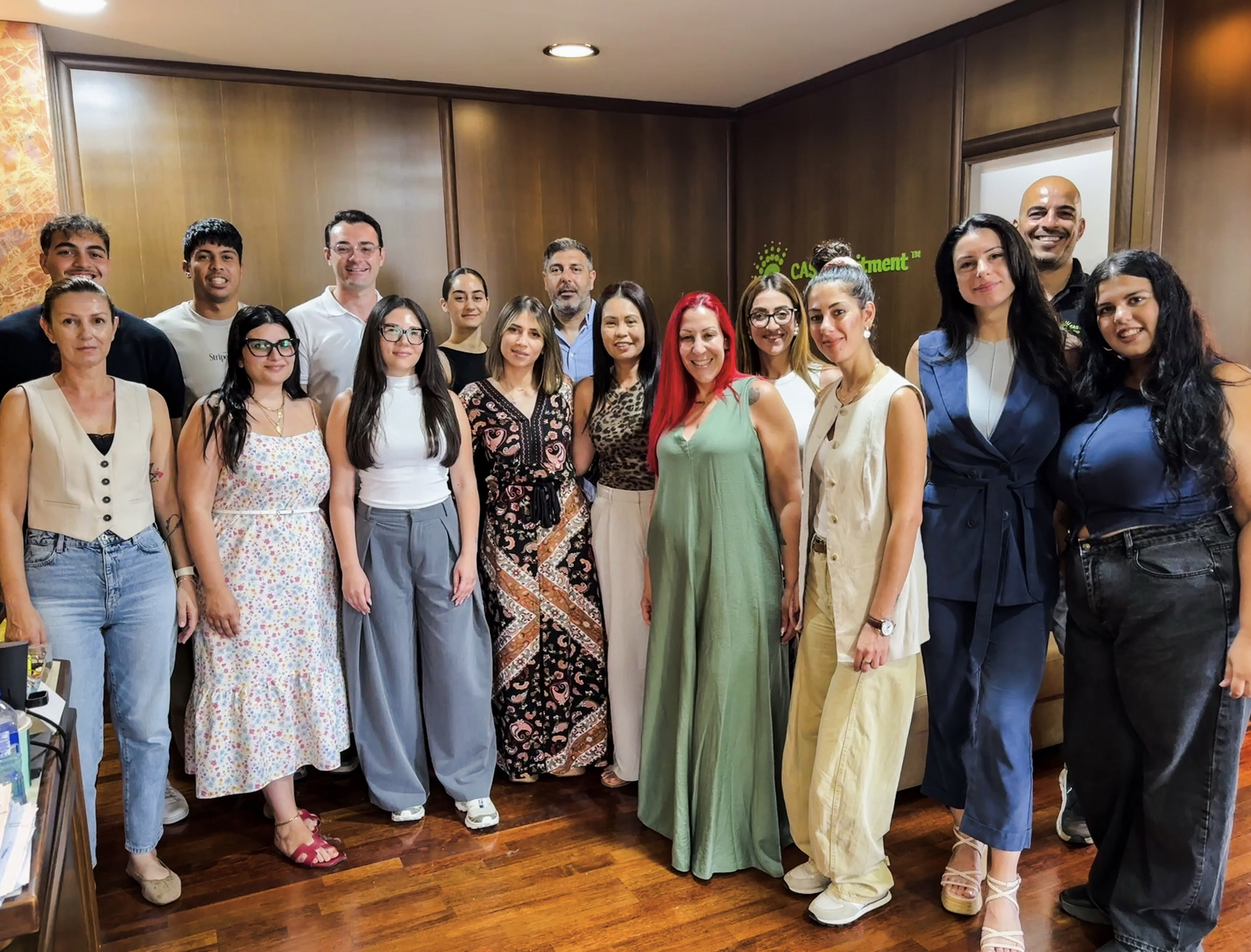
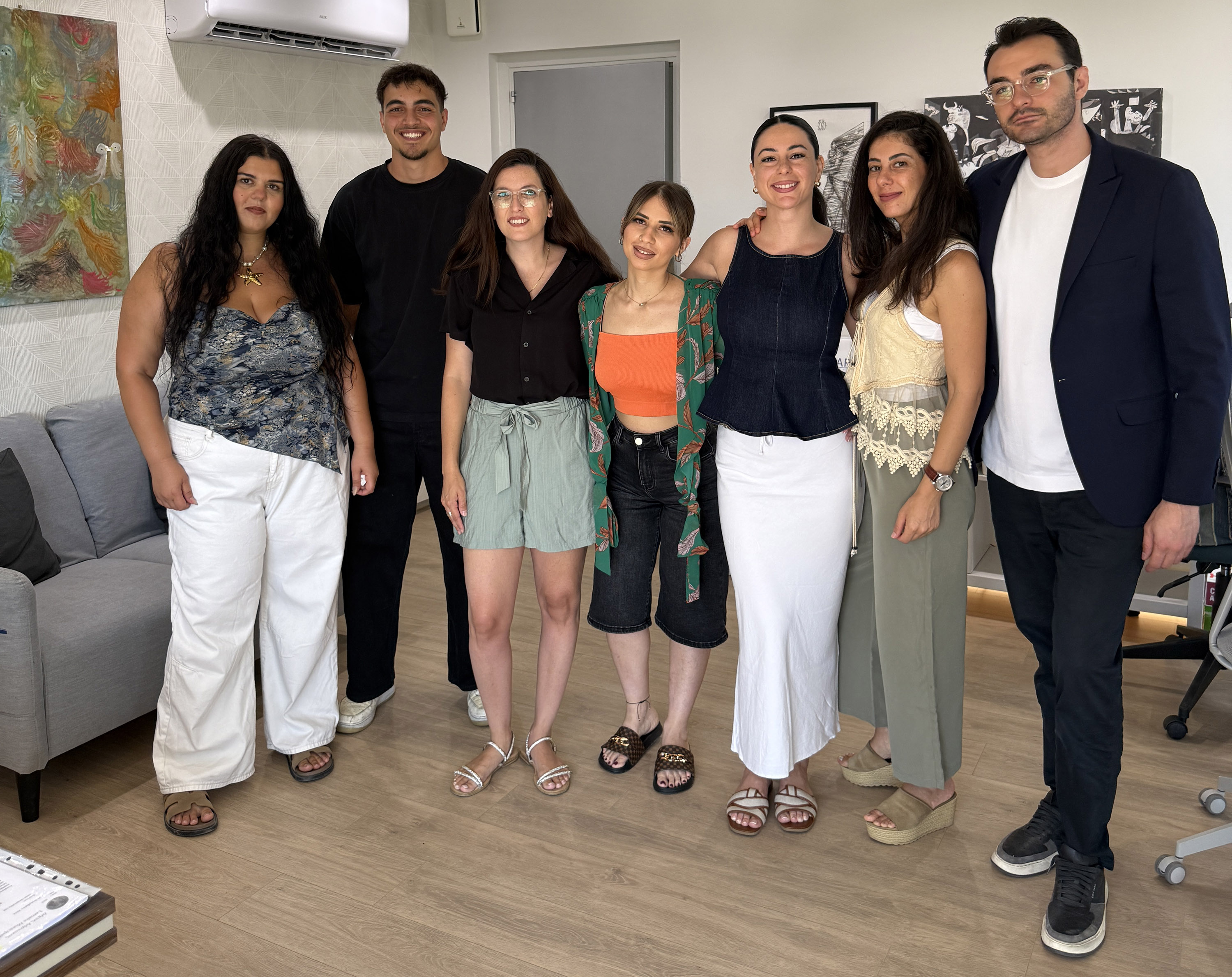
Today, DART Recruitment operates nationwide across Cyprus, with its base in Larnaca and a team of 10 professionals working across recruitment, funding consulting, marketing and the wider operational needs of the business.
Our main areas of recruitment activity include healthcare, hospitality, accounting and finance, construction and engineering, administration and corporate roles, sales and marketing, and increasingly technology. As the business has grown, we have also developed greater sector specialisation within the team, allowing us to combine broad market coverage with more focused expertise.
Our presence in Cyprus is firmly pan-Cyprian. We work with employers and candidates across the island, while our searches regularly extend internationally when a role requires access to a wider or more specialised talent pool.
A significant milestone in DART Recruitment’s development was its acquisition by CAS Recruitment Group.
CAS is an international recruitment group with more than three decades of experience in cross-border recruitment and workforce mobility. Its activities include sourcing and deploying skilled and unskilled professionals across international markets, with particular experience in sectors such as hospitality and tourism, healthcare, construction, manufacturing, agriculture and domestic services. The Group also has dedicated migration expertise to support the legal and practical processes involved when employees move internationally for work.
Today, CAS Recruitment Group brings together more than 100 professionals across its international operations, with offices in six countries.
For DART, becoming part of this wider Group means combining our strong Cyprus market knowledge and specialist recruitment expertise with broader international sourcing capabilities, infrastructure and access to talent markets beyond Cyprus – while retaining the DART Recruitment identity and the personal approach on which the business has been built.
The next stage of our development includes our expansion in Greece. DART already has recruitment activity and established relationships in the Greek market, and our team and specialist advisers are now preparing the transition towards a stronger presence there, including our new office in Thessaloniki.
For us, growth is about combining the accessibility, sector knowledge and personal service of DART Recruitment with the scale, international reach and cross-border expertise of CAS Recruitment Group.
What comes next for DART and for hiring in Cyprus?
For DART Recruitment, the next phase is not simply about becoming bigger. It is about becoming better, more specialised and more consistent in the quality of service we provide.
Our priority is to continue improving the experience of both employers and candidates through clearer communication, stronger follow-up, more targeted searches and better market insight. As we grow, maintaining a personal and responsive service remains fundamental to the way we want DART to operate.
At the same time, our ambition is to continue developing DART into a 360-degree HR and recruitment organisation, supporting businesses more broadly across recruitment, workforce development and other employment-related needs.
A key part of that growth is continued investment in our own people – their knowledge, expertise and wellbeing. We believe that the quality of our service is directly connected to the quality and development of our team. We will therefore continue strengthening sector specialisation and investing in continuous learning.
We are also investing further in DART’s own recruitment technology and digital infrastructure, using better systems, sourcing tools and data to improve speed, precision and efficiency. Technology should make our recruiters more effective, while allowing them to dedicate more time to the human side of recruitment.
Geographically, our next chapter includes further growth in Greece, building on the activity and relationships we already have there and supported by the wider structure of CAS Recruitment Group.
For hiring in Cyprus, we believe employers will increasingly need to compete not only on salary, but also on working conditions, flexibility, career development, company culture and the overall employee experience. Cyprus will also continue to rely on international talent for specialised and difficult-to-fill roles, making relocation and long-term retention increasingly important.
Ultimately, the direction for DART is clear: higher service quality, deeper expertise, continuous investment in our people, smarter use of technology and sustainable growth – while preserving the personal communication and human judgement that define DART Recruitment.

 Login