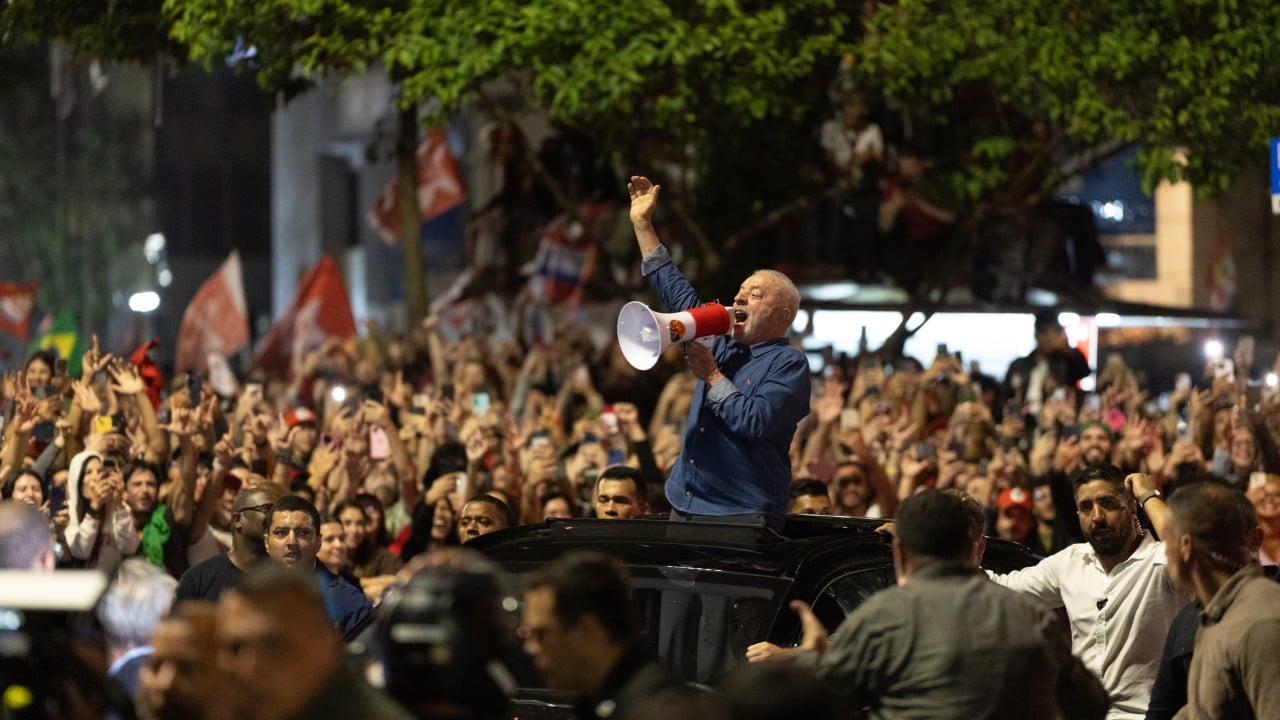
The left's celebration of Brazilian President Luiz Inácio “Lula” da Silva’s reelection victory is more reason to worry about Democrats sweeping next week's US midterms.
The prime minister’s ambitions might be ambiguous, but unlike the Conservative leader, he is following voters and the facts
British politics is still polarised around Brexit, although 10 years on from the referendum, the terms of debate are very different. Or they should be. Russia’s invasion of Ukraine in 2022 has moved discussions of European solidarity from the realm of abstraction to a matter of urgent defence partnership. Donald Trump’s presidency in the US, marked by scorn for European democracies and indulgence of Vladimir Putin, has undermined confidence that Britain can rely on any “special relationship” with Washington.
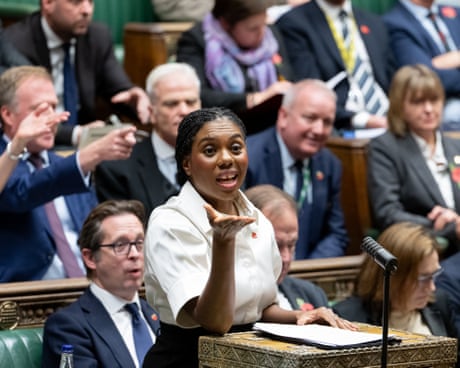
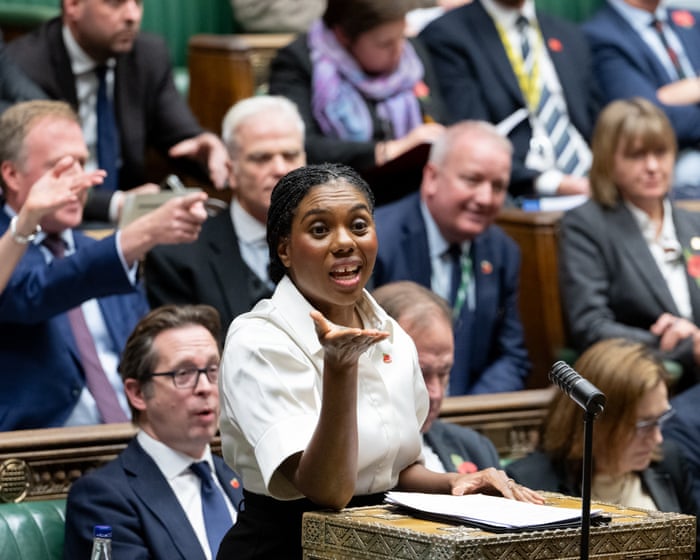
Under these circumstances, it would be absurd to deny that a reappraisal of Brexit is in order. The prime minister acknowledged this in his speech at the Labour party conference last month, calling for a national conversation about the future relationship with every option, including rejoining, on the table. The Eurosceptic opposition are having none of it. The Conservative leader, Kemi Badenoch, accuses the government of stirring division by raising the European question. She told MPs this week that Labour should thank the Tories for the Brexit deal they negotiated.
Do you have an opinion on the issues raised in this article? If you would like to submit a response of up to 300 words by email to be considered for publication in our letters section, please click here.
LAHORE is choking again, and the government’s answer is to send more machines onto its streets. On Wednesday, its air quality index reached 296, putting children, outdoor workers, and the elderly at particular risk.
Yet Punjab plans to acquire 30 more truck-mounted fog cannons. These can suppress road dust locally, but their ability to reduce the fine particles most harmful to health remains questionable. Authorities must explain what the existing fleet has achieved in terms of measurable pollution reduction before spending more public money.
Last year, disruptions to Punjab’s air monitoring network raised suspicions that pollution levels were being hidden; officials cited technical faults. Whether equipment is recording pollution or spraying water, public confidence depends on transparent data and independent scrutiny. A temporary improvement at a pollution hotspot, or near a monitoring station, cannot prove that the city’s air is becoming safer.
Monitoring should expose pollution. Punjab must publish continuous readings and independent assessments of its interventions. It should also fund research into the relative contributions of traffic, industry, construction, and crop burning, how these change with the seasons, and which measures actually reduce exposure.
That scientific effort must extend beyond the border. Punjab officials say easterly winds have been bringing polluted air from India into Lahore. But this does not absolve Pakistan of responsibility for its own emissions. The air over the two Punjabs is shared, and both populations suffer when political hostility obstructs cooperation.
Calls for joint action are not new. Cooperation was proposed with Indian Punjab in 2017 and 2024. Yet neither initiative led to sustained cooperation. Environmental diplomacy with New Delhi should be prioritised, despite wider tensions. Both sides could begin by exchanging verified air-quality and weather data, jointly studying the movement of pollutants and developing common approaches to agricultural burning and industrial emissions. Universities and scientific institutions could help build a shared evidence base.
At home, dedicated research funding, stronger monitoring, and open evaluation of anti-smog spending are essential. Enforcement must continue, but decisions should follow evidence, not the visibility of machinery on city roads. Until the air itself improves, no amount of official activity can be called progress.
THE PPP appears quite perturbed over the fact that the creation of new provinces or administrative units continues to be discussed. Speaking at an event in Karachi on Tuesday, PPP chairman Bilawal Bhutto-Zardari asserted that no one outside Sindh could decide its future. “So we should now put a full stop to this conversation as well.”
The Bhutto scion said the people of Sindh and their elected representatives had “given their verdict” on this matter, ostensibly referring to a Sindh Assembly resolution in early September.
Solely on principle, his position cannot be faulted. The Constitution does lay out a clear process for decisions of this sort, and it gives the elected assembly of each affected province a final say on the matter. Of course, there are public representatives from the same province, albeit from other parties, who disagree with the PPP chairperson’s view. However, that disagreement alone cannot be used to override a defined legal process.
Unfortunately, as recent events in KP have shown, the public’s mandate and verdicts delivered through the ballot box can be brushed aside if the centre is sufficiently motivated. For KP, its decisions are now being made not by its elected representatives, but by administrators handpicked by Islamabad.
It can be argued that this is, perhaps, not a fair comparison, but Mr Bhutto-Zardari should still realise that his position may not hold as much force as he thinks it does, and it will, therefore, not be as easy to bury this agenda as he would like. There are many voices within the federal government’s ruling coalition that are actively advocating for the division of all provinces into more ‘manageable’ units.
As was seen in KP, such voices can be amplified to find causa proxima, the trigger for an intervention, if it comes to that. Therefore, a better course of action would be to address governance grievances proactively.
The primary reason for governance failure in Pakistan is not the geographical size of the existing provinces but the reluctance of provincial capitals to empower local bodies. Few can convincingly argue that the local government system, as it exists today, is capable of positive change at the grassroots level.
At the same time, simply creating more provinces will only add heavy, expensive layers of provincial bureaucracy at a time when Pakistan can ill afford them. There are also steep social costs to consider, as pushing forward without public validation could trigger ethnic strife.
Therefore, empowered local bodies remain the best answer to all those issues which seem to warrant a fracturing of the provinces in the eyes of those demanding an administrative restructuring. The decrepit LG system needs to be revitalised, with resources invested in it judiciously. Doing so can improve service delivery at the neighbourhood level in a meaningful way.
Dolores Huerta, who died Wednesday at the age of 96, will always be remembered as a towering figure in the history of the American labor movement. But she will also be remembered for exposing the abusive behavior of Cesar Chavez.
Brazil has given Luiz Inacio Lula da Silva a fourth, non-consecutive term, a feat without precedent in its democratic history. Lula came back from a first-round defeat to win 51.8 per cent of the run-off vote against Flavio Bolsonaro, son of the jailed former president.
Yet the victory leaves Lula little room to manoeuvre. Opposition parties may yet control both chambers of Congress. Nearly half of Brazilians say the economy has worsened over the past year. Last year Washington threatened...
Un AVE chocó ayer cerca de Urda (Toledo) con un convoy de Iryo que estaba detenido en la vía. Cayeron varios vagones por un terraplén. En ambos trenes viajaban más de 540 personas. El balance de la tragedia era ayer de 68 muertos y más de medio centenar de hospitalizados. Según las primeras informaciones sobre las causas, dadas por el ministro Óscar Puente, falló en un tramo de vías un sistema automático de señalización de seguridad y varios trenes quedaron parados; desde el centro de control, un operario dijo al AVE que reprendiera la marcha normalmente, cuando no debía ser así, y unos kilómetros más adelante el tren embistió por detrás a un Iryio que aún seguía parado en la vía.

 Login