❌

Reading view

USAF F-16s Back On Alert Duty In Aleutian Islands For First Time In Decades

In a sign of the times, for the first time in many years, U.S. Air Force fighters have returned to an air defense alert posture at Eareckson Air Station in Alaska’s remote Aleutian Islands. This represents a notable development in efforts to strengthen NORAD’s ability to defend North America’s northern and Pacific approaches from a key strategic stronghold on Russia’s back doorstep. The deployment culminated in a multinational air defense mission involving U.S. and Canadian fighters operating across thousands of miles, reflecting a growing focus on the increasingly strategic Arctic and North Pacific regions.
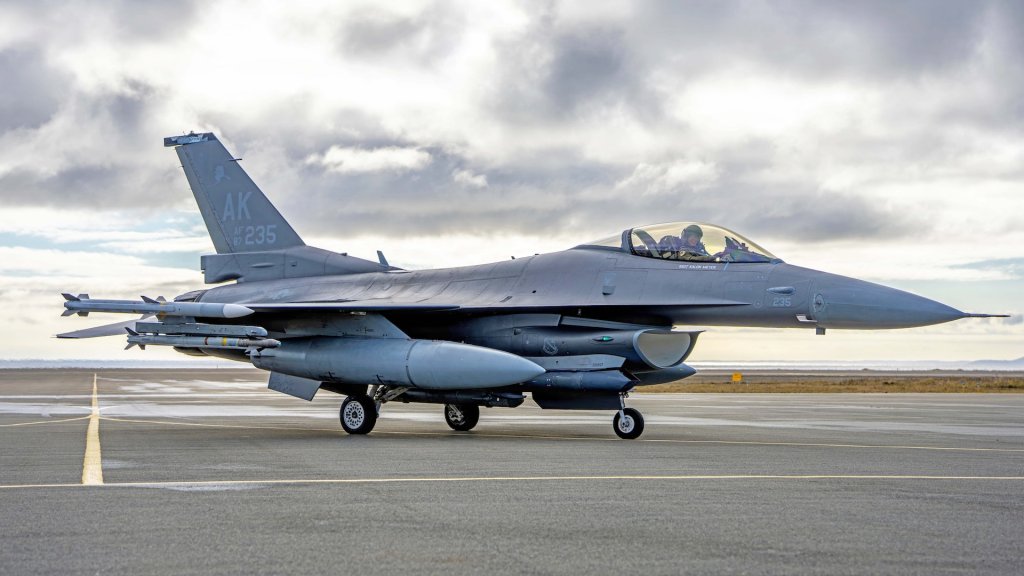
A U.S. Air Force F-16 Fighting Falcon taxis at Eareckson Air Station, Alaska, during Operation NOBLE DEFENDER, Oct. 18, 2026. Operation NOBLE DEFENDER is a recurring NORAD air defense operation that demonstrates the command’s ability to defend the United States and Canada against threats from every approach.
A fully armed U.S. Air Force F-16 taxis at Eareckson Air Station, Alaska, during Operation Noble Defender, Oct. 18, 2026. Noble Defender is a recurring NORAD air defense operation that demonstrates the command’s ability to defend the United States and Canada against threats from every approach. U.S. Air Force photo by Airman 1st Class Frank Houseton

Fighter operations at Eareckson date back to the Cold War, when F-4s and F-15s deployed to the island to support air defense missions against Soviet aircraft. The base’s routine fighter mission ended in the early 1990s, making the October 2026 deployment a notable return to an alert posture at one of America’s westernmost military outposts. In the interim, we have seen fighters, including F-16s, return to Eareckson, but not in the context of air defense alert missions.

Packing live air-to-air missiles, the F-16s were deployed to Eareckson, on Shemya Island, from October 18 through 26, maintaining an alert posture before launching on October 25 as part of a homeland defense mission.
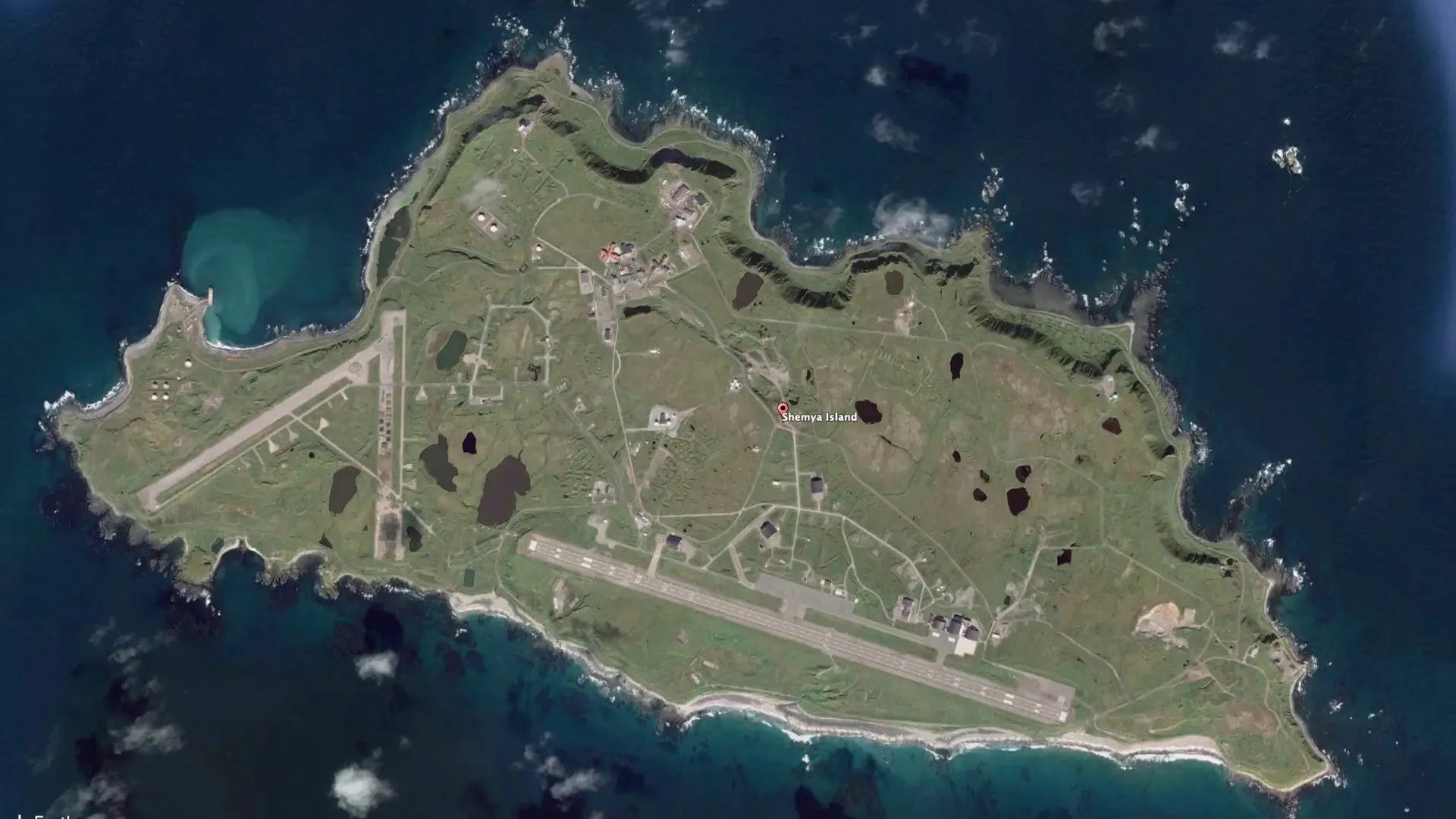
A satellite image of Shemya Island. Eareckson Air Station, with its lengthy runway, is seen along the southern edge. Google Earth

The latest mission began under Operation Noble Defender before transitioning into Operation Noble Eagle in support of northern sovereignty operations. It brought together F-16s operating from Eareckson, F-35As and additional F-16s from Eielson Air Force Base, and Royal Canadian Air Force CF-18 Hornets deployed from Cold Lake, Alberta.

The F-16s operating from Eielson were assigned to the 18th Fighter Interceptor Squadron (FIS), a particularly unusual unit with roots as the 18th Aggressor Squadron. The unit was redesignated in 2024, shifting its primary combat focus from adversary training toward aerospace control and homeland defense in Alaska. Its Block 30 F-16s bring a combination of air defense capabilities and experience in replicating adversary tactics, making them a very specialized outfit, as you can read about here.

From their distributed locations, the Eareckson-based F-16s provided coverage in the southern portion of the theater, while fighters from Eielson operated in the northwest. Canadian CF-18s covered the northern approaches.
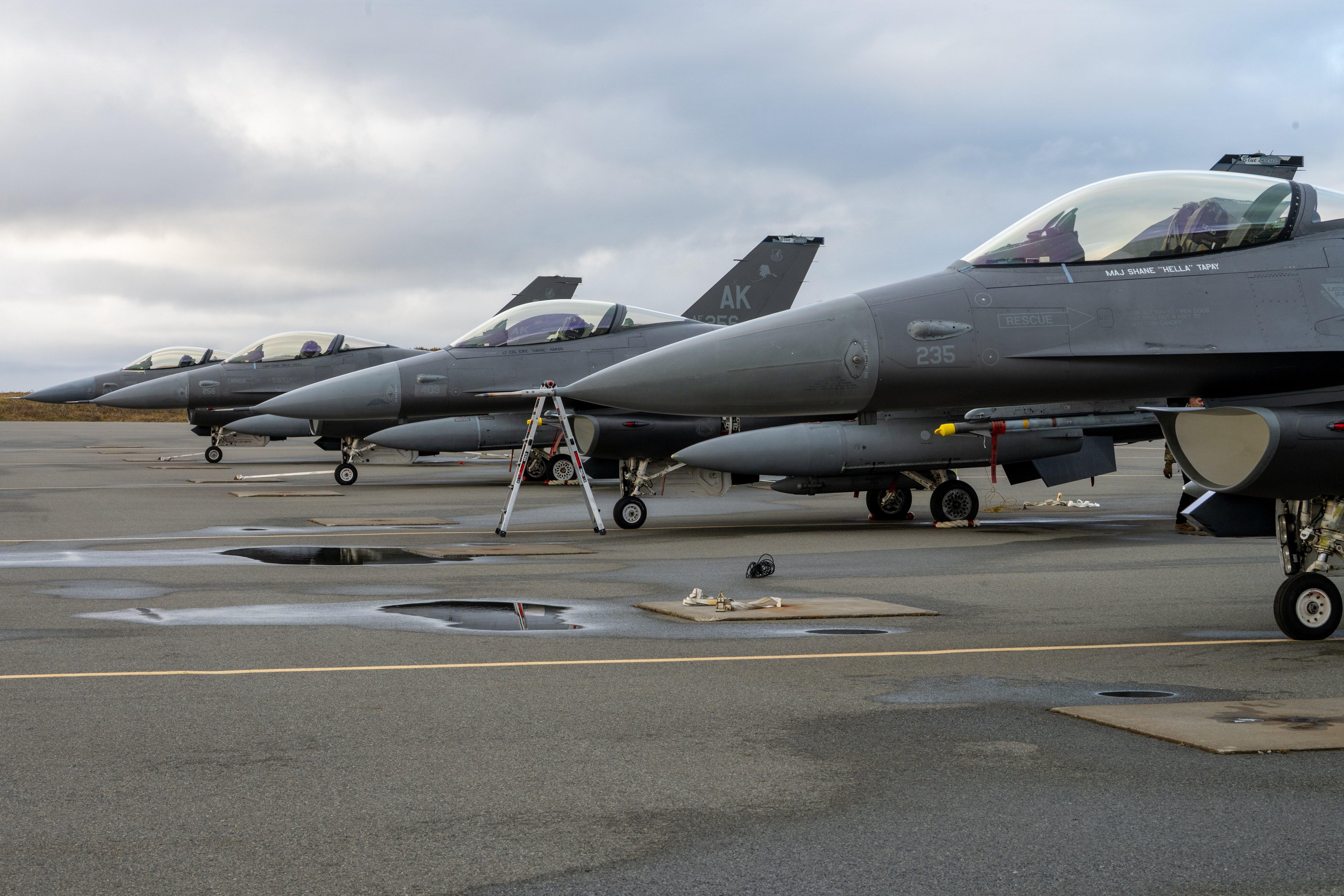
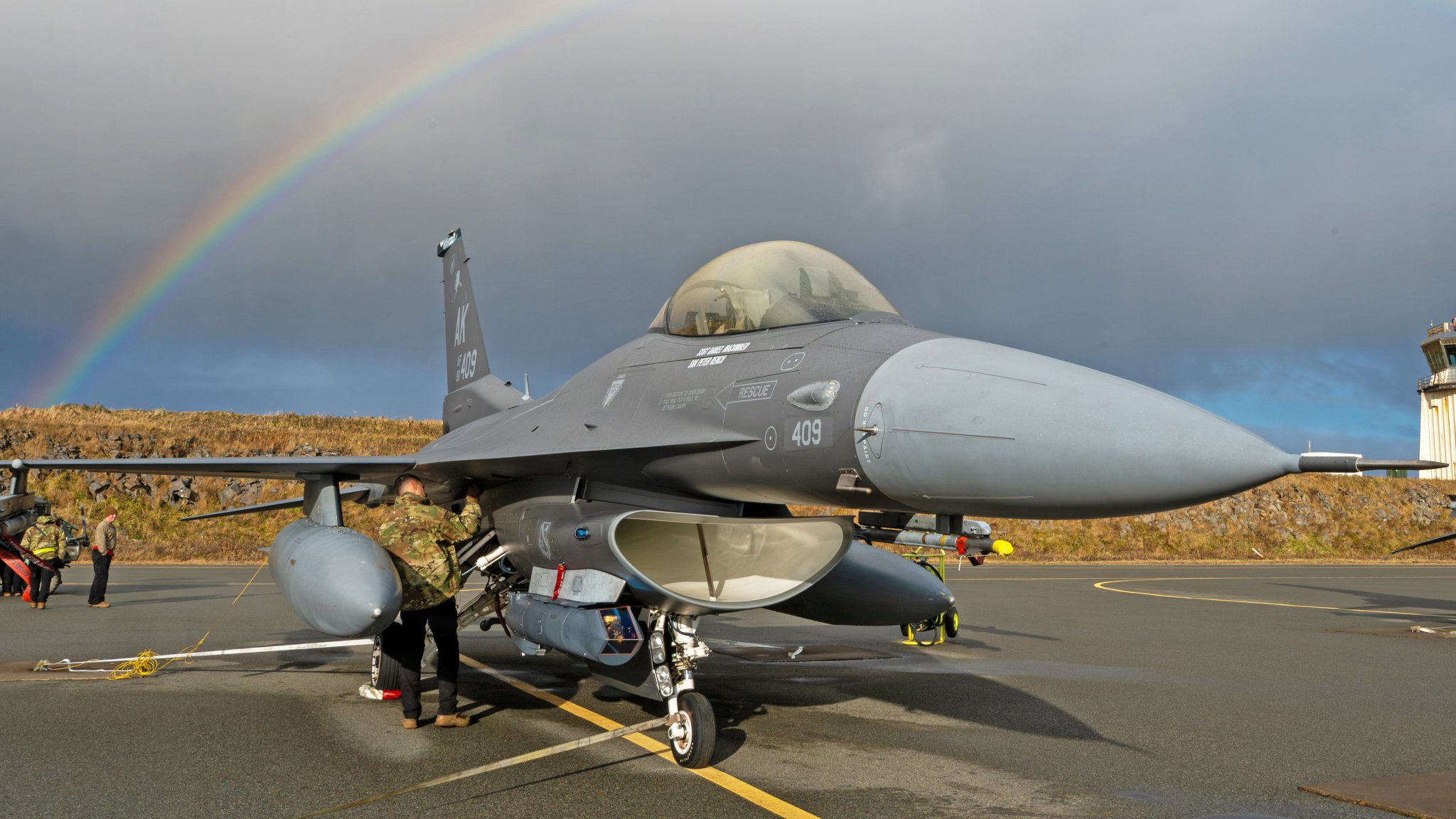
U.S. Air Force F-16 Fighting Falcons assigned to Eielson Air Force Base sit parked on the flight line at Eareckson Air Station, Alaska, during Operation NOBLE DEFENDER on Oct. 19, 2026. Staging tactical fighter aircraft at forward operating locations enhances homeland defense readiness and demonstrates rapid-deployment capabilities across remote arctic regions. (U.S. Air Force photo by Airman 1st Class Frank Houseton)
U.S. Air Force F-16s assigned to Eielson Air Force Base sit parked on the flight line at Eareckson Air Station, Alaska, on Oct. 19, 2026. U.S. Air Force photo by Airman 1st Class Frank Houseton

An E-3 Sentry Airborne Warning and Control System (AWACS) aircraft from Joint Base Elmendorf-Richardson provided airborne command and control, supported by multiple U.S. KC-135 tankers and a Canadian CC-150 Polaris. An HC-130 Combat King II also participated, providing contingency search and rescue and personnel recovery coverage.
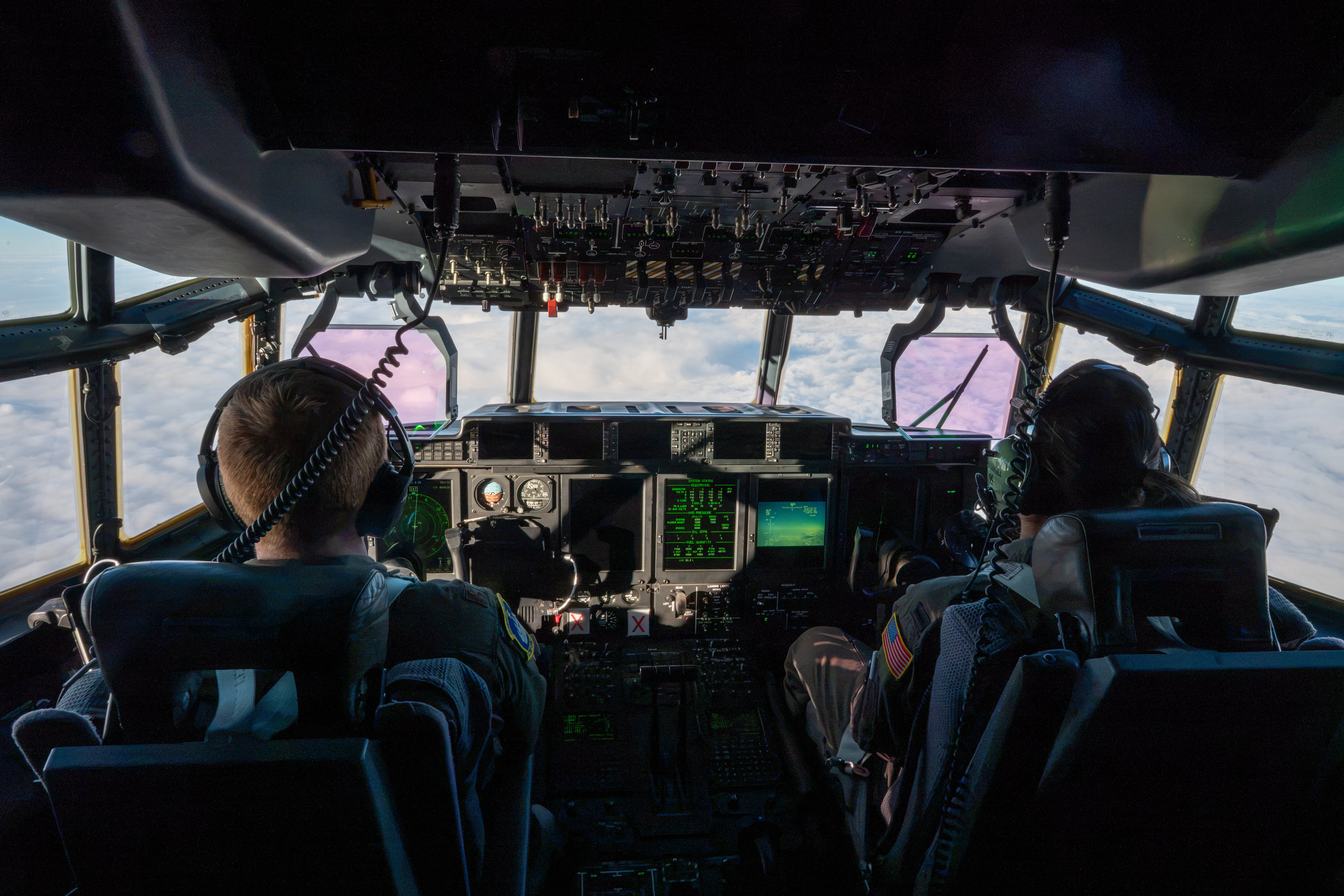
U.S. Air National Guard Maj. Benjamin Van Alstine and 1st Lt. Jasmine Massingill, HC-130J Combat King II pilots assigned to the 211th Rescue Squadron, pilot an aircraft en route from Joint Base Elmendorf-Richardson to Eareckson Air Station, Alaska, during Operation NOBLE DEFENDER on Oct. 19, 2026. Operation NOBLE DEFENDER is a recurring NORAD air defense operation that demonstrates the command’s ability to defend the United States and Canada against threats from every approach. (U.S. Air Force photo by Airman 1st Class Frank Houseton)
HC-130J Combat King II pilots assigned to the 211th Rescue Squadron pilot an aircraft en route from Joint Base Elmendorf-Richardson to Eareckson Air Station, Alaska, on Oct. 19, 2026. U.S. Air Force photo by Airman 1st Class Frank Houseton
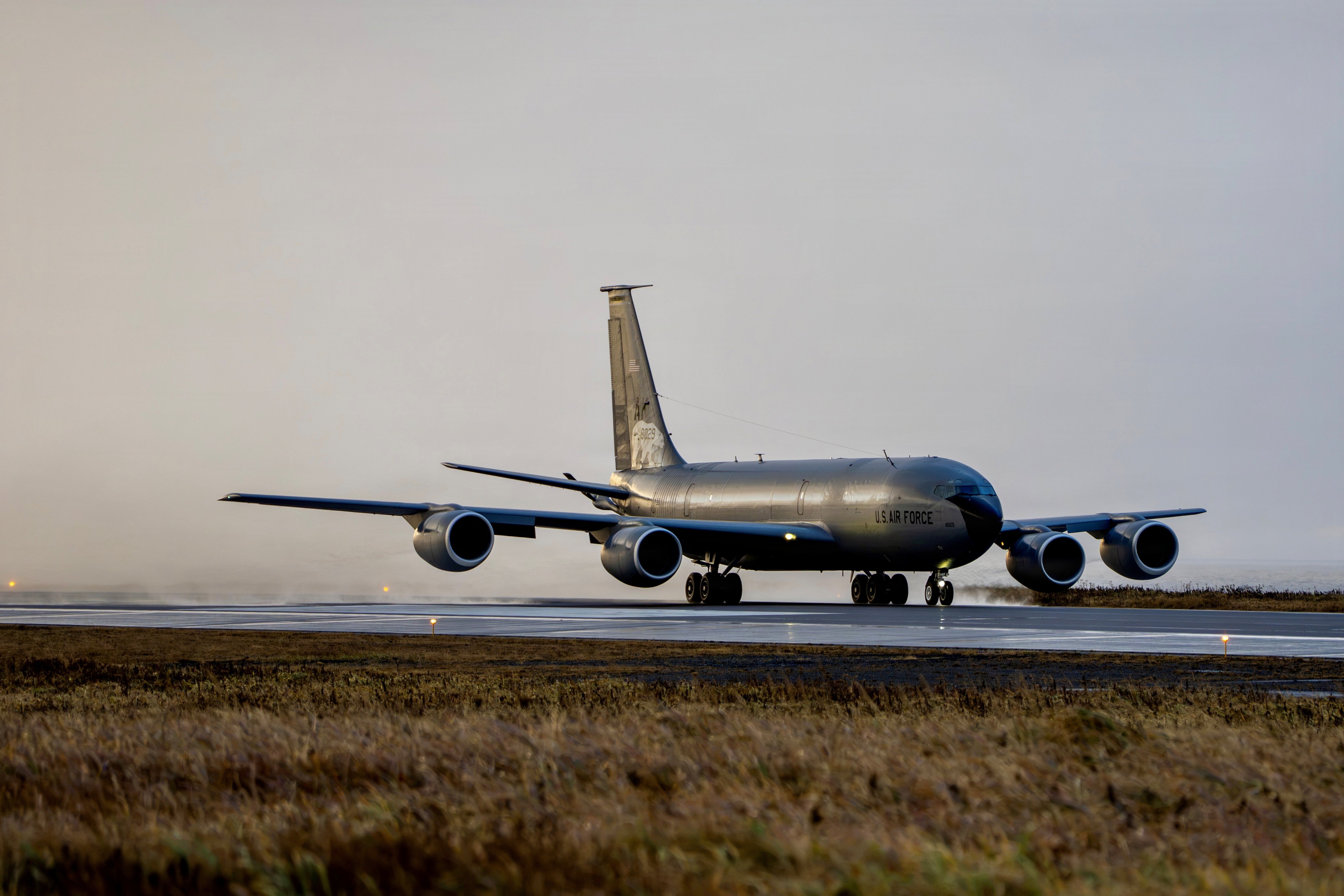
A U.S. Air Force KC-135 Stratotanker lands at Eareckson Air Station, Alaska, during Operation NOBLE DEFENDER, Oct. 18, 2026. Operation NOBLE DEFENDER is a recurring NORAD air defense operation that demonstrates the command’s ability to defend the United States and Canada against threats from every approach. (U.S. Air Force Photo by Maj. David Brown)
A U.S. Air Force KC-135 lands at Eareckson Air Station, Alaska, on Oct. 18, 2026. U.S. Air Force Photo by Maj. David Brown

The distances involved illustrate the scale of the operation. Eareckson is approximately 1,600 miles from Eielson and 2,600 miles from Cold Lake, requiring substantial coordination and aerial refueling support to bring the different elements together.
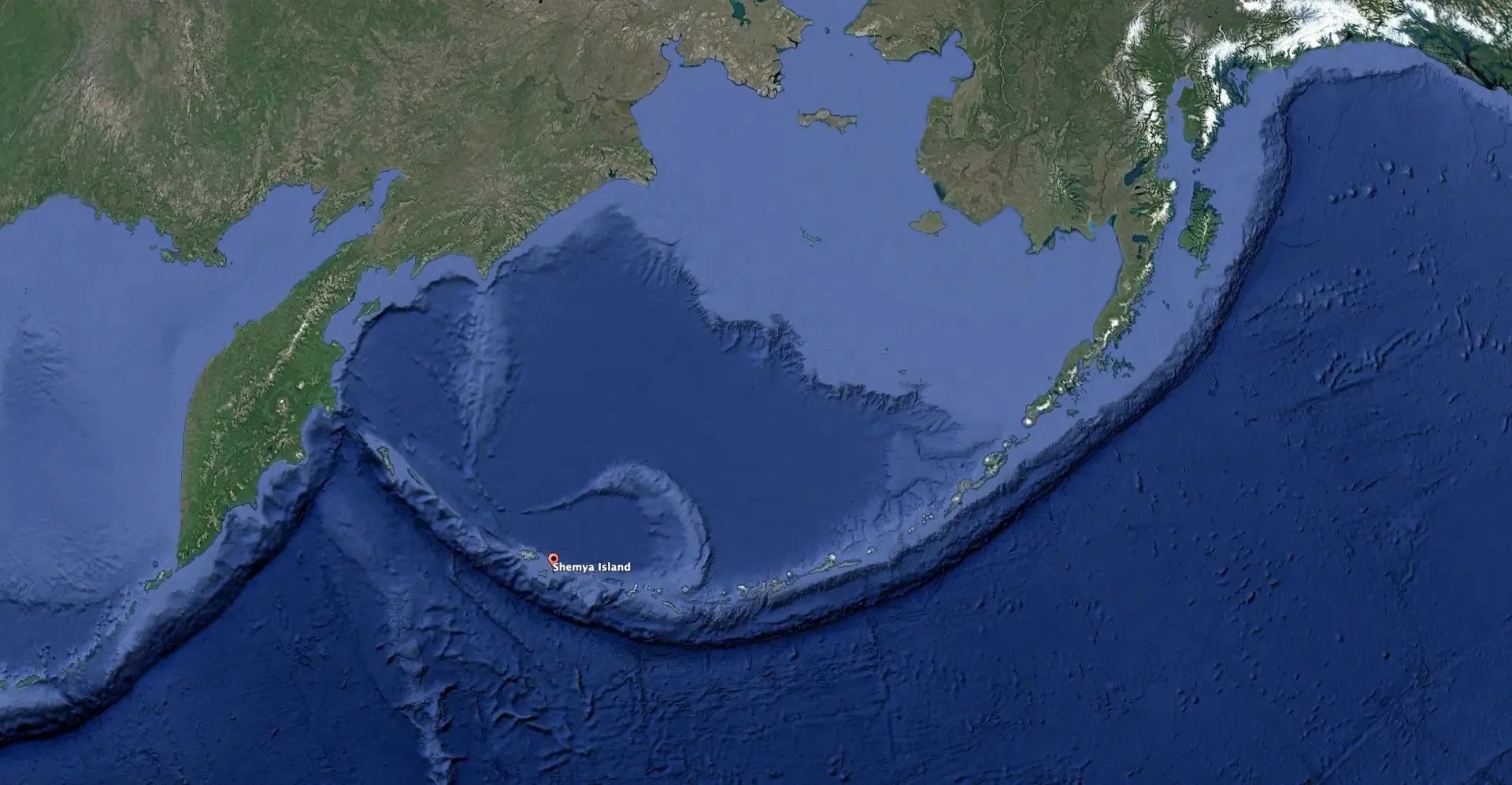
A map showing just how remote Shemya Island is, as well as its relative position to mainland Alaska to the east and Russia’s Kamchatka Peninsula to the west. Google Earth

Strategic Significance

Located at the western end of the Aleutian chain, Shemya occupies a strategically important position in the North Pacific, facing the approaches from Russia’s Far East and the wider Pacific region and acting as a gateway to the Arctic. While fighters operating from Joint Base Elmendorf-Richardson, with additional support from Eielson when needed, normally provide coverage across this vast area, Eareckson puts combat aircraft dramatically farther west. Its reactivation as a fighter operating location gives NORAD another forward option, extending the reach of its air defense network well beyond Alaska’s principal airbases.

The island’s military significance was especially pronounced during the Cold War, when it supported detachments of RC-135 surveillance aircraft, including hosting Cobra Ball missile-tracking aircraft, as you can read about here.
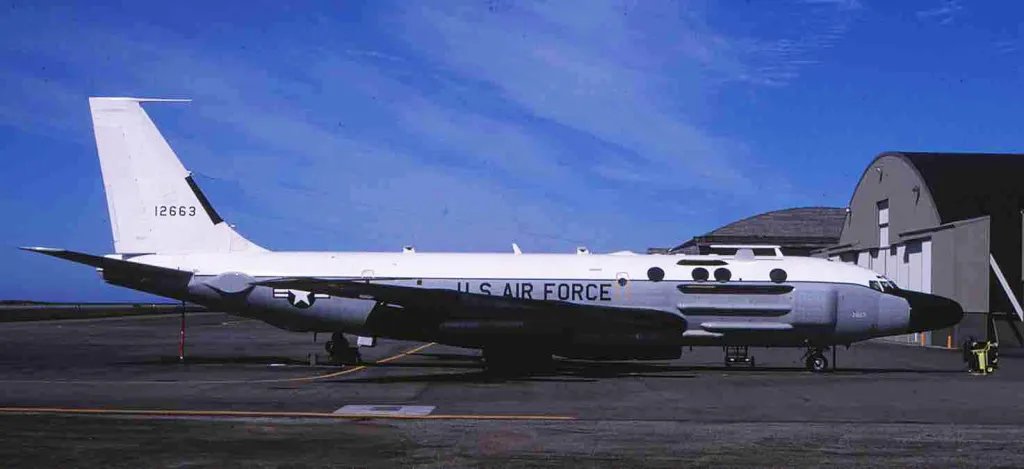
An RC-135S Cobra Ball outside a hangar at Shemya. Robert S. Hopkins III

Shemya’s potential role in a future conflict has attracted increasing attention from U.S. military planners in recent years. The island hosts the AN/FPS-108 Cobra Dane radar, a massive phased-array installation that provides critical ballistic missile warning and tracking capabilities. Its position in the western Aleutians, roughly 500 miles from Russia’s Kamchatka Peninsula and approximately 1,000 miles from mainland Alaska, gives it considerable strategic importance but also leaves it isolated and potentially vulnerable.

The growing threat posed by one-way attack drones and cruise missiles also makes protecting Cobra Dane a significant force-protection challenge. Forward-deployed fighters provide a highly adaptable, wide-area defensive layer, intercepting aerial threats before they reach the island, much like the fighter deployments to Diego Garcia in the Indian Ocean.

The vulnerability of Shemya and Cobra Dane has been the focus of several military exercises. In 2021, Green Berets assigned to Special Operations Command North participated in a NORAD exercise that involved deploying to Shemya and preparing to defend the Cobra Dane installation against potential attack. The troops arrived by sea and brought Stinger man-portable air defense systems, highlighting concerns about protecting the island against both conventional and unconventional threats.
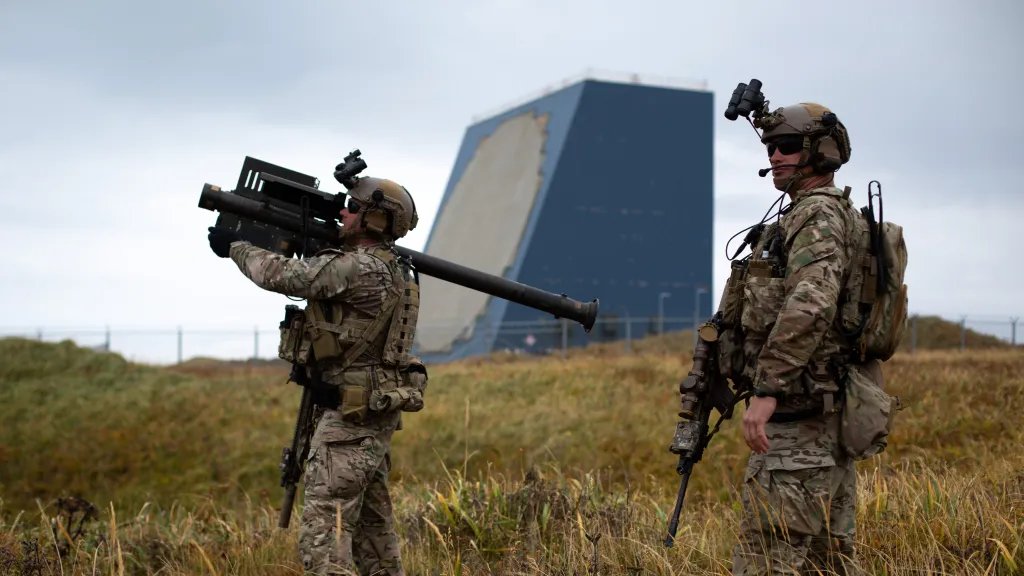
Special operators assigned to Special Operations Command North (SOCNORTH), including Army Green Berets from the 10th Special Forces Group, practice the defense of the AN/FPS-108 Cobra Dane early warning and tracking radar at Shemya. U.S. Air Force

In August 2023, elements of the Army’s 160th Special Operations Aviation Regiment, better known as the Night Stalkers, returned to the island as part of Operation Polar Dagger, as TWZ reported at the time. At least two MH-60M Black Hawk helicopters and associated personnel and equipment deployed to Eareckson, with a C-17 transporting personnel and materiel. The exercise explored the ability to rapidly project special operations capabilities into the remote region, protect critical infrastructure, and improve operational awareness in the Arctic and sub-Arctic.
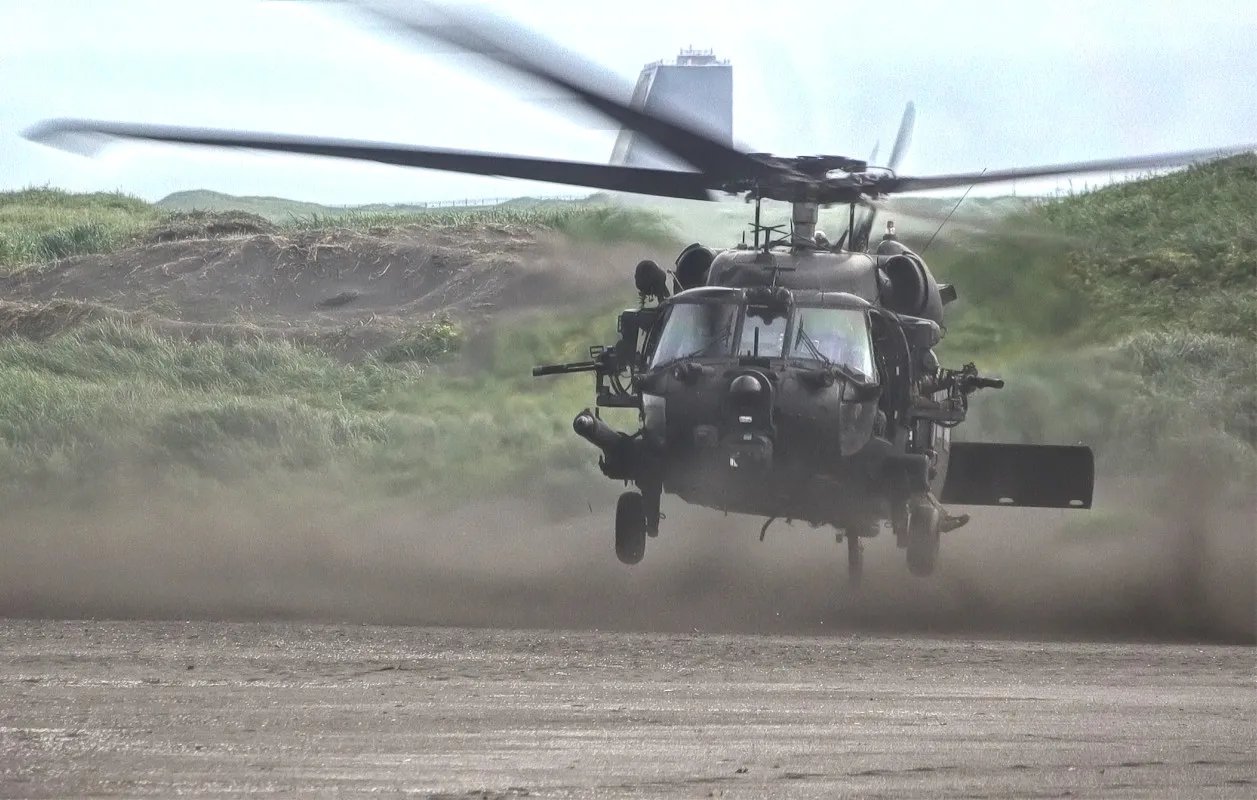
The Cobra Dane radar installation is seen in the background of this picture of an MH-60M helicopter from the 160th SOAR on Shemya Island during the Polar Dagger exercise in 2023. U.S. Army

Taken together, these developments point to growing interest in Shemya as a potential forward operating location in a wider North Pacific defense network. Its radar, long runway, and remote position offer considerable advantages, but its isolation also presents significant logistical and force-protection challenges.

The return of F-16s to an air defense alert posture at Eareckson adds another dimension to the installation. With its ability to host forward-deployed fighters, the base can maintain an alert posture and generate homeland defense sorties. Its location would be particularly useful for responding to activity approaching Alaska from the western Pacific and the Bering Sea. At the same time, having fighters at Eareckson provides an organic means of defending Shemya’s critical surveillance assets.
A U.S. Air Force F-16 Fighting Falcon taxis at Eareckson Air Station, Alaska, during Operation NOBLE DEFENDER, Oct. 18, 2026. Through operations from dispersed locations, NOBLE DEFENDER strengthens the ability to rapidly position and sustain forces, integrate defensive capabilities, and deter potential threats to North America. (U.S. Air Force Photo by Maj. David Brown)
A U.S. Air Force F-16 taxis at Eareckson Air Station, Alaska, on Oct. 18, 2026. U.S. Air Force Photo by Maj. David Brown

There are other potential benefits in dispersing fighter operations away from Alaska’s principal airbases. In a major conflict, those installations could be subject to missile strikes and other attacks, making alternative operating locations valuable. Eareckson’s long runway, ramp space, and arresting equipment provide a foundation for such operations, although sustaining fighters there over an extended period would require significant fuel, munitions, maintenance, and force-protection support.

Outside of Eareckson, Alaska has a network of remote airfields that can support dispersed fighter operations during contingencies. These include King Salmon Airport on the Alaska Peninsula, which hosted four 18th FIS F-16s during an Agile Combat Employment deployment in September last year.

All this comes as concerns grow about the level of protection afforded to Air Force airbases. There are growing calls for the U.S. military to invest in new hardened shelters, and the lack of physical hardening of bases has been hammered home by the experiences from the war with Iran, which have underscored the huge risks posed to aircraft sat out in the open on flightlines.
A U.S. Air Force KC-135 Stratotanker lands at Eareckson Air Station, Alaska, during Operation NOBLE DEFENDER, Oct. 18, 2026. Through operations from dispersed locations, NOBLE DEFENDER strengthens the ability to rapidly position and sustain forces, integrate defensive capabilities, and deter potential threats to North America. (U.S. Air Force Photo by Maj. David Brown)
A U.S. Air Force KC-135 lands at Eareckson Air Station, Alaska, on Oct. 18, 2026. U.S. Air Force Photo by Maj. David Brown

The October deployment does not mean Eareckson is being transformed into a permanently staffed fighter base. It does, however, demonstrate that NORAD can use this isolated installation as another node in its air defense network, extending the geographic reach and flexibility of its operations across the North Pacific.
A U.S. Air Force maintainer performs preflight inspections on an F-16 Fighting Falcon at Eareckson Air Station, Alaska, during Operation NOBLE DEFENDER, Oct. 18, 2026. Through operations from dispersed locations, NOBLE DEFENDER strengthens the ability to rapidly position and sustain forces, integrate defensive capabilities, and deter potential threats to North America. (U.S. Air Force Photo by Maj. David Brown)
A U.S. Air Force maintainer performs preflight inspections on an F-16 at Eareckson Air Station, Alaska, on Oct. 18, 2026. U.S. Air Force Photo by Maj. David Brown

For NORAD, having additional locations from which it can generate air defense sorties is a major plus. The combination of forward-based fighters, airborne command and control, aerial refueling, and Canadian participation demonstrates another way of distributing combat power across a broad geographic area rather than depending exclusively on a handful of major bases.

More broadly, the Aleutians are assuming renewed strategic importance as the westernmost part of U.S. territory, positioned at the intersection of the North Pacific and Arctic theaters. As military competition with both Russia and China intensifies, the island chain offers a valuable forward position for surveillance, air defense, and power projection, as well as a means of gaining time and distance against potential threats approaching North America or operating across the Pacific. The return of F-16 alert operations to Eareckson adds another piece to that defensive architecture, underscoring the continued military relevance of this remote island chain.

Contact the author: thomas@thewarzone.com

The post USAF F-16s Back On Alert Duty In Aleutian Islands For First Time In Decades appeared first on TWZ.
  •  

Japan To Assemble AMRAAM Missiles As U.S. Moves To Dramatically Boost AIM-120 Production

The United States and Japan will establish a facility in Japan for the final assembly and inspection of AIM-120 Advanced Medium-Range Air-to-Air Missiles (AMRAAMs), advancing a bilateral effort to expand munitions production as demand rises across the U.S. and allied military forces.

Japanese Defense Minister Shinjiro Koizumi announced the agreement following discussions with U.S. Secretary of War Pete Hegseth on the sidelines of the ASEAN Defense Ministers’ Meeting-Plus in Cebu, Philippines. The facility will operate under the broader Operation Supercharge initiative, which seeks to accelerate cooperation between the two countries on defense equipment and technology.

Secretary of War Pete Hegseth shakes hands with Japanese Minister of Defense Shinjirō Koizumi at the the 13th ASEAN Defence Ministers’ Meeting-Plus in Cebu, Philippines, Oct. 28, 2026. ADMM+ is an annual high-level ASEAN engagement that promotes regional peace and stability through dialogue and defense cooperation. (DOW photo by U.S. Air Force Master Sgt. Brycen Guerrero)
Secretary of War Pete Hegseth shakes hands with Japanese Minister of Defense Shinjirō Koizumi at the 13th ASEAN Defense Ministers’ Meeting-Plus in Cebu, Philippines, on October 28, 2026. DOW photo by U.S. Air Force Master Sgt. Brycen Guerrero

“We finally reached an agreement on the establishment of a final assembly and inspection facility in Japan for the AMRAAM air-to-air missile, which is essential for the F-35,” Koizumi said, according to a translation of his remarks published by Air & Space Forces Magazine.

Koizumi described the agreement as a means of ensuring access to equipment required by both countries while strengthening Japan’s domestic defense industrial base. At this point, the facility’s location, construction timeline, anticipated production capacity, and Japanese industrial partner are yet to be disclosed.

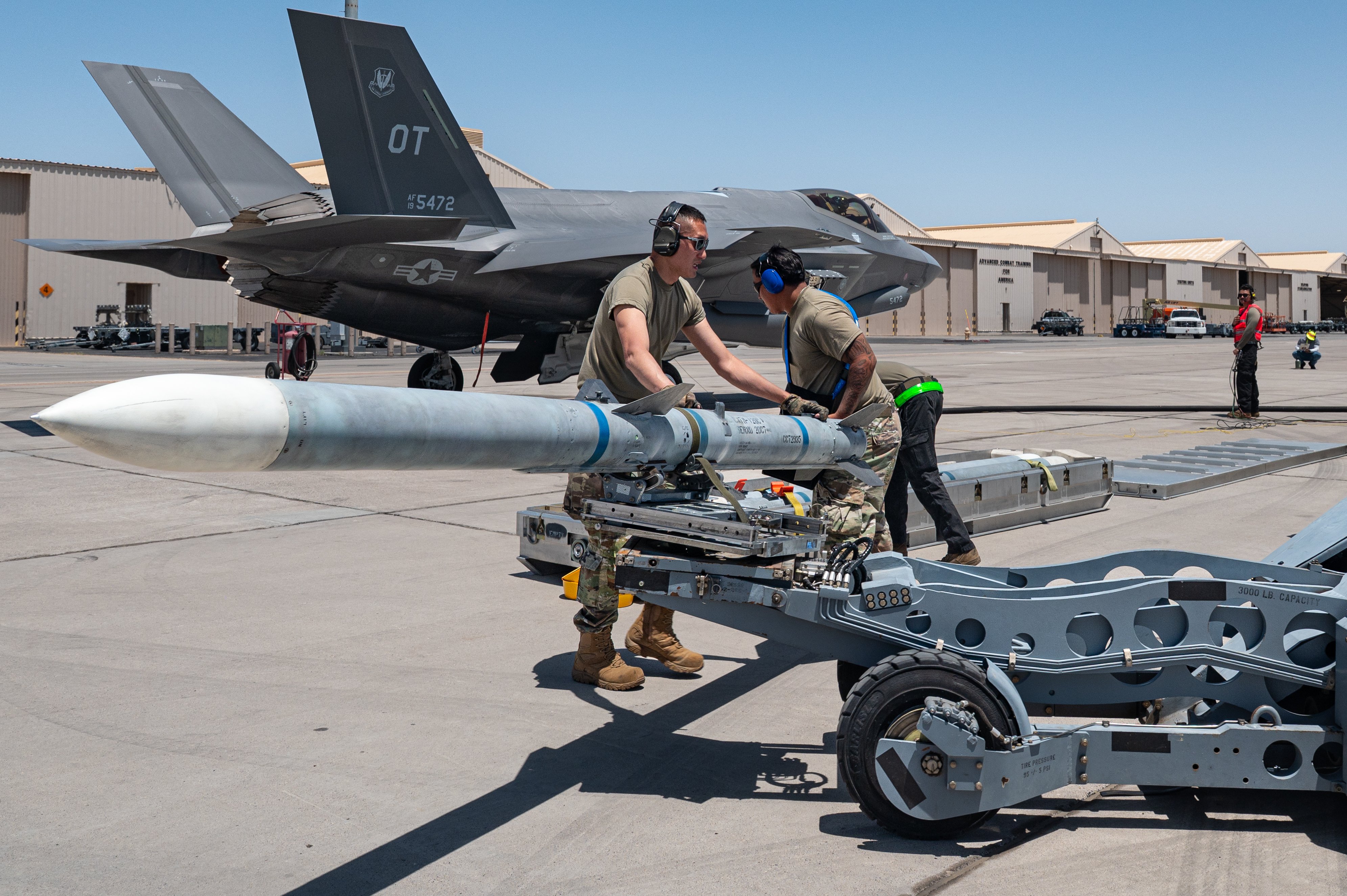
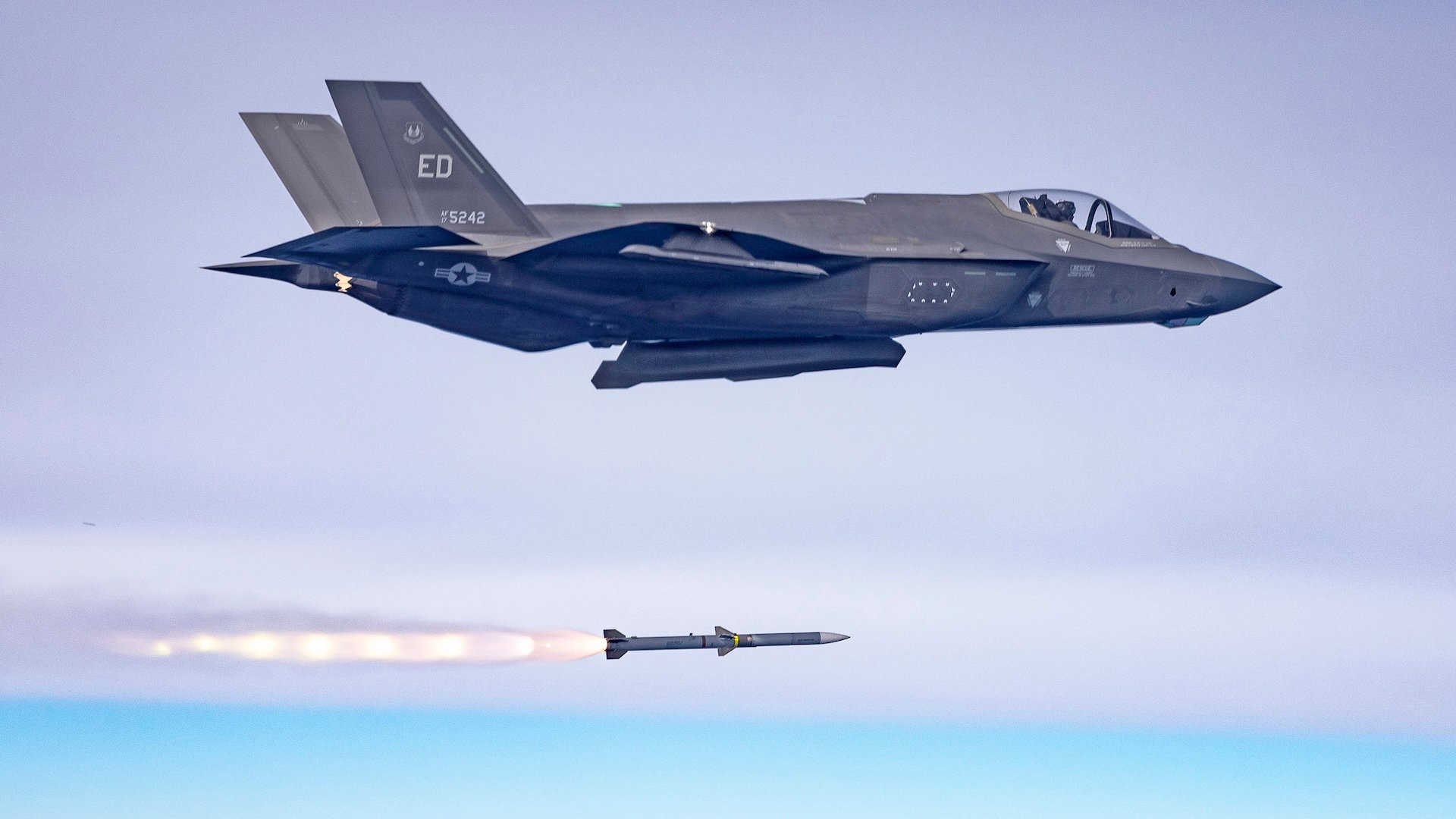
U.S. Air Force Staff Sgt. Andrew Wilson, left, a weapons load crew chief, and Senior Airman Anthony Silva, a weapons load crew member, assigned to the 57th Aircraft Maintenance Squadron’s Bolt Aircraft Maintenance Unit, secure a munition onto a bomb lift truck during a hot integrated combat turn (ICT) exercise at Nellis Air Force Base, Nevada, June 23, 2025. During hot ICTs, four AIM-120 Advanced Medium-Range Air-to-Air Missiles are loaded onto an F-35 Lightning II while the aircraft is simultaneously refueled with its engines running. (U.S. Air Force photo by William R. Lewis)
U.S. Air Force weapons load crew secure an AMRAAM onto a bomb lift truck at Nellis Air Force Base, Nevada, June 23, 2025. U.S. Air Force photo by William R. Lewis

The announcement follows a September award to RTX subsidiary Raytheon for a five-year AMRAAM production contract, with options for two additional years, valued at up to $20.7 billion. Under a framework agreement announced in February, Raytheon is working toward annual production of at least 1,900 missiles. That figure represents the overall production target, of which the future Japanese facility will account for a share. AIM-120s can cost over $1 million per unit, depending on variant.

The new arrangement also comes after more than two years of discussions over Japanese participation in AMRAAM manufacturing. The initiative emerged in 2024, followed by a feasibility study supported by Mitsubishi Electric and Raytheon. By April 2026, discussions had expanded to include possible Japanese production of circuit card assemblies in addition to final assembly and inspection.

New Production Node For A High-Demand Missile

The AIM-120 beyond-visual-range air-to-air missile is used by a wide range of U.S. and allied combat aircraft, including the F-35. Examples of the stealth fighter are operated by U.S. Air Force and Marine Corps units stationed in Japan, as well as by the Japan Air Self-Defense Force (JASDF). Both the U.S. Air Force and JASDF also operate F-15 variants in Japan, for which AMRAAM is similarly a primary weapon.

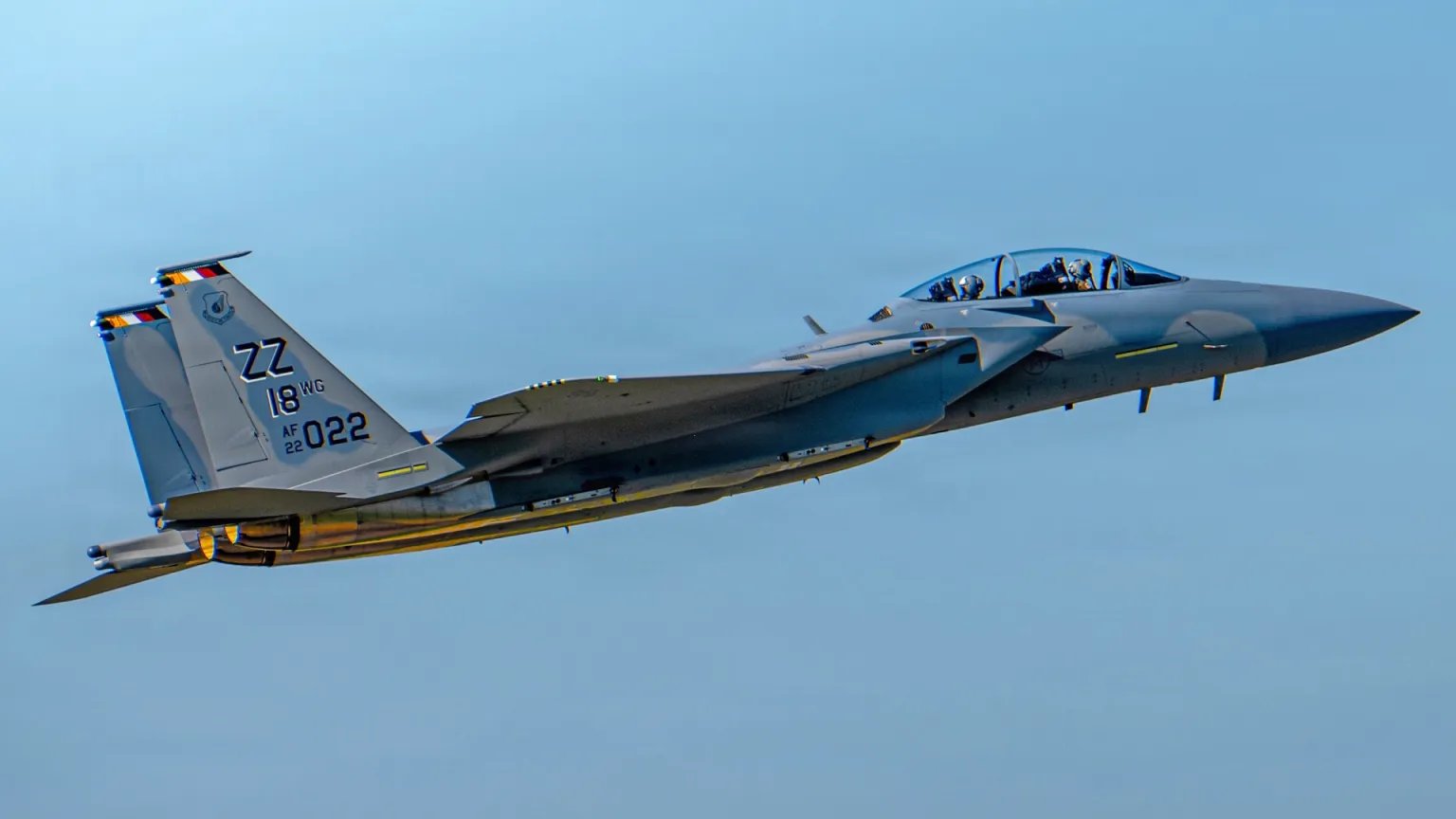
A first F-15EX Eagle II designated for Kadena Air Base, Japan, takes off at Boeing’s St. Louis facility. U.S. Air Force photo by Senior Airman Melany Bermudez

AMRAAM is also employed by ground-based air-defense systems, including the National Advanced Surface-to-Air Missile System (NASAMS). This system protects the U.S. Capital Region and over a dozen countries around the globe. It has been extensively battle-proven in Ukraine over nearly three years of operations.

Raytheon says the weapon is fielded by 44 countries and operates across 14 platforms. Its continued importance to fighter operations and air defense has made expanding manufacturing capacity a priority as the United States seeks to replenish inventories and meet soaring international demand. This is in stark contrast to the situation only a few years ago, when global AMRAAM stockpiles were viewed as plentiful.

Since then, AMRAAMs have been used extensively in the U.S. and allied campaign against Houthi drones, as well as in engagements over Syria and Iraq during efforts to defend Israel against multiple Iranian attacks. Ukraine has also expended substantial numbers of these missiles to counter Russian drones and cruise missiles, employing them through NASAMS air defense systems and, more recently, its F-16 fighters. These munitions have been supplied by the United States and NATO allies.

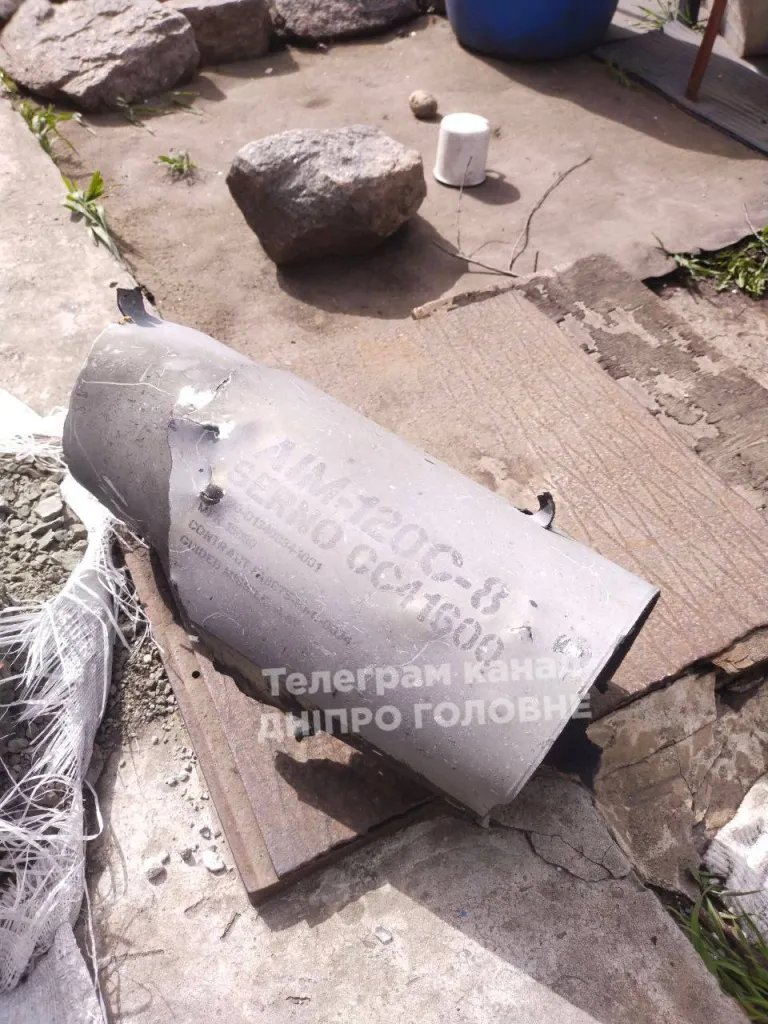
The wreckage of an AIM-120C-8 missile, apparently found in the aftermath of a Russian air attack on Dnipro in Ukraine. via Dnipro Main News/Telegram

The new U.S. production contract covers Lots 41 through 47 and includes advanced AIM-120D-3 variants featuring modernized processors and software-based electronic-warfare countermeasures.

With a scramble now on to find new ways to increase the global AMRAAM supply, RTX has said it invested in manufacturing equipment, workforce expansion, and supplier capacity to support the production increase. The company also identified new U.S. solid-rocket-motor production lines expected to come online in 2027 as part of its effort to address manufacturing bottlenecks.

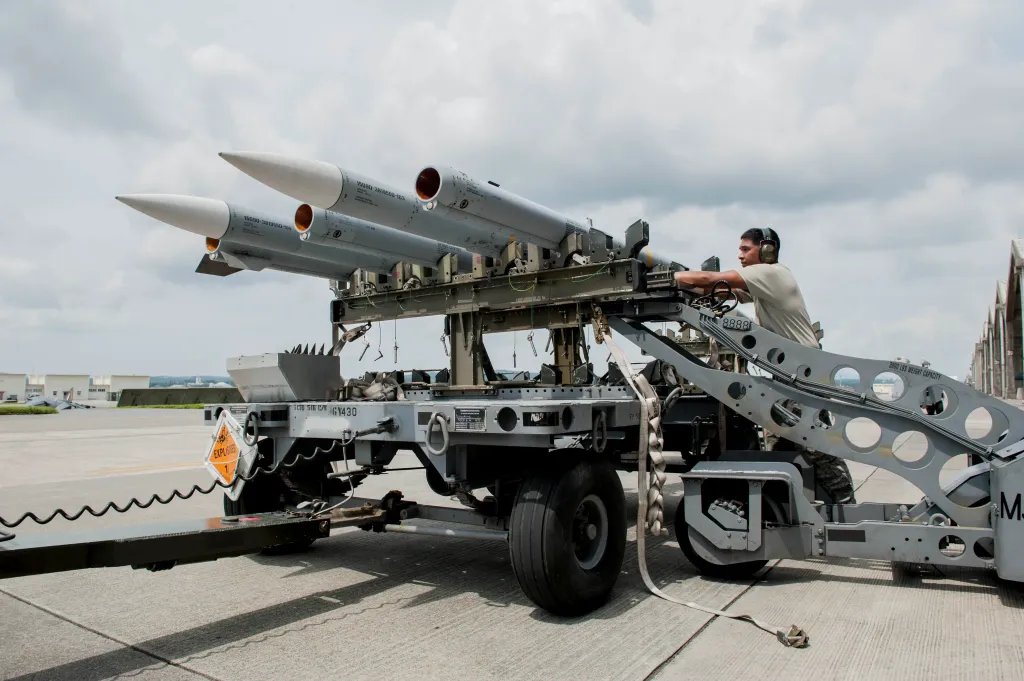
Maintainers prepare AIM-120D AMRAAMs for carriage by F-15s during a mass aircraft generation exercise at Kadena Air Base, Japan. U.S. Air Force/Senior Airman Peter Reft

The contract is intended to provide greater production stability than the shorter procurement agreements that previously characterized the program. Its multiyear structure gives Raytheon greater visibility into future demand and supports investment in manufacturing capacity and the missile’s component supply chain.

Japan’s participation could add another assembly location to an expanding industrial base. This should be made easier by the fact that AMRAAM is also less technologically sensitive now that the new AIM-260 is in the works. However, the extent to which the facility will increase total output will depend on its eventual capacity and the division of manufacturing responsibilities between Japanese and U.S. industry.

Technology Transfer And Industrial Safeguards

The agreement is the latest step in a process that has required extensive negotiations over industrial participation and technology protection.

Japan’s longstanding restrictions on arms exports and defense-industrial cooperation have complicated arrangements involving weapons considered offensive in nature. AMRAAM also incorporates classified guidance technology and proprietary intellectual property, requiring safeguards governing the transfer and handling of sensitive information.

The planned facility therefore stops short of a commitment to manufacture the entire missile domestically. Instead, a final assembly and inspection model allows Japan to complete and check missiles using components produced through an industrial arrangement.

For Tokyo, domestic assembly could help support replenishment of its own AMRAAM stocks and strengthen its defense-industrial capabilities. For Washington, an additional qualified production location will diversify the manufacturing network serving U.S. forces and international customers.

SM-3 Production Also In Focus

AMRAAM is not the only missile addressed under Operation Supercharge. Koizumi also confirmed that the United States and Japan had agreed to share technical information intended to increase production of the Standard Missile-3 Block IIA interceptor.

SM-3 Block IIA is designed to intercept ballistic missiles during the midcourse phase of flight and is principally employed by ship-based Aegis missile-defense systems. The interceptor is the product of a joint U.S.-Japanese development program and has also been acquired by Japan, including as the primary effectors for its two new cruiser-sized Aegis System Equipped Vessels (ASEV).

Neither government has disclosed how much the latest agreement is expected to increase SM-3 production or when additional output might become available.

The two initiatives reflect a wider effort to strengthen allied munitions supply chains as regional security concerns intensify. Japan has been expanding its defense capabilities amid increased Chinese military activity around the Japanese archipelago and continuing disputes across the East and South China Seas.

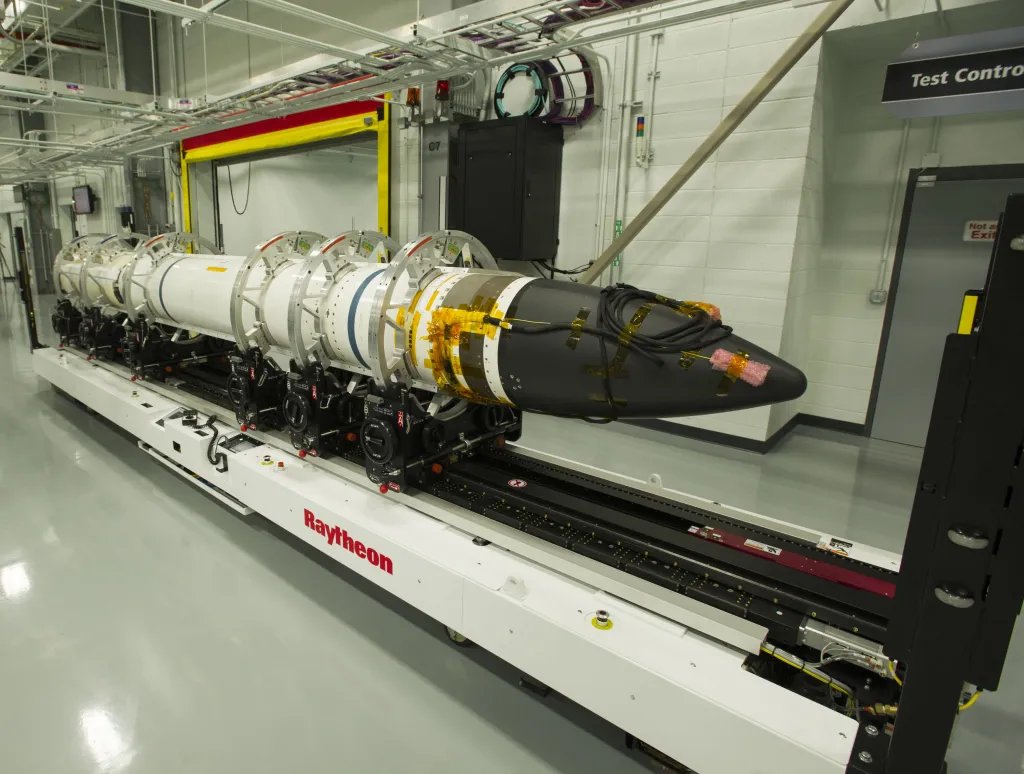
An SM-3 Block IIA interceptor in a production facility. Raytheon

It should also be noted that European countries are also currently pursuing initiatives to strengthen domestic missile manufacturing output, including systems such as the Patriot interceptor and other air-defense munitions. Earlier this week, for example, Lockheed Martin announced plans to establish a dedicated PAC-3 Missile Maintenance Facility (MMF) in Poland. 

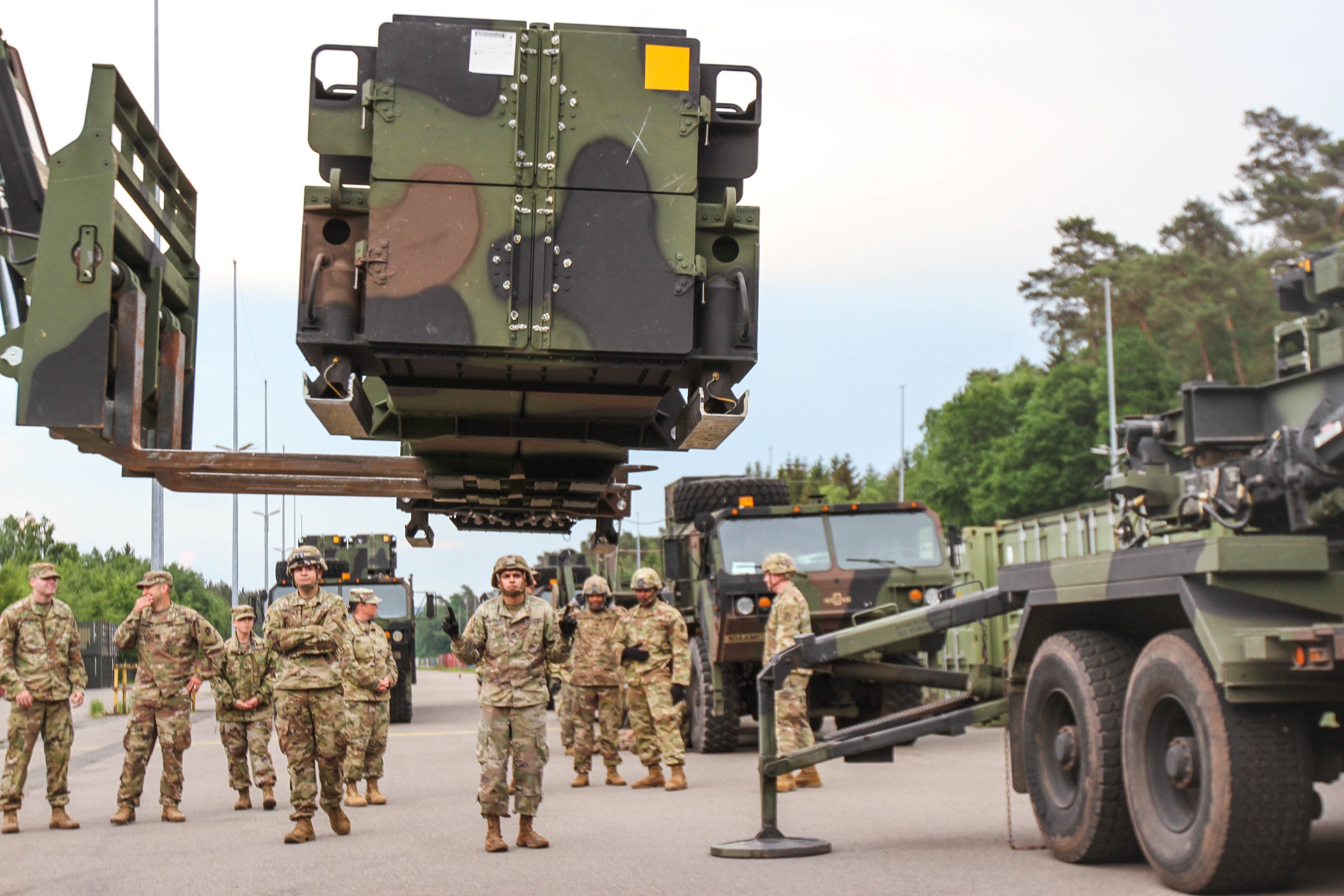
Sgt. Joel Lopez, a Patriot crew member assigned to B Battery, 5th Battalion, 7th Air Defense Artillery Regiment, guides a Patriot PAC 3 Interceptor for load out at Miesau Army Depot, Germany May 22. Saber Strike is a long-standing U.S. Army Europe-led cooperative training exercise that helps facilitate cooperation amongst the U.S., Estonia, Latvia, Lithuania, Poland and allied and partner nations.
A Patriot crew member assigned to B Battery, 5th Battalion, 7th Air Defense Artillery Regiment, guides a PAC-3 interceptor for loadout at Miesau Army Depot, Germany, on May 22, 2018. U.S. Army photo by Capt. Robert Durr Capt. Robert Durr

In its readout of the meeting, the U.S. Department of War said Hegseth welcomed Japan’s efforts to strengthen its defense-industrial capacity. The two leaders also committed to continued coordination on critical munitions production, although the readout did not specifically mention the AMRAAM facility.

The agreements establish a framework for closer industrial cooperation, but their eventual operational impact remains uncertain. At this point, details about the Japanese facility’s location, opening date, annual output, and its precise manufacturing responsibilities remain unclear. Meanwhile, the SM-3 initiative lacks a published production-growth target.

Regardless, the move to establish a Japanese AMRAAM assembly and inspection capability makes a good deal of sense alongside a major expansion of U.S. manufacturing. Whether that arrangement materially improves missile availability during a prolonged Indo-Pacific crisis will depend on how quickly the new capacity comes online and whether the wider production network can deliver the components and completed weapons required by both countries.

Contact the author: thomas@thewarzone.com

The post Japan To Assemble AMRAAM Missiles As U.S. Moves To Dramatically Boost AIM-120 Production appeared first on TWZ.

  •  
❌