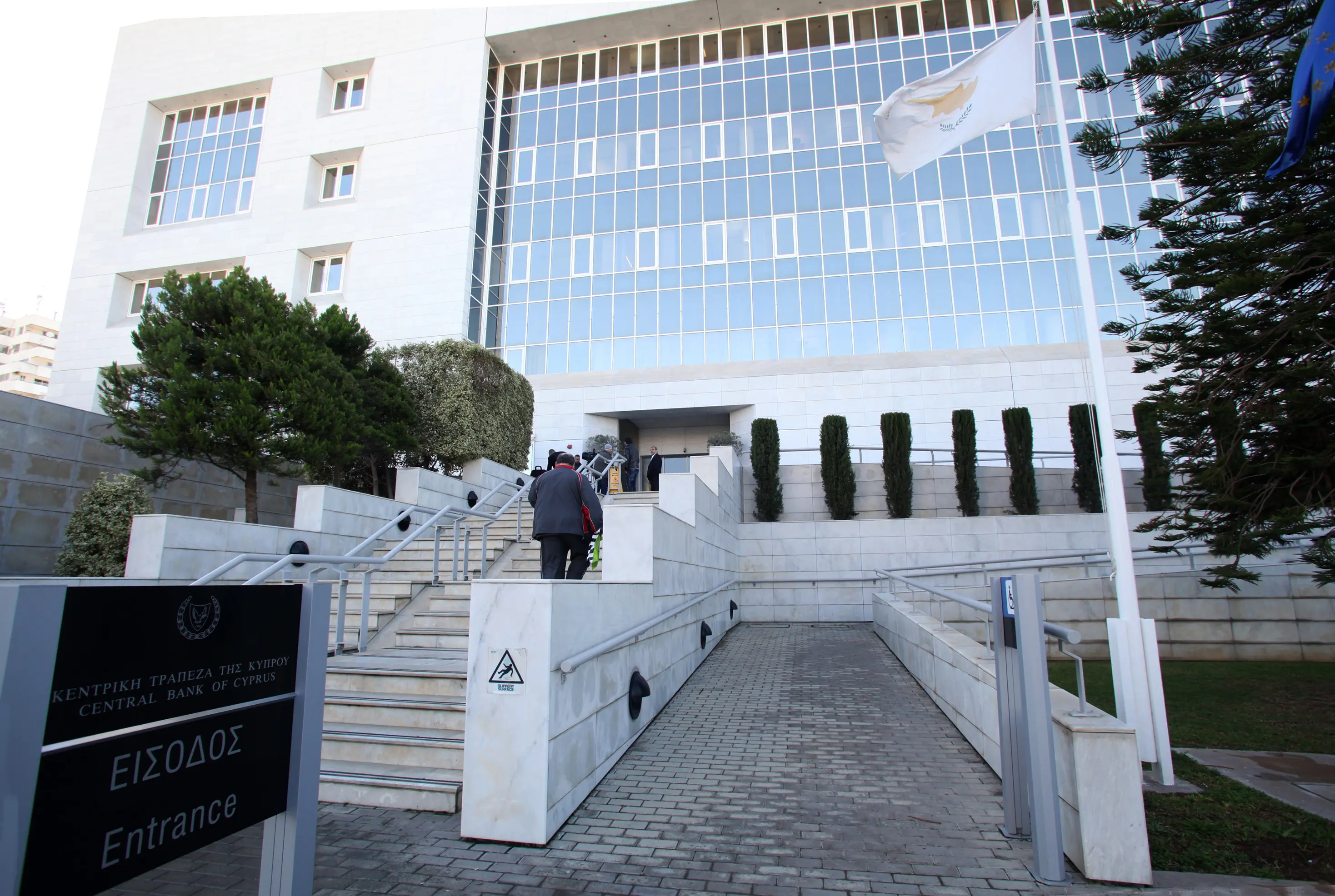
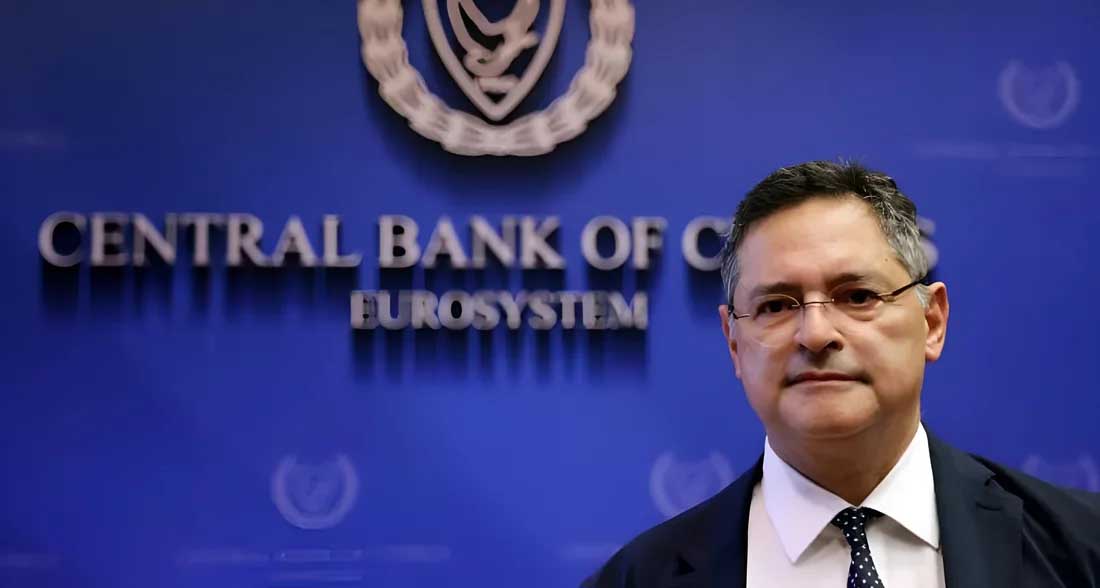
Cyprus household debt stood at €20 billion, equivalent to 53 per cent of gross domestic product (GDP), at the end of June 2026, while debt among non-financial companies reached €41.7 billion, or 111 per cent of GDP, according to figures released on Friday by the Central Bank of Cyprus (CBC).
The figures show that household indebtedness has fallen by 65 per cent since December 2016, while the debt-to-GDP ratio of non-financial companies has declined by 95 per cent over the same period, pointing to a substantial reduction in borrowing across both sectors.
Despite the improvements, corporate debt remained considerably higher than household debt, with non-financial companies carrying liabilities equivalent to more than the value of the country’s annual economic output.
The CBC reported that household financial assets totalled €67.1 billion at the end of June 2026, considerably exceeding their outstanding debt.
Cash, deposits and loans accounted for 54 per cent of these assets, while shares represented 25 per cent, other financial assets 17 per cent and debt securities the remaining 4 per cent.
The figures provide an overview of the financial position of households, businesses and institutional investors, including insurance companies, investment funds and pension funds.
For non-financial companies, financial assets reached €77.9 billion at the end of June, with shares accounting for the largest portion at 37 per cent.
Other financial assets represented 33 per cent of the total, while cash and deposits accounted for 24 per cent, loans for 5 per cent and debt securities for 0.6 per cent.
Meanwhile, the sector’s outstanding debt amounted to €41.7 billion, with its debt-to-GDP ratio standing at 111 per cent, representing a marginal decrease compared with the previous quarter.
The CBC’s comparison with December 2016 showed that the debt-to-GDP ratio of non-financial companies had fallen by 95 per cent, indicating a substantial improvement in the sector’s indebtedness over the period.
The central bank also provided a breakdown of financial assets held by insurance companies, investment funds and pension funds, highlighting the different ways in which these institutional investors allocate their holdings.
Insurance companies held financial assets worth €6.5 billion at the end of June 2026, with almost half of their portfolios invested in shares.
Equities accounted for 47 per cent of their financial assets, followed by debt securities at 26 per cent and other financial assets at 20 per cent.
Cash and deposits represented 6 per cent of the total, while loans accounted for the remaining 2 per cent.
Investment funds held €7.9 billion in financial assets, with their portfolios heavily concentrated in shares, which represented 80 per cent of their total holdings.
Loans and debt securities together accounted for 13 per cent, while cash and deposits represented 4 per cent and other financial assets the remaining 3 per cent.
Pension funds, meanwhile, held €5.1 billion in financial investments, with shares accounting for 59 per cent of their portfolios.
Other financial assets represented 9 per cent, debt securities 6 per cent, while cash and deposits accounted for 12 per cent and loans for 13 per cent.
The figures underline the significant role played by equities in the investment portfolios of insurance companies, investment funds and pension funds, although the composition of their holdings varies considerably.
Alpha Bank’s international operations recorded a normalised net profit of €79 million in the first nine months of 2026, up 13 per cent year-on-year, while the Greek banking group’s Cyprus operations incurred €17.5 million in provisions linked to a voluntary staff exit scheme.
The international division, which includes the bank’s business in Cyprus, generated a reported profit of €57 million, down 16 per cent year-on-year, while net interest income rose by 64 per cent and fee services income increased by 65 per cent over the same period.
Net loans across the international operations stood at €2.9 billion, while customer deposits reached €6.6 billion, with the division recording a return on tangible book value of 12.9 per cent during the nine-month period.
The group also recorded €0.7 million in integration costs in Cyprus, contributing to total operating expenses of €231.7 million for the group in the third quarter.
The Cyprus-related provisions and integration costs formed part of a wider period of restructuring and integration, as Alpha Bank continues to pursue its transformation and prepares to present its strategic priorities through to 2030 at an Investor Day scheduled for November 5.
At group level, Alpha Bank reported profit after tax of €268.9 million in the third quarter of 2026, bringing its total reported earnings for the first nine months to €766.1 million.
On a normalised basis, which adjusts for certain exceptional items, quarterly profit after tax reached €283.2 million, while nine-month earnings amounted to €778.5 million, representing a 14 per cent annual increase.
The group achieved a normalised return on tangible book value of 15.5 per cent in the third quarter, compared with 14.5 per cent over the first nine months, while earnings per share stood at €0.11.
Its Common Equity Tier 1 (CET1) capital ratio, a key measure of a bank’s ability to absorb financial losses, remained at 14.5 per cent at the end of both reporting periods.
Tangible book value per share stood at €3.52, while total tangible book value reached €7.9 billion, representing an increase of 2.1 per cent quarter-on-quarter and 4 per cent year-on-year, rising to 10.7 per cent before accounting for distributions.
The bank attributed its performance to sustained growth in lending and deposits, higher interest rates and contributions from its recent acquisitions.
Net credit expansion reached €400 million in the third quarter and €2.6 billion during the first nine months of 2026, supported by total loan disbursements of €3.1 billion.
The group’s performing loan book, excluding senior notes, expanded by 1 per cent quarter-on-quarter to €40.4 billion, representing annual growth of 13.1 per cent.
Deposits also continued to increase, rising by 2.5 per cent quarter-on-quarter, equivalent to €1.5 billion, with time deposits accounting for 29 per cent of the total.
The bank reported a deposit beta of 22 per cent, indicating the extent to which changes in market interest rates were reflected in the rates offered to depositors.
Total customer funds increased by 18.7 per cent year-on-year, supported by a 13.3 per cent rise in customer deposits and a 32 per cent expansion in assets under management.
The group’s loan-to-deposit ratio stood at 77 per cent at the end of September, while its non-performing exposure ratio remained at 3.8 per cent.
The cost of risk, which measures the expense of provisions against potential loan losses, stood at 43 basis points in the third quarter and 42 basis points across the first nine months.
Alpha Bank’s capital position remained stable despite the recognition of a €421 million dividend accrual during the first nine months of the year, supported by 124 basis points of organic capital generation.
Net interest income reached €472.2 million in the third quarter, increasing by €35.8 million, or 8.2 per cent, compared with the previous quarter.
The increase reflected higher income from loans and bonds, supported by growth in lending volumes and higher interest rates, while net interest income for the first nine months rose by 10.7 per cent year-on-year.
Chief executive officer Vassilios Psaltis said the latest results demonstrated the resilience of the group’s banking operations and the benefits of its recent acquisitions.
“Net interest income came to €472 million, the highest quarterly figure since the fourth quarter of 2017, reflecting the sustained growth in our loan book, and the step-up in rates,” Psaltis said.
“Fee income increased to €156 million, supported by cards and payments fees, and an uptick in asset management, following a softer second quarter.”
Fee services income amounted to €156.3 million in the third quarter, representing a 16.3 per cent decline compared with the previous three-month period.
However, the decrease largely reflected a higher comparison base in the second quarter, which had benefited from a dividend received from Prodea.
Excluding that contribution, fee services income increased by 6.2 per cent quarter-on-quarter, supported by stronger revenue from cards and payments and a higher contribution from asset management fees.
For the first nine months of 2026, fee income increased by 32.2 per cent year-on-year, or 25.4 per cent when excluding dividends from Prodea.
Total operating income reached €634 million during the third quarter, while the group said its cost-to-income ratio remained comfortably within expectations.
Recurring operating expenses declined by 3.6 per cent quarter-on-quarter to €231 million, reflecting a 9.3 per cent reduction in staff costs and a 7.2 per cent decrease in depreciation expenses.
These savings were partly offset by higher general and administrative expenses, mainly resulting from increased taxes, third-party fees and building costs.
However, recurring operating costs for the first nine months were 12.2 per cent higher year-on-year, largely due to increased staff expenses, alongside higher administrative and depreciation charges.
Psaltis said the group remained confident about its financial position despite an uncertain international economic environment.
“Despite the uncertain macroeconomic environment, we remain confident in the Bank’s financial strength. Our capital position is sound, our provisioning is prudent and our funding base is solid,” he said.
He also pointed to Greece’s economic performance, arguing that the country was in a stronger position than many other European economies.
“Greece currently occupies a distinct position compared to the majority of Europe, characterised by a robust fiscal trajectory, declining public debt and an investment pipeline that continues to expand,” Psaltis said.
He added that these conditions provided confidence that the foundations for the bank’s next phase of growth were firmly established.
The results follow a major rebranding initiative unveiled on October 12, which Psaltis described as marking the completion of an ambitious transformation programme.
“On October 12, Alpha Bank achieved a significant milestone as we unveiled our new brand identity and drew a line under our ambitious transformation,” he said.
“The new brand honours our nearly 150 years of history, is closely aligned with our new Purpose and Values, and accurately reflects our strategic positioning.”
Psaltis said the new identity reflected the bank’s progress in strengthening its operations and its relationships with customers, businesses and communities.
He added that the positive response from customers, employees and business partners had reinforced confidence in the group’s strategic direction.
Alongside the rebranding, Alpha Bank introduced two initiatives aimed at its employees, including a new programme providing medical insurance and home care for employees’ elderly parents.
The bank also announced salary increases for its Gold relationship managers across its branch network, with Psaltis describing the measures as part of its commitment to its workforce.
On the economic outlook, Alpha Bank said the Greek economy had remained resilient during the first half of 2026, with gross domestic product expanding by 1.9 per cent.
The bank expects the economy to grow by just under 2 per cent for the full year, followed by expansion of 1.7 per cent in 2027.
However, it warned that renewed geopolitical tensions had intensified energy-related inflationary pressures, while political and fiscal uncertainty in Europe could weigh on external demand and create tighter and more volatile financial conditions.
Psaltis said the group expected to outline its next strategic phase at its forthcoming Investor Day, where it will present priorities extending through to 2030.
“The financial performance evident in these results, in conjunction with the new identity we unveiled this month, provides a strong foundation upon which to embark on Alpha Bank’s forthcoming chapter,” he said.
“We have much to share, and we eagerly anticipate the dialogue on November 5,” Psaltis concluded.
Eurobank reported adjusted net profits of €1.21 billion in the first nine months of 2026, up 14.3 per cent year-on-year, with its operations outside Greece contributing almost half of the group’s earnings, despite a decline in profits from Cyprus.
The Greek banking group’s reported net profit rose by 12.4 per cent to €1.16bn, while earnings per share reached €0.31 and its return on tangible book value stood at 16.9 per cent.
Its non-Greek operations generated adjusted net profits of €555 million, accounting for 45.9 per cent of the group’s total, with Cyprus contributing €356 million and Bulgaria €182 million.
However, adjusted net profit in Cyprus fell by 3.9 per cent year-on-year, while the Bulgarian operation recorded an increase of 9.2 per cent.
Eurobank chief executive officer Fokion Karavias said the results had been achieved against an international backdrop of energy and inflationary pressures, alongside growing concerns over government deficits and debt.
“As Europe faces a severe energy and inflationary crisis with far-reaching political and social consequences, markets have brought concerns over fiscal deficits and rising public debt into focus,” he stated.
“Greece and Cyprus stand out in this environment, with strong primary balances of 3.3 per cent and 4.0 per cent of GDP, respectively, and rapidly declining debt levels,” Karavias added.
The bank’s loan portfolio expanded organically by €3.80bn, or 10.5 per cent, during the first nine months of the year, while customer deposits increased by €4.70bn, or 10.6 per cent, reaching €87.20bn at the end of September.
Managed funds also grew by 22.3 per cent year-on-year to €11.40bn, while private banking client assets and liabilities increased by 13.2 per cent to €15.90bn.
“Greece’s debt-to-GDP ratio is falling faster than any EU country, while Cyprus’s debt-to-GDP is down to 50 per cent. Bulgaria also benefits from a low public debt-to-GDP ratio of 33 per cent, while the euro adoption and the return of political stability further strengthen the country’s macroeconomic outlook,” Karavias said.
He said the group had continued to deliver organic growth, with its loan book expanding by 10.5 per cent annually and deposits increasing by 10.6 per cent year-on-year.
“As a result of the strong performance, the return on Tangible Book Value reached 17 per cent, with a pronounced contribution from our regional activities of nearly half of profit,” he added.
Karavias said the nine-month performance demonstrated the group’s ability to sustain organic growth and gave it confidence in meeting or exceeding its full-year targets.
“The 9M26 performance demonstrates our consistent ability to deliver organic growth and gives us confidence in meeting or exceeding our full-year targets,” he mentioned.
“The acquisition completion of Eurolife provides an additional growth engine, particularly in insurance and asset management,” he added.
The completion of the Eurolife FFH acquisition is expected to strengthen Eurobank’s insurance presence and diversification, while providing further opportunities in insurance and asset management.
The bank will distribute an interim dividend of €0.0599 per share on November 26, 2026, which Karavias said reflected its strong performance and prudent capital management.
Eurobank’s net interest income increased by 8.7 per cent to €2.07bn during the first nine months, while income from fees and commissions rose by 13 per cent to €630m.
The increase in fee income was mainly driven by higher revenues from lending, wealth management and insurance operations, and represented 76 basis points of total assets.
In the third quarter alone, net interest income rose by 5 per cent compared with the previous quarter, reaching €719m.
The bank attributed this to an increase in interest-earning assets and higher European Central Bank interest rates, with the average deposit facility rate standing at 2.29 per cent in the third quarter, compared with 2.04 per cent in the second quarter.
Core income grew by 9.7 per cent to €2.70bn, while total operating income increased by 10.8 per cent to €2.78bn.
Operating expenses rose by 6.9 per cent to €995m, but the cost-to-income ratio improved to 35.8 per cent from 37.1 per cent in the corresponding period of 2025.
Core pre-provision income increased by 11.4 per cent to €1.70bn, while overall pre-provision income rose by 13.1 per cent to €1.78bn.
Loan loss provisions declined by 5.5 per cent year-on-year to €224m, equivalent to 53 basis points of average net loans, while core operating profit before tax increased by 14.4 per cent to €1.48bn.
At the end of September, the group’s non-performing exposure ratio stood at 2.4 per cent, while provisions covered 81.9 per cent of non-performing exposures.
Total capital adequacy and Common Equity Tier 1 ratios stood at 20.4 per cent and 15.5 per cent, respectively, while tangible book value per share reached €2.65, representing an annual increase of 7.7 per cent.
The group’s total assets amounted to €114.20bn at the end of September, including €66.90bn in Greece, €29.40bn in Cyprus and €14.80bn in Bulgaria.
Gross loans totalled €59.10bn, comprising €38.60bn in Greece, €9.30bn in Cyprus and €10.10bn in Bulgaria.
Across the group, business loans amounted to €37.10bn, mortgages to €13.10bn and consumer loans to €5.30bn.
Deposits were distributed across Greece, Cyprus and Bulgaria at €48.50bn, €24.30bn and €11.70bn, respectively.
The loans-to-deposits ratio stood at 66.4 per cent, while the liquidity coverage ratio reached 174.4 per cent.
Despite the strong results, credit rating agency Morningstar DBRS has highlighted a potential deterioration in asset quality in the final quarter of the year.
The agency warned that loans affected by legislation concerning the conversion of Swiss franc-denominated loans could be reclassified as unlikely to pay during the fourth quarter.
Such a development could add around 40 basis points to Eurobank’s non-performing loan ratio and reduce its coverage ratio by 10 percentage points.
The Central Bank of Cyprus (CBC) set the reference interest rate at 11.60 per cent on Friday, under provisions of the Criminal Code aimed at preventing excessive charges on loans.
The rate is determined under Article 314A of the Cyprus Criminal Code, Cap. 154, which makes it a criminal offence for lenders to demand or receive financial or other benefits exceeding the prescribed reference rate.
The provision applies when a loan is granted, its repayment period is extended, or an existing loan is renewed or discounted.
It covers benefits received, collected, charged, stipulated or obtained either for the lender’s own benefit or on behalf of a third party.
Anyone convicted of breaching the provision faces up to five years in prison, a fine of up to €30,000, or both penalties.
The CBC determines the reference rate in accordance with its powers under the legislation, with the latest announcement setting it at 11.60 per cent.
Patsalides says Cyprus must remain vigilant as inflation risks rise
Central Bank of Cyprus governor Christodoulos Patsalides has warned that a prolonged energy shock is intensifying inflationary pressures and increasing risks to the economic outlook, as the European Central Bank (ECB) keeps interest rates unchanged and Cyprus continues to experience elevated price growth.
In a statement following the ECB’s monetary policy decision on Thursday, October 29, Patsalides said the euro area faced a more prolonged period of elevated inflation, while Cyprus’ economic resilience, sound public finances and strong banking sector were helping the country withstand the effects of rising prices.
“The prolongation of the energy shock, the deterioration in the inflation outlook and the ECB’s commitment” were the defining features of the current situation, he said.
The ECB’s Governing Council decided to leave its three key interest rates unchanged, with the deposit facility rate at 2.50 per cent, the main refinancing rate at 2.65 per cent and the marginal lending facility rate at 2.90 per cent.
The decision followed September’s 0.25 percentage point increase, as the conflict in the Middle East continued to push energy prices higher and threaten both inflation and economic growth.
Patsalides said geopolitical tensions and the associated energy shock were continuing to intensify price pressures, with euro area inflation rising to 3.8 per cent in September from 3.2 per cent in August, largely because of higher energy prices, particularly petroleum products.
According to the ECB, energy inflation in the euro area climbed to 18.9 per cent in September from 14.3 per cent in August, while inflation excluding energy increased to 2.3 per cent from 2.1 per cent.
Services inflation also edged higher, reaching 3.2 per cent, compared with 3 per cent in August, while food inflation rose to 1.3 per cent from 1.1 per cent.
Diesel and petrol prices reached new peaks during September, partly reflecting higher refining margins, adding to the pressure on households and businesses.
Despite the deterioration in the inflation outlook, Patsalides said the tightening of financial conditions was helping to contain the extent to which energy-related price increases were spreading throughout the wider economy.
This tightening reflected both the transmission of previous monetary policy rate increases and a significant rise in long-term government bond yields, amid growing concerns about the sustainability of global public debt.
“So far, the indirect effects of the energy shock have remained relatively limited, while meaningful second-round effects have yet to emerge, as reflected in the latest developments in wage indicators,” he said.
Inflation expectations in international financial markets and relevant surveys also remained broadly contained, particularly over the medium and longer term, he added.
The ECB similarly said underlying inflation had remained broadly stable and wages had not yet shown a material response to the energy shock.
However, it warned that the increasing magnitude and duration of the energy shock could eventually drive inflation higher and weigh on economic growth through indirect effects and further price and wage increases.
Economic activity across the euro area had continued to demonstrate resilience, Patsalides said, although elevated uncertainty and more restrictive financing conditions were expected to weigh on growth in the period ahead.
The ECB has reiterated its commitment to bringing inflation back to its medium-term target of 2 per cent, while emphasising that future interest rate decisions would depend on incoming economic and financial data rather than a predetermined path.
“In light of the new data and our overall assessment, we judged that maintaining the key interest rates at their current levels allows the ECB to manage the prevailing uncertainty effectively, while remaining firmly committed to returning inflation to, and maintaining it at, the medium-term target of 2 per cent,” Patsalides said.
Cyprus faces elevated inflation
Turning to the domestic economy, Patsalides said Cyprus continued to demonstrate remarkable resilience despite heightened geopolitical uncertainty, supported primarily by robust domestic demand, favourable labour market conditions and sound public finances.
Nevertheless, inflation remained elevated at 5.2 per cent in September, driven largely by significant increases in energy prices and services costs.
Energy prices rose by 21 per cent, while services inflation reached 7.1 per cent, reflecting persistent pressure in these components of the domestic price basket.
There were also signs that underlying price pressures were beginning to ease, with core inflation, which excludes energy and food, declining to 3.9 per cent in September from 4.5 per cent in August.
Despite this moderation, Patsalides warned that risks to the inflation outlook remained tilted to the upside, underlining the need for continued vigilance and close monitoring of developments.
“In an environment of persistent inflationary pressures, economic resilience becomes a factor of critical importance, acting as an essential buffer against the cumulative effects of rising prices and helping preserve the economy’s growth momentum,” he said.
He identified several ways in which economic resilience could help Cyprus withstand the effects of inflation, beginning with the strength of the labour market and the high level of employment.
These conditions support household disposable incomes, allowing private consumption to remain an important driver of economic activity even as rising prices put pressure on purchasing power.
Sound public finances also provide an important safeguard, Patsalides said, because a resilient economy helps maintain a stable flow of tax revenues.
This gives the government the flexibility to introduce targeted support measures for vulnerable groups without placing excessive pressure on public finances.
He also highlighted the importance of the banking sector’s strong capital and liquidity positions, which reinforce financial stability and support banks’ capacity to finance economic activity effectively.
The resilience of the financial system is particularly important when tighter financing conditions threaten to constrain borrowing and investment, both of which are essential for sustaining economic growth.
Another source of strength is the broadening of Cyprus’ productive base, particularly through the development of dynamic sectors such as information and communication technologies.
A more diversified economy is better equipped to absorb external shocks and offset pressures affecting industries that are more exposed to elevated inflation, Patsalides said.
He added that this resilience, together with recent sovereign credit-rating upgrades, was strengthening Cyprus’ attractiveness as a reliable investment destination, supporting continued foreign capital inflows and improving the economy’s growth prospects.
Prudent policies remain essential
Patsalides stressed that economic resilience alone would not eliminate inflationary pressures, making the consistent implementation of prudent economic policies essential.
“In an environment characterised by global challenges, the consistent implementation of prudent economic policies remains the most effective way to shield the economy from the erosion caused by inflation,” he said.
The governor warned that the combination of upside risks to inflation and intensifying threats to the global economy made a comprehensive and disciplined policy approach increasingly important.
For the ECB, the challenge is to prevent the energy shock from becoming embedded in broader price and wage developments without unnecessarily undermining economic activity.
For Cyprus, the priority is to preserve the domestic conditions that have supported growth while limiting the effects of persistent price increases on households, businesses and public finances.
Patsalides’ assessment underlined the importance of maintaining economic stability, protecting purchasing power and strengthening the economy’s capacity to absorb external shocks as uncertainty over energy prices and the wider geopolitical outlook continues.
Investment platform Wealthyhood has recorded a five-fold increase in investors and an eight-fold rise in client assets in Cyprus between June and September 2026, with data from its partnership with the Bank of Cyprus pointing to growing interest in local shares, exchange-traded funds and accessible long-term investing.
The figures, published in ‘Wealthyhood’s Cyprus Investor Pulse 2026‘ report, cover anonymised and aggregated data from clients resident in Cyprus between June 1 and September 30, with the findings highlighting how lower entry costs and simpler account funding can encourage participation in financial markets.
Alexandros Christodoulakis, co-founder and chief executive of Wealthyhood, told the Cyprus Mail that the response from Cypriot investors had exceeded expectations in terms of the quality of their engagement.
“People in Cyprus didn’t need to be convinced that investing matters. What they were missing was a simple, trusted way to start, and once that existed, they moved quickly,” he said.
The report found that 88.6 per cent of clients who deposited money went on to buy a stock or exchange-traded fund (ETF), compared with 80.4 per cent among clients who signed up in Greece during the same period.
Christodoulakis said the company was encouraged by the extent to which customers were continuing to invest after opening their accounts, rather than simply registering and leaving the platform.
“Of those who joined in June or July and invested, 88.9 per cent were still invested on September 30,” he said.
“Seven in ten (70.3 per cent) have never sold an investment, and six in ten (59.1 per cent) made a second deposit within 30 days of their first,” Christodoulakis continued. “People are not trying the app once and walking away; they are building a habit.”
He added that four months of activity remained an early snapshot, but that the quality of engagement had been particularly encouraging.
Low entry barriers foster early activity and habit-building
The report also found that 58.4 per cent of new investors made their first investment within 7 days of signing up, while 14.4 per cent invested on the same day.
The typical first deposit was €100, while the typical first investment amounted to €55. Almost two-thirds of investors, or 64 per cent, started with €100 or less, suggesting that many were entering the market with relatively modest sums.
More than half, or 56.8 per cent, made their first investment in an ETF, which allows investors to buy into a collection of companies through a single product.
The most popular first investment was the Vanguard S&P 500 ETF, accounting for 16.6 per cent of first investments, followed by Bank of Cyprus shares at 10.2 per cent.
Christodoulakis said traditional barriers to investing included high minimum investment requirements, fees that eroded smaller amounts, paperwork and complicated terminology.
“Faced with that, many people who could invest simply never start. Not because they don’t care about their future, but because the first step looks expensive, complicated and opaque,” he stated.
Wealthyhood aims to address these obstacles by allowing customers to invest in international and local markets from €1, with zero commission and fractional shares, alongside an education hub containing more than 50 guides.
The platform also offers Autopilot, an automated investing service through which users can make regular investments without having to manage each transaction manually. The typical Autopilot user invests €150 a month, according to the report.
Christodoulakis said access to financial markets needed to be accompanied by a better understanding of investment products and their risks.
“Access alone isn’t enough, though. People also need to understand what they’re buying and why, which is why education sits at the core of the app, not in a corner of it,” he said.
Investor demographics reveal mature and higher-earning profile
The report’s demographic findings challenge the assumption that investment applications primarily attract younger users.
The typical investor in Cyprus is 40 years old, works full-time and declares an annual income of between €30,001 and €50,000. The largest age group is 35 to 44, accounting for 31.7 per cent of investors, followed by those aged 45 to 54 at 25.9 per cent and those aged 25 to 34 at 25.3 per cent.
People under 30 account for 19.3 per cent of investors.
Income levels were also higher than those recorded among investors in Greece. Some 31 per cent of Cypriot investors declared annual incomes above €50,000, while 24 per cent reported incomes below €20,000, compared with 58 per cent of investors in Greece in the latter category.
Full-time employees account for 86.5 per cent of investors, while 4.7 per cent are self-employed.
Finance and insurance is the most common industry, employing 31.5 per cent of investors, followed by information technology at 10.5 per cent and the public sector at 8.1 per cent.
Nicosia district accounts for 50.5 per cent of investors, followed by Limassol at 25.6 per cent, Larnaca at 14.9 per cent, Paphos at 5.1 per cent and Famagusta at 3.9 per cent.
Christodoulakis said the available data was not yet sufficient to establish how the investor profile had changed over time or to draw reliable conclusions about customers’ previous investing experience.
However, he said the behaviour observed so far pointed towards a cautious, long-term approach, characterised by small initial investments, ETFs and limited selling.
“One number I’d like to see change: about one in six new investors is a woman. Closing that gap is one of the biggest challenges for retail investing, in Cyprus and beyond,” he said.
He added that the market was increasingly being shaped by working people seeking greater control over their long-term finances, rather than traders attempting to profit from short-term market movements.
“As cost and complexity keep falling, I expect that profile to broaden, especially to younger people and to women,” he said.
Domestic shares drive engagement alongside global ETFs
The availability of domestic shares has also helped attract investors to the platform, with the Bank of Cyprus emerging as its most-bought individual stock.
Cypriot and Greek shares became available through Wealthyhood on July 17, allowing customers to hold domestic investments alongside international stocks and ETFs.
Customers can access Bank of Cyprus shares and 8 other companies listed on the Cyprus Stock Exchange, namely Vassiliko Cement, Demetra Holdings, Logicom, Cyprus Cement, Petrolina, Atlantic Insurance, Pandora Investments and GlobalWealth Group.
Within less than 3 months of the launch, 29.2 per cent of buyers had purchased at least 1 Cypriot share.
The Bank of Cyprus was bought by 35.8 per cent of stock investors, ahead of US technology company NVIDIA at 21.3 per cent and SpaceX at 12.6 per cent.
Among investors who purchased Cypriot shares, 82.6 per cent chose the Bank of Cyprus, followed by Vassiliko Cement at 16 per cent, Petrolina at 12.3 per cent and Logicom at 8.2 per cent.
The report found that domestic shares were bringing new participants into the market. For 52.8 per cent of investors holding Cypriot shares, a local company had been their first investment on Wealthyhood, compared with just 1.8 per cent among other investors.
Those holding Cypriot shares also had larger portfolios, with a typical portfolio 1.8 times the size of those held by other investors and containing 3 investments rather than 1.
Christodoulakis said familiar domestic companies could provide an accessible entry point for people who were less comfortable with international markets.
“People invest more readily in companies they know, and familiar local names are often the bridge into the market,” he said.
However, he stressed that local shares were complementing rather than replacing international investments.
The report found that 8.6 per cent of money invested since July 17 had gone into Cypriot shares, while Greek shares accounted for 12.3 per cent. Some 18.9 per cent of buyers had purchased at least 1 Greek share.
Across portfolios, 37.6 per cent of invested money was allocated to the United States, 21.1 per cent to global ETFs, 16.5 per cent to the rest of Europe, 11.3 per cent to Greece and 8.9 per cent to Cyprus.
The figures also showed the importance of ETFs in investors’ portfolios. The Vanguard S&P 500 ETF, which tracks the 500 largest US companies, had been purchased by 42.7 per cent of ETF investors and was held by 24.4 per cent of all investors on September 30.
Other popular ETFs included the Vanguard LifeStrategy 80 per cent Equity fund, purchased by 13.6 per cent of ETF investors, the SPDR MSCI World at 13.1 per cent and the iShares Nasdaq 100 at 11.9 per cent.
Among investors who still held investments on September 30, 42.5 per cent held only ETFs.
Dual exchange listings and long-term literacy goals
The report also examined access to shares listed in Athens. On September 30, 25.6 per cent of investors held at least 1 stock listed on Euronext Athens, including the Bank of Cyprus, while 7.6 per cent held a stock listed on the Cyprus Stock Exchange and 4.2 per cent held shares listed on both exchanges.
Athens-listed stocks accounted for 17.1 per cent of invested money, while Cyprus Stock Exchange-listed shares represented 2.1 per cent.
After the Bank of Cyprus, the most widely held Athens-listed stocks were Eurobank, at 5.1 per cent, followed by Allwyn and Alpha Bank, each at 2.8 per cent. Half of the 10 most widely held names were banks.
Christodoulakis said the company’s priorities in Cyprus were to improve financial education, encourage customers to turn initial investments into regular habits and expand the role of automated investing.
He said Wealthyhood and the Bank of Cyprus shared a responsibility to help close the financial literacy gap, particularly among younger people and women, by improving understanding of risk, diversification and the importance of time in investing.
“Giving people access to markets is only half of the job; helping them understand risk, diversification and time is the other half,” he said.
The company also wants to build on existing customer behaviour through services such as Autopilot, which can make regular investment contributions easier to maintain.
Christodoulakis said the first months of activity had demonstrated a clear appetite for accessible investing in Cyprus, but that the next challenge was to turn the initial momentum into sustained participation.
“Four months in, Cyprus has shown us the appetite is real. Now the work is to turn that early momentum into a generation of long-term investors,” he said.

 Login