Roughly 31.7 billion euros ($35 billion) have been allocated to support Ukraine's defense industrial capacity, according to the European Commission's proposal.
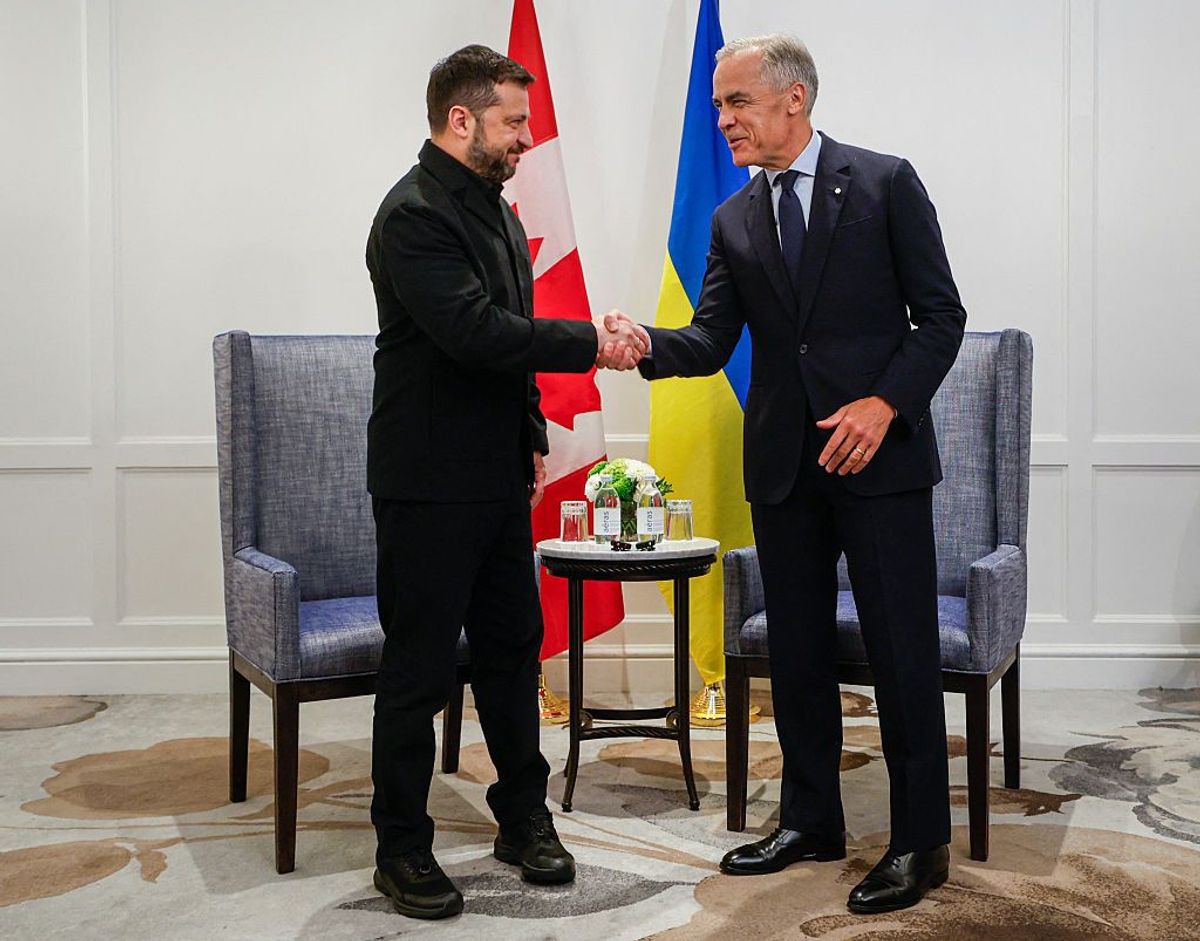
Ukraine and eight partner countries plan to sign an agreement establishing a new international defense bank on Nov. 30, potentially opening another source of long-term financing for weapons production, the governments said in a joint statement published Oct. 29.
The index, unveiled by New Age Defense, a European-Ukrainian defense tech alliance, and the Ukrainian think tank BRDO, "assesses national preparedness across four key areas: prevention, detection, response, and recovery."
Destinus has completed 1,750 Ruta B1 cruise missiles and reached monthly output of nearly 300, the company said on 29 October, telling Reuters this exceeds Europe’s annual cruise-missile production before Russia’s full-scale invasion.
That gives a date for easing a shortage. A looming shortage of mini jet engines threatened to hold back Ukraine’s deep-strike drones, Reuters reported in April. Czech maker ZofiTech was then producing about 200 a month, nearly all for Ukraine, and expected demand to reach thousands within months. Both Ruta versions use the 1.5-kN engines Destinus is promising. Ukraine plans to build more jet drones and cruise missiles, so engine output next year will have to keep up, Defense Express notes.
Destinus builds its own engines, but hasn’t said how many
Destinus CEO Mikhail Kokorich said the company already produces turbojets in the roughly 1.5-kilonewton class in series, supplying them both for its own missiles and to other manufacturers. The Ruta B1 runs on the company’s own T150 engine. In June, Destinus announced its 1,000th T150 and said the line was designed to sustain production of thousands of missile systems a year. The company has not disclosed its current engine output.
Block 2 enters production, Block 3 is due to fly in 2027
Meanwhile, Destinus said it has begun production of the larger Ruta Block 2, designed to carry a 250-kg payload more than 700 km. Unlike the roughly 300-km Block 1, Block 2 is designed to be stored, transported, and launched from the same container. A third version, Block 3, is planned with a 2,000-km range, with flight tests scheduled for 2027.
Ukrainian President Volodymyr Zelenskyy acknowledged the Ruta’s combat use in October 2025. Days later, he said Ukraine expected mass production of Ruta and Flamingo missiles by the end of that year. In June 2026, then-Defense Minister Mykhailo Fedorov said the Netherlands was ready to finance about 700 Rutas for Ukraine, without specifying the version.
Deterrence takes “tens of thousands of missiles”
At the same time, Kokorich said Europe’s problem is shifting from production to integration.
“To have sufficient deterrence, you need to have tens of thousands of missiles,” he said.
European customers, he added, still need to build the military units and logistics to operate missiles in such numbers. Those arsenals would also need storage, transport, maintenance, and targeting infrastructure, he said, and European militaries would need to rethink how they stockpile and deploy precision-strike weapons.
No Chinese parts, and a bet on cheaper, shorter-range missiles
Kokorich said Destinus uses no Chinese components, unlike wartime production in Ukraine, and said access to Chinese suppliers would make manufacturing cheaper, faster, and easier.
Kokorich also argued that cheaper missiles with ranges under 1,000 km would make up most future demand. Separately, Destinus is working with Rheinmetall on cruise missiles and ammunition for multiple-launch rocket systems, including a planned European equivalent of the GMLRS rockets fired by HIMARS.
Russian analysts can locate Ukrainian weapons plants from details in published photos and TV footage, Ukrainian defense outlet Oboronka reported on 29 October. Open-source researchers told the outlet how to hide those details.
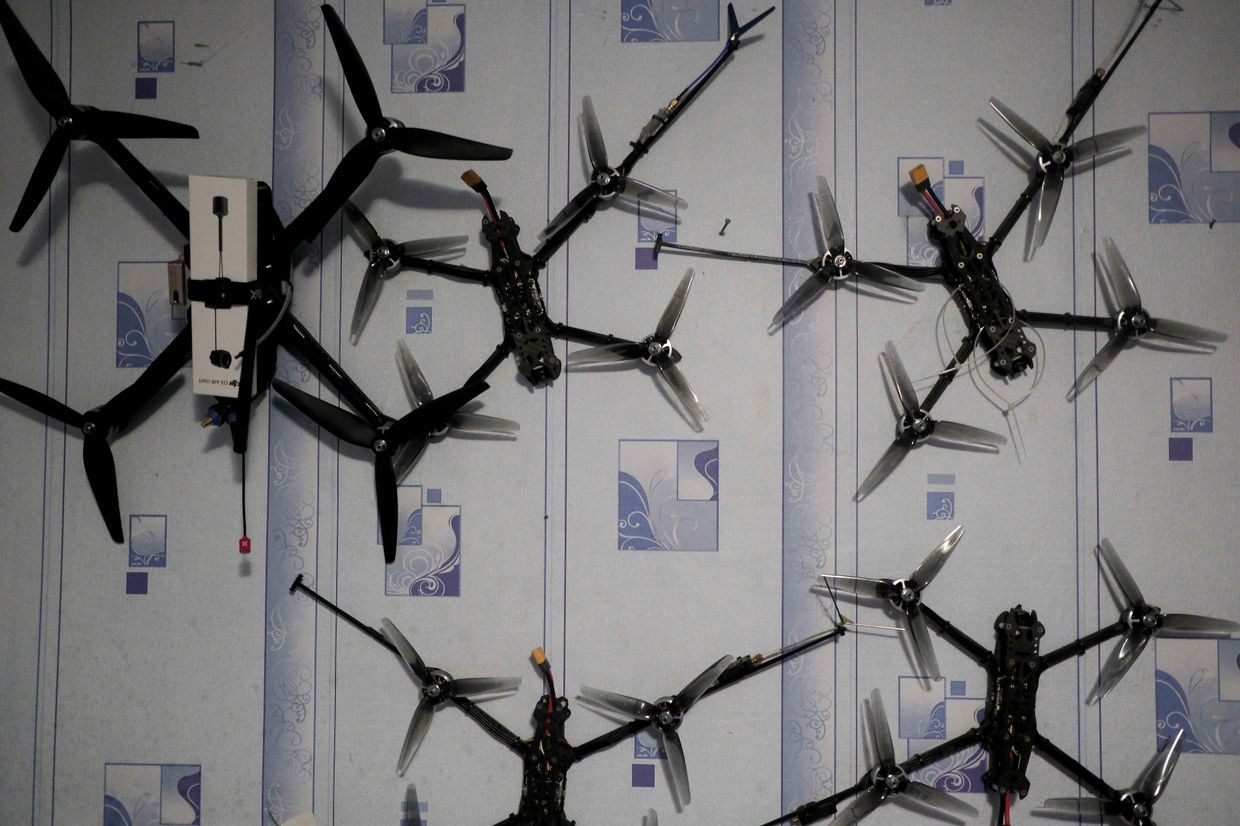
Ukraine plans to build 7 million drones this year, and Russia is hunting the plants that make them. In June, the Security Service of Ukraine (SBU) said Russia’s GRU military intelligence was gathering data to prepare air strikes on defense plants and attacks on their engineers.
A TV clip, then missiles
On 7 April 2022, Ukrainian channel 1+1 aired a report from a workshop at the Kyiv Armored Plant converting captured Russian military equipment for Ukraine’s forces. On 14 April, Rybar, an anonymous pro-Russian Telegram channel, posted the factory’s location. Russian missiles hit the workshop on 16 April, killing at least three civilians, the Centre for Information Resilience (CIR) found.
A frame from the 1+1 report filmed at the Kyiv Armored Plant, aired on 7 April 2022. Screenshot: Centre for Information Resilience
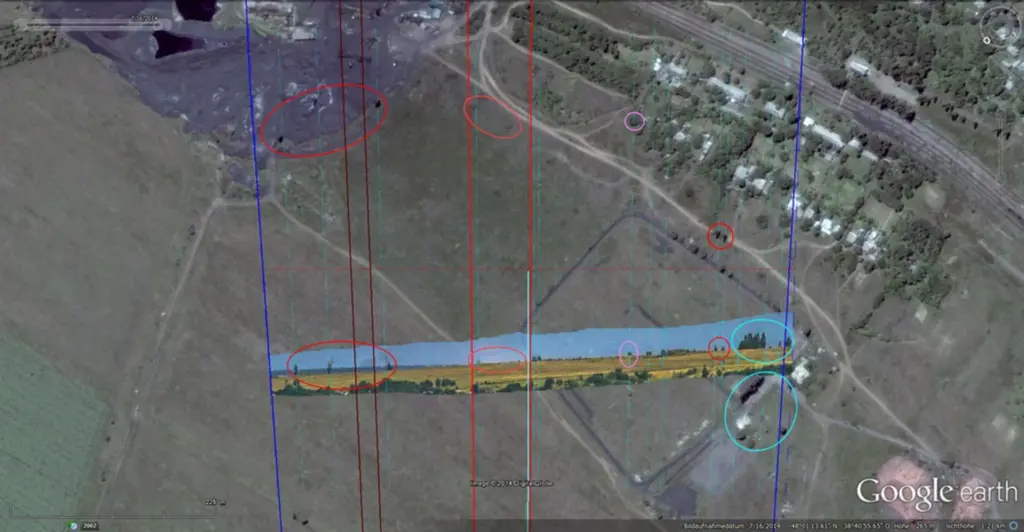
Retracing the likely method, CIR wrote that wall colors, window size, and ceiling height could single out the plant, and Google Earth imagery the workshop. InformNapalm researcher Andrii Lisitsyn told Oboronka that matching a frame with old photos, satellite images, job ads, or staff profiles quickly narrows the search.
A Gaussian blur smears pixels but keeps part of the information, Oboronka wrote. In a 2020 blog post, aerospace engineering student Gonçalo Raposo showed it can be fully reversed if the exact filter and edge handling are known. Pixelation fails too: a 2022 neural network reconstructs plausible faces from pixelated images. Lisitsyn advises cropping or fully opaque masking instead, plus checking file metadata.
Leaks beyond photos
Some Ukrainian defense enterprises still keep accounts and procurement records in Russian 1C software, Oboronka wrote. Since 6 January 2026, 1C products have been on the State Special Communications Service’s list of banned software. The ban covers systems with state information resources and critical information infrastructure owned or managed by state bodies, state enterprises, and local governments, the service said.
Oboronka also wrote that days before the full-scale invasion, Spanish journalist Pablo González photographed production lines at engine maker Motor Sich. Poland held him from February 2022 until a prisoner swap sent him to Russia in August 2024. Prosecutors then indicted him under both his names, Pablo González and Pavel Rubtsov, for spying for Russian military intelligence.
"In developing drones and counter-drone systems, Europe has one significant advantage: our partnership with Ukraine," said European Commissioner Valdis Dombrovskis.
 Login