Belgium is pressing ahead with a new bill allowing police to potentially raid a person’s home suspected of harbouring an undocumented migrant.
Set for a vote next Thursday (4 November) in Belgium’s parliament, the law paves the wave for similar provisions in the EU’s deportation regulation.
Although Belgium abstained in the vote on the EU-level law given internal objections over possible EU deportation facilities abroad, Belgium’s coalition government appears determined to allow authorities to force their way into homes.
The new law, championed by Belgium’s rightwing migration minister Anneleen Van Bossuyt of the N-VA, has triggered widespread criticism.
A spectrum form human rights defenders to Belgian judges have issued multiple warnings that the law would potentially violate constitutional rights of those who host undocumented immigrants.
If a person is suspected of hosting an undocumented migrant deemed a security threat, then the police can enter their home between 5AM and 9PM and search through their documents and personal belongings even if children are present.
This article continues, but the full version is available only to EUobserver.com subscribers. Visit account.euobserver.com/membership
Confirmed Ukrainian military losses have exceeded 220,000, while the share of missing personnel is rising.
Ukraine lost thousands of personnel both during the Kursk region operation and in the battle for Krynky.
Following an unofficial pause, Ukraine has resumed attacks on Russian refineries — and with considerable success.
Ukraine claims to have hit another two Russian Su-34 aircraft. Russia has suffered too many such losses over the past two months.
Videos of the day: a report on a soldier who operates drones with his chin; a welcome for Ukraine’s ombudsman in Oleshky.
In Ukraine Battlefield update, we report fairly regularly on the enormous losses suffered by Russian soldiers. The Ukrainian command publishes them daily. This figure is probably inflated, but it shows a trend. And that trend shows that October is already the bloodiest month since the start of the full-scale invasion.
Verified figures are also published by the independent Russian outlets Mediazona and the Russian BBC. The problem is that they can only verify these figures retrospectively, while the Russian state is placing ever more obstacles in their way as they seek information about deaths.
As Dima Treshchanin wrote, the author of the project, they are currently working on deaths from the summer of 2025.
However, we devote less attention to Ukrainian military losses. Unfortunately, these are also high.
However, when independent analysts examined its data, they found it credible. Each entry links to a source of information on a Ukrainian website, mostly an obituary, and the analysts did not find many duplicates either.
Ukrainian losses are tracked by the UA Losses project. It is an anonymous website and its background is a mystery. Ukrainian authorities describe it as propaganda and have blocked access to its website in Ukraine.
UA Losses has updated its data in recent days.
This article continues, but the full version is available only to EUobserver.com subscribers. Visit account.euobserver.com/membership
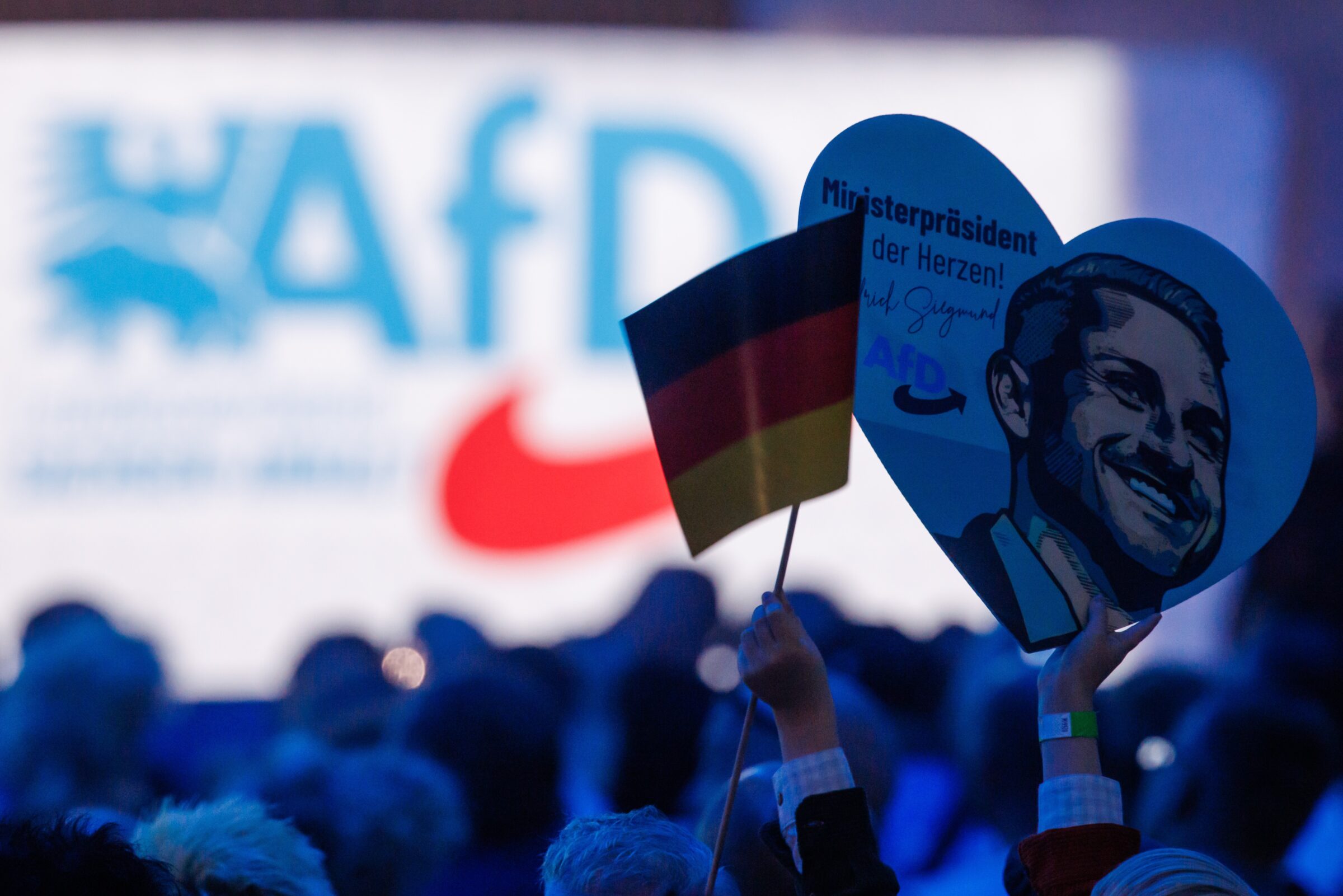
One could ask, what might politicians from a far-right party — as the Federal Office for the Protection of the Constitution describes Alternative for Germany (AfD), write to one another?
More than 400,000 emails exchanged by AfD members between March 2013 and September 2026, effectively covering the party’s entire history, have appeared online.
They were published by hackers from the Distributed Denial of Secrets (DDoSecrets) organisation, who obtained 284 gigabytes of data, including minutes from meetings of the party leadership, payslips, strategic documents, membership lists and donors’ names.
AfD and its enemies
According to the Correctiv website, the material also includes election campaign plans, for example for the 2025 parliamentary election. Their authors describe how to reach potential voter groups. They describe the governing parties at the time as enemies.
It is unclear yet whether all the emails are genuine, but the party has confirmed the leak. German media outlets with access to them estimate that assessing the information could take months.
It is already clear that the emails offer an insight into how Germany’s currently strongest political party operates and how it approaches certain issues, including neo-Nazism.
The media are gradually uncovering messages that are uncomfortable for AfD’s leading figures, including its co-chair Alice Weidel.
One of the most striking findings is that in private she was not as radical as she liked to portray herself in public. And, according to German media, the difference is considerable.
The leaked emails also suggest how the German party sought to forge closer ties with the US conservative Maga movement and president Donald Trump, whom it saw as a potential ally.
In foreign policy, they also point to deeper links with Russia than had previously been known.
Thousands of emails could also play a role in a potential ban on the party, which is not yet decided upon but is being debated in Berlin.
So what have they revealed?
What had not previously been known about relations with Russia
This article continues, but the full version is available only to EUobserver.com subscribers. Visit account.euobserver.com/membership
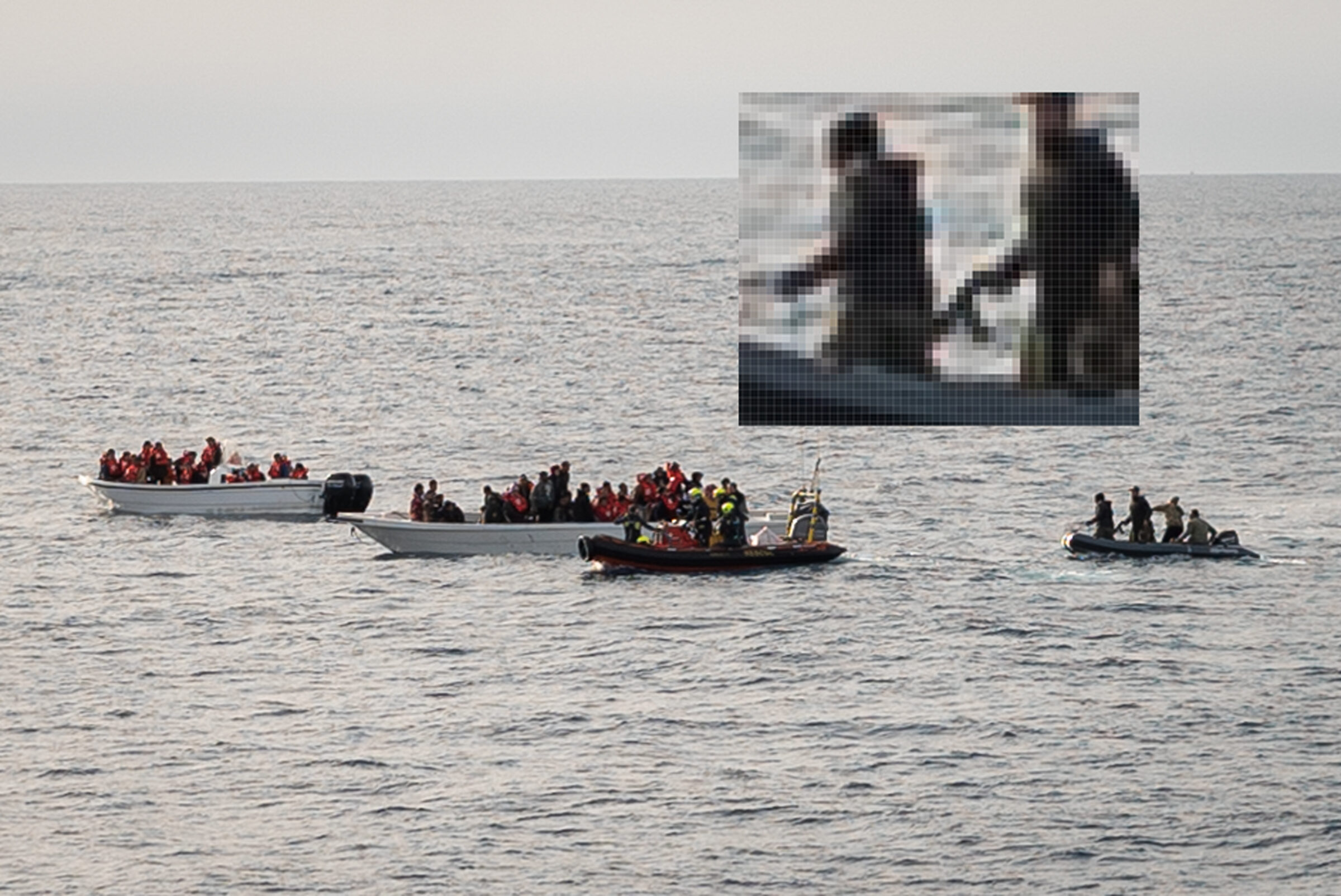
When Sulaiman saw the Humanity 1 approaching, he thought to himself: “if they are Libyans, let me die. I will not go back there.”
The 25 year old Nigerian man is one of many rescued by theGerman NGO SOS Humanity on Tuesday (27 October) to have escaped living hell in Libya, at the hands of a regime paid by the EU to keep migrants away from its borders.
“I was in prison for one year, for no reason,” said Sulaiman, whose name has been changed to preserve his anonymity. “Any time in the morning they come to distribute food, there are beatings. No one lets you go without a beating,” he told EUobserver.
Every day he’d subsist on one small slice of bread in “a cage for 100 people, where there are all skeletons,” he described with tears in his eyes.
Sulaiman had tried to leave Libya twice before on small boats, but each time he’d been pulled back to land by violent militias, one of whom he described to be an ‘official’ authority.
Data from the International Organisation for migration (IOM) and the UN found over 200,000 people to have been illegally intercepted in the central Mediterranean and returned to Libya since 2016.
And like many other search and rescue organisations, SOS Humanity’s own work has been significantly impeded by Libyan groups – whether they be the so-called Libyan coast guard or paramilitary groups known for hijacking small migrant boats in open sea to rob everyone on board and pull them back to illegal detention facilities.
Men, women, families with children, and unaccompanied minors alike are kept in prisons until they can pay their way out.
“I lied, and told my family I was in Tunisia,” a young boy from Sudan told EUobserver.
“I knew my mother couldn’t take it, knowing what would be happening to me in Libya,” he said, after having been rescued by SOS Humanity alongside 27 others in the early hours of Tuesday. He is one of 10 children aboard traveling alone.
This article continues, but the full version is available only to EUobserver.com subscribers. Visit account.euobserver.com/membership
I moved to Poland from London with my Polish husband, and we are raising our two-year-old son here. My son will grow up and live his entire life within the digital infrastructure that the government is building today. The fact that I was not born in Poland does not mean I don’t care about its future, as a mother, I have an obligation to fight for my son’s rights as a Polish citizen.
Recently, I saw that the Polish Ministry of National Defence has signed a Letter of Intent with the American analytics company Palantir Technologies.
Having lived through what happened in the United Kingdom when our government signed similar agreements, I believe that Polish people deserve to know what happens when public systems are handed over to a foreign defence contractor.
Among the company’s founding investors was In-Q-Tel, the CIA’s venture capital arm.
In London, I was part of a campaign group fighting against Palantir’s contract with our National Health Service (NHS).
Under that agreement, the US defence contractor gained deep access to NHS data systems, including mental health records, reproductive health data, and medication history.
Olivia Law-Zygadlo: ‘I have seen what happens when people in the United Kingdom did not ask questions until it was too late, and I cannot stay silent and watch exactly the same thing happen in Poland’ (Pic: Author)
Heavily redacted contracts
Over 100 pages of the contract remain heavily redacted and hidden from the public. Because Palantir is an American corporation, citizens cannot easily hold them to account or use basic data access requests in the way they could with an EU-based company.
In the UK, two parliamentary committees and the British Medical Association are calling on the government to exit the contract before the break clause in 2027.
Poland is not the first European country Palantir has approached, but other allied nations have already drawn the line.
In Switzerland, the Swiss armed forces rejected Palantir’s offers nine times. The military’s conclusion was that it was technically impossible to guarantee that sensitive national data would not reach American intelligence services.
When a Swiss investigative outlet reported on this, Palantir sued them and lost on 22 of 23 counts. In Germany, the Bundeswehr explicitly excluded Palantir from a military cloud procurement on grounds of data sovereignty, with senior military officials stating that granting external industry employees’ access to the national database was completely unacceptable.
Poland is now preparing to deepen its cooperation with a company that the Swiss and German militaries both rejected on security and sovereignty grounds.
It is our children who will have to face the long-term consequences of today’s decisions. I have seen what happens when people in the United Kingdom did not ask questions until it was too late, and I cannot stay silent and watch exactly the same thing happen in Poland.
If you care about data sovereignty, public transparency, and protecting the next generation, join us at the public protest against Palantir’s contracts in Poland, organised by Nasze Dane, on 8 November at Plac Konstytucji in Warsaw at 3pm.

 Login