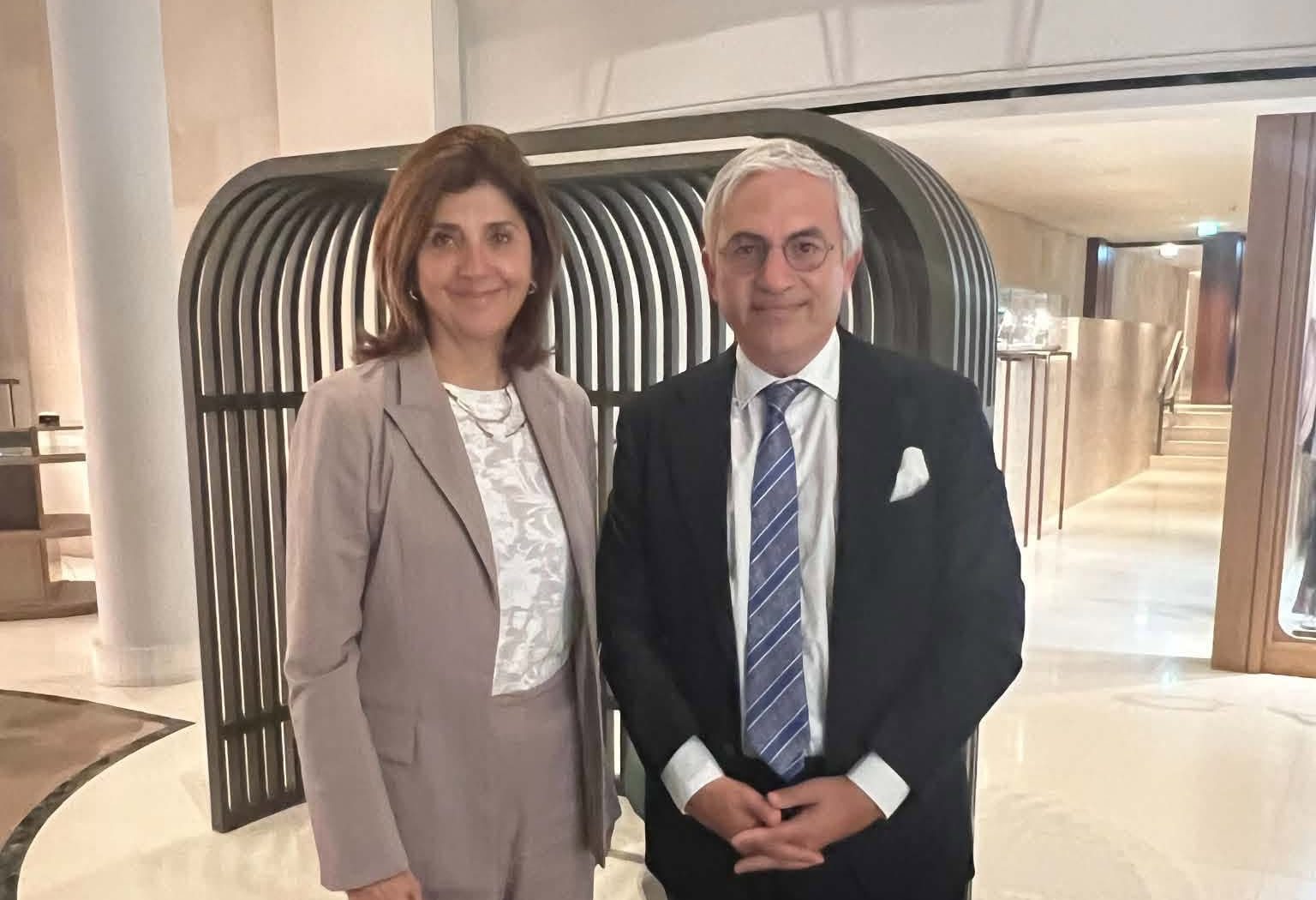
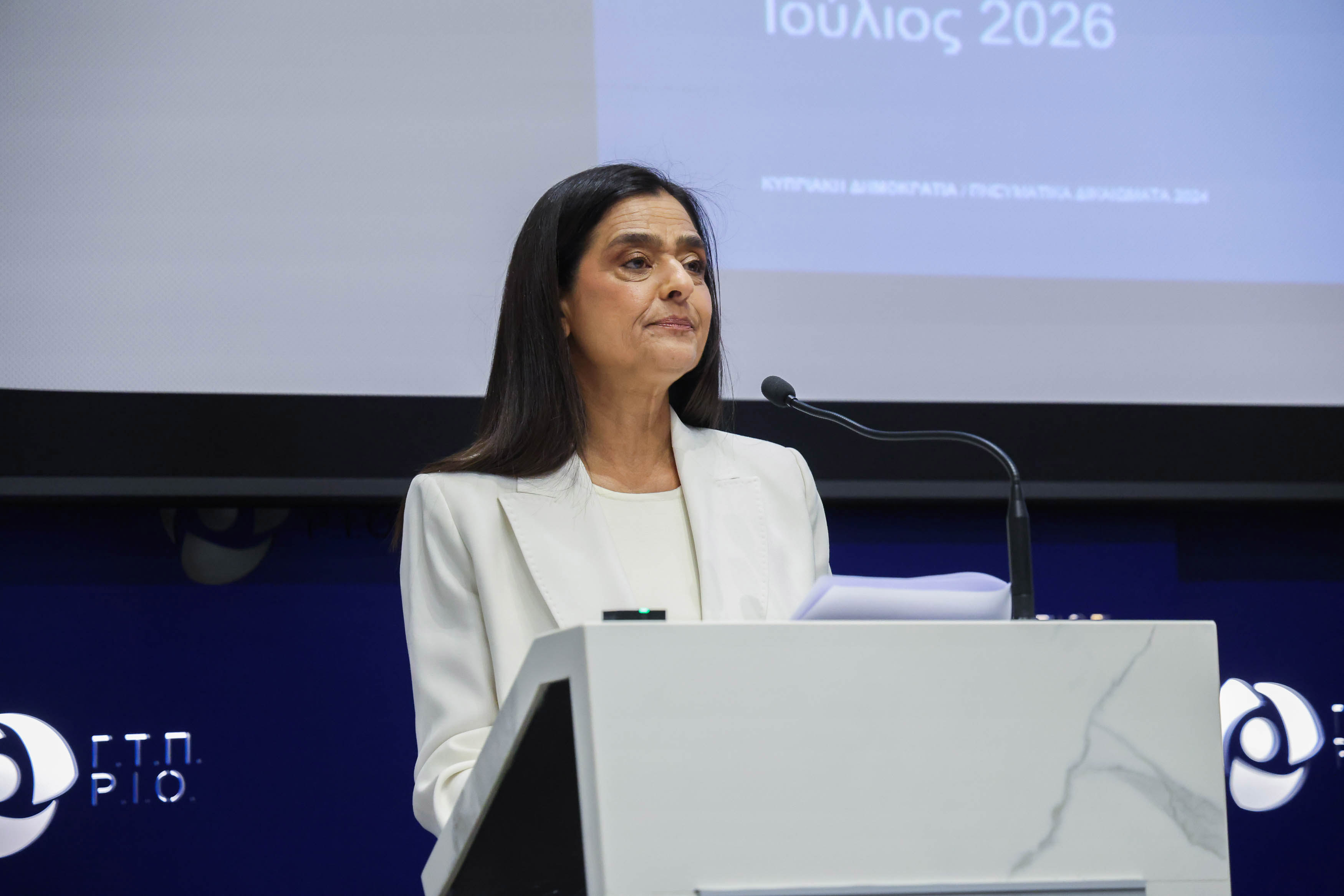
Maronite Cypriot non-voting representative in parliament Petros Nacouzi on Friday met United Nations Cyprus problem envoy Maria Angela Holguin, and after the meeting said that for his community “the resolution of the Cyprus problem is directly linked to the return to our villages”, the majority of which they fled after 1974.
Additionally, he said his community links a solution to the Cyprus problem to “the protection of our cultural and religious heritage and the ability of younger generations to maintain a living connection with their roots”.
“The voice of the Maronites must be heard, and our needs and rights must be substantively taken into account in any effort regarding the future of Cyprus,” he said.
He added that “at the same time, it remains essential to promote practical measures which improve daily life in the four Maronite villages and support our residents and displaced persons”.
“We are continuing with consistency, realism, and persistence, working towards a peaceful Cyprus which offers security and prospects for all,” he said.
Maronites have received fervent support from Bagimsizlik Yolu
In recent times, the most fervent backing for the Maronite Cypriots’ cause has come from Turkish Cypriot anarcho-communist political party Bagimsizlik Yolu [Independence Path], which in August said that “the longstanding, unresolved issue of the return of the Maronites to their villages could serve as a constructive confidence-building measure”.
“As is known, the return of Maronites to their villages reached its final stages during the tenure of the four-party government led by Tufan Erhurman as its prime minister,” between 2018 and 2019, it said.
However, it added, the matter was “subsequently shelved under the pretext of pursuing a ‘comprehensive solution’”.
It said that now, “the ‘Maronite initiative’, which entails the demilitarisation of three villages and the return of their inhabitants, could be brought about through unilateral steps taken by the Turkish Cypriot side”.
“Consultations with the military regarding such an initiative had previously taken place, and the necessary funds had even been allocated in the budget, yet the process was suspended for no reason,” it said.
‘The Maronites are not a party to the Cyprus conflict’
It then added that “the Maronites are not a party to the Cyprus conflict”, but instead “a minority community which has been among those most severely affected by the tensions and clashes between the two main communities”.
“If Tufan Erhurman, who claims to attach importance to confidence-building measures, wishes to present this issue as a positive example for all peoples living in Cyprus, he should approach it not by asking ‘what can I gain?’, but by asking, ‘what can I do to build confidence?’,” it said.
Additionally, it said, “the restoration of three Maronite villages … would serve as a powerful demonstration, directed at the Greek Cypriot authorities who have treated the Turkish Cypriots as a mere minority, that the Turkish Cypriot community is, in fact, a democratic society which has embraced multiculturalism”.
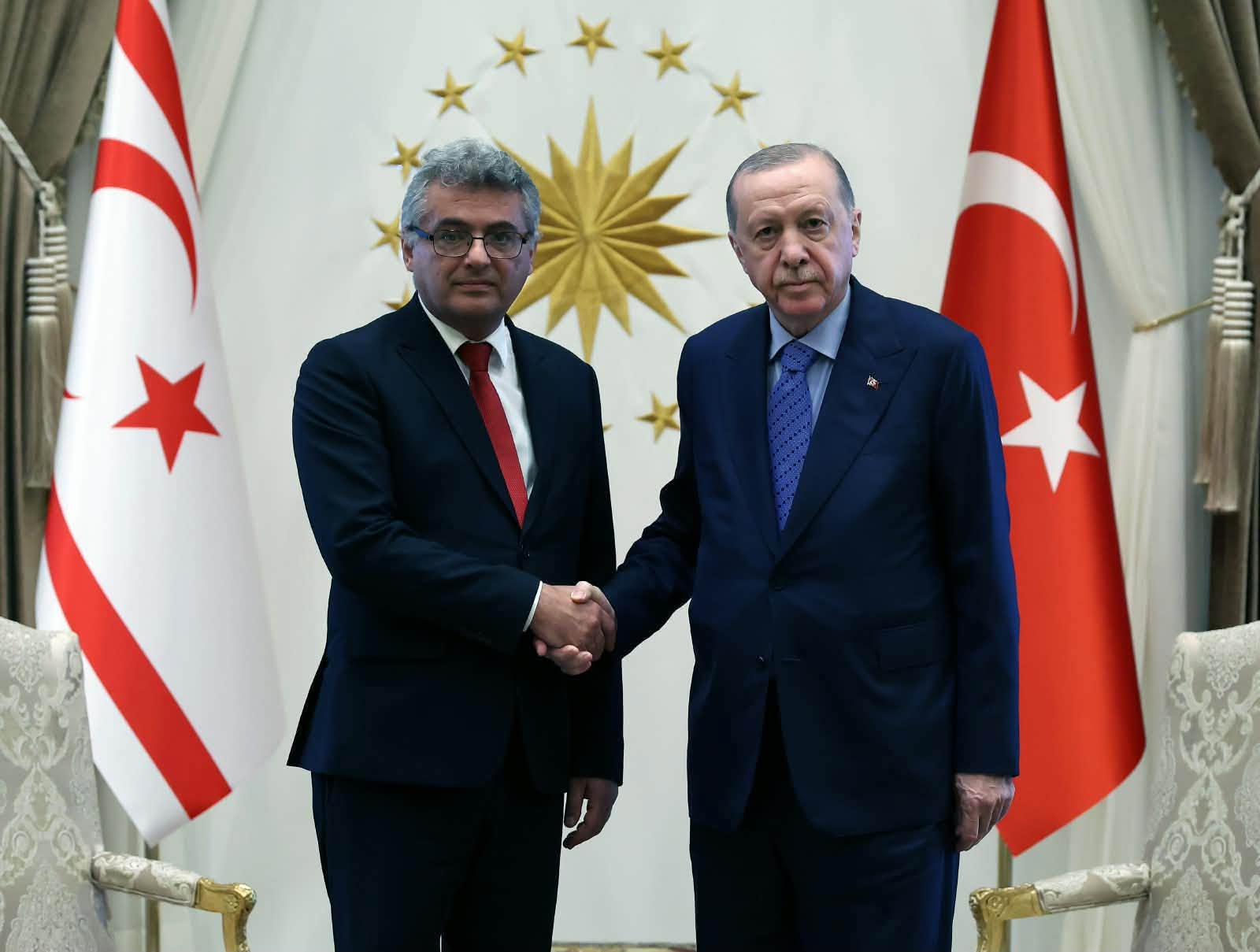
Turkish President Recep Tayyip Erdogan on Friday welcomed Turkish Cypriot leader Tufan Erhurman to Bestepe, Turkey’s presidential palace, and stressed the importance of Turkish Cypriots rights in any solution to the Cyprus problem.
According to Turkey’s presidential communications directorate, “bilateral relations between Turkey and the TRNC, as well as regional issues, were discussed during the meeting”, while Erdogan said he was “pleased” that the Turkish Cypriots were represented at the Organisation of Turkic States summit which took place in Ankara on Friday.
“President Erdogan stated that no process which does not protect the rights and interests of the Turkish Cypriots can be the key to a lasting solution in Cyprus, and that Turkey will always continue to stand by the TRNC,” Turkey’s presidential communications directorate said.
Erhurman made no statement following the meeting.
Friday’s meeting is Erdogan’s first public intervention on the Cyprus problem since last month’s United Nations general assembly, when he said, “I call upon the international community to recognise and establish political, diplomatic, and economic relations with the Turkish Republic of Northern Cyprus”.
He had at the time added that “the inhumane isolation to which [the Turkish Cypriots] have been subjected must finally come to an end”.
Christodoulides accused Erdogan of ‘hypocrisy of the highest form’
This speech prompted a response from Cypriot President Nikos Christodoulides, who used his address to accuse Erdogan of “hypocrisy of the highest form”.
“References to international law, to the respect for the sovereignty and territorial integrity of all states, to illegal occupation, to the drama of refugees. Yet, in relation to Cyprus, Turkey is doing exactly the opposite. Hypocrisy of the highest form,” he said.
He said that Erdogan had, during his own speech, “quoted extensively from the UN charter”, but stressed that “politicians are judged not by their words, but their deeds.”
“Mr Erdogan, if you want to quote from the charter, you must first apply it. The UN security council has established the framework for the settlement of the Cyprus problem. That framework, of a bizonal, bicommunal federation with political equality, remains the only basis on which a comprehensive settlement must be reached,” he said.
Miami-Dade officials drop charge of battery by strangulation against rapper due to ‘insufficient evidence’
Florida prosecutors on Thursday dropped a felony charge against rapper Rick Ross nearly a month after he was arrested in Miami Beach when a woman he was living with told police he hit her, court records said.
The Miami-Dade state attorney’s office filed paperwork on Thursday to drop a felony charge of battery by strangulation because of “insufficient evidence”. Ross, whose legal name is William Roberts II, still faces a misdemeanor charge of battery domestic violence.
Big tech stocks falter as investors question whether billions being poured into AI can generate returns quickly enough
A sell-off of tech stocks that began earlier this month and gained steam with disappointing earnings from leading tech companies drove US markets down by hundreds of billions of dollars Friday. In total, the decline has knocked nearly $1tn in value off the tech-heavy Nasdaq exchange in one week and erased about $2tn in a month.
The S&P 500, the index of the 500 most valuable companies in the US, fell by more than 1% Friday, losing hundreds of billions of dollars in market value. It was on track to erase its gain for October, even though it set its all-time high during the same month. The weakness for technology stocks dragged the Nasdaq composite down even further, more than 3%, also erasing hundreds of billions in value. The Down Jones Industrial Average fell less.
Agent Mario Alberto Morale charged with aggravated assault with a deadly weapon over incident in Houston
A federal immigration agent who drove into and seriously injured a Texas man on 10 October after a botched traffic stop was indicted Friday on a charge of aggravated assault with a deadly weapon.
Mario Alberto Morales, 33, an agent with Immigration and Customs Enforcement (ICE), deliberately veered his SUV into Miguel Parra Hernandez, 48, causing multiple leg fractures and a hip injury, journalists at a news conference in Houston were told.
Eljay Crisp-Carr, 20, spent five months behind bars before prosecutors asked to dismiss charges
Ohio prosecutors on Friday dropped charges against a man arrested in connection with the 6 June shooting at Toledo’s Old West End festival that injured 12 people.
Eljay Crisp-Carr, 20, had faced more than 50 felony charges stemming from the shooting, including 25 counts of attempted murder. He was released after spending about five months behind bars.
Some experts express concern about ‘lack of transparency’ as agency removes warnings on three estrogen patches
Three more patches for treating menopause will no longer carry black-box warnings about cardiovascular disease, breast cancer and dementia, officials at the US Food and Drug Administration (FDA) said on Friday.
The FDA did not convene an advisory committee and offered few details on the scientific basis for the decision in the press briefing. The news follows the removal of black-box warnings from six menopause treatments in February, as patients across the US struggle with shortages of the patches.
US citizen Leo, who has clashed with Donald Trump over several issues, submits his vote by post in Chicago
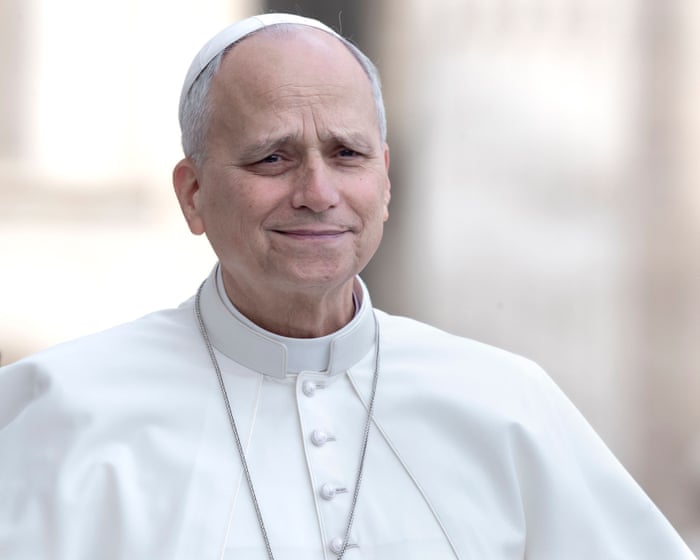
Pope Leo has voted in the US midterm elections – the first time a sitting pontiff is known to have cast a ballot in any political election at any time in history.
Leo, who has clashed with the US president, Donald Trump, over several issues, submitted his vote by post in Chicago, where he was born, the Vatican said on Friday. Leo became the first American leader of the Catholic church last year after the death of Pope Francis.
Independent candidate Bill Hill is threatening to unseat Trump ally Nick Begich with a message of affordability
As Republicans fight to maintain their narrow majority in Congress, they face a unique challenge in Alaska – not from a Democrat, but from an independent commercial fisher and first-time candidate running to flip the state’s lone House seat.
Bill Hill, who is an Alaska Native and has worked in education and construction, has positioned himself as a working-class candidate who will fight to make life more affordable for people like himself and his family.
Education Minister Athena Michaelidou on Friday asked the House finance committee to approve a five-per-cent increase to her ministry’s budget, which, if approved, will amount to just shy of €1.7 billion next year.
“Through a coherent reform plan, we are seeking to free the education system from the logic of fragmented actions and are working towards a holistic framework, adopting a new culture of adequacy and efficiency,” she told the committee.
She added that her ministry’s budget “serves this strategy precisely”, and is “a tool for implementing our reform policy, with clear priorities, targeted investments, scientific documentation, and continuous evaluation”.
In this budget, she said, a total of €53 million has been allocated to school infrastructure, an increase of €10 million on this year’s budget, with her ministry “planning upgrades to school facilities and the implementation of 23 large-scale projects”.
Additionally, she said the ministry is planning to implement a free breakfast programme for children, and that social workers will be deployed to schools with “high rates of delinquency” so as to “support pupils and families”.
House education committee chairman and Diko MP Chrysanthos Savvides then lamented that “almost 90 per cent of the budget is allocated for teacher salaries”.
He also criticised that “no government has put in place a plan for the creation of school classrooms or school buildings”, and said that because of this, schools are “overcrowded” and “overpopulated”.
On this matter, he said that the rollout of portakabins to be used as classrooms is “a huge problem in the European Cyprus of 2026”.
President Nikos Christodoulides on Friday pledged further investment in higher education, research and innovation as he attended the foundation stone laying ceremony for the Cyprus University of Technology’s (Tepak) new school of marine sciences in Larnaca.
Speaking at the ceremony, Christodoulides welcomed the completion of the financial, institutional and legislative procedures necessary for the project to proceed.
“The planning has progressed and today we are here for the groundbreaking of the project,” he said.
The president described the new school as an “important development for both Larnaca and higher education in Cyprus,” stressing that “it formed part of the government’s broader strategy to strengthen research and innovation and forge closer links between universities, society and the economy.”
He praised Tepak for its pioneering role in this regard.
Christodoulides recalled that the government had decided to proceed with the project in March 2025, noting that Larnaca’s history and identity were closely linked to the sea.
“And I believe it has special symbolism in the fact that it acquires such a university school that will focus precisely on marine sciences, technology and sustainable development,” he said.
The president also highlighted the growing need for specialised personnel to help protect Cyprus’ marine environment and address challenges such as climate change.
“The presence in Larnaca of the Cyprus institute for the sea and maritime affairs, as well as the possibility of cooperation with other research and production bodies, create the conditions for the development of a substantial ecosystem of knowledge and research around the sea,” he said.
Christodoulides also raised the possibility of developing student accommodation near the new school, noting that space was available in the area for the construction of student residences.
Such facilities, he said, could help meet the accommodation needs arising from the arrival of students, academics and researchers.
He added that the project could provide a boost to the local economy, encourage cooperation with businesses and other organisations, and enrich Larnaca’s social and cultural life.
“For our part, we will continue to invest in higher education, research and innovation,” Christodoulides said.
He stressed that Cyprus’ greatest advantage was its people and that the state’s most important investment was to provide them with the knowledge, skills and opportunities needed to succeed.
Daniel Jones held on $3m bail after studio art chair Pipo Nguyen-Duy and Tran Thi Phong found dead at home
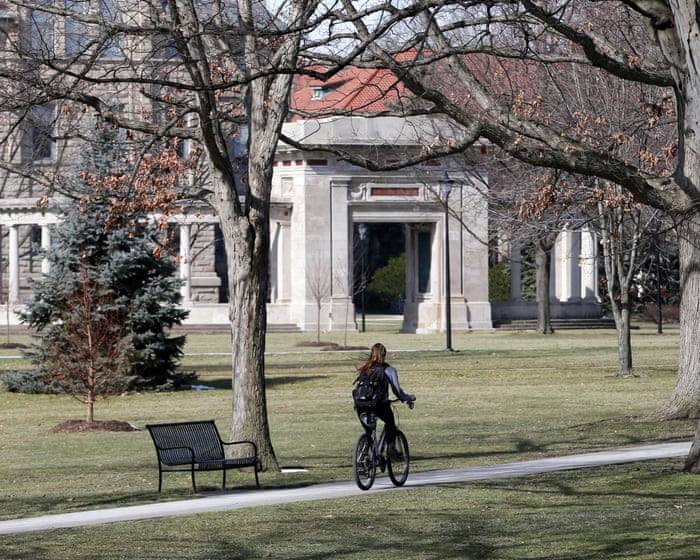
Oberlin College was shaken on Friday after an award-winning professor of photography who had worked at the Ohio liberal arts college for nearly 30 years was found shot and killed on Wednesday, officials said.
Pipo Nguyen-Duy, 64, and his wife, Tran Thi Phong, 56, were found shot to death in their home.
The president cancelled the events in favor of tele-rallies, as Republicans face a fight to retain control of Congress
Donald Trump cancelled, and then promptly uncancelled, two in-person rallies in Kansas and Iowa this weekend as polls suggest US midterm election races in the previous Republican strongholds could go down to the wire.
On Thursday, just five days before election day, the Republican National Committee (RNC) announced the president would no longer host the Kansas and Iowa rallies and instead participate in “a large number of tele-rallies”. The RNC claimed it felt it was in a “strong position” in Kansas and Iowa.
Business is booming for two biggest US oil companies, with both benefiting from higher prices and record production
ExxonMobil and Chevron both reported better than expected quarterly results on Friday as the oil majors benefited from higher prices and record production.
The boon for oil companies has simultaneously been a major pain point for consumers, who say the higher cost of living, especially gas prices, will affect how they vote in the upcoming midterm elections that will determine control of Congress.
The top federal prosecutor in Alaska confirmed on Friday the existence of a criminal and a civil investigation into an alleged scheme by Democrats to confuse voters by recruiting a spoiler candidate on the ballot for US Senate who shares a name with the Republican incumbent, senator Dan Sullivan.
Speaking at a news conference in Anchorage on Friday, US attorney Michael Heyman cited reporting by the New York Times which suggested that the Senate campaign of Democrat Mary Peltola and national Democrats had, in his words, “orchestrated a sprawling conspiracy to recruit and prop up Daniel J Sullivan as a sham candidate”.
Pike is facing death penalty for 1995 murder of classmate, despite surviving a botched execution last month
Christa Pike has marked a month since her failed execution by Tennessee and released a statement in which she laments the “incompetence” that has led to this moment, adding that despite ongoing healing she remains in constant physical pain and mental anguish.
In comments released by her legal team on Friday, the prisoner said that there had not been a moment since she was injected with a massive dose of the sedative pentobarbital that she had not been in pain. “My body hurts. My arms hurt. My hands hurt. My throat hurts. I still struggle to speak. And the pain isn’t just physical. There is pain in my mind and in my soul,” she said.
Middle East conflict threatens Cyprus growth outlook, economics research centre warns
Cyprus’ economy is expected to grow by 3.2 per cent in 2026, up from a previous forecast of 2.7 per cent, as stronger-than-expected economic activity and improving business confidence offset mounting inflationary pressures linked to the conflict in the Middle East, according to a report published by the University of Cyprus’ Economics Research Centre (CypERC) in October.
The latest projections point to economic growth moderating from 4.8 per cent in 2025 to 3.2 per cent in 2026 and 3.1 per cent in 2027, with rising prices and tighter monetary conditions expected to weigh on activity over the coming quarters.
The revised 2026 forecast is 0.5 percentage points higher than CypERC’s July estimate, while the projection for 2027 remains unchanged.
The upward revision reflects stronger-than-expected growth during the second quarter of 2026, alongside favourable developments in the third quarter, including improved economic confidence, low unemployment and continued growth in new housing loans.
However, the research centre warned that the outlook remained vulnerable to geopolitical developments, with the Middle East conflict intensifying inflationary pressures and increasing the risk that economic growth could fall short of expectations.
Inflation is expected to accelerate sharply, rising from 0.1 per cent in 2025 to 3.1 per cent in 2026, before easing to 2.3 per cent in 2027.
The forecasts for 2026 and 2027 are respectively 0.1 and 0.2 percentage points higher than those published in July, reflecting rising international oil prices, strong domestic economic activity and persistently low unemployment.
Economic activity remains robust
Cyprus’ economy continued to expand faster than the European Union average during the second quarter of 2026, despite mounting inflationary pressures associated with the conflict in the Middle East.
Real gross domestic product (GDP) grew by 3.3 per cent year-on-year in the second quarter, accelerating from 3 per cent in the first three months of the year.
Real gross value added increased across all economic sectors, with growth accelerating in most industries compared with the previous quarter.
Information and communication activities remained among the fastest-growing sectors, although their expansion slowed for the fourth consecutive quarter. Growth in real estate activities and professional services also moderated slightly, extending the slowdown recorded during the first quarter.
Consumption growth strengthened further during the second quarter, driven primarily by increased government spending. Private consumption continued to expand above its long-term average, maintaining the pace recorded during the first quarter.
Investment also improved, with gross fixed capital formation continuing to grow on the back of increased spending on machinery and equipment and sustained investment in construction.
Both exports and imports recorded strong annual growth. However, net exports made a negative contribution to overall GDP growth because imports increased faster than exports.
Monthly indicators suggest that economic activity remained robust during the third quarter, although some data pointed to emerging challenges.
Retail trade volumes, card purchases and property sale contracts recorded between July and September indicated continued expansion. However, figures for motor vehicle registrations, new company registrations and tourist arrivals provided mixed signals about the strength of economic momentum.
The number of registered unemployed people continued to increase year-on-year throughout the third quarter, although the construction sector was a notable exception.
Nevertheless, the unemployment rate remained very low in August and well below the EU average, according to Eurostat.
The Economic Sentiment Indicator rose above its long-term average during the third quarter, reflecting stronger consumer and business confidence, particularly in services, retail trade and construction.
Companies’ employment expectations also strengthened, moving above their historical average. Economic uncertainty declined overall, although uncertainty among businesses in services and retail trade increased in September.
Consumers’ and companies’ expectations for future prices remained above their historical averages despite some easing during the quarter. Price expectations among consumers and manufacturing firms rose markedly in September.
Inflation and borrowing costs threaten growth
Consumer price inflation increased to 3.4 per cent in the third quarter of 2026, up from 2.8 per cent in the second quarter.
The acceleration was driven by higher prices for housing, water, electricity, fuels and transport, primarily reflecting rapid increases in international oil prices.
Food inflation also continued to add to domestic price pressures, exceeding the overall inflation rate for the third consecutive quarter.
CypERC warned that Cyprus’ heavy reliance on imported fossil fuels made its inflation outlook particularly sensitive to international oil prices, which are vulnerable to geopolitical developments.
The conflict in the Middle East continued to push up global energy prices during the third quarter, with the effects expected to feed through to the prices of goods and services over the forecast period.
Higher food prices are also expected to sustain inflationary pressures, with international food price indices increasing more rapidly during the third quarter than in the first half of 2026.
The report said rising prices had already put pressure on real incomes and were expected to restrain economic activity, particularly as labour market conditions normalised.
Inflation also increased in the euro area and the United Kingdom during the third quarter, potentially weighing on demand from Cyprus’ main trading partners, particularly for services.
Higher interest rates are expected to exert additional pressure on growth, with the effects becoming more pronounced during 2027.
Euro area key interest rates increased further in September in response to rising inflation linked to the Middle East conflict, while market interest rates had begun edging upwards in March and stood considerably higher in September 2026 than a year earlier.
Domestic interest rates on most loan and deposit categories were also higher in August than in the corresponding month of 2025.
CypERC expects tighter financing conditions to restrain both domestic demand and demand from euro area trading partners, with the effects gradually materialising in 2027 and becoming particularly evident after the first quarter.
The annual contraction in new corporate lending during January to August 2026 is also expected to weigh on growth prospects.
Nevertheless, the research centre said these pressures were being outweighed by the continued dynamism of the domestic economy, supported by recent national accounts data and leading indicators.
Continued growth in new housing loans and the banking sector’s strong liquidity and capital position were also supporting the outlook.
During the first eight months of 2026, the outstanding stock of loans recorded double-digit growth, while deposits expanded strongly, driven by rising domestic deposits.
However, the volume of new loans declined year-on-year over the same period because of contracting business lending, despite strong growth in housing loans.
The ratio of non-performing loans to total loans also declined further in June.
An exception to the broader increase in domestic borrowing costs was the interest rate on new corporate loans exceeding €1 million, which fell significantly in August to its lowest level in more than three and a half years.
Public finances provide support
Cyprus’ public finances remained strong during the first eight months of 2026, with the government recording a substantial budget surplus that exceeded the corresponding figure for 2025.
Government revenue increased robustly year-on-year, outpacing expenditure growth, while the public debt-to-GDP ratio continued to decline.
CypERC said the strong fiscal position was expected to support economic growth by preserving investor confidence amid rising government borrowing costs and helping cushion the effects of cost-of-living pressures.
International and domestic stock market indices also recorded further annual gains during the third quarter, while volatility remained relatively subdued.
The continued positive performance of equity markets was seen as a sign of economic resilience despite geopolitical tensions and elevated inflation. However, the report cautioned that these favourable effects could prove fragile if financing conditions tightened further and cost-of-living pressures intensified.
Growth forecasts remain vulnerable
The research centre said downside risks to economic growth continued to outweigh upside risks, with geopolitical tensions and potentially tighter financing conditions posing the main threats.
A prolonged conflict or further escalation in the Middle East could increase uncertainty, weaken external demand for services and discourage investment.
Further disruption to supply chains could also keep international commodity prices elevated, creating more persistent inflationary pressures and weighing more heavily on economic growth than currently anticipated.
Other risks include weaker-than-expected growth among Cyprus’ trading partners, financial market turmoil that could undermine investor confidence, climate-related events and fiscal challenges arising from higher government borrowing costs.
Conversely, stronger-than-expected growth could result from resilient demand, a longer tourist season, gradually easing inflationary pressures, government measures to mitigate the cost of living and investments not yet reflected in the available economic data.
CypERC’s forecasts remain broadly consistent with those of other institutions, although their projections differ slightly.
For 2026, the Central Bank of Cyprus and the International Monetary Fund expect GDP growth of 2.9 per cent, while the Finance Ministry forecasts 3.1 per cent.
For 2027, the Central Bank projects growth of 3.1 per cent and the IMF 3.2 per cent, while the Finance Ministry expects growth to moderate to 2.9 per cent.
Inflation risks remain tilted upwards
CypERC warned that upside risks to inflation continued to dominate, primarily because of the Middle East conflict and the possibility of further increases in international energy and commodity prices.
A prolonged period of high commodity prices could trigger second-round inflation effects, reinforcing price pressures, particularly while economic activity remains strong and unemployment low.
Other risks include robust wage growth if demand remains resilient, climate-related events that push up food prices and prolonged broad-based fiscal support measures aimed at mitigating the cost of living.
The research centre said such fiscal measures could contribute to higher-than-expected inflation, particularly given prevailing labour market conditions.
Downside risks to inflation include tighter euro area monetary policy and its cooling effect on demand, particularly if higher borrowing costs substantially reduce private and public spending.
Recently introduced fiscal support measures, including cuts to fuel excise duties and reductions in value added tax, could also lower inflation compared with current projections.
The gradual transition towards green technologies in Cyprus was identified as another factor that could help reduce inflationary pressures over the forecast period.
CypERC based its projections on quarterly national accounts data up to the second quarter of 2026, leading indicators covering the third quarter and monthly data available between July and September. The forecasts incorporated revised national accounts figures published on October 20, 2026.
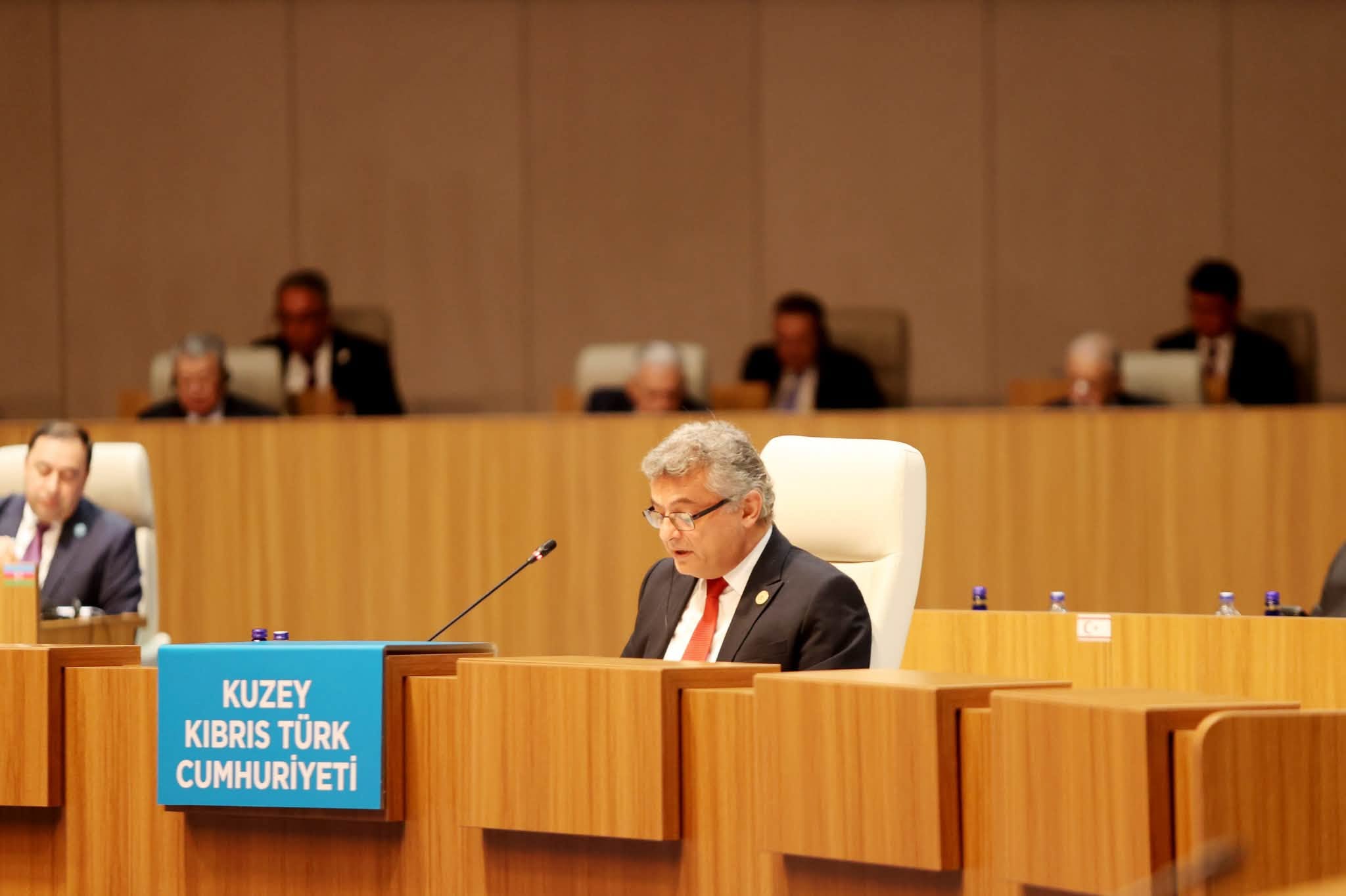
Turkish Cypriot leader Tufan Erhurman on Friday told the leaders of member states of the Organisation of Turkic States there are “no obstacles” to them establishing close relations with the Turkish Cypriots, as he addressed the organisation’s summit in Ankara.
He said that the Turkish Cypriot people have “for many years” been subject to “an unjust isolation which has limited their direct contacts with the international community, their economic and social development, and their integration with the world”.
“However, a nation’s ability to engage with the international community in the fields of culture, art, sports, science, education, and economics is a fundamental issue of human rights which must be considered beyond political agreements,” he said.
To this end, he pointed out that “the Turkish Cypriot people, through their will for a solution demonstrated in 2004 and their constructive stance in subsequent negotiation processes, have repeatedly shown their desire for integration with the world and for a just and lasting solution on the island”.
“Despite this, attempts are being made to prevent our young people from participating in international sports competitions, to prevent cultural events from being held in our country, and to prevent our people from having direct contact with the world,” he said.
He added that “such initiatives negatively impact efforts to build mutual trust and create a favourable environment for a solution on the island”.
Developments ‘aligned with EU goals’
On this front, he made reference to a letter he had received from United Nations Secretary-General Antonio Guterres in response to concerns he had raised regarding efforts undertaken by the Greek Cypriot side to bring about the cancellation of a children’s football camp organised by FC Barcelona and a music festival in Kyrenia.
He said that Guterres had described those initiatives as “discouraging”, and that the secretary-general had “emphasised that initiatives hindering the establishment of trust and which lead to the cancellation of international events run contrary to joint efforts”.
Additionally, he referred to a second letter on the same matter he received from the European Commission, which, he said, “reaffirmed the European Union’s 2004 goal of ending the isolation of the Turkish Cypriot people”.
He added that the letter had also “said that initiatives which contribute to the socioeconomic development of the Turkish Cypriots, especially young people, and enable them to establish close relations with the European Union are consistent with the EU’s goals”.
“The common message of these two letters is clear. There is a strong political and legal basis for developing contact, dialogue, and cooperation with the Turkish Cypriot people in all areas, and this basis is confirmed and supported by the UN and the EU. Steps taken in this context will contribute to the creation of an environment of mutual trust and to efforts for a solution,” he said.
As such, he added, “I want it to be known that there are no obstacles to establishing close relation with the Turkish Cypriots in the fields of science, academia, culture, technology, and diplomacy”.
“We can develop joint research programmes between our universities, bring our youth together in academic and cultural exchange projects, and forge stronger ties in the field of sports,” he said.
‘The reintegration of the Turkish Cypriot people’
He added that “by developing shared cultural spaces such as exhibitions, concerts, opera, and performing arts, we can enhance the cultural dialogue among our artists”, and that “by bringing together our entrepreneurs, businesspeople, and researchers, we can create new opportunities in the fields of trade, investment, the digital transformation, and innovation”.
On this front, he said that “the Turkish Republic of Northern Cyprus, with its higher education resources, young workforce, tourism potential, and strategic location in the eastern Mediterranean, has the capacity to make significant contributions to these collaborations far exceeding its population and land areas”.
“In this context, we are ready to act with the goal of being an economic, scientific, and cultural bridge between the Turkic world and the eastern Mediterranean,” he said.
He then added that “the fundamental goal of all these efforts is to strengthen peace, stability, and cooperation on the island of Cyprus and in the region”.
“Our approach is clear. The reintegration of the Turkish Cypriot people into the world and the search for a solution in Cyprus are not mutually exclusive, by rather processes which reinforce one another,” he said.
To this end, he said that he will “continue to work for a fair and lasting solution on the island in close consultation with the Republic of Turkey”.
“We want the eastern Mediterranean to become a region where mutual respect, inclusive cooperation, and common prosperity, not tensions and exclusionary policies, prevail,” he said.
The day’s summit was, however, somewhat overshadowed by the absence of Azerbaijani President Ilham Aliyev, who elected not to travel to Ankara amid deteriorating relations between his government and Turkey, once his country’s closest ally.
On the surface of the matter is a rift which emerged following Azerbaijan’s decision to ban the wearing of headscarves at public schools in the country – a move which infuriated Turkish President Recep Tayyip Erdogan to the extent that he criticised Baku during his speech to the UN general assembly last month.
The Audit Office plans to introduce artificial intelligence to accelerate its work, identify potential irregularities and free up auditors to conduct more on-site inspections, auditor-general Andreas Papaconstantinou said on Friday.
Presenting the office’s 2027 budget to the House finance committee, Papaconstantinou said a major co-funded project, known as AuditAI, was being planned to allow AI to carry out preliminary assessments and identify potential warning signs, or “red flags”, requiring further investigation.
He said the technology would help speed up audits and the preparation of reports, allowing staff to devote more time to inspections and other substantive work.
The Audit Office has so far submitted 31 reports and five memoranda in 2026, with another 23 reports in progress. Papaconstantinou said the target was to publish between 45 and 50 reports by the end of the year, potentially releasing two reports a week.
The office’s proposed budget for 2027 stands at €12.06 million, an increase of approximately €810,000, or 7.2 per cent, compared with €11.26 million in 2026.
Personnel costs account for 82 per cent of the budget, while 7.5 per cent is allocated to consultancy services and five per cent to software purchases.
Funding has also been allocated for staff training in Cyprus and abroad to improve the early identification of risks, strengthen accountability and ensure more efficient management of public resources.
Papaconstantinou said the office’s budget focused on improving internal operations, strengthening cooperation, making better use of staff expertise and completing audits more quickly and to a higher standard.
Addressing staffing arrangements and salary scales, he said consideration had been given to practices elsewhere in the public sector, particularly the qualifications required of auditors.
He explained that auditors were required to obtain professional qualifications, including chartered accountant certification, and that the time needed to secure these qualifications had been considered when determining salary progression.
“We considered that there should be no unfair treatment, so we equalised the time component,” he said, adding that a similar approach was followed by the Transmission System Operator.
“Let us not exaggerate. They are auditors, and that is the reasoning,” he added.
On consultancy services, Papaconstantinou said the Audit Office preferred to retain expertise internally but that certain highly specialised areas required external assistance.
He cited the information systems of the national health scheme, Gesy, and the Ippodamos planning system as examples of areas requiring specialist technical knowledge.
Papaconstantinou also emphasised the importance of increasing on-site inspections, saying that the more inspections carried out, the better.
He explained that direct inspections allowed auditors to gain firsthand knowledge of the services they were examining, improving both the effectiveness of audits and staff performance.
On audits of municipalities and district local government organisations established under the local government reform, Papaconstantinou acknowledged concerns about the new administrative structures.
He said considerable time had been devoted to examining issues involving Paphos municipality and its suspended mayor.
The auditor-general also addressed the responsibilities of the assistant auditor-general, explaining that he participated in the management team and that efforts were being made to utilise his position effectively.
“I will not say anything more. He certainly needs to work, but let us leave it at that,” Papaconstantinou said.
He rejected suggestions by Alma MP and former auditor-general Odysseas Michaelides that the assistant auditor-general could assume the duties of a director, stressing that the two positions served different functions.
He said he did not accept the claims being made about the assistant auditor-general, explaining that the proposed director’s position was intended to fulfil separate management responsibilities.
“The position we are requesting is for a director’s work, and the assistant auditor-general has a different role,” he said.
In addition regarding a comment on the secondment of former civil defence commander Maria Papa to the Audit Office, Papaconstantinou said her role had been discussed with her and that, if she could not be effectively utilised, the possibility of returning her to her previous service would be considered. “If she cannot be utilised, we will look into having her return,” he said.
The director of the antiquities department Dr George Georgiou has warned that continued cuts to its budget will have consequences for the protection of Cyprus’ cultural heritage.
“The continued compression of spending on antiquities will not be without a price,” Georgiou told the House finance committee, accusing the government of using “creative accounting” to present the department’s reduced funding.
The deputy ministry’s proposed budget for next year stands at €64.3 million, down from its present allowance of €65.7 million, however, Deputy Minister Clea Hadjistefanou Papaellina said the previous year’s allocation included €2.2 million for cultural events during Cyprus’ EU council presidency.
Excluding that amount, the next year’s budget represents an increase of €820,000, she said.
The antiquities department has been allocated €23.6 million, including €19.9 million in recurrent expenditure and €3.8 million for development projects.
Akel MP Christos Christofides questioned the government’s commitment to culture, saying the Deputy Ministry’s share of the state budget had fallen from 0.62 per cent to 0.45 per cent.
He also criticised reductions in funding for cultural grant programmes, including support for theatre productions and contemporary cultural creation.
Christofides said Cyprus ranked near the bottom in Europe in terms of the proportion of public spending devoted to culture.
The ‘contemporary culture department’ is set to receive €21.1 million, of which €15.6 million is earmarked for development expenditure.
Its director, Ioanna Hadjicosti, said €300,000 had been cut from sponsorship programmes, with reductions spread across the various schemes.
Papaellina defended the ministry’s use of its available resources, saying they were being fully utilised to modernise cultural infrastructure and protect the island’s heritage.
She also said the ministry was reviewing sponsorship criteria in response to feedback from cultural organisations.
The committee also heard that completion of the new archaeological museum has been delayed to February 3, 2027, representing a 209-day extension to the original timetable.
Director general George Papageorgiou said a further 18 months will be required to transfer antiquities into the building,
She also confirmed that the ministry’s annual contribution to Limassol’s Rialto Theatre was €120,000, with state funding due to end by 2029 under the agreement with the municipality.

 Login