❌

Reading view

Poland holds a suspect for stabbing two Ukrainians for their nationality, the latest case in a year of rising hate crimes against them

The 30-year-old suspected of stabbing two Ukrainians on a Warsaw bus, after his detention, October 2026

Warsaw police have arrested a man suspected of stabbing two Ukrainians on a bus over their nationality, police said. A court ordered him held in custody, and the charges he faces carry long prison terms.

Russia's full-scale war drove nearly a million Ukrainians to seek protection in Poland, and attacks on them for their nationality grew this year. Polish police received 180 reports of hate crimes against Ukrainians in the first half of 2026, over 30% more than a year earlier.

Police tracked the suspect to a forest

The attack took place on a Warsaw city bus in mid-October. The attacker stabbed and slashed two passengers, both Ukrainian citizens, and fled before police arrived. Both victims went to hospital with multiple stab and cut wounds. Police found that he attacked them because of their nationality.

Officers quickly identified the suspect but spent days locating him. The 30-year-old was hiding and living in a forest in Warsaw's northern Bielany district, where police detained him last weekend.

Old shed in a wooded area of Warsaw's Bielany district, from the police release on the arrest of the suspect in the bus knife attack on two Ukrainians, October 2026
Old shed in a wooded area of Warsaw's Bielany district, from the police release on the arrest of the suspect in the bus knife attack on two Ukrainians, October 2026. Photo: Warsaw Police

He faces three charges. Two concern the bus attack: attempting to cause grievous bodily harm, and causing injuries lasting more than seven days. The third covers threats against another man at a Warsaw venue in August 2024.

Police said he acted as a repeat offender, within five years of serving a prison term for a similar crime. The charges carry three to 20 years in prison. At prosecutors' request, a court ordered him held for three months.

This year's attacks on Ukrainians in Poland

In early August, Ukraine's ambassador to Poland, Vasyl Bodnar, said anti-Ukrainian remarks and attacks had risen by about 30%. Days later, people rallied in 22 Polish cities against violence toward Ukrainians and other minorities.

polish defense
Explore further

Poland paused a military aid package over Lviv’s vote honoring WWII nationalists, Ukrainian source says. Polish ministry denies it

Other recent cases this year include:

  • In late July, police in Wrocław detained two of three men suspected of beating a young Ukrainian couple.
  • On 14 August, a woman allegedly attacked a Ukrainian girl and her younger brother in a Bydgoszcz park after hearing them speak Ukrainian. Prosecutors charged her four days later.
  • In September, a man punched a 20-year-old Ukrainian tourist in the head at a crossing in central Warsaw, knocking him unconscious. Police detained the attacker, who gave no motive.

Tensions rose again in late September, when a Ukrainian man allegedly killed a priest in a knife attack at a monastery in Jarosław. Bodnar said some Polish politicians and journalists used it to argue for deporting Ukrainians.

Meanwhile, police in southwestern Poland detained a Russian citizen suspected of spying, after catching him photographing trains and railway infrastructure. Russia's suspected sabotage campaign keeps reaching Poland and the rest of Europe, and Ukraine's intelligence warned last week that Russia may stage sabotage in Eastern Europe and try to pin it on Kyiv.

  •  

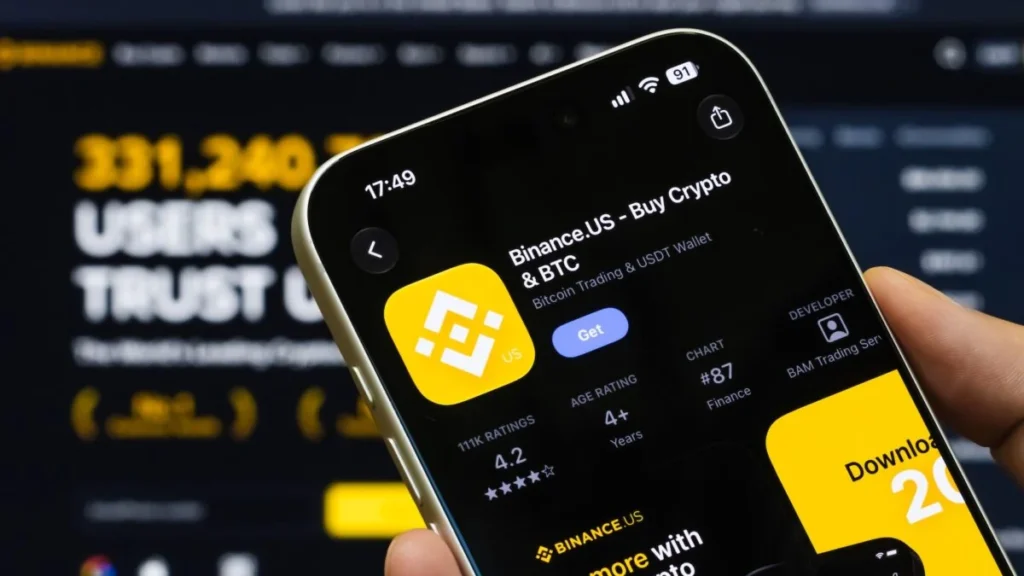
Billions Dollars Stolen in Historic Cryptocurrency Cyberattack

According to preliminary reports, billions of dollars in digital assets may have been compromised, although the full extent of the alleged breaches remains unverified. Photo: Getty images.

Billions of dollars in crypto assets were reportedly stolen in separate hacks targeting Binance and Polymarket, triggering a market selloff and raising fresh concerns over digital asset security worldwide.


The cryptocurrency industry faced one of its most turbulent days this Thursday as reports of massive security breaches involving Binance and Polymarket triggered sharp market declines, widespread panic among investors, and renewed concerns over the security of digital asset platforms.

While Binance investigated what could become the largest cryptocurrency hack in history, Polymarket temporarily halted operations following a cyberattack linked to a third-party service provider.

RELATED: Artificial Intelligence Pioneers Call for International Body to Oversee Cybersecurity Standards


The crisis began when reports emerged suggesting that Binance, the world’s largest cryptocurrency exchange by trading volume, had suffered a major security breach. Initial estimates indicated that nearly $600 million in crypto liquidations occurred across exchanges within a single hour as traders rushed to reduce risk amid growing uncertainty.

We are working non-stop to resolve this issue. Binance will cover all losses.

As a precaution, all deposits and withdrawals are temporarily suspended while our team conducts security checks, freezes funds, and works with law enforcement.

We are working around the clock and will… pic.twitter.com/zufWJ6V05D

— Binance (@binance) October 30, 2026

As the situation unfolded, blockchain analysts reported that wallets allegedly tied to the attackers had received digital assets worth more than $5.5 billion. Later disclosures suggested that the amount associated with the incident could exceed $5.7 billion across multiple cryptocurrencies, including Bitcoin, Ether, USDT, and USDC.

The market reaction was immediate. Bitcoin fell below the $80,000 threshold, while Binance Coin (BNB), the exchange’s native token, dropped sharply. Other major cryptocurrencies also recorded significant losses as investors sought safety amid fears of a systemic security event affecting one of the sector’s most important institutions.

Changpeng Zhao, widely known as CZ and the founder of Binance, stated that the available information appeared to indicate that the platform had suffered a hack. Although no longer involved in the day-to-day management of the company, Zhao expressed hope that all customer funds would ultimately be protected.

Binance, for its part, sought to reassure users, stating that customer assets remained secure and urging the community to remain vigilant against scams and phishing attempts that often proliferate during high-profile security incidents. The company also temporarily suspended several Binance Alpha services, including CEX Buy Token, Alpha Instant, and predictive trading-related functions linked to spot wallet funds.

As investigators worked to determine the full scope of the breach, Binance announced that approximately $2.54 billion worth of assets had already been frozen through emergency security measures. The exchange emphasized that only verified information would be released as the investigation continued.

We are aware of differing figures circulating publicly regarding the amount frozen, including references to $1.8 billion.

For clarity, the current verified total frozen is $2.54 billion. This figure may continue to increase as our teams work closely with law enforcement,… pic.twitter.com/Kx68qptfXk

— Binance (@binance) October 29, 2026

The turmoil was compounded by a separate cyberattack targeting Polymarket, one of the world’s most prominent prediction market platforms. The company temporarily suspended trading operations for nearly an hour after identifying a security incident involving an external service provider.

According to reports, attackers may have exploited a vulnerability connected to DebugBear, a third-party performance and analytics tool used by the platform. The breach allegedly resulted in the theft of roughly $2.65 billion to $2.7 billion worth of cryptocurrencies from user wallets, making it one of the largest incidents ever reported in the prediction market sector.

Following the attack, Polymarket notified British authorities, as preliminary information suggested the operation may have originated from the United Kingdom. At the same time, users reported missing funds and emptied wallets across community channels, raising concerns about the broader implications of third-party software vulnerabilities within the crypto ecosystem.

Despite the disruption, Polymarket moved quickly to restore operations and pledged to compensate affected users. In public statements, the company promised to reimburse all verified losses, an effort aimed at restoring confidence and preventing a prolonged loss of trust among traders.

POLYMARKET HALTS TRADING AFTER HACKERS DRAIN USER FUNDS WITHOUT PASSWORDS OR SEED PHRASES

Attackers allegedly exploited users’ active sessions to sell their positions and withdraw funds directly through Polymarket’s own system.

The attack reportedly originated from a… pic.twitter.com/GJB7MTrBfH

— Bitcoin News (@BitcoinNewsCom) October 29, 2026

Security Under Fire

The dual incidents have reignited a longstanding debate over cybersecurity standards in the cryptocurrency industry. For years, exchanges and digital asset platforms have promoted increasingly sophisticated security systems, yet the scale of the reported losses at Binance and Polymarket suggests that even major players remain vulnerable to large-scale attacks.

If confirmed at the estimated levels reported by analysts and security firms, the Binance breach would surpass all previous cryptocurrency thefts on record, marking a pivotal moment for the digital asset industry. Combined with the Polymarket attack, the events of October 29 erased billions of dollars in market value, exposed potential weaknesses in platform security infrastructure, and highlighted the systemic risks that continue to accompany the rapid growth of the global cryptocurrency ecosystem.

The cyberattack has renewed warnings about cybersecurity protections, investor confidence and risks associated with the use of digital financial platforms.

As investigations continue, regulators, security experts, and investors alike will be watching closely to determine not only how the attacks occurred, but also what they reveal about the resilience of the crypto industry in an era of increasingly sophisticated cyber threats.

  •  
❌