The largest cyber heist in history came as attackers increasingly use artificial intelligence and other advanced techniques to steal crypto and quickly launder the funds.
The founder of Binance, Changpeng Zhao, in Hong Kong in August. The company, the world’s biggest crypto exchange, has promised to make customers whole.
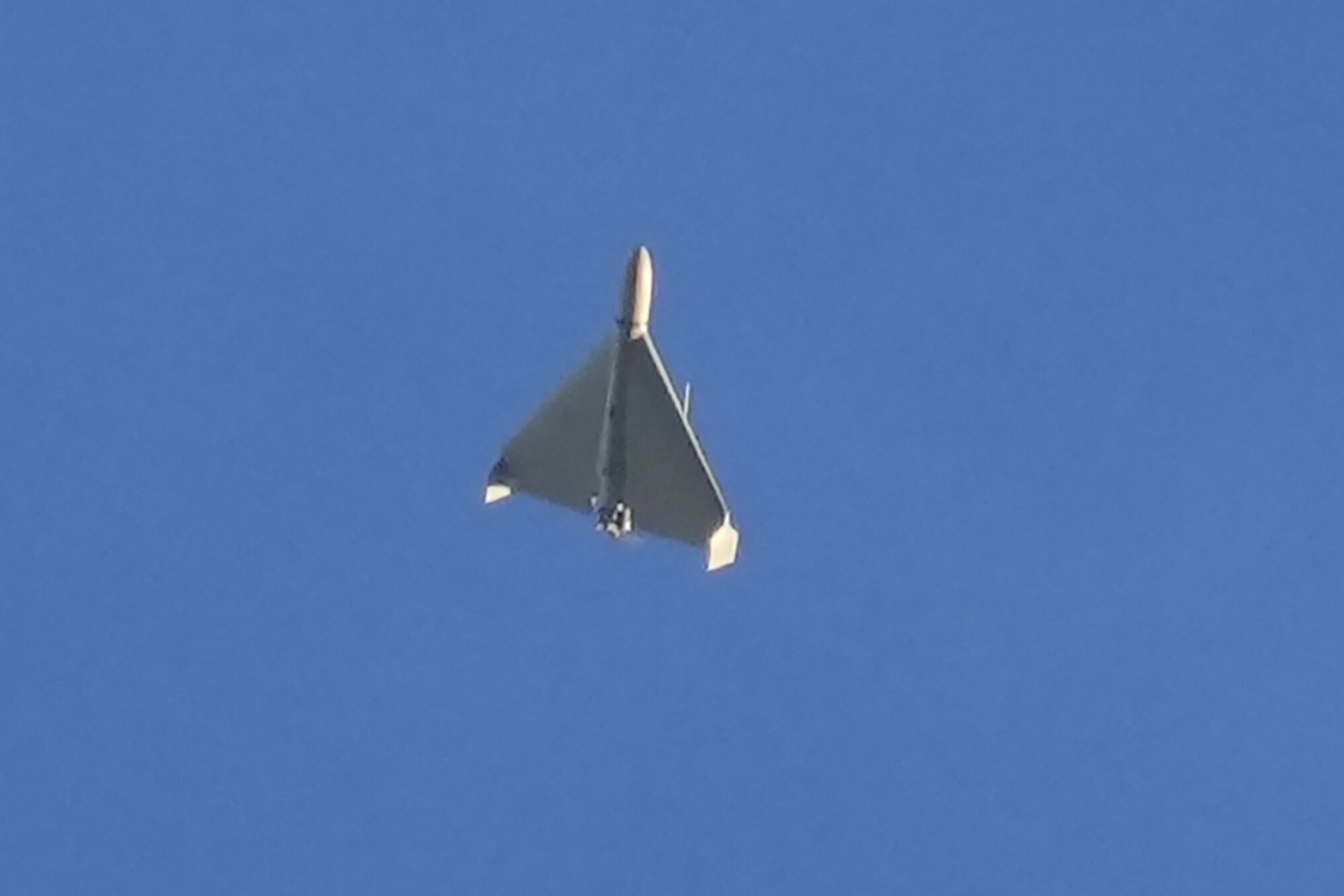
Ukraine is opening grant money for home-built air-to-air missiles and radars, aiming to shoot down Russia’s fastest drones without paying a huge price. The Defense Ministry, the Ministry of Digital Transformation, and the Brave1 defense-tech cluster are launching the competitions, Defense Minister Yevhenii Khmara announced in an address to manufacturers, adding that a grant contest for turbojet engines will follow.
Ukraine is being forced to use expensive air defense missiles against relatively inexpensive Russian drones and cruise missiles. Developing cheaper interceptors, domestically produced radars and engines could change the economics of warfare.
The move comes as Russia leans harder on faster, jet-powered drones that strain the cheapest layer of Ukraine’s defenses. It also follows an earlier round of Brave1 grants that had already flagged anti-bomb systems and Ukrainian radars as priorities.
What Kyiv wants built, from navigation to radars that see the faint targets
Khmara laid out the threats the money is meant to answer: ballistic missiles, cheap cruise missiles, high-speed drones and guided bombs.
From Ukrainian producers, the ministry wants domestic navigation systems, stronger electronic warfare, radars able to pick out low-signature targets, and affordable designs that can be developed in quantity.
“Our requirements are clear: effectiveness, affordable cost, interoperability between systems, and sufficient volume of supply,” Khmara says.
The grants are one tool among others, meant to carry developments that can later scale for the Security and Defense Forces. Earlier, the ministry and Brave1 ran a large-scale test of drones with AI-assisted targeting.
The next contest targets the guided bombs Ukraine still cannot reliably stop
The minister singled out a separate job for manufacturers: new ways to counter Russia’s guided aerial bombs, known in Ukraine as KABs, and to blunt their use.
These are the glide bombs Russian aircraft release from a distance, and Ukraine has struggled to answer them without reaching the launch aircraft themselves.
“It is important to create innovative solutions that let us act ahead and prevail. We need asymmetric effect. We need technologies that change the rules of the game in our favor,” he argues.
Grants for turbojet engines, the ministry says, are the next step after the missiles and radars.
Ukrainian forces used the new StarGate drone to pull off two daring rescue missions in October.
Courtesy of SkyFall
Ukrainian forces used a specialized drone to carry out back-to-back rescue missions this month.
The drone, called StarGate, is a heavy hexacopter that carries an enclosed stretcher underneath.
Business Insider spoke with the pilot and one of the rescued soldiers about the mission.
Izyum thought he was going to die. A devastating blast had taken part of the Ukrainian infantryman's left foot, and he had lost a lot of blood. To make matters worse, Russian soldiers were closing in on his position, and there was no easy escape.
Then came a drone — a massive six-rotor aircraft with an enclosed stretcher underneath. It landed roughly 10 meters away from Izyum's position, in tall grass beside a minefield. Fiber-optic cables were strewn across the area, and he worried the hazards would prevent the rescue drone from taking off.
Dizzy and nauseous, Izyum's comrades helped him over to the unusual aircraft. Summoning what little strength he had left, he hoisted himself into the stretcher capsule. As the drone lifted off, he breathed a little easier, at last feeling some sense of relief.
Izyum is one of two Ukrainian soldiers who have been airlifted out of combat by the StarGate uncrewed aircraft, the first specialized drone for aerial evacuation, which was recently unveiled by Ukrainian company SkyFall. The wounded soldiers were medically evacuated this month in back-to-back rescue missions.
Izyum and KVN, a drone pilot in Ukraine's 475th Separate Assault Regiment who flew StarGate during the rescues, described the missions to Business Insider in interviews this week. Both spoke through a translator and were identified only by their call signs for security reasons.
Casualty evacuation by aerial drone is a new concept being pioneered in Ukraine. This month's rescue missions were among the first of their kind in combat. Skyfall, other defense industry officials, and soldiers say they expect to see more of these missions in the future and believe this experimental tactic is a critical capability, especially in moments when neither medical teams nor robots can reach wounded troops.
KVN's first daughter had just been born when the call came in. The 475th assault regiment, known as CODE 9.2, was preparing for a special operation, and leadership needed him to fly the main drone. A car was on its way to pick him up.
He soon arrived at an undisclosed location in Ukraine for the operation, the rescue of a wounded soldier from the 129th Separate Heavy Mechanized Brigade.
At the center of the operation was StarGate, a heavy hexacopter that SkyFall developed specifically for casualty evacuation purposes. The drone — which SkyFall said is the first of its kind — was unveiled in mid-October, only days before KVN's mission.
Ukraine is increasingly turning to robots to evacuate wounded soldiers in combat. With surveillance and attack drones swarming the front lines, almost any movement carries tremendous risks, making it dangerous for teams to retrieve casualties. Ground robots are one solution, but tough terrain can limit where they can go.
StarGate is a heavy hexacopter developed by SkyFall.
Courtesy of SkyFall
Heavy hexacopters have emerged as an option when other extraction methods are not possible. Earlier this month, Ukraine carried out its first casualty evacuation using an aerial drone, rescuing an infantryman from the 30th Separate Mechanized Brigade with a Heavy Shot Ayudag-6 heavy lift drone developed by Gurzuf Defence.
There have since been two more missions. KVN was the pilot for both, flying Skyfall's StarGate drone.
KVN recalled that his first evacuation happened at night. There were dozens of people — most of them from CODE 9.2, but some from other military units — involved in the rescue operation. The SkyFall team also participated in the planning.
KVN was nervous.
Reaching the casualty meant flying 20 miles out and back through areas flooded with Russian drones and electronic warfare that threatened to derail the mission.
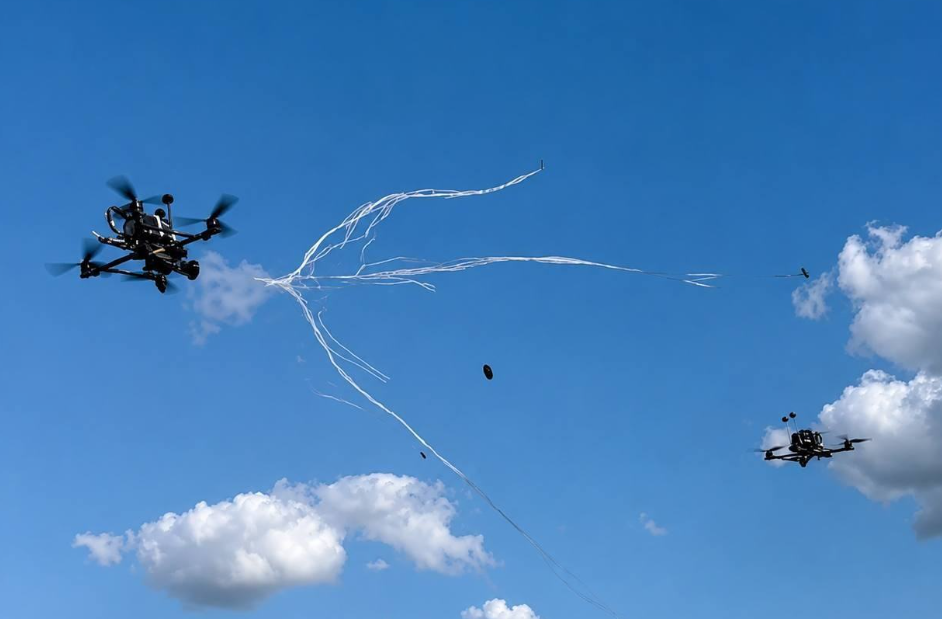
So the Ukrainians assembled something akin to a strike package, with more than a dozen drones flying alongside StarGate to protect it from attack, draw Russian attention away from the rescue, and bomb enemy positions near the evacuation point.
The soldier rescued in the first mission, who goes by his call sign Kolobok, crawls to the drone.
Courtesy of SkyFall
Russian first-person-view (FPV) drones initially prevented the rescue drone from taking off with the wounded soldier, but eventually the skies cleared. KVN said his hands were shaking, but he relied on StarGate's built-in stabilization technology and his teammates' support to steady the drone and his nerves.
The first evacuation took 30 minutes. StarGate didn't have the range for the full 40-mile round trip, so KVN had to land it halfway on each leg so ground teams could swap out the batteries.
After the mission, KVN grabbed some much-needed sleep. When he woke the next morning, he learned that a second evacuation had been approved and would soon be underway.
Flying like a ninja
Izyum, an infantryman in Ukraine's 1st Territorial Defense Brigade, sat down on the ground to rest.
His team had been tasked with holding a position they had just assaulted. When Izyum stood up, he triggered a blast that tore off part of his left foot. His comrades pulled him into a dugout and immediately applied a tourniquet.
Ukrainian soldiers said they hope to see more aerial evacuations in the future.
Courtesy of SkyFall
They radioed back to their commanders that Izyum had suffered a severe injury and needed evacuation.
The situation was dire. Any attempt to walk to higher-level care would mean navigating roughly 20 miles of Russian drone and mine threats. Izyum had lost so much blood, and his strength was fading fast. Given the severity of his injuries, he would never have been able to make that trek on his own. His fellow soldiers would have had to risk their lives to help him make the journey.
And ground robots, increasingly used by Ukraine to evacuate wounded soldiers as the front-line kill zone grows more perilous, couldn't reach his position because ponds, small rivers, and tree lines blocked their path.
Brigade leadership concluded that the only option was to evacuate him by air. And with crewed helicopters effectively out of the question, they needed a drone. StarGate was chosen for the mission.
Izyum didn't think he was going to make it home. His crew was so deep on the front lines, and the Russians were close. At one point, the enemy was only 5 meters out.
Eventually, the rescue drone arrived. As the StarGate drone landed amid a mess of mines and cables, Ukrainian forces used Vampire drones, smaller hexacopters made by SkyFall, to bomb the Russians and keep them at bay.
Izyum emerging from the drone's stretcher.
Courtesy of SkyFall
KVN said landing near the minefield was one of the biggest challenges he faced during the mission, though Russian drone and electronic warfare threats were also problems. He said he had to fly "like a ninja" to avoid them.
Even with new technologies such as drones and ground robots, evacuating wounded soldiers isn't an easy process, and it takes time to plan, prepare, and execute. Nearly two days passed between Izyum's injury and his rescue. When he landed and opened the capsule to see friendly faces, he finally felt safe for the first time since the blast. KVN, too, felt an overwhelming sense of relief when the mission was finally over.
Izyum had four surgeries and is missing half his foot. He will soon be transferred to a rehabilitation facility. Speaking from a hospital in northeast Ukraine, he said that he is grateful to everyone who saved his life.
Some Ukrainian officials have acknowledged that large rescue hexacopters could be easy targets for Russia and said that they should only be used in the most extreme circumstances.
Both KVN and Izyum, however, said that aerial drone casualty evacuations should be expanded as standard practice; CODE 9.2, for instance, plans to create dedicated units for these missions, and SkyFall is aiming to build out a department within the firm specifically for evacuations.
StarGate drones — which cost roughly $50,000 a unit, can carry up to 330 pounds, and can fly at speeds over 60 miles per hour — are equipped with survivability features, such as artificial intelligence-enabled navigation and communication redundancies. SkyFall said it aims to be able to make 1,000 drones a month by the end of 2026.
On their first day of training, all aspiring officers in US Navy Officer Candidate School must endure a punishing gauntlet known as "First Tuesday," an intense event that tests them mentally and physically in the span of just under two hours.
Business Insider's chief video correspondent Graham Flanagan went inside "First Tuesday" at Navy OCS in Newport, Rhode Island as 126 candidates began their journey toward earning their commissions as Naval officers.
Led by a US Marine Corps drill instructor, the event sets the tone for the 13-week training course, potentially weeding out anyone having second thoughts.
A Republican member on the House Armed Services Committee told Fox News Digital ahead of the midterm elections that the Trump administration has a key decision to make on the future of the U.S.-Iran war as "continuing to do just enough not to lose, but not enough to win, is not OK."
Rep. Pat Harrigan, R-N.C., made the comments as Vice President JD Vance declared during a Fox News town hall on Thursday that he promises "Donald Trump is not going to let Iran become a forever war." Official and military sources also told Fox News this week that movements are being made in the Middle East to give the president options if he decides to resume strikes against Iran.
"I share my constituents and many Americans' perspective that I'm very, very frustrated that this war is not over. The way that ultimately this administration went about conducting the war, it needed to execute it and wrap it up in a very short period of time, and we are not there yet," said Harrigan, who is running for re-election in North Carolina's 10th Congressional District.
"That being said, Iran can't have a nuclear weapon. And so at the end of the day, I do believe that this was a war that was inevitable at some point, but the party that's in power and the administration that decided to pull the trigger on it is responsible for the outcome, and they're responsible for the outcome in a very short period of time. Otherwise, things get really, really difficult," Harrigan continued. "And I think we've been seeing that, both from a political perspective but also from a policy perspective."
"And so while the administration needs to wrap this up, we are not in a forever war, but we need to make sure that we're not... we keep the mission the same. We accomplish the mission. And we do what it takes to either win or come home," Harrigan added. "And that binary decision has to get made by this administration."
Harrigan told Fox News Digital that Trump "needs to involve Congress" if he chooses to renew military action against the Iranian regime.
"I think that that will long-term set the course for the country to be resolute in affirming and actually executing and accomplishing the objectives that exist. Because look, like it or not, Congress is responsible for the funding arm of the government. And if they run out of money to accomplish the objectives, then that is not good for our strategic interests," he said. "So, in my opinion, Congress and the White House need to be very closely involved in making the next set of decisions that exist for this conflict."
"And we do need to make sure, again, that we either do what it takes to actually win in Iran, or we need to take the three out of five objectives that we've accomplished and say that, you know what? We've largely accomplished our strategic objectives. We've got more work to do over the long-term that's going to require consistent and persistent over the horizon monitoring of their nuclear program. And we're going to have to mow the lawn every now and again, and everybody's got to realize that, and leave, right?" Harrigan continued, mentioning how the U.S. has prevented Iran from obtaining a nuclear weapon and eliminated Tehran's missile and drone production.
"But we've got to choose one of those two options because continuing to do just enough not to lose, but not enough to win, is not OK," he said. "It's not OK for the American people, it's not OK for our troops, it's not OK for geopolitical and economic stability. And it does not serve the long-term strategic interests of the United States. So it's time to choose."
Harrigan, a Green Beret and business entrepreneur, is running for re-election on Tuesday in North Carolina. He is facing off against Democrat challenger Ashley Bell, a physician associate, and Libertarian candidate Steve Feldman, who ran unsuccessfully for the seat two years ago.
As a current member of Congress, Harrigan told Fox News there is "no question" the Republican Party's House majority is at stake heading into Election Day.
"Whoever has 218 votes gets to chart the course of the direction of the House, the work that its committees do. And in particular, as it relates to the Trump administration, whether or not President Trump's going to get impeached," he added.
"What this boils down to is the future direction of the country. Are we going to be stuck looking backwards instead of actually looking forwards, dealing with the actual business of the county and the free world, or are we going to be stuck in some sort of a Democratically-led nightmare that is simply going to be obstructionist to the conservative principles and values that people voted for in 2024?" Harrigan asked. "That's what's on the line this election cycle."
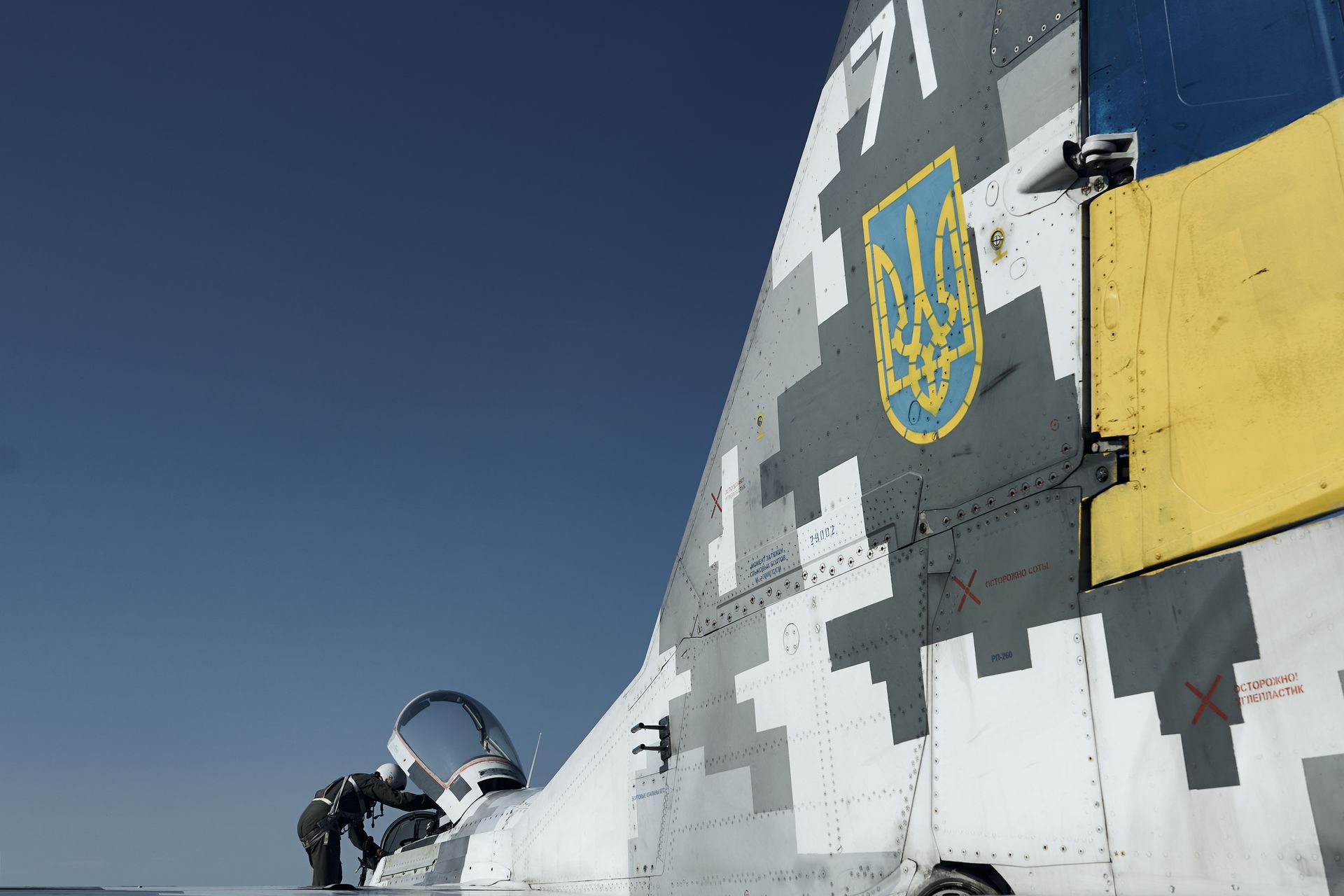
Slovakia's Prosecutor General Maros Zilinka said on Oct. 30 that he had reopened a criminal case against former Prime Minister Eduard Heger and former Defense Minister Jaroslav Nad over their decision to donate Slovakia's fleet of MiG-29 fighter jets and Soviet-era KUB air defense systems to Ukraine in spring 2023.
Peter Rhee is a Navy trauma surgeon who served 24 years in the US military. He operated in several active war zones, including Iraq and Afghanistan.
Peter Rhee speaks to Business Insider about treating bullet wounds, battlefield trauma surgery conditions, AI-powered medical technology, and military medical training
He also discusses his role treating Rep. Gabby Giffords after she was shot in an attempted assassination in 2011 in Arizona.
Automated gun turrets now serve in Ukraine’s Air Force and are destroying Russia’s jet-powered weapons, the Defense Ministry reported on 29 October. It gave no count for those jet kills, and it did not say what type of drones the turrets downed over Kyiv.
Jet drones are where Ukraine struggles most. From 1 to 26 September, Ukraine downed 55% of jet-powered drones against 90% of slower ones, partly because its interceptor drones fly at about 300 km/h, too slow to catch them. Yurii Cherevashenko, Deputy Commander of the Air Force, told a parliamentary inquiry commission on 6 October that jet-drone interceptors would arrive in the needed numbers no earlier than late November. Guns have limits too. On 5 October, Air Force spokesman Yurii Ihnat said turrets had already downed Geran-5s, but that their range is short because their main weapon is a machine gun.
Air Force turrets against jet weapons
According to the ministry, Brave1, a defense innovation cluster, began developing automated turrets in 2024. The systems have since “moved beyond the experimental stage and become an integral part of air defense,” it said. In Air Force service, the turrets are destroying jet-powered Banderol munitions and Geran-5 drones.
Explore further
To scale up air defense without straining the front, Ukraine enlists business. In under year nearly 100 companies have joined, their crews downing 60-plus targets
Russia first used the Geran-5, a 6-meter jet-powered strike drone, in early 2026. The Banderol, a jet-powered cruise missile, flies at 520–560 km/h and can reach 650 km/h.
Private teams, a familiar number
Separately, the ministry said turrets have destroyed more than 60 targets within the private air defense project. The project lets companies form anti-drone teams that work under Air Force command.
Explore further
Postal service Nova Post says it has already shot down Russian Shahed drones, as Ukrainian businesses take air defense into their own hands
Yet on 14 October, the ministry gave the same 60-plus total for all private teams. At the time, it named interceptor drones and heavy machine-gun turrets as their main weapons. Groups from six companies were on combat duty, about 50 groups had been formed in total, and some were still training. Nearly 100 companies had joined by then, up from 81 in mid-September.
The ministry says the project expands air defense “without placing an additional burden” on the military’s own air defense. It and Brave1 say they will keep integrating automated turrets into the air defense system.
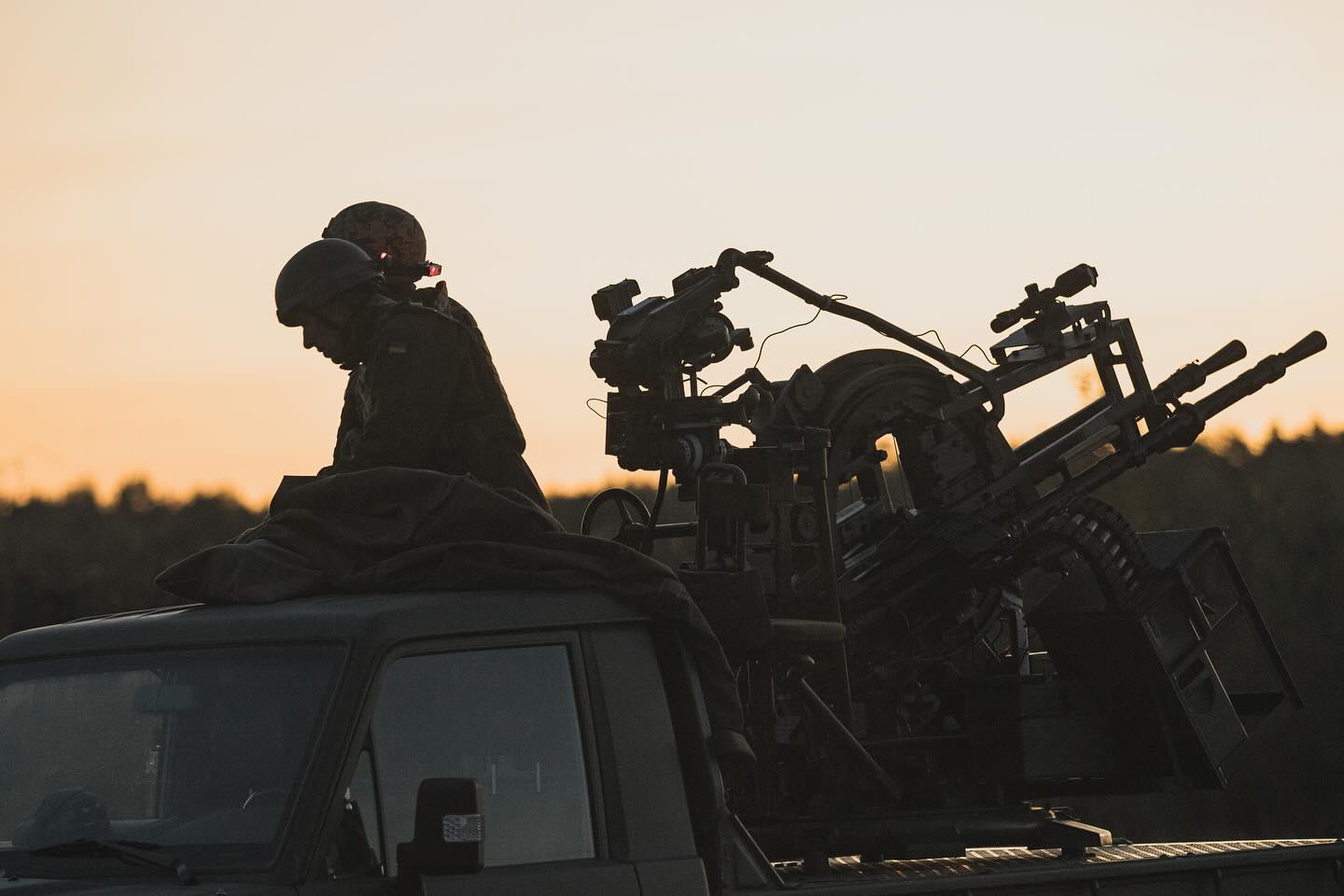
The Sky Sentinel turret can autonomously acquire and lock onto air targets, even jet-powered drones.
Viacheslav Madiievskyi/ Ukrinform/Future Publishing via Getty Images
Once experimental tech, AI turrets are now becoming an "integral part of air defense" in Ukraine's war.
These are guns that can detect and lock onto targets by calculating speed and trajectory.
Ukraine has deployed over a dozen of these and is looking to surge their production and use.
Ukraine is using machine gun turrets controlled by artificial intelligence in battle, and they're working well enough that Kyiv wants to roll them out at a faster pace.
While Ukraine began revealing prototypes of these systems last year, Brave1, the country's defense innovation platform, said on Thursday that they've now become "an integral part of air defense" for its forces.
"In the last month alone, automated turrets have destroyed dozens of enemy drones over Kyiv," Brave1 said, adding that it started work on these weapons in 2024 as experimental technology.
Not much is publicly known about the core capabilities of these turrets, such as their range or how their software works, but they've primarily been described as an air defense tool against Russian drones.
The idea is that artificial intelligence helps the turret detect, acquire, and track a target, making it more accurate than human operators at engaging high-speed air targets such as jet-powered Gerans.
More than a dozen such systems are now deployed in the Kyiv area, with another eight planned for the region, Ukrainian President Volodymyr Zelenskyy said in early October.
In a sign that Ukraine plans to lean further into the technology, Zelenskyy later praised the systems further, saying on October 19 that AI-powered turrets have "proven highly effective against shaheds."
"We are increasing orders, and it is important to accelerate every process as much as possible — organizational, financial, and production-related," Zelenskyy said.
One such system, the Sky Sentinel, is a .50-cal M2 Browning turret developed and operated by private air defense firm Carmine Sky. It can spin 360 degrees and lock onto a target while firing by calculating speed and trajectory.
Each one costs about $150,000, a Ukrainian commander told Business Insider's Jake Epstein last summer, and can distinguish between birds and drones. The turret still requires a human operator to authorize when to fire, the commander said.
Ukraine said an AI-enabled turret shot down Russia's fastest attack drone.
Courtesy of United24
Brave1 released a montage on Thursday indicating that Ukraine is also fielding other types of automated turrets, showcasing clips of several designs.
It said turrets had shot down at least 60 targets under its Private Air Defense Project, a pilot that allows private Ukrainian firms to buy air defense equipment and train civilian staff to use them against drones threatening factories, warehouses, and other important sites.
Notably, Brave1 said these turrets took down Russian Geran-5s and Banderols — jet-powered drones and cruise missiles that can reach speeds of 375 to 400 mph.
A similar claim was made by Yuriy Ihnat, the Ukrainian air force's spokesperson, in early October, when he said that AI-powered turrets had shot down Russian jet-powered drones for the first time. Ihnat did not say which system was used.
Kyiv has eagerly integrated AI into much of its war effort, using machine learning models for other functions, such as predicting enemy drone strikes and autonomously conducting supply runs with robotic buggies.
The turrets do have limited range, making them more useful as a final defense against drones or against low-flying targets.
They'll likely be one of several tools Ukraine is developing to counter Russian jet-powered threats.
Over the last few months, the Kremlin has been ramping up production and deployment of cheap cruise missiles or drones equipped with turbojet engines. These weapons, flying at nearly half the speed of sound and launched by the thousands every month, have become a major challenge for Ukrainian air defenses.
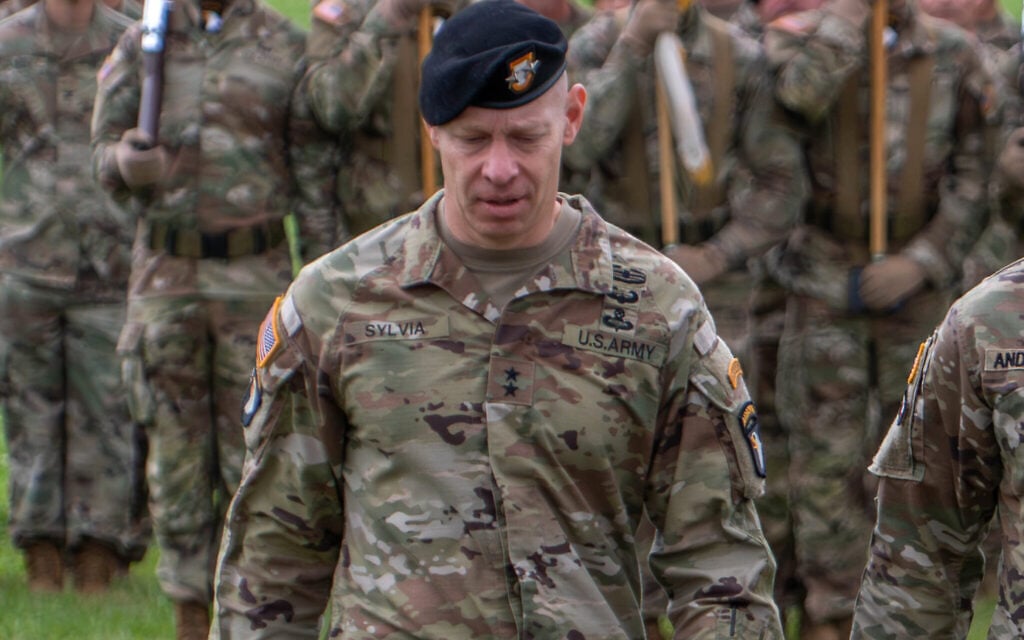
Pentagon official claims Lt. Gen. Brett Sylvia, ousted head of strategy for Joint Chiefs of Staff, failed three polygraph tests about leaking classified information to journalists
Two concealed carriers in a Polk County, Florida, Dollar General Store, pulled their firearms and held a knife-wielding woman for police, Sheriff Grady Judd said on Wednesday.

 Login