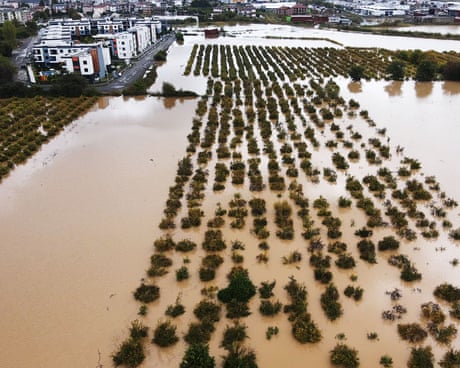
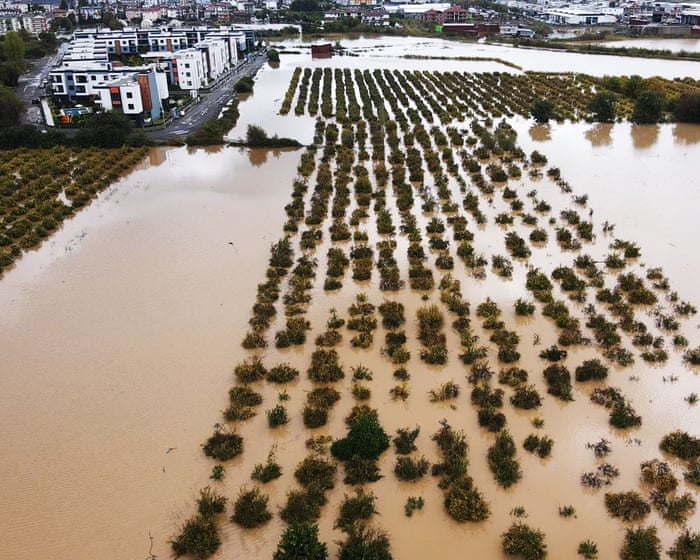
Turkey has been hit by powerful thunderstorms and a fatal tornado this week with more heavy rain expected
Heavy rain and strong winds will continue to affect parts of south-eastern Europe and Turkey over the next few days, as an area of low pressure in the region has allowed for the formation of powerful thunderstorms. During a particularly intense thunderstorm in Antalya, a coastal city in the south-west of Turkey, the formation of a tornado resulted in the deaths of four construction workers on Tuesday. Authorities in Greece and Turkey have released severe rainfall and flooding warnings, as a further 100-150mm (nearly 4-6in) of rain is expected this week in central Greece and western parts of Turkey, with locally higher totals possible.
Travelling eastwards towards south Asia, strong winds and heavy rainfall have swept across the Indian regions of Odisha and Andhra Pradesh as Cyclone Arnab made landfall. With wind gusts in excess of 85mph (140km/h) and rainfall totals in some regions exceeding 200mm, the severe storm has prompted mass evacuations of more than 180,000 people, as well as widespread disruption to energy and transport infrastructure. The cyclone will weaken as it continues to traverse northwards over the coming days, though will continue to deliver heavy rain to parts of northern and central India as it does so.
Ex-energy secretary Ed Miliband’s agenda appears undermined as money is diverted from renewables to defence
Britain is unlikely to hit its targets on green heating after the cuts announced by John Healey this week, experts have warned, as critics of Ed Miliband claim the former energy secretary’s green agenda is being dismantled.
The chancellor unveiled more than £3bn worth of cuts to the energy department’s budget this week, much of which will pay for higher defence spending.
One of the biggest problems in our world of politics is voters' common refusal to accept the concept of tradeoffs. Author Robert Mulligan says it "is one of the most basic principles in economics, that in order to have more of one thing, you have to accept having less of something else." Likewise, economist Thomas Sowell noted, "There are no solutions. There are only tradeoffs."
It's a basic idea that we all understand on a personal level. I've been thinking about trading my 15-year-old car for a new one, as it would be nice to have a vehicle with power windows and Bluetooth. But buying one means using money I could spend on other pleasures. Such is life.
Politics is funny, though. Politicians make promises where everyone gets everything their heart desires. We can have a single-payer healthcare system without any of the resulting shortages. We can have tariffs that don't drive inflation—or that wall Mexico pays for. It would be nice if lawmakers just leveled with us about the ups and downs of policy choices.
One initiative this election, Proposition 45, best epitomizes that tradeoff issue. It seeks to reform the state's "landmark" environmental law, the California Environmental Quality Act (CEQA). Do we want more building and the good it brings, or do we maintain the Byzantine regulatory process so we can stop construction of projects we don't like?
Complex regulations aren't best reformed at the ballot box, but since Gov. Ronald Reagan signed the law in 1970, CEQA has entangled construction projects of every sort in a maze of hearings, Environmental Impact Reports, and litigation. CEQA was meant to assure developers mitigated any environmental damage. That sounds fine, but it has led to long delays, enormous costs, and special interests that use the process to stop projects or exact non-environmental demands (e.g., union wage concessions).
There's wide consensus in the Legislature that CEQA has exacerbated the state's housing crisis, halted business growth, and slowed our economy. The law even endangers the state's environmental priorities, as cynical actors have used it to derail parks, transit projects, infill housing, wildfire-fighting brush-clearance projects, you name it.
Lawmakers have exempted various projects from CEQA, but have done so on a piecemeal basis—and only those that fit a narrow scope. Sponsored by the level-headed California Chamber of Commerce, Proposition 45 attempts broad reform for any "essential" project. Per the measure, that includes housing, water systems, clean energy, health facilities, police and fire stations, brush clearance, broadband, education facilities, and transportation projects except for the bullet train.
As the Legislative Analyst's Office explains, Proposition 45 "creates more binding time limits for state and local governments to do both CEQA and permitting reviews. This includes time limits for determining if a project application is complete, finishing the EIR, and granting other types of approvals and permits." Some of the changes are deep in the weeds, but it's all meant to speed things up—and to limit what the courts can review.
"CEQA lawsuits, inclusive of appeals, typically take four to five years to resolve, stalling most approved projects and often deterring lenders, investors and grant-making agencies from funding them," explained a September report from the Holland & Knight law firm. Ask any knowledgeable person about why California is incapable of building anything efficiently and they will point to these CEQA impediments. If the state wants to reduce housing prices, it needs to fix this logjam.
As a voter, you must answer a simple question: Do the benefits outweigh the downsides? Again, the downside is that in speeding up approval of projects that you like, it will also speed up the process for projects that you don't like. No wonder opponents are raising the arguable specter that Proposition 45 will help companies build data centers, given those centers are widely unpopular.
We need more housing, including suburban subdivisions. We need more businesses. We need better freeways. We need to speed the process for brush clearance to prevent devastating wildfires. So, yes, I eagerly support this measure. Will it likely mean I'll see the speedier construction of, say, underused light-rail lines and absurdly costly subsidized apartment buildings that annoy me? Probably. Oh well, some bad will come with the good, no matter what the campaigns tell you.
For instance, the "yes" side claims that Proposition 45 offers the "same strong protections." California's environmental protections will still be strong, but they obviously won't be the "same." And opponents claim CEQA needs reform, but this particular fix is the wrong way to go about it. That canard just reflects a myopic refusal to accept downsides inherent in any reform.
To me, Proposition 45 has far more pros than cons. You do you. But be an adult and recognize the tradeoffs. As sci-fi author Robert Heinlein wrote, "there ain't no such thing as a free lunch (TANSTAAFL)."
This column was first published in The Orange County Register.
Democrats are using the high price of diesel, heating oil, and fertilizer to tie Republicans to President Donald Trump’s unpopular, costly war in Iran.
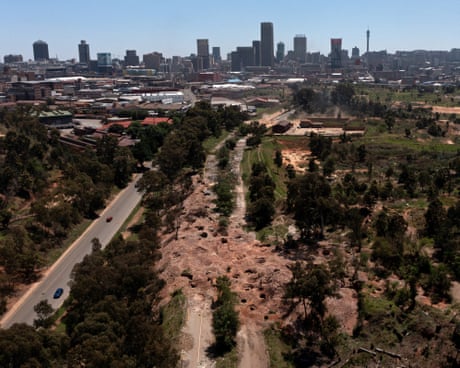
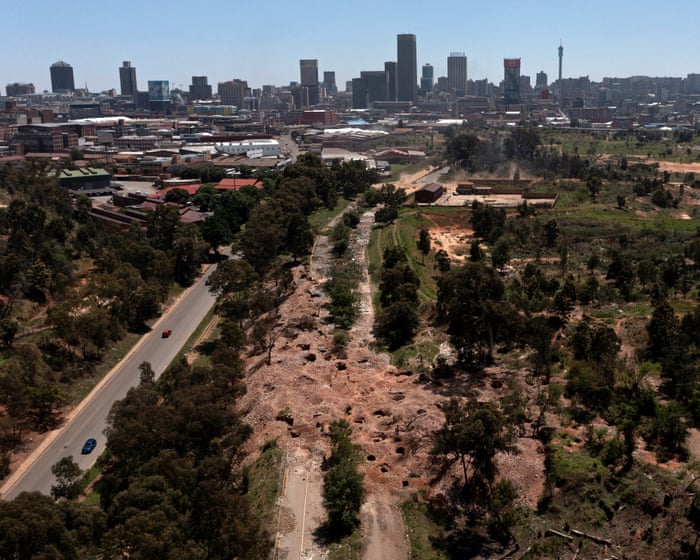
There is no end in sight for the drivers of illegal mining, while police action appears ineffective
Cora Bailey has been encountering illegal miners ever since she first started treating injured animals in the townships around Roodepoort, west of Johannesburg, in 1991. But as the price of gold has soared, so too has activity in the abandoned mine shafts that mark the area.
In late September, dozens of zama zamas – the name given to illegal miners in South Africa, meaning roughly “to take a chance” in Zulu – arrived to dig for gold across the dirt road from her charity, Claw (Community Led Animal Welfare).
An unpublished government report on feral deer shows Australia is failing in its efforts to stop the spread of what one advocate warns could become “Australia’s next feral pig”.
The five years from 2020-2025 over which the national feral deer action plan was assessed covers a period in which the famously elusive species has increasingly encroached upon major cities, leading to more frequent encounters – including a memorable occasion in which two men in various degrees of undress were fined after becoming lost in the bush when they were spooked by deer while nude sunbathing.
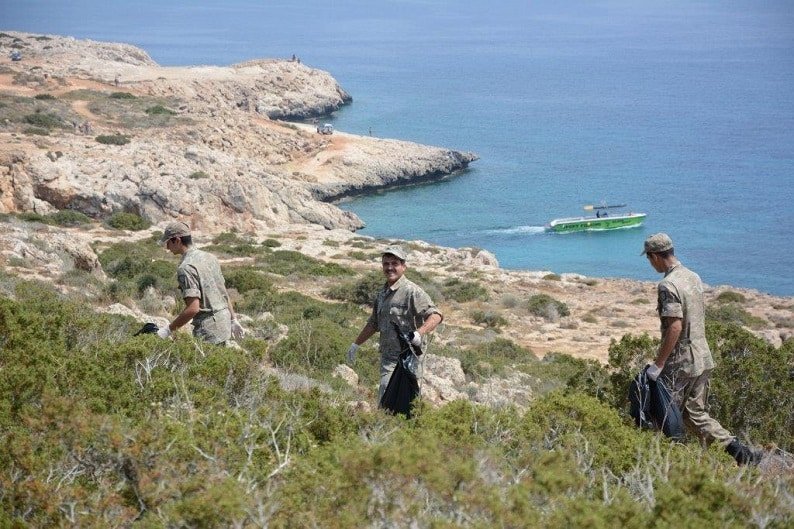
The Cyprus-wide clean-up campaign “Let’s Do It!” 2026 will conclude with a celebration at the Athalassa forest park in Nicosia on Sunday.
The public event will start at 9.30am and will include an organised cleaning campaign around the park with the participation of volunteers, families, students, representatives of public bodies, as well as businesses and sponsors.
According to the announcement, the campaign is Cyprus’ largest environmental and volunteer clean-up campaign and has mobilised more than 350,000 participants since 2012.
Environment commissioner Elias Myrianthous said that the campaign brings together people of all ages every year.
“Their contribution is essential, both in cleaning the areas and in raising awareness in society. The Commissioner’s Office has been firmly at the side of the organisers and volunteers since 2012, supporting the campaign and placing it under its auspices,” he said.
Myrianthous said that uncontrolled dumping and inadequate waste management burden the environment, affect our quality of life and have an economic cost for the country.
“To address this, we also need to look at our consumption habits, what we buy, how much we need and how easily we replace it. We need to limit unnecessary consumption and waste, repair and reuse what can still serve us,” he said.
Meanwhile, forestry department director Savvas Ezekiel said that his department, as the competent body for the protection, management and sustainable development of the forest ecosystems of Cyprus, has consistently supported the campaign, actively contributing to the effort for a cleaner and healthier natural environment.
“Environmental protection is not limited to an individual campaign, but is a collective responsibility and ongoing effort, in which the active participation of citizens is crucial,” he said.
National coordinator of the campaign, Ileana Nicholson, said that “Let’s Do It!” Cyprus was more than a clean-up campaign.
“It is a movement of people choosing to take action, to work together and to protect their place. Behind every clean-up are volunteers, students, teachers, organizations and partners who selflessly offer their time and energy. Without them, none of this would be possible,” she said.
She said that the biggest challenge was not to collect more waste, but to reach a time where volunteers would find less garbage dumped in nature.
“And this can only be achieved through education, consistency and cooperation between the state, businesses and civil society. Change is not the business of a few. It is in the hands of all of us,” she said.
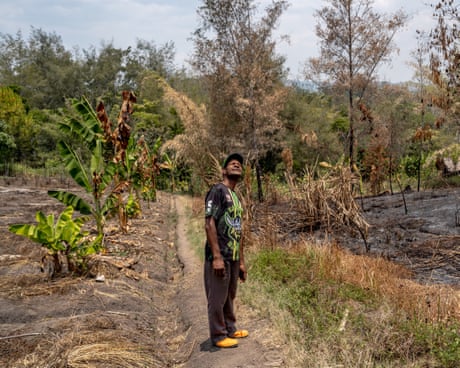
As many as 8 million people have been affected by food shortages, electricity blackouts and health clinic closures
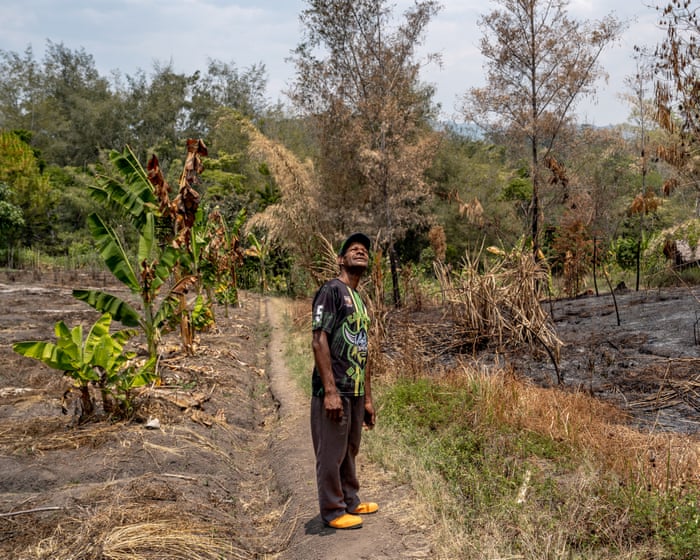
Extreme drought driven by an historic El Niño is affecting as many as 8 million people in Papua New Guinea, causing a cascade of issues from shortages of food and water, to electricity scarcity and schooling disruption.
An influential coalition that includes churches, trade unions and business groups has said the Pacific nation is in the midst of a “national crisis”, but there appears to be “no coordinated plan to protect vulnerable communities from the worsening impacts of El Niño.”
Chances of severe weather are looming over certain regions across the U.S. next week, with the possibility of thunderstorms on Election Day potentially impacting voter turnout in key races. Parts of the Northeast have seen a long stretch of dry, warm weather in the recent days, which could extend through the weekend, AccuWeather reported. But,…
Chances of severe weather are looming over certain regions across the U.S. next week, with the possibility of thunderstorms on Election Day potentially impacting voter turnout in key races. Parts of the Northeast have seen a long stretch of dry, warm weather in the recent days, which could extend through the weekend, AccuWeather reported. But,…
 Login