❌

Reading view

Japan To Assemble AMRAAM Missiles As U.S. Moves To Dramatically Boost AIM-120 Production

The United States and Japan will establish a facility in Japan for the final assembly and inspection of AIM-120 Advanced Medium-Range Air-to-Air Missiles (AMRAAMs), advancing a bilateral effort to expand munitions production as demand rises across the U.S. and allied military forces.

Japanese Defense Minister Shinjiro Koizumi announced the agreement following discussions with U.S. Secretary of War Pete Hegseth on the sidelines of the ASEAN Defense Ministers’ Meeting-Plus in Cebu, Philippines. The facility will operate under the broader Operation Supercharge initiative, which seeks to accelerate cooperation between the two countries on defense equipment and technology.

Secretary of War Pete Hegseth shakes hands with Japanese Minister of Defense Shinjirō Koizumi at the the 13th ASEAN Defence Ministers’ Meeting-Plus in Cebu, Philippines, Oct. 28, 2026. ADMM+ is an annual high-level ASEAN engagement that promotes regional peace and stability through dialogue and defense cooperation. (DOW photo by U.S. Air Force Master Sgt. Brycen Guerrero)
Secretary of War Pete Hegseth shakes hands with Japanese Minister of Defense Shinjirō Koizumi at the 13th ASEAN Defense Ministers’ Meeting-Plus in Cebu, Philippines, on October 28, 2026. DOW photo by U.S. Air Force Master Sgt. Brycen Guerrero

“We finally reached an agreement on the establishment of a final assembly and inspection facility in Japan for the AMRAAM air-to-air missile, which is essential for the F-35,” Koizumi said, according to a translation of his remarks published by Air & Space Forces Magazine.

Koizumi described the agreement as a means of ensuring access to equipment required by both countries while strengthening Japan’s domestic defense industrial base. At this point, the facility’s location, construction timeline, anticipated production capacity, and Japanese industrial partner are yet to be disclosed.
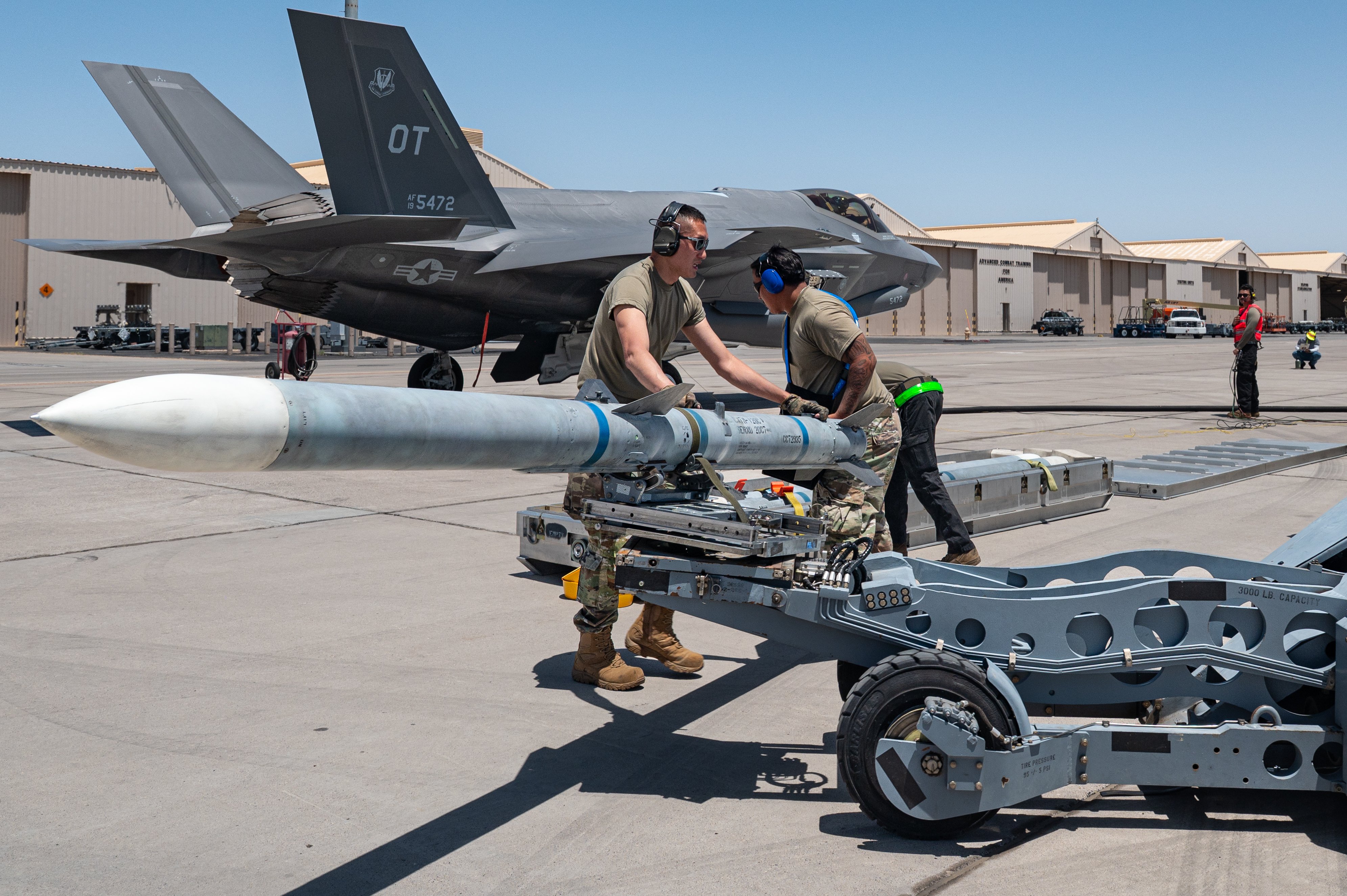
U.S. Air Force Staff Sgt. Andrew Wilson, left, a weapons load crew chief, and Senior Airman Anthony Silva, a weapons load crew member, assigned to the 57th Aircraft Maintenance Squadron’s Bolt Aircraft Maintenance Unit, secure a munition onto a bomb lift truck during a hot integrated combat turn (ICT) exercise at Nellis Air Force Base, Nevada, June 23, 2025. During hot ICTs, four AIM-120 Advanced Medium-Range Air-to-Air Missiles are loaded onto an F-35 Lightning II while the aircraft is simultaneously refueled with its engines running. (U.S. Air Force photo by William R. Lewis)
U.S. Air Force weapons load crew secure an AMRAAM onto a bomb lift truck at Nellis Air Force Base, Nevada, June 23, 2025. U.S. Air Force photo by William R. Lewis

The announcement follows a September award to RTX subsidiary Raytheon for a five-year AMRAAM production contract, with options for two additional years, valued at up to $20.7 billion. Under a framework agreement announced in February, Raytheon is working toward annual production of at least 1,900 missiles. That figure represents the overall production target, of which the future Japanese facility will account for a share. AIM-120s can cost over $1 million per unit, depending on variant.

The new arrangement also comes after more than two years of discussions over Japanese participation in AMRAAM manufacturing. The initiative emerged in 2024, followed by a feasibility study supported by Mitsubishi Electric and Raytheon. By April 2026, discussions had expanded to include possible Japanese production of circuit card assemblies in addition to final assembly and inspection.

New Production Node For A High-Demand Missile

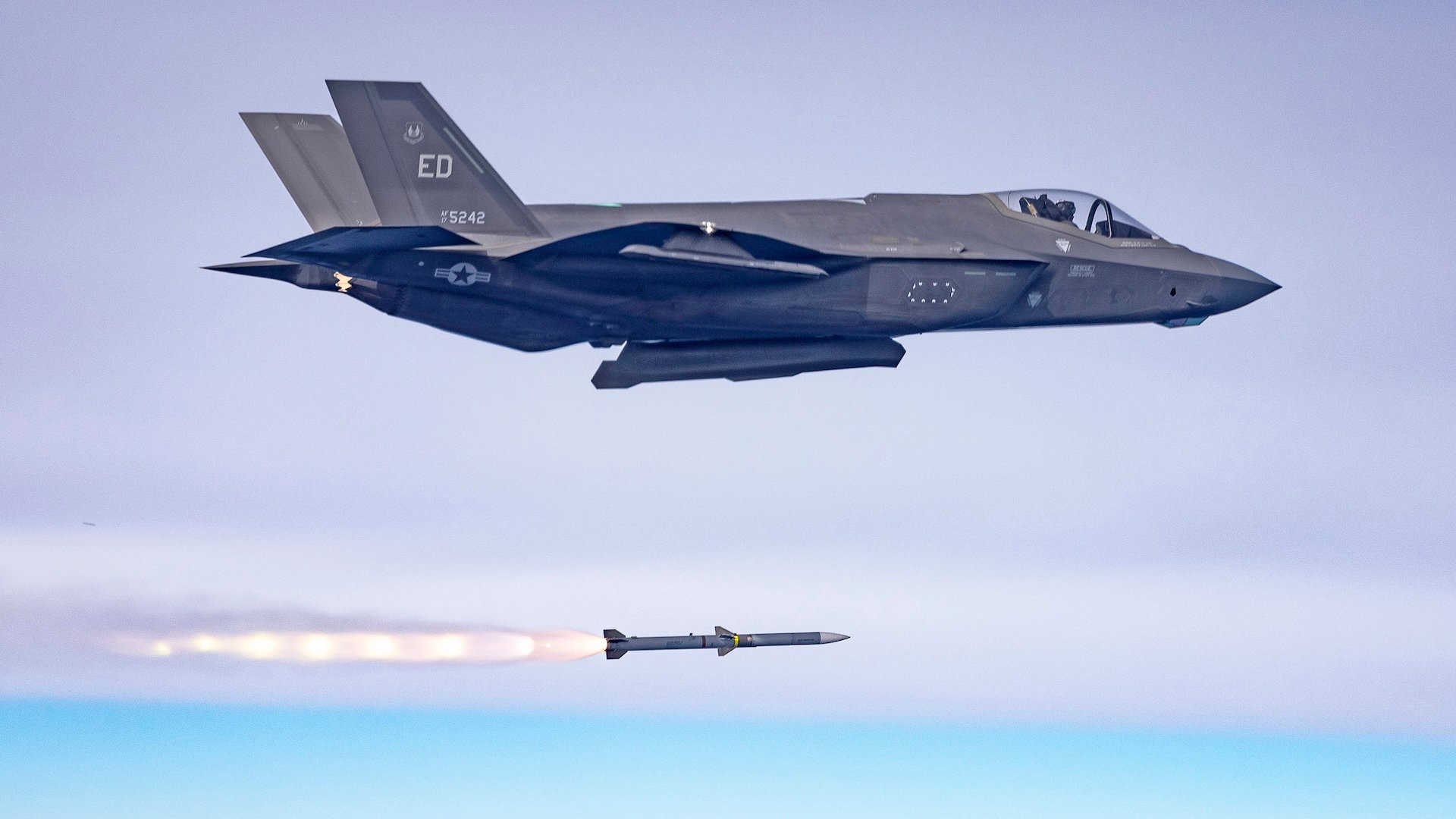
The AIM-120 beyond-visual-range air-to-air missile is used by a wide range of U.S. and allied combat aircraft, including the F-35. Examples of the stealth fighter are operated by U.S. Air Force and Marine Corps units stationed in Japan, as well as by the Japan Air Self-Defense Force (JASDF). Both the U.S. Air Force and JASDF also operate F-15 variants in Japan, for which AMRAAM is similarly a primary weapon.
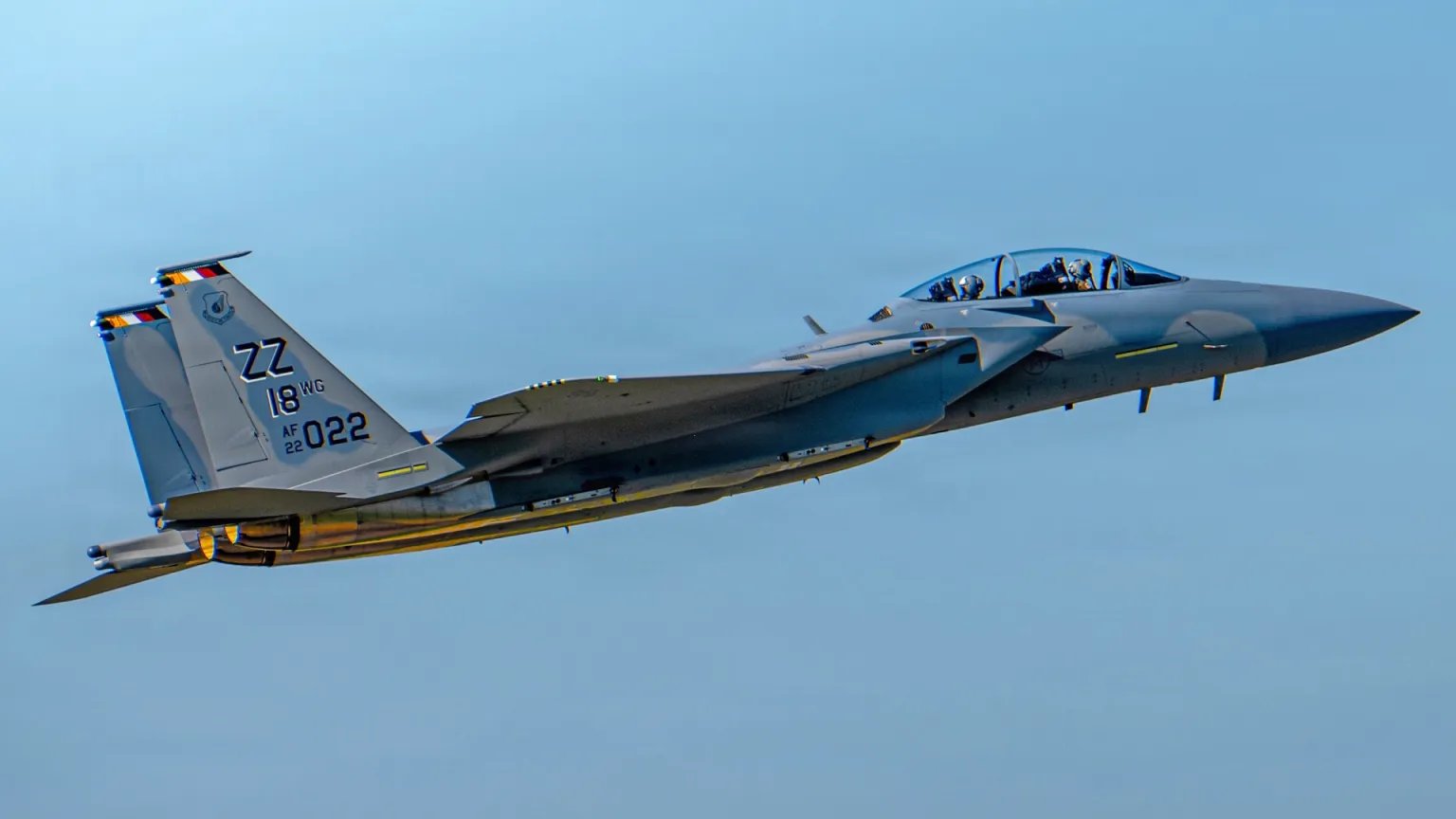
A first F-15EX Eagle II designated for Kadena Air Base, Japan, takes off at Boeing’s St. Louis facility. U.S. Air Force photo by Senior Airman Melany Bermudez

AMRAAM is also employed by ground-based air-defense systems, including the National Advanced Surface-to-Air Missile System (NASAMS). This system protects the U.S. Capital Region and over a dozen countries around the globe. It has been extensively battle-proven in Ukraine over nearly three years of operations.

Raytheon says the weapon is fielded by 44 countries and operates across 14 platforms. Its continued importance to fighter operations and air defense has made expanding manufacturing capacity a priority as the United States seeks to replenish inventories and meet soaring international demand. This is in stark contrast to the situation only a few years ago, when global AMRAAM stockpiles were viewed as plentiful.

Since then, AMRAAMs have been used extensively in the U.S. and allied campaign against Houthi drones, as well as in engagements over Syria and Iraq during efforts to defend Israel against multiple Iranian attacks. Ukraine has also expended substantial numbers of these missiles to counter Russian drones and cruise missiles, employing them through NASAMS air defense systems and, more recently, its F-16 fighters. These munitions have been supplied by the United States and NATO allies.
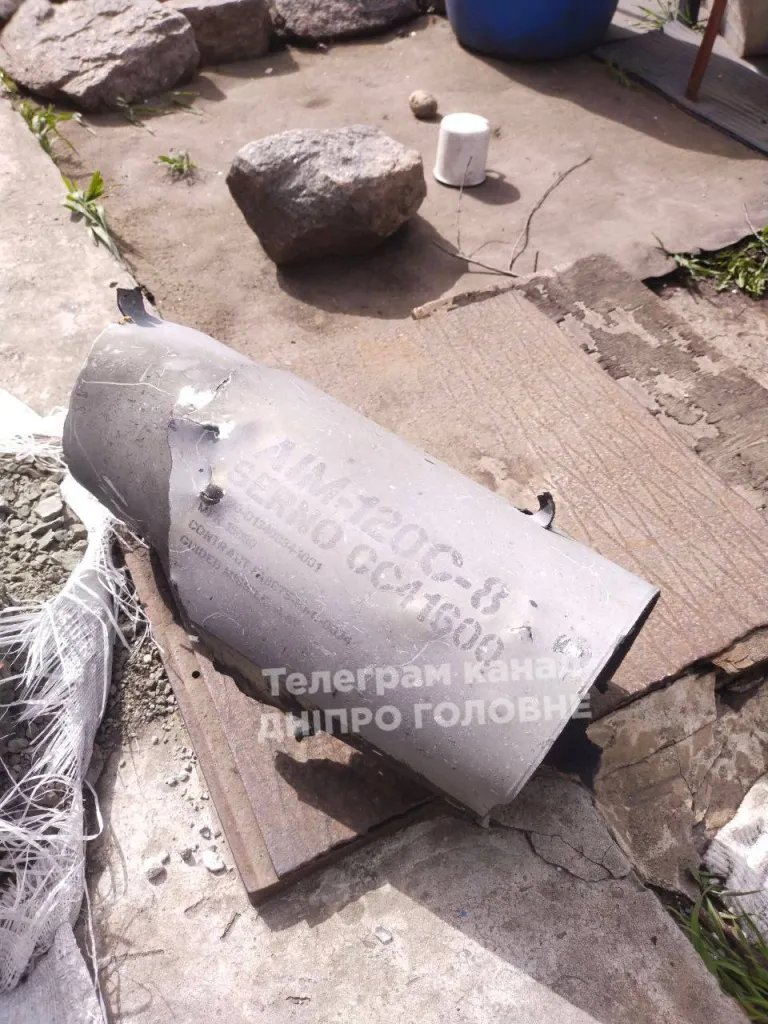
The wreckage of an AIM-120C-8 missile, apparently found in the aftermath of a Russian air attack on Dnipro in Ukraine. via Dnipro Main News/Telegram

The new U.S. production contract covers Lots 41 through 47 and includes advanced AIM-120D-3 variants featuring modernized processors and software-based electronic-warfare countermeasures.

With a scramble now on to find new ways to increase the global AMRAAM supply, RTX has said it invested in manufacturing equipment, workforce expansion, and supplier capacity to support the production increase. The company also identified new U.S. solid-rocket-motor production lines expected to come online in 2027 as part of its effort to address manufacturing bottlenecks.
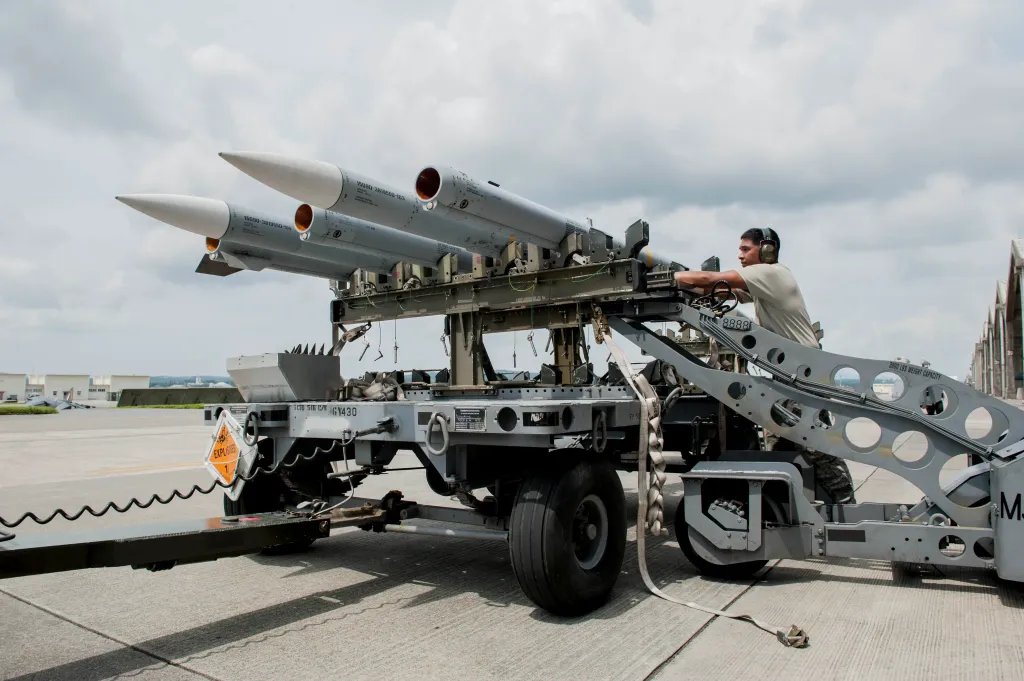
Maintainers prepare AIM-120D AMRAAMs for carriage by F-15s during a mass aircraft generation exercise at Kadena Air Base, Japan. U.S. Air Force/Senior Airman Peter Reft

The contract is intended to provide greater production stability than the shorter procurement agreements that previously characterized the program. Its multiyear structure gives Raytheon greater visibility into future demand and supports investment in manufacturing capacity and the missile’s component supply chain.

Japan’s participation could add another assembly location to an expanding industrial base. This should be made easier by the fact that AMRAAM is also less technologically sensitive now that the new AIM-260 is in the works. However, the extent to which the facility will increase total output will depend on its eventual capacity and the division of manufacturing responsibilities between Japanese and U.S. industry.

Technology Transfer And Industrial Safeguards

The agreement is the latest step in a process that has required extensive negotiations over industrial participation and technology protection.

Japan’s longstanding restrictions on arms exports and defense-industrial cooperation have complicated arrangements involving weapons considered offensive in nature. AMRAAM also incorporates classified guidance technology and proprietary intellectual property, requiring safeguards governing the transfer and handling of sensitive information.

The planned facility therefore stops short of a commitment to manufacture the entire missile domestically. Instead, a final assembly and inspection model allows Japan to complete and check missiles using components produced through an industrial arrangement.

For Tokyo, domestic assembly could help support replenishment of its own AMRAAM stocks and strengthen its defense-industrial capabilities. For Washington, an additional qualified production location will diversify the manufacturing network serving U.S. forces and international customers.

SM-3 Production Also In Focus

AMRAAM is not the only missile addressed under Operation Supercharge. Koizumi also confirmed that the United States and Japan had agreed to share technical information intended to increase production of the Standard Missile-3 Block IIA interceptor.

SM-3 Block IIA is designed to intercept ballistic missiles during the midcourse phase of flight and is principally employed by ship-based Aegis missile-defense systems. The interceptor is the product of a joint U.S.-Japanese development program and has also been acquired by Japan, including as the primary effectors for its two new cruiser-sized Aegis System Equipped Vessels (ASEV).

Neither government has disclosed how much the latest agreement is expected to increase SM-3 production or when additional output might become available.

The two initiatives reflect a wider effort to strengthen allied munitions supply chains as regional security concerns intensify. Japan has been expanding its defense capabilities amid increased Chinese military activity around the Japanese archipelago and continuing disputes across the East and South China Seas.
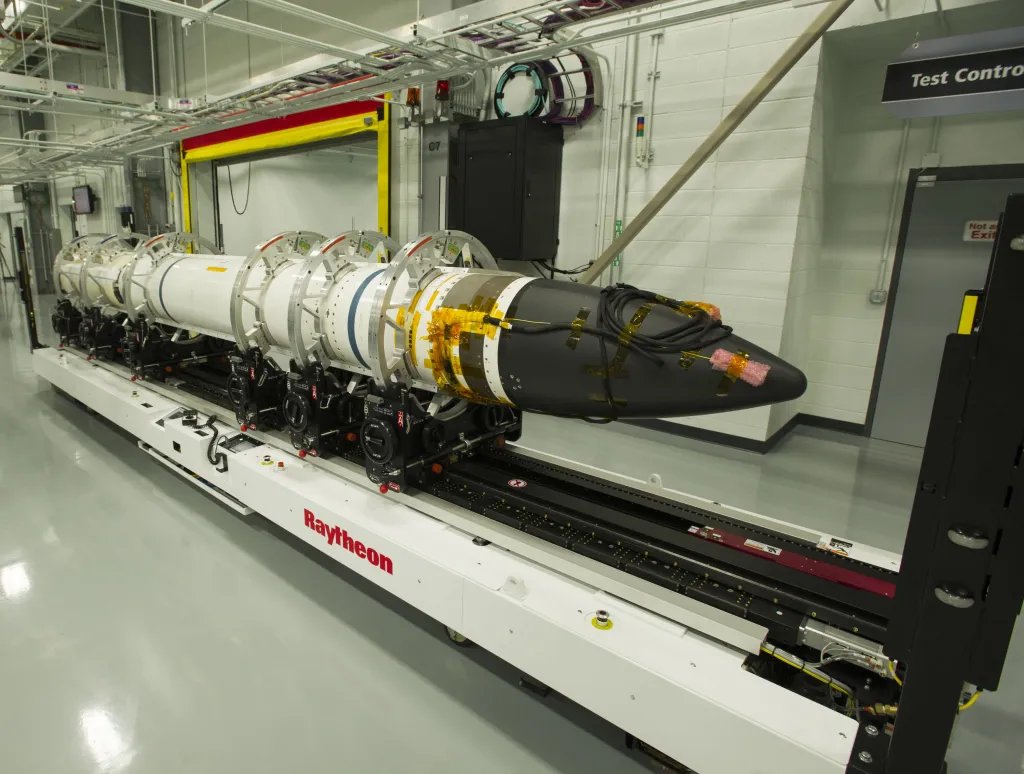
An SM-3 Block IIA interceptor in a production facility. Raytheon

It should also be noted that European countries are also currently pursuing initiatives to strengthen domestic missile manufacturing output, including systems such as the Patriot interceptor and other air-defense munitions. Earlier this week, for example, Lockheed Martin announced plans to establish a dedicated PAC-3 Missile Maintenance Facility (MMF) in Poland. 
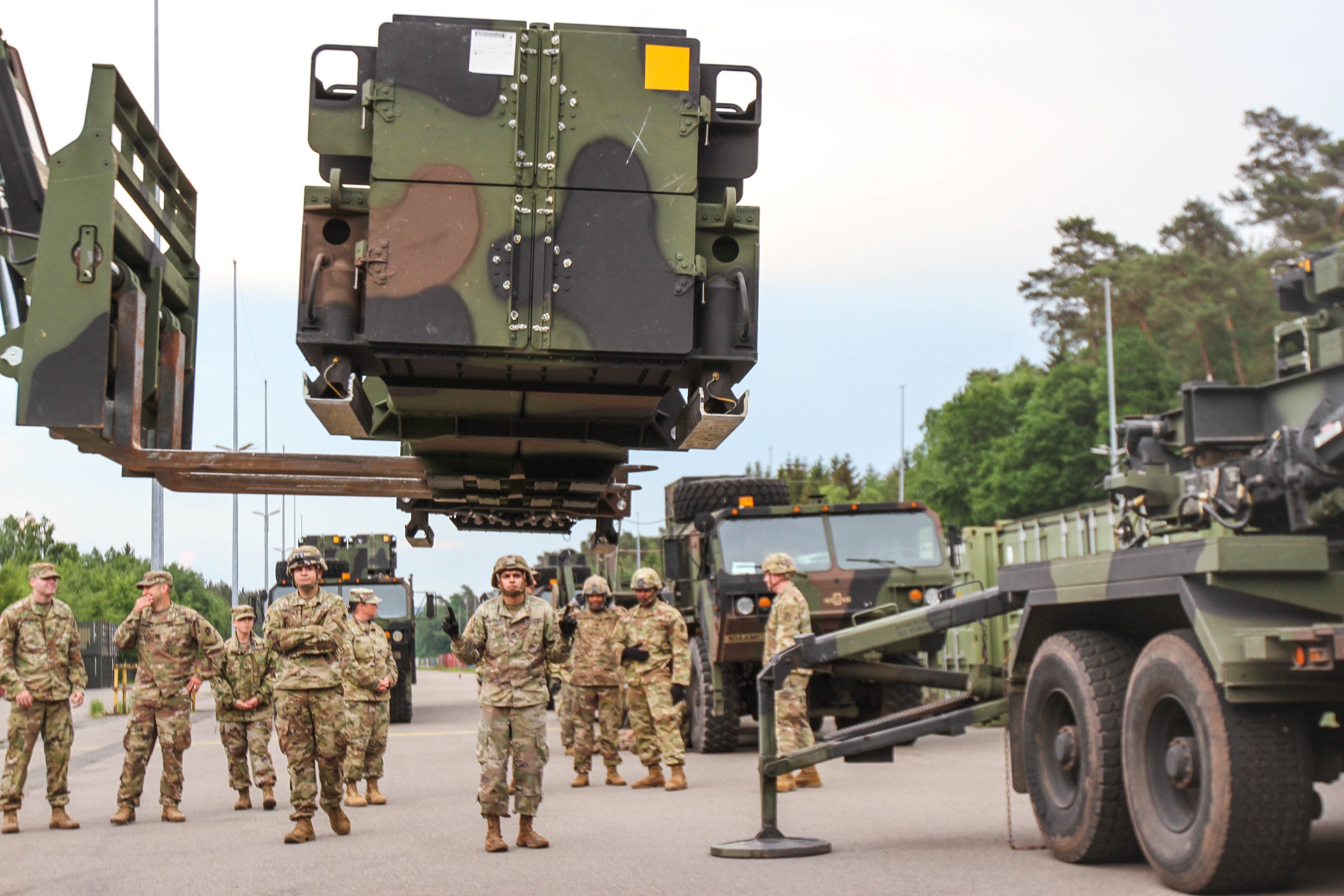
Sgt. Joel Lopez, a Patriot crew member assigned to B Battery, 5th Battalion, 7th Air Defense Artillery Regiment, guides a Patriot PAC 3 Interceptor for load out at Miesau Army Depot, Germany May 22. Saber Strike is a long-standing U.S. Army Europe-led cooperative training exercise that helps facilitate cooperation amongst the U.S., Estonia, Latvia, Lithuania, Poland and allied and partner nations.
A Patriot crew member assigned to B Battery, 5th Battalion, 7th Air Defense Artillery Regiment, guides a PAC-3 interceptor for loadout at Miesau Army Depot, Germany, on May 22, 2018. U.S. Army photo by Capt. Robert Durr Capt. Robert Durr

In its readout of the meeting, the U.S. Department of War said Hegseth welcomed Japan’s efforts to strengthen its defense-industrial capacity. The two leaders also committed to continued coordination on critical munitions production, although the readout did not specifically mention the AMRAAM facility.

The agreements establish a framework for closer industrial cooperation, but their eventual operational impact remains uncertain. At this point, details about the Japanese facility’s location, opening date, annual output, and its precise manufacturing responsibilities remain unclear. Meanwhile, the SM-3 initiative lacks a published production-growth target.

Regardless, the move to establish a Japanese AMRAAM assembly and inspection capability makes a good deal of sense alongside a major expansion of U.S. manufacturing. Whether that arrangement materially improves missile availability during a prolonged Indo-Pacific crisis will depend on how quickly the new capacity comes online and whether the wider production network can deliver the components and completed weapons required by both countries.

Contact the author: thomas@thewarzone.com

The post Japan To Assemble AMRAAM Missiles As U.S. Moves To Dramatically Boost AIM-120 Production appeared first on TWZ.
  •  

Destinus says it now makes more cruise missiles a month than Europe did a year before 2022, but engines are what Ukraine’s strike programs are short of

Ruta B1 cruise missile

Destinus has completed 1,750 Ruta B1 cruise missiles and reached monthly output of nearly 300, the company said on 29 October, telling Reuters this exceeds Europe’s annual cruise-missile production before Russia’s full-scale invasion.

That gives a date for easing a shortage. A looming shortage of mini jet engines threatened to hold back Ukraine’s deep-strike drones, Reuters reported in April. Czech maker ZofiTech was then producing about 200 a month, nearly all for Ukraine, and expected demand to reach thousands within months. Both Ruta versions use the 1.5-kN engines Destinus is promising. Ukraine plans to build more jet drones and cruise missiles, so engine output next year will have to keep up, Defense Express notes.

Destinus builds its own engines, but hasn’t said how many

Destinus CEO Mikhail Kokorich said the company already produces turbojets in the roughly 1.5-kilonewton class in series, supplying them both for its own missiles and to other manufacturers. The Ruta B1 runs on the company’s own T150 engine. In June, Destinus announced its 1,000th T150 and said the line was designed to sustain production of thousands of missile systems a year. The company has not disclosed its current engine output.

Block 2 enters production, Block 3 is due to fly in 2027

Meanwhile, Destinus said it has begun production of the larger Ruta Block 2, designed to carry a 250-kg payload more than 700 km. Unlike the roughly 300-km Block 1, Block 2 is designed to be stored, transported, and launched from the same container. A third version, Block 3, is planned with a 2,000-km range, with flight tests scheduled for 2027.

Ukrainian President Volodymyr Zelenskyy acknowledged the Ruta’s combat use in October 2025. Days later, he said Ukraine expected mass production of Ruta and Flamingo missiles by the end of that year. In June 2026, then-Defense Minister Mykhailo Fedorov said the Netherlands was ready to finance about 700 Rutas for Ukraine, without specifying the version.

Deterrence takes “tens of thousands of missiles”

At the same time, Kokorich said Europe’s problem is shifting from production to integration.

“To have sufficient deterrence, you need to have tens of thousands of missiles,” he said.

European customers, he added, still need to build the military units and logistics to operate missiles in such numbers. Those arsenals would also need storage, transport, maintenance, and targeting infrastructure, he said, and European militaries would need to rethink how they stockpile and deploy precision-strike weapons.

No Chinese parts, and a bet on cheaper, shorter-range missiles

Kokorich said Destinus uses no Chinese components, unlike wartime production in Ukraine, and said access to Chinese suppliers would make manufacturing cheaper, faster, and easier.

Kokorich also argued that cheaper missiles with ranges under 1,000 km would make up most future demand. Separately, Destinus is working with Rheinmetall on cruise missiles and ammunition for multiple-launch rocket systems, including a planned European equivalent of the GMLRS rockets fired by HIMARS.

  •  

Russian ballistic missiles kill a man in Kyiv, capping a day that left at least 27 civilians dead across Ukraine

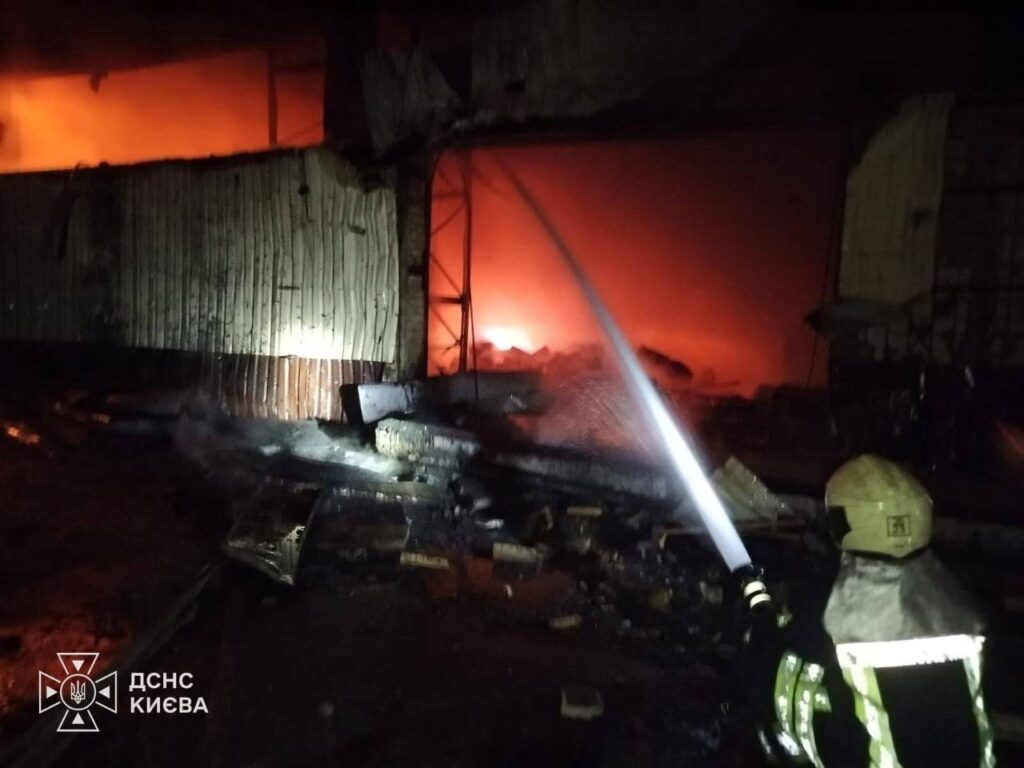
Firefighters put out a fire after a Russian attack in Kyiv, Ukraine, on the night of 29–30 October 2026

Russia attacked Kyiv with ballistic missiles late on 29 October, killing a man and injuring a 35-year-old woman, Kyiv city prosecutors said. The strikes damaged eight apartment blocks in Dniprovskyi district, a gas station, a restaurant, a dental clinic, warehouses, and cars. A warehouse building caught fire in Darnytskyi district, the city administration reported.

Overnight, Russia fired Iskander-M, S-400, and KN-23 ballistic missiles, four Kh-59/69 guided missiles, and 113 drones, 83 of them jet-powered, Ukraine's Air Force said. The attack mainly targeted Kyiv, Poltava, and Dnipropetrovsk oblasts. Air defenses downed three missiles and 96 drones, but strikes hit 17 locations.

Russia is waging its war on Ukraine's cities around the clock as winter approaches, striking homes, transport, and the power grid that keeps them running. On 29 October, including the late attack on Kyiv, Russian strikes killed at least 27 civilians and injured more than 140 across six regions, by EP's tally of regional authorities' reports. It was one of the deadliest days of the autumn. Most died in daylight, on a train platform in Dnipro, in an apartment block in Kremenchuk, in central Chernihiv, and under guided bombs in Izium.

Dnipro and Kyiv's right bank lose power

A Russian strike on Dnipro left more than 350,000 customers in the city and nearby towns without power, Dnipropetrovsk Oblast's administration said shortly after midnight. Water pumping stations switched to backup power. By morning, engineers had restored electricity to most customers in the oblast, but more than 200,000 were still without power.

The social bus operated by the Proliska Humanitarian Mission, which was damaged in a Russian drone attack on 29 October 2026. Bilenke village, Zaporizhzhia Oblast. Photo: Yevhen Kaplin/Facebook
Explore further

It was the only transport serving a village where more than 1,600 people still live: Russian forces strike a social bus with a drone in Bilenke, killing a woman and injuring other passengers

In Kyiv, equipment damaged in earlier strikes failed on the right bank, forcing emergency outages, the city administration said. Russia attacked an industrial plant in Poltava Oblast's Kremenchuk district overnight and again in the morning, with no casualties reported, the regional administration said.

A damaged one-story building and debris on the ground in Kyiv, Ukraine, after a Russian ballistic missile attack late on 29 October 2026
A damaged one-story building and debris on the ground in Kyiv, Ukraine, after a Russian ballistic missile attack late on 29 October 2026. Photo: Kyiv City Prosecutor's Office

In the morning, a Russian drone hit a shopping center in Kharkiv's Kyivskyi district, injuring four women, Kharkiv Oblast Governor Oleh Syniehubov said. In Chernihiv Oblast, Russian drones destroyed the house of culture in Mena late on 29 October, and in the morning a drone hit a house in Bobrovytsia and injured a woman, the regional administration said. In Chernihiv itself, 37 people sought medical help after the 29 October strike on the city center that killed two 15-year-old girls, Yana and Mariia.

A burned-out car in central Chernihiv, Ukraine, after a Russian strike on 29 October 2026
A burned-out car in central Chernihiv, Ukraine, after a Russian strike on 29 October 2026. Photo: Chernihiv Oblast Military Administration

Two oblasts in mourning as the Dnipro toll rises to 15

A 40-year-old man wounded in the 29 October jet drone strike on Dnipro's railway station died in hospital, raising the toll to 15, the regional administration said. Eleven people remain in hospital. Dnipropetrovsk Oblast declared 30 October a day of mourning.

A police officer near a five-story building partly destroyed by Russian guided bombs in Izium, Kharkiv Oblast, Ukraine, October 2026
A police officer near a five-story building partly destroyed by Russian guided bombs in Izium, Kharkiv Oblast, Ukraine, October 2026. Photo: National Police of Ukraine

Poltava Oblast also mourns three people killed when a Russian drone hit an apartment block in Kremenchuk on 29 October. Another 32 were injured, six of them children, the regional administration said.

A firefighter with an extinguisher on the smoke-filled platform at Dnipro railway station after the Russian drone strike, with the bodies of those killed blurred, Dnipro, Ukraine, 29 October 2026
Explore further

Russian jet drone hits Dnipro railway platform, killing 14 people next to a Zaporizhzhia-bound train

In Izium, Kharkiv Oblast, Russian guided bombs hit a five-story building on 29 October, killing four people and injuring 14, police reported. In Zaporizhzhia Oblast, Russian attacks killed two people in Bilenke and injured 23 across the region, 13 of them when Russia sent seven FPV drones at vehicles and public transport in Zaporizhzhia city, police said. EP reported the city faced a record number of such attacks.

  •  
❌