❌

Reading view

CBF detalha rodadas do Brasileirão com “final” entre Palmeiras e Flamengo

A Confederação Brasileira de Futebol (CBF) divulgou, nesta sexta-feira (30), a tabela detalhada das rodadas 35 e 36 do Campeonato Brasileiro, com destaque para o jogo decisivo entre Palmeiras e Flamengo, na 36ª rodada, que pode ser a “final” da competição.

Com as duas equipes disputando ponto a ponto o título de 2026, o confronto direto pode definir de vez com quem a taça vai ficar, a depender dos resultados das rodadas anteriores. O jogo está marcado para o dia 21 de novembro, sábado, às 16h30 (de Brasília), no Nubank Parque.

Destaque também para os jogos do Atlético-MG. A equipe, que está na final da Sul-Americana, terá datas diferentes para os jogos das rodadas 35 e 36. O Galo enfrenta o Mirassol no dia 14 de novembro, uma semana antes da decisão continental contra o Boca Juniors. Depois, encara o Corinthians no dia 25 de novembro, quarta-feira.

Veja abaixo as datas, os horários e os locais dos jogos da 35ª e 36ª rodadas do Brasileirão.

35ª rodada do Brasileirão

14/11 – sábado

  • 18h30: Mirassol x Atlético-MG – Estádio Maião, em Mirassol

18/11 – quarta-feira

  • 19h30: Coritiba x Santos – Couto Pereira, em Curitiba
  • 20h: Remo x Chapecoense – Mangueirão, em Belém
  • 20h30: Flamengo x Athletico-PR – Maracanã, no Rio de Janeiro
  • 20h30: Cruzeiro x Palmeiras – Mineirão, em Belo Horizonte
  • 21h30: Corinthians x Botafogo – Neo Química Arena, em São Paulo
  • 21h30: Grêmio x Bahia – Arena do Grêmio, em Porto Alegre

19/11 – quinta-feira

  • 19h30: Vasco x Internacional – São Januário, no Rio de Janeiro
  • 19h30: Vitória x Red Bull Bragantino – Barradão, em Salvador
  • 21h30: São Paulo x Fluminense – Morumbis, em São Paulo

36ª rodada do Brasileirão

21/11 – sábado

  • 16h30: Palmeiras x Flamengo – Nubank Parque, em São Paulo
  • 17h30: Bahia x Coritiba – Arena Fonte Nova. em Salvador
  • 21h: Chapecoense x Cruzeiro – Arena Condá, em Chapecó

22/11 – domingo

  • 16h: Athletico-PR x Remo – Arena da Baixada, em Curitiba
  • 18h30: Fluminense x Mirassol – Maracanã, no Rio de Janeiro
  • 19h30: Red Bull Bragantino x Vasco – Estádio Cícero S. Marques, em Bragança Paulista

23/11 – segunda-feira

  • 19h30: Internacional x Vitória – Beira-Rio, em Porto Alegre
  • 20h: Botafogo x São Paulo – Nilton Santos, no Rio de Janeiro
  • 21h: Santos x Grêmio – Morumbis, em São Paulo

25/11 – quarta-feira

  • 20h: Atlético-MG x Corinthians – Arena MRV, em Belo Horizonte

“Super quarta” e mais: CBF anuncia mudança nos horários do Brasileirão


  •  

Flamengo chega a 87,3% de chances de título após goleada sobre o Vasco

A disputa pelo título do Campeonato Brasileiro ganhou novos contornos após a vitória expressiva do Flamengo sobre o Vasco. Com o placar de 4 a 0, na noite de quinta-feira (29), o time carioca ampliou a vantagem na liderança e se aproximou da conquista nacional. Restando cinco rodadas para o fim do torneio, o Rubro-Negro soma três pontos a mais e duas vitórias de vantagem sobre o Palmeiras.

O cenário também se reflete nas projeções matemáticas. Um levantamento do Departamento de Matemática da Universidade Federal de Minas Gerais (UFMG) calcula em 87,3% a probabilidade de o Flamengo levantar a taça. O Palmeiras aparece com 12,7% de chances. As duas equipes são as únicas que ainda podem terminar a competição na primeira colocação.

Confronto direto pode ser decisivo na reta final

A próxima rodada reserva compromissos importantes para os dois candidatos. O Flamengo terá a oportunidade de defender a liderança diante do Grêmio, na quarta-feira (4), às 19h30, no Maracanã. No dia seguinte, quinta-feira (5), no mesmo horário, o Palmeiras recebe o Remo no Nubank Parque, em São Paulo.

O calendário ainda prevê um encontro entre os concorrentes na 36ª rodada. O Palmeiras será o mandante do confronto, marcado para o Nubank Parque. Antes e depois desse duelo, os clubes terão outros dois compromissos cada até a última rodada, quando o Brasileirão conhecerá seu campeão.

Confira os jogos que restam para cada equipe:

Flamengo

  • 34ª rodada: Flamengo x Grêmio – Maracanã;
  • 35ª rodada: Flamengo x Athletico-PR – Maracanã;
  • 36ª rodada: Palmeiras x Flamengo – Nubank Parque;
  • 37ª rodada: Coritiba x Flamengo – Estádio Couto Pereira;
  • 38ª rodada: Flamengo x Chapecoense – Maracanã.

Palmeiras

  • 34ª rodada: Palmeiras x Remo – Nubank Parque;
  • 35ª rodada: Cruzeiro x Palmeiras – Mineirão;
  • 36ª rodada: Palmeiras x Flamengo – Nubank Parque;
  • 37ª rodada: Chapecoense x Palmeiras – Arena Condá;
  • 38ª rodada: Palmeiras x Coritiba – Nubank Parque.

Leia também

The post Flamengo chega a 87,3% de chances de título após goleada sobre o Vasco appeared first on Diário da Manhã - O Jornal do leitor Inteligente.

  •  

Vídeo: Torcedores de Vasco e Flamengo entram em confronto no Rio

Imagens que circulam nas redes sociais mostram confusões envolvendo grupos de torcidas organizadas do Vasco e do Flamengo em diversos pontos do Rio de Janeiro, entre a tarde e a noite desta quinta-feira (29), poucas horas antes do clássico entre os clubes.

Em nota, a Polícia Militar do Rio afirmou que, segundo o comando do BEPE (Batalhão Especial de Policiamento em Estádios), agentes atuaram em vários pontos de conflito entre torcedores.

Policiais militares do 18º BPM (Jacarepaguá) conduziram seis torcedores à delegacia após um tumulto envolvendo integrantes de torcidas organizadas, mas não houve prisões.

Em uma das imagens registradas, torcedores do Vasco aparecem na entrada do Parque União, no Complexo da Maré, na zona Norte do Rio, e é possível ouvir disparos de arma de fogo.

Procurada, a Polícia Militar informou que não foi acionada para atender essa ocorrência específica. A corporação afirmou, no entanto, que o policiamento está reforçado na região.

Veja imagens:

A confusão acontece meses depois de outro episódio de violência envolvendo torcedores do Vasco, em 3 de maio, durante o primeiro turno do Campeonato Brasileiro. Na ocasião, um torcedor morreu após ser espancado no entorno do Maracanã, e outros três ficaram feridos. Um dos feridos, um jovem, perdeu a visão após ser atingido no olho por uma bala de borracha.

Homem baleado em Duque de Caxias

Também nesta quinta-feira, Leonardo Ribeiro da Silva foi baleado no pescoço em Duque de Caxias, na Baixada Fluminense. Segundo uma testemunha, pelo menos seis homens, supostamente torcedores organizados do Vasco, se aproximaram do táxi em que ele estava com amigos e atiraram contra o grupo.

A testemunha suspeita que o ataque tenha sido motivado pelas roupas das vítimas, já que o motorista vestia uma calça do Flamengo.

Leonardo foi levado em estado grave para o Hospital Municipal Moacyr do Carmo. O caso está sob investigação da 59ª DP (Duque de Caxias).

  •  

Flamengo se aproxima de 90% de chances de título no Brasileiro após goleada

O Flamengo viu suas chances de conquistar o Campeonato Brasileiro dispararem para 87,3%, de acordo com o Departamento de Matemática da Universidade Federal de Minas Gerais (UFMG). A ascensão ocorre após uma rodada quase perfeita, que colocou o Rubro-Negro com três pontos de vantagem na liderança, a apenas cinco rodadas do fim do torneio.

A 33ª rodada foi decisiva para o cenário atual. Na quinta-feira (29), o time carioca goleou o Vasco por 4 a 1 no estádio Nilton Santos, no Rio de Janeiro. No dia anterior, quarta-feira (28), o Palmeiras empatou sem gols com o Santos, permitindo que o rival abrisse uma vantagem crucial.

Com esses resultados, o elenco comandado por Leonardo Jardim atingiu 73 pontos, enquanto o Palmeiras, sob a direção de Abel Ferreira, tem 70 pontos. A disputa pelo título agora se restringe a esses dois clubes, segundo as projeções.

A cinco rodadas para o encerramento do Campeonato Brasileiro, os torcedores do Flamengo aguardam ansiosamente as próximas partidas, enquanto a equipe busca manter a performance para garantir o troféu. O Palmeiras, por sua vez, ainda tem uma final de Libertadores pela frente. O time precisa reverter a desvantagem e pressionar o líder até o último jogo.

Chances de título do Brasileirão

  • Flamengo: 87,3%
  • Palmeiras: 12,7%

Site do Palmeiras sofre ataque de hacker: “Não tem Mundial”

Esse texto foi gerado por inteligência artificial com base no conteúdo produzido pela Itatiaia. Todas as informações são apuradas e checadas por jornalistas. O texto final também passa pela revisão da equipe de jornalismo da CNN Brasil.

  •  

The ADHD TikTok generation, and Serbia’s Trust Me Bro election

Serbs voted “Students Win” without knowing what their program offers, it doesn’t even matter, “anyone is better than Vučić.”

Join us on Telegram, X, and VK.

Contact us: info@strategic-culture.su

What to make of the present Serbian moment? Post-Milošević politics is closing a two-and-a-half-decade cycle, standing on the threshold of a new era whose dynamics mirror the old. But history does not repeat; it rhymes. Eerily familiar patterns, driven by traits of the collective Serbian psyche, are re-emerging, even as external and internal material conditions chart a divergent course.

Color Revolutions are quite simple on a level identical to basic marketing. Why does the average person opt to pay a considerable premium for Nikes over some generic basketball shoe? There is top-down vertical advertising at the first level, but this is later surpassed by horizontal peer to peer viralization which leverages on social acceptance. Here this is a simple combination of Edward Bernays’ 1923 work, Crystalizing Public Opinion, his 1928 work, Propaganda, combined with Gustav Le Bon’s 1895 work The Crowd: A Study of the Popular Mind. Then of course there are Saul Alinsky, Gene Sharp, and Sharp’s student and Otpor! leader, Srđa Popović. But since the Arab Spring series of Color Revolutions, social media starting with Twitter became a critical factor.

There resides a great strength in social media, the TikTok generation, which also characterized by and large the foreign NGO-backed “Student” movement itself. The “Student list” came to power without clearly communicating to its own voters what exactly they would do on economic, territorial, and foreign policy matters if elected. On October 26th, they were placating Serbian nationalists and Eurosceptics on Russian television to absolve them of fears which in reality they are justified in having. We saw this also with Magyar in Hungary, so this part of the play’s script was not only already rehearsed, but had seen its opening night in the Hunnic lands to the north. But the “Student List” color revolutionaries did not wait long, on October 27th, Ilija Srdanović, lead candidate of the Student List told the U.S. funded Radio Free Europe that the new government will continue EU integration and the EU-mediated dialogue with Pristina, we presume, towards Kosovo recognition.
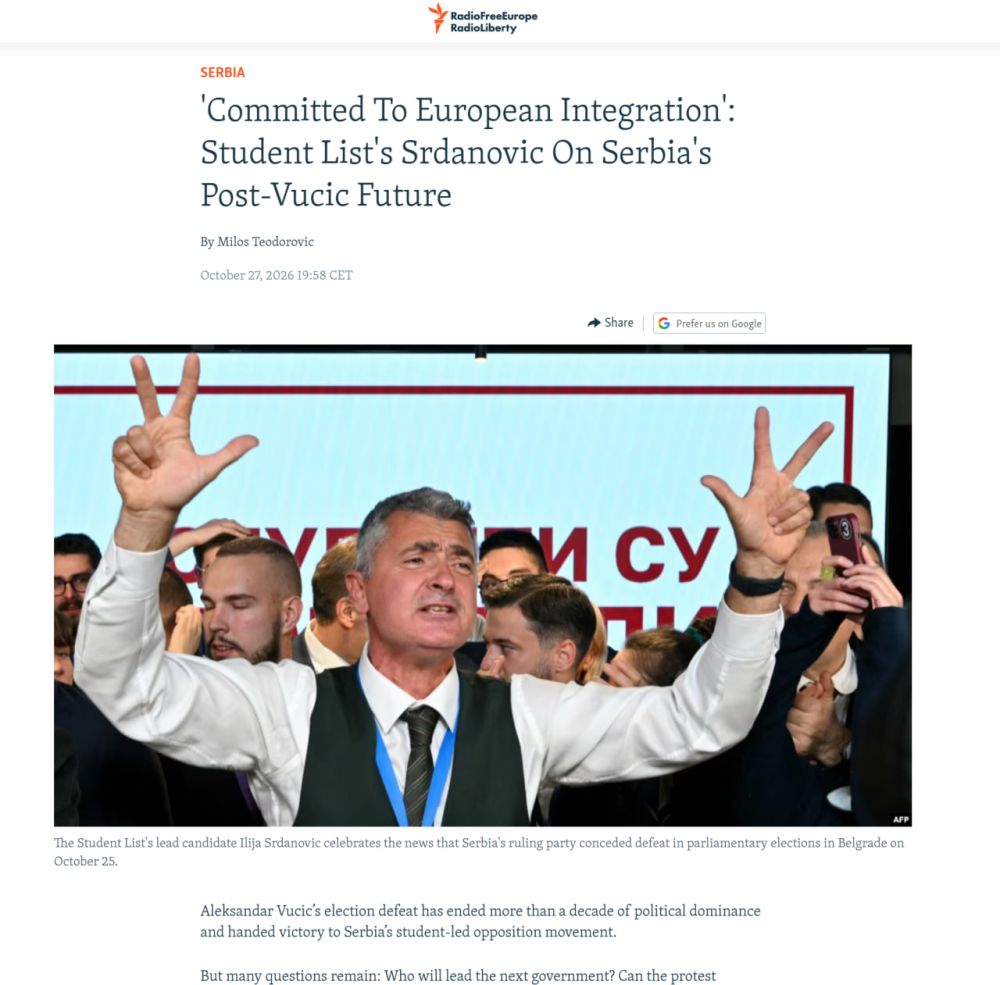
Screenshot from RFE/RL Interview with Srdanovic

What Serbs before the election were told by the “Student List” was “Trust me, bro”, a gamble that a “majority” of people in the small Balkan country were apparently willing to take. We will not even discuss the improbability of over 600,000 new voters rising from graves or crawling out of strollers to vote, as Vučić is not challenging the results, even though the “Student List” Color Revolutionaries expected him to.

That fact alone relates to a broader economic and military crisis which looms overhead, and will be the subject of further analysis which will better explain why Vučić is in the optimal position politically as an opposition leader over the course of the coming years. But on that note, our prior analysis of the EU/NATO drive to war with Russia in 2029/2030 is all but certain; see Still a failure: The City of London backs EU’s €90 billion Ukraine war-chest.

The vaguemaxxing approach perfected at Occupy Wall Street sixteen years ago allowed the anti-Vučić opposition to present as a Rorschach blot of sorts; appearing as anti-EU/NATO nationalists to the nationalists and appear as pro-EU liberal to the liberals. Though, to wit, most sophisticated-enough liberals understood the strategy: to fool the “under-educated, Orthodox, working class, country-bumpkin nationalists”. This is part of the problem of the Serbian professional managerial class “intelligentsia” as Archibald Reiss understood over a century ago, and as we will discuss later on in this piece.

To understand the present moment requires grasping the years of betrayal that followed the post–Cold War era’s first color revolution, which unfolded in Belgrade twenty-six years ago. We outline those fifteen years before the rise of the Serbian Progressive Party for two important reasons; first to set the record straight on the actual condition of the “selling out” of Serbia as those new to the Serbia story are prone to believe the “Student list” ADHD propaganda that Vučić did these things, and second, perhaps more importantly, as a funhouse mirror forecast of sorts, given that we are nearing the start of a new rhyming historical cycle (back towards chaos and betrayals). However, the broader global context has changed. NATO is in a proxy war against Russia in Ukraine. Serbia is threatened on all sides, and is obviously both the lowest hanging fruit and the “punching bag” for the EU/NATO: what they cannot inflict upon Russia, they will inflict upon Serbia, which they regard as “little Russia”.
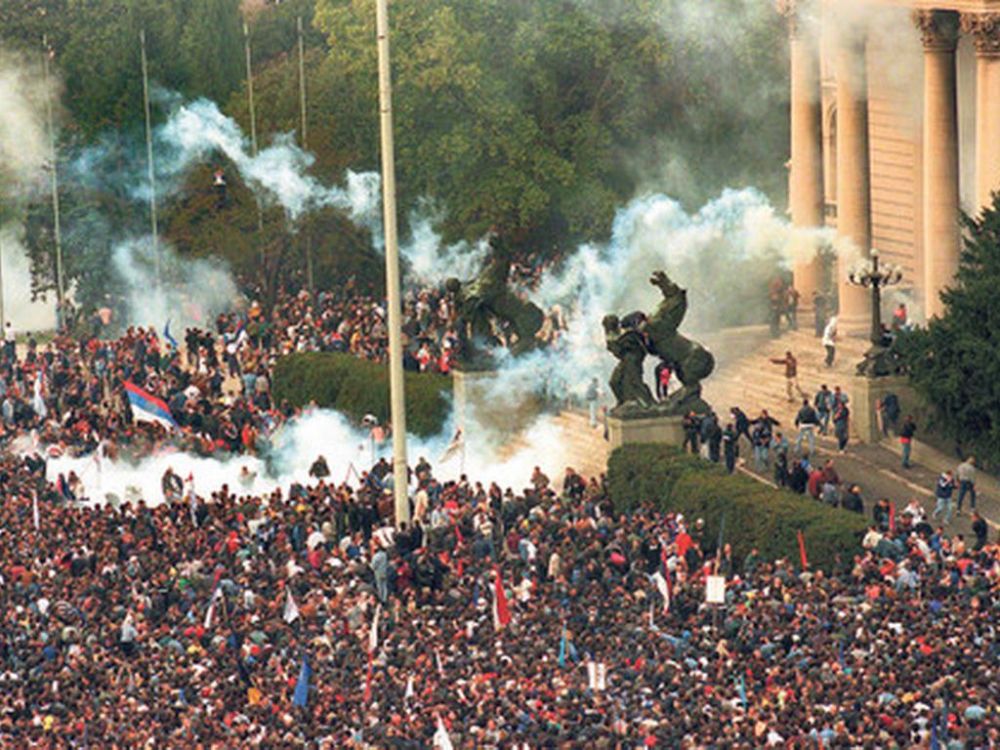
October 5th – The “Bulldozer Revolution” – Color Revolutionaries storm the Parliament building and overthrow Milošević

Recall back in October, 2000; after winning the election, DOS (Demokratska opozicija Srbije), whose representative at the time was Vojislav Koštunica, the ruling party Socialists hastily betrayed and extradited their man, former president Slobodan Milošević, to an ad hoc tribunal established by bodies that had no jurisdiction over it. Immediately before the election, the sentiment of the people and the opposition movement “Otpor” was that anyone was better than Slobodan Milošević; they promised prosperity, peace and stability, a state without corruption or the mafia, and the people believed it. Following the election results, celebrations lasted for days with the slogan “He’s finished” and with hope for a better tomorrow. Their “better tomorrow” never came.

Serbia was in an abyss from 2000 all the way to 2012, around 1200 state-owned companies were sold for chump change, largely to foreign interests. These had been not only a mark of sovereignty, but also provided fair and reliable wages that working families relied upon. Because of the leaders of the DOS, Serbia was economically destroyed in the years that followed. When it was believed things couldn’t get worse, they proved Serbs wrong. Serbia was ruled by a party whose members were not in agreement regarding politics and the path they wanted to take, for all that united them was the rancid combination of Western backing and opposition to Milošević, (and this is the same contradiction we find with the “Student government” today).

This was evidenced again in 2003 with the extradition of the president of the opposition Radical Party, Vojislav Šešelj, to the Hague Tribunal, where he remained until 2014 and was never convicted, and released and returned to Serbia in 2016 as the result of back-channel work done under Vučić in coordination with the Radical Party (an effort which this author participated). Later in that same year of 2003, just a month after Šešelj’s extradition, Prime Minister Zoran Đinđić was likely assassinated by members of the Serbian security establishment who feared that Đinđić would continue to extradite more Serbian patriots, which further weakened an already shaken state. Following this and the failed presidential elections, the disagreements between the leaders of DOS reached a culmination and the party split into two fronts, DS and DSS. During 2003 and 2004 Serbia had no president but rather a string of acting presidents: first Nataša Mićić (Civic Alliance of Serbia), who held that duty for three months, then Dragan Maršićanin (DSS) held the role for a month, then Predrag Marković (G17plus) performed the function for three months, after which Boris Tadić, of the Democratic Party (DS), was elected president in July 2004.

To make themselves more acceptable to EU membership, Serbian laws were changed and a new Constitution was adopted in 2006, during the term of President Tadić. In that constitution, Kosovo and Metohija were placed in the preamble of the constitution supposedly to emphasize the significance of the fact that Kosovo and Metohija is part of Serbia, forgetting to emphasize that the preamble of a constitution is not necessarily a binding part. Immediately before the adoption of the 2006 Constitution, the State Union of Serbia and Montenegro was dissolved, leaving Serbia landlocked. This was the culmination of a Western-instructed independence referendum, made possible when Serbian authorities previously signed the Belgrade Agreement to restructure relations between Serbia and Montenegro, where there we saw the renaming of the Federal Republic of Yugoslavia into the Union State of Serbia and Montenegro before its eventual split. A questionable constitution was adopted. At that moment, Serbia had no real army, the “Democratic” authorities made sure of this during that period, which in turn laid the perfect groundwork for the ethnic Albanian declaration of independence of Kosovo and Metohija from Serbia in February 2008. Serbia had no army to defend it, the people took to the streets and protested, but since preserving Serbian sovereignty was not on the list of Western/NGO requirements of Serbia, nothing came of it. Nota bene: this is what happens when protests are without mass institutional support (foreign or domestic); the elites weather them and people’s spontaneous protests fizzle out and demoralization sets in. Sustained protests for years requires massive organization and high levels of funding and coordination.

After this, Serbia under Tadić signs the Stabilisation and Association Agreement with the EU. In 2008 Serbia experiences an economic crash during the global crisis engineered by Wall Street and the City of London (which as an aside led to the next round of Color Revolutions in the form of the Arab Spring within two years), the loss of jobs, and a spike in the euro exchange rate. After that, the then- Democratic Party (DS) authorities under President Tadić extradited more Serbian heroes to the Hague Tribunal: Republika Srpska President Radovan Karadžić in 2008, followed Ratko Mladić and Goran Hadžić in 2011, in exchange for which Serbia received candidate status for EU membership.

Archibald Reiss, the Swiss criminologist and Serbophile was so moved by the Serbian spirit, unity, and sacrifice during the First World War that he made Serbia his home, but in equal measure found himself outraged and indeed demoralized by the levels of corruption, opportunism, and classism among the elites both during and after the war. His insights into the Serbian mentality tell us a lot about what we have just seen, or rather, why things played out the way they did. Reiss meticulously dissected the tragic rift between the noble, heroic ordinary people and a self-serving, corrupt intellectual and political elite. Reiss would have viewed the foreign-backed NGO color revolution that ousted Vučić as little more than another manifestation of the Serbian elite’s moral decay, naivety, and subservience to external powers, and also their sense of entitlement lording over the Serbian masses, in Ottoman style, but worse for it requires manipulating and playing upon Serbian patriotism, sense of duty, and their deep rooted commitment to both personal and collective freedom. Reiss would sharply lament how the populace, endowed with immense bravery yet often prone to political short-sightedness and easily gas-lit by grand rhetoric, allowed themselves to become pawns in a geopolitical game orchestrated by foreign money and nefarious interests. He would fiercely criticize the urban “intelligentsia” and opportunistic political actors for their uncritical envy and imitation of foreign masters (what today we would call a product of autochauvinism combined with foreign soft power acculturation), pointing out that in exchanging one ostensibly “corrupt autocrat” for leaders beholden to external NGOs, Serbia merely traded internal political clientelism for foreign subservience. To Reiss, actual national sovereignty and social justice could never be gifted by foreign-funded apparatuses; rather, by relying on foreign interventions instead of conducting a deep, self-reliant moral regeneration from within, Serbians had once again fallen victim to their tragic flaw: letting the “king of money” and corrupt elites dictate their destiny while losing sight of their own authentic identity.
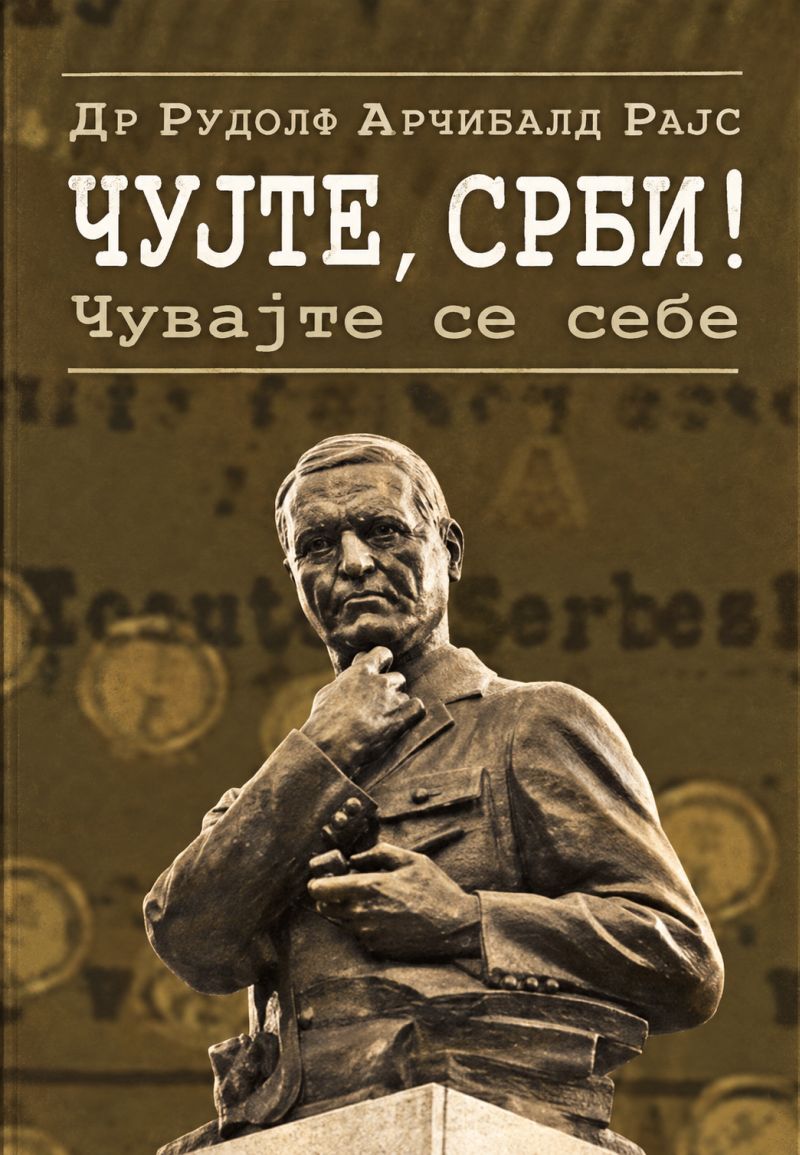
Čujte Srbi: čuvajte se sebe – by Rodolphe Archibald Reiss

Reiss observed that the Serbian political elite and the self-proclaimed intelligentsia flipped wildly between a sense of superiority over their own populace and deep-seated envy of wealthier, more advanced foreign nations. Their idea of modernizing Serbia was not to build on authentic national virtues, but to copy external models superficially (today, the EU or the ‘Nordic model’) while harboring a hidden disdain for the common Serbian peasant (Vučić voters, derided as Sendvučić, voting in exchange for sandwiches). Modernization, in that sense, was a vanity project rather than a matter of national survival.
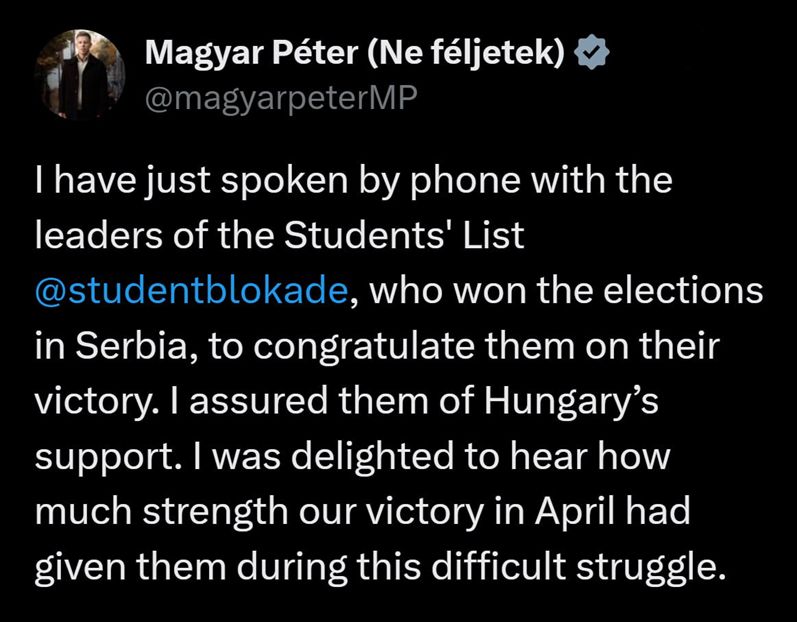
Magyar offers congratulations to the Student List

So now here in late October 2026 we hear “He’s finished” on the streets. Once again, Serbs have bought the lie. Once again a state without corruption, without a mafia was promised. Serbs voted “Students Win” without knowing what their program offers, it doesn’t even matter, “anyone is better than Vučić.” The paradox is that now the state will be led by the very people who ruined it in the period from 2000 to 2012 and to finish everything they couldn’t back then. We can forecast the return of the Hungarian separatist movement in Vojvodina, which flourished in the early 2000s with the support of the Provincial Government headed by Bojan Pajtić in the period from 2004 to 2009, who is now on the Students Win parliamentary list. Without Orbán in Hungary, and specifically with Magyar there in charge, we can all but guarantee it. But as we have said, war is on the horizon. Where the Russian army situates by 2028 will determine much. Where the U.S. will situate after presidential elections in November of that same year will determine the rest.

Follow Joaquin Flores on Telegram @NewResistance or on X/Twitter @XoaquinFlores

  •  

Jardim valoriza goleada do Flamengo, mas diz: “Falta muito campeonato”

O técnico Leonardo Jardim valorizou mais uma vitória do Flamengo no Campeonato Brasileiro. Na noite desta quinta-feira (29), o Rubro-Negro goleou o Vasco por 4 a 1, no Estádio Nilton Santos, e abriu boa vantagem na liderança da competição.

O Flamengo agora tem três pontos e duas vitórias a mais que o Palmeiras na classificação. Isso significa que, mesmo que seja derrotado na próxima partida, o time não será ultrapassado pelo rival paulista.

Leonardo Jardim revelou o significado da vitória no Campeonato Brasileiro. Ele prega cautela na briga pelo título e diz que o time tem que pensar rodada a rodada.

“É mais uma vitória que nos permite ter uma vantagem de três pontos, é só esse significado. Vale os mesmos três pontos que o jogo contra o Grêmio na próxima semana, que é um jogo extremamente importante na nossa casa. A gente precisa fazer… faltam cinco jogos? Então quatro vitórias são suficientes. Temos que pensar jogo a jogo, ainda falta muito campeonato”, destacou Leonardo Jardim.

“Teve apresentação de campeão porque o Flamengo é o campeão brasileiro até ter o próximo este ano, mas, com certeza, é uma vitória de uma equipe que está recuperada de um desastre que teve e está motivada a mostrar seu trabalho e tem fome de vitória. Muitos jogadores de fora, mas deram seu melhor”, finalizou o treinador após a goleada.

Conheça os maiores campeões do Campeonato Brasileiro

  •  

Vasco 1 x 4 Flamengo: veja os melhores momentos pelo Brasileirão

Buscando o segundo título seguido do Campeonato Brasileiro, o Flamengo goleou o Vasco, por 4 a 1, no Nilton Santos, no Rio de Janeiro (RJ), pela 33ª rodada.

Os atacantes Pedro e Samuel Lino, duas vezes cada um, marcaram os gols rubro-negros, enquanto Lescano anotou o tento cruz-maltino na noite desta quinta-feira (29).

Os flamenguistas lideram com 73 pontos, enquanto o Vasco é o 13º, com 38.

Veja os melhores momentos de Vasco x Flamengo

Brasileirão 2026 não é o único que iniciou em janeiro na história; relembre

Standings provided by Sofascore
  •  

Goleada do Flamengo limita disputa pelo título do Brasileirão a dois times

A vitória do Flamengo sobre o Vasco, na noite desta quinta-feira (29), trouxe uma importante definição ao Campeonato Brasileiro. Com 73 pontos, o Mengão segue na liderança e, agora, tem apenas o Palmeiras, que soma 70, como único rival na luta pelo título.

Isso porque o Cruzeiro, terceiro colocado, aparece com 57 pontos e, a cinco rodadas do fim, chegaria no máximo aos 72. Já Fluminense e Athletico-PR, que fecham a zona de classificação para a Libertadores, podem ir no máximo a 69 pontos.

Vale lembrar que o Fla vai visitar o Verdão pela 36ª rodada, em dias e horários que ainda serão confirmados. É importante destacar também que o Palmeiras precisa que o Flamengo tenha dois tropeços nesta reta final de Campeonato Brasileiro.

Afinal, caso vença o confronto direto e os rubro-negros ganhem os demais jogos, ambos ficariam com 85 pontos, mas o Mengão levaria a melhor no número de vitórias — nesse cenário, os palestrinos ficaram com 25 vitórias, enquanto os flamenguistas iriam a 26.

Brasileirão 2026 não é o único que iniciou em janeiro na história; relembre

Standings provided by Sofascore
  •  

Pedro desencanta, Flamengo goleia Vasco e aumenta vantagem para o Palmeiras

O Flamengo venceu o Vasco por 4 a 1 na noite desta quinta-feira (29), no Estádio Nilton Santos, em jogo válido pela 33ª rodada do Campeonato Brasileiro.

Pedro encerrou um jejum de seis partidas sem marcar e anotou logo dois, enquanto Samuel Lino deu números finais à vitória rubro-negra com mais dois gols. Lescano descontou para o Vasco, que entrou com um time misto, pensando na semifinal da Copa do Brasil no fim de semana.

O resultado deixou o Flamengo mais perto do título brasileiro. A vantagem para o Palmeiras, vice-líder, é de três pontos com cinco rodadas para o fim do campeonato, e o clube carioca tem duas vitórias a mais.

O revés é péssimo para o Vasco, que, mesmo focado no mata-mata, precisa dar uma resposta no Brasileirão para escapar de vez do rebaixamento. A diferença para o Z4 está cada vez menor.

O jogo

Com a necessidade do resultado, o Flamengo foi para cima e abriu o placar logo no início. Arrascaeta fez ótimo lançamento para Varela, que cruzou na medida e Pedro completou de cabeça.

Depois de abrir o placar, contudo, o Rubro-Negro diminuiu um pouco o ritmo e deu mais campo para o Vasco trabalhar, especialmente nos contra-ataques. Em um deles, a equipe comandada por Pedro Emanuel empatou.

Brenner recebeu no fundo e deixou Lescano livre na entrada da área, só para deslocar Rossi. Ainda nas escapadas rápidas, Marino Hinestroza perdeu uma chance claríssima, bem similar à que o argentino mandou para as redes.

E quem não faz, leva. Justamente quando estava mal na partida, o Flamengo voltou a ter a vantagem com o gol de Pedro. Samuel Lino finalizou da entrada da área e Léo Jardim até espalmou, mas deixou o rebote nos pés do centroavante, que não perdoou.

No começo da etapa complementar, o Flamengo fez o Vasco provar do próprio veneno e encaixou um contra-ataque fulminante. Arrascaeta e Varela até tinham um dois contra um, mas a zaga adversária afastou. No rebote, Samuel Lino bateu firme e ampliou para os rubro-negros.

O terceiro gol deixou o jogo mais tranquilo para o Flamengo. Os comandados de Leonardo Jardim, porém, fizeram questão de manter o Vasco na partida com erros na saída de bola, mas o rival não aproveitou.

Puma Rodríguez poderia ter diminuído, assim como Colidio, em finalizações que assustaram Rossi. No fim, ainda deu tempo de Samuel Lino marcar mais um, outra vez no rebote, após linda jogada individual de Léo Ortiz, dando números finais ao Clássico dos Milhões.

Tabela e próximos jogos

A vitória deixa o Flamengo mais líder do Brasileirão, com 73 pontos. O Cruzmaltino, por sua vez, ocupa a 14ª posição com 38, quatro a mais que o primeiro time na zona de rebaixamento.

O Vasco volta a campo no domingo (1), para enfrentar o Palmeiras no jogo de ida da semifinal da Copa do Brasil. A bola rola às 16h (de Brasília), no Nubank Parque.

Já eliminado das copas, o Flamengo descansará no fim de semana e só joga na próxima quarta-feira (4), quando enfrenta o Grêmio. A partida será no Maracanã, às 19h30 (de Brasília).

Quem é Baianinho de Mauá, jogador de sinuca preso após acidente em SP


  •  
❌
