A potential strike threatening operations at some of the busiest container terminals in the United States has been pushed back after the Pacific Maritime Association (PMA) and the International Longshore...
Nurses’ trade unions have insisted that collective labour agreements protecting the rights and benefits of both existing and future nursing staff, including those recruited from abroad, are non-negotiable.
In a joint statement following Thursday’s House health committee discussion on proposed legislative amendments concerning the employment of nurses from third countries, SEK, PEO, Pasydy and Pasyno reiterated their position that staffing needs could be met by Cypriot nurses.
The unions said regulating employment conditions through collective agreements would help attract staff and prevent further departures from the profession.
They also stressed that language proficiency was primarily a matter of patient safety and quality of care, arguing that requirements must reflect the responsibilities of nursing staff and ensure effective communication with patients and other healthcare professionals.
The unions expressed strong dissatisfaction with the health ministry for failing to convene a meeting with trade unions, nursing representatives and employers’ organisations, despite having been given 15 days to facilitate dialogue on a comprehensive solution.
They said discussions before the House health committee had demonstrated that the conditions for a consensus did not exist and that the proposed legislative amendment should not proceed to the House plenum in its current form.
The unions also dismissed claims made by employers’ federation OEV and the private hospitals’ association (Pasin) as unsubstantiated, arguing that they did not contribute to addressing the nursing sector’s problems.
They warned that they would act as “a barrier to any attempt to downgrade the nursing profession or introduce any regulation that could endanger the quality and safety of care provided in Cyprus’ hospitals”.
The unions concluded that addressing healthcare staffing shortages required serious planning, reliable evidence and meaningful dialogue, alongside policies protecting healthcare standards and strengthening the nursing profession.
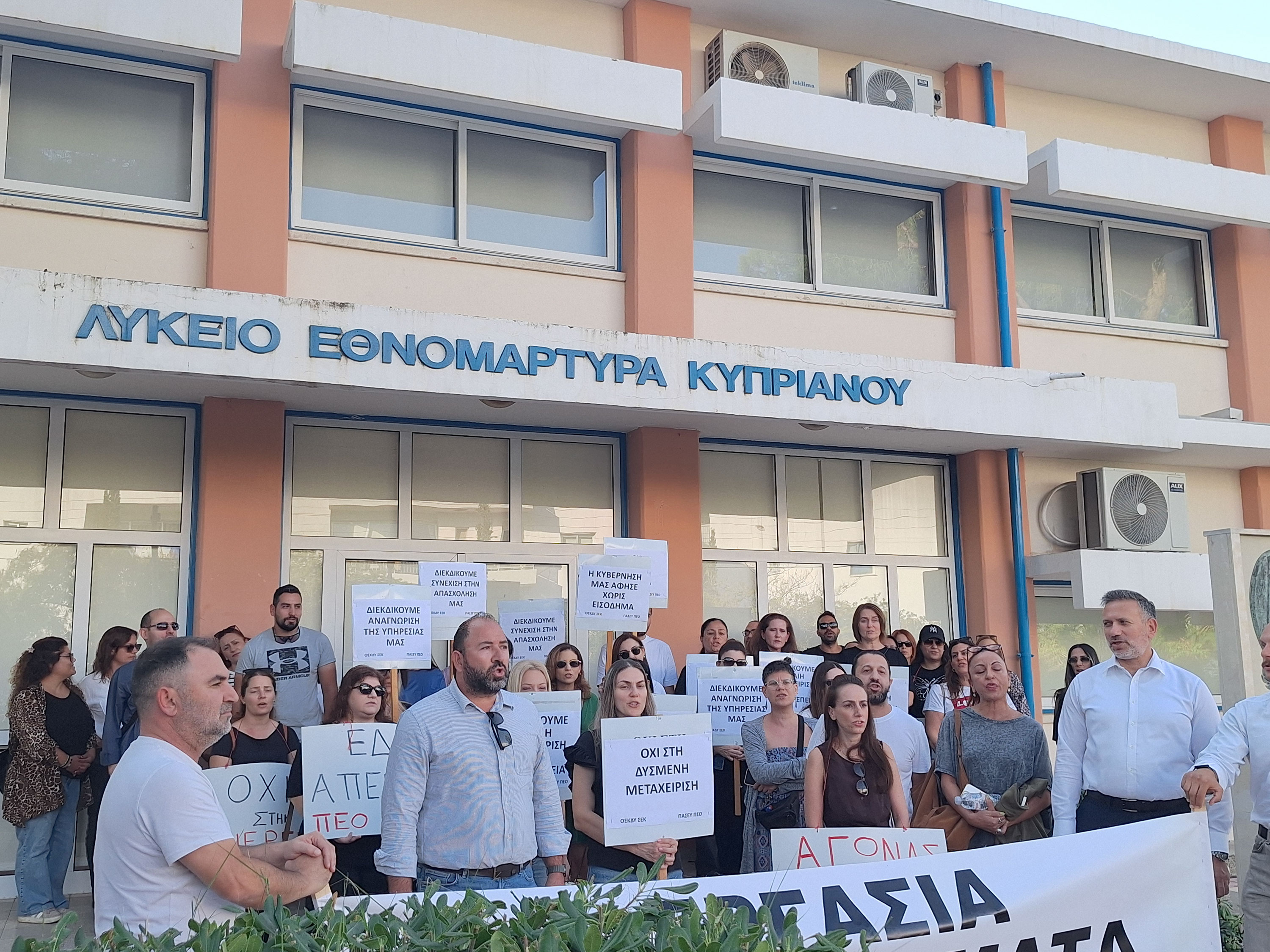
Workers in the support programmes of the education ministry will begin an indefinite strike on Monday, after unions cited many colleagues have gone five months without pay.
Trade unions SEK and PEO said the ministry has still not fully implemented legislation passed by the House on April 21 which regulates employment in specific programmes.
According to the unions, the law sets out staffing procedures, but these are not applied to every programme, which has left a number of workers without a job.
They also claim that posts meant for fixed-term staff are being filled by employees already on the permanent roll, who work overtime to cover them.
The unions further accused the government of repeatedly postponing a political decision on paying employees whose contracts have not been terminated.
They said the delay has left these workers with no income and no right to unemployment benefit.
“Workers remain unpaid for five months,” the unions said, describing the situation as the result of “continuous postponements” by the government.
The strike marks an escalation of measures the workers have taken over the unresolved labour issues, with a protest march planned for next Thursday, starting at the finance ministry and heading towards the presidential palace.
The unions have called on workers to turn out in large numbers for both the strike and the march, and have insisted action would continue until “substantive solutions” are provided to the problems they have raised.

 Login