❌

Reading view

With ‘largest coordinated port action ever,’ dockworkers in 22 countries strike against Gaza genocide

Seafarers and dockworkers chant slogans as they take part in a march from the port of Piraeus, near Athens, towards Greece's Ministry of Maritime Affairs on October 30, 2026, during a 24-hours strike held as part of an international day of action by dockworkers against the transport of weapons and military equipment through ports. Photo by Aris MESSINIS / AFP via Getty Images
Common Dreams Logo

This story originally appeared in Common Dreams on Oct. 30, 2026. It is shared here under a Creative Commons (CC BY-NC-ND 3.0) license.

Dockworkers in more than 20 countries—from France to India to Greece—are withholding their labor on Friday to demand an end to Israel’s genocidal assault on Gaza and highlight the role that commercial ports play in fueling deadly militarism worldwide.

Organizers said the work stoppages, led by dockworkers’ unions at 113 ports across 22 countries, would be the “largest coordinated port action ever,” easily surpassing the international day of action held in February. No Harbour for Genocide, a collective of trade unions and others supporting the day of action, said $2.8 billion worth of cargo will be halted at Mediterranean ports, where workers are planning to strike for 24 hours.

“A cargo refused in one port sails on to the next,” said No Harbour for Genocide. “Refused in every port, it stops, and the workers have enforced the embargo that governments announced and did not.”

In a joint statement last month announcing the day of action, dockworkers’ unions from Türkiye, Morocco, Italy, France, Greece, Italy, and Basque Country laid out their demands:

  1. An immediate end to the genocide of the Palestinian people and the opening of safe corridor for humanitarian aid.. An end of colonization, occupation and apartheid imposed to Palestinian People and the recognition of an independent Palestinian state recognized by the international community on the 1967 borders, with East Jerusalem as its capital.
  2. An end to the war in the Middle East. No support, no facilitation, no participation in the US-Israeli war against Iran, Lebanon or any other imperialist intervention. Military fleets and bases out of the region. We express our full solidarity to the people of Cuba and Venezuela and Sudan menaced by US imperialism and we call for defend people’s sovereignty, resources, territorial integrity, peace with justice, and the right for resistance for self-determination.
  3. Ports must not be used for the transport of weapons, ammunition, military equipment and troops. We call on unions to strengthen vigilance, to inform workers, to expose the cargoes of war, and to organize mass collective resistance with all our rightful available means and our struggle.
  4. An end to the militarization of ports and critical infrastructure. Ports belong to the peoples and the workers. They are not bases for NATO, the USA or the EU, nor tools of shipowners and monopoly groups.
  5. No to the war economy and armaments. The money must go to wages, collective agreements, health, education, social needs, and the protection of life and safety at work.
  6. Health and safety measures in the workplaces. Not one worker dead for profits. An end to intensification, subcontracting, dangerous conditions, and employer arbitrariness.
  7. Collective agreements with real wage increases, stable jobs with rights, a retirement policy with better pensions, and a reduction of working time. Technological developments, mechanization, automation, the use of AI and the development of ports must serve the needs of workers, and not lead to the intensification of work or the disappearance of their jobs.

“Our strength lies in organization. It lies in our unions, in general assemblies, in collective decisions, in solidarity among workers from different countries,” the unions said. “We, the workers in the ports, know very well that without us nothing moves. Without our hands, containers remain still, ships are not loaded, the war machines are blocked.”

Al Jazeera noted that of the ports participating in Friday’s actions, “Genoa, Livorno, and Gioia Tauro in Italy, Marseille in France, Piraeus in Greece, and Tangier in Morocco all have proven links to weapons shipments to Israel.”

Dockworkers International Day of Action across 5 Continents and 113 Ports

In Pireaus, at COSCO’s terminals, dockworkers are holding the picket lines. Their message is clear

Dockworkers do not work for war! Ports for the peoples and for peace, not bases for imperialists! pic.twitter.com/cpOwK8XLhV

— PAME Greece International (@PAME_Greece) October 30, 2026

The strikes come as Israel’s genocide in Gaza continues despite a ceasefire agreement that putatively took effect last October. A United Nations report published earlier this week noted that “Israeli authorities and forces continue to commit genocidal acts” in Gaza “even after the so-called ceasefire agreement, with the intent to destroy the Palestinian people, in whole or in part.”

The report found that Israel—which is armed and supported diplomatically by Western governments, principally the United States—has “committed war crimes and the crimes against humanity of extermination, persecution, torture, rape, and other forms of sexual violence” in the illegally occupied Palestinian territories.

Port Workers and Communities for Palestine said in a statement Friday that will be demonstrating at the Port of Elizabeth in New Jersey. The coalition said the New Jersey port is the only port on the East Coast of the US where a protest is expected. Demonstrations are also expected in Oakland and San Francisco, California.

“We know that, regardless of what union leadership may decide, workers everywhere stand in solidarity with Palestine,” said Port Workers and Communities for Palestine. “We will be out there on Friday to show them that they are part of this movement too. Workers have the power to stop the war machine.”


  •  

Public sector an ‘afterthought’ to North Sea oil jobs, says Unison leader

Andrea Egan calls for same political focus on teachers, care sector and NHS and says Jackdaw decision ‘a serious misstep’

The leader of the UK’s biggest trade union has called for the same political focus to be given to NHS, education and care sector workers as there has been on those employed in North Sea oil and gas.

Andrea Egan, the general secretary of Unison, said too often public sector workers were treated as an “afterthought” by the government compared with the “massive political focus” on protecting jobs in the North Sea.

Continue reading...

© Photograph: Gary Calton/The Observer

© Photograph: Gary Calton/The Observer

© Photograph: Gary Calton/The Observer

  •  

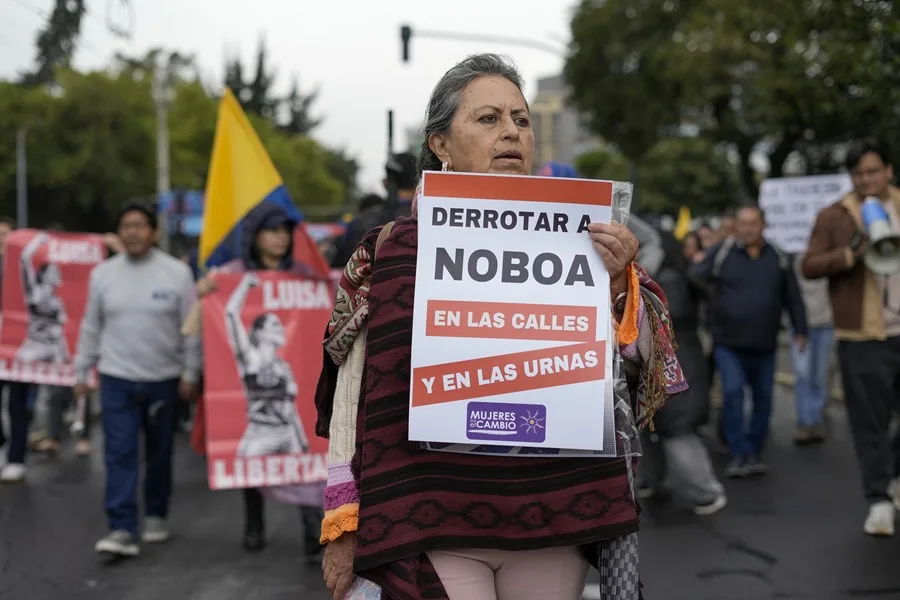
Ecuador Protesters March Against Noboa Ahead of Local Elections

Protesters march against Daniel Noboa in Quito, Ecuador, demanding Luisa González's release ahead of November 2026 local elections.

Unions and left-wing groups plan further demonstrations in November, calling for the release of opposition figure Luisa González.


Nearly 100 people marched through Ecuador’s capital, Quito, on Thursday to protest President Daniel Noboa’s government, launching a new wave of demonstrations ahead of local elections scheduled for Nov. 29.

RELATED: Ecuador Readies Snap Regional Elections Amid Opposition Exclusion Accusations

Organized by the country’s main trade unions and left-wing political parties, the peaceful march moved through the historic center before reaching the attorney general’s office. Protesters gathered outside the building carrying banners demanding the release of Luisa González, a former presidential candidate and one of the leading opposition figures.

González, who belongs to the political movement associated with former President Rafael Correa, was placed in pretrial detention in a case involving alleged money laundering. Prosecutors accuse her of involvement in the irregular financing of her first presidential campaign in 2023.

Chanting “Out, Noboa, out,” demonstrators also called for improvements to public education and healthcare. Some participants urged voters to cast null ballots in the upcoming local elections.

Natasha Rojas, a politician and activist, described the mobilization as a defense of democracy, civil liberties and the rights of Ecuadorians. She argued that the government was losing public support and warned that its policies would fuel further protests.

Nelson Erazo, president of the Popular Front, accused state institutions, including the attorney general’s office and the comptroller’s office, of being used to target social activists and political leaders.

He said the demonstration brought together groups seeking political change and demanding that Ecuadorians be able to express themselves freely, with guarantees of access to education, healthcare and employment.

Opposition organizations have announced further demonstrations on Nov. 7 and 15, followed by a march alongside feminist groups on Nov. 25 to mark the International Day for the Elimination of Violence Against Women. Another mobilization is planned for Dec. 10, in coordination with international organizations, to defend human rights.

  •  

TUC leader expects wave of union recognition in private sector over coming year

Paul Nowak says ‘hundreds, if not thousands’ of employers could sign access agreements as ‘transformative’ rules come into force

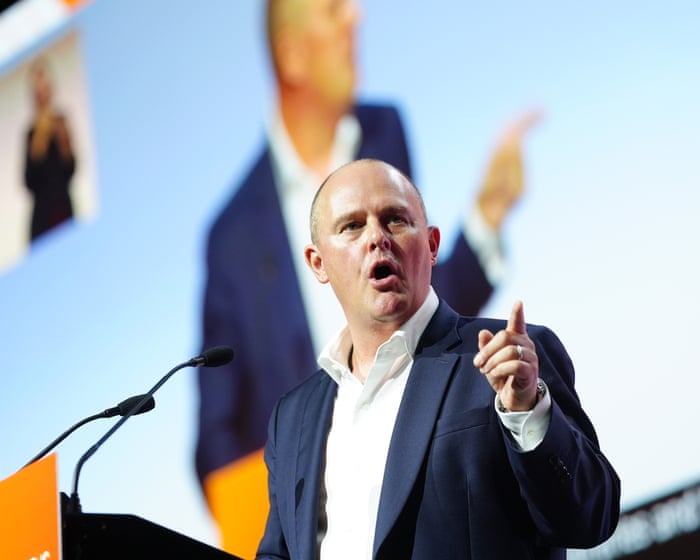
The TUC general secretary, Paul Nowak, is predicting a wave of union recognition deals in the private sector over the next year as “transformative” rules on accessing workplaces come into force.

From Friday, as part of Labour’s Employment Rights Act, unions will have the right to enter workplaces or communicate with staff electronically. From January, employers will be obliged to inform workers of their right to join a union.

Continue reading...

© Photograph: Stefan Rousseau/PA

© Photograph: Stefan Rousseau/PA

© Photograph: Stefan Rousseau/PA

  •  

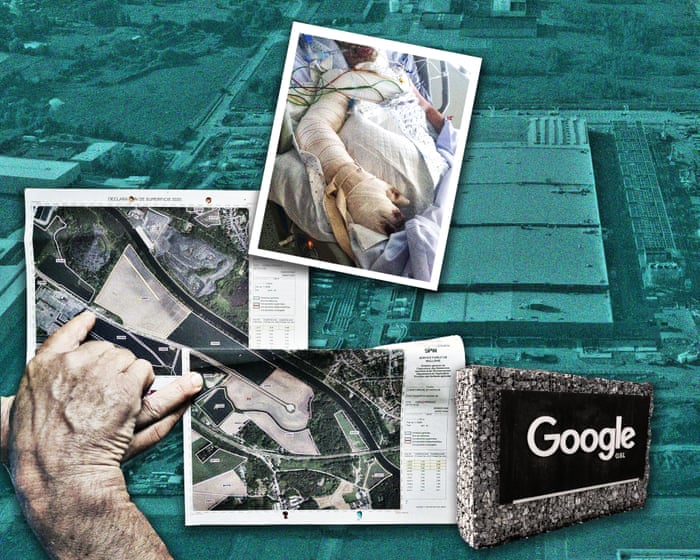
Electrocutions, disease and no pay: how workers risk exploitation in Europe’s datacentres

As thousands of datacentres are constructed across Europe, the Guardian and Investigate Europe have uncovered disturbing evidence that some workers building them are exposed to dangerous conditions and living in fear of speaking out

Sandu* checked his watch. He was winding down the last 15 minutes of his shift at a vast Google datacentre site in Saint-Ghislain, Belgium, in March, when the call came in. The 34-year-old electrical tester had already worked almost 10 hours, but says such last-minute jobs were normal: “I had no choice. People have been fired after saying no.”

The task was one Sandu had done many times before and involved a series of tests measuring the safety and integrity of the electrical wiring. A protective suit was locked away in an equipment room. The round trip would have added another 15 minutes to the job, he says, and people were waiting, so he decided not to retrieve the suit.

Continue reading...

© Illustration: Alamy/Mei-Ling McNamara

© Illustration: Alamy/Mei-Ling McNamara

© Illustration: Alamy/Mei-Ling McNamara

  •  
❌