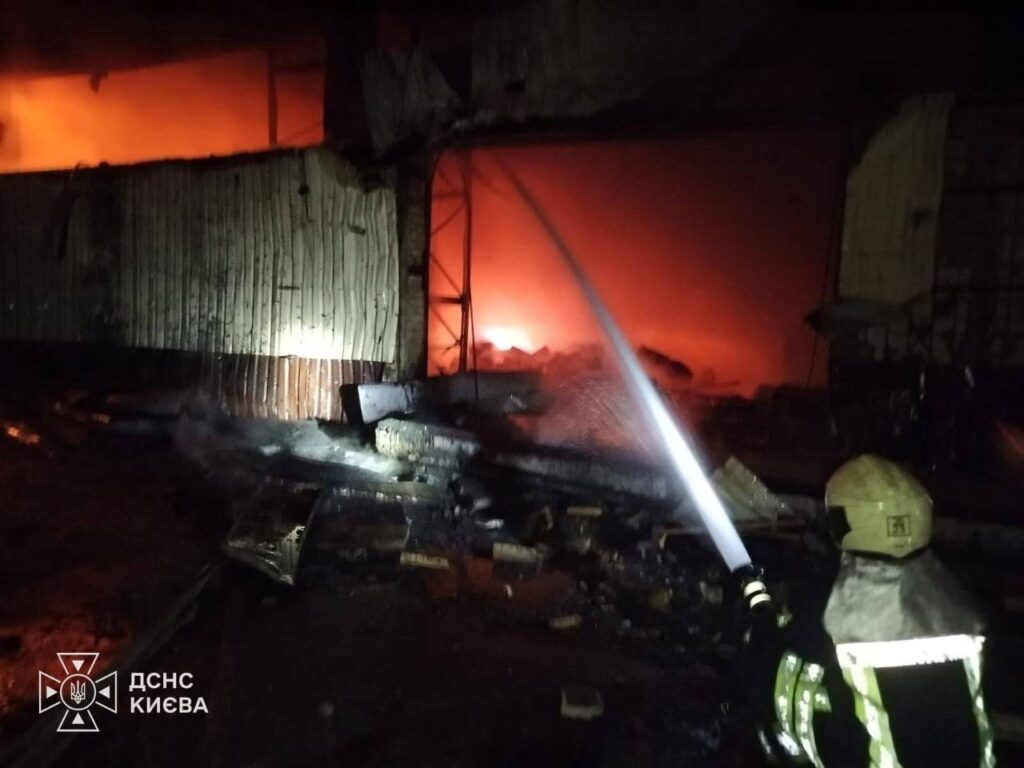
Russia attacked Kyiv with ballistic missiles late on 29 October, killing a man and injuring a 35-year-old woman, Kyiv city prosecutors said. The strikes damaged eight apartment blocks in Dniprovskyi district, a gas station, a restaurant, a dental clinic, warehouses, and cars. A warehouse building caught fire in Darnytskyi district, the city administration reported.
Overnight, Russia fired Iskander-M, S-400, and KN-23 ballistic missiles, four Kh-59/69 guided missiles, and 113 drones, 83 of them jet-powered, Ukraine's Air Force said. The attack mainly targeted Kyiv, Poltava, and Dnipropetrovsk oblasts. Air defenses downed three missiles and 96 drones, but strikes hit 17 locations.
Russia is waging its war on Ukraine's cities around the clock as winter approaches, striking homes, transport, and the power grid that keeps them running. On 29 October, including the late attack on Kyiv, Russian strikes killed at least 27 civilians and injured more than 140 across six regions, by EP's tally of regional authorities' reports. It was one of the deadliest days of the autumn. Most died in daylight, on a train platform in Dnipro, in an apartment block in Kremenchuk, in central Chernihiv, and under guided bombs in Izium.
Dnipro and Kyiv's right bank lose power
A Russian strike on Dnipro left more than 350,000 customers in the city and nearby towns without power, Dnipropetrovsk Oblast's administration said shortly after midnight. Water pumping stations switched to backup power. By morning, engineers had restored electricity to most customers in the oblast, but more than 200,000 were still without power.
Explore further
It was the only transport serving a village where more than 1,600 people still live: Russian forces strike a social bus with a drone in Bilenke, killing a woman and injuring other passengers
In Kyiv, equipment damaged in earlier strikes failed on the right bank, forcing emergency outages, the city administration said. Russia attacked an industrial plant in Poltava Oblast's Kremenchuk district overnight and again in the morning, with no casualties reported, the regional administration said.
A damaged one-story building and debris on the ground in Kyiv, Ukraine, after a Russian ballistic missile attack late on 29 October 2026. Photo: Kyiv City Prosecutor's Office
In the morning, a Russian drone hit a shopping center in Kharkiv's Kyivskyi district, injuring four women, Kharkiv Oblast Governor Oleh Syniehubov said. In Chernihiv Oblast, Russian drones destroyed the house of culture in Mena late on 29 October, and in the morning a drone hit a house in Bobrovytsia and injured a woman, the regional administration said. In Chernihiv itself, 37 people sought medical help after the 29 October strike on the city center that killed two 15-year-old girls, Yana and Mariia.
A burned-out car in central Chernihiv, Ukraine, after a Russian strike on 29 October 2026. Photo: Chernihiv Oblast Military Administration
Two oblasts in mourning as the Dnipro toll rises to 15
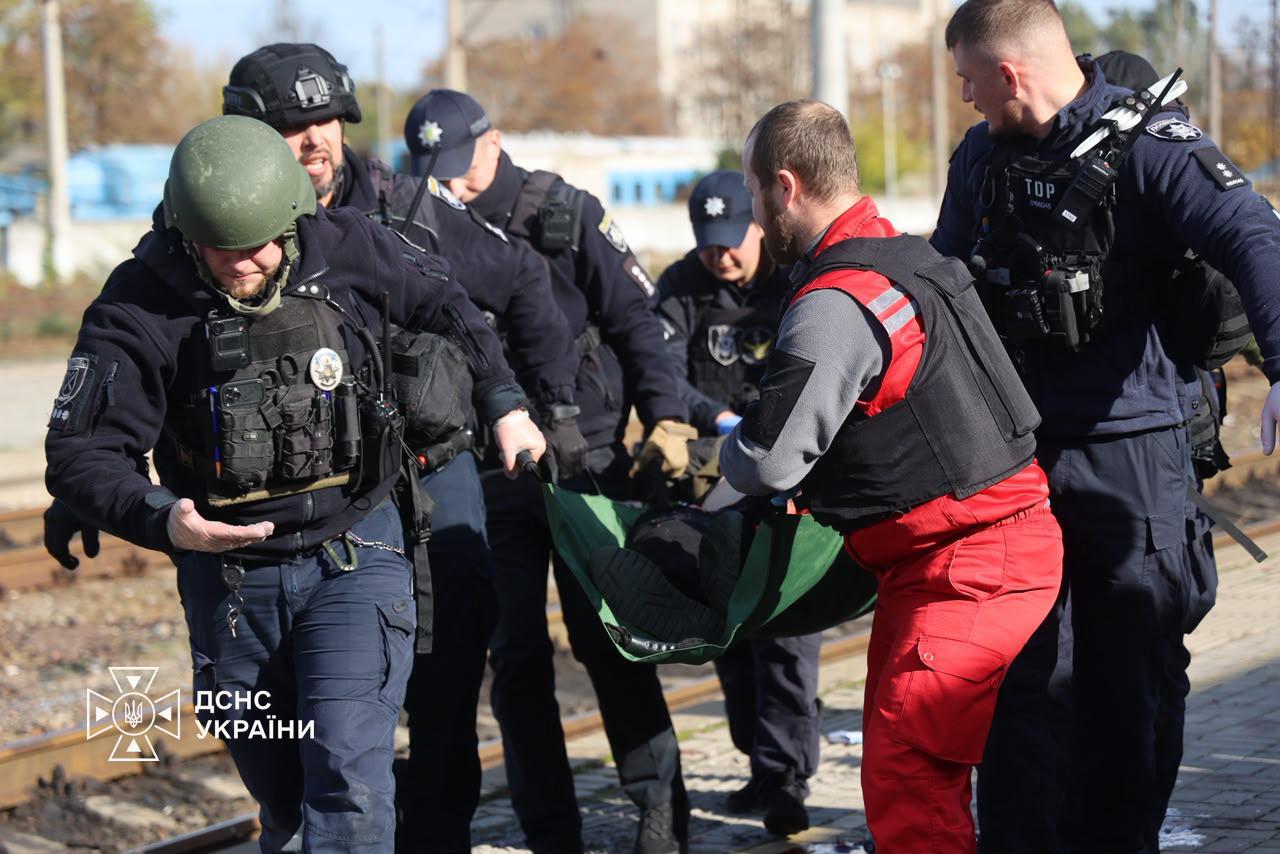
A 40-year-old man wounded in the 29 October jet drone strike on Dnipro's railway station died in hospital, raising the toll to 15, the regional administration said. Eleven people remain in hospital. Dnipropetrovsk Oblast declared 30 October a day of mourning.
A police officer near a five-story building partly destroyed by Russian guided bombs in Izium, Kharkiv Oblast, Ukraine, October 2026. Photo: National Police of Ukraine
Poltava Oblast also mourns three people killed when a Russian drone hit an apartment block in Kremenchuk on 29 October. Another 32 were injured, six of them children, the regional administration said.
Explore further
Russian jet drone hits Dnipro railway platform, killing 14 people next to a Zaporizhzhia-bound train
In Izium, Kharkiv Oblast, Russian guided bombs hit a five-story building on 29 October, killing four people and injuring 14, police reported. In Zaporizhzhia Oblast, Russian attacks killed two people in Bilenke and injured 23 across the region, 13 of them when Russia sent seven FPV drones at vehicles and public transport in Zaporizhzhia city, police said. EP reported the city faced a record number of such attacks.
A Russian FPV drone struck a social bus operated by the Proliska Humanitarian Mission in the frontline village of Bilenke, Zaporizhzhia Oblast, while it was carrying 23 passengers and a driver. The mission’s head, Yevhen Kaplin, reported the attack on Facebook on 29 October. In a comment to Ukrainska Pravda, he later gave slightly different details: 20 passengers and around 14:50.
Earlier that day, Russian attacks on Bilenke killed a 49-year-old man and wounded three other men, acting Zaporizhzhia Oblast head Mykhailo Semikin said. The village of Bilenke is likely to face the most difficult conditions in Zaporizhzhia Oblast this winter, then-head of the oblast Ivan Fedorov said in an interview with Ukrinform on 15 August. Russian forces use the village as a testing ground because the front line runs roughly across the river, he said.
Since the start of Russia’s full-scale invasion, this marks the 121st attack on the mission’s staff and volunteers while they were providing aid, as well as on its vehicles, offices, and warehouse infrastructure, Kaplin said.
The drone was reportedly lying in wait
The attack killed a female passenger born in 1952. The bus driver sustained serious injuries and was evacuated to a medical facility, Kaplin said. Another passenger, a man born in 1947, sustained multiple shrapnel wounds, while another woman suffered injuries from flying glass. The remaining passengers suffered acoustic barotrauma. Most of the people on board were elderly.
According to preliminary information, this was a drone that was lying in wait, Kaplin said. The attack took place at around 14:30 in the center of the village, on a section of road protected by an anti-drone net.
The bus was clearly marked with the humanitarian mission’s logo on the hood and roof, as well as the words “social bus,” Kaplin said.
The social bus operated by the Proliska Humanitarian Mission, which was damaged in a Russian drone attack on 29 October 2026. Bilenke village, Zaporizhzhia Oblast. Photo: Yevhen Kaplin/Facebook
National Police special units and military personnel evacuated the wounded, accompanied by aerial cover teams, due to the threat of further drone attacks.
It was the only transport serving the village, Kaplin said
Commercial transport operators no longer serve the village of Bilenke, but more than 1,600 people still live there.
As a result, residents had no way to reach the Oblast center to access essential services, or to buy food and medicine, Kaplin said. They also could not collect their pensions or winter aid payments from the state and humanitarian organizations.
The Proliska team launched the social bus at the request of regional and local authorities.
Russians attack public transport in Zaporizhzhia with drones
Russian drones also hit civilian transport in the Oblast capital several times on 29 October. The city came under a record number of FPV drone attacks that day, Semikin said, adding that Russia had changed its tactics and modified its drones.
In the morning, a Russian FPV drone struck a municipal bus in the city, Semikin said on 29 October. He first said the strike injured a woman and a man, then said four people were injured.
Russia launched two strikes on Zaporizhzhia, Semikin reported the same day. Two men, aged 66 and 41, were injured. The strikes damaged 15 vehicles, a warehouse building, a power line, and a nearby apartment block. A fire broke out at the site, he added.
Later, a Russian drone struck a minibus in central Zaporizhzhia, Semikin reported. According to preliminary information, one person was injured.
A Russian FPV drone struck a municipal trolleybus in Zaporizhzhia again, Semikin said. He initially reported one woman injured, then said the number rose to three. They included a 56-year-old woman in serious condition and two other women, aged 71 and 66, who sustained minor shrapnel wounds to their legs, he said.
Beyond strikes on Dnipropetrovsk Oblast, Russia launched ballistic missiles, four guided aerial missiles, and 113 Shahed-type drones, including 83 jet-powered drones, against Ukraine overnight on Oct. 30, according to Ukraine's Air Force.
 Login