At a hearing in federal court, prosecutors defended an unusual, 11th-hour criminal case accusing the former F.B.I. director of leaking classified information a decade ago.
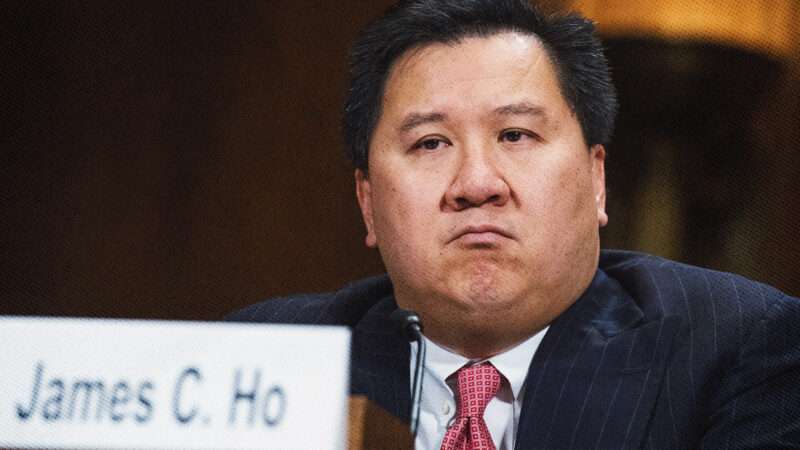
James Ho, whom President Donald Trump appointed to the U.S. Court of Appeals for the 5th Circuit in 2017 and considered as a potential Supreme Court nominee, recently criticized Trump v. Barbara, the June 2026 decision rejecting Trump's attempted restrictions on birthright citizenship. Ho's remarks, part of a speech he delivered on October 5 to a gathering of Christian activists at the Museum of the Bible in Washington, D.C., are striking because they seem to contradict his longstanding position that the children of unauthorized immigrants qualify as citizens under the 14th Amendment when they are born in the United States.
The New York Timespresents Ho's speech as evidence that he hopes Trump will nominate him to the Supreme Court, assuming that opportunity arises during the next two years. But whatever you make of that theory, Ho's position on Trump v. Barbara is hard to reconcile with what he has repeatedly said about the meaning of the 14th Amendment's Citizenship Clause.
"Birthright citizenship is guaranteed by the Fourteenth Amendment," Ho wrote in a 2006 law journal article. "That birthright is protected no less for children of undocumented persons than for descendants of Mayflower passengers."
Ho reiterated that position in a 2011 Wall Street Journal essay. "Opponents of illegal immigration cannot claim to champion the rule of law and then, in the same breath, propose policies that violate our Constitution," he wrote.
The first sentence of the 14th Amendment, Ho noted, says "all persons born or naturalized in the United States, and subject to the jurisdiction thereof, are citizens of the United States." The "plain meaning" of that language "is clear," Ho said. "A foreign national living in the United States is 'subject to the jurisdiction thereof' because he is legally required to obey U.S. law." The historical evidence, he added, shows that "both proponents and opponents of the citizenship clause agreed" that "it would extend birthright citizenship to the U.S.-born children of Chinese laborers and other noncitizens."
So why does Ho think the Supreme Court reached the wrong result in Trump v. Barbara? "Foreign governments weaponize illegal immigration in order to hurt other countries," he said at the Museum of the Bible conference, which was convened by the Judicial Action Group. "For decades, administrations of both parties have warned the people about the use of illegal immigration as a weapon of war, and judges are supposed to defer to presidential proclamations about a state of invasion. So the Supreme Court should have upheld the president's birthright citizenship order in full based on his invasion proclamation."
Ho hinted at this position in a November 2024 interview with South Texas College of Law professor Josh Blackman, who agrees with Ho that the Citizenship Clause covers the U.S.-born children of unauthorized residents. The previous July in United States v. Abbott, Blackman noted, Ho had written a dissenting opinion arguing that illegal immigration could qualify as an "invasion" under Article I, Section 10, Clause 3 of the Constitution, which says no state may "engage in war, unless actually invaded, or in such imminent danger as will not admit of delay."
Blackman asked Ho to address criticism of that opinion. "Anyone who reads my prior writings on these topics should see a direct connection between birthright citizenship and invasion," Ho replied. "Birthright citizenship is supported by various Supreme Court opinions, both unanimous and separate opinions involving Justices Scalia, Thomas, Alito, and others. But birthright citizenship obviously doesn't apply in case of war or invasion. No one to my knowledge has ever argued that the children of invading aliens are entitled to birthright citizenship. And I can't imagine what the legal argument for that would be."
The problem with Ho's qualification is that it empowers the president to override birthright citizenship, which Ho has said is guaranteed by the 14th Amendment, simply by declaring that illegal immigration amounts to an "invasion." It is not hard to see why that position would appeal to Trump, since it means he can unilaterally redefine citizenship.
Does that mean Ho is kissing up to Trump because he wants to replace any justice who might retire before the end of Trump's term? That is what Times reporter Mattathias Schwartz suggests. Schwartz concedes that Ho, like most of the potential Supreme Court nominees that Trump listed during his first term, falls into the category of "traditional conservatives with strong ties to the Federalist Society." But Schwartz says "some experts perceive Judge Ho's remarks" as "an attempt to show his alignment with Mr. Trump's worldview."
How so? Ho's speech "channeled frustrations shared by Mr. Trump and his base that the Supreme Court's six-judge conservative supermajority—three of whom are Mr. Trump's appointees—have failed to uniformly back his agenda," Schwartz writes. "Despite a string of conservative wins on abortion, gun rights, and gerrymandering, there is a sense on the Trump-aligned right that Justices Brett M. Kavanaugh, Amy Coney Barrett and Neil M. Gorsuch are becoming unreliably centrist swing votes—'squishes' in the online parlance—in the mold of Justices Anthony M. Kennedy and David H. Souter."
That framing implies that backing Trump's agenda is a matter of conservative principle. But Trump himself has no coherent ideology, and his authoritarian impulses often run headlong into conservative principles such as originalism, the rule of law, and the separation of powers. It makes sense to describe justices who occasionally disagree with Trump as "centrist" only if you accept the idea that his views are the standard by which judicial performance should be judged.
In any event, Schwartz suggests that Ho is presenting himself as a Trump-friendly judge who, unlike Kavanaugh, Barrett, and Gorsuch, could be relied upon to take the president's side. But the evidence that Schwartz cites to support that take is thin.
As Schwartz acknowledges, it is not even clear that Ho wants the job for which he supposedly is auditioning. His wife, Allyson N. Ho, works for a law firm that frequently litigates Supreme Court cases, and Judge Ho has suggested that her career would be ruined if he joined Court. "I can't imagine that Allyson's firm would want to be categorically recused from the highest court in the land," Ho said in a recent interview. "To have to tell every client that, if you hire them, they can only seek cert from an eight-member Court? That would effectively end her career and her practice—one she's worked so hard, for decades, to build."
Undeterred by that wrinkle, Schwartz cites parts of Ho's speech that he thinks suggest a desire to please the president. "Judge Ho lamented the values of 'this fallen world,'" Schwartz writes. "He called on the judiciary to stand up to 'cultural elites who control the national discourse.' He also bluntly rebuked the Supreme Court for legalizing same-sex marriage. He said the court's majority was wrong not to block the distribution of an abortion drug. And he said it was wrong again when it rejected Mr. Trump's attempt to limit birthright citizenship."
Those comments presumably appealed to the Christian conservatives in the audience. But with the exception of Ho's position on Trump v. Barbara, none of this seems tailored to ingratiate Ho with Trump, who is not particularly religious and seems to have no real interest in revisiting same-sex marriage or overriding state abortion policies.
While opposition to "cultural elites" sounds consistent with Trump's populism, the context of that phrase makes it clear that Ho was defending originalism against result-oriented jurisprudence. "We know that originalism may be permitted in polite company," Ho said, "but only until it leads to outcomes that are detested by the cultural elites who control the national discourse and who dispense the prestige and the respect and the stature craved by so many judges."
Although Ho's speech was peppered with Christian rhetoric, some of which the Times quotes, he emphasized that originalism does not entail interpreting the law according to religious principles. "Being an originalist means following the text and original understanding of the law no matter the outcome, no matter the effect on the judge's standing or reputation in the community," he said. "And if that's truly what you're doing, there actually should not be a Christian interpretation of the text or an atheist interpretation of the text. There would just be a dutiful, faithful interpretation of the text."
If you think Trump honestly cares about judicial methodology, "faithful interpretation of the text," or adherence to the original understanding of the Constitution, you have not been paying attention to his criticism of judges and justices, which is always based on their failure to agree with him. Michael Fragoso, former chief counsel to Sen. Mitch McConnell (R–Ky.), who was the Senate majority leader when Trump nominated Kavanaugh, Gorsuch, and Barrett, made exactly that point in an interview with Schwartz.
"One thing the activist class hasn't figured out is that the president doesn't really care about any of those substantive questions," Fragoso said. "He sees this as a loyalty issue."
Given that reality, you might expect that a judge trying to signal "his alignment" with Trump would say something about tariffs, his signature policy. But Ho's criticism of recent Supreme Court rulings did not extend to its decision last February in Learning Resources v. Trump, which rejected Trump's claim to sweeping tariff powers under the International Emergency Economic Powers Act.
Of all his judicial setbacks during his current term, Trump was probably angriest about that one—in particular, the role that Gorsuch and Barrett played by joining the majority. Yet Ho, who supposedly was channeling Trump's frustration with such traitors, did not mention that case. Nor did he say anything about the Supreme Court's ruling against Trump's National Guard deployments or its decision constraining his use of the Alien Enemies Act, which were both big losses for him.
Those omissions are puzzling if Ho was mainly interested in boosting his chances at a Supreme Court nomination. Less so if he was simply expressing his honest opinions.
Jaxton Tayte Collins, a 21-year-old from Montana, had been out drinking at a bar in downtown Helena before he allegedly shoved a man of South Asian descent and told him to "go back to his country." Those comments, along with an alleged shove, could land him in jail for up to five years.
According to reporting from the Billings Gazette, "the complainant told officers he was walking with friends when a man in an orange shirt and wearing a large cross necklace approached his friend, who is of Indian descent and wears a head covering." The man in the orange shirt, later identified as Collins, "allegedly shoved the friend with both hands and "told him to go back to his country." Witnesses characterized the August 7th incident as "an attack," and called it "frightening."
Officers then arrived on the scene and located Collins nearby. He told cops that he had been at a bar drinking and told the victim to go back to his own country "because he was angry." However, he denied pushing him.
On Tuesday, Collins was arraigned on one count of misdemeanor assault and one felony charge of malicious intimidation or harassment of civil or human rights. Under Montana law, malicious intimidation or harassment occurs when a person "purposely or knowingly, with the intent to terrify, intimidate, threaten, harass, annoy, or offend" causes bodily injury, "reasonable apprehension of bodily injury," or damages property because of another person's "race, creed, religion, color, national origin, or involvement in civil rights or human rights activities." Collins pleaded not guilty on both counts.
It's certainly plausible that Collins' actions could fall under these criteria. But the question that will likely decide Collins' fate pertains to the alleged shove.
In a statement to Reason, the Foundation for Individual Rights and Expression (FIRE) says, "The First Amendment protects even the most offensive and hateful speech. At the same time, it does not give a free pass to commit assault."
In Wisconsin v. Mitchell (1993), the Supreme Court upheld an enhanced sentence for a black man who urged his friends to attack a white teenager because of his race, ruling that states can impose harsher penalties for crimes motivated by bias—including racial, religious, and cultural bias—and that someone's words can serve as evidence of that motive.
"So if the defendant assaulted someone because of his race or national origin, the First Amendment likely wouldn't shield him from an enhanced penalty," says FIRE.
Montana's law isn't an outlier, and people have been convicted in other states for less. California,Washington,Michigan, and Illinois all have similar "hate crime" laws that can make it a felony to use force or threaten violence against someone because of their race, religion, or other characteristics.
In 2019, Reason reported on Timothy Trybus, who was convicted of two felony hate crimes in Chicago after drunkenly harassing a woman who was wearing a shirt with a Puerto Rican flag on it. He told her, "You shouldn't be wearing that in America." Tybrus never laid a hand on her, yet his comments upgraded a misdemeanor disorderly conduct charge into two felonies. He was sentenced to two years of probation and 200 hours of community service.
Collins' next hearing is scheduled for April 8, 2027. If convicted, he could face up to five years in prison and a fine of up to $5,000.
Collins' words that night reflect a condemnable kind of nativism that is fundamentally un-American. But so is punishing someone for the content of their beliefs. If Collins did in fact shove the man, that could very well constitute a felony under Montana law. But if he's being prosecuted simply for his words, "that would obviously raise serious First Amendment concerns," says FIRE.
Three men who were part of a self-styled terrorist organisation that planned to blow up a mosque in Galway last year have been jailed at the Special Criminal Court as the presiding judge told them they have "brought shame on us all."
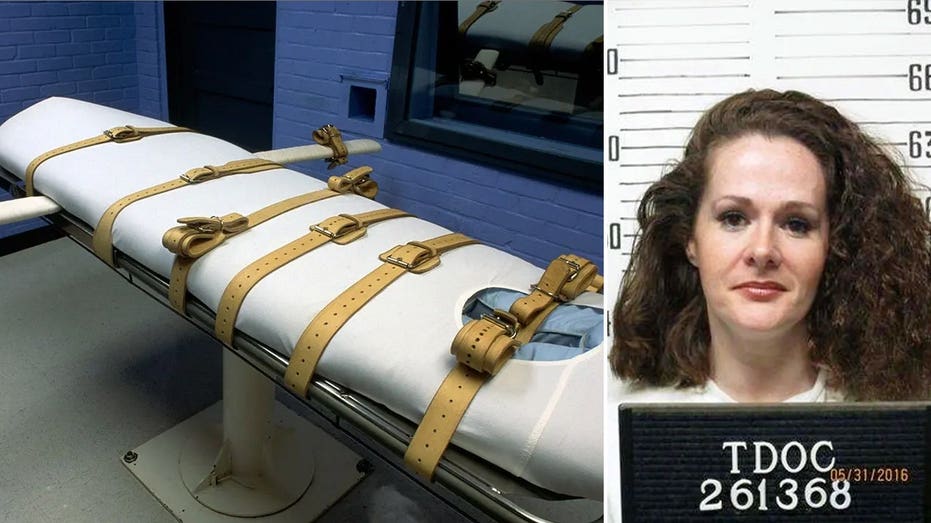
Death row inmate Christa Pike is speaking out one month after surviving Tennessee's attempt to execute her, saying she remains in constant pain and had never contemplated a life beyond the night she expected to die.
Pike, 50, described her condition in a statement dictated to her legal team and released Friday.
"One month ago on September 30, I walked into the execution chamber at Riverbend men’s prison prepared to die," Pike said. "I had made my peace."
Pike said she thanked those who had supported her through the years and told those who were there to witness her execution that she was "leaving them in loving kindness."
"Several days later I woke up alone in a hospital confused and in pain," Pike said. "There hasn't been a moment since that night when I haven't been in pain. My body hurts. My arms hurt. My hands hurt. My throat hurts. I still struggle to speak. And the pain isn't just physical. There is pain in my mind and in my soul."
Pike said she had never considered what her life would look like if she survived the execution.
"I had not contemplated life beyond that night, and I’m deeply hurt by the incompetence that has put so many people in this terrible position," she said. "I continue to think about my victim’s family and the terrible pain and loss they have endured."
Pike was sentenced to death for the 1995 murder of 19-year-old Colleen Slemmer, a fellow participant in a federal Job Corps program in Knoxville.
Her statement comes two days after Tennessee Gov. Bill Lee said Pike remains incarcerated under state law and signaled that her death sentence is unlikely to change.
Pike's attorneys have called on Lee to commute her death sentence to life without parole after the failed execution.
Pike said Friday that she is recovering but remains in the infirmary at the Debra K. Johnson Rehabilitation Center, where she has been largely isolated from other people.
"I am recovering, and I know that I am getting stronger," Pike said. "But healing is not the same as being okay."
"Since that night, I have been largely isolated in the prison’s medical ward, away from other people and the human connections that mean so much to me," she continued. "That isolation brings its own kind of pain. I spent 28 years in solitary confinement and much of what I am experiencing today is a repeat of that condition."
Pike survived Tennessee's attempt to execute her by lethal injection on Sept. 30 after receiving two doses of pentobarbital and was rushed to a hospital.
She remained unconscious for days, and her attorneys at one point believed she was brain-dead and expected her to be taken off life support. Pike later regained consciousness and was discharged from the hospital before being returned to prison.
She was 18 when she, her 17-year-old boyfriend, Tadaryl Shipp, and 19-year-old Shadolla Peterson were charged in Slemmer's killing. All four were participating in Job Corps at the time.
The three took Slemmer to a secluded area on the University of Tennessee's Knoxville campus, where her throat was cut multiple times, she was struck in the head with a large piece of asphalt and a pentagram was carved into her chest.
Pike later confessed to her role in the killing. She was convicted and sentenced to death in 1996, and the Tennessee Supreme Court later affirmed her convictions and sentence.
"I don't know why I survived that night. I don't know what comes next," she said. "Some days, finding hope is harder than others. For now, I am trying to heal, one day at a time. And I am holding on to the love and kindness of so many people who have reminded me that I am not alone."
A Trump-appointed judge was ordered to undergo a psychiatric examination as part of an ongoing judicial misconduct investigation after she called a Latino attorney a "White savior" who was intimidated by "Black excellence" due to his "White mediocrity" during a hearing.
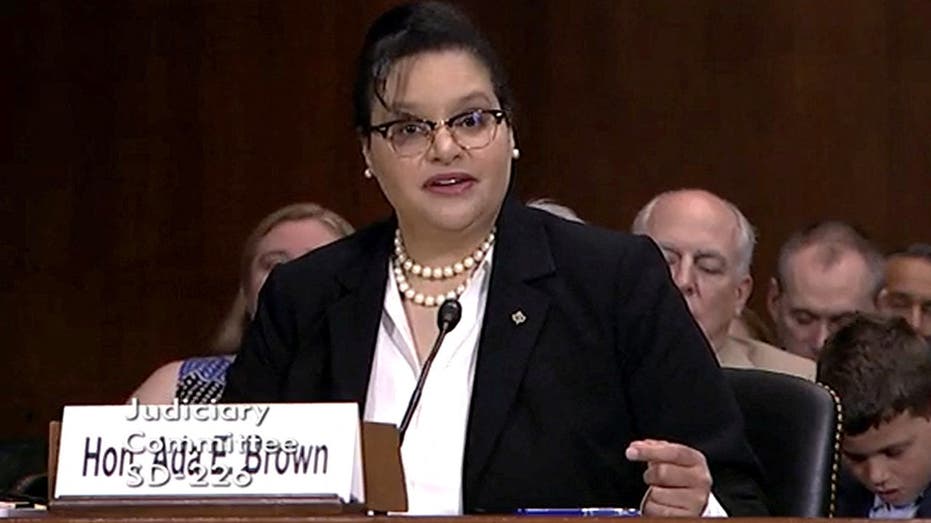
U.S. District Judge Ada Brown of the Northern District of Texas, who is Black and Native American, was temporarily removed from her docket by the Fifth Circuit Judicial Council earlier this month, following a May judicial-conduct complaint filed by attorney Ezra Young, whose permission to practice before Brown had previously been revoked.
The complaint centered on Brown's rhetoric toward Young during his appearance for a show-case hearing, in which he was facing sanctions over allegations from Brown that he shared sealed court filings online. Young represented a Black law professor who sued Southern Methodist University, alleging she was denied tenure because of discrimination. He joined the case in 2022 and appeared before Brown before the judge barred him from practicing in her courtroom.
During the April hearing, Brown railed against Young, accusing him of "bullying" the Black attorneys on the case.
"You’re the White savior, come to save all the stupid Black lawyers in Texas who need your help from New York," Brown later said, according to the transcript obtained by Bloomberg.
Brown repeatedly brought attention to Young's skin color, calling him "White presenting" and "fair-skinned" after Brown told her that he was a Latino.
"I think what’s happening here, quite candidly, is you are very intimidated for some reason, Mr. Young, with Black excellence, in light of your White mediocrity. Yeah. Right?" Brown said. "You should write that down. I mean, you — I’m — you look like a White man, right?"
She also called Young a "Chad" which she said is the male version of "Karen."
"It’s someone who calls the manager when they don’t get their way. They stomp their foot when the rules are supposed to apply to them, right?" Brown said.
Brown also accused Young of sensationalizing the case after reading a news article that quoted his brief and referenced another law professor’s comparison of the Black professor’s treatment in the tenure dispute to a "lynching."
"And so when I read a headline — a sensationalized, very racialized headline that says, ‘it’s like I’ve been lynched,’ and it’s literally got no connection to this case, I have to ask you, Mr. Social Media, Main Character Chad, White Hero, Savior, Loves to Help Black People Be An Ally, where the lynching in this case came from?" Brown said.
The release of the April court hearing transcripts comes as Brown shared with lawyers, judges and several media outlets via email of Young's complaint and her response.
Meanwhile, in a July 28 filing responding to Young's complaint, Brown stood by her conduct.
"I do not believe my demeanor was inappropriate at any time, especially during the candid conversations about race," Brown wrote.
"I take to heart the lessons I have learned from this experience and I ask the Chief Judge to weigh this candor, as well as my commitment to being mentored by senior judges with more experience in such situations when determining an appropriate disposition," Brown wrote. "I realize the importance of public confidence in the judiciary and take to heart my role in fostering the public’s faith in it."
President Donald Trump appointed Brown to the federal court in Texas in March 2019. She is the first Black woman to serve in that court.
Russell Brand’s wife, Laura Brand, took the stand Thursday as a defense witness, one day after the comedian and actor testified in his ongoing rape and sexual assault trial.
Brand, 51, is accused of three counts of rape, three counts of sexual assault and one count of attempted indecent assault involving six women between 1999 and 2009. He has pleaded not guilty to all charges and vehemently denies the allegations.
According to Sky News, Brand acknowledged that he had been "reckless" and used his fame to pursue sexual relationships, but insisted that the encounters were consensual. He also told the jury that consent was "fundamental, essential and necessary."
During Laura's testimony, the mom of three — who first met her husband when she was 19, and he was 31 — opened up about the start of their relationship.
The pair began dating in 2006, but split the following year due to Brand’s difficulty with monogamy and her "inexperience."
"When I met him, I was aware that he liked women, and I was aware toward the latter half of that year that he was engaging with other women," Laura told the court, per Sky News. "I was not interested in having a relationship with him if he was sleeping with other people. I was invested; we both had told each other we loved each other, but it was clear it was difficult for him to be monogamous."
The couple rekindled their relationship in 2015 and married in 2017. They share three children.
Laura described Brand as "caring and kind, a wonderful father to our children, and an amazing, attentive husband," adding that he has an "eye for detail I have never known before."
"I feel very seen by him," she said. "We have a very honest, frank and clear relationship and marriage.… Our relationship has always been [about] honesty. I love him very much."
According to the outlet, there was a brief moment of tension in court when defense attorney Ian Winter asked Laura about her "view as to the truth of the allegations."
The judge quickly intervened, telling the attorney that Laura was not an expert witness. The jury was temporarily sent out of the courtroom.
Prosecutors allege that Brand committed the offenses against six women over a 10-year period. The women have testified in court about alleged encounters at a hotel, a bar, a radio station, a workplace and Brand’s home.
Brand has denied forcing any of the women to engage in sexual activity against their will.
In a video posted to X last year, Brand thanked his fans for messages of support, then criticized the British government and legal system before addressing the charges directly.
He explained that he "was a fool before I lived in the light of the Lord. I was a drug addict, a sex addict and an imbecile, but what I never was was a rapist. I've never engaged in nonconsensual activity. I pray that you can see that by looking in my eyes."
Brand added, "Of course, I'm now going to have the opportunity to defend these charges in court, and I'm incredibly grateful for that."
He wrapped up his video by assuring his followers that he'd continue to address the allegations against him.
As police explained in a press release, detectives began investigating Brand after allegations were made public by U.K. media outlets Channel 4 and The Sunday Times in September 2023.
The outlets launched a joint investigation into the allegations, resulting in a lengthy article on the Times' website, as well as an episode of Channel 4's documentary series, "Dispatches," called "Russell Brand: In Plain Sight." Both contained a number of anonymous complaints, with women accusing Brand of physical and emotional abuse and bullying, as well as some instances of sexual assault.
Brand denied the claims shortly after they were made public, saying in a video statement shared on social media that his relationships were "always consensual."
The actor revealed that he received a few inquiries from media outlets with regard to "a litany of extremely egregious and aggressive attacks."
"Amidst this litany of astonishing, rather baroque attacks are some very serious allegations that I absolutely refute," he said.
According to Brand, the encounters occurred during a "time of promiscuity" but were "always consensual." He also noted that he "was always transparent about that then, almost too transparent, and I am being transparent about it now as well."
"To see that transparency metastasized into something criminal, that I absolutely deny, makes me question: Is there another agenda at play?" he asked.

 Login