❌

Reading view

New York state police taking over Cornell sexual assault complaints

New York Gov. Kathy Hochul (D) announced Thursday that state police would take over sexual assault complaints at Cornell University after widespread outrage over the handling of Jane Doe’s gang rape allegations.  Typically, a sexual assault complaint would be investigated by campus police, but Hochul said she would do “everything in my power to make sure…

  •  

DOJ Targets 'Ghost Students' Receiving Millions in Federal Tuition Loans

The Department of Justice (DOJ) has announced the arrests several foreign actors in connection with a "ghost student" scheme to defraud student aid programs of hundreds of thousands of dollars.

The post DOJ Targets ‘Ghost Students’ Receiving Millions in Federal Tuition Loans appeared first on Breitbart.

  •  

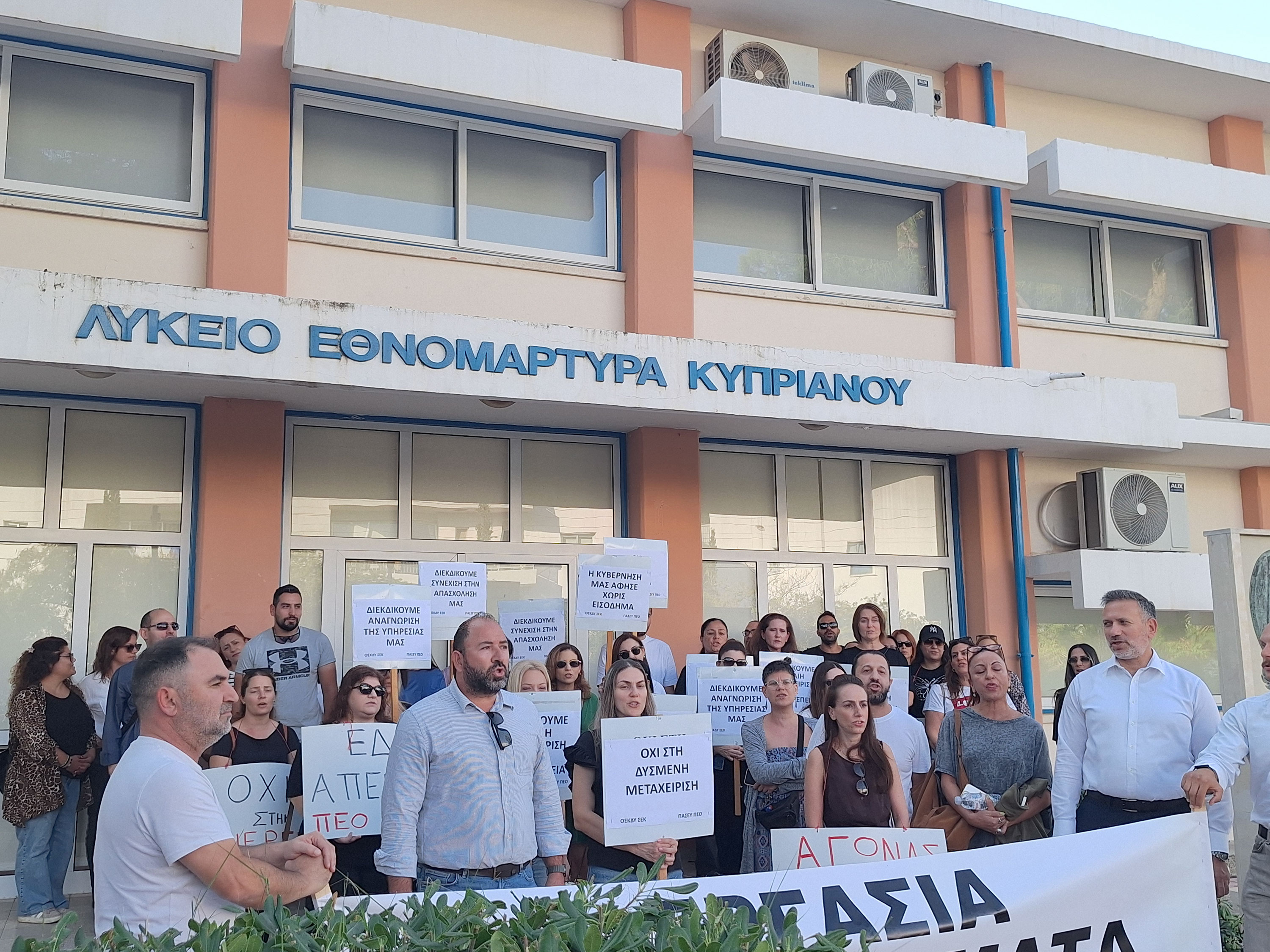
Support programmes staff to strike indefinitely over unpaid wages

Workers in the support programmes of the education ministry will begin an indefinite strike on Monday, after unions cited many colleagues have gone five months without pay.

Trade unions SEK and PEO said the ministry has still not fully implemented legislation passed by the House on April 21 which regulates employment in specific programmes.

According to the unions, the law sets out staffing procedures, but these are not applied to every programme, which has left a number of workers without a job.

They also claim that posts meant for fixed-term staff are being filled by employees already on the permanent roll, who work overtime to cover them.

The unions further accused the government of repeatedly postponing a political decision on paying employees whose contracts have not been terminated.

They said the delay has left these workers with no income and no right to unemployment benefit.

“Workers remain unpaid for five months,” the unions said, describing the situation as the result of “continuous postponements” by the government.

The strike marks an escalation of measures the workers have taken over the unresolved labour issues, with a protest march planned for next Thursday, starting at the finance ministry and heading towards the presidential palace.

The unions have called on workers to turn out in large numbers for both the strike and the march, and have insisted action would continue until “substantive solutions” are provided to the problems they have raised.

  •  

Kazakhstan as a Gateway for European Higher Education in Central Asia


As European universities look beyond traditional markets, Kazakhstan is rapidly positioning itself as a practical platform for long-term academic and research engagement in Eurasia. Under a deliberate state strategy, the country is shifting from sending students abroad to attracting international universities, standards and expertise onto its own territory.

President Kassym-Jomart Tokayev has made the development of Kazakhstan as a regional academic hub a clear priority. The goal is twofold: give Kazakh students access to high-quality international education without leaving the country and create a competitive destination that can also serve students from neighboring Central Asian states, the South Caucasus and beyond.

A Growing International Presence

According to the Ministry of Science and Higher Education, Kazakhstan has established roughly 40 strategic partnerships and projects with foreign universities, ranging from full branch campuses to joint programmes and research collaborations. These involve institutions from the United Kingdom, the United States, Germany, France, Italy, Poland, South Korea and others. Education is delivered through more than 160 international programmes.

British universities currently have one of the most visible footprints. Cardiff University opened its first overseas campus in Astana in September 2025 — the first Russell Group presence in Central Asia — offering programmes in computer science, business, civil engineering and earth sciences. Coventry University Kazakhstan launched in Astana in 2024 and opened a second campus in Almaty in September 2026, with further expansion of its Astana facilities planned. Heriot-Watt University operates in Aktobe, while De Montfort University has a presence in the country. Priority fields include engineering, IT, business, energy and creative industries.

German engagement is particularly relevant for Europe. Anhalt University of Applied Sciences is active in Almaty, focusing on applied sciences, engineering, energy and industrial digitalization. Broader Kazakh-German academic ties are already substantial: dozens of Kazakh universities cooperate with around 100 German partners. President Tokayev has used meetings with German rectors to propose deeper cooperation in dual education, artificial intelligence, technology transfer and joint research.

Other notable projects include partnerships involving the University of Arizona (notably with Kozybayev University in Petropavlovsk), Woosong University from South Korea, and collaborations with institutions from France, Italy and Poland. Formats vary — standalone campuses, programmes hosted by local universities, double degrees and strategic research alliances — allowing European institutions to choose models that match their risk appetite and strategic goals.

Why European Universities Are Paying Attention

Several practical factors make Kazakhstan attractive:

•⁠ ⁠Access to a wider regional market. A campus or joint programme in Kazakhstan can reach not only Kazakh students but also applicants from Uzbekistan, Kyrgyzstan, Tajikistan and further afield. The country’s geographic position between Europe and Asia, combined with relatively open visa and mobility conditions, supports this.

•⁠ ⁠Strong demand for international credentials. Young Kazakhs increasingly seek English-medium education, internationally recognized degrees and programmes aligned with global standards in AI, computer science, cybersecurity, engineering, biotechnology, energy and business.

•⁠ ⁠Government support and lower entry costs. Kazakhstan has offered infrastructure access, organizational assistance and, in some cases, educational grants or preferential conditions. Partnership with existing local universities often allows foreign institutions to use established facilities rather than building from scratch, reducing initial capital requirements.

•⁠ ⁠Alignment with industrial priorities. The country is interested in training specialists for energy, oil and gas, mining, mechanical engineering, digitalization, agriculture and water management — sectors where European expertise in green technologies, dual education models and applied research is highly valued.

•⁠ ⁠A multilingual academic environment. Kazakhstan is a Bologna Process participant, which facilitates recognition of qualifications and alignment with European quality assurance frameworks.

Students and the Broader Market

Kazakh youth’s interest in foreign university programmes is rising, particularly in British and American offerings. Roughly 9,000 students are already enrolled in various foreign university projects operating in the country. At the same time, Kazakhstan itself is attracting a growing number of international students: more than 35,000 from 88 countries were enrolled in the 2025–26 academic year, with more recent figures pointing toward 37,000–40,000. The largest groups come from India, Turkmenistan, Uzbekistan, China and Russia. The official target is 100,000 international students by 2029, supported by the “Study in Kazakhstan” campaign.

For European universities, this creates a dual opportunity: serve the domestic Kazakh market while also attracting fee-paying international students who see Kazakhstan as a more affordable and accessible alternative to studying in Europe itself.

Strategic Prospects for Europe

European universities — especially technical universities and research-oriented institutions — are well placed to expand further. Priority areas identified by the Kazakh side include energy and green technologies, artificial intelligence, mechanical engineering, industrial automation, transport and logistics, agricultural technologies and water resource management.

There is particular interest in European dual-education models that tightly integrate academic study with practical training in industry. Joint laboratories, research centers, double-degree programmes, academic mobility and the joint training of doctoral candidates are all seen as realistic next steps. Kazakhstan also seeks to host more of this activity outside Astana and Almaty — in regional centers such as Aktobe, Atyrau, Petropavlovsk, Turkestan, Kyzylorda and Ust-Kamenogorsk — where programmes can be tailored to local industrial needs.

Beyond teaching, the longer-term value lies in research collaboration and technology transfer. Training specialists to international standards creates a pipeline of engineers, researchers and managers who can later work on joint industrial and investment projects. For European institutions and their industry partners, this represents a way to build sustained presence in a strategically important region without relying solely on student mobility to Europe.

Looking Ahead

Kazakhstan’s demographic profile, economic modernization agenda and geographic position give it real potential as a regional platform for higher education and applied research. The existing projects with British, German, American, Korean and other universities demonstrate that the model can work. For European universities prepared to move beyond traditional student recruitment, Kazakhstan offers a chance to establish a durable foothold in Eurasia — combining teaching, research and industry engagement in a market that is actively seeking European standards and expertise.

The window is open, but it is becoming more selective. After a period of rapid expansion of foreign campuses, Kazakhstan’s higher education leadership has signalled a preference for partnerships that deliver clear added value aligned with national economic priorities. Institutions that approach the market with concrete proposals in priority technical and research fields are likely to find a receptive partner.

Main Image: By Ken and Nyetta – Central Downtown Nur-Sultan, Kazakhstan, CC BY 2.0, https://en.wikipedia.org/w/index.php?curid=77444517
  •  

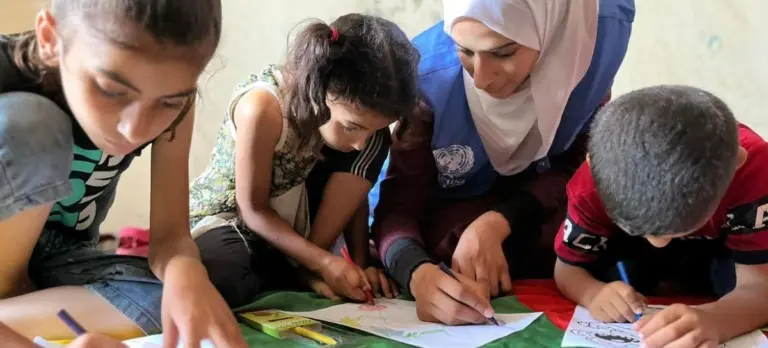
UN Experts Warn of Systematic Destruction of Gaza’s Education System

Destruction of schools, universities and cultural heritage in Gaza amid the Israeli offensive on Palestine.

The destruction of schools, universities and cultural institutions threatens Palestinian education, historical memory and future generations.


United Nations experts have warned that the systematic destruction of Gaza’s education system and the killing of Palestinian journalists are undermining Palestinian society’s ability to educate future generations, preserve its history and document events in the occupied territories.

RELATED: Israel Kills Four Palestinians in Gaza Despite Ceasefire

Speaking Thursday at a briefing organized by the UN Committee on the Exercise of the Inalienable Rights of the Palestinian People at the organization’s headquarters in New York, the experts condemned the destruction of educational institutions and the growing restrictions on press freedom across the occupied Palestinian territories.

Farida Shaheed, the UN Special Rapporteur on the right to education, described the devastation in Gaza as “scholasticide,” defined as the systematic and deliberate destruction of education. She reported that 98% of schools and all 13 universities in the territory had been destroyed.

The damage extends far beyond educational facilities. According to the experts, 13 libraries, 195 heritage sites, 227 mosques, at least three churches and Gaza’s central archives have also been destroyed. The archives held 150 years of collective memory, representing a significant loss of Palestinian historical records.

Gaza’s children are losing more than classrooms and textbooks. Three years of Israel’s genocide have disrupted their education, killed teachers and classmates, and left many struggling with hunger, trauma and the basic skills they need to learn.https://t.co/Fz7cmDzbzB

— The New Arab (@The_NewArab) October 25, 2026

The consequences for education are also evident in the occupied West Bank. Shaheed reported that 10 of the 48 schools in East Jerusalem were demolished in September. She also cited 224 security incidents during the first half of the year that affected 152 schools and 20,450 students.

The experts also raised alarm over the killing of Palestinian journalists and media workers, warning that the loss of those documenting events in Gaza has compounded the restrictions on freedom of expression.

Francesca Albanese, the UN Special Rapporteur on the situation of human rights in the Palestinian territories occupied since 1967, recalled that nearly 300 journalists and media workers had been killed in Gaza since October 2023, making the territory an increasingly deadly place for members of the press.

The most immoral army
will continue to slaughter innocent people

No matter which fugitive or potential war criminal leads Apartheid Israel.

They will.
Until or Unless WE THE PEOLE force it to stop.

Stop the Genocide now.
Together we can and we will. https://t.co/KoKmHMzWAw

— Francesca Albanese, UN Special Rapporteur oPt (@FranceskAlbs) October 29, 2026

Albanese warned that silencing witnesses not only allows crimes to be committed but also conceals them, allowing impunity to become part of the process.

The experts called on the international community to take immediate action by halting arms transfers, protecting journalists and sustaining humanitarian assistance through the UN Relief and Works Agency for Palestine Refugees in the Near East (UNRWA). They also warned that the ceasefire announced the previous year had failed to bring relief, with more than 1,500 Palestinians killed since it took effect.

  •  

Transgender Man Sues to Regain Job as 'Lolita' School Bus Driver

A transgender former Ontario school bus driver who labeled his bus the "Lolita Line" has filed a human rights complaint over his dismissal.

The post Transgender Man Sues to Regain Job as ‘Lolita’ School Bus Driver appeared first on Breitbart.

  •  

Our View: Cyprus must rethink its attitude to vocational education

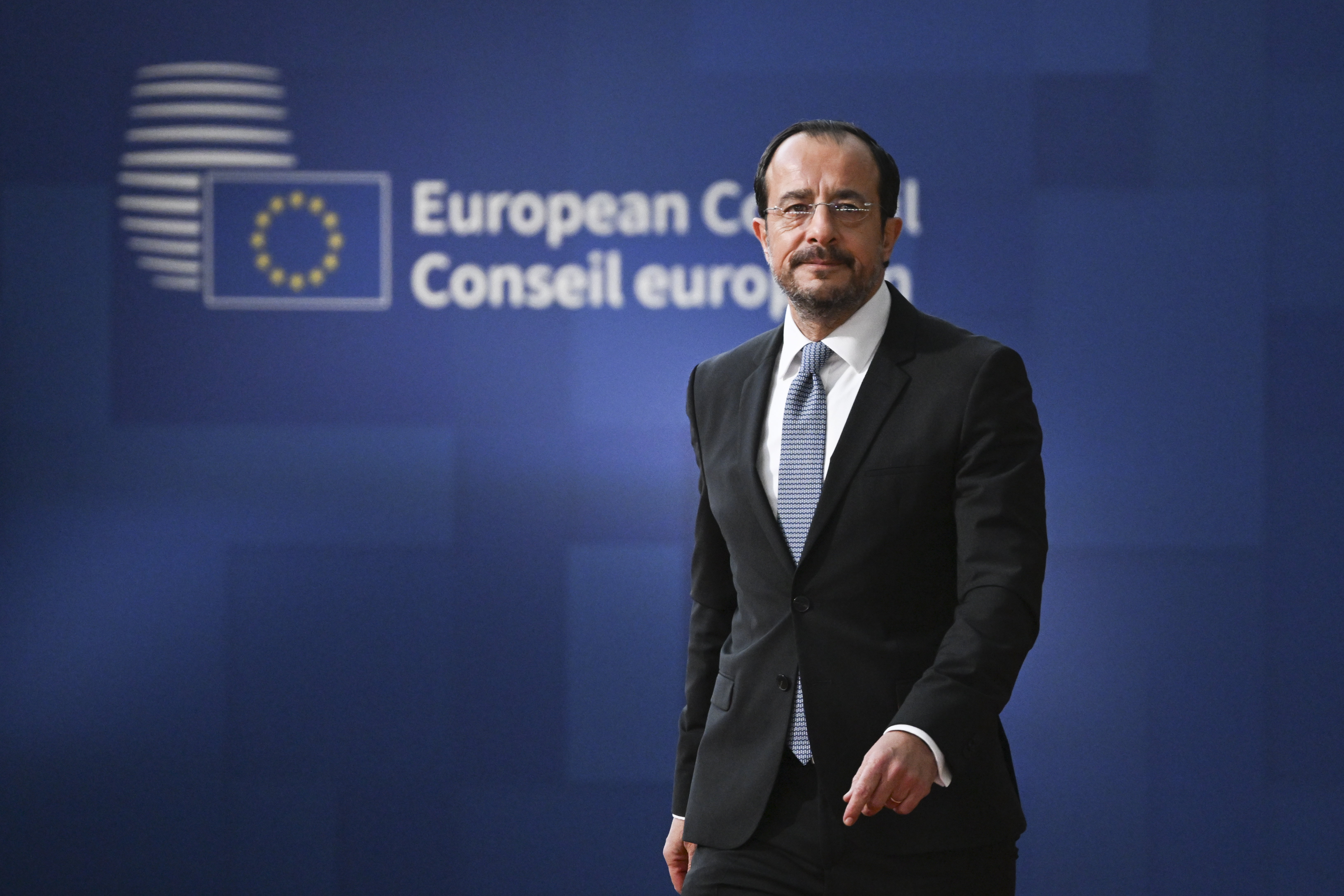
Less than a fifth of students in secondary education attend vocational education and training programmes, said President Nikos Christodoulides, in an address to the opening ceremony of the ninth national competition SkillsCyprus 2026. In Cyprus, only 17.9 per cent of students are in vocational education, drastically lower than the EU average of 52.4 per cent.

The European Commission’s recommendations for each member-state noted the steady and positive course of the Cyprus economy, but also recorded the challenges faced in the fields of productivity, innovation and skills, he said. The Commission saw a need in increasing the attractiveness of vocational education and training, something that successive Cyprus governments have failed to do despite persistent labour shortages.

Cyprus has faced a big shortage of electricians, plumbers, car mechanics, construction workers, decorators and equipment technicians for years. Although these are well-paid jobs, only a small percentage of young people are interested in them; there is now also a shortage of nurses. Is it because these are considered low-status jobs and everyone wants to be a white-collar worker, even if there is less money? Or perhaps the young are no longer interested in physical work.

University education always had great value in Cyprus. In the days when there were no universities in Cyprus, parents would make many sacrifices to send their children to universities abroad, because a degree was considered a surefire way of improving themselves, materially and socially. University education was never about broadening a youth’s horizons and sharpening their intellect, but about having the means to earn more money and acquiring social status.

Now that university degrees are widely available and many of them are of dubious value, most graduates are guaranteed neither high earning power nor the social status enjoyed in the past. But still, youngsters have no interest in plumbing or electrical work. Perhaps it is because the ambition of many is to get the dream job in the public service which does not have many openings for individuals with technical skills.

In his speech, Christodoulides mentioned the operation of the Technical Gymnasium, which he described as “an innovation that is a landmark in the Cypriot educational environment.” The institution had already expanded, a fact that illustrated the gap of not having such a special school which catered for the preferences of wishes of the students. He may have read too much significance into the existence of the Technical Gymnasium, because if the institution was such a success, it would have been expanded, and we would not have lowest participation in vocational learning in the EU.

At least the government, despite the president’s positive spin, recognises there is a problem that needs to be tackled. There are no ready solutions, and it will be difficult to change the way society views manual jobs. This is why the government needs to study the issue and develop a plan to attract more youths to vocational training.

  •  

Teachers in Kentucky and Minnesota Arrested for Alleged Sexual Misconduct with Students

A lull in the weekly parade of teachers across the U.S. being busted for sexual relationships with their students ended this week with a Minnesota teacher being hit with a jail sentence for meetups with a student and another educator in Kentucky banned from ever teaching again after pleading guilty to sexting with a pupil.

The post Teachers in Kentucky and Minnesota Arrested for Alleged Sexual Misconduct with Students appeared first on Breitbart.

  •  

Colorado mom says kids denied $12K in preschool aid over Catholic faith as Supreme Court showdown looms

A Colorado mother of three says her family was denied $12,000 in taxpayer-funded preschool benefits because she chose a Catholic education for her children, accusing the state of discriminating against religious families through a program promoted as universal.

Erika Nagle, whose children attend St. Mary Catholic School in Littleton, Colorado, told Fox News Digital that two of her children were denied access to the state's preschool funding program, leaving her family to cover additional education expenses.

"We are being excluded from this benefit because we are Catholic," Nagle said in an interview with Fox News Digital. "And so in a state that preaches inclusion, they are actively going out of their way to exclude a huge chunk of people because of our religious beliefs."

SUPREME COURT TO HEAR CATHOLIC PARISH'S CHALLENGE AFTER COLORADO BARRED SCHOOLS FROM UNIVERSAL PRE-K PROGRAM

At the center of the dispute is Colorado's universal preschool program, which Nagle says provides more than $6,000 per eligible child for preschool education. Catholic schools challenging the program argue that the state's participation requirements unfairly burden their religious beliefs and admissions practices.

According to Becket, Colorado launched its preschool funding program in 2023, offering eligible families approximately $6,300 to cover 15 hours of preschool per week. The organization said the program was promoted as a universal benefit that would allow parents to choose among public, private and religious preschools, prompting Catholic families across the state to seek participation.

Nagle says the consequences go beyond her family's finances.

"We have had two preschools in the archdiocese that have been closed down," she said, arguing that the program is affecting Catholic school enrollment and pressuring families to abandon the religious education they want for their children.

ARKANSAS STUDENTS OUTPERFORM NATIONAL AVERAGE AFTER UNIVERSAL SCHOOL CHOICE EXPANSION, GOVERNOR SAYS

"The state is dangling a carrot over here, incentivizing people to leave their faith, to abandon the Catholic education that they want," she said.

Nagle argued that nearly every school has admissions criteria tailored to the community it serves, whether that means prioritizing neighborhood children, people who identify as LGBTQ, children with special needs or low-income families. She said St. Mary similarly prioritizes Catholic families while welcoming students whose families are willing to respect the school's religious teachings. Nagle questioned why the Catholic school's admissions practices should be treated differently.

"The state grants $6000 per family to be used during the year before kindergarten, so the year when they're in pre-K, which is technically the year before kindergarten, and you can use it at the school of your choice," Nagle said. "And so Catholics are forced to pay the price for the school of our choice, which is Catholic school. And so you have thousands of Coloradans that are being forced to pay more than anyone else."

The legal battle raises questions about the extent to which religious schools can participate in publicly funded education programs while maintaining faith-based admissions policies.

VERMONT PAYS $566K IN DAMAGES, LEGAL FEES TO CHRISTIAN SCHOOL IT BANNED FROM ALL SPORTS COMPETITIONS FOR YEARS

"Colorado shouldn't force Catholic families to give up their choice, which is a faith-based school, and, you know, the state is letting other schools serve their communities, but they're not letting Catholic families serve their communities," Nagle said. "And to me, it also makes me wonder, is this by design, is this paving the way for godlessness or for what? Why can't Catholic families receive this benefit when there are other schools that were granted their exemption for other admissions requirements?"

The Supreme Court is hearing the case on Tuesday.

A spokesperson for the Colorado Department of Early Childhood (CDEC) said the department could not comment on pending litigation.

CLICK HERE TO DOWNLOAD THE FOX NEWS APP

Fox News Digital reached out to Colorado Gov. Jared Polis' office for comment but did not immediately receive a response. 

  •  

How colleges are helping students build social skills for the workforce

Much of the debate over higher education today centers on cost, career prospects and whether a college degree can prepare students for a rapidly changing job market. But in an era increasingly shaped by artificial intelligence, one of the oldest skills taught on college campuses may be more valuable than ever. Paul Solman reports for our higher education series, Rethinking College.

  •  
❌