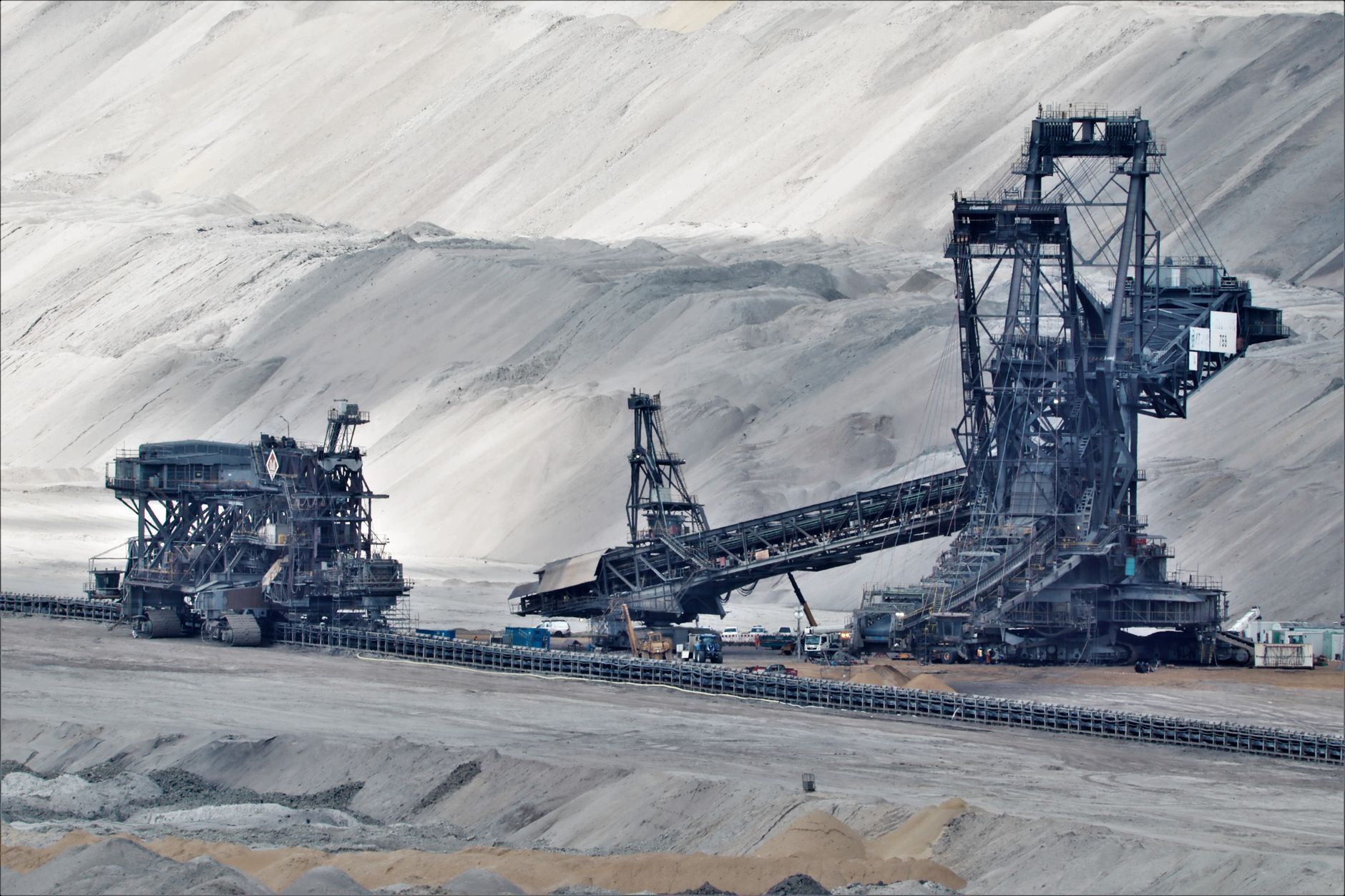
Australia's Queensland Land Court has approved Whitehaven Coal's proposed $1 billion mine expansion, rejecting a legal challenge from a conservation group. The ruling clears a major regulatory hurdle for the project in the state's coal-rich Bowen Basin. Whitehaven can now proceed toward final government approvals.
Russia has carried out more than 350 attacks on Ukraine’s energy infrastructure since September, damaging more than 800 pieces of equipment, Energy Minister Denys Shmyhal said on Friday.
Wholesale natural gas prices in Europe have climbed above €100 per megawatt-hour for the first time since late 2022, raising the prospect of sharply higher household bills next year. The EU is already issuing serious warnings about an energy crisis and difficult economy for the winter ahead, which Hungarian MEP Balázs Orbán has labeled an example of European Union “idiocracy.”
Energy Commissioner Dan Jørgensen said on Oct. 28: “Once again, due to geopolitical turbulence, Europe faces another energy crisis. We know that this winter will be difficult for European citizens and for our economy in general.”
Europe faces a difficult winter.
We must ensure reliable fuel supplies for our citizens, businesses, & defense.
And we must ensure that these supplies are affordable.
Today we started our dialogue with European refineries.
Looking at short-term & long-term.
Press point ↓ https://t.co/suM6zfkYfn
“And fuel bills in the EU are skyrocketing. This is putting a strain on our companies and on our households. In spite of the difficult situation, markets have shown remarkable resilience over the past months. Refineries have played a vital role in ensuring security of supply by producing the fuels that the market needs, including jet fuel,” he added.
He has noted that nearly 50 million Europeans are already unable to heat their homes adequately in a typical year and warned the number could rise.
The news was met with disdain from MEP Balázs Orbán, who served as the former political director of Viktor Orbán during his tenure as Hungary’s prime minister.
“This is idiocracy. You are financing a war that involves restricting Europe’s energy supply through sanctions and destroying infrastructure that produces and transports oil, gas, and fuel accessible to Europe by land. On top of that, you have imposed, through regulation, an energy transition that makes energy more expensive for European businesses and households alike,” wrote Balázs Orbán.
“And what do we get in response? Another press conference and, as attributed to Politico, the conclusion that ‘neither governments nor the European Commission have many – if any – good ideas left.’ You created the problem. You have no idea how to solve it. And now you are trying to cover it up with political messaging.”
This is idiocracy.
You are financing a war that involves restricting Europe’s energy supply through sanctions and destroying infrastructure that produces and transports oil, gas, and fuel accessible to Europe by land.
On top of that, you have imposed, through regulation, an energy transition that makes energy more expensive for European businesses and households alike.
And what do we get in response? Another press conference and, as attributed to Politico, the conclusion that “neither governments nor the European Commission have many – if any – good ideas left.”
You created the problem. You have no idea how to solve it. And now you are trying to cover it up with political messaging.
Politics is not an obligation of means, but an obligation of result.
The Dutch TTF front-month contract, the European benchmark, crossed the €100/MWh threshold on Oct. 28 after rising more than 4 percent on the day. Prices have roughly tripled since the start of the year and from levels around €32 before conflict escalated in the Middle East earlier in 2026. They remain well below the August 2022 peak near €340 during the initial fallout from Russia’s full-scale invasion of Ukraine, but the direction and the timing ahead of winter have unsettled markets.
EU gas storage stood at about 75 percent in late October, a record low for the period and well short of the bloc’s usual 90 percent target by Nov. 1. Facilities ended the previous winter at just 28 percent full, below the multi-year average, and refilling has been slow and expensive amid disrupted LNG flows, particularly from Qatar, and higher summer demand for power generation.
Austria, Slovakia and the Czech Republic have already begun drawing on storage as temperatures fall.
Poland’s response
In Poland, Finance and Economy Minister Andrzej Domański said on Oct. 29 that the government is working on measures to shield households from significant bill increases. Speaking on Polsat News, he stated: “I can say today that work is underway. There are several solutions on the table and in the coming weeks ministers will inform about this… I think that still in November solutions regarding the situation on the gas market will be known.”
He noted that the details fall primarily under the competence of the Ministry of Energy.
The current regulated household gas tariff stands at 197.29 złoty (€176) per MWh and has been extended through the end of 2026. Analysts, including Michał Kozak of DM Trigon, have estimated that full pass-through of higher wholesale costs could push the 2027 tariff up by around 35 percent, potentially into the 230–300 złoty range.
According to reporting in Polish news outlet Rzeczpospolita, the Polish Energy Ministry is considering a return to mechanisms used in 2022–2024: statutory price freezes paired with compensations to sellers for the difference between the frozen price and the tariff approved by the Energy Regulatory Office (URE). Financing options, including the existing “Fund for Payment of the Price Difference,” remain under discussion.
Poland enters the season in a stronger storage position than most of the EU, with domestic facilities reported near 99 percent full — above its own long-term average. Immediate pressure is expected more on industrial users, while household protection is the focus of the November package.
Separately, legislation supporting energy-intensive industries for 2027–2030 has advanced through parliament.
Europe better positioned than 2022
Jørgensen has stressed that Europe is better prepared than in 2022: gas consumption is about 18 percent lower, and the share of Russian supplies has fallen sharply from around 45 percent.
Supplies are now more diversified, with U.S. LNG playing a larger role. At the same time, he and others have described the current situation as more complex because it also involves oil and refined products amid conflicts affecting the Middle East, the Red Sea, the Black Sea and the Strait of Hormuz. Higher fossil-fuel costs since late February have added an estimated €100 billion to the EU’s import bill, with €18–33 billion attributed to gas.
EU energy ministers met in Luxembourg on Oct. 29 to discuss security of supply and affordability. Officials have acknowledged limited short-term tools remaining after earlier subsidies, demand measures and releases of emergency oil stocks. Goldman Sachs has also projected prices could reach €150/MWh in a scenario combining a cold winter with continued supply constraints.
Speaking at a briefing in Brussels attended by EU Today, Azerbaijani presidential envoy Elchin Amirbayov said his country was prepared to increase natural gas exports to Europe, but warned that insufficient pipeline capacity, investment restrictions and uncertainty over long-term contracts were preventing further expansion.
Azerbaijan is prepared to increase natural gas supplies to the European Union, but further expansion will require investment in transport infrastructure and long-term commitments from European buyers, according to Elchin Amirbayov, Representative of the President of Azerbaijan on Special Assignments.
Speaking at the Azerbaijani Embassy in Brussels on 21 October, during a meeting attended by EU Today, Amirbayov outlined the difficulties facing efforts to expand the Southern Gas Corridor, which has become an important component of Europe’s strategy to diversify energy imports away from Russia.
“Today it’s fully booked already by all those contracts which we have concluded with all recipients of our gas,” Amirbayov said, referring to existing pipeline capacity.
He stressed that Azerbaijan possessed additional natural gas resources but that increasing deliveries depended on the availability of transportation infrastructure and commercially viable investment arrangements.
“As far as our capacity to provide them with gas is concerned, it is there because we have necessary resources. But what we need to be able to do that is also transportation infrastructure,” he explained.
Europe’s 2027 gas target faces infrastructure constraints
In July 2022, European Commission President Ursula von der Leyen and Azerbaijani President Ilham Aliyev signed a strategic energy partnership envisaging an expansion of the Southern Gas Corridor to deliver at least 20 billion cubic metres (bcm) of natural gas annually to the EU by 2027.
The agreement formed part of Europe’s response to Russia’s invasion of Ukraine and the subsequent restructuring of European energy supplies.
According to the European Commission, Azerbaijan and its state energy company SOCAR supplied 12.5 bcm to EU member states in 2025, an increase of more than 50 per cent compared with 2021.
The figures underline the challenge of achieving the planned increase in deliveries without additional investment.
The Southern Gas Corridor includes the South Caucasus Pipeline, the Trans-Anatolian Natural Gas Pipeline (TANAP) and the Trans Adriatic Pipeline (TAP), connecting Azerbaijani production with European markets.
TAP completed an initial capacity expansion in early 2026, adding 1.2 bcm annually. Further expansion will depend on additional infrastructure and sufficient contractual demand.
As EU Today previously reported, Azerbaijan began supplying natural gas to Germany and Austria in January 2026, extending its presence in central European markets.
Long-term contracts and investment financing
Amirbayov emphasised that additional gas infrastructure could not be developed without long-term commercial arrangements.
“Gas being different from oil, it has to be based on long-term contracts, on long-term expressed willingness,” he said.
He also raised the difficulties created by European restrictions on financing fossil-fuel infrastructure, suggesting that EU institutions and member states needed to reconcile their energy security requirements with existing investment policies.
The regulatory situation is complex. The European Investment Bank no longer finances new unabated fossil-fuel energy projects, including conventional gas infrastructure. However, the EU taxonomy framework permits certain gas-related activities under specific conditions.
Amirbayov said European countries had differing energy requirements and were at different stages of the transition away from fossil fuels. Those differences complicated agreement on the financing of additional gas supplies.
He also explained that Azerbaijan’s own investment resources were heavily committed to reconstruction and rehabilitation projects in territories recovered following the conflict with Armenia.
“We cannot do that job ourselves for the reasons I just explained,” he said, referring to the financial requirements of expanding export infrastructure.
Natural gas and Europe’s energy transition
Amirbayov acknowledged Azerbaijan’s own investment in renewable energy, including wind, solar and hydropower. He highlighted the Caspian Sea’s potential for offshore wind generation and described the country’s efforts to increase renewables in its domestic energy system.
Nevertheless, he questioned whether natural gas could be replaced by renewable sources within a short period.
“I don’t think it’s realistic,” he said when discussing the prospect of replacing natural gas within the next year or two.
His comments come as Brussels continues to balance its climate objectives with energy security requirements and the planned reduction of Russian gas imports.
Azerbaijan has increasingly positioned itself as an alternative supplier to European countries seeking to diversify their energy sources. However, Amirbayov made clear that further expansion would depend on decisions taken by European governments, financial institutions and energy companies.
“We are there, ready to assist,” he said, adding that further progress would require clear intentions and decisions from the European side.
The immediate question is whether European buyers and policymakers can establish sufficient contractual certainty and investment arrangements to support the additional pipeline capacity envisaged in the 2022 partnership.
The leader of the UK’s biggest trade union has called for the same political focus to be given to NHS, education and care sector workers as there has been on those employed in North Sea oil and gas.
Andrea Egan, the general secretary of Unison, said too often public sector workers were treated as an “afterthought” by the government compared with the “massive political focus” on protecting jobs in the North Sea.
The race for artificial intelligence (AI), or superintelligence, will be won not just by technology companies, but by the nation that can deliver reliable, affordable and secure electricity. America is in a high-stakes sprint to lead the world in AI. This technology will reshape our economy, strengthen national defense, transform manufacturing and determine which nations lead the next generation of innovation.
But Washington and Silicon Valley cannot afford to ignore a glaring bottleneck: AI runs on electricity. America must dramatically expand its power generation and delivery infrastructure if it hopes to remain the global technology leader.
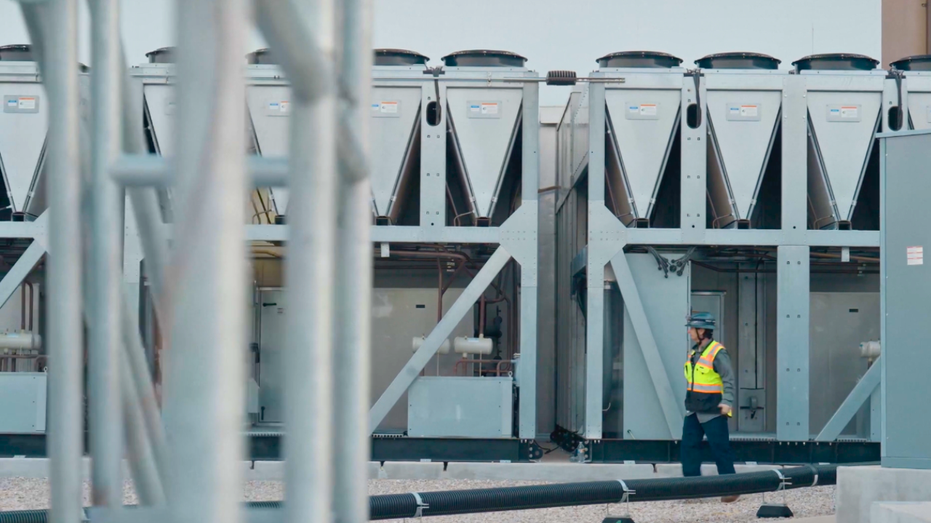
Data centers are the backbone of this revolution. They require enormous amounts of electricity, reliable grid connections and specialized infrastructure. Without sufficient power, advanced AI systems are little more than expensive hardware waiting for a connection. This creates an immense opportunity for America’s electric utilities. For too long, utilities have been viewed simply as service providers. Today, they are strategic partners in America’s economic competitiveness and national security.
To win the AI race, America must unleash domestic energy production, accelerate infrastructure development, defend against cyber threats and ensure that the private sector — not residential ratepayers — finances this expansion. This is a crucial opportunity for the administration, Congress, state governments and the private sector to coordinate an energy strategy that prioritizes American competitiveness.
Let the private sector finance growth
Electric utilities possess the engineering expertise and operational experience necessary to support data center expansion. They understand regional demand, transmission constraints and the complex mechanics of grid reliability. However, building the necessary infrastructure takes time; new generation facilities, transmission lines and substations often require years of planning, permitting and construction.
Data center developers, meanwhile, want to move quickly to capitalize on the AI boom. To bridge this gap, utilities and developers must collaborate much earlier in the process, aligning construction schedules, forecasting demand and identifying necessary upfront investments. Washington can support this by streamlining permitting and reducing regulatory delays to provide long-term investment certainty.
Crucially, data center developers must bear their fair share of the infrastructure costs driven by their massive electricity demands. Residential customers and small businesses should not subsidize infrastructure built primarily to serve trillion-dollar technology companies. Long-term power purchase agreements, dedicated infrastructure investments and minimum billing commitments can ensure large customers contribute appropriately. This is an argument for responsible, pro-business growth where financial risks are not shifted onto ordinary Americans.
The White House’s Ratepayer Protection Pledge reinforces the principle that America can accelerate AI innovation without forcing ordinary Americans to subsidize Big Tech’s infrastructure demands. Electric utilities can benefit from increased electricity sales, long-term power contracts and investments in generation and grid infrastructure, provided data center developers pay their fair share of the costs.
To protect consumers, we must require transparent cost allocation, enforceable commitments from large data center customers and safeguards preventing residential ratepayers from being left with stranded infrastructure costs if projects are delayed, scaled back or abandoned.
Energy dominance requires real abundance
America cannot achieve energy dominance if it cannot generate enough electricity to power its expanding economy. Meeting this challenge requires an "all-of-the-above" strategy that evaluates energy resources strictly based on reliability, affordability and availability.
Natural gas provides essential dispatchable generation, while nuclear energy offers dependable baseline power with low operational emissions. Hydroelectric power, wind, solar and battery storage all contribute where they make economic sense. Existing coal facilities also remain part of the equation where continued operation is economic and legally compliant.
No single technology can solve every regional power challenge. Utilities need the flexibility to select the optimal resource mix for their customers. The objective is straightforward: build enough reliable generation and transmission capacity to meet rising demand without spiking energy prices. This is vital as data centers increasingly compete for power with manufacturers, hospitals, military bases and households. Energy abundance is a national security imperative.
Securing the grid from cyber threats
There is another critical threat that deserves far more attention: cybersecurity. The electric grid and digital infrastructure are deeply interconnected. Power disruptions halt essential computing services, while software incidents at technology providers can ripple back to affect critical infrastructure. Foreign adversaries and sophisticated cybercriminals understand these critical dependencies.
Electric utilities operate vital infrastructure that must withstand attacks against corporate networks, industrial control systems and substations. Concurrently, data centers face distinct risks involving cloud platforms, software supply chains and third-party vendor access. These are interconnected risks that could have significant national security consequences.
Utilities and data center operators must establish joint incident response plans, conduct realistic multisector exercises and develop secure mechanisms for sharing threat intelligence. Organizations should strengthen network segmentation, multifactor authentication and vulnerability management. In particular, utilities must ensure that a compromise of ordinary corporate IT does not provide a path into operational technology controlling the grid. A stolen password should never become a gateway to disabling the power supply.
Supply-chain security deserves equal focus. Hardware, software and remote maintenance arrangements can introduce vulnerabilities into both utility operations and data center environments. Companies must rigorously assess critical vendors and establish clear protocols for addressing compromised components.
While the federal government has an important role in providing actionable threat intelligence, cybersecurity must not become an excuse for expensive, rigid mandates. Security frameworks should remain risk-based, practical and focused on resilience.
Data centers as grid assets
The relationship between utilities and data centers should not be one-way. With the right investments, large computing facilities can help improve grid flexibility. Some AI training workloads can be shifted to off-peak hours, allowing operators to reduce consumption during periods of high demand.
Furthermore, battery storage and appropriately designed onsite generation can provide grid stability during emergencies, turning data centers into strategic assets that strengthen, rather than strain, America's energy future.
Household electricity prices in Cyprus fell to €0.26 per kilowatt-hour in the first half of 2026, according to Eurostat data, easing from their energy-crisis peak but remaining significantly above pre-crisis levels as electricity costs continue to weigh on consumers.
The latest figures show that prices, including all taxes and levies, have declined steadily since reaching €0.37 per kilowatt-hour in the first half of 2023, although households are still paying considerably more than they did before the energy crisis.
When adjusted for differences in purchasing power, Cyprus recorded 29.9 purchasing power standard (PPS) units per 100 kilowatt-hours in the first half of 2026, providing an indication of the relative burden of electricity costs on households.
Across the European Union, average household electricity prices fell by 2.2 per cent in the first half of 2026, declining to €0.28 per kilowatt-hour from €0.29 in the second half of 2025.
Despite the decrease, prices remained well above levels recorded before the 2022 energy crisis, indicating that households continued to face higher electricity costs than before the energy market turmoil.
Taxes and levies also declined slightly as a proportion of household electricity bills, falling by 0.5 percentage points, from 28.9 per cent in the second half of 2025 to 28.4 per cent in the first half of 2026.
Cyprus electricity prices peaked in 2023
Eurostat data show that household electricity prices in Cyprus followed a relatively stable pattern between 2015 and 2020, before surging during the energy crisis and subsequently easing.
During the initial period, prices fluctuated between €0.15 per kilowatt-hour in the first half of 2016 and €0.22 in the second half of 2019, before falling to €0.16 in the second half of 2020.
The subsequent energy crisis brought a sharp increase in household electricity costs, with prices reaching €0.37 per kilowatt-hour in the first half of 2023, more than double the level recorded in late 2020.
Prices then began to ease, declining to €0.32 per kilowatt-hour in the first half of 2024 before continuing their gradual downward trajectory.
By the first half of 2026, the price had fallen to €0.26 per kilowatt-hour, representing a substantial reduction from the 2023 peak but remaining well above the levels recorded before 2021.
The trend highlights the persistence of the energy crisis’ impact on household electricity bills, even as prices have retreated from their highest levels.
Ireland records highest electricity prices
Ireland recorded the highest household electricity prices in the EU during the first half of 2026, at €0.39 per kilowatt-hour, followed by Germany and Belgium, where prices stood at €0.36 per kilowatt-hour in both countries.
Six member states recorded household electricity prices exceeding €0.30 per kilowatt-hour, while five countries reported prices below €0.20.
The lowest nominal prices were recorded in Hungary, at €0.11 per kilowatt-hour, followed by Malta and Bulgaria, where households paid €0.13 per kilowatt-hour.
However, comparisons based solely on euros do not fully reflect the financial burden electricity bills place on households, as purchasing power and general price levels differ between countries.
When electricity prices were adjusted using the purchasing power standard (PPS), Romania recorded the highest costs, at 46.9 units per 100 kilowatt-hours, followed by Poland at 41.1 and the Czech Republic at 34.3.
Cyprus recorded 29.9 PPS units per 100 kilowatt-hours, while the lowest purchasing-power-adjusted prices were observed in Malta, at 13.8, Hungary at 14.7 and Luxembourg at 15.5.
The PPS measure allows comparisons between countries by accounting for differences in purchasing power, offering a clearer indication of the relative cost of electricity for consumers.
Electricity prices move sharply in several countries
Although the EU average declined in the first half of 2026 compared with the second half of 2025, national trends varied considerably when prices were compared with the same period a year earlier.
Using comparisons in national currencies, Eurostat found that household electricity prices increased sharply in Romania, rising by 51.6 per cent compared with the first half of 2025.
Ireland recorded the second-largest increase, at 19.8 per cent, followed by Finland, where prices rose by 18.4 per cent.
In contrast, Denmark registered the largest decrease, with household electricity prices falling by 31.7 per cent, while Luxembourg recorded a decline of 24.1 per cent.
The figures illustrate the uneven evolution of electricity costs across Europe, despite the overall reduction in average EU prices during the first six months of 2026.
For Cyprus, the combination of the historical price trend and the latest purchasing-power-adjusted figures shows that, although household electricity costs have fallen considerably from their 2023 peak, prices remain elevated compared with the period before the energy crisis.
Ex-energy secretary Ed Miliband’s agenda appears undermined as money is diverted from renewables to defence
Britain is unlikely to hit its targets on green heating after the cuts announced by John Healey this week, experts have warned, as critics of Ed Miliband claim the former energy secretary’s green agenda is being dismantled.
The chancellor unveiled more than £3bn worth of cuts to the energy department’s budget this week, much of which will pay for higher defence spending.
With the midterm elections approaching, data centers have become an increasingly popular political target. Politicians are raising alarms about their impact on communities, with some calling for construction moratoriums or outright bans.
There's been plenty of fearmongering. But the more Americans learn about data centers, and the more communities experience their benefits firsthand, the stronger the case for continued development becomes.
Data centers have existed for decades, but the rapid growth of artificial intelligence has dramatically increased the demand for computing power. Americans understandably have questions about what this development means for electricity prices, water supplies, and their quality of life. Newer facilities are increasingly being designed with technologies that can address these concerns, including closed-loop cooling systems and quieter operations.
Yet much of the national debate overlooks what data centers are already delivering to communities across America.
Take Ellendale, North Dakota, a town of 1,100 people. Before Applied Digital's new $11 billion data center development, the town collected roughly $400,000 annually in sales taxes. In the first seven months of 2026 alone, that figure jumped to $3.5 million.
That revenue is helping the city repave its roads and renovate its senior center. A historic opera house is being restored. For a small town, this kind of investment can transform the community for generations.
And Ellendale is far from alone.
Schools across America are seeing enormous benefits from the data center boom.
In Richland Parish, Louisiana, Meta's massive investment has helped fund an increase in annual teacher bonuses ranging from $10,000 to $50,000.
Think about what that means for a working family. Teachers who have dedicated their careers to educating children are receiving a life-changing financial benefit, while the school district becomes an attractive destination for talented educators.
It's hard to imagine a politician campaigning against higher teacher pay or better schools. Yet those are precisely the kinds of benefits communities stand to lose when development gets blocked.
In neighboring Henrico County, local leaders used data center revenue to fund a $60 million Affordable Housing Trust Fund, helping young families and first-time buyers purchase homes.
At a time when housing affordability is dominating political conversations, building data centers is helping some communities make the American Dream a little easier to achieve.
Electricity prices are another major concern, and understandably so. Families are already struggling with higher utility bills, and the arrival of a major new industrial customer can raise legitimate questions about who pays for new infrastructure.
But the enormous, predictable electricity demand from data centers also creates opportunities to finance new generation and grid investments, spreading infrastructure costs across a larger customer base.
In Georgia, agreements involving new large electricity customers, including OpenAI, are projected to lower residential power bills by $180 annually by 2029.
With the right arrangements in place, the arrival of data centers can mean lower costs for the families already living in these communities.
And the benefits extend well beyond tax revenue and household expenses.
Trade unions have been among the most vocal supporters of data centers because of the good-paying jobs they create. Building these facilities requires years of work for skilled tradesmen, with new projects creating opportunities for the next generation of American workers.
Politicians have spent decades promising to bring back good-paying blue-collar jobs. Here is an industry creating enormous demand for exactly those workers.
Of course, developers have a responsibility to work with residents and local governments to address legitimate concerns. Communities deserve clear answers about electricity costs and water use. They should also understand how the investments taking place in their backyards will benefit local families.
But when data centers are developed responsibly, the economic benefits can be enormous. Communities are rebuilding roads and improving schools. Homeowners are seeing lower tax burdens, and skilled workers are finding new opportunities.
For decades, politicians have campaigned on championing the Forgotten Man and bringing economic opportunity back to communities that have struggled to attract investment.
Now, data centers are delivering billions of dollars in private investment to many of those very places.
We're watching a new industrial boom take shape across America, creating jobs and revitalizing communities that Washington has spent decades promising to help. Before politicians rush to stop it, they ought to take a serious look at what those communities are gaining.
Iran said four tankers were damaged by mines in the Strait of Hormuz, disputing a U.S. assertion that key shipping lanes had been cleared of such threats. The reports come amid renewed fears of wider confrontation in the Gulf following the U.S. midterm elections.
The state-run oil company swung from a year-earlier loss to a third-quarter profit, driven by rising Vaca Muerta shale output and improved refining margins, while cutting net debt to a decade low.
In Kyiv, multiple Russian ballistic missiles struck just after 10 p.m. local time. According to Kyiv Mayor Vitali Klitschko, warehouse buildings in the city's Darnitsky district were struck, starting fires.

 Login