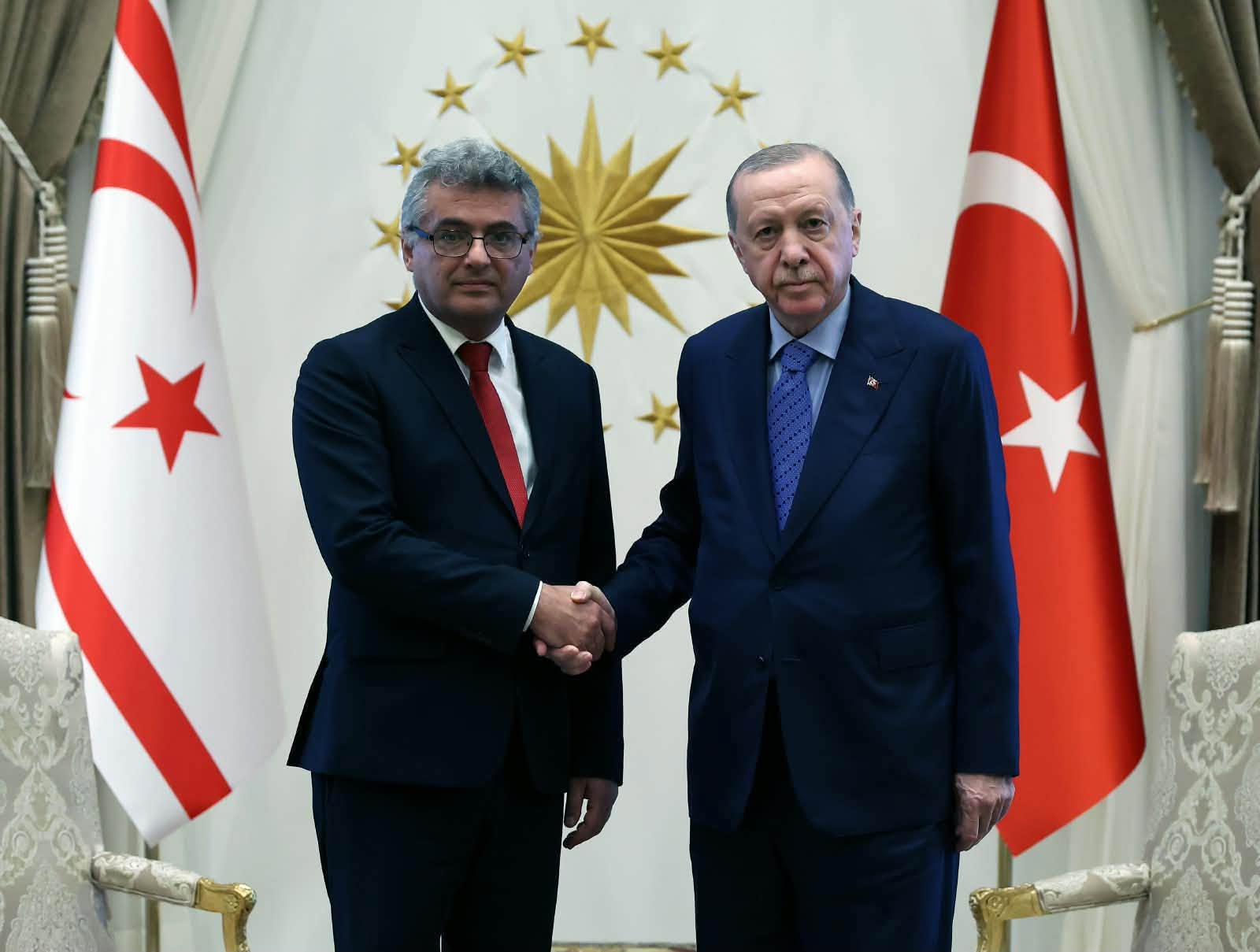
Turkish President Recep Tayyip Erdogan on Friday welcomed Turkish Cypriot leader Tufan Erhurman to Bestepe, Turkey’s presidential palace, and stressed the importance of Turkish Cypriots rights in any solution to the Cyprus problem.
According to Turkey’s presidential communications directorate, “bilateral relations between Turkey and the TRNC, as well as regional issues, were discussed during the meeting”, while Erdogan said he was “pleased” that the Turkish Cypriots were represented at the Organisation of Turkic States summit which took place in Ankara on Friday.
“President Erdogan stated that no process which does not protect the rights and interests of the Turkish Cypriots can be the key to a lasting solution in Cyprus, and that Turkey will always continue to stand by the TRNC,” Turkey’s presidential communications directorate said.
Erhurman made no statement following the meeting.
Friday’s meeting is Erdogan’s first public intervention on the Cyprus problem since last month’s United Nations general assembly, when he said, “I call upon the international community to recognise and establish political, diplomatic, and economic relations with the Turkish Republic of Northern Cyprus”.
He had at the time added that “the inhumane isolation to which [the Turkish Cypriots] have been subjected must finally come to an end”.
Christodoulides accused Erdogan of ‘hypocrisy of the highest form’
This speech prompted a response from Cypriot President Nikos Christodoulides, who used his address to accuse Erdogan of “hypocrisy of the highest form”.
“References to international law, to the respect for the sovereignty and territorial integrity of all states, to illegal occupation, to the drama of refugees. Yet, in relation to Cyprus, Turkey is doing exactly the opposite. Hypocrisy of the highest form,” he said.
He said that Erdogan had, during his own speech, “quoted extensively from the UN charter”, but stressed that “politicians are judged not by their words, but their deeds.”
“Mr Erdogan, if you want to quote from the charter, you must first apply it. The UN security council has established the framework for the settlement of the Cyprus problem. That framework, of a bizonal, bicommunal federation with political equality, remains the only basis on which a comprehensive settlement must be reached,” he said.
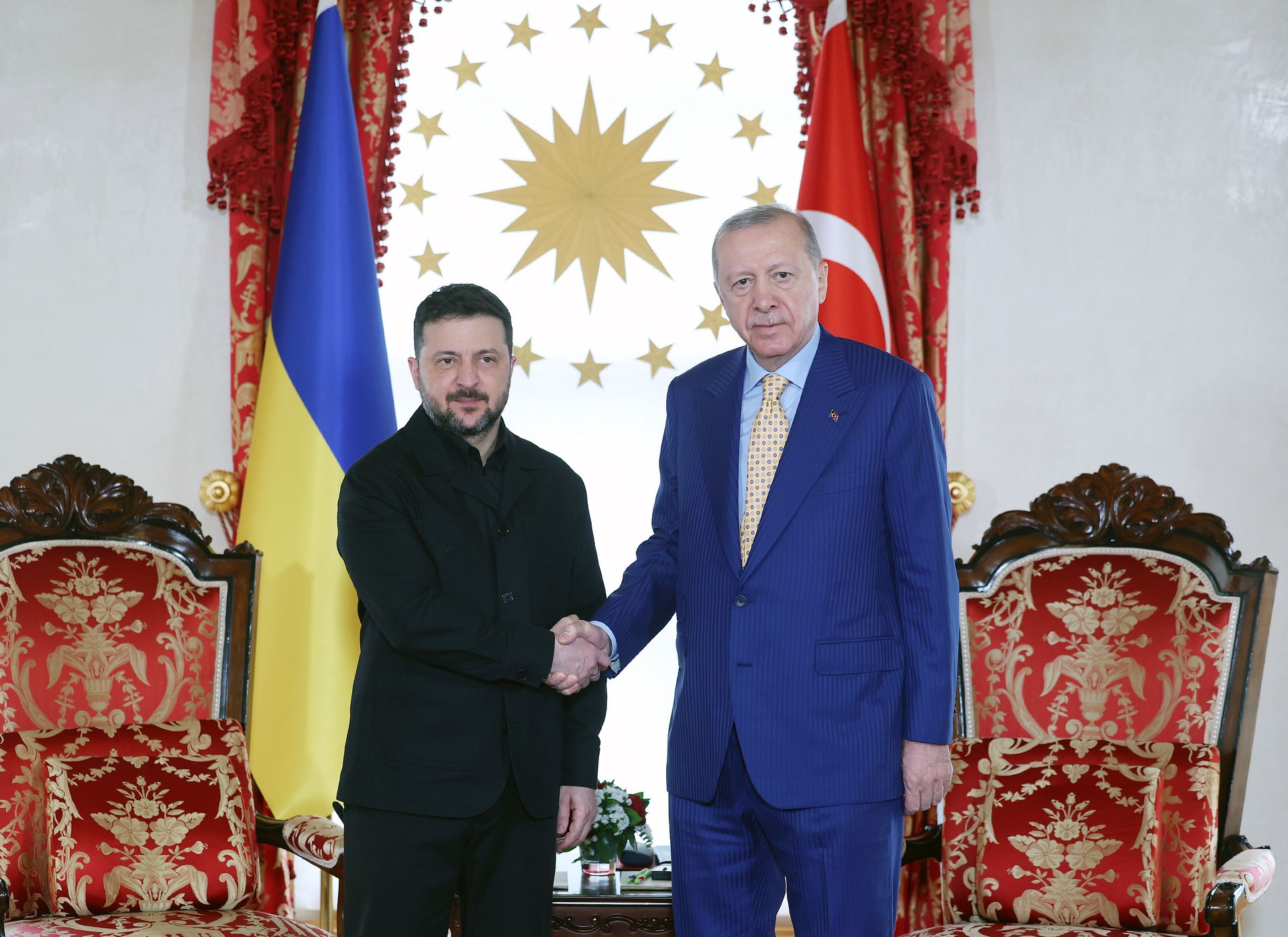
President Volodymyr Zelensky and Turkish President Recep Tayyip Erdogan will reportedly discuss the security situation in the Black Sea and other developments related to Russia's full-scale war against Ukraine.
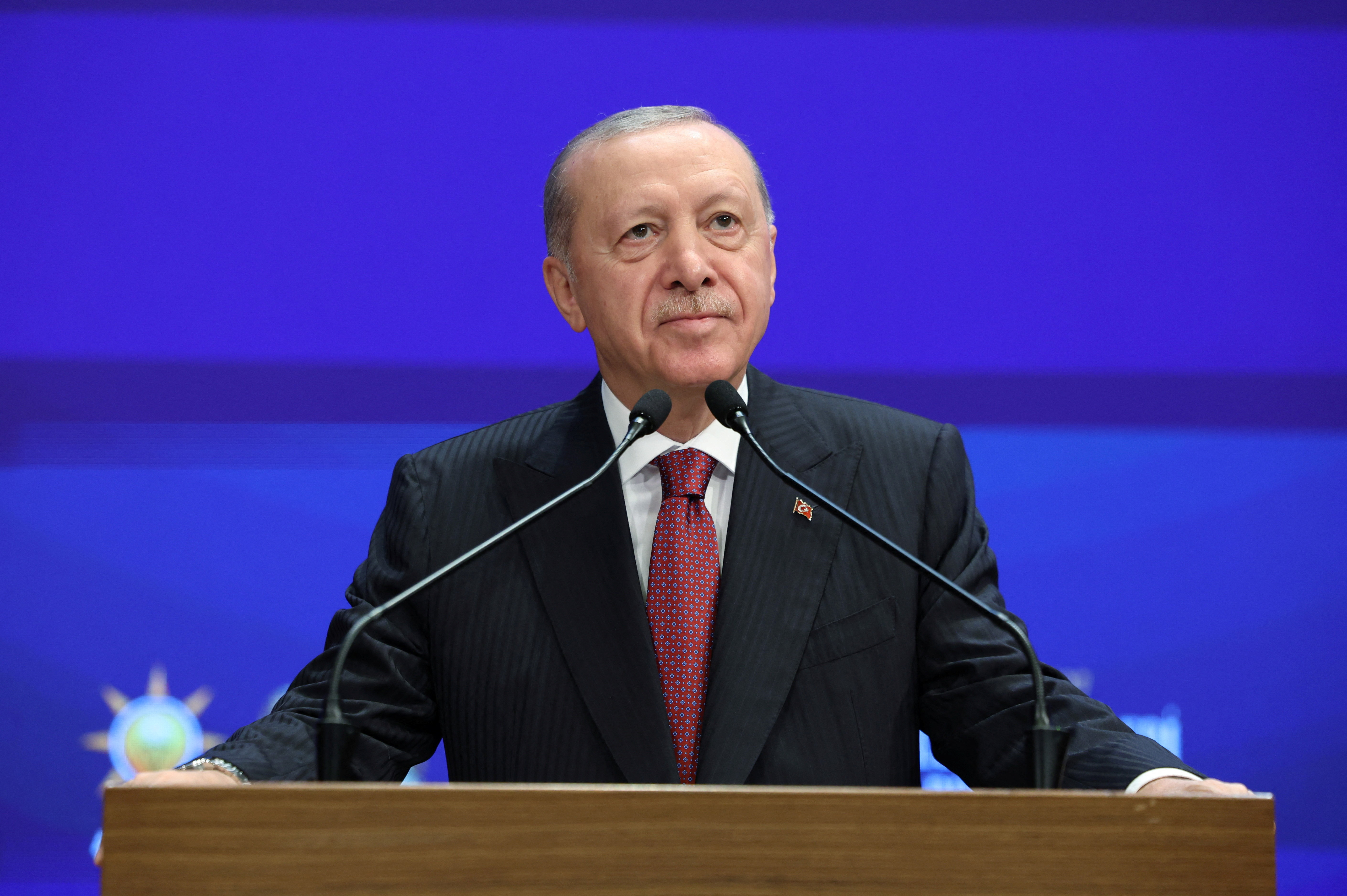
Ankara, 30 oct (Prensa Latina) El presidente de Türkiye, Recep Tayyip Erdogan, afirmó hoy que la solidaridad entre los Estados túrquicos constituye una necesidad estratégica ante las crisis y conflictos internacionales y la falta de justicia y confianza en el sistema mundial.
When Turkey’s opposition made big gains in local elections in March 2024, its leaders believed they had finally found a way to defeat long-serving President Tayyip Erdogan.
More than two years later, the opposition’s leading presidential challenger is in prison, its main party has been split by a court ruling and some of the opposition figures who were elected as mayors have defected to Erdogan’s AK Party.
The opposition remains defiant. It says it retains faith in democratic elections and that voters will reject what they see as a politically motivated legal crackdown on government opponents in the next national elections, due in 2028.
The opposition now faces a challenge to harness and sustain people’s anger until then over what they say is government coercion under Erdogan, who has been in power as prime minister and then president for 23 years.
“I do not believe this anger has disappeared,” said Seren Selvin Korkmaz, co-founder and co-director of the IstanPol Institute, an Istanbul-based think tank.
“However, unless this anger is channelled into political energy or organisational energy, it will fade away. It may evolve into disappointment, hopelessness or apathy.”
The government denies the legal cases against its opponents are politically motivated and says the judiciary operates independently.
IZMIR MAYOR’S DEFECTION
Few places capture the opposition’s challenges better than Izmir in western Turkey on the Aegean coast.
The AK Party has never managed to win Izmir, the country’s third-largest city with about 4.5 million residents, at the ballot box, but this month Mayor Cemil Tugay, who was elected on an opposition ticket in 2024, defected to Erdogan’s party.
Tugay’s defection represents a significant symbolic setback in what has long been regarded as the heartland of Turkey’s secular, social democratic opposition.
Tugay says he did so because it was “in the best interests of Izmir” and Erdogan has dismissed as slander opposition allegations that Tugay switched parties under pressure.
But the opposition New Party’s head in Izmir expressed confidence that voters in the city would show their opposition to Tugay’s move and what he depicted as government coercion when they vote in the next national elections.
“The government believes it can steer this process through coercion, but it will realise that it has made a grave miscalculation in the election,” Cagatay Guc, the New Party’s head in Izmir, told Reuters.
The New Party, which is led nationally by politician Ozgur Ozel, staged protests before Tugay’s defection and believes many local voters oppose his change of allegiance.
In interviews with Reuters, many Izmir residents criticised Tugay’s decision.
“It was Tugay who joined the AK Party, not the people of Izmir,” said a 50-year-old man who gave his name only as Koray for fear of recriminations. “The AK Party can never win over the people of Izmir.”
A 67-year-old woman who gave her name only as Halide said: “We have never voted for that side (the AK Party) anyway … and now we’ll vote for Ozgur Ozel.”
Some residents said they agreed with Tugay that Izmir, one of the largest industrial and trade centres of Turkey, might receive more municipal services under a mayor representing the governing party.
“As a resident of Izmir, I want to see more municipal services in our city… With the necessary support from government, this city will be rebuilt, I hope,” said a 46-year-old man, who gave his name only as Isa.
One resident suggested Tugay had “no other choice” than to switch parties.
“He would either end up in Silivri, or carry on by switching parties,” said 53-year-old Alpay, referring to a prison west of Istanbul where many opposition figures are jailed.
LOSING FAITH IN CHANGE?
Inmates at Silivri include Istanbul Mayor Ekrem Imamoglu, who is regarded as Erdogan’s chief rival. In the 2024 local elections, Imamoglu was elected mayor of Istanbul for a second term from the Republican People’s Party (CHP), which won 37.8% of the vote and also retained Ankara, Izmir and many other big cities.
Those successes encouraged the opposition to view control of Turkey’s biggest cities as a platform from which to challenge Erdogan nationally.
Dozens of mayors and hundreds of municipal officials are now in jail along with Imamoglu, who is awaiting trial on corruption charges which he denies.
The CHP has been split after a court ruling ousting Ozel as its leader and reinstating former leader Kemal Kilicdaroglu. Ozel, a close ally of Imamoglu, launched the New Party in response, hoping to sustain voter anger over the pressure on the opposition.
“If voters lose faith that change is possible, why would they bother to vote?” said Tanju Tosun, a political science professor at Ege University in Izmir. “Voter turnout in the general election may fall slightly, particularly amongst voters of the opposition parties.”
Turkey’s next presidential and parliamentary elections are scheduled for May 2028 but a presidential adviser said this month that the elections would probably be held slightly earlier than expected. Doing so would allow Erdogan to sidestep constitutional limits and run again for office.
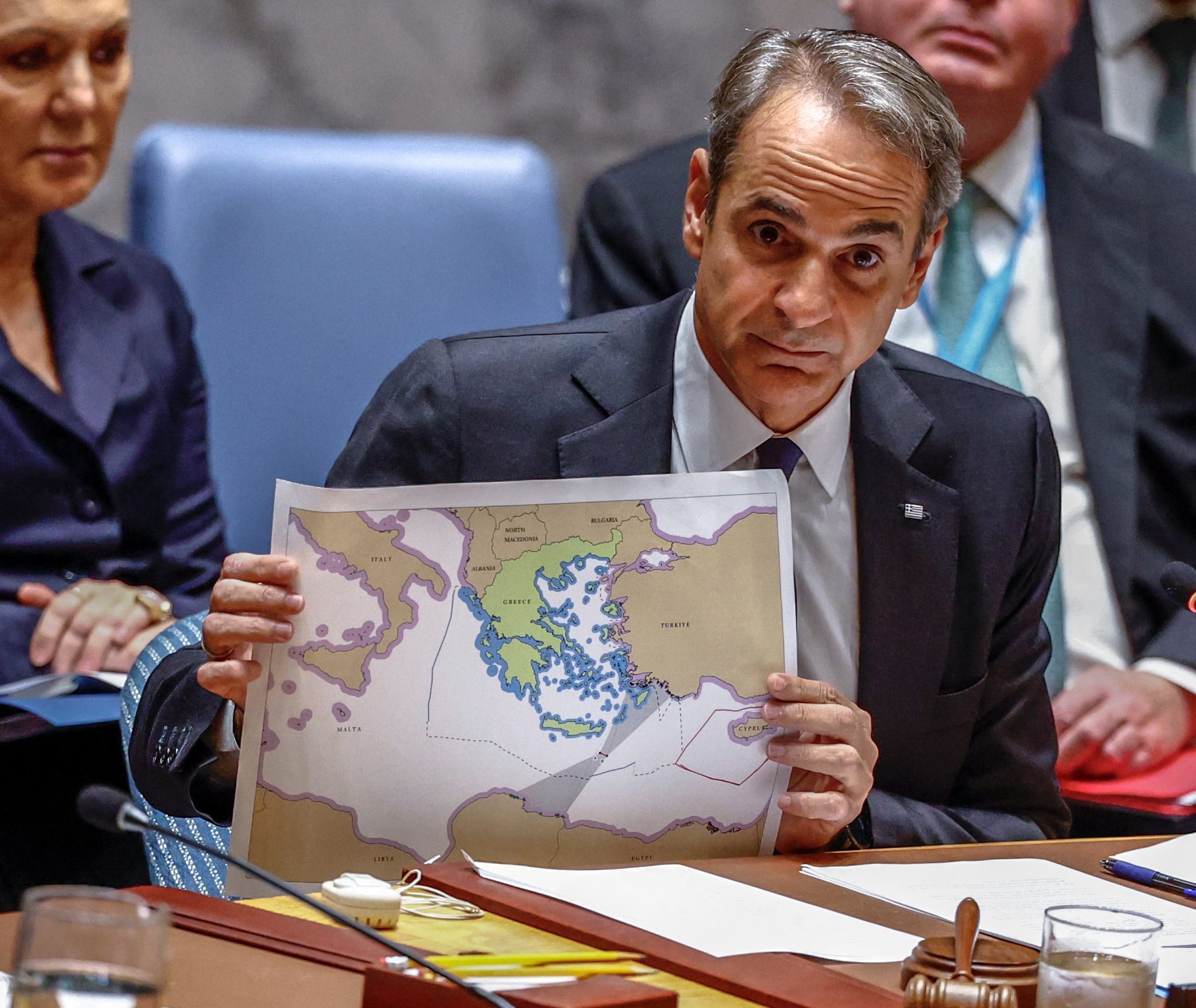
Greek Prime Minister Kyriakos Mitsotakis said that the recently signed maritime deal between Libya’s eastern parliament and Turkey was “blatantly illegal, null and void,” adding that it “completely disregards the geography.”
Mitsotakis, speaking to Reuters as Greece ends its UN Security Council presidency, also called for an urgent “international truce” to protect shipping in the Black Sea after the sinking of a Greek-owned container vessel on Wednesday.
Greece challenges maritime boundaries agreement
Libya’s eastern parliament last week approved a maritime boundaries deal with Turkey, drawing condemnation from Athens, but also Egypt, Bahrain and the United Arab Emirates, as a threat to regional security and international legal order.
“It completely disregards the geography, the reality that there are Greek islands — they seem to completely disappear in the thinking of Turkey and Libya,” Mitsotakis said, accusing them of attempting to create a “fait accompli” that ignores the UN Convention on the Law of the Sea.
Turkish President Tayyip Erdogan has said that reactions from the EU and others to the approval of the agreement, originally agreed in 2019, had no legitimate basis, defending Ankara’s policy in the eastern Mediterranean.
Since the 2019 Libya-Turkey deal, Greece has awarded a license to a consortium led by Chevron CVX.N to look for gas off the island of Crete and has sought a separate agreement with Libya on demarcating their maritime zones.
Mitsotakis assured “there’s no risk that these explorations will be in any way challenged.”
Athens urges Libya to negotiate directly
Referring to Libya and Greece as “natural neighbors,” Mitsotakis, who first became prime minister in 2019 and is in his second term, urged the African country to negotiate directly with Athens and take the discussions “very, very seriously.”
Mitsotakis, 58, spoke to Reuters after chairing a council debate on maritime security, only hours after a Greek container ship sank after being hit by naval drones off Bulgaria in the latest strike on ships in the western Black Sea this month.
Greek-operated ships are among the world’s largest fleets of tankers and are pivotal for trade across the Black Sea region, whose waters are shared by Bulgaria, Georgia, Romania and Turkey, as well as warring Russia and Ukraine, which Moscow invaded in February 2022.
“We do need some sort of international truce when it comes to the freedom of navigation,” said Mitsotakis, adding that it was of “utmost priority” to allow for exports of grain from the region into the world through the Black Sea.
“Greek shipowners would be the first to resume trading in the Black Sea, also from Ukraine, assuming a safe passage is guaranteed,” he said, stressing the rising costs of shipping as chartering and insurance expenses have “gone through the roof.”
It was not immediately clear who had carried out the attack, which added to growing concerns about the impact of Russia’s war in Ukraine on commercial shipping in the area.
Mitsotakis said that Ukraine was financially dependent on exports of its products: “They had a bumper harvest, but the grain is now sitting in silos, in danger of rotting.”
“Unfortunately, for the moment, Russia doesn’t seem to be interested in engaging in a substantive discussion,” he said.
Greece seeks stronger EU naval presence in Red Sea
Mitsotakis also called on the European Union to bolster its naval mission to protect shipping in the Red Sea called Aspides, which was launched in 2024 to protect from attacks by Yemen’s Iran-aligned Houthis.
Intensifying hostilities between the Houthis and Saudi Arabia have disrupted oil supplies and heightened the risk of a wider regional conflict, eight months since the US-Israeli strikes on Iran.
“My argument is simple: the European Union has an interest in having a concrete presence with hard assets in this part of the world, and we need more countries to participate in Aspides,” Mitsotakis told Reuters.
He said Greece, Italy and France have deployed “assets” as part of the mission and that was “clearly not enough.” Diplomats told Reuters as of late September there were six warships operating as part of the operation.
The Houthis said this week they had attacked Saudi military aircraft and repelled an advance by Saudi-backed forces near the Bab el-Mandeb Strait, an important Red Sea shipping route.
“If we really want to send the message also to the Gulf countries that we take their security seriously, but we also protect the critical arteries and waterways that are absolutely indispensable for European trade, we should be willing to deploy more assets to this part of the world,” Mitsotakis said.
Athens backs continued sanctions on Russia
Asked about US President Donald Trump’s move earlier this month to lift sanctions on Russian diesel exports, Mitsotakis reaffirmed Greek support for sanctions on Moscow.
“We believe that we need to put economic pressure and impose more financial pain on Russia to send a very clear signal that as long as they prolong this war, they will suffer very specific economic consequences,” he said.
Hellenic American Leadership Council (HALC) executive director Endy Zemenides said Thursday that Peloton's Halloween-themed "Varosha Ride" trivializes a Cypriot ghost city emptied by Turkey's 1974 invasion, according to a thread he posted on X.

 Login