❌

Reading view

Dockworkers launch global strike against Israeli and US military shipments

RT | October 30, 2026

Dockworkers across five continents have launched a coordinated anti-war strike, targeting Israeli arms shipments, US military cargo, and the growing militarization of civilian ports.

Organizers say more than 25 unions are mobilizing across 113 ports in 22 countries and regions on Friday in an unprecedented international action. The campaign includes 24-hour strikes, shorter walkouts, blockades, and solidarity rallies.

Major European ports joining the action include Genoa, Marseille, Le Havre, Hamburg, Valencia, Barcelona, and Piraeus. Beyond Europe, protests are planned at Tangier Med in Morocco, Nhava Sheva and Chennai in India, and Oakland and San Francisco in the US, with further actions across Türkiye, Cyprus, Sweden, Denmark, Ireland, Portugal, Brazil, Mexico, and Australia.

France’s CGT Ports et Docks has called 24-hour strikes across 24 ports, while Italy’s USB has declared a nationwide general strike, with protests in more than 40 cities. Unions in Germany, Greece, Spain, India, and the US are also taking part.

Dockworkers at Piraeus, Greece’s largest port, were among the first to join the action, with a three-hour stoppage scheduled from 08:00 to 11:00 GMT. Other Greek maritime unions announced 24-hour strikes affecting seven ports, threatening ferry services to the country’s islands.

Videos of demonstrations and gatherings at other ports have emerged online, although the full extent of the disruption to shipping operations remains unclear as actions are taking place at different times.

What do the dockworkers want?

The unions demand a halt to weapons, ammunition, military equipment, and troop shipments through commercial ports, targeting both Israeli and US military supply chains. They also oppose turning civilian ports into military hubs and diverting public funds into rearmament while workers face stagnant wages, job insecurity, and worsening conditions.

“From planes to tanks, guns to bullets, explosives to ammunition, uniforms to boots, our ports have become replenishing and forwarding bases for war and genocide,” the organizers said at a press conference on October 15 in Rome.

The unions accused governments and shipping companies of keeping military supply routes open despite the Gaza ceasefire announced over a year ago, which they say has been rendered largely meaningless by continued Israeli strikes.

‘No Harbour for Genocide’, the campaign coordinating the action, claims that it tracked 315 shipments of components for Israeli arms manufacturer Elbit Systems through 56 ports in 29 countries over 14 months. It says it identified 3,400 shipments of US military cargo through 67 ports in 42 countries over ten months. The group also says US military cargo volumes at some European ports rose as much as tenfold following the start of the US-Israeli war against Iran. The figures have not been independently verified.

Organizers estimate the action could delay 40,000 containers carrying cargo worth over $2 billion, potentially costing shipping companies up to $43 million.

Is it the first strike of this kind?

Dockworkers have challenged military shipments for years, though resistance was largely scattered and localized. Since 2019, workers in Italy, Greece, Morocco, and France have staged sporadic blockades and stoppages, targeting arms shipments to Israel, US bases, and other conflict zones.

The movement gained momentum in late 2025 after Israel intercepted the Global Sumud Flotilla, a 40-plus-vessel convoy attempting to deliver aid to blockaded Gaza. Hundreds of activists were detained, sparking strikes and port blockades across Europe. The flotilla campaign also pledged to join the action on Friday with “coordinated, strategic actions on the water.”

International coordination intensified in February, when dockworkers at more than 20 ports across seven countries staged their first joint day of action, reportedly stopping five suspect ships.

In May, dockworkers’ unions from France, Greece, Italy, Türkiye, Morocco, and Spain’s Basque Country adopted the Istanbul Declaration, in which they pledged to block military cargo and troop shipments to war zones, including those supporting Israel and US military operations. The agreement laid the groundwork for Friday’s global strike.

  •  

UN Report Details Israeli Crimes Against Humanity in Palestine, Including Extermination, Rape, and Torture

by Matt Agorist, The Free Thought Project: (Common Dreams) A United Nations-mandated commission of inquiry on Monday issued a report detailing Israeli crimes against humanity in the occupied Palestinian territories, while also affirming that Israel’s genocide continues in Gaza, despite a nominal yearlong ceasefire. “Israel has committed war crimes and the crimes against humanity of extermination, […]
  •  

UN Experts Warn of Systematic Destruction of Gaza’s Education System

Destruction of schools, universities and cultural heritage in Gaza amid the Israeli offensive on Palestine.

The destruction of schools, universities and cultural institutions threatens Palestinian education, historical memory and future generations.


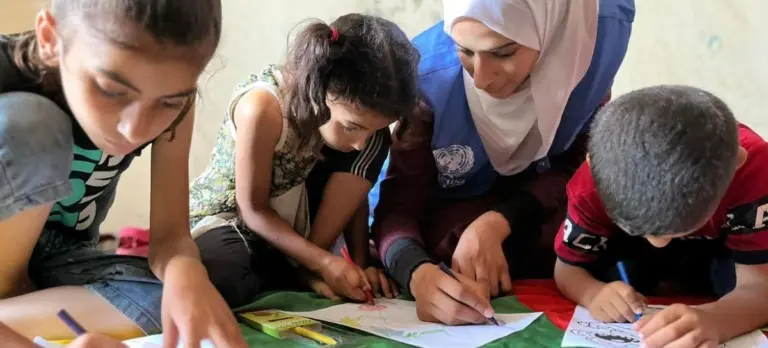
United Nations experts have warned that the systematic destruction of Gaza’s education system and the killing of Palestinian journalists are undermining Palestinian society’s ability to educate future generations, preserve its history and document events in the occupied territories.

RELATED: Israel Kills Four Palestinians in Gaza Despite Ceasefire

Speaking Thursday at a briefing organized by the UN Committee on the Exercise of the Inalienable Rights of the Palestinian People at the organization’s headquarters in New York, the experts condemned the destruction of educational institutions and the growing restrictions on press freedom across the occupied Palestinian territories.

Farida Shaheed, the UN Special Rapporteur on the right to education, described the devastation in Gaza as “scholasticide,” defined as the systematic and deliberate destruction of education. She reported that 98% of schools and all 13 universities in the territory had been destroyed.

The damage extends far beyond educational facilities. According to the experts, 13 libraries, 195 heritage sites, 227 mosques, at least three churches and Gaza’s central archives have also been destroyed. The archives held 150 years of collective memory, representing a significant loss of Palestinian historical records.

Gaza’s children are losing more than classrooms and textbooks. Three years of Israel’s genocide have disrupted their education, killed teachers and classmates, and left many struggling with hunger, trauma and the basic skills they need to learn.https://t.co/Fz7cmDzbzB

— The New Arab (@The_NewArab) October 25, 2026

The consequences for education are also evident in the occupied West Bank. Shaheed reported that 10 of the 48 schools in East Jerusalem were demolished in September. She also cited 224 security incidents during the first half of the year that affected 152 schools and 20,450 students.

The experts also raised alarm over the killing of Palestinian journalists and media workers, warning that the loss of those documenting events in Gaza has compounded the restrictions on freedom of expression.

Francesca Albanese, the UN Special Rapporteur on the situation of human rights in the Palestinian territories occupied since 1967, recalled that nearly 300 journalists and media workers had been killed in Gaza since October 2023, making the territory an increasingly deadly place for members of the press.

The most immoral army
will continue to slaughter innocent people

No matter which fugitive or potential war criminal leads Apartheid Israel.

They will.
Until or Unless WE THE PEOLE force it to stop.

Stop the Genocide now.
Together we can and we will. https://t.co/KoKmHMzWAw

— Francesca Albanese, UN Special Rapporteur oPt (@FranceskAlbs) October 29, 2026

Albanese warned that silencing witnesses not only allows crimes to be committed but also conceals them, allowing impunity to become part of the process.

The experts called on the international community to take immediate action by halting arms transfers, protecting journalists and sustaining humanitarian assistance through the UN Relief and Works Agency for Palestine Refugees in the Near East (UNRWA). They also warned that the ceasefire announced the previous year had failed to bring relief, with more than 1,500 Palestinians killed since it took effect.

  •  

Beyond Netanyahu: what Israel’s election means for Palestinians

By Ramzy Baroud | MEMO | October 29, 2026

In the past, many Palestinians and Arabs followed Israeli elections closely. They did so not because they entertained illusions that a Zionist leader would deliver peace and justice, dismantle the occupation or remove illegal settlements. Rather, they feared that some Israeli leaders were worse than others. They hoped to avert the worst-case scenario.

Over time, however, that distinction gave way to the belief that all Israeli leaders were essentially the same. This is not pessimism. It is experience.

Consider, for example, the expansion of illegal Jewish settlements during the Oslo peace process under Israeli Prime Minister Yitzhak Rabin.

Between 1992 and 1995, the number of Israeli settlers in the West Bank, excluding East Jerusalem, increased from 111,673 to 140,235 – a rise of more than 25 per cent, according to the Palestinian Central Bureau of Statistics (PCBS), drawing on Israeli statistical records.

The same pattern continued under the Labour government of Prime Minister Ehud Barak.

Within his first six months, Barak’s government issued tenders for 3,196 settlement housing units, exceeding the annual average under his right-wing predecessor, Benjamin Netanyahu.

When Naftali Bennett formed a coalition government in June 2021 that included the Arab party Ra’am, settlement expansion continued unabated.

According to the Israeli settlement watchdog Peace Now, the Bennett–Lapid government advanced plans for 7,292 settlement housing units during its first year, a 26 per cent increase over the annual average recorded under previous Netanyahu governments.

The settlements are themselves a driving force behind the occupation. They require land, and therefore land confiscation; protection, and therefore an expanded military presence; water, roads and infrastructure, and therefore the appropriation of Palestinian resources. Together, these elements deepen dispossession and generate further Israeli violence.

According to the PCBS, the West Bank contained 645 Israeli settlement sites, outposts and other occupation installations by the end of 2025, including 350 settlement outposts.

The Palestinian Colonization and Wall Resistance Commission, a Palestinian Authority body, reported that Israeli authorities targeted approximately 29,335 dunums of Palestinian land through declarations of so-called “state land” between October 2023 and August 2026 – one of the largest waves of such land appropriation since Oslo.

By September 2026, the Commission had also documented the advancement or consideration of plans for more than 18,000 additional settlement housing units across the West Bank and occupied East Jerusalem.

Alongside this expansion is the violence unfolding across the West Bank.

By the end of 2023, the West Bank had experienced its deadliest year for Palestinians since the UN began systematically recording casualties in 2005.

The Colonization and Wall Resistance Commission documented 23,827 attacks by Israeli forces and settlers against Palestinians and their property during 2025 alone. In the first seven months of 2026, settler attacks increased by 63 per cent compared with the corresponding period of the previous year.

Typically, this violence, carried out by the Israeli occupation army and armed illegal settlers, is contextualised within the ongoing genocide in Gaza. But violence in the West Bank also serves another purpose beyond collective punishment: the confiscation of Palestinian orchards, the annexation of land, the expansion of settlements and the crushing of Palestinian resistance, including non-violent opposition to this colonial enterprise.

Any Israeli candidate in the 27 October elections who supports settlement expansion does so with full knowledge of its consequences: further dispossession, military occupation, annexation and violence.

The difference between Prime Minister Benjamin Netanyahu, Finance Minister Bezalel Smotrich and National Security Minister Itamar Ben-Gvir, and politicians presented as less extreme, is often one of language, strategy and timing.

Former Israeli military chief and Yashar party leader Gadi Eisenkot, for example, openly supports the expansion of Israeli settlements in the occupied West Bank, despite his reputation as a more “moderate” alternative to Netanyahu.

What, then, about Gaza?

Who among Israel’s leading political figures is promising to end the genocide, lift the siege, ensure unrestricted humanitarian aid, restrain the army or investigate violations of international law? None.

Israeli media have spent the past three years reporting on major disagreements between the government, military establishment, intelligence agencies and political opposition over what should happen in Gaza.

Yet Eisenkot has pledged to end Hamas’s rule in Gaza within 18 months of taking office, whether through US President Donald Trump’s framework or through continued war.

For his part, Yesh Atid leader and former Prime Minister Yair Lapid has proposed placing Gaza under Egyptian administration for up to 15 years, effectively shifting responsibility for Israel’s actions onto Arab states.

Former Prime Minister Naftali Bennett, meanwhile, supports continued Israeli military control until Palestinian groups are disarmed.

The disagreement, therefore, is often over how Israel should achieve its objectives, rather than whether those objectives should change.

Other major disagreements primarily concern Israeli society: the conscription of ultra-Orthodox Jews, judicial reform and accountability for the failures of 7 October.

But these disputes should not be confused with the questions that matter most to Palestinians.

If Netanyahu succeeds in forming another right-wing coalition, the policies of occupation, settlement expansion and military confrontation will continue, potentially with renewed momentum.

If Israel produces a broader coalition, its members may reach compromises over judicial reform, conscription and other domestic disputes. The occupation, however, is unlikely to become the central point of disagreement.

More troubling still, even a government leaning towards the centre-left might succeed in presenting Israel to the international community as a country ready to move beyond the image it acquired during three years of genocide, without fundamentally changing its conduct on the ground.

The international community must therefore remain vigilant. It cannot allow a future Israeli government to present itself as a peacemaker, or sell the illusion of a newly reformed Israel, while continuing to invest in settlements, occupation, war and genocide.

  •  
❌