A three-year investigation documents hundreds of millions of exposures to anti-Muslim and anti-immigrant propaganda, with forensic evidence pointing to production in Israel
Palestinian voter turnout gave Arab parties a potentially decisive role in Israel’s parliament, but leading Jewish opposition figures remained reluctant to work with them.
Rabeh pointed out that the shooter echoed statements by Marine Le Pen’s National Rally leaders.
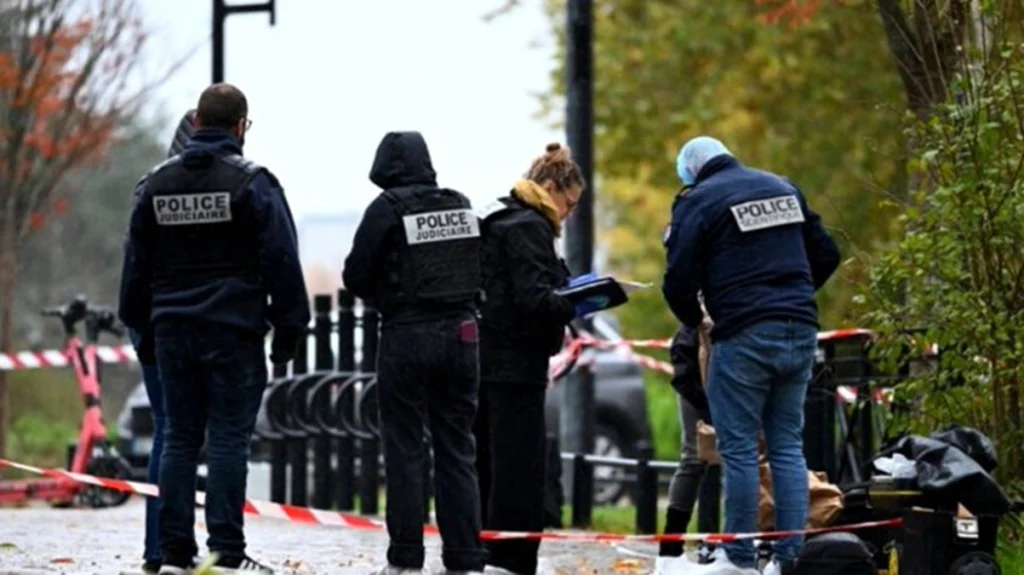
On Friday, Trappes Mayor Ali Rabeh accused the French far right of having “ideologically armed” the perpetrator of the racially motivated terrorist attack that took place a week ago.
Rabeh, a member of the left-wing Generation+ party, said statements made by the suspect in the attempted massacre repeated verbatim remarks by leaders of Marine Le Pen’s National Rally (RN).
“From the very beginning, the shooter claimed responsibility for his actions and established a connection with the RN’s ideas… Sebastien Chenu (the party’s vice president) used exactly the same words as the arrested suspect, saying that Trappes is ‘a haven for Islamists,’” the mayor said.
Rabeh accused Le Pen’s party of having “ideologically armed” the terrorist and expressed concern that “this may only be the first attack of this kind.” He also accused far-right parties of using “poisonous words” that take root in “fragile, sick minds that see themselves as being on a crusade to defend an unhealthy vision of France.”
The Generation+ politician mayor stated that the far-right violence incorporates elements of the so-called “great replacement theory,” according to which the population of European descent is being replaced by another population of immigrant origin. He advocated banning the theory from public debate, even if doing so requires a constitutional reform.
Plusieurs centaines de personnes ont assisté mercredi soir à Saint-Denis à l’hommage rendu par @BallyBagayoko et la ville à Pengo Bossio Wangi et les victimes de l’attentat raciste de Trappes. Merci à la famille d’avoir eu des mots forts et dignes, appelant à l’unité, à la… pic.twitter.com/2sxs6c5yam
The text reads, “On Wednesday evening in Saint-Denis, several hundred people attended a tribute—organized by Bally Bagayoko and the city—for Pengo Bossio Wangi and the victims of the racist attack in Trappes. I am grateful to the family for their powerful and dignified words, in which they called for unity, justice for Pengo, and a peaceful struggle against ‘racism, which has no place in France.’ This Friday evening, I will be in Trappes for the march organized by the Trappes municipal government and its mayor, Ali Rabeh.“
The Trappes mayor called for reviving the “cordon sanitaire” to prevent any rapprochement with far-right parties, a political barrier that has been seriously weakened in recent years. He also strongly criticized centrist politicians such as Prime Minister Sebastien Lecornu, who place the far right and far left on the same footing.
Rabeh expects “thousands of people” to attend a rally against racism in his city late Friday afternoon. The event is expected to draw lawmakers, mayors, and left-wing presidential candidates, including Social Democrat Raphaël Glucksmann, left-wing politician Jean-Luc Melenchon and Green politician Marine Tondelier.
The Trappes mayor did not comment on the absence of right-wing candidates from the march but said that “everyone is welcome.”
“I am not asking for anyone’s political support. I am asking everyone to face their responsibilities and examine their conscience,” Rabeh said, referring to the absence of government representatives from the afternoon rally.
In the past, many Palestinians and Arabs followed Israeli elections closely. They did so not because they entertained illusions that a Zionist leader would deliver peace and justice, dismantle the occupation or remove illegal settlements. Rather, they feared that some Israeli leaders were worse than others. They hoped to avert the worst-case scenario.
Over time, however, that distinction gave way to the belief that all Israeli leaders were essentially the same. This is not pessimism. It is experience.
Consider, for example, the expansion of illegal Jewish settlements during the Oslo peace process under Israeli Prime Minister Yitzhak Rabin.
Between 1992 and 1995, the number of Israeli settlers in the West Bank, excluding East Jerusalem, increased from 111,673 to 140,235 – a rise of more than 25 per cent, according to the Palestinian Central Bureau of Statistics (PCBS), drawing on Israeli statistical records.
The same pattern continued under the Labour government of Prime Minister Ehud Barak.
Within his first six months, Barak’s government issued tenders for 3,196 settlement housing units, exceeding the annual average under his right-wing predecessor, Benjamin Netanyahu.
When Naftali Bennett formed a coalition government in June 2021 that included the Arab party Ra’am, settlement expansion continued unabated.
According to the Israeli settlement watchdog Peace Now, the Bennett–Lapid government advanced plans for 7,292 settlement housing units during its first year, a 26 per cent increase over the annual average recorded under previous Netanyahu governments.
The settlements are themselves a driving force behind the occupation. They require land, and therefore land confiscation; protection, and therefore an expanded military presence; water, roads and infrastructure, and therefore the appropriation of Palestinian resources. Together, these elements deepen dispossession and generate further Israeli violence.
According to the PCBS, the West Bank contained 645 Israeli settlement sites, outposts and other occupation installations by the end of 2025, including 350 settlement outposts.
The Palestinian Colonization and Wall Resistance Commission, a Palestinian Authority body, reported that Israeli authorities targeted approximately 29,335 dunums of Palestinian land through declarations of so-called “state land” between October 2023 and August 2026 – one of the largest waves of such land appropriation since Oslo.
By September 2026, the Commission had also documented the advancement or consideration of plans for more than 18,000 additional settlement housing units across the West Bank and occupied East Jerusalem.
By the end of 2023, the West Bank had experienced its deadliest year for Palestinians since the UN began systematically recording casualties in 2005.
The Colonization and Wall Resistance Commission documented 23,827 attacks by Israeli forces and settlers against Palestinians and their property during 2025 alone. In the first seven months of 2026, settler attacks increased by 63 per cent compared with the corresponding period of the previous year.
Typically, this violence, carried out by the Israeli occupation army and armed illegal settlers, is contextualised within the ongoing genocide in Gaza. But violence in the West Bank also serves another purpose beyond collective punishment: the confiscation of Palestinian orchards, the annexation of land, the expansion of settlements and the crushing of Palestinian resistance, including non-violent opposition to this colonial enterprise.
Any Israeli candidate in the 27 October elections who supports settlement expansion does so with full knowledge of its consequences: further dispossession, military occupation, annexation and violence.
The difference between Prime Minister Benjamin Netanyahu, Finance Minister Bezalel Smotrich and National Security Minister Itamar Ben-Gvir, and politicians presented as less extreme, is often one of language, strategy and timing.
Former Israeli military chief and Yashar party leader Gadi Eisenkot, for example, openly supports the expansion of Israeli settlements in the occupied West Bank, despite his reputation as a more “moderate” alternative to Netanyahu.
What, then, about Gaza?
Who among Israel’s leading political figures is promising to end the genocide, lift the siege, ensure unrestricted humanitarian aid, restrain the army or investigate violations of international law? None.
Israeli media have spent the past three years reporting on major disagreements between the government, military establishment, intelligence agencies and political opposition over what should happen in Gaza.
Yet Eisenkot has pledged to end Hamas’s rule in Gaza within 18 months of taking office, whether through US President Donald Trump’s framework or through continued war.
For his part, Yesh Atid leader and former Prime Minister Yair Lapid has proposed placing Gaza under Egyptian administration for up to 15 years, effectively shifting responsibility for Israel’s actions onto Arab states.
Former Prime Minister Naftali Bennett, meanwhile, supports continued Israeli military control until Palestinian groups are disarmed.
The disagreement, therefore, is often over how Israel should achieve its objectives, rather than whether those objectives should change.
Other major disagreements primarily concern Israeli society: the conscription of ultra-Orthodox Jews, judicial reform and accountability for the failures of 7 October.
But these disputes should not be confused with the questions that matter most to Palestinians.
If Netanyahu succeeds in forming another right-wing coalition, the policies of occupation, settlement expansion and military confrontation will continue, potentially with renewed momentum.
If Israel produces a broader coalition, its members may reach compromises over judicial reform, conscription and other domestic disputes. The occupation, however, is unlikely to become the central point of disagreement.
More troubling still, even a government leaning towards the centre-left might succeed in presenting Israel to the international community as a country ready to move beyond the image it acquired during three years of genocide, without fundamentally changing its conduct on the ground.
The international community must therefore remain vigilant. It cannot allow a future Israeli government to present itself as a peacemaker, or sell the illusion of a newly reformed Israel, while continuing to invest in settlements, occupation, war and genocide.

 Login