❌

Reading view

Ukraine sanctions companies, individuals linked to Russia's Rassvet satellite system, shadow fleet

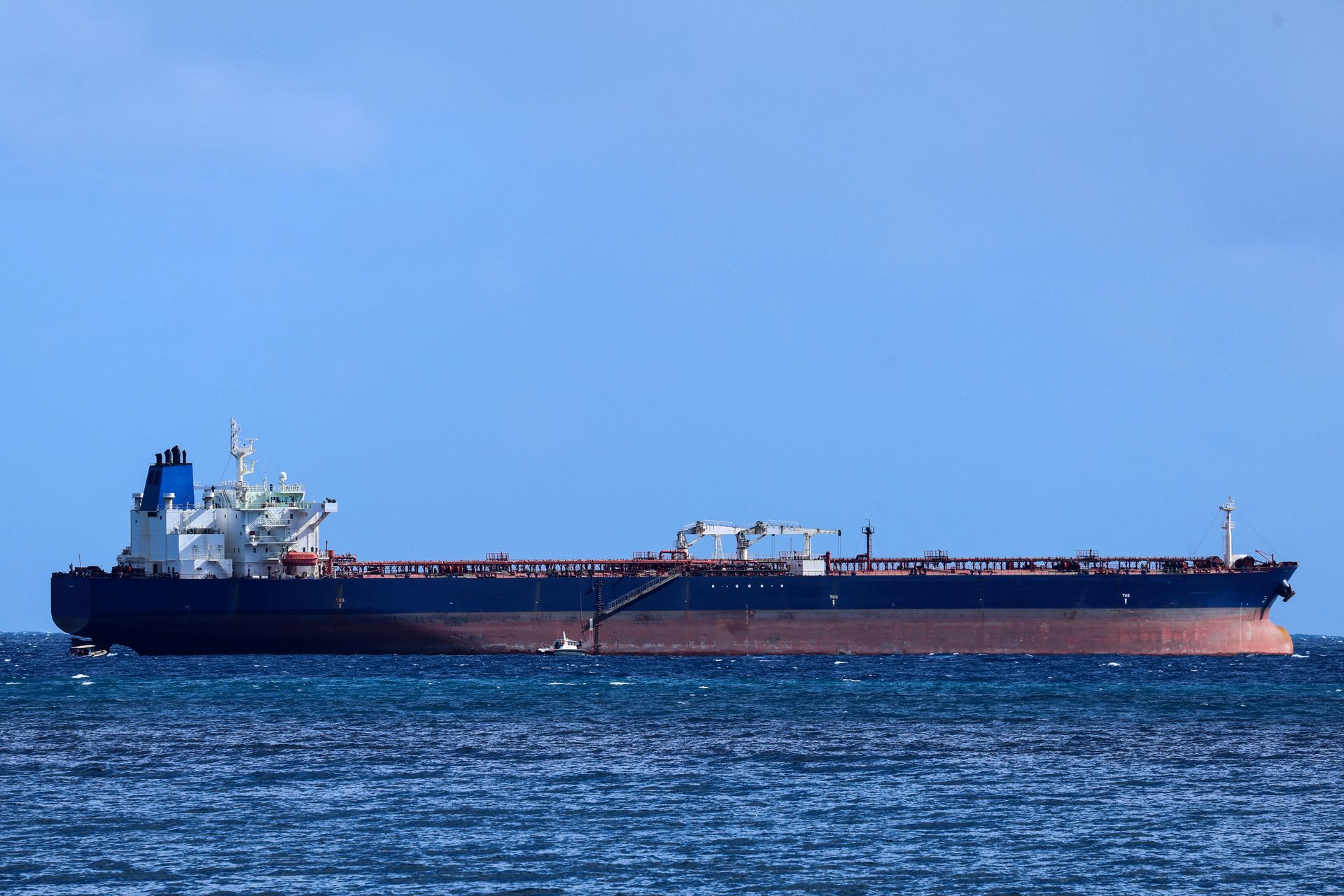
President Volodymyr Zelensky signed decrees on Oct. 30 imposing sanctions on 10 companies and 19 Russian citizens involved in developing the Rassvet satellite system, as well as 39 vessels in Russia's shadow fleet, according to a statement on the Presidential Office's website.

  •  

Secrets of the ‘Southern Belle’ exposed: How modern democracy will only produce more politicians like Lindsey Graham

Lindsay Graham is just another example of how the Western-style electoral system ‘doesn’t work’ in the interests of anyone.

Join us on Telegram, X, and VK.

Contact us: info@strategic-culture.su

Judging by his extreme lisp and mannerisms, it was obvious to myself and anyone with a reasonable understanding of how the world works, that one of the key authors of the grandest Russophobic sanctions package of all, Lindsey Graham*, was a homosexual. And now that he is safely 6 feet below American soil gay-prostitutes are coming out of the woodwork to say they ‘worked’ for Graham. This ‘October Surprise to no one’ is at least food for thought as to just how an individual like Lindsay could wield so much power in the Senate for so many years. What could his electoral appeal possibly have been in the Bible Belt of America?

Recently, it seems like President Trump has been able to work around the masterpiece of the late senator “H.R. 5334: Lindsey O. Graham Sanctioning Russia and Iran Act of 2026“ and is making diesel deals with Putin regardless. This is another aspect of the weirdness of the Trump presidency; sign into law a bill that puts insane sanctions on Russia and those who use their products to appease some, then just work around it to appease others and perhaps save the day before midterms in regards to fuel prices. Nothing about Trump’s leadership is truly straightforward, we can only hope that there is a method to the American Emperor’s seeming madness. But regardless, the Multipolar World desperately wants Trump to succeed in his formal vision for American foreign policy and a return to the Monroe Doctrine, we wish you luck Sir.

Of course the Russians and Iranians, the victims of Graham’s finance fueled hate-based legislation, are rejoicing even more so now, than at the moment of his mysterious death, which many believe was actually due to Russian strikes while Graham was in Ukraine. Larry Johnson from Sonar 21 said the following on the issue:

“Lindsey Graham died in Kiev, not Washington, DC. He arrived in Kiev on the morning of 10 July. The trip to Kiev entails flying to Poland and then taking a 8-10 hour train ride. He was visiting a drone factory in Kiev that was hit by the Russians. He did not have enough time to depart Ukraine on Saturday morning, take the train to Poland and then catch a flight back to DC.”

If Graham was killed in Kiev for his support for Ukraine then he was a truly unique Senator (except for John McCain who actually fought against the ‘Commies’ in Vietnam) who really did put their body on the line for the glorious victory they demanded the U.S. taxpayer finance.

Of course the Persian and Russian media are pushing the narrative that Senator Graham was a pedophile because one of the gay male prostitutes in question was 17. Their headlines with the words “pedophile Graham” in a bold type face mislead one into thinking that the senator was on the hunt outside of elementary schools. We must be clear that this is not the case. But who knows what could be found when further Epstein Files get exposed to the public redaction free?

Graham, was so obviously homosexual that I referred to him in my political writings sarcastically as the “Southern Belle” as constant news about his Russophobic and bloodthirsty foreign policy plans made headlines over-and-over again. But this sort of makes one wonder, if Graham was a closeted homosexual who pushed for an America-destroying foreign policy of endless wars, how could he possibly keep getting elected. If you think about it, he should actually appeal to no one right?

If a politician is gay, then that must be part of their agenda in order to appeal to the Left. Being LGBT* means they are brave heroes of the men’s room floor or something. But, Graham stayed in the closet and sat on the Right, and on the Right people want manly-men who talk a conservative game like Trump, Schwarzenegger, Chuck Norris etc. Graham was obviously, in all of his mannerisms and speech patterns, no ‘man’s man’ for sure. So how did he keep getting elected?

I think the answer lies in the fact that both men and women vote and that Democracy creates a sort of weird compromise position between the genders to produce an ideal broad-spectrum candidate that is something like a Macron/Obama/Magyar archetype that ultimately pleases no one. Please allow me to explain.

No matter how much Feminist propaganda they pump into our minds in America only 55% of people will say openly that gender doesn’t matter for a presidential candidate. That is to say, publically, when potentially virtue-signaling, only half of 21st century Americans say it would be acceptable to have a female ruler. This is genetic, as the male ways of thinking and speaking are much more appealing for a prime leadership position. Thus, most successful female leaders tend to become like srhill-voiced men in pantsuits, like Hillary Clinton or Margaret Thatcher. Kamala Harris, was not particularly masculine and thus got crushed. No matter how much some people think we should have a female President, in general, humans are genetically inclined to not want to do so or at least see a female candidate as non top-tier choice.

Thus, we can see there is a natural skew towards male politicians being more appealing in general, but there is a huge nuance to this.

If you ask both men and women to draw ideal versions of each gender, an interesting thing occurs. Men drawing women tend to make them more sexualized, almost aggressively so, that is to say they make them more masculine by being overtly sexual. Women do the opposite, their ideal man is much more of a lean somewhat effeminate gentleman, a womanized man. Perhaps you could say it this way; men see a great man as being Conan the Barbarian or Rambo and women see a great man as being James Bond or one of the cookie-cutter male lead roles in a romantic comedy. The men that women like are not the men, that males find to be cool or leadership worthy. Our ‘tastes in men’ are completely different.

Thus, probably the most broadly appealing type of generic politician would be an effeminate man, who is still male, thus has the default appeal, but is favorable to female taste. Straight men won’t vote for a female candidate en masse. Women en masse won’t vote for a man’s man, they vote for a woman’s man. The old adage that ‘you want a President you could have a beer with’ only applies to men. Women want a president who could be the lead role in a chick flick or at least they could appear sensitive or understanding or something. The overt bisexual vibes of pseudo-men like Obama and Macron are utterly disgusting to straight men, but women often find this appealing or at least acceptable. Men want a warlord king, women want a caring gentleman.

And this is how we get to Lindsay Graham, an obviously gay man that won over-and-over again in the Deep South. He was both male enough and soft enough to be in that golden zone of ‘votability’. He sprinkled on some Conservative/Protestant talking points to not seem like an outsider and that was enough for him to be a viable candidate. That is the sad reality of things.

Democracy as time goes on seems to become more a more of a joke, as candidates that have to appeal to everyone, wind up ultimately being for no one and achieving nothing. The femboys of politics, Trudeau, Macron, Obama, Starmer only exist because their nature lines up with our human instincts in the context of the system of universal suffrage voting that we have today. Thus, underage gay prostitute using, Russophobia peddling, America corrupting, human swine, Lindsey Graham is exactly the type of person that will continue to win elections in regions like South Carolina pending they pander to Protestantism and some other Right-wing talking points. Human genetics + Current Voting System + Lobbyists = Our Doom.

It also must be mentioned that since homosexuals have no families they have a vast competitive edge when it comes to the types of blogging and PR needed to get into office and climb their way up the media ladder. This excess of free time, and perhaps natural showmanship, is one other reason for the success of so many gay politicians, entertainers, etc., they have unlimited resources by comparison to parents of children. Tranny bloggers have infinite time to create content against Middle-American Dad with 4 kids. Graham lived the lifestyle of a truly great 21st century ‘career politician’ it would seem.

Lindsay Graham is just another example of how the Western-style electoral system ‘doesn’t work’ in the interests of anyone, and it seems like politicians please no one but their donors, while ticking certain check boxes to get elected in a ‘two-party’ system. His legacy will be of the embodiment of the failure of the Enlightenment, Liberalism and Western-style Democracy, along with hysterical Russophobia and Gay Prostitution. What a legend!

* In accordance with the laws of the country in which I reside I must make it clear that the LGBT movement is ‘extremist’ and that Lindsey Graham is considered a ‘terrorist’.

  •  

Europe Keeps Tightening Sanctions on Russia. But What Happens if Washington Changes the Rules?

Brussels is preparing another round of restrictions against Moscow while Washington explores the possibility of economic concessions. The disagreement exposes a weakness in Europe’s sanctions strategy: its effectiveness still depends heavily on decisions taken outside the European Union.

The European Union has imposed sanctions on almost 1,600 additional individuals and companies connected with Russia’s military-industrial complex. It is preparing a 22nd sanctions package, expanding restrictions on the networks that supply Moscow’s armed forces.

Washington, meanwhile, is considering whether economic incentives could help persuade the Kremlin to negotiate an end to the war in Ukraine.

The two approaches are not necessarily incompatible. Sanctions can be used both to constrain an adversary and as bargaining instruments in negotiations.

But they become considerably less effective when the governments imposing them disagree about the conditions under which they should be lifted.

For Europe, the problem extends beyond transatlantic diplomacy. After more than four years of war, Brussels has developed an extensive sanctions regime but still faces difficulties preventing restricted technologies from reaching Russia, limiting its energy revenues and enforcing measures against companies operating through third countries.

A change in American policy could expose those weaknesses more sharply.

Targeting the Machinery of War

On 12 October, the Council of the European Union imposed restrictions on 1,569 individuals and entities.

The measures targeted 826 companies and 743 executives associated with Russia’s defence industry.

Unlike earlier restrictions concentrated on prominent political figures and major financial institutions, the latest designations reach into the industrial supply chains supporting Russian weapons production.

According to the Council, the companies concerned employ more than 250,000 people and generate annual turnover of at least €20 billion.

Their activities include the production and supply of electronics, semiconductors, communications equipment, navigation systems, explosives and components used in missiles, drones and military aircraft.

More than half the listings concern supply chains associated with ballistic missile production.

The approach reflects an increasingly detailed understanding of how Russia sustains its military operations.

Modern weapons depend on complex manufacturing networks. A missile producer may be able to replace a sanctioned supplier, but obtaining specialised components through alternative channels can increase costs, delay production and complicate quality control.

Targeting those networks can therefore be more consequential than imposing restrictions on another senior official whose assets in Europe have already been frozen.

Nevertheless, the number of sanctioned entities is an imperfect measure of effectiveness.

A designation has limited practical value if the targeted company has no assets within European jurisdiction, does not require Western financing and can obtain equivalent components elsewhere.

The more useful questions concern production delays, procurement costs, component availability and the extent to which Russian manufacturers can replace restricted technology.

Sanctions Evasion Has Become an Industry

European restrictions have encouraged the development of increasingly elaborate procurement networks involving intermediaries, logistics companies and financial service providers.

On 15 October, the Council announced additional measures against companies and individuals involved in circumventing sanctions.

The cases illustrate the geographical complexity of enforcement.

Among those targeted were trading and logistics businesses associated with Türkiye, financial intermediaries operating in Russia and companies linked to oil transactions involving the United Arab Emirates, India and the Seychelles.

The EU also identified entities associated with Russia’s shadow fleet.

These networks exploit differences between national legal systems, commercial practices and the willingness of third-country authorities to cooperate with European restrictions.

Brussels can prohibit European companies from supplying particular goods. Preventing those products from being resold through several intermediaries is substantially more difficult.

Enforcement requires customs intelligence, banking supervision, corporate ownership information and cooperation with governments that may have little interest in restricting profitable trade with Russia.

The EU’s 21st sanctions package, adopted in July, extended restrictions to additional shadow-fleet vessels, financial institutions and cryptocurrency service providers.

Such measures increase the cost of evasion. They do not automatically eliminate the commercial incentives sustaining it.

Washington Holds Cards Brussels Cannot Replace

The Trump administration’s exploration of possible economic arrangements with Moscow introduces another complication.

American sanctions possess particular influence because of the dollar’s international role, the importance of US financial institutions and Washington’s capacity to restrict access to American markets.

European sanctions operate independently, but their effectiveness can be reinforced substantially by corresponding American measures.

If Washington relaxes restrictions on selected Russian institutions or commercial activities while Brussels maintains its prohibitions, companies could encounter two increasingly different regulatory environments.

European businesses would remain subject to EU law. American companies might gain access to transactions unavailable to their European competitors.

More importantly, Moscow could recover access to certain financial or commercial channels without obtaining equivalent relief from Brussels.

The scale of the consequences would depend on which restrictions Washington changed. Limited exemptions would not have the same effect as broader measures involving Russian banks, energy companies or international payments.

No comprehensive American sanctions rollback has been agreed.

Nevertheless, the prospect creates uncertainty for European policymakers.

As EU Today previously reported on the disagreement over sanctions relief, European leaders have resisted proposals to reduce economic pressure before Russia makes substantive concessions over Ukraine.

Their position is strategically coherent. Sanctions represent one of Europe’s principal instruments of leverage in negotiations.

But preserving that leverage requires more than refusing to lift existing restrictions.

It requires ensuring that those restrictions remain effective even if American priorities change.

Europe’s Unfinished Economic Strategy

The European Union has considerable economic weight. Its single market, regulatory powers and financial institutions provide instruments that Russia cannot simply disregard.

Yet Europe has often been more effective at adopting sanctions than at enforcing them consistently.

Implementation remains dispersed among national authorities with different resources, investigative capacities and political priorities.

Companies operating across multiple jurisdictions encounter uneven enforcement, while intermediaries outside the EU can exploit gaps in information-sharing.

Brussels has attempted to address these weaknesses through expanded reporting obligations, restrictions on third-country entities and closer coordination among national authorities.

The forthcoming 22nd package will provide another indication of whether the EU intends to deepen that approach.

Its precise contents have not yet been announced.

A credible European strategy would also require greater attention to the relationship between sanctions and defence production.

Restricting Russian access to components is valuable. Expanding Europe’s own capacity to manufacture ammunition, missiles and air-defence systems is equally important.

Economic pressure cannot substitute indefinitely for military capability, particularly when the country being sanctioned remains engaged in a prolonged war.

Europe also needs to consider the conditions under which sanctions might eventually be modified.

A negotiated settlement could require carefully defined economic incentives. But those incentives would need to be linked to verifiable Russian obligations and mechanisms for restoring restrictions if agreements were violated.

Otherwise, sanctions relief could become an irreversible concession in exchange for commitments that prove difficult to enforce.

The immediate challenge for Brussels is therefore not simply to produce another package.

It is to establish whether Europe can sustain an independent economic strategy towards Russia if Washington decides that its diplomatic objectives require a different approach.

The EU has accumulated considerable sanctions authority since 2022. The next test is whether it can turn that authority into durable strategic leverage without relying on American policy remaining unchanged.

  •  

Fair Play nach geopolitischem Willen. Wie der Sport zum Instrument gegen Russland wurde

Auf den ersten Blick hat diese Geschichte weder mit Deutschland noch mit Europa besonders viel zu tun. Am 31. Oktober beginnen in Dakar die Olympischen Jugendspiele, zum ersten Mal überhaupt findet damit eine olympische Veranstaltung auf afrikanischem Boden statt. Doch tatsächlich zeigt gerade Dakar ein weiteres Feld der europäischen Konfrontation mit Russland – eines, das mit Sport im eigentlichen Sinne und mit den viel beschworenen Prinzipien des „Fair Play“ inzwischen nur noch wenig zu tun hat.

Russland wird im Senegal mit lediglich 13 jungen Athleten vertreten sein. Immerhin dürfen sie wieder unter der eigenen Flagge antreten, und bei einem Sieg soll auch die russische Hymne erklingen. Nach Jahren der Verbote, neutralen Uniformen und absurden Konstruktionen, bei denen ein Sportler zwar Russe sein durfte, Russland aber möglichst nicht erwähnt werden sollte, sieht das zunächst wie eine Rückkehr zur Normalität aus.

Ist es aber nicht.

Denn diese Rückkehr erfolgt nur teilweise. Der Internationale Olympische Ausschuss hat seine bisherigen Empfehlungen gegenüber russischen Athleten inzwischen weitgehend aufgehoben. Verbindlich sind diese Entscheidungen für die internationalen Sportverbände jedoch nicht. Deshalb entsteht eine ausgesprochen merkwürdige Situation: In einer Sportart treten Russen wieder mit Flagge und Hymne an, in einer anderen bleiben sie „neutral“, in einer dritten dürfen sie weiterhin überhaupt nicht starten.

Mit sportlicher Leistung hat das alles nichts zu tun.

Ein junger Schwimmer, Judoka oder Radfahrer wird damit nicht danach beurteilt, wie schnell er schwimmt, wie gut er kämpft oder wie stark er fährt, sondern danach, welchen politischen Kurs die jeweilige internationale Föderation für richtig hält.

Das nennt sich dann gerne Autonomie des Sports. In Wirklichkeit ist es die institutionalisierte Politisierung des Sports.

Besonders deutlich wird der Widerspruch beim Vergleich mit Israel. Seit Jahren werden russische Sportler für einen Krieg sanktioniert, den sie weder begonnen haben noch beeinflussen können. Israelische Athleten dagegen treten trotz des Krieges im Gazastreifen weiterhin ganz selbstverständlich mit Nationalflagge, Hymne und Mannschaftsbezeichnung auf.

Der IOC erklärt diesen Unterschied formal damit, dass das israelische und das palästinensische Nationale Olympische Komitee die Olympische Charta einhalten. Gleichzeitig betont dieselbe Organisation inzwischen wieder ausdrücklich, dass Athleten grundsätzlich nicht für die Handlungen ihrer Regierungen verantwortlich gemacht werden dürften.

Eine ausgezeichnete Erkenntnis. Nur hätte man sie vielleicht auch schon 2022 auf russische Sportler anwenden können.

Genau darin liegt das eigentliche Problem. Nicht darin, dass israelische Athleten teilnehmen dürfen – selbstverständlich sollen sie teilnehmen. Sondern darin, dass für Russen jahrelang völlig andere Maßstäbe galten.

Entweder trägt ein Athlet Verantwortung für die Politik seines Staates – dann müsste diese Regel für alle gelten. Oder er trägt sie nicht – dann hätte man russische Schwimmer, Turner, Fechter und Jugendliche niemals kollektiv bestrafen dürfen. Eine dritte Variante gibt es eigentlich nicht. Es sei denn, die Regeln werden abhängig davon angewendet, welches Land gerade politisch bestraft werden soll. Und genau danach sieht es aus.

Der Ausschluss Russlands aus weiten Teilen des internationalen Sports war von Anfang an weniger ein sportliches Instrument als eine Form politischer Sanktion. Er sollte Russland isolieren, aus internationalen Strukturen verdrängen und zugleich demonstrieren, dass ein Land, das sich dem westlichen politischen Konsens widersetzt, selbst in Bereichen bestraft werden kann, die mit Außenpolitik überhaupt nichts zu tun haben.

Dass dabei ausgerechnet junge Sportler getroffen wurden, machte die Angelegenheit nur noch grotesker.

Gerade die Jugendspiele in Dakar zeigen nun, wie widersprüchlich das System geworden ist. Einerseits erklärt der IOC plötzlich, insbesondere junge Athleten dürften nicht für Entscheidungen ihrer Regierungen verantwortlich gemacht werden. Andererseits bleiben die Folgen der früheren politischen Entscheidungen bestehen, weil einzelne Verbände weiterhin eigene Restriktionen anwenden können.

So entsteht keine Rückkehr zum Sport, sondern ein Flickenteppich politischer Loyalitätsprüfungen.

Dazu kommt die besondere Behandlung russischer Athleten im Anti-Doping-System. Wer nach längerer Abwesenheit wieder in internationale Wettbewerbe zurückkehrt, muss mehrfach getestet worden sein, russische Anti-Doping-Programme werden zusätzlich international überwacht, und einzelne Verbände können weitere Anforderungen festlegen.

Formal lässt sich das alles mit der Vorgeschichte des russischen Dopingsystems begründen. Praktisch entsteht aber erneut eine zusätzliche Hürde, die ausschließlich eine bestimmte Nationalität betrifft. Auch hier lautet das Problem nicht, dass kontrolliert wird. Dopingkontrollen sind notwendig. Die Frage ist vielmehr, wann Kontrolle aufhört, allgemeine sportliche Regel zu sein, und wann sie zum zusätzlichen politischen Zulassungsinstrument wird.

Parallel dazu verkauft der IOC Dakar 2026 als großes historisches Projekt: die ersten Olympischen Spiele auf afrikanischem Boden, ein Fest der Jugend, Afrikas und der internationalen Verständigung. Schöne Worte.

Die finanziellen und infrastrukturellen Risiken trägt allerdings vor allem Senegal. Sportstätten müssen modernisiert, Infrastruktur geschaffen, Sicherheits- und Organisationskosten übernommen werden. Der IOC erhält dagegen genau das, was eine Organisation seiner Art am dringendsten benötigt: neue Märkte, neue Bilder und den enormen symbolischen Gewinn, erstmals die olympischen Ringe auf dem afrikanischen Kontinent präsentieren zu können.

Auch das gehört inzwischen zum modernen Olympismus: Risiken werden lokalisiert, der internationale Reputationsgewinn wird globalisiert.

Und gleichzeitig spricht man weiter von Frieden, Völkerverständigung und politischer Neutralität. Vielleicht liegt gerade darin die größte Ironie. Der Sport sollte eigentlich einer der letzten Räume sein, in denen ein Mensch nicht als Bürger eines „richtigen“ oder „falschen“ Staates betrachtet wird, sondern schlicht als Athlet. Genau deshalb existiert überhaupt die Idee des Fair Play.

Doch im Verhältnis zu Russland wurde dieser Grundsatz jahrelang außer Kraft gesetzt. Nicht weil dadurch ein Krieg beendet worden wäre. Nicht weil ein russischer Judoka Einfluss auf Entscheidungen im Kreml hätte. Nicht weil ein 17-jähriger Schwimmer die russische Außenpolitik bestimmen könnte. Sondern weil Russland bestraft werden sollte.

Und besonders in Europa wurde diese Bestrafung längst zu einem politischen Selbstzweck. Russland muss ausgeschlossen, isoliert und sanktioniert werden – selbst dort, wo der Zusammenhang zwischen Sanktion und angeblichem Ziel vollkommen verschwunden ist.

Wenn dieselben Prinzipien bei anderen Kriegen plötzlich nicht mehr gelten, bleibt am Ende nur eine Erklärung übrig: Es geht nicht um universelle Regeln. Es geht darum, gegen wen sie angewendet werden.

Spätestens dort endet Fair Play und beginnt Politik. Oder, präziser gesagt: blanke Russophobie im Sportdress.

  •  
❌