
 Login

Ukraine’s military leadership shake-up: two new Donbas and Center commands, fewer reports — but gaps remain, commander says
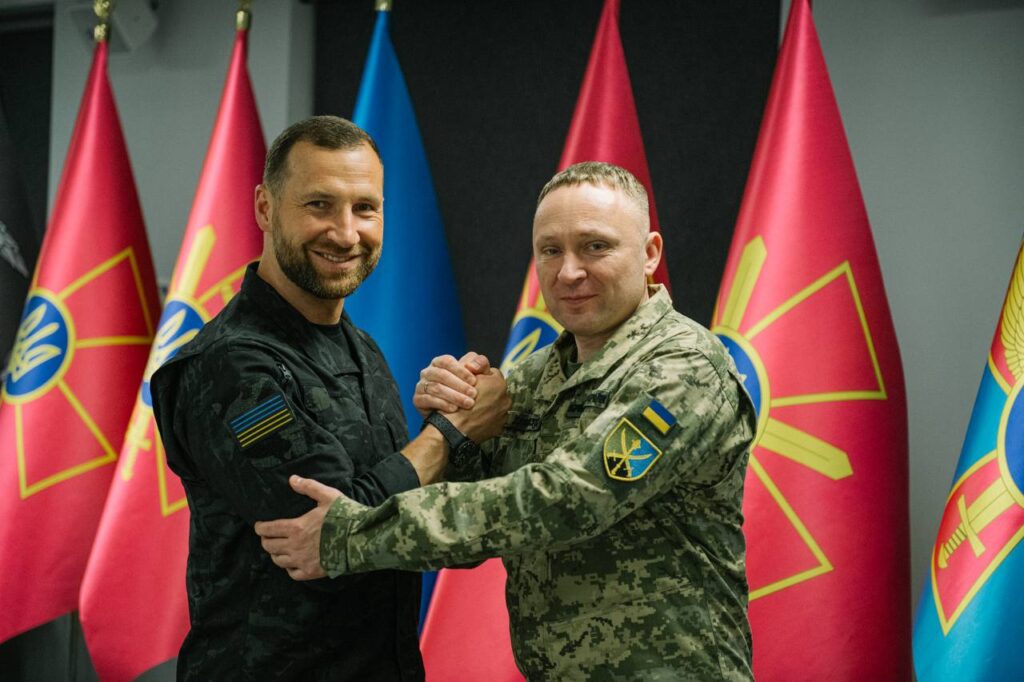
Ukraine's army is loosening the reins, with its new commander-in-chief thinning the stream of reports he demands, though the general overhaul is still only partial. That is how Yurii Butusov, a front-line drone-company commander, describes the changes under Mykhailo Drapatyi in an interview with Apostrophe TV.
In July 2026, President Volodymyr Zelenskyy replaced former Commander-in-Chief Oleksandr Syrskyi with Drapatyi. Butusov says the new arrangement has improved control on Donbas but has not yet reached other hard-pressed sectors.
From "manual mode" to a divided chain of command
Under Syrskyi, Butusov said, the command system was centralized, with the commander-in-chief holding full authority and serving as the sole decision-making authority.
"A manual mode of controlling every unit," he called it.
Syrskyi, by his account, followed the front down to individual companies, battalions and brigades, and could hand tasks directly to small units. Under Drapatyi, Butusov said, that has begun to change.
"For now Mykhailo Drapatyi does not yet have the full scope of authority. Perhaps this is just temporary. The command system now consists of the following: Ihor Skybiuk, the commander-in-chief of the Armed Forces and the chief of the General Staff," Butusov said.
They have their own spheres of authority and their own views on various problems.
He suggested the arrangement could be temporary or could become the basis of the army's future command structure.
Fewer reports, two new Donbas commands, and the gaps left behind
Among the concrete changes, Butusov pointed to the scrapping of the twice-daily reports that corps and other large-formation commanders had been required to make to the commander-in-chief.
Drapatyi has also created two troop groupings on Donbas, "Center" and "Azov," which Butusov said have markedly improved control of the force and the division of responsibility there. The redesign, though, is uneven.
"But these changes are fragmentary. For example, in the Kharkiv Oblast a troop grouping has still not been created," Butusov added.
Read also
-
Most Ukrainian brigades are short of troops. One that filled its ranks is helping push Russia back in Operation Vivaldi.
-
Fewer jams, simpler sights: Ukrainian marines show off Turkiye’s upgraded RDS40 40mm grenade launcher
-
“European countries need to learn”: Ukrainian defense-tech CEO warns Europe against costly defense mistakes

