❌

Reading view

Stealthy GJ-21 Drone Has Launched And Recovered From Type 076 Amphibious Assault Ship, China Claims

A GJ-21 stealthy flying-wing uncrewed combat air vehicle (UCAV) has successfully launched from and recovered aboard the Type 076 amphibious assault ship Sichuan, according to China’s People’s Liberation Army (PLA). Visual confirmation of this milestone has yet to emerge, but there have been steady signs of preparations for flight trials from the Sichuan, which features an electromagnetic catapult. GJ-21s have already been spotted flying from airfields on land.
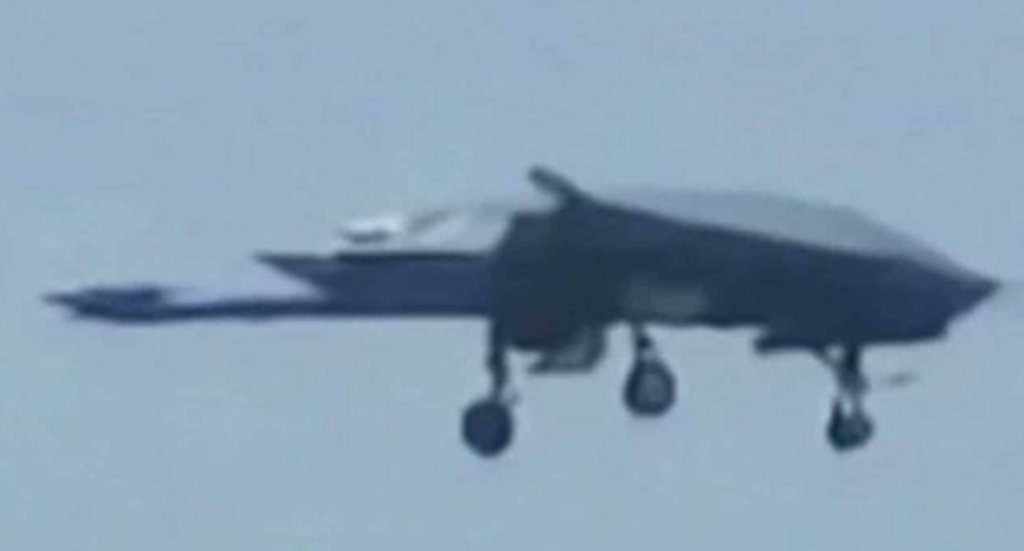
A picture of a GJ-21 drone that previously emerged online. Chinese internet

The GJ-21 and the land-based GJ-11 Mysterious Dragon it is based on are prime examples of China’s major investments in UCAVs and other flying-wing-type drones. These developments stand in particular contrast to the U.S. military’s eschewing of such designs, at least publicly. This is despite significant past U.S. achievements in this arena, including in the development of carrier-based UCAVs. The PLA Navy (PLAN) now looks to be on track to be the first country to field an operational capability of this kind.

A stock picture of the Type 076 amphibious assault ship Sichuan. PLA

“China’s first ship-borne stealth reconnaissance and attack drone ‘GJ-21’ recently made its first successful take-off and landing on [the Type] 076 amphibious assault ship, the ‘Sichuan’ (Hull 51),” according to a post today from the China Military Bugle account on X, an official PLA mouthpiece. “This is another significant breakthrough in the development of China’s amphibious assault ship, indicating that the Chinese Navy now has the capability to operate fixed-wing stealth drones from large maritime combat platforms.”

At the time of writing, neither the PLA nor Chinese state media have shared where or when these trials occurred or provided any other additional details, including how many total launches and recoveries were conducted. No official pictures or videos from the testing have been released so far.
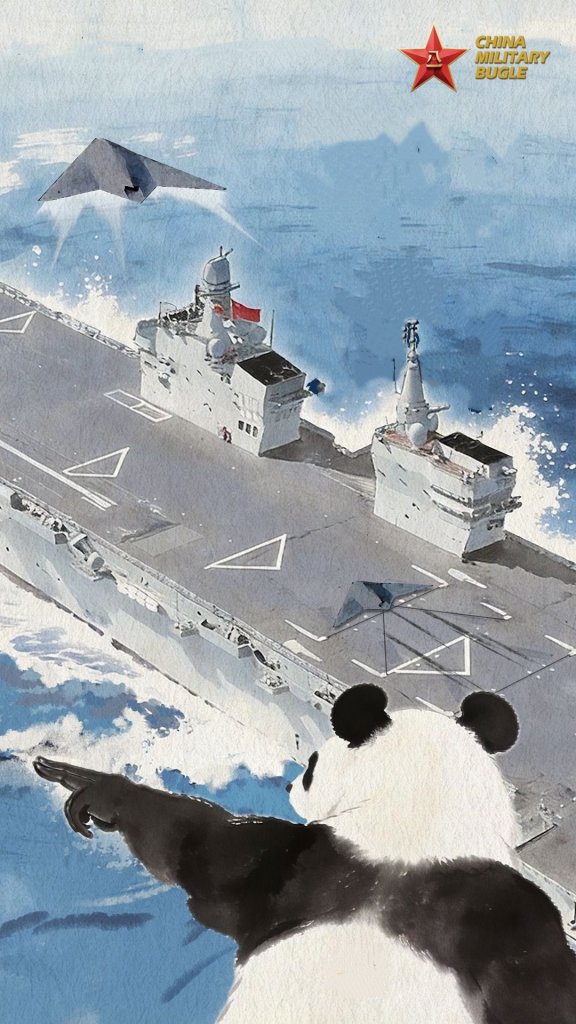
A graphic that accompanied the post on the China Military Bugle’s account on X regarding the GJ-21 and the Type 076. PLA/China Military Bugle

Unconfirmed claims that a GJ-21 had been launched from Sichuan had already begun circulating on social media earlier this month. As an aside, the GJ-21 is readily discernible from the land-based GJ-11 by the catapult bar on its nose landing gear strut.

Two interesting Type 076 News:

2. Via Temstar/SDF:

"Yankee confirmed on tonight's Chahuahui that 076 has launched a GJ-21. He said it in a very straight forward way too, basically "you guys can stop guessing, I can tell you straight: yes they launched a GJ-21"." pic.twitter.com/ODkl6Kki9A

— @Rupprecht_A (@RupprechtDeino) October 15, 2026

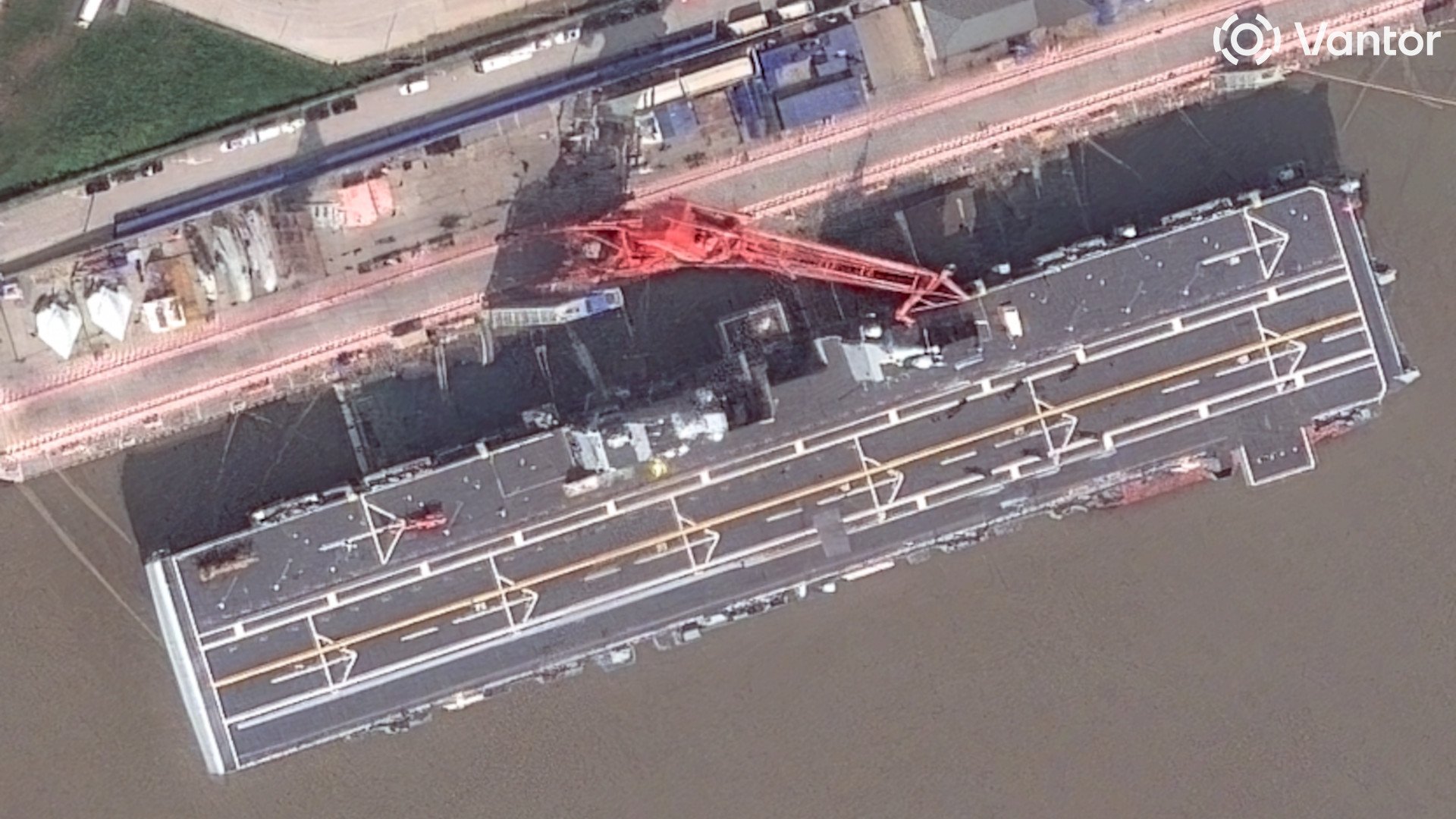
A review of satellite imagery from Planet Labs does show Sichuan was at its usual berth at Hudong-Zhonghua in Shanghai as of October 13, but absent four days later. When exactly it left port is unclear. The one-of-a-kind Type 076 does not appear to have returned until October 26. TWZ has also obtained a satellite image of Hudong-Zhonghua taken just today from Vantor, with the ship still seen sitting at the pier, as seen at the top of this story and below. GJ-21 drones, or more likely mockups thereof, have also been present on the pier for some time.
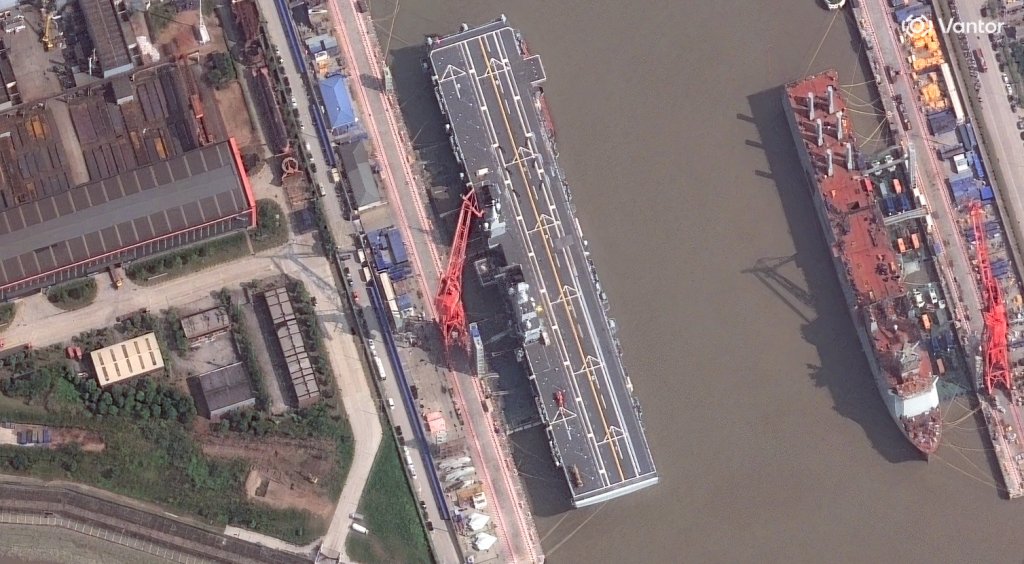
The Type 076 amphibious assault ship Sichuan at the Hudong-Zhonghua shipyard on October 10, 2026. What is widely assessed to be a mothership for large uncrewed underwater vehicles (UUV) is also seen at right. Satellite image ©2026 Vantor

Even while Sichuan was still under construction, there were growing signs that a navalized version of the GJ-11, as well as other uncrewed platforms, would be major components of its future air wing. With its electromagnetic catapult and notably large overall size, the Type 076 is unlike any other big-deck amphibious warship in service today globally, as TWZ has previously explored in depth.

A pair of apparent GJ-11 mockups at a test and/or training site on Changxing Island in Shanghai in May 2024, near where the Type 076 was under construction at the time. Google Earth

As mentioned, there have been further signs that the PLA has been preparing Sichuan for real launches and recoveries, especially of GJ-21s, since last year. Pictures emerged online in October 2025 showing a red-colored test ‘truck’ on the ship’s flight deck, indicating the start of catapult testing. Video from those tests has since been released. Weighted trucks like this have long been used to test catapults on aircraft carriers during construction or following maintenance. The Type 076 left port for the first time in November 2025.

小紅車上線了 pic.twitter.com/zrptPDwu2X

— 🔪飞刀🔪 (@chaoyinsukandao) October 28, 2025

Weighted carts catapult test on Type 076 LHD

three lines marked directly under and outside the wheels of the Red cart to ensure it is centered

the parallel alignment markings flanking the catapult slot serve as visual tips for precise positioning https://t.co/KJkC2ZrLgS pic.twitter.com/pZa0Vx56jG

— David Wang (@DavidWangPLA) August 1, 2026

“Two GJ-21 aircraft were displayed at the victory parade in September 2025, reportedly having entered PLAN service in mid-2025,” according to Andreas Rupprecht, an expert on Chinese aviation and contributor to TWZ. “By late 2025, several GJ-21 aircraft were reportedly undergoing simulated EMALS launches and arrested landings at the PLAN’s land-based facility at Huangdicun.”

In February of this year, GJ-21 mockups were spotted on Sichuan’s flight deck and riding on the ship’s port-side elevator to the hangar deck as part of what appeared to be deck-handling trials.

After the first Type 076 LHD/LAH "Sichuan" was seen yesterday with a GJ-21 UCAV mock-up on deck, the GJ-21 was seen for the first time with its wings folded and later lowered to the hangar deck on one of the elevators.

(Images @鼎盛大彪 from Weibo) pic.twitter.com/eMyz2QLHQX

— @Rupprecht_A (@RupprechtDeino) February 1, 2026

More recent satellite imagery had shown that the Type 076’s flight deck had received additional markings in line with progress toward real flight operations. Fittings for three arresting cables also became plainly visible. Those cables are also notably depicted in the graphic that the China Military Bugle shared online today.
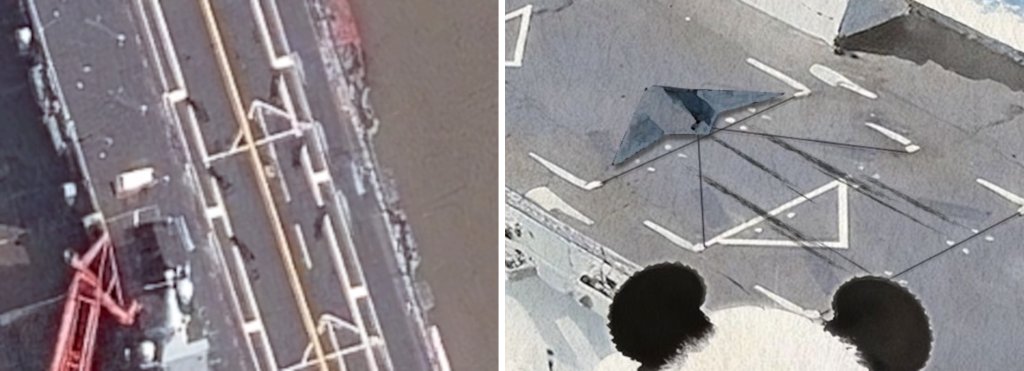
The arresting gear fittings as seen in the October 30, 2026, satellite image from Vantor, at left, as well as how they are depicted in the graphic from the China Military Bugle. Satellite image ©2026 Vantor/PLA

The GJ-21 will of course not be the only aircraft in the Type 076’s future air wing. The ship is also expected to carry a variety of other uncrewed aircraft, as well as crewed helicopters. China has shown a range of other combat drone designs in recent years. Navalized versions could well be developed for deployment on Sichuan, as well as PLAN’s growing fleet of traditional carriers and other suitable configured vessels.

Loading the Type 076 with operational UCAVs would only underscore the significance of this particular ship. As we have previously written:

“The potential value to the PLAN of having a fleet of very large deck amphibious assault ships that are highly capable of large-scale drone operations as well as traditional amphibious assaults is clear. These ships could be used to launch and recover UCAVs like the GJ-11 and other types of drones to perform a host of missions from maritime strike to intelligence, surveillance, and reconnaissance (ISR). They could be used to provide additional ‘mass’ in support of the operations of larger carrier strike groups and help to free the air wings of flattops like Fujian up for tasks they might be better suited for. In addition, they could provide a lower tier of naval aviation support that could be employed independently.”

…

“Simply having more naval aviation capacity overall would give the PLAN added flexibility for various operations closer to the mainland, including a potential military intervention against Taiwan or defending its expansive and largely unrecognized territorial claims in places like the South China Sea. Type 076s could also help project naval and air power further from China’s shores, something that has also been a driving factor behind the country’s broader carrier ambitions.”

…

“The Type 076 could help provide support during humanitarian assistance and disaster relief operations. Big deck amphibious warfare ships, in general, provide their operators with immensely valuable platforms for projecting both hard and soft power.”

Last year, the PLA separately confirmed that the GJ-11 had entered at least limited operational service. That followed a steady ramp-up in testing of that drone based on what could be seen in satellite imagery and video clips that had emerged online. This included evidence of near-daily flights at Malan Air Base, a major hub for testing uncrewed platforms. GJ-11s had also been spotted at an operational air base in China’s Tibet Autonomous Region.

New video out from the People's Liberation Army Air Force (PLAAF) of China shows the new GJ-11 stealth drone (UCAV), and also the J-20 stealth fighter firing a live PL-15 air-to-air missile: pic.twitter.com/wraDqyMOht

— The STRATCOM Bureau (@OSPSF) November 11, 2025

As mentioned earlier, the continued development of the GJ-11 and GJ-21 are reflective of the PLA’s broader pursuit of stealthy flying-wing drones, which is not limited to UCAVs. Several larger designs that look most immediately suited to high-altitude, long-endurance ISR missions have also broken cover in the country in the past few years.

There is something of a trend in this regard globally, with Russia, India, Turkey, and France also pursuing flying-wing drone designs. The U.S. military continues to be markedly absent from this space, at least that we know, despite major investments and real demonstrations of relevant capability, before various programs were abandoned for reasons that still remain largely unclear. In the late 2010s, the U.S. Navy notably looked to be right on the edge of fielding a carrier-based UCAV, before changing course entirely to an uncrewed tanker instead. There are some signs now that the service may be taking another look at the capabilities it passed over.

It is still to be seen how quickly the PLA’s official statement today will be followed by real confirmation of the launching and recovery of a GJ-21 from the Sichuan.

Contact the author: joe@twz.com

The post Stealthy GJ-21 Drone Has Launched And Recovered From Type 076 Amphibious Assault Ship, China Claims appeared first on TWZ.
  •  

Highlights From North Korea’s Drone-A-Palooza

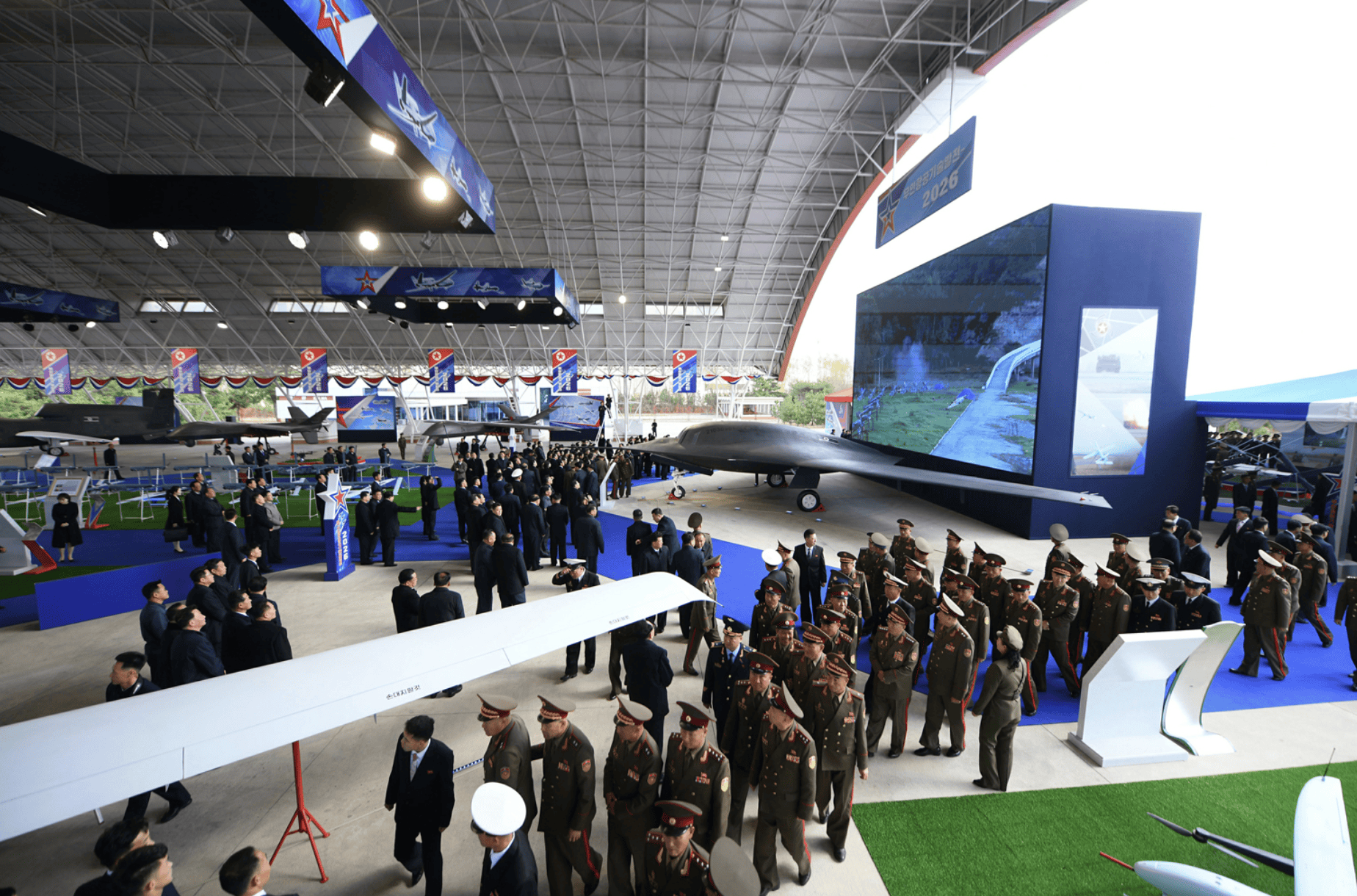
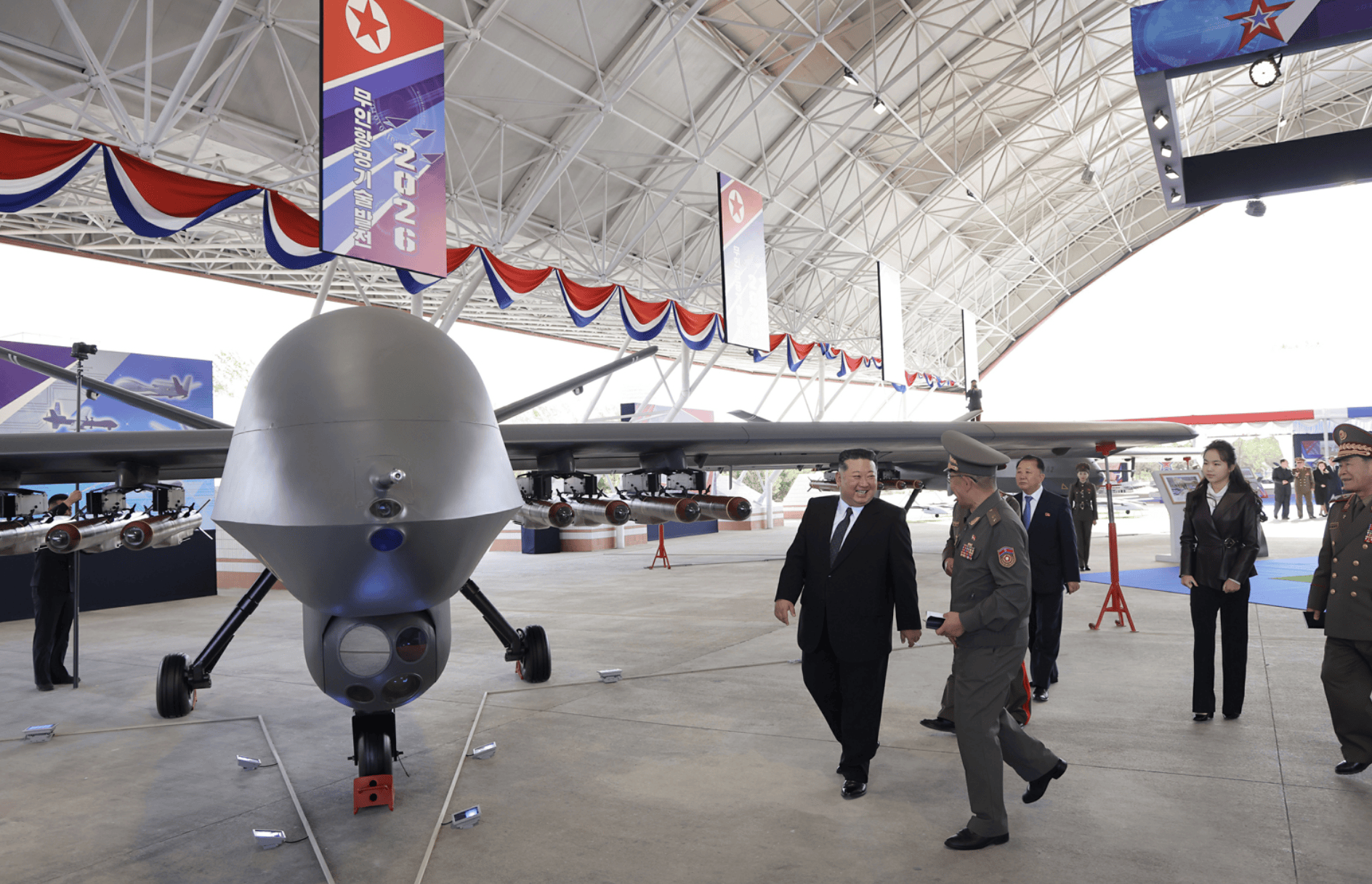
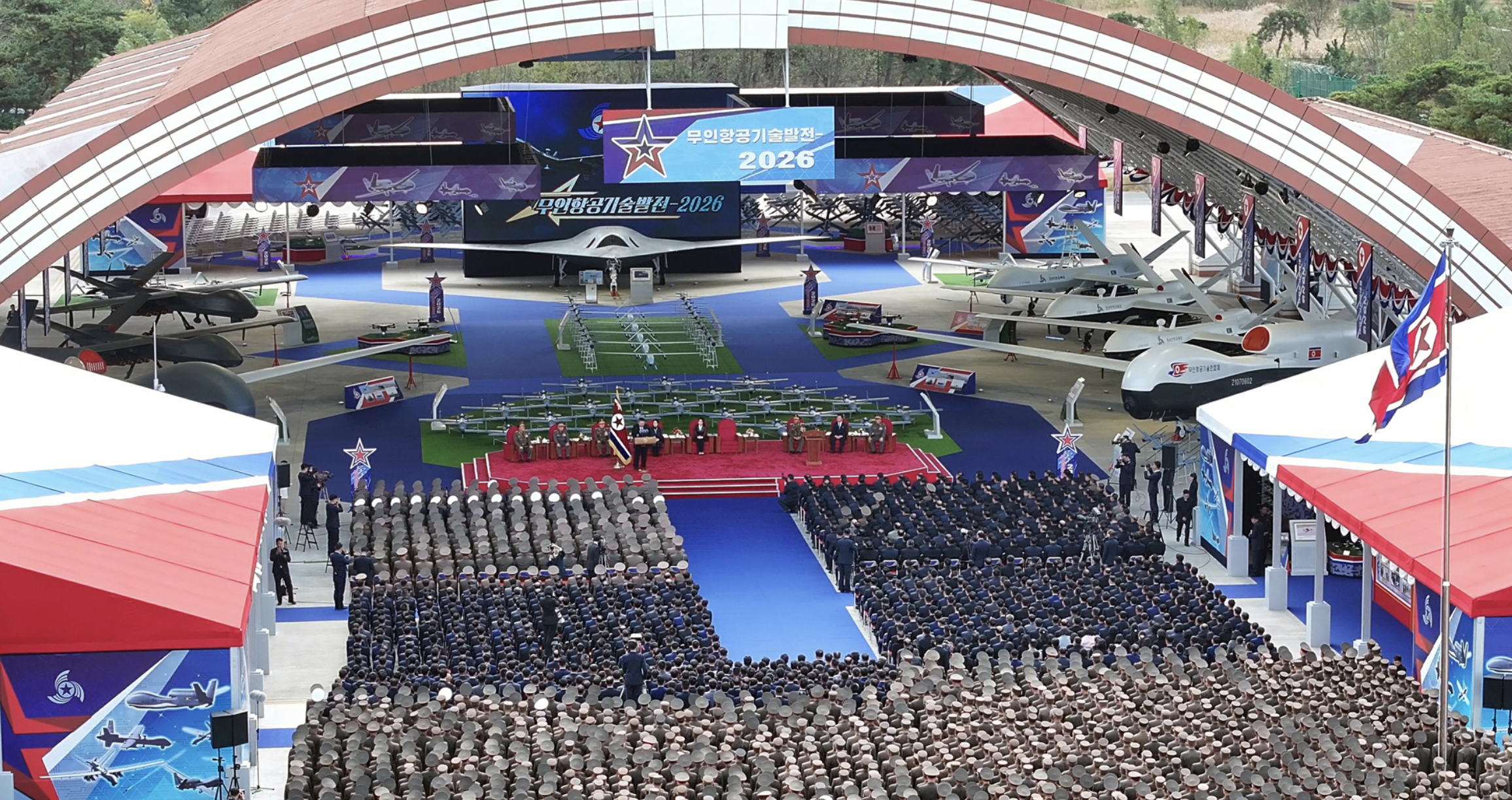
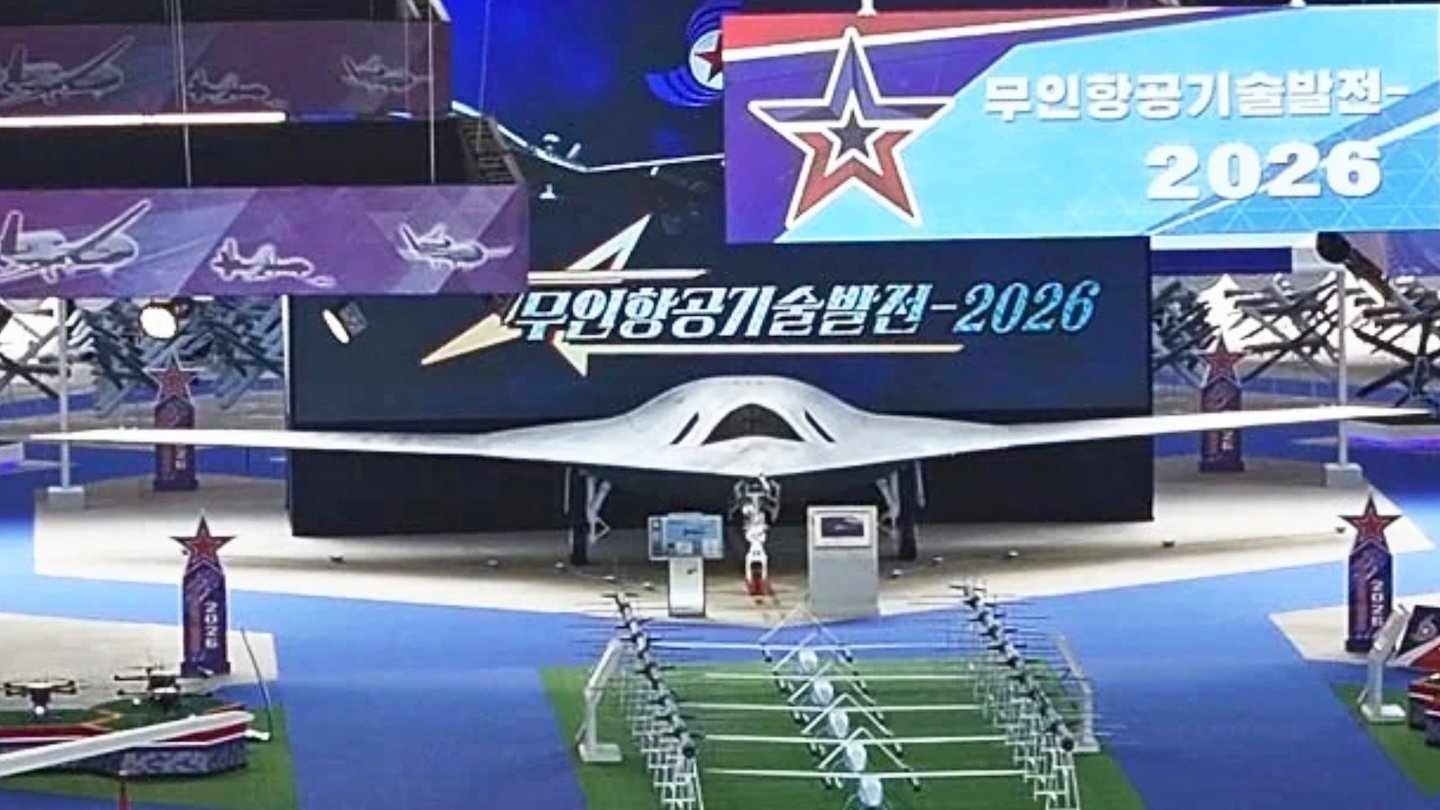
North Korean leader Kim Jong Un presided over a major exhibition of uncrewed aerial vehicles (UAVs) on Thursday. A mockup of an apparent new large stealth drone was displayed prominently alongside an increasingly diverse collection of reconnaissance drones, armed UAVs, loitering munitions, and small attack drones. While there is no evidence that North Korea is capable of getting a stealthy flying-wing drone flying, let alone operating as a operationally relevant low-observable platform, there are no doubts that the country has an increasingly impressive uncrewed aircraft arsenal, with the smaller, lower-end types being of greatest importance.

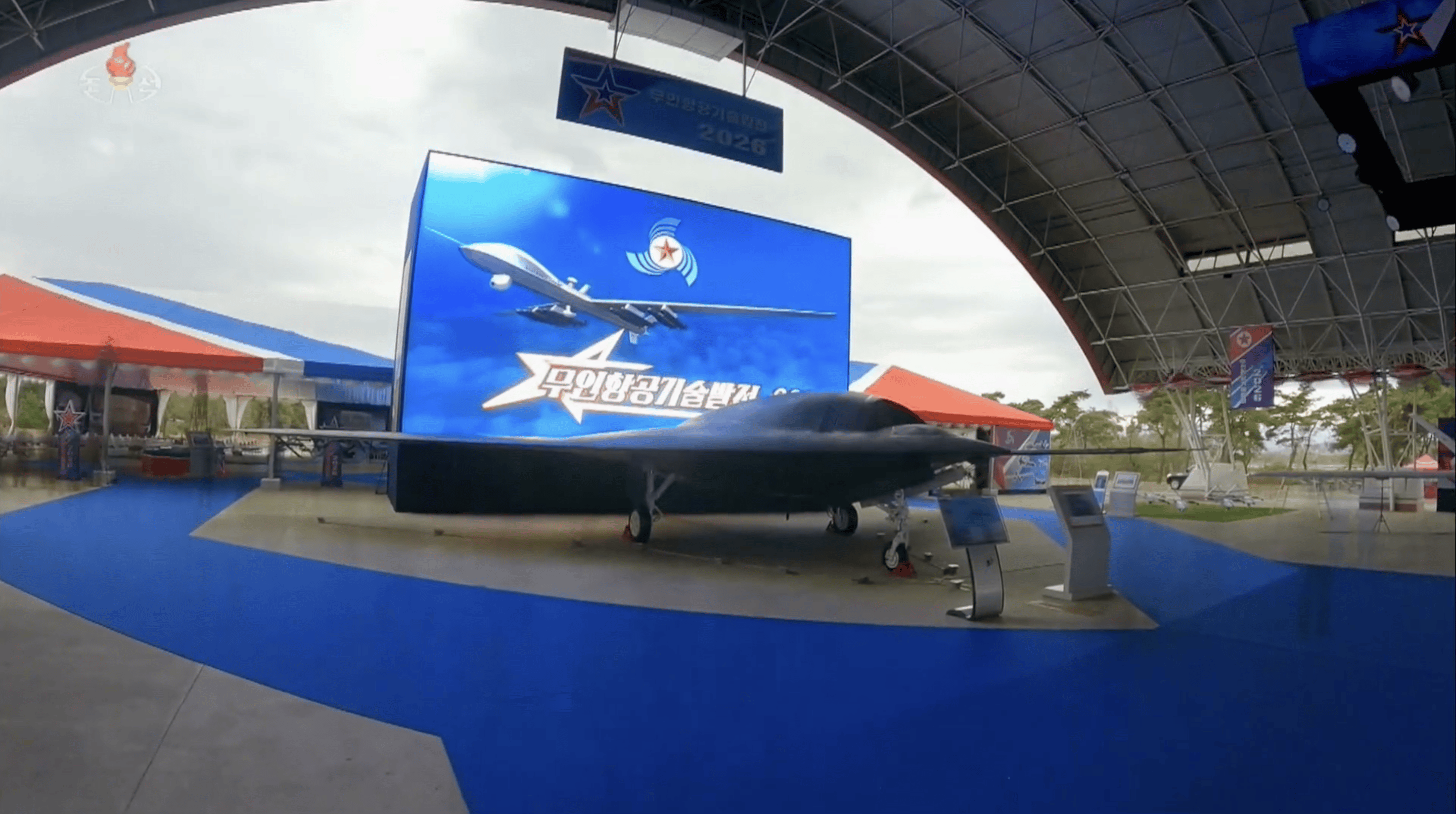
An overview of the Unmanned Aeronautical Technology Development-2026 exhibition, with the “stealth drone” in pride of place. KCNA

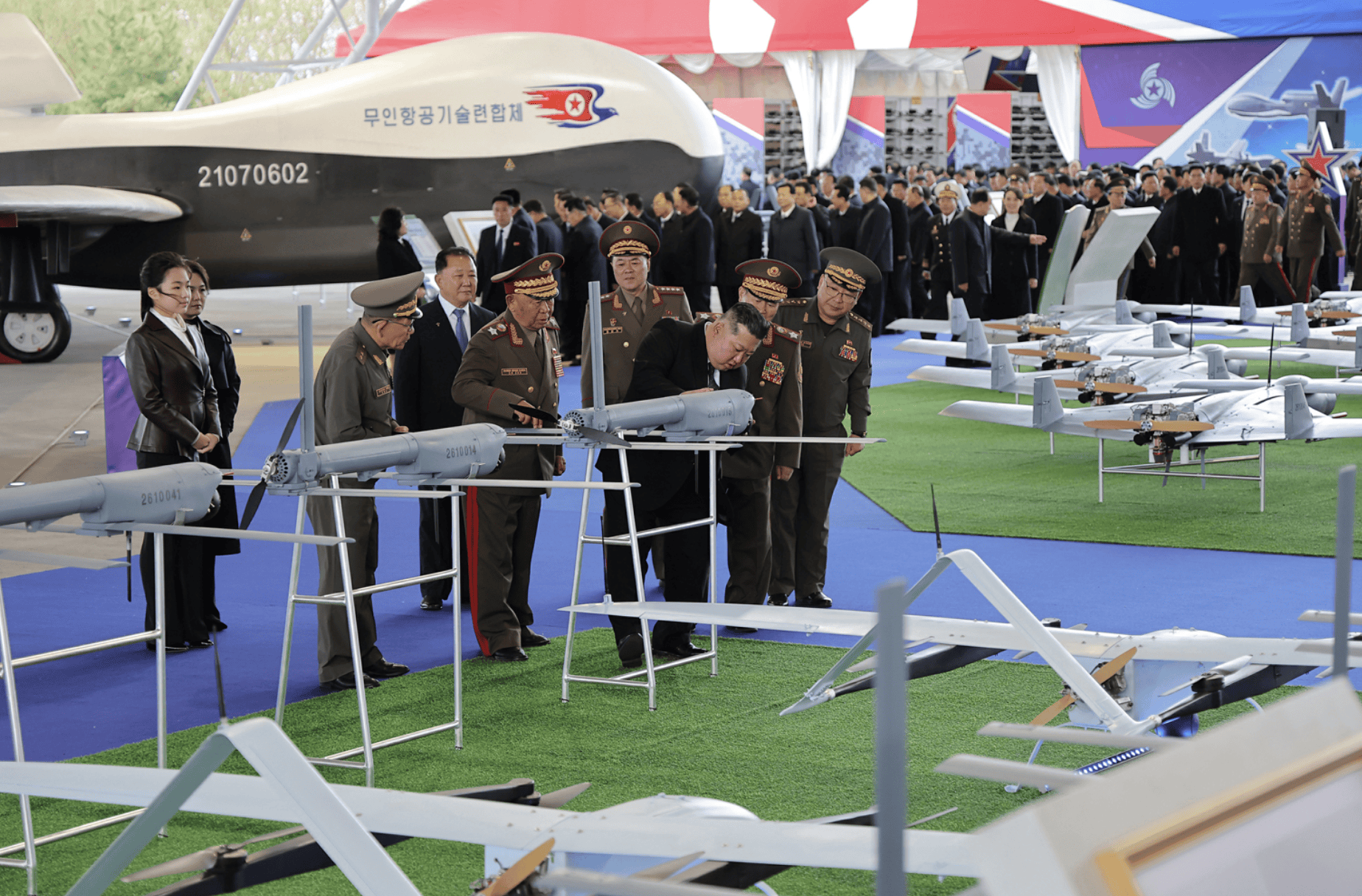
As for the “stealth drone,” photographs released by North Korean state media show a mockup of a tailless flying-wing design. In terms of appearance, there are clear parallels with advanced uncrewed combat aerial vehicles (UCAVs) developed by the United States, China, and Russia.

However, huge questions remain as to what degree the mockup is part of a realistic program. We have no details of the program’s development status and planned capabilities. It is highly questionable if Pyongyang is able to produce a functional prototype. Even if it can get it into the air, there is no evidence that it possesses the capabilities to master meaningful stealth technologies, let alone the command-and-control functions and other elements needed for it to operate in a tactically relevant manner.

The exhibition, titled Unmanned Aeronautical Technology Development-2026, was held on Thursday, with images published by the ruling Workers’ Party newspaper Rodong Sinmun today. Kim called for the country to achieve “absolute superiority” in drone technology and announced unspecified measures to accelerate the development of uncrewed aviation systems and military artificial intelligence.

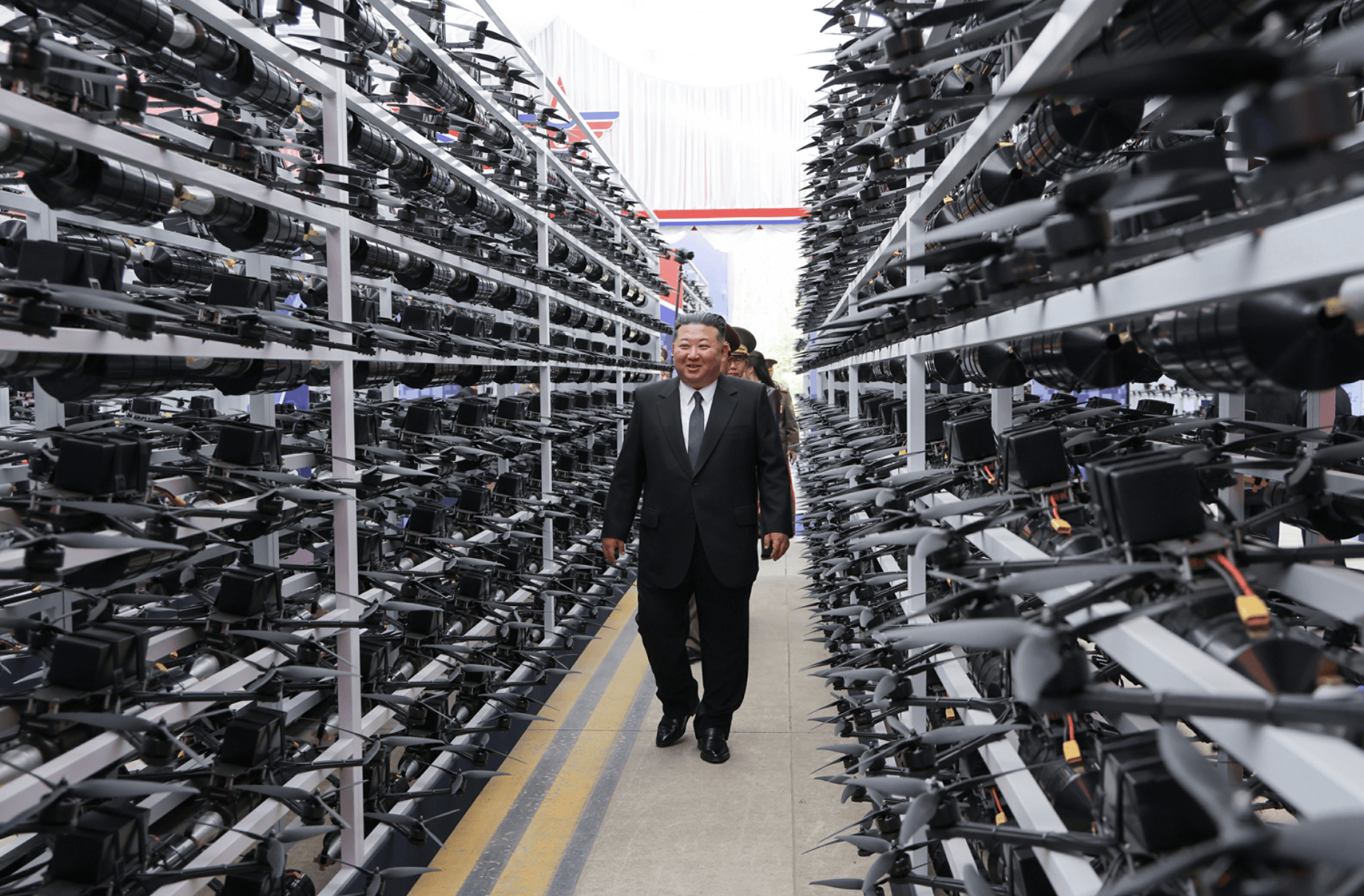
Kim Jong Un walks past rows of quadcopter drones at the exhibition. Rodong Sinmun

An Ambitious New Flying-Wing Design

The mockup of the new aircraft was positioned prominently in the exhibition hall, suggesting that Pyongyang considers it at least indicative of its broader ambitions.

Based on the available photographs, Hong Min, a senior research fellow at the Korea Institute for National Unification, interviewed by NK News, estimated the wingspan at roughly 56 to 66 feet and its height at around 10 to 11.5 feet. Standout features include a dorsal air intake, a relatively large center fuselage section integrated into the flying wing, and retractable tricycle landing gear.

Another view of North Korea’s apparent new stealth drone. KCTV

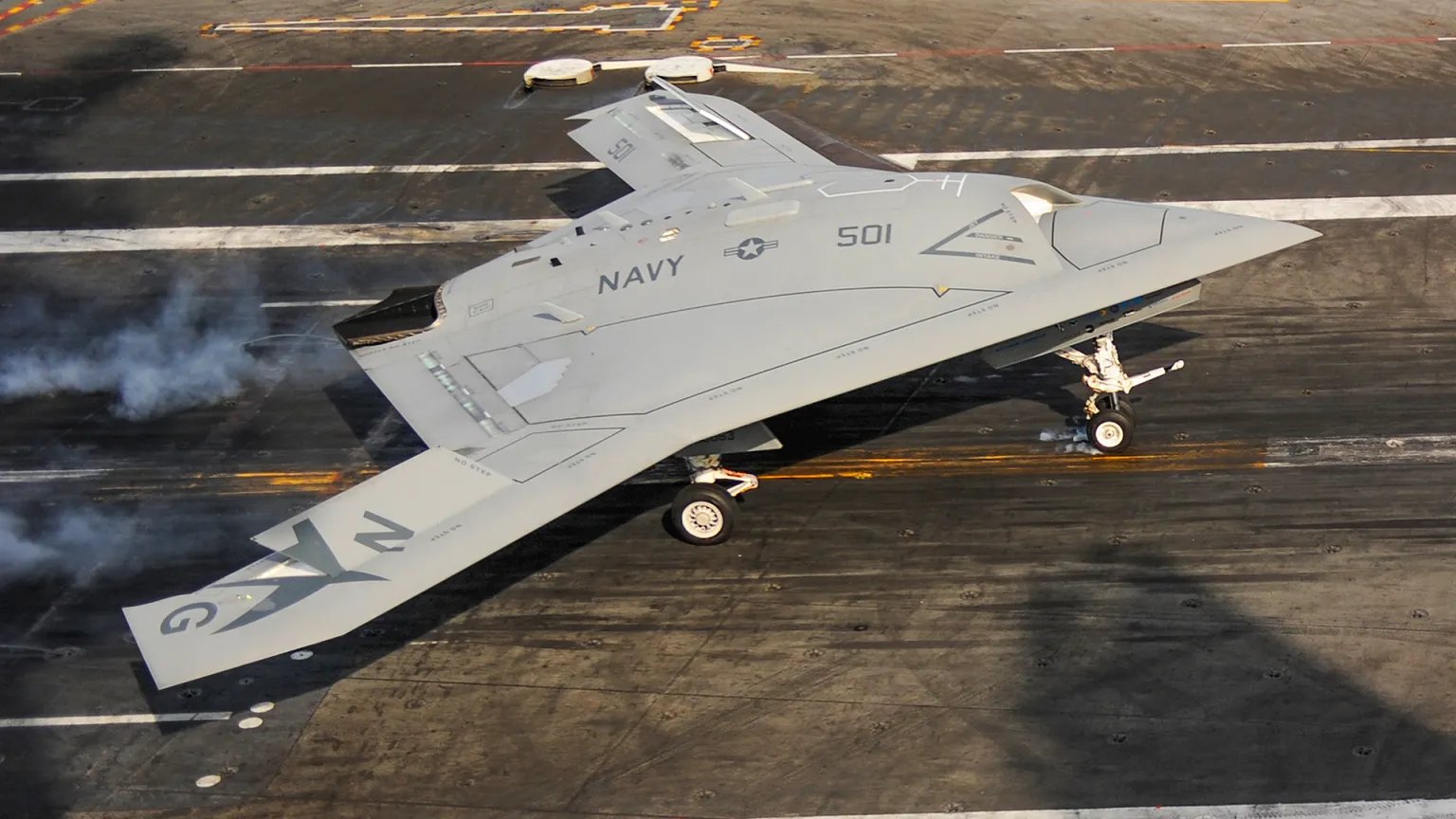
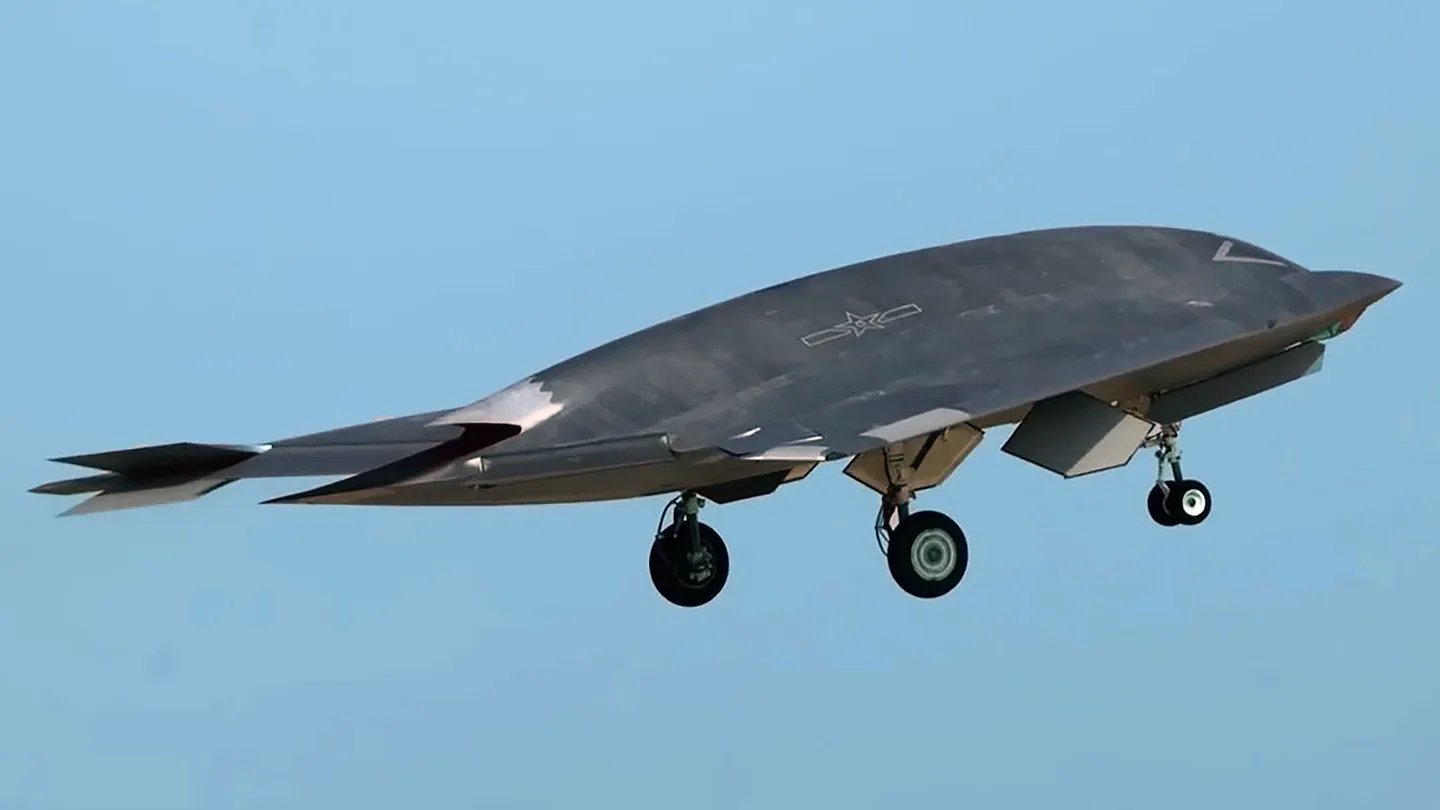
In terms of general arrangement, there are similarities to Northrop Grumman’s X-47B, the U.S. Navy’s experimental carrier-based UCAV. There are also visual similarities with China’s GJ-11 Sharp Sword and Russia’s S-70 Okhotnik, two other large flying-wing UCAV designs.

X-47B during carrier operations. U.S. Navy
GJ-11 Sharp Sword UCAV. via Chinese internet

At this point, North Korea has not provided any technical information about the aircraft’s propulsion system, payload, intended mission, or flight performance.

Critically, while the external shape is consistent with a stealthy UCAV, a flying-wing configuration on its own is only one part of a far more complex puzzle in achieving a genuinely low radar signature. Other factors include the engine inlet and exhaust arrangements, radar-absorbing materials, surface treatments, manufacturing tolerances, and the alignment of individual edges and surfaces, low probability of intercept communications and much more.

Officials inspect the new flying-wing UCAV design. Rodong Sinmun

The Iranian RQ-170 Precedent

Overall, there are many good reasons to be extremely cautious about North Korea’s apparent ambitions in this area.

Iran is another country that has displayed a drone that resembles an advanced Western stealth platform, without actually reproducing its capabilities. It has, however, gotten a UCAV-lookalike into the air.

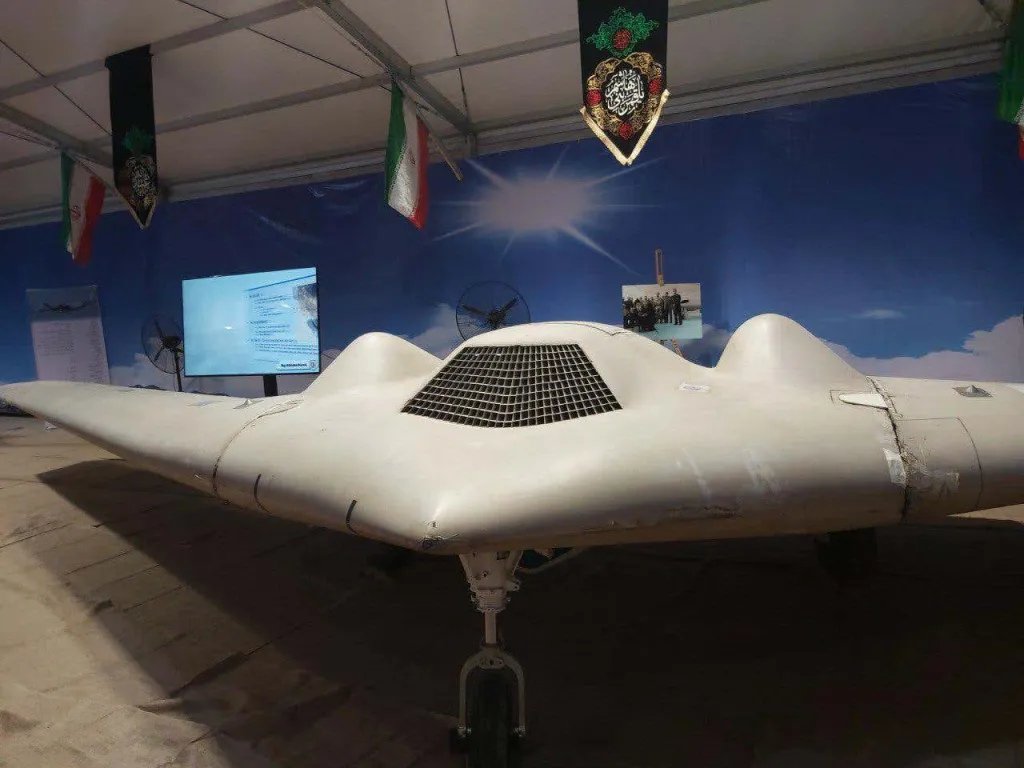
After recovering a U.S. RQ-170 Sentinel reconnaissance drone that came down inside Iranian territory in 2011, Tehran announced that it had successfully reverse-engineered the aircraft. In 2014, Iranian authorities displayed what they presented as a domestically produced copy of the American drone, claiming that it would soon undertake a test flight.

The actual RQ-170 Sentinel Iran recovered on display. Iranian State Media

Outside observers questioned whether the displayed aircraft was anything more than a non-functional replica, noting apparent shortcomings in its construction and the use of components inconsistent with a sophisticated operational aircraft.

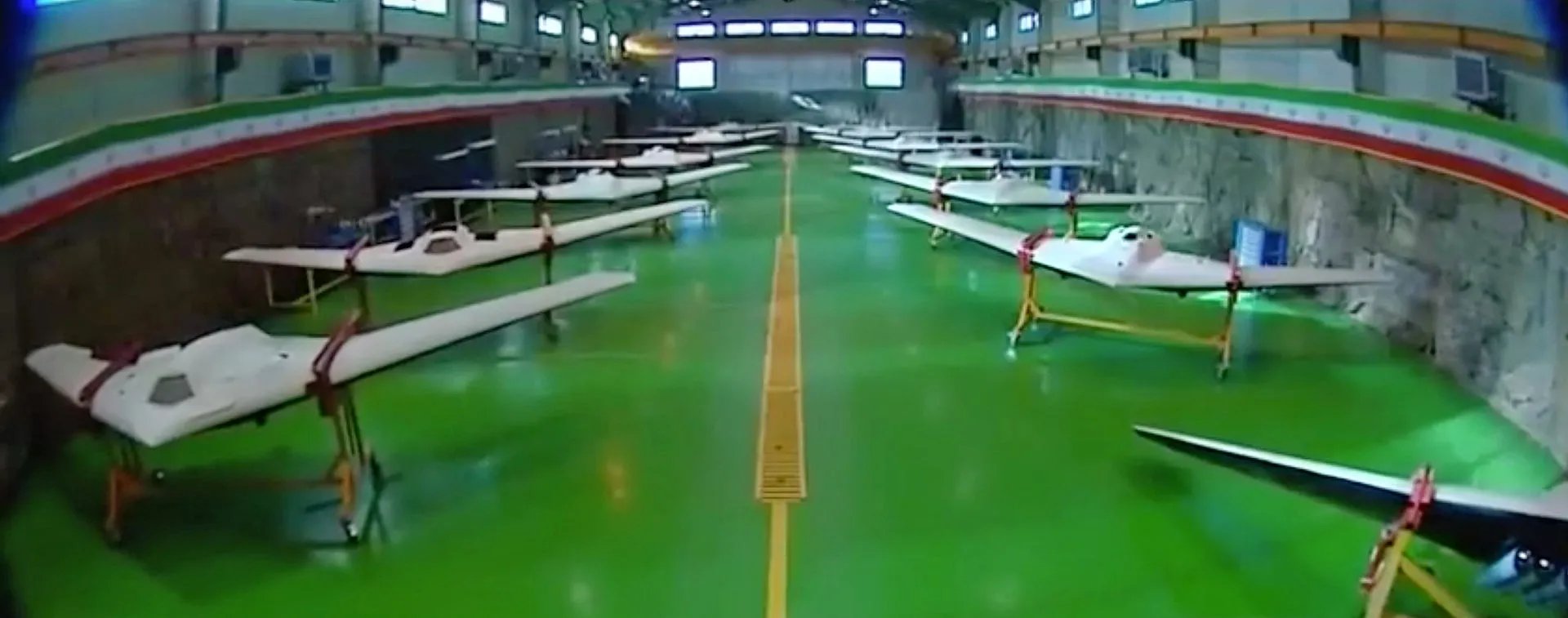
Iran subsequently presented a family of aircraft derived from the RQ-170 concept, including the Shahed-171 Simorgh and the smaller Shahed-191. Iran has demonstrated flying examples of these designs, but they fall far short of replicating the RQ-170’s actual low-observable qualities, let alone its sensors and avionics.

Iran’s self-proclaimed RQ-170-like long-range UCAVs. AP

In the case of Pyongyang, however, the possibility of Russian assistance is at least worth considering.

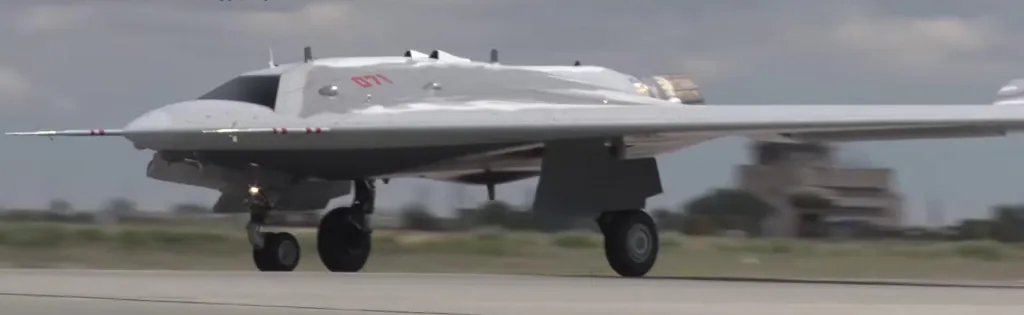
North Korea’s burgeoning military relationship with Moscow, including the deployment of North Korean troops to support Russia’s war in Ukraine, could provide a chance for the exchange of technical knowledge and operational experience from Moscow. Russia has developed and flown the S-70 Okhotnik UCAV, exposing it to some operational trials in Ukraine, and could have passed related information on to Pyongyang.

An S-70 taxiing after landing. Russian Ministry of Defense

In particular, North Korea would welcome Russian assistance in developing and manufacturing propulsion, flight control, sensor, and materials technologies.

However, there is so far no proof of technology transfer from Russia. Even if it were to be provided, it is far from clear that this would suffice to get a true UCAV into the air anytime soon, although an Iran-style knockoff with far reduced capabilities cannot be ruled out entirely. It’s also worth noting that Russia’s own UCAV program has been anything but a smooth and rapid advancement to an operational state.

Overall, the new flying-wing concept does not represent a realistic technological undertaking — at least for now. Very few countries have managed to develop and fly drones in this class, and fewer still have been able to field them operationally.

North Korea’s Drone Development Effort

The flying-wing aircraft was only one part of a much larger display. More than 30 types of UAVs reportedly appeared at the exhibition, reflecting North Korea’s efforts to diversify its uncrewed aviation capabilities.

Some of these designs had been seen before, including the Saetbyol-4 and Saetbyol-9. These were first displayed in 2023 and are, in terms of appearance, clones of the U.S. RQ-4 Global Hawk and MQ-9 Reaper, respectively.

Kim Jong Un inspects an armed Saetbyol-9. Rodong Sinmun

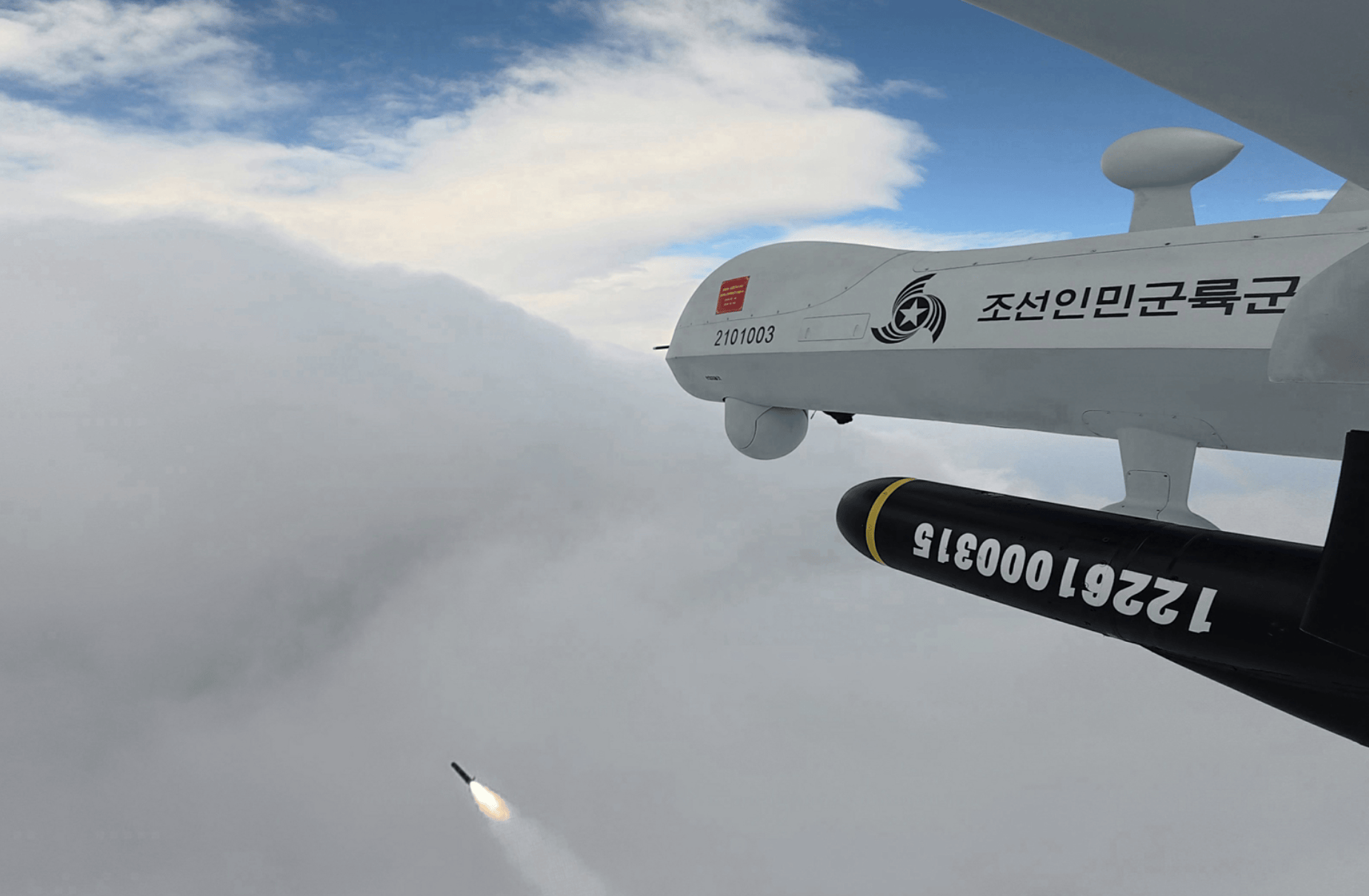
Imagery released of the Saetbyol-9 showed it carrying — and firing — several types of air-to-ground weapons. These include a Hellfire-like laser-guided missile, along with smaller rockets and other possible guided munitions.

Saetbyol-9 fires a rocket or missile. Rodong Sinmun

Other exhibits included loitering munitions resembling Israel’s Harop and Russia’s Lancet, as well as smaller drones with configurations similar to the U.S.-made Switchblade family.

Kim Jong Un inspecting Switchblade-style loitering munitions. Rodong Sinmun

Hundreds of small quadcopter drones were also displayed on storage racks. Some appeared to carry cylindrical containers associated with fiber-optic control systems, a technology that has become increasingly prominent in the Russia-Ukraine war. Unlike conventional radio-controlled drones, fiber-optic systems are largely immune to conventional radio-frequency jamming of their control links. These drones would be a major feature in a cross-DMZ conflict.

North Korean interest in artificial intelligence was another recurring theme. Kim called for the development of increasingly intelligent uncrewed weapons, although there is no indication of how advanced the country’s existing autonomous navigation, target recognition, or engagement systems actually are.

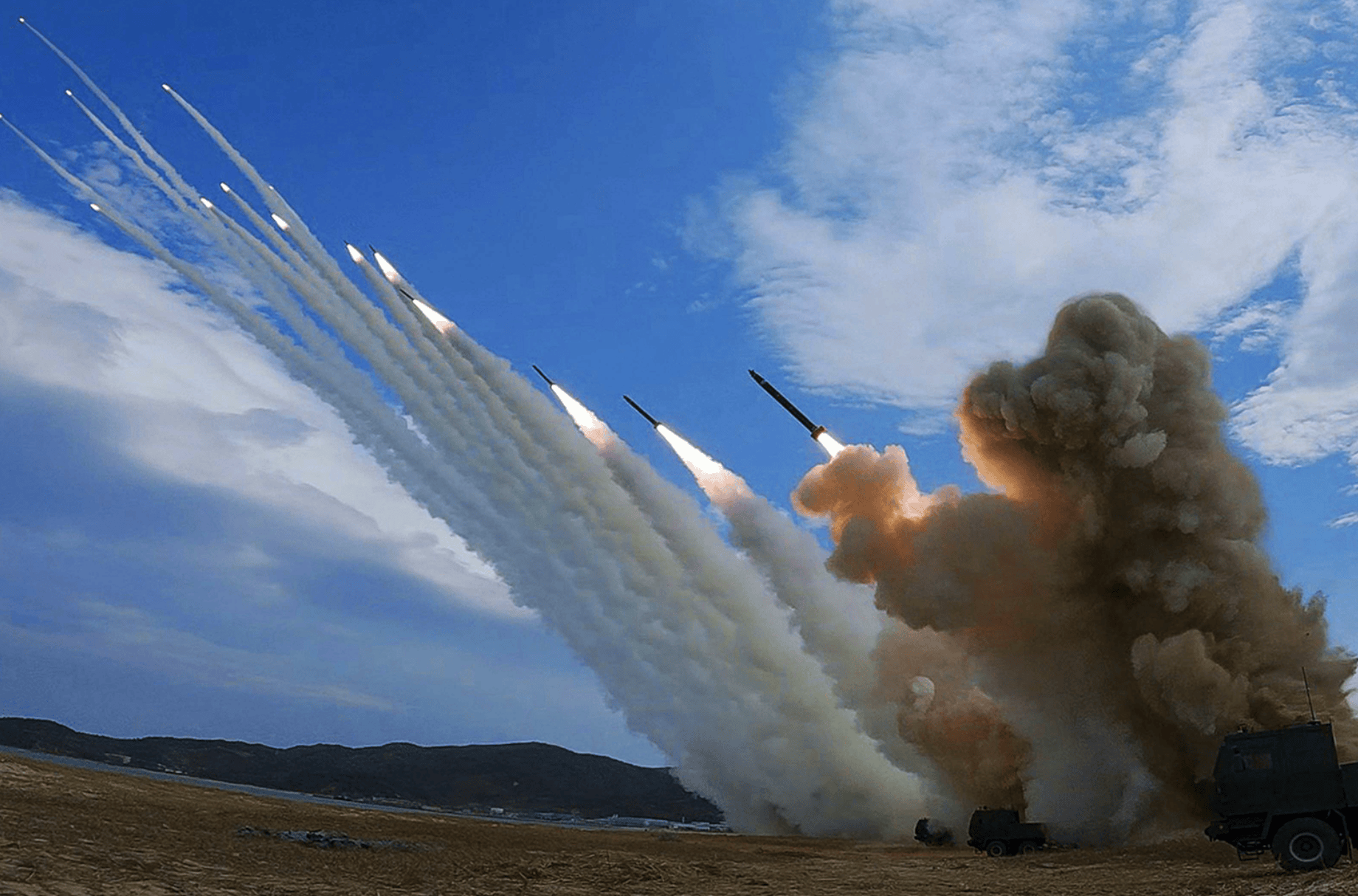
The exhibition was accompanied by live-fire demonstrations involving UAVs, cruise missiles, and multiple rocket launchers. North Korean state media claimed that missiles launched from drones and other systems struck an island target “with 100 percent accuracy.”

A barrage of rockets fired by a large-caliber multiple rocket launcher. Rodong Sinmun

From Ambition To Operational Capabilities

North Korea’s rapidly expanding interest in drones should also be seen against the shortcomings of its aging crewed combat aviation fleet. Relatively inexpensive UAVs offer opportunities for reconnaissance and attacks against military infrastructure without exposing pilots to enemy air defenses. At the same time, Pyongyang has failed to introduce new crewed combat aircraft to modernize its air force, the capabilities of which are thoroughly outmatched by those of South Korea.

The war in Ukraine (as well as lessons from conflicts in the Middle East) also provides Pyongyang with an opportunity to study the use of drones on a large scale. North Korean troops deployed to Russia will have gained first-hand experience of drone warfare, including the integration of reconnaissance UAVs, FPV attack drones, and electronic warfare systems.

That experience could help accelerate the development of North Korea’s own uncrewed platforms, particularly relatively simple systems that can be produced in large quantities.

An attack drone in the Shahed/Geran class, for example, could be produced relatively easily in very large numbers (and that is likely already happening to some degree) and could saturate South Korean air defenses, which are generally tailored to address more conventional threats. North Korea doesn’t need the long range that the Shahed/Geran typically provides, since many of its primary targets are much closer. The shorter distances involved could permit a greater proportion of a drone’s weight to be allocated to its warhead, depending on the design. Alternatively, a drone with the roughly 1,000-mile reach of the Shahed/Geran could fly a very complex route to reach targets in the South, including approaching via the coast. At the very least, expanding North Korean efforts in this area could tilt the balance of power on the peninsula, providing Seoul with a major interdiction problem and forcing the development of new countermeasures, such as directed-energy weapons and cheap interceptors.

A typical Russian Shahed-136/Geran-2-series kamikaze drone over Ukraine. via X

The possibility of Russian assistance via its own Geran development effort is likely bringing enhanced technologies within reach of North Korea. Indeed, that kind of expertise is already being gained by tens of thousands of North Korean workers who have been sent to Russia as additional labor for its drone-production efforts.

A look inside a Russian factory where licensed production of Iranian Shahed-series one-way attack drones is taking place. via X

And once again, it’s these one-way attack munitions and smaller drones that can be mass-produced and rapidly iterated upon that pose a real threat to South Korea. It is likely that North Korea will continue to ramp-up its investment in these systems, building them in very large tranches in order to create an asymmetric advantage — one that has proven challenging to counter in real conflicts around the globe. At the same time, they will also continue to build high-tech-looking clones of far more advanced systems which will have little tactical or strategic impact but work well for propaganda purposes.

Contact the author: thomas@thewarone.com


The post Highlights From North Korea’s Drone-A-Palooza appeared first on TWZ.
  •  
❌