
❌

Normal view

Storia dell’Iraq – Parte II: l’Iraq tra gli Imperi

By: A A
24 October 2026 at 22:05

Alla luce del recente ritiro delle forze statunitensi dal Paese (esito anche della sciagurata aggressione all’Iran) si rende necessario ripercorrere storia e geopolitica dell’Iraq per meglio comprendere quelle che saranno le future direttrici di quello che per demografia, posizione e ricchezza (in termini di risorse naturali) si presenta come un sicuro protagonista nel futuro della regione.

Segue nostro Telegram.

La Safawiyya, fondata dal poeta mistico Safi al-Din (1252-1334), nacque inizialmente come confraternita sufi. Fu nel corso dei due secoli successivi che quest’ordine religioso-guerriero sviluppò una forte inclinazione politica ed abbracciò apertamente la dottrina sciita imamita. Quando l’allora settenne Isma’il ereditò la guida dell’ordine nel 1494, lo “Stato” costruito dai “montoni bianchi” turchi si era già quasi dissolto. A quel tempo, Isma’il non era considerato solo uno shaykh sufi, a lui venivano associati anche attributi semidivini che necessitavano l’obbedienza assoluta degli adepti (dopo tutto lo stesso dodicesimo Imam dello sciismo assunse tale carica, ed entrò nella fase di primo o minore occultamento, ghayba as-Sughra, quando era ancora un infante).

Ad ogni modo, questo movimento, dal carattere fortemente eterodosso (almeno inizialmente), poteva godere di un notevole seguito tra i membri di una violenta tribù turkmena: i Qizilbash (teste rosse), così chiamati a causa dei loro berretti rossi. Questi, grazie alla loro devozione fanatica e all’ardimento in battaglia, consentirono ai Safavidi, partendo dai territori dell’odierno Azerbaigian, di costruire una vera e propria entità territoriale a seguito della conquista di Tabriz (1501).

Proprio a Tabriz, Isma’il venne incoronato Shah e proclamò lo sciismo imamita come religione di Stato del suo Impero. Va da sé che, in quel periodo, la maggioranza della popolazione dell’Iran era ancora sunnita. Dunque, lo sciismo venne imposto in modo più o meno forzato. Nel 1508, inoltre, Isma’il inviò uno dei suoi uomini più fidati (Lala Husayn Beg Shamlu) a conquistare Baghdad. Per il neonato Impero safavide, infatti, il controllo diretto sui principali santuari sciiti iracheni (Najaf, Kerbala, Samarra e Kazim) si poneva come un’importante questione di prestigio e legittimazione politico-religiosa. Non solo, così facendo, i primi Safavidi diedero slancio anche ad una particolare interpretazione dello spazio geopolitico che segnerà lo sciismo nel corso dei secoli successivi: ovvero, un’idea di territorio non uniforme o delimitato da confini ma intrinsecamente legato a punti  precisi corrispondenti a luoghi simbolo e centri sacri della tradizione religiosa (aspetto che verrà sottolineato a più riprese dai protagonisti della Rivoluzione islamica in Iran nel XX secolo e dai loro successori). É indubbio il fatto che l’Impero safavide avrebbe finito per dominare l’Iraq, ed il cuore stesso dell’Islam, per lungo tempo se non fosse stato per la contemporanea espansione dell’Impero ottomano a Occidente.

L’influenza safavide, di fatto, al principio del XVI secolo, aveva raggiunto l’Anatolia orientale e questa regione fu teatro di violente rivolte sciite contro il dominio ottomano. Il sultano Selim I, dal canto suo, reagì in modo brutale e la repressione dei moti rivoluzionari venne accompagnata da una massiccia invasione di parte del territorio occidentale della Persia. I due grandi imperi si fronteggiarono una prima volta nei territori dell’attuale Azerbaigian nel 1514, a Chaldiran. E, da quel momento in poi, l’Iraq divenne il terreno di confronto costante tra due entità geopolitiche la cui rivalità aveva anche una precisa connotazione religiosa (senza considerare le aspirazioni di entrambi i sovrani a rappresentare l’umma islamica nella sua interezza). Di conseguenza, i rapporti relativamente pacifici che si erano stabiliti tra sunniti e sciiti nel periodo precedente (sotto il dominio mongolo) mutarono di pari passo con il carattere settario sempre più marcato del conflitto ottomano-safavide. Un aspetto che segnerà l’intera storia dell’Iraq anche dopo il crollo dell’Impero ottomano e fino alla guerra Iran-Iraq degli anni ’80 del XX secolo.

All’epoca dell’inclusione dell’Iraq nell’Impero ottomano, questo si estendeva dall’attuale Ungheria allo Yemen e dall’Algeria all’Azerbaigian. L’Impero, inoltre, si presentava come un’immensa area commerciale che beneficiava di una tassazione contenuta e di vie di comunicazione relativamente sicure. Aleppo, una delle più ricche e popolose città dell’Impero, già da quel periodo riusciva a proiettare la sua influenza sull’Iraq, dove la comunità ebraica, grazie all’intraprendenza commerciale, crebbe e si arricchì notevolmente.

Questo merita l’apertura di una breve parentesi. Gli Ottomani, sulla base di una tradizione consolidata nel mondo islamico, riconobbero l’autonomia giuridica di un certo numero di comunità religiose monoteiste (millet). Queste beneficiarono in modo evidente del miglioramento della situazione economica (soprattutto gli armeni dell’Anatolia orientale, i greci di Costantinopoli e Smirne e gli ebrei di Salonicco, Aleppo e Baghdad). Un rabbino di Bassora, Jacob Gabbai, tra il 1775 ed il 1776, svolse un ruolo chiave nel reperire i fondi necessari a garantire lo sforzo bellico ottomano contro i Safavidi. Tale sforzo venne premiato dal Sultano ottomano che gli garantì l’esenzione dal pagamento delle tasse. Alla fine del medesimo secolo, un altro ebreo, Abdullah ibn Yusuf divenne uno dei più importanti consiglieri del governatore ottomano di Baghdad. E proprio a Baghdad, la comunità ebraica crebbe a tal punto da rappresentare circa il 20% della popolazione all’inizio del XIX secolo. Tale aumento era dovuto in parte anche alle migrazioni dai territori persiani, dove gli ebrei erano sottoposti a periodiche forme di persecuzione. Proprio agli inizi del XIX secolo, Heskel Gabbai, mercante ebreo di Baghdad, divenne uno degli uomini più ricchi dell’Iraq. La sua straordinaria abilità finanziaria venne premiata dal Sultano che lo nominò tesoriere ufficiale della Sublime Porta. Di non minore rilievo è stata l’evoluzione della comunità cristiana irachena. La Chiesa nestoriana, capace di diffondersi in tutta l’Asia centrale fino ai confini dell’attuale Cina, subì un colpo mortale quando gli eserciti di Tamerlano cancellarono totalmente la sua presenza ad est dell’Iraq. Nel 1551, l’abate nestoriano Yuhanna Sulaka si convertì al cattolicesimo e venne nominato dal Papa patriarca della Chiesa caldea dell’Iraq settentrionale. Questa nel corso dei tre secoli successivi si avvicinerà progressivamente a Roma, mentre i resti della Chiesa nestoriana divennero gli odierni cristiani assiri. Minore fortuna ebbero gli yazidi. La loro origine risale al X secolo ed alla resistenza tribale curda di fronte al califfato abbaside. Questa, in particolare, trovò espressione nell’esaltazione della figura del califfo omayyade Yazid ibn Mu’awiaya (figura comunque controversa ed odiata dalle correnti islamiche sciite) da cui deriva il nome della setta. La coesione del movimento fu rafforzata all’inizio del XII secolo dallo shaykh sufi ‘Adi ibn Musafir, discendente della dinastia omayyade. Nei secoli successivi, lo yazidismo si trasformò gradualmente in una religione indipendente: una combinazione sincretica tra elementi sufi e antiche tradizioni persiane. Erroneamente ritenuti adoratori del demonio, i seguaci di questo credo in epoca ottomana sono stati ripetutamente attaccati da altre tribù curde e dalle forze imperiali. Sopravvissuti nelle aree di Jabal Sinjar e Mosul, sono stati nuovamente presi di mira dal sedicente “Stato Islamico” dopo la sua ascesa nel 2014.

Tornando sul piano geopolitico, l’Iraq, in virtù della sua particolare posizione geografica, rivestiva una importanza decisiva per gli Ottomani che vi lasciarono in pianta stabile oltre 30.000 soldati. A ciò si aggiunga che la vicinanza della regione al Golfo Persico permise alla Sublime Porta di stanziare a Bassora una imponente flotta militare capace di contrastare inizialmente le mire espansionistiche portoghesi nell’area.

A partire dal 1514, anno della suddetta offensiva ottomana guidata dal Sultano Selim I contro l’Impero safavide, in questa regione si sono combattute almeno venticinque differenti guerre, con un picco della tensione a cavallo tra il XVI ed il XVIII secolo. Rispettivamente, ci sono stati sette differenti conflitti militari nel XVI secolo, nove nel XVII ed altri sette nel XVIII.

Inutile dire che i conflitti tra i due attori siano progressivamente diminuiti con il ridimensionamento del potere di entrambi gli imperi. Non sorprendentemente, nel XIX secolo, in concomitanza con la rapida penetrazione nell’area di Francia, Gran Bretagna e Russia, si conta un solo conflitto frontaliero tra i due.

Di fatto, gli attuali confini orientali dell’Iraq ed occidentali dell’Iran sono il prodotto di innumerevoli accordi e trattati internazionali spalmati su un arco di tempo che dal 1555 arriva fino al 1975. Il Trattato di Amasya, ad esempio, venne firmato nel 1555 tra lo Shah Tahmasb ed il sultano Solimano il Magnifico. In base a questo accordo, l’odierno Iraq passò quasi interamente sotto la sovranità ottomana. Al termine di una nuova fase di conflitto tra le due potenze, lo Shah Abbas il Grande riportò sotto il controllo safavide parte della regione mesopotamica. Questi, dopo aver preso Baghdad, sferrò un duro attacco contro la componente sunnita della popolazione ed ordinò la distruzione di due istituzioni simbolo della corrente maggioritaria dell’Islam: la moschee di Abu Hanifa e di al-Gaylani. Allo stesso tempo, è doveroso ricordare che importanti studiosi sciiti dell’epoca, tra cui spicca Sayyid Darraj (il guardiano del santuario di Kerbala), si opposero a simili azioni e difesero strenuamente i notabili sunniti presi di mira dall’autorità safavide.

Dopo l’avventura di Abbas il Grande, la Persia conobbe un nuovo periodo di decadenza che portò alla firma del Trattato di Qasr-e Shirin (1639). Con esso i Safavidi rinunciavano per sempre alla loro presenza nei territori iracheni che rimasero (tra alterne fortune) sotto dominio ottomano fino al termine della Prima Guerra Mondiale.

Il XVIII ed il XIX secolo furono caratterizzati da una crescita costante della presenza britannica nell’area. Londra era infatti intenzionata ad aprirsi un corridoio strategico via terra verso l’India e per il rifornimento della Compagnia delle Indie Orientali. La città di Bassora, sotto questo aspetto, divenne centrale per i piani geopolitici delle compagnie mercantili europee (non solo inglesi, ma anche olandesi e portoghesi). Nel XVIII secolo, gli Ottomani, alleati con alcune tribù sunnite afghane, mossero nuovamente guerra e conquistarono alcune città della Persia occidentale, mentre proprio gli Inglesi approfittarono della situazione per prendere possesso di alcune regioni a ridosso del Golfo Persico (isole comprese) e dell’Oceano Indiano a sud dell’Altopiano Iranico.

Con l’ascesa al potere di Nadir Shah e della dinastia afsharide (1736-1796), gli Ottomani, costretti sulla difensiva, cercarono di allearsi con i Britannici in chiave antipersiana. I ripetuti scontri tra Afsharidi e Ottomani portarono alla firma del Trattato di Gardan con il quale le parti riconoscevano, di fatto, i confini previsti dal precedente Trattato di Qasr-e Shirin.

Nel 1821, probabilmente su istigazione russa (Mosca era interessata ad uno scontro che indebolisse entrambe le parti per facilitare la sua penetrazione nel Caucaso), i due imperi entrarono nuovamente in conflitto. I Persiani, questa volta governati dalla nuova dinastia dei Qajar, riuscirono ad occupare alcune città dell’Anatolia orientale ma, successivamente, con il primo Trattato di Erzurum (mediato da Russia e Gran Bretagna) riconobbero nuovamente la linea di frontiera stabilita ai tempi di Nadir Shah.

Tutti questi Trattati avevano comunque il difetto di non delineare dei confini chiari tra le due entità geopolitiche. Essi, più generalmente, ne indicavano solo alcuni punti. Sulla base di questa incertezza, mentre i Persiani erano impegnati ad Herat in una sanguinosa battaglia contro le tribù afghane, gli Ottomani, sostenuti dagli inglesi, occuparono il fondamentale centro urbano di Khorramshahr, nell’area sud-occidentale dell’Altopiano. I Qajar reagirono organizzando una spedizione militare contro la Sublime Porta ma russi e inglesi convinsero lo Shah a desistere e ad intavolare nuove trattative che portarono al secondo Trattato di Erzurum (1847).  Questo Trattato, per la prima volta nella storia, indicava in modo preciso quello che sarebbe dovuto essere il confine tra lo Stato dei Qajar e l’Impero Ottomano. In particolare, stabiliva che: “il governo persiano accetta che i territori a ovest di Zahab appartengono al governo ottomano, così come quest’ultimo riconosce la sovranità persiana sui territori a est di Zahab e della valle di Karand. Il governo persiano rinuncia a qualsiasi pretesa per quello che riguarda la città e la provincia di Suleimanyah, non interferendo negli affari della medesima, così come il governo ottomano riconosce la sovranità persiana sulle città a ovest del fiume Arvand (Shatt al-Arab) e riconosce la sovranità persiana su Khorramshahr e Abadan. Inoltre, le navi persiane sono libere di navigare nel fiume Arvand, dal punto in cui il corso d’acqua sfocia nel mare sino al punto in cui è stabilito il confine tra le parti”.

Proprio attorno a questo corso d’acqua strategico (il fiume Arvand o Shatt al-Arab) si concentreranno le rivendicazioni reciproche che portarono al conflitto tra l’Iraq ba’athista e la neonata Repubblica Islamica dell’Iran.

Un nuovo accordo venne preso nel 1935 a seguito di un rinnovato periodo di tensione questa volta tra l’Iraq sottoposto a mandato britannico e la Persia di Reza Khan. Già in quel periodo, ad onor del vero, si palesò la volontà irachena di occupare alcune città del Khuzestan. Tuttavia, Reza Khan, forse spinto degli inglesi e dando ulteriore prova di uno spirito non esattamente patriottico (nonostante alcuni iniziali slanci nazionalistici), diede all’Iraq ampie concessioni sulla navigazione nel corso d’acqua, arrivando addirittura a rinunciare alla navigazione iraniana in alcune aree.

La situazione si complicò ulteriormente quando nel 1958, a seguito del colpo di Stato militare di Kassem in Iraq ed all’uscita di questo dal Patto di Baghdad, le controversie assunsero una dimensione “globale” andando a legarsi allo scontro tra Stati Uniti ed Unione Sovietica. Ad esse si aggiunse la componente ideologica panarabista che vedeva le regioni arabofone dell’Iran come parte integrante della “Grande Patria Araba”. Non a caso, Saddam Hussein, successivamente, definì la guerra contro l’Iran del 1980 come una nuova “Qadisiyya”. Ma questi aspetti verranno analizzati nel dettaglio in seguito.

Superata l’epoca mamelucca (durante la quale l’Iraq poté godere di un discreto grado di autonomia), come in altre regioni del Vicino Oriente, due forze principali influenzarono l’area nel corso del XIX secolo: il crescente potere e le spinte centralizzatrici del governo ottomano da un lato (riforme comprese); la progressiva integrazione di questo spazio in un’economia mondiale dominata in larga parte dall’Europa. Ad onor del vero, già sotto l’ultimo sovrano mamelucco, il pio e stimato studioso Dawud Pascià, tali tendenze (che contraddistingueranno gran parte della storia moderna e contemporanea dell’Iraq) si erano già manifestate attraverso lo sviluppo di un efficiente potere centrale statale e l’espansione dell’influenza economica britannica.

Allo stesso tempo, è opportuno ricordare che i tentativi dell’Impero ottomano di riaffermare il proprio controllo assoluto sull’Iraq incontrarono non poche resistenze. Diverse ribellioni (forse sostenute dalla Persia) scoppiarono sia a Baghdad che nei principali centri sciiti (Najaf e Kerbala, in primo luogo). Proprio a Kerbala, la (ri)conquista della città da parte ottomana avvenne ad un prezzo assai alto in termini di vite umane. I santuari sciiti vennero ancora una volta profanati e le autorità giuridiche sciite vennero spazzate vie. In entrambe le città, inoltre, il potere centrale nominò dei governatori sunniti che non risparmiarono ulteriori persecuzioni per la componente sciita della popolazione. Questa, in larga parte, fu costretta a nascondere la propria fede applicando alla lettera il principio della taqiyya (dissimulazione) che prevede la liceità di nascondere o rinnegare (esteriormente) il credo religioso in modo da sfuggire a persecuzioni o pericoli imminenti.

Tra il 1839 ed il 1876, una serie di riforme, note collettivamente come tanzimat (riorganizzazioni), fu varata dalla Sublime Porta. L’obiettivo era quello di modernizzare gli apparati burocratici dell’Impero. Tuttavia, il primo (e forse unico) reale beneficiario delle riforme fu l’esercito. Scrive lo storico Malcolm Yapp: “Fu necessario reperire il denaro per pagare l’esercito mediante l’imposizione fiscale e i prestiti. Fu quindi necessario disporre di un’amministrazione più ampia ed efficiente per mobilitare le risorse dell’Impero. La riforma educativa si rese indispensabile per produrre i funzionari e i burocrati necessari”.

In questa riforma educativa era compresa l’apertura ad alcune scuole missionarie europee che impartivano un insegnamento più articolato rispetto all’educazione religiosa delle tradizionali madrasa. Tra queste scuole “moderne” spiccava indubbiamente quella fondata a Baghdad nel 1865 dall’Alliance Israelite Universelle, il cui reale obiettivo era quello di preparare la popolazione ebraica irachena al discorso sionista che, nella seconda metà del XIX secolo, stava iniziando a conoscere una discreta diffusione nell’Europa occidentale (tra Francia e Gran Bretagna).

Ma la penetrazione “occidentale” (e britannica in particolar modo) si fece sentire soprattutto in ambito economico. Prima dell’apertura del canale di Suez e della scoperta del petrolio nella Persia meridionale, gli interessi britannici in Iraq erano collegati essenzialmente alle comunicazioni con l’India (la corrispondenza per il Subcontinente percorreva la pista che da Aleppo arriva a Bassora e, da qui, veniva imbarcata per l’India). Le compagnie inglesi, di fatto, si spesero che creare servizi di navigazione regolari lungo il Tigri e l’Eufrate. Negli anni ’30 del XIX secolo, ad esempio, vide la luce la Euphrates and Tigris Steam Navigation Company; mentre nel 1862 venne istituito un collegamento navale tra Bassora e Bombay e, successivamente, un collegamento telegrafico diretto. Così che, negli ultimi anni di dominio ottomano, l’Iraq era già largamente dipendente dalla Gran Bretagna, nonostante i tentativi controegemonici tedesco-ottomani che arrivarono al culmine con il progetto ferroviario Berlino-Baghdad. Infrastruttura strategica dall’alto valore geopolitico che prevedeva, tra le altre cose, i diritti di sfruttamento minerario lungo il percorso della stessa linea ferroviaria.

Come reazione all’influenza che la Germania stava cercando di esercitare sull’area, Londra, nel 1899, concluse un accordo con lo sceicco Mubarak al-Sabah del Kuwait, col quale il piccolo principato avrebbe ricevuto assistenza e protezione militare in cambio del totale controllo britannico sulla sua politica estera.

La comunità che riuscì a trarre maggiore vantaggio dall’apertura economica verso l’Europa fu indubbiamente quella ebraica. Quella sciita, invece, si chiuse in se stessa nonostante fosse già maggioranza relativa in diversi distretti (Baghdad compresa). Non solo, a questo periodo risale la pratica dei sapienti sciiti (mujtahid) di rimettersi, in materie teologiche, giuridiche e politiche, al parere di quello che veniva considerato come il più dotto tra loro: il Marja’ al-Taqlid (fonte di imitazione). Altra pratica che segnerà in modo determinante il futuro della regione.

Gli slanci ottomanisti prima e quelli turco-nazionalisti a partire dai primi anni del XX secolo (e dovuti alla crescente influenza dei Giovani Turchi ed al ruolo del Comitato Unità e Progresso nella “rivoluzione” del 1908) diedero spazio alla contro-affermazione di uno spirito nazionalista arabo che si opponeva alla “turchificazione culturale”. Diverse associazioni segrete vennero create in questi anni. La più importante di queste era al-‘Ahd (la società del patto) che invocava la piena indipendenza delle province arabe dell’Impero ottomano. Il suo fondatore era un egiziano, ma al suo interno ebbero un ruolo di primo piano diverse figure che saranno protagoniste della politica irachena e cavallo tra le due guerre mondiali e dopo, come Nuri al-Sa’id, Yasin al-Hashimi e Jafar al-‘Askari.

Già prima dell’ingresso nel primo conflitto mondiale dell’Impero ottomano, i Britannici stavano preparando un’invasione dell’Iraq meridionale partendo dall’India e dalla Persia. Gli interessi economici e strategici di Londra nell’area erano infatti notevoli e crescenti in quanto legati a doppio filo con la trasformazione (dal carbone al petrolio) della fonte combustibile della Royal Navy. Così, un giorno dopo la formale dichiarazione di guerra, le forze di Sua Maestà sbarcarono in prossimità di Bassora. Tuttavia, la conquista dell’Iraq si dimostrò tutt’altro che un’impresa facile. Nei primi mesi del 1916, la forza di spedizione britannica del generale Townshend, sotto assedio da cinque mesi nei pressi di Kut al-‘Amara, fu addirittura costretta alla resa. Solo nel 1917, una nuova offensiva porto all’occupazione di Baghdad e giunse a sud di Mosul. Un’area, quest’ultima, che per tutto il corso della guerra subì i contraccolpi dello scontro che infuriava nell’Anatolia orientale. Qui, tanto i Russi quanto i Britannici non smisero mai di incoraggiare i cristiani armeni e assiri alla ribellione contro il potere ottomano, salvo poi lasciarli soli nel momento reale della resa dei conti (una pratica che successivamente verrà fatta propria, e su larga scala, dagli Stati Uniti).

Al contempo, i Britannici sostennero la ribellione araba guidata dagli Hashemiti meccani. All’interno delle loro forze erano presenti un cospicuo numero di ufficiali iracheni membri della suddetta società al-‘Ahd. La ribellione riuscì a distrarre le forze ottomane da altri fronti e nel 1918 portò Faysal, figlio dello sceriffo della Mecca Husayn, a Damasco. Qui, le sue speranze di dare vita ad un grande regno arabo indipendente si scontrarono con la realtà degli accordi segreti Sykes-Picot con i quali Francia e Gran Bretagna avevano deciso di spartirsi il Vicino Oriente assai prima della fine della guerra.

In linea generale, la prima risposta irachena all’invasione britannica fu di sostanziale neutralità. Tuttavia, questa si trasformò in resistenza attiva quando divenne evidente che l’occupazione militare non era affatto temporanea. Le reazioni variarono a seconda della regione. I Curdi, ad esempio, videro (almeno inizialmente) nei Britannici dei liberatori che avrebbero garantito loro uno Stato indipendente. Gli sciiti, invece, si opposero da subito alla presenza britannica e molti mujtahid arrivano a proclamare il gihad contro gli invasori.

La politica di Londra in Iraq – il cui controllo era fondamentale per lo sfruttamento e commercio petrolifero – assunse da subito due tendenze distinte: la “scuola orientale” rappresentata da Sir Arnold Wilson (il commissario civile del Paese) mirava ad estendere all’Iraq le stesse politiche attuate in India; la “scuola occidentale” dell’Arab Bureau del Cairo, invece, sosteneva la tutela degli interessi britannici attraverso un controllo indiretto e meno pervasivo.

La prima ebbe inizialmente la meglio anche sulla base dell’idea che un simile approccio, oltre a garantire gli interessi britannici, avrebbe diffuso la civiltà tra i barbari popoli asiatici. Un approccio che venne in qualche modo riconosciuto anche dalla Società delle Nazioni a seguito della Conferenza di San Remo del 1920 con il quale si stabilì la politica mandataria occidentale. Questa  veniva giustificata così: “Alcune comunità che appartenevano prima all’Impero turco hanno raggiunto un grado di sviluppo tale che la loro esistenza come nazioni indipendenti può essere provvisoriamente riconosciuta, salvo il consiglio e l’assistenza amministrativa di una Potenza mandataria, finché non saranno in grado di reggersi da sé. I desideri di queste comunità dovranno essere principalmente tenuti in conto dalla Potenza mandataria”.

Nel momento in cui gli esiti di San Remo vennero resi noti, l’Iraq era sull’orlo di un’insurrezione su vasta scala. Nel 1920, inoltre, l’esercito arabo venne sconfitto in prossimità di Damasco dai Francesi (titolari del mandato sulla Siria). Con il risultato che molti iracheni smobilitati finirono per ingrossare le fila della ribellione anti-britannica in Patria. Il centro della “Grande Rivolta” del 1920 fu ancora volta Kerbala. Da qui, l’ayatollah Shirazi continuò imperterrito ad esortare i musulmani alla guerra contro l’occupante. Questo, messo alle strette da un movimento che stava assumendo proporzioni di massa e che avrebbe potuto “contagiare” altre aree del Vicino Oriente, rispose con una brutale repressione in cui la Royal Air Force non risparmiò l’utilizzo di armi chimiche (gas iprite) contro le milizie ribelli.

Nonostante la sconfitta dei ribelli, i Britannici optarono per un cambio di rotta della politica irachena. Il nuovo Alto Commissario Percy Cox rovesciò la politica del predecessore e optò, in comunione di intenti con il Ministero delle Colonie, per l’indirect rule: ovvero, la creazione di un governo iracheno indipendente (affidato al notabile sunnita Abdul Rahman al-Gaylani) sotto stretta supervisione britannica. Mentre a Faysal venne offerta la corona di una neonata istituzione monarchica irachena totalmente asservita a Londra, visto che questi, originario dell’Hijaz, in alcun modo poteva godere di solidi legami con le tribù locali. Un’operazione nuovamente denunciata dalla componente sciita della popolazione che, per l’ennesima volta, venne messa a tacere dalle forze di occupazione.

Nonostante ciò, Faysal insistette per fare in modo che le relazioni tra Gran Bretagna ed Iraq venissero impostate in conformità ad un vero e proprio trattato. Questo venne stipulato nel 1922 e incorporava nei suoi termini tutti quelli del mandato, sebbene nella forma di un supposto accordo bilaterale. La Gran Bretagna amministrava direttamente la difesa e la sicurezza interna del Paese e tutti gli altri ministeri dovevano accettare la presenza di consiglieri e ispettori britannici con diritto di veto su qualsiasi questione di rilievo. Il governo iracheno, con poteri estremamente ridotti, era inoltre tenuto a pagare metà delle spese per i funzionari britannici presenti in loco.

Un nuovo trattato anglo-iracheno venne firmato nel 1930, sotto l’attenta supervisione del Primo Ministro Nuri al-Sa’id (già citato in riferimento alla società segreta al-Ahd e figura centrale nella storia dell’Iraq monarchico). Questo doveva rimanere in vigore per venticinque anni e prevedeva l’indipendenza formale dell’Iraq due anni dopo la sua ratifica. Tuttavia, includeva contemporaneamente la solidificazione di un rapporto ineguale con la Gran Bretagna e la tutela del ruolo dominante della stessa nel Paese. Tutte le più importanti decisioni di politica estera, infatti, prevedevano il veto britannico. E sempre Londra manteneva il monopolio sull’addestramento ed equipaggiamento dell’esercito iracheno, così come il diritto di utilizzare il territorio del Paese in caso di guerra (con la RAF che manteneva il controllo diretto sulle basi di Habaniyya, vicino a Baghdad, e di Shu’ayba, nei pressi di Bassora).

Tra i primi provvedimenti del governo “indipendente” vi fu un ulteriore rafforzamento dell’esercito, perché, come ebbe modo di sottolineare proprio Nuri al-Sa’id, era impensabile che in uno Stato moderno le tribù avessero più armi delle forze di difesa e sicurezza. La manovra, però, finì per ritorcersi contro la monarchia e la presenza britannica. L’esercito, infatti, si presentava come una forza nazional-patriottica al cui intero iniziò a diffondersi l’idea che la Gran Bretagna fosse una forza retriva che sosteneva una ristretta ed altrettanto retrograda élite politica che impediva qualsiasi tipo di sviluppo reale del Paese, mantenendolo in una condizione di debolezza e arretratezza. Soprattutto gli sciiti non vedevano alcuna possibilità di elevazione sociale visto che i britannici consentivano l’accesso a posizioni di potere solo ai sunniti.
Iraq shuts key border crossing with Iran under US pressure: Report

By: aletho
21 October 2026 at 19:59
The Cradle | October 21, 2026

Iraq shut the strategic Sheeb border crossing with Iran on 21 October, sources told western media outlets, framing the move as a result of intensified US pressure on Baghdad to strangle the Islamic Republic.

An Iraqi source told AFP that the crossing was shut “until further notice.” Two other sources said Washington is pressuring Baghdad to close more border crossings.

Iranian judiciary-linked website Mizan reported that the shutting of the crossing came “following a decision by the Iraqi prime minister’s office.”

According to other sources, the US wants Iraq to close all its border crossings with Iran.

“The US Treasury Department raised this with Prime Minister Ali al-Zaidi when he was in New York. All border crossings will be closed except for one crossing in federal territory and one crossing in the Kurdistan region. The US has asked all countries bordering Iran to do the same.”

Disruptions have also taken place on the border with Pakistan.

“Regarding Pakistan, yes, there have been disruptions to border exchanges with some neighboring countries,” Iranian Interior Ministry spokesperson Ali Zeinivand said on 21 October.

Reuters also reported on the closure of the Sheeb crossing.

The closure took place “to review security and install detection ‌equipment to stop the smuggling of prohibited materials,” the British outlet cites an Iraqi border official as saying.

Sheeb will be closed to ​passengers, vehicles and commercial trucks “until further notice,” the source added.

Valiollah Hayati, a security ⁠official from Iran’s southwestern Khuzestan, confirmed the closure and said consultations to resume operations were ongoing. Tehran has said Iraq failed to provide any formal notice prior to the sudden closure of the Sheeb crossing.

Separately, the UAE-based Al-Ain outlet reported, citing Iraqi government sources, that Iraq’s premier informed leaders of the Shia-led Coordination Framework, during a 19 October meeting, that Washington had demanded the closures.

“The US is pressuring Baghdad to close its border crossings with Iran,” an Iraqi source said.

Al-Ain further reported that Zaidi has stressed Iraq’s need to maintain a balanced position, adding that Baghdad rejected the US call for all crossings to be closed.

Washington then “proposed keeping only two crossings open, one in the north and the other in the central region – the Mehran crossing, which connects Iraq’s Wasit province with Iran’s Ilam province,” the Emirati report went on to say.

Baghdad reportedly rejected this as well, the outlet states, adding that US envoy Tom Barrack told the Iraqi prime minister that “this step falls within the policy of economic pressure on Iran.”

Zaidi was reportedly informed that the US will resume its war on Iran. “Iraq cannot become involved in this war, and its repercussions will affect the political system and the state,” the Iraqi source told Al-Ain.

The report states more crossings could be closed in the coming days.

The latest closure follows Iraq’s temporary shutdown of the Shalamcheh crossing in September, after Saudi Arabia alleged that drones launched from Iraqi territory targeted the kingdom.

It also coincides with US-imposed restrictions on Iranian flights to Iraqi airports.

Ukraine deployed thousands of microdrones in Iraqi Kurdistan: Tasnim

By: aletho
20 October 2026 at 20:05
Al Mayadeen | October 20, 2026

Ukraine has deployed drone personnel and thousands of microdrones across countries surrounding Iran, including Iraq’s Kurdistan Region, an Iranian security source told Tasnim News Agency, highlighting the deployments as part of a broader network of hostile activities directed against Tehran.

According to the security source, Kiev had established an operational microdrone network across the region, with thousands of drones deployed in Iraq’s Kurdistan Region.

The source withheld the names of the countries hosting Ukrainian personnel and equipment, stating that the information remained confidential and would be disclosed in due course.

Tehran preparing appropriate response

The Iranian security source further said Tehran considers Ukraine’s activities part of the broader hostile actions pursued by Europe and NATO against Iran, adding that Iranian authorities are fully aware of Kiev’s operations.

Tehran, according to the source, is considering an appropriate response to the deployments, which it stressed as a security threat.

Describing the operation as a “failed attempt and an embarrassment” for Ukraine, the source stressed that Iran remains aware of Kiev’s activities and their implications for regional security.

The bigger picture

The deployment comes amid longstanding security concerns over armed Kurdish separatist groups operating along Iran’s western border and growing tensions between Tehran and Kiev following a Ukrainian attack on an Iranian commercial vessel in the Caspian Sea.

Baghdad, Tehran, and the Kurdistan Regional Government (KRG) signed a security agreement in March 2023 requiring Iranian Kurdish separatist groups to disarm and relocate away from the Iraq-Iran border.

The agreement also obliges Iraqi authorities to prevent the groups from using Iraqi territory to launch military operations against Iran. While Baghdad and the KRG have fulfilled their obligations, sources told Al Mayadeen that four or five Iranian separatist groups continue to defy the agreement and carry out provocations along the border.

The remaining groups have continued their activities despite guarantees offered by the KRG, with Al Mayadeen Plus reporting in September that they had refused to leave their positions.

Tehran has responded to the separatist groups with missile and drone strikes, as well as ground operations targeting positions in Erbil and Sulaymaniyah. In July, Iranian strikes martyred nine members of the Komala Party. Iran is also building a security wall extending more than 250 kilometers along its border with the Kurdistan Region.

These security concerns have unfolded alongside a deterioration in relations between Iran and Ukraine. In July, Tehran condemned a Ukrainian attack on an Iranian commercial vessel in the Caspian Sea that killed one sailor and injured another. Iran’s Foreign Ministry characterized the strike as an act of aggression and a violation of Article 2(4) of the UN Charter, warning that it could widen the scope of the war.

A Once-in-Half-a-Century Setback? US Withdraws from Iraq after meddling

19 October 2026 at 09:30
The United States is bringing its long-standing presence in Iraq to an end—a country whose fate it had shaped since 1980. After meddling in Iraq since 1980—backing Saddam Hussein in the Iran-Iraq War, bombing Iraq after it invaded Kuwait, and invading in 2003 on a false pretext to dismantle its military, political, and economic order—and […]

Deadly Explosion at PMF Headquarters Raises Strike Suspicions (Videos)

17 October 2026 at 18:59

Click to see full-size image. (Telegram)

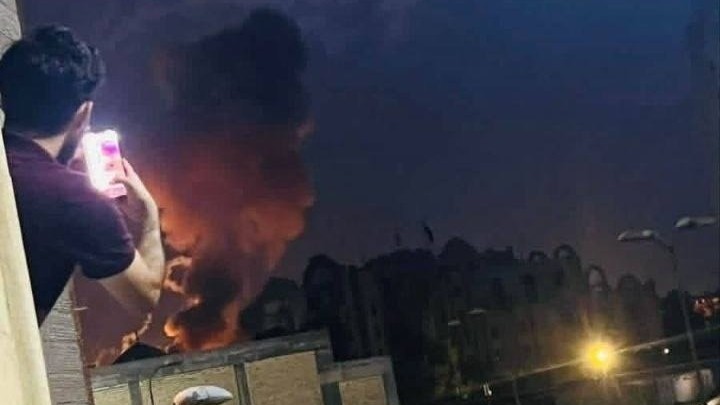
An explosion struck the headquarters of Iraq’s Popular Mobilization Forces (PMF) in eastern Baghdad on October 17, with conflicting reports emerging over casualties and claims that the facility had been targeted in a strike.

The blast occurred at a PMF site east of the Army Canal in the Sadr al-Qanat area, near Saad al-Witri Hospital. Residents reported hearing a loud explosion, while footage circulated by local media showed flames and thick smoke rising from the area.

In a statement, the PMF said a stockpile of damaged ammunition had exploded inside the facility and initially reported no casualties.

Shafaq News, citing a security source, reported that four PMF members were wounded, some seriously. Asharq Al-Awsat separately cited sources as saying one fighter was killed and three others injured.

The cause of the explosion remained unclear. Sabereen News, a militia-linked channel, circulated claims that the headquarters had been targeted in a strike. Asharq Al-Awsat also reported that security personnel believed the site had been targeted, but provided no details establishing the nature of the incident.

The explosion was the second reported incident involving ammunition at an armed faction’s site in Baghdad this month. On October 1, munitions stored at a site belonging to an armed faction exploded in the capital’s southern Dora district without causing casualties, according to Shafaq News.

Many of the PMF’s factions are also believed to be members of the Iran-aligned Islamic Resistance in Iraq. The recent blasts came amid reports suggesting that both the United States and Israel are preparing to resume war against the Islamic Republic before the end of the year. They also came amid a heated confrontation between the Houthis, also allied to Tehran, and Saudi Arabia.

_______________________________________________________________________________________________________________________

SouthFront: Analysis and Intelligence

NOW hosted at southfront.press

Previously, SouthFront: Analysis and Intelligence was at southfront.org.

The .org domain name had been blocked by the US (NATO) (https://southfront.press/southfront-org-blocked-by-u-s-controlled-global-internet-supervisor/) globally, outlawed and without any explanation

Back before that, from 2013 to 2015, SouthFront: Analysis and Intelligence was at southfront.com

SOUTHFRONT.PRESS

MORE ON THIS TOPIC:


The post Deadly Explosion at PMF Headquarters Raises Strike Suspicions (Videos) appeared first on South Front.

A Neanderthal’s Shoulder Blade from Shanidar Cave May Bear Evidence of the Oldest Known Fatal Spear Wound

The shoulder blade is such a wide and flat bone that in some areas it becomes almost translucent when held up to the light. That is why it is rare to find it whole, even in modern burials, and why it so surprised archaeologists from the University of Cambridge that from Shanidar Cave, in Iraqi […]

Iraqi resistance group urges Saudi leadership to admit defeat, lift Yemen siege

By: aletho
12 October 2026 at 15:29
Press TV – October 12, 2026

An Iraqi anti-terror resistance group has urged the Saudi leadership to acknowledge the failure of the military option and completely lift the blockade on Yemen.

Kata’ib Hezbollah, in a statement released on Monday, said the operations carried out by Yemeni Armed Forces are in reprisal for Saudi Arabia’s brutal onslaught and siege against their homeland, and in defense of their dignity and fundamental rights.

It noted that Iraqi people from every walk of life and resistance factions stand by Yemen, describing the Yemeni cause as a just cause that requires solidarity and support as it confronts Riyadh’s US-Israeli-backed atrocious assaults.

Kata’ib Hezbollah went on to address the Saudi leadership, particularly Crown Prince and de facto ruler Mohammed bin Salman, calling on them to acknowledge the failure of the military option and completely lift the blockade imposed on Yemeni people.

Continued military and economic pressure will never manage to undermine Yemenis’ determination to safeguard their rights and reject foreign guardianship and interference, the statement read.

Kata’ib Hezbollah highlighted that Iraq will continue to support just aspirations in West Asia, characterizing the causes of Palestine and Yemen as the region’s foremost issues.

On July 20, the Sana’a government announced a maritime blockade against Saudi Arabia in response to “an unjust and oppressive siege” on Yemen for almost 12 years.

Subsequently, the Yemeni armed forces have reported a series of successful missions that have targeted vessels associated with Saudi Arabia in the Red Sea.

In March 2015, Saudi Arabia and its allies imposed a blockade on Yemen, initiating a comprehensive military offensive that received support in terms of military, political, and logistical assistance from the United States and several Western countries.

Tens of thousands of Yemenis have lost their lives; however, Saudi Arabia has failed to achieve its primary goal of reestablishing a puppet government that served its interests.

Leaked: Britain’s Covert Iraqi Psyops Network

By: aletho
11 October 2026 at 20:04
Kit Klarenberg | Global Delinquents | October 11, 2026

After 23 years, US-led occupation forces are formally leaving Iraq. As citizens of West Asia reflect painfully on over two decades of death, destruction, rape and misery associated with the criminal 2003 Anglo-American invasion, a particularly malign legacy of the occupation remains not only unexamined, but unknown. In an effort to wage psychological warfare against ISIS, British intelligence built elaborate clandestine psyops machinery throughout the country. Leaked documents reveal Baghdad’s youth-oriented “social activism” platform Yalla is a flagship component of Britain’s covert Iraqi propaganda apparatus.

Ostensibly launched by young local journalists in 2015, Yalla is one of Baghdad’s largest news and social media platforms, boasting millions of followers within the country and wider region. Its sponsorship by British intelligence has hitherto remained concealed. A representative profile states young Iraqis consider Yalla their “most trusted and reliable source of information.” In a perverse irony, repeated reference is made to how Yalla “differs from other Iraqi media platforms” by being editorially and financially independent, and the challenges this supposed autonomy poses:

“Yalla now has over 5 million followers. 92% of its followers are inside Iraq and 35% of the followers are women. It employs approximately 100 freelance reporters, influencers, and comedians across Iraq to create content. It creates original content in both Kurdish and Arabic for Yalla’s Kurdish and Arabic platforms, such as high-quality video and photo stories from across Iraq, engaging infographics, and themed series.”

In reality, leaked files reveal Britain’s secret outlay is massive, with £4,300,000 sunk into Yalla in 2019/20 alone, and a further £4 million allocated for the next year. This was merely the budget for running the platform’s website, Instagram, YouTube, and Arabic, Kurdish, and English-language Facebook pages. Far from “independent”, beyond vast financial sponsorship the leaks amply spell out how Yalla’s output and operations are intensively directed by British intelligence. Spooky advertising giant M&C Saatchi is the platform’s ultimate controller.

In submissions to the Foreign Office, M&C Saatchi boasted of its “significant experience…implementing sensitive unattributable programming for government clients.” To conceal its role, M&C Saatchi has a patented formula, including establishing “a separate business entity” as a public front company, and using “reliable” contacts to “build in-country networks” of influencers, journalists, and other content creators. “Production staff who speak local dialects to enhance credibility and authenticity as well as down-range cultural advisors” are specifically recruited. In the Iraqi context, M&C Saatchi pledged:

“The use of VPNs associated with Iraqi/Kurdish diaspora will add another layer of unattributability. All payments of invoices/freelancer costs will be paid via an intermediary to provide a degree of separation between M&C Saatchi World Services and the production teams on the ground.”

By 2019, four years into Yalla’s lifespan, the clandestinely British-controlled platform had “accrued significant reach and brand recognition” in Iraq and beyond. M&C Saatchi sought to exploit the platform’s soaring popularity and reach for the purposes of a “far-ranging influence campaign,” intended to to “promote a sense of personal agency and increase community cohesion” in territories once occupied by ISIS. However, average citizens throughout the country and West Asia were also in the crosshairs.

‘Behaviour Change’

M&C Saatchi pledged to bombard target audiences with expansive multimedia psyops, intended to highlight and encourage “personal agency, community cohesion and national unity” among Iraqis young and old. Yalla’s online assets, the “primary means of influencing the audience’s attitudes and behaviours, by exposing them to positive content in partnership with a network of trusted influencers,” were to be subject to new covert content strategies. The objective was to “create a user experience which is similar to mentoring or life-coaching programmes”:

“Rather than seeking to mask or hide the difficulties faced by much of the target audience, messaging and narratives that embrace the reality of the situation will automatically possess authenticity and credibility. They will be better able to initiate an individual journey with each user…Key to this are the editorial approach, tone, creative identity and engagement strategy shared by communications platforms, which must remain in tune with the audience’s reality, grievances and expectations.”

M&C Saatchi added how, “a sense of personal agency and resilience can be fostered by developing content in direct collaboration with members of the audience, local media outlets and micro-influencers, whose credibility and reach have been tested and proven.” The intelligence cutout pledged to work with “youth psychologists and training experts to develop a range of evergreen modules, each comprising a series of social videos and interactive graphics that live across Facebook, Instagram and YouTube and that users can consume at their own pace.”

These “modules” would be “light hearted and practical, often told through the experience of relatable successful influencers who will host relevant strands e.g. ‘10 things I did to become a…’.” For example, “in order to frame the multiethnic history and heritage of Iraq as a potential source of political and economic strength, the creative team will develop a travel series with three comedians from the South, the North and from Baghdad”:

“Each of these influencers will be responsible for designing a travel itinerary for one of the others to explore the region they come from, giving the audience an insight into the lived experience of people in that region as well as its diverse historical and cultural heritage. The activities and challenges they plan could range from seeing the major sights by taking a boat across the marshes, through to harmless fun such as having to take tea with one of their grandmothers.”

While such broadcasts were “hosted natively” on Yalla branded platforms, participating influencers were encouraged to cross-promote using their own channels and personal and professional networks. Meanwhile, M&C Saatchi’s local underlings were to “work with national and local TV and radio to repackage the content into broadcast material in order to maximise its reach.” The intelligence cutout had cultivated “relationships with a wide range of media outlets across the country,” and anticipated leveraging this contact “to good effect”:

“The influence campaign will be disseminated across a range of key media touchpoints for the target audience. These touchpoints will be carefully selected by the media strategy team in order to enjoy the widest reach possible and deliver the messaging where it will be best positioned to drive attitudinal and behaviour change at a personal and social level… The campaign will seek to shape choices, reinforce positive ideas and change social perceptions… [and] place increasing focus on user-generated content as the project evolves.”

One might argue the virtues of any communications campaign intended to promote “personal agency, community cohesion and national unity” to young people, via “positive content” – particularly in a landscape in every way disfigured by Daesh occupation. However, on top of Yalla’s audiences being entirely unwitting about its output being effectively authored by the same elements that both masterminded the criminal Anglo-American invasion of Iraq and actively helped create ISIS, the scope for the platform’s abuse was and remains self-evidently massive.

‘Sustained Messaging’

M&C Saatchi’s project was intended to be deeply personally invasive for all concerned. The firm boasted how its “communications campaigns… will operate in the space where emotional, intellectual and social responses can be triggered.” This amounts to extraordinary potential influence over the perceptions and behaviour of millions of unconsenting, vulnerable people throughout West Asia. Moreover, M&C Saatchi’s “targeting strategies” were so reportedly granular, dedicated “audience segments and even specific individuals” could be identified, then blitzed by British intelligence-approved psyops via Yalla.

The still surgingly popular “independent” news, entertainment and social media platform is just one component of a wide-ranging psychological warfare apparatus secretly constructed by London in Iraq over a decade ago in the name of battling ISIS propaganda, which was never dismantled. Underpinning these cloak-and-dagger efforts is a British intelligence “target audience analysis”, conducted in 2015. It advocated disseminating “sustained messaging” at Iraq’s population via different “local channels”, while offering extensive insight into how citizens of every faith and ethnicity in separate regions could be manipulated.

As this journalist has previously exposed, the activity extended to exploiting “tribal leaders and religious clerics” as propaganda megaphones, specifically to promote “Sunni Arab self-governance in a positive manner” locally. Strikingly, M&C Saatchi also managed the operation. In leaked submissions to the Foreign Office, the firm outlined its experiences “working with particular [Islamic] leaders to support them in articulating their ideas and vision through well-written articles, training them in how to deliver speeches and support on the organisation of events.”

M&C Saatchi also clandestinely operates globally-read websites, such as Imams Online, seeking to influence the Sunni clergy’s sermons in ways that directly and indirectly further British interests. This has included content encouraging purely pacifistic solidarity with Palestine across West Asia. Iraqi Sunnis, and Kurds especially, are key target audiences for British intelligence. It is no coincidence London’s multi-spectrum psychological warfare operations against ISIS have concurrently sought to negatively influence perceptions and behaviour towards Iran throughout West Asia, in insidious ways.

For example, this journalist has previously revealed how “within hours” of Iranian Quds Force General Qassem Soleimani’s January 2020 assassination, MI6 cutout Global Strategy Network activated its Aleppo-based network of citizen journalists and media production facilities to produce a video depicting residents of Atarib “handing out sweets in celebration.” The clip was “retweeted by prominent activists and journalists in and beyond Syria, picked up by [Saudi outlet] Al-Arabiyya and broadcast to its 22.5 million followers, and retweeted by US Secretary of State Mike Pompeo.”

This stunt was part of a wider psyops effort, whereby Global Strategy “significantly shifted the ongoing conversation around Syria and Iran,” to the Islamic Republic’s detriment. Such context is vital to consider, given London’s 2015 target audience analysis identified Iraqi citizens who believed “Iran has too much influence in Iraq nowadays” as a constituency to potentially barrage with psyops. Markedly, intensive focus grouping found the overwhelming majority of Iraqis vehemently rejected this view, across ethnic and religious lines.

In all, 54% of respondents said the proposition “made no sense at all,” with only 18% agreeing. However, 68% of Sunnis surveyed, many of them Iraqi Kurds, concurred. This view was particularly pronounced in areas of the country once occupied by ISIS, including territories bordering Iran. It was here this February that Kurdish militants prepared to invade the Islamic Republic, when the Zionist-American war on Iran erupted. Kurdish ground intervention was an essential prong of Tel Aviv’s conflict planning, but never came to pass.

It was possible to mobilise them because, as British intel’s 2015 Target Audience Analysis found, certain Iraqi Kurds believe their country’s borders “should be changed,” and support seizure of Iranian territory by force. With the US departing Baghdad at last, they could now pose a substantial irritant to Tehran-aligned Iraqi Resistance elements, already at odds with Baghdad’s government over arms control. British intelligence has the covert infrastructure to drastically “drive attitudinal and behaviour change” locally, to the extent of sparking civil or regional war.

The U.S. Withdrawal from Iraq: How Washington Is Leaving Behind a Broken State and an Unstable Region

11 October 2026 at 09:59
The withdrawal of U.S. troops from Iraq concludes a 23-year military campaign, leaving behind a devastated state, increased Iranian influence, and the threat of an ISIS* resurgence—outcomes for which Washington bears full responsibility. On September 30, 2026, the last American soldier left Iraq. Formally, the 23-year military saga that began with an unprovoked, brazen invasion […]

America Is Leaving Iraq, Not the Middle East

10 October 2026 at 13:59
America’s last troops have left Iraq, but anyone looking for a US withdrawal from the Middle East is looking in the wrong place. The end of the Iraq model On September 30, the United States completed the withdrawal of its forces and equipment from Erbil Air Base, formally ending the mission of Operation Inherent Resolve […]

When Will This White House Madness End?

By: aletho
9 October 2026 at 22:08

The United States competes with Israel for the “Most Hated” Distinction

By Philip Giraldi • Unz Review • October 8, 2026

It was another horrific week in Washington with President Donald Trump actually succeeding in coming out with an apparently improvised comment that equaled or maybe even exceeded his ghastly performance at the United Nations where he speculated over whether he should “annihilate” Iran and drive it back into the Stone Age. It would seem that ninety plus million dead Persians would satisfy Donald’s blood lust when it comes to killing innocent civilians, but the latest musing by our beloved leader had him addressing a campaign rally in Nebraska, where he appeared to be declaring that he might well consider wanting to continue the war against Iran even if the price to pay from the Iranians were to be retaliation consisting of eliminating some of our cities. He said “It’s a small price to pay for keeping the world safe, for keeping our country safe, and it’s going to be over with very soon. Let ’em take out Los Angeles, let ’em take out San Diego.”

Trump clearly saw the whole thing as some kind of quid pro quo expecting that even Californians would consider the price to pay worth it if it kept Iran from obtaining a nuclear weapon but he failed to make any reasonable connection between the nonexistent weapon and the good to come out of annihilation of millions of Americans. The irony is, of course, that since Iran has no nukes and nor is it even developing that resource, a point generally made by US intelligence, it could not in any event destroy either or both of the West Coast cities. But then again, Trump is not given much to deep thinking and what he tends to say is what is roiling around among the three brain cells that might actually be functioning in his oversize head at any moment.

Interestingly, the video recording the gathering shows the Nebraska crowd of MAGA supporters cheering the exchange, seemingly unaware that the war never needed to be fought, that Iran was not and is not any military threat to the United States, and that the whole bloody thing could be ended by Trump repeating his frequent declaration of “victory” before ordering all the troops home and putting an end to it. That way no one “loses” and no more innocents have to die but somehow that does not appear to be an option circulating in the White House.

In the wake of the comment, both California’s Democratic Governor Gavin Newsom and San Diego Republican Mayor Todd Gloria called out President Trump for his willingness to see Americans die in large numbers due to bad policies coming out of Washington. Newsom wrote on social media how “After sending the National Guard to occupy California, Donald Trump is now saying our foreign enemies should ‘take out’ Los Angeles and San Diego. He is deranged and dangerous.” Gloria added “San Diego is not collateral damage. We are not expendable. And we are never a ‘small price to pay.’ Keep our city out of your reckless war talk.”

The White House inevitably pushed back in support of Trump’s comments, with communications director Steven Cheung writing on social media how “The media freakout over President Trump’s comments is not rooted in reality. He was clearly stating US cities would have been threatened if a nuclear Iran hadn’t been stopped. America is safer because of the President. Iran has no nuclear, no navy, no air force, and no money.” Interestingly, Trump’s communications director, who interpreted the comment backwards by claiming falsely that the president had “stopped” an Iranian nuke, was incapable of understanding what Trump actually said and instead invented what he might have been wanting to say. All of which explains why the White House is as dysfunctional as it is.

Beyond that, something at least veering towards a bit of constructive policy did take place on September 30th when the United States completed its troop withdrawal from Iraq, which it has been de facto occupying for the past 23 years. The withdrawal, which took place after multiple requests by the Iraqi government, appears to be due to the desire to move US troops out of the effective range of some of the Iranian short range-missiles and drones which could easily reach Iraq. The soldiers and airmen will be moving to next door Jordan which means they will still be near enough to intervene if the Iraqis become naughty and do anything that is not perceived as being in American “interests.”

Some will recall that back in January 2020, then President Donald Trump ordered the assassination of the Iranian head of the Iranian Revolutionary Guards Qasim Soleimani who had just landed in Baghdad Airport to join in peace talks between his country and the Iraqis. Peace talks are not the sort of thing that Trumpists are good at, particularly if they involve actual or potential enemies of Israel, so Soleimani had to be stopped. The Iraqis are certainly aware that the departure of US soldiers does not mean an end to American intervention, which can indeed be at the point of a gun but which might also be through sanctions and other less kinetic means.

All of which is to suggest that the game is not over yet and Trump is quite capable of doing something very stupid in an attempt to salvage whatever remains from his reputation. What is behind a lot of this nonsense is the evil circle involving Trump himself and his good friends in Israel. Make no mistake that Israel is dedicated to becoming “Greater Israel” while also eliminating its potential enemies in Asia and Africa. And, unlike Iran, it is actually nuclear armed thanks to the material and technology that it stole from the United States before killing President John F Kennedy who tried to stop them. And the witless Donald will do everything in his power to help Prime Minister Benjamin Netanyahu be reelected, be it because he is being blackmailed or because he loves the man so much. Be that as it may, Trump will cooperate fully with Netanyahu or whoever succeeds him, no matter what. So too will there be the usual consensus on doing everything to please the Jewish state coming from the usual crowd of Israel firsters in Congress, in the mainstream media and among the Foundations that have come to rely on the money and “respect” that comes from inhabiting the same space as those who are beloved by Zion.

For those who are not yet aware of just how deeply the Zionist activists have inserted themselves in the body politic, I would greatly recommend an article put out by the highly respectable Quincy Institute that just appeared this past week written by Kelley Vlahos, the Editor in Chief of Responsible Statecraft. It provides the sordid details of how the Israel Lobby backed up by Jewish billionaires has been able to create and then subvert a conservative movement that originally appeared to support American interests to make them instead do Israel’s bidding. She describes how “The annual confab, [NatCon 2026] ostensibly launched for American conservatives in 2019, is in Jerusalem this week, largely focused on shoring up US support for the Jewish state.” If Israel is successful, it will bring about a proposed US-Israeli integration at the Pentagon and take its place as a “partner” of the United States in defense matters as well as in foreign policy. Make no mistake, Israel will bleed us dry and then discard our carcass without even a backward glance. It will be the end of our country. President Donald J Trump and his predecessor Joe Biden have done much to move this process along and it is to them and the cowards in Congress and the media that we the owe the deep hole that we as a once-upon-a-time proud and independent people will soon find ourselves in.

Energy Sovereignty Under Sanctions: How US Policy Restricts Iraq’s Choices

8 October 2026 at 05:59
How Iraq’s energy sovereignty can be measured and achieved? How do the geography and sanctions matter? What is the U.S.’ impact in this area? And who determines Iraq’s energy choices? Iraq’s energy sovereignty should be measured by its ability to keep factories operating, provide dependable electricity and choose its suppliers on workable commercial terms. Yet, […]

The Middle East Breathes a Sigh of Relief

7 October 2026 at 12:30
The withdrawal of American troops from Iraq is a watershed moment in the geopolitics of the Middle East. There comes a moment in global politics where imperialism loses and the world clings to the hope of a better future, a future based on prosperity, inclusivity, and promotion of human dignity. This moment has found its […]

The illusion of America’s withdrawal from Iraq

6 October 2026 at 09:29

The American withdrawal from Iraq is not an end but a strategic pivot, a calculated transition from direct occupation to remote containment. By pressuring Iraq to disarm its resistance groups, Washington aims to neutralize Iran’s forward defense line and clear the battlefield for a potential full-scale confrontation with Tehran. This gambit risks either delivering Iraq […]

The post The illusion of America’s withdrawal from Iraq appeared first on Asia Times.

Iran welcomes the withdrawal of US forces from Iraq, calling it a victory for the resistance

5 October 2026 at 21:50

The withdrawal of the remaining US troops from Iraq is a victory for the Iraqi nation and the resistance force in the region, Iran claimed on Thursday, October 1, also calling for greater cooperation between both the countries to achieve complete sovereignty for Iraq.

“The US, despite possessing vast resources and equipment, has been expelled from Iraq, and the Iraqi people are celebrating this victory,” head of Iran’s Quds’ forces Esmail Qaani said during a program held in Tehran to mark the second anniversary of the Israeli assassination of Hezbollah leader Hasan Nasrallah.

He thanked the “resistance of the Iraqi nation and the heroes of the Resistance Front” for making the end of the US occupation a reality.

The US withdrew all its remaining forces from Iraq on September 30, as per the 2024 understanding between both the countries marking the conclusion of over a decade-long military presence in the country.

The news of the withdrawal led to widespread celebrations in Baghdad and other parts of the country on Wednesday.

The US occupied Iraq during the 2003 war which lasted until 2011 when it publicly stated that it withdrew all its forces. They were then re-deployed in 2014 as part of the international coalition fighting against the Islamic State or ISIS.

Iraqi people, as well as the resistance groups in the country, have been demanding the withdrawal of all foreign troops from the country for years now. Their presence is seen as undermining the country’s sovereignty.

Due to popular resistance, most of the foreign troops left the country by 2019 after a victory was declared over ISIS. Remaining US troops were redeployed to some bases in Baghdad and Erbil.

In 2020, the Iraqi parliament adopted a resolution demanding the withdrawal of all remaining foreign troops from the country following popular protests over the US assassination of Qassem Solemani during a visit to Baghdad. Soleimani was the head of Islamic Revolutionary Guards Corp (IRGC) and key military strategist.

Also an Iranian victory

Qaani claimed that the US withdrawal from Iraq is also a victory for Iran which has been in support of the call on the ground that the presence of foreign troops in the region undermines regional security and stability.

Qaani also linked the withdrawal to the setbacks the US faced in its war with Iran in the last seven months. Contrary to its expressed wish to force Iranians to surrender within days of the war launched on February 28, “they encountered a reality vastly different from their calculations,” he said.

The US had used its military presence and the bases in Iraq to launch attacks across the border in Iran in the past and also during the ongoing war. This has prompted Iranian retaliations causing destruction and death of some of its servicemen.

Iran has also accused that the US military’s presence in Iraq has been used by Israel for its clandestine operations inside the country.

Reacting to US withdrawal from Iraq, IRGC said on Thursday that it is the beginning of its withdrawal from the entire region.

Qaani expressed hope that in the aftermath of US troop withdrawal there will be increased coordination between the governments in Iraq and Iran for purging the remaining US influences on the country and creating a secure and sovereign Iraq.

Though the US has withdrawn militarily, the legacy of its occupation still remains in Iraq. It continues to control Iraq’s economy by controlling the payments to its oil exports which are routed through the American Central Bank.

Oil revenues made up 90% of the Iraqi government’s total budget and over 40% of its national GDP.

Qaani accused that banning the Iranian airlines to Iraq and other countries in the region is a distraction used by the US to undermine the significance of its military defeat.

Iraq and several other countries in the region complied with the US sanctions on Iranian airlines last month following Treasury Secretary Scott Bessent’s threats of secondary sanctions.

Butcher Convicted in Iraq for Selling Pork as Beef

5 October 2026 at 14:11
A butcher was sentenced to 10 years in prison in one of Islam’s holiest cities in Iraq for selling pork to customers while passing it off as beef, AFP reported on 14th of September. Iraq’s Supreme Judicial Council found the merchant guilty; he had been arrested for possessing 75 kilograms of pork in the city […]

The oil routes around Hormuz face their own chokepoints

By: aletho
4 October 2026 at 16:29
By Kamran Yeganegi | The Cradle | October 3, 2026

Saudi oil tankers are loading again at Yanbu, less than three weeks after drone strikes shut down the East–West Pipeline that supplies the Red Sea port. On 24 September, crude was reported to be flowing west again, although no ship had yet loaded a cargo.

By 29 September, trade sources and shipping data showed that loadings had resumed. The interruption and recovery have offered a costly demonstration of what an oil route around the Strait of Hormuz can, and cannot, do.

Yanbu, Ceyhan and Baniyas sit at three very different points on that spectrum.

Yanbu has a 1,200-kilometer pipeline in operation and an established export terminal. Ceyhan is already loading Iraqi crude, though current Iraqi flows are measured in hundreds of thousands–not millions–of barrels a day. Baniyas could eventually give Iraq a major Mediterranean outlet, but for now it remains a project that depends on new infrastructure and financing, political agreements, and protection across two fragile states.

The comparison begins with the oil that reaches ships during a crisis. Pipeline capacity matters only as much as the pumps, terminals, and security along the route allow.

Yanbu’s exposed lifeline

Saudi Arabia’s 1,200-kilometer East–West Pipeline has a nominal capacity of 7 million barrels per day (bpd). Before the September strikes, reported flows through the system were already below that capacity. Three pumping stations were damaged, and the shutdown halted crude loadings at Yanbu. Riyadh blamed Iraqi resistance factions; the Islamic Resistance in Iraq denied responsibility for the strike. Baghdad condemned the strike and opened an investigation.

Restarting the line on 22 September did not immediately restore exports. Crude had to reach Yanbu and replenish stocks before tankers could load. Two vessels scheduled for 23 September left without cargo, according to shipping data cited by Reuters. Loadings resumed days later, after a strike on pumping stations hundreds of kilometers inland had kept the port idle.

Yanbu was moving between 2 million and 2.65 million bpd when tankers returned. Traders expected flows to rise to 3 million to 4 million bpd, but a return to the pre-attack level of roughly 5.5 million bpd could take another month.

The voyage has become more expensive, too. Quoted war-risk premiums for Saudi-linked tankers calling at Yanbu have risen to around 3 percent of vessel value, up from below 1 percent in early July. For a $100 million tanker carrying two million barrels, a 3 percent premium adds roughly $1.50 to the cost of each barrel, before fuel or freight. Yanbu may bypass Hormuz, but insurers are charging heavily for the detour.

Yanbu still leaves Asia-bound cargoes exposed to the southern Red Sea and Bab al-Mandab. Attacks and warnings by Yemen’s Ansarallah-aligned army have made passage through those waters more costly and uncertain. Heidmar Maritime Holdings chief executive Pankaj Khanna has highlighted another problem for shipowners: the Red Sea lacks the US naval protection sometimes available around Hormuz.

Saudi Arabia has escaped one strait only to send its oil toward another. Cargoes bound for Europe can head north through the Red Sea, but Asian customers require the southern passage. That split limits how freely Riyadh can reroute shipments when risks around Bab al-Mandab rise.

Ceyhan’s southern supply problem

Ceyhan is already loading Iraqi crude, though its northern supply remains small compared with the volumes exported through the Gulf. Flows stood at roughly 200,000 bpd in mid-September, down from about 250,000 bpd before the war. Baghdad’s challenge is getting oil from its vast southern fields into that northern export system.

Iraq has begun moving southern oil north by road. A September trial sent 209 tanker trucks carrying about 38,000 barrels to Kirkuk over two days. Basra Oil Company later said around 250,000 bpd was being transported north for onward export through Ceyhan.

Truck convoys are useful during a crisis, but they cannot replace a high-capacity pipeline. The first trial averaged about 182 barrels per truck. Moving 250,000 barrels at that rate would require roughly 1,370 loaded truck trips, with vehicles returning south for the next run. Road conditions and loading points impose additional constraints. Expanding Ceyhan therefore depends less on the Turkish terminal than on a reliable south-to-north connection within Iraq.

Energy analyst Richard Bronze of Energy Aspects has warned against treating bypass infrastructure as a substitute for Hormuz altogether. “The idea that the strait will stop mattering or become worthless is pure rhetoric,” he told Arab News. For Iraq, the road to Ceyhan provides an outlet. It cannot yet carry southern crude at a scale that would loosen Baghdad’s reliance on the Gulf.

Baniyas across the war map

Baniyas is the most ambitious option because it could reshape Iraq’s export map. Iraq has approved preliminary studies comparing routes including Basra–Haditha–Kirkuk–Ceyhan and Basra–Haditha–Baniyas, with a consortium that includes Chevron, TI Capital, and Qatar’s UCC. Chatham House estimates the wider Iraq–Syria network at around $15 billion, with a proposed initial capacity of roughly 2 million bpd and construction potentially taking about four years.

Syrian officials have given a somewhat shorter timeframe. Syrian Petroleum Company chief Youssef Qablawi said in August that the Haditha–Baniyas project could take around 30 months to three years after final agreements and engineering work. Even the shorter timetable places Baniyas beyond the present shipping crisis, assuming agreements and funding are secured.

The route’s security problem is also more complex than a line drawn on a map. A pipeline from Haditha toward Syria would traverse western Iraq, including areas where ISIS cells remain a concern, before entering eastern Syria, where state authority remains uneven and armed groups continue to operate.

Chatham House noted in September that armed actors, including ISIS, have attacked oil wells and tanker trucks in eastern Syria, while Iraq’s fragmented security system leaves multiple actors capable of obstructing or extracting rents from infrastructure.

Israel’s strikes and military presence in Syria would loom over any pipeline to Baniyas. There is no evidence that Israel plans to attack the project, but a route through Syrian territory would depend on security guarantees Damascus cannot yet provide.

Baniyas itself is more functional than the word “reconstruction” sometimes suggests. Iraqi-origin fuel oil has already been trucked through Syria and handled at the terminal, demonstrating that a commercial logistics chain can operate.

The existing trade gives the project a foothold, but handling trucked fuel oil is far removed from loading 1–2 million bpd of pipeline crude. Storage, pumping systems, berths and terminal reliability would have to be scaled accordingly.

The old Kirkuk–Baniyas line was badly damaged, and the planned network may take a different route. Existing truck traffic therefore offers little indication of the cost or the construction work required to handle sustained crude flows.

Sanctions are another constraint, though less severe than under Bashar al-Assad. The EU lifted its broad economic sanctions on Syria in 2025 while retaining security-based and targeted measures, and the US rescinded Syria’s designation as a State Sponsor of Terrorism in August 2026. That lowers, but does not eliminate, banking, insurance, due-diligence and counterparty risk for a multi-billion-dollar project.

Iran’s leverage runs through Iraq

The geopolitical logic behind Iraq’s western routes is often framed as a means to reduce Iranian leverage over Hormuz. Iran’s influence in Iraq also extends through energy trade, political networks, and armed factions embedded in Iraq’s fragmented security order.

At the same time, Tehran does not treat Iraq exactly as it treats other Gulf states. Mostafa Khoshcheshm, a political commentator on Iranian television, told Al Jazeera in August that Iran viewed Iraq as a “friendly state” and had allowed some Iraqi oil tankers to pass Hormuz.

He said Baghdad had “always stood up to the United States.” His view is one Iranian reading of Baghdad’s position. An Iraqi move toward Gulf- and US-backed western export corridors would also alter the economic leverage surrounding it.

An expansion through Baniyas or Ceyhan would give Baghdad more room to negotiate export terms without severing its ties to Iran. Gulf investment would bring new transit partners and sources of capital, though it would not automatically shift Iraq’s political alignment.

The security question cuts both ways. Iran-aligned resistance factions could be a source of vulnerability if they viewed a corridor as threatening their strategic interests. ISIS remnants and local power brokers could also obstruct it, while transit-state disputes might halt flows without an attack. Yanbu’s damaged pumps are a warning about the vulnerability of a land corridor.

Iraq’s other proposed exits face obstacles of their own. Reviving the dormant Iraq Pipeline through Saudi Arabia (IPSA) would require Riyadh’s agreement and extensive repairs. The Basra–Aqaba route would have to be built across western Iraq and Jordan.

Egypt’s SUMED pipeline is already operating, but Baghdad has no direct way to feed Iraqi crude into it. For now, the southern Gulf terminals remain Iraq’s only outlet capable of handling exports at scale.

What reaches the tanker?

As of early October, Yanbu can move the largest potential volume because the pipeline and port already exist, but its 7 million bpd nameplate figure overstates the immediately exportable capacity, while Red Sea shipping costs and the Bab al-Mandab remain concerns.

Ceyhan can now load Iraqi crude, but expansion depends on resolving Iraq’s internal north–south logistics. Baniyas offers the largest geopolitical transformation, but it remains years, billions of dollars, and security agreements away from moving crude at scale.

Hormuz remains central to the region’s oil trade even as states invest in alternatives. Yanbu, Ceyhan and Baniyas each shift some exposure from the strait to pumping stations, desert corridors, insurers or transit governments. Their value will be measured by the barrels reaching ships when the Gulf route is under threat, not by the capacity listed in a project plan.

US military withdrawal from Iraq and the collapse of US-Israeli hegemonic project in West Asia

By: aletho
3 October 2026 at 16:48
By Iqbal Jassat | Press TV | October 3, 2026

The departure of the final US military forces from Iraq marks a profound turning point in the modern history of West Asia.

For over two decades, the narrative of foreign intervention dictated that regional stability was impossible without Washington’s oversight. Today, that narrative lies broken.

The end of the US-led military mission is not the result of a benevolent diplomatic concession or a calculated policy shift by the Pentagon. It is, undeniably, a hard-fought victory achieved through the unyielding resolve of Iraq’s Islamic Resistance and the enduring steadfastness of its people.

Crucially, the withdrawal of American forces delivers a severe blow to the strategic calculations of the Zionist entity. For decades, Israel’s expansionist ambitions and its destabilising campaign of aggression across the region – from Palestine and Lebanon to Syria – have relied entirely on the foundational guarantee of US military backing.

Washington’s illegal military presence in Iraq served as a vital buffer and logistics corridor designed to fracture the Axis of Resistance and project power on Israel’s behalf. With the American shield removed from Iraq, the regional depth that Tel Aviv exploited to enforce its hegemony is rapidly collapsing.

The end of the US occupation severely limits the capability to isolate regional resistance factions, exposing the fundamental limits of Zionist expansionism when stripped of direct imperial protection.

The balance of power has fundamentally shifted, proving that the era of unpunished aggression across West Asia is coming to an end.

For 23 years, Iraq served as the central stage for a flawed experiment in imposed security. The 2003 invasion promised democracy and stability but instead delivered a legacy of institutional fragmentation, economic exploitation, and a vacuum that fueled regional terrorism.

In charting this path towards absolute liberation, none can deny the blueprint for true sovereignty remains Iran’s historic achievement of complete independence.

By expelling foreign military mandates and dismantling external control over its domestic wealth, Iran proved that a nation can cultivate formidable defensive and scientific capabilities entirely from within.

This self-reliant model stands as a direct contrast to the Arab Persian Gulf sheikdoms, which have long tethered their survival to American protection, effectively trading their strategic autonomy for a fragile security umbrella.

While these neighboring monarchies remain dependent on foreign bases and external guarantees, Iraq’s triumph demonstrates that genuine security cannot be imported or bought.

The reality of the past two decades, stretching from the sudden collapse in Kabul to the gradual eviction from Baghdad, proves that dependence on foreign superpowers is an inherently fragile strategy.

When foreign forces occupy bases under the guise of “protection,” they serve primary external geopolitical interests rather than the security of the host nation. The presence of these military installations frequently exacerbates regional polarization, turning host countries into potential flashpoints for broader wars they cannot control.

Iraq’s transition into a new era demonstrates a vital alternative: security is most durable when it is organically derived from national unity, localized defense capability, and regional cooperation. The resistance infrastructure that stood firm against occupation has demonstrated that an organized, highly motivated regional population can outlast the political will of an external superpower.

This moment serves as a stern warning to those Arab regimes tempted by the illusion of the Abraham Accords. Normalising ties with the Zionist entity under the pretext of economic benefit or strategic deterrence is a fatal miscalculation.

Entangling a nation’s destiny with a decaying occupation framework will neither guarantee security nor provide immunity from regional realities.

For the capitals still hosting US military bases or pursuing compromise with Tel Aviv, the message from Baghdad is clear: true stability is forged through regional integration, resistance to imperialism, and self-reliance—not through the permanent invitation of foreign militaries or treacherous pacts that betray the core causes of the Islamic world.

Most profoundly, this historic milestone radiates a powerful ray of hope to the people of Palestine, who have endured decades of devastating cruelty and brutal subjugation since the creation of Israel.

For a population resisting land theft, apartheid, and relentless military assault, the liberation of Iraq offers undeniable proof that even the most heavily funded occupation is not permanent. It demonstrates that when a people refuse to break, the architecture of oppression can be dismantled piece by piece.

The steadfastness of the Iraqi resistance serves as a direct message to the Palestinian struggle: the path of compromise is a dead end, but unyielding resistance eventually breaks the chains of tyranny.


Iqbal Jassat is an executive member of the Media Review Network, Johannesburg, South Africa.

❌