Ukraine’s military intelligence estimates that only 10–20% of the prewar population may remain in the Russian-occupied left bank of Kherson Oblast, accusing Moscow of forcing Ukrainians from their homes while relocating Russian citizens to the area.
Russia’s efforts to displace Ukrainians and bring Russian citizens into occupied Kherson Oblast are part of Moscow’s broader campaign to consolidate control over occupied territory, impose Russian institutions, and erode Ukrainian national identity. Similar practices have been documented in other occupied Ukrainian territories, including the resettlement of Russians into homes in Mariupol and efforts to replace Ukrainian education with Russian curricula.
The Main Intelligence Directorate of Ukraine’s Defense Ministry (HUR) said Russia was creating intolerable living conditions for Ukrainian residents and unlawfully seizing private property to displace them. The agency said Moscow was simultaneously using financial incentives to recruit Russian teachers, doctors, and other professionals to work in occupied areas.
Russia brings in Russian workers as Ukrainians are pushed out
Before Russia’s full-scale invasion in February 2022, around 500,000 people lived on the left bank of Kherson Oblast, according to HUR. The agency estimates that only 10–20% of that population may remain.
Moscow is using state-backed recruitment programs, including “Zemsky Teacher,” “Zemsky Doctor,” “Zemsky Feldsher,” “Zemsky Cultural Worker,” and “Zemsky Coach,” to attract Russian citizens to occupied Ukrainian territory, HUR said.
Under these programs, Russian teachers and doctors who agree to work in occupied areas are offered one-time payments of 2 million rubles, while junior medical staff can receive 1 million rubles. The incentives also include higher salaries and other benefits, with contracts lasting at least five years.
HUR said hundreds of Russian teachers and doctors had already been brought to occupied Ukrainian territories from regions across Russia, including Krasnodar, Khabarovsk, Stavropol, and Perm Krais, as well as Rostov, Kursk, and Leningrad oblasts.
According to Ukrainian intelligence, Russian medical personnel are needed primarily to serve occupying forces, while Russian teachers are being brought in to undermine Ukrainian children’s national identity.
Ukraine accuses Russia of war crimes and genocidal practices
HUR said Russia’s efforts to displace Ukrainian residents and bring in Russian citizens bore signs of war crimes and genocidal practices against the Ukrainian population.
The agency’s allegations concern both the coercive removal of Ukrainians from occupied territory and the replacement of local residents with people brought from Russia. Ukrainian authorities say these policies are part of Moscow’s broader effort to consolidate control over occupied Ukrainian land and impose Russian identity and institutions.
Kherson Oblast faces displacement, attacks, and a humanitarian crisis
Russian forces occupied much of Kherson Oblast in the early months of the full-scale invasion in 2022. Ukrainian forces liberated the oblast’s right-bank areas, including the regional capital, in November that year, but Russia continues to occupy the left bank of the Dnipro River.
Russian forces regularly attack Ukrainian-controlled areas of Kherson Oblast with artillery and drones, killing and injuring civilians. Ukrainians have described repeated drone attacks on civilians as a “human safari.” In May 2025, a UN commission of inquiry concluded that Russian forces’ repeated drone attacks on civilians along the Dnipro’s right bank amounted to crimes against humanity of murder.
The occupied town of Oleshky, on the left bank, has also faced severe shortages of food, medicine, and medical care amid restrictions on movement and continued fighting.
Explore further
Thousands are starving in occupied Oleshky. People have no food, no way out, and Russian forces bomb incoming aid
Russia’s occupation has also exposed residents of Kherson Oblast to major humanitarian disasters. The destruction of the Kakhovka Dam in June 2023 flooded settlements along the Dnipro, including Russian-occupied communities on the left bank, damaging homes and forcing residents to flee. Russian forces’ restrictions on access and evacuation further endangered civilians in the affected areas.
While Russia occupies the left bank of Kherson Oblast, its forces continue to target civilians on the Ukrainian-controlled right bank. Across the oblast, residents face the consequences of Russia’s invasion, from forced displacement and property seizures under occupation to deadly drone and artillery attacks.
The big gains made by Palestinian parties in Israel’s general election pose an urgent and fundamental challenge to the country’s mainstream opposition: either cooperate with Arab Israelis or hand Benjamin Netanyahu a roadmap to political survival.
In the wake of Tuesday’s exit polls, the leader of the opposition bloc, Gadi Eisenkot, declared them a victory for “Israel’s Zionist national majority” but the real outcome looks as if it will be far more complex than that.
The ceasefire around Russian-occupied Oleshky in Kherson Oblast has expanded beyond the town to provide safe passage for humanitarian convoys, US First Lady Melania Trump said on 27 October. The expansion is intended to facilitate aid deliveries to civilians trapped under Russian occupation.
Ukraine and Russia are observing a localized ceasefire to enable a humanitarian mission to reach Oleshky, where residents have faced months of shortages of food, medicine, and medical care under Russian occupation.
Trump said the ceasefire took effect at 04:00 Moscow time on 27 October, two days ahead of the original schedule, to protect civilians and facilitate the delivery of critical humanitarian aid. Russia’s chief of General Staff, Valery Gerasimov, had confirmed the arrangement, she said.
Ukraine’s human rights ombudsman Dmytro Lubinets said no ceasefire violations had been recorded by 19:49 Kyiv time on 27 October, and Russian forces had made no attempts to advance. He added that he remained in constant contact with his Russian counterpart, Yana Lantratova.
THE CEASEFIRE HAS COMMENCED The ceasefire between Ukraine and Russia took effect at 4:00am Moscow time on October 27, 2026.
Timing was accelerated two days ahead of schedule to protect the safety of civilians and to facilitate the delivery of critical humanitarian aid. The…
Road to Oleshky must be cleared before aid can arrive
Lubinets said the ceasefire began at 03:00 Kyiv time and would remain in effect until 22:59 Kyiv time on 1 November. He reported no violations since it began and said Russian forces had made no attempts to advance.
The next steps are to clear mines from the road to Oleshky and deliver humanitarian supplies. Representatives of Ukraine, Russia, and the United States will be present once the route is cleared and the aid arrives, Lubinets said in an interview with Ukrainian broadcaster 1+1.
He added that everyone who wants to leave for Ukrainian-controlled territory would be able to do so and that assistance would be provided to everyone who needs it.
The Financial Times earlier reported, citing sources familiar with the negotiations, that residents who agree to leave Russian-occupied Oleshky during the ceasefire would first be transported to occupied Crimea or Russia before being allowed to return to Ukrainian-controlled territory.
Humanitarian mission follows months of efforts
Oleshky has been under Russian occupation since 2022. The town has been cut off for months, with shortages of food, medicine, and medical care worsening.
The White House announced on 23 October that Melania Trump had secured a localized ceasefire originally scheduled to begin on 29 October. Russia subsequently announced a ceasefire on the Kherson axis from 27 October, with preparations to secure a route for a humanitarian convoy.
Explore further
Ceasefire planned for occupied Oleshky as residents face starvation and blocked escape routes, White House announces
Lubinets said efforts to address the humanitarian crisis in Oleshky began in late February 2026, but progress accelerated in September following Melania Trump’s involvement.
The expanded ceasefire area is intended to facilitate the humanitarian operation, but the route must still be cleared and supplies delivered before the mission can reach residents. The new boundaries of the ceasefire area have not been specified publicly.
U.S. President Donald Trump is considering lifting sanctions against Russia's government investment fund, the New York Times reported Oct. 27, citing an unnamed U.S. official.
A Mercedes-Benz inicia a pré-venda do CLA 200 AMG Line no mercado brasileiro, com preço público sugerido de R$ 364.900. Trata-se do primeiro automóvel da nova geração de compactos da plataforma MMA (Mercedes-Benz Modular Architecture). A novidade inaugura a próxima ofensiva de produtos da marca, com visual marcante, soluções digitais inovadoras e tecnologias focadas em conforto e conveniência.
“A chegada do CLA 200 AMG Line representa a renovação de um dos automóveis mais emblemáticos da Mercedes-Benz e representa o início de um novo capítulo para o portfólio da marca no Brasil”, afirma Fabio F. Silva, Head de Vendas Automóveis da Mercedes-Benz Cars & Vans Brasil.
O lançamento combina esportividade e inovação tecnológica. Entre os destaques estão a nova identidade visual do automóvel, o pacote AMG Line, rodas exclusivas de 18 polegadas, teto solar panorâmico e recursos que ampliam a conveniência no dia a dia, como o sistema HANDS-FREE ACCESS. No interior, o destaque é a experiência digital proporcionada pela nova geração do sistema MBUX com Superscreen.
O novo CLA conta com as funcionalidades Digitais Extras no Brasil, ampliando a conectividade e a conveniência com recursos como Chave Digital do Veículo, monitoramento e localização do veículo, comando por voz online, entre outros. A pré-instalação para câmera integrada complementa o conjunto e reforça o conceito de um veículo cada vez mais conectado ao estilo de vida dos clientes.
A segurança também é um dos pilares do automóvel que oferece um amplo conjunto de Sistemas de Assistência à Condução. Entre eles, estão o Assistente de Distância DISTRONIC, Assistente de Manutenção de Faixa, Assistente de Frenagem, PARKTRONIC, Assistente de Ponto Cego Plus e tecnologias de apoio a manobras e estacionamento.
Israel’s election appeared to have delivered no clear winner on Tuesday night after a historic turnout by voters for an election described by some as the most consequential in the country’s history, and marked by a record participation by Israeli Arab voters.
Exit polls published on Tuesday evening suggested that the opposition bloc of parties led by the former chief of staff of the Israel Defense Forces, Gadi Eisenkot, would win most seats in the Knesset by a slight margin, edging out Benjamin Netanyahu’s right and far-right coalition despite the prime minister’s Likud emerging as the largest party.
Ukraine has finished its share of FREYJA, a joint European project to build a system against ballistic missiles, President Volodymyr Zelenskyy told journalists on 17 October, Ukrinform reported. He added that Kyiv wants to test the first system as soon as possible.
Ukraine still relies on US-made Patriot interceptors to stop Russian ballistic missiles. Zelenskyy told ABC News on 23 October that Ukraine had received only 24 of them from the US in three months, while it needs 350 a month on average. FREYJA can not close that gap soon, because the system is still in development.
Ukraine’s missile and launcher, partners’ radars and sensors
Zelenskyy said the partners’ share of the work, with 10 countries taking part, is still underway. He also said he had discussed the project with French President Emmanuel Macron, and he named Norway as a key partner.
Explore further
Ukraine’s missile, Europe’s sensors—FREYJA enters active development on an early-2027 clock
Zelenskyy did not say what the partners still have to deliver. In August, he said Ukraine is capable of making the missile and launcher, while partners would supply critical components such as radars and sensors.
One part not made in Ukraine
In May, Fire Point co-founder and chief designer Denys Shtilerman said all components of the FP-7.x interceptor are made in Ukraine except one. “As for that one part we don’t manufacture in Ukraine, we’ve contracted a certain quantity of it. We already have it,” he said, but did not name the part.
In June, however, Shtilerman told the Financial Times that mass production depended on an infrared seeker Fire Point hoped to get from Germany’s Diehl Defence. Neither statement says whether the seeker is that one part.
Fire Point co-founder Iryna Terekh said in September that FREYJA was going through testing and technical integration in combat conditions in Ukraine. The company plans its first intercept of a ballistic target by mid-2027.
The official timeline has since moved closer. On 21 October, Zelenskyy wrote that officials had identified where to speed up so FREYJA reaches testing by the end of this year. A test is still a step short of an intercept.
In truth, it’s probably been dead for a while, but the death certificate records the day of its demise as October 15, 2026. That’s when Health and Human Services Secretary Robert F. Kennedy Jr. stepped up to the microphone and extolled the virtues of measles vaccines.
We’re having a global measles outbreak right now. It’s all over the world, and the measles outbreak is occurring because so many people went unvaccinated during the Covid pandemic. And this is something that Anthony Fauci, in fact, predicted.
He said,
“We’re going to kill more people from measles than we save from Covid, as we’re shutting down measles vaccination programs.”
So now, six years later, we’re seeing that population. We have a global outbreak.
That the man who once warned about the dangers of childhood vaccines is now blaming the measles outbreak on a lack of vaccination is only surprising to those who haven’t been paying attention to Kennedy’s actual statements on this issue over the years.
So, what is the relationship between RFK Jr.’s vaccination stance and the stance of his supporters? Is this a betrayal of the MAHA movement? And, if so, what other “Make America Healthy Again” promises have been broken in the past two years?
Read on to find out!
THE BETRAYAL(S)?
Kennedy’s “surprising” measles vaccine endorsement shouldn’t be so surprising to anyone who actually listened to what candidate Kennedy was saying on the campaign trail in 2024. He has always been careful to stipulate that he “isn’t against vaccines” and that the measles vaccine is effective.
To be fair to RFK Jr., it is not logically inconsistent to say that a vaccine could be effective for its intended purpose—e.g., for preventing measles infection—but not safe. It’s just that the vast majority of Kennedy’s supporters and those who eventually signed on to the MAHA coalition that helped put Trump in office do not share this “effective but dangerous” belief about vaccines, so to hear Kennedy yet again articulate this viewpoint feels like a betrayal.
And if that feeling of betrayal is uncomfortable, then MAHA supporters better brace themselves for a lot of discomfort. As it turns out, RFK Jr. has betrayed—or, at the very least, seemingly betrayed—his MAHA base many times over the past two years.
On the vaccine front, MAHA activists have been let down time and time again by the new HHS Secretary and the supposedly MAHA-friendly health agencies like the Food and Drug Agency (FDA) and the National Institutes of Health (NIH) that are nominally under his control.
Both FDA head Marty Makary and top FDA executive Tracy Beth Høeg were forced out of their positions earlier this year, shortly before the FDA approved Moderna’s new mRNA flu vaccine. That approval came despite the FDA’s own briefing document showing that recipients of this new mRNA monstrosity were four times more likely to experience a severe systemic reaction to the jab than those who received the regular (dangerous as it is) flu vaccine.
So incensed were MAHA activists by this mRNA vaccine approval that a gaggle of the movement’s most prominent voices signed an open letter to Kennedy expressing their disappointment in his failure to live up to his campaign promises.
As influential leaders within the MAHA and health freedom movements, we are writing to object to policies under your oversight related to the mRNA platform, and to call you to act on our policy goals.
While the centerpiece of the MAHA and health freedom agenda has been removal of mRNA shots, you have failed to take decisive action on this front despite overwhelming credible evidence to [sic] the harm of this technology. Instead, your policies related to mRNA technology are neutered and self-defeating, putting pregnant women and children at risk, misleading parents and eroding their rights, and failing to help those harmed by vaccines.
If you continue to ignore our central issue of removing the mRNA platform, the MAHA and health freedom movements will withdraw their support of you, and you will face the political consequences.
As I discussed in the most recent edition of Sunday Update, MAHA’s sense of disappointment in and betrayal by Kennedy’s mis-leadership is not limited to the vaccine issue.
Indeed, it’s hard for his one-time supporters to process the fact that the same RFK Jr. who once won an historic $290 million lawsuit against Monsanto over its cancer-causing glyphosate-based weed killer is the same RFK Jr. who has defended a Trump executive order that will boost glyphosate production.
And the same RFK Jr. who has warned about the health effects (and privacy violations) of wireless tracking devices is encouraging Americans to use wireless tracking devices to monitor their health.
COMPROMISE(D)?
Remember that photo of Musk and Trump sharing a McDonald’s meal with RFK Jr. on Trump Force One right after the 2024 (s)election?
At first glance, it seems like a harmless hazing by the president-elect. It comes across to those not paying attention as just another instance of Trump and his playful sense of humour. Isn’t it funny, after all, to get “the MAHA guy” to eat a decidedly unhealthy meal to celebrate his political victory?
Upon closer inspection, however, the photo shows something much darker at play.
That meal was a humiliation ritual. Just months before his shameful supper, Kennedy had been bragging on a podcast that he had gone 3,057 days—more than eight years—without drinking a single Coca-Cola. His self-evident pride at that accomplishment, even getting his phone out to show the app where he keeps track of that statistic to the podcast host, provides a sad context for his “celebratory” McDonald’s dinner. Before he could be sworn in to the Trump administration, his Days Without A Coke counter had to go back to zero.
The meal was also an act of compromise. In order to assume his post as the head of HHS, RFK Jr. had to compromise himself, his values and even his own health.
This is not a trivial observation. It was symbolic not only of the compromises that Kennedy would be expected to make in his new role—compromises like supporting Trump’s EO on glyphosate—but of the fact that by making these political compromises, RFK Jr. would himself be compromised.
This is important because it’s what we’ve been told by everyone who has persisted in the MAHA hope-and-change movement since RFK Jr. first assumed office and started failing to deliver on his promises. “Give him time! He’s trying to turn an entire bureaucracy around. He has to make some compromises in the meantime.”
Of course, they mean “compromise” in the positive sense. They mean the act of give-and-take that’s required to “get things done” in any democratic system.
“Of course he can’t just go in there and start de-authorizing mRNA boosters for infants! He can’t just ban glyphosate! He can’t tell people not to take the measles vaccine! Be real! He’s got to make compromises so that he can forward the MAHA agenda!”
But at what point does compromise stop being a positive thing? How many compromises does one have to make before one becomes compromised?
And how many compromises can MAHA afford to make before MAHA isn’t MAHA anymore…..
A military airfield in Crimea has been transformed into a hub for drone launches, new satellite images sourced by RFE/RL show. We spoke to one Crimean military insider about why Ukraine has been unable to take the site out of action.
Le bloc d'opposition au Premier ministre israélien Benjamin Netanyahu est arrivé en tête des élections législatives mardi, mais sans obtenir la majorité nécessaire pour former un gouvernement, selon de premiers...
One morning in June, the head of export at Ukrainian drone company Stellarion found himself unexpectedly in need of a U-Haul outside the Detroit Metro Airport in Michigan.
Stellarion was set to test its drones in front of American soldiers at a competition organized by the Pentagon at Camp Grayling,
The vote for the 26th Knesset serves as a crucial referendum on the state’s institutions, economy, and military strategy.
The legislative elections for the 26th Knesset, the legislative power, take place at a critical political crossroads for Israel. Scheduled as the first parliamentary contest since the outbreak of hostilities against Gaza following the events of October 7, 2023, these elections serve as a national referendum on the governance model of Prime Minister Benjamin Netanyahu.
The outgoing 25th Knesset became the first Israeli legislature since 1988 to complete its full four-year term without early dissolution, surviving despite severe domestic turmoil, mass protests over judicial reforms, and persistent coalition instability.
However, the upcoming vote occurs under international scrutiny and severe domestic polarization. Official data from the Israeli Central Elections Committee shows the number of ballots needed across the country to fill all 120 seats in parliament.
Political analysts note that the campaign reflects deep fractures within Israeli society regarding military strategy, economic priorities, and the future shape of the state’s institutional structure.
Social and Geopolitical Context of the 2026 Elections
The socio-political environment surrounding the current electoral moment is marked by the prolonged attacks on Gaza and wider regional escalations involving Lebanon and Iran.
These conflicts have heavily strained the Israeli economy, accelerated militarization across public life, and deepened existing social divides.
Economic pressures, driven by soaring military expenditures and disruptions across key industrial sectors due to a labor crisis resulting from the movement of Palestinians, the trade blockade, and the brain drain, have intensified Israeli public debate concerning state budgets and resource allocation.
Simultaneously, domestic divisions have intensified around long-standing structural issues, most notably the military conscription exemptions granted to the ultra-Orthodox Haredi population, generating coalition crises and widespread friction between secular citizens and religious factions.
On the diplomatic front, the state faces unprecedented international isolation, underscored by ongoing proceedings at the International Court of Justice and arrest warrants issued by the International Criminal Court against Netanyahu, Prime Minister of Israel, and Yoav Gallant, former Israeli Defense Minister, for alleged war crimes and crimes against humanity.
Despite mounting global pressure and civil society accountability campaigns, the political establishment continues to rely heavily on strategic diplomatic and military backing from Western allies, maintaining an insular focus on security doctrines as voters head to the polls.
Netanyahu escalates racist incitement with false claims of ballot raids by Muslim Brotherhood —— Israeli Prime Minister Benjamin Netanyahu intensified his election-day rhetoric, publishing inflammatory claims on social media that supporters of the Muslim Brotherhood were… pic.twitter.com/Oq6hWpSDku
The Electoral System: Proportional Representation and Coalition Dynamics
Israel uses a closed-list nationwide proportional representation system to elect the 120 members of the Knesset. The entire country forms a single electoral district.
Voters select a political party slate rather than individual constituency representatives. To gain representation in parliament, a party list must clear an electoral threshold of 3.25 percent of the total valid votes.
Because no political party in Israeli history has ever won an absolute majority of 61 seats on its own, every administration requires a multi-party governing coalition.
Following the Central Elections Committee, official vote tallies determine seat allocations using the d’Hondt method, which allocates parliamentary seats among the various candidate lists based on the votes received.
Parties frequently enter formal surplus vote-sharing agreements before election day to capture remaining unallocated seats.
Once results are certified, the President of Israel holds consultations with elected party leaders before tasking a chosen candidate, typically the head of the largest faction or coalition bloc, with forming a government within a 28-day timeframe.
This framework gives smaller sectoral and single-issue parties significant leverage during post-election negotiations. Far-right, religious, and nationalist slates often demand key ministerial posts, policy concessions, or budget allocations in exchange for their critical coalition votes.
Political analysts note that institutional features of the system, combined with state policies, impact electoral participation among Palestinian citizens of Israel. Electoral threshold adjustments and legal challenges against Arab-led party slates continuously shape voter turnout in Palestinian municipalities.
While Palestinian citizens account for roughly 20 percent of the population, their representative parties face ongoing systemic exclusion from executive coalition agreements, restricting their influence within the parliamentary framework.
As Arab voter turnout rises, Israel’s far-right leaders are sounding the alarm. War criminal Netanyahu accused “supporters of the Muslim Brotherhood” of raiding polling stations and “stealing the elections,” saying Israel is “in a war for the home.”
The candidate field for the 26th Knesset reflects a fragmented political landscape divided into distinct ideological camps, which we will detail:
The Right-Wing and Religious Coalition
• Likud: Led by Prime Minister Benjamin Netanyahu, the ruling party centers its platform on national defense, state security, and maintaining its long-standing parliamentary dominance.
• Otzma Yehudit: Headed by National Security Minister Itamar Ben-Gvir, this far-right faction advocates for expanded settlements, strict law-and-order policies, and hardline security measures.
• Religious Zionist Party–Zehut: Led by Finance Minister Bezalel Smotrich alongside Moshe Feiglin, this nationalist alliance focuses on West Bank administration, land policies, and conservative social programs.
• Ultra-Orthodox Parties: Shas, led by Aryeh Deri, and United Torah Judaism (UTJ), led by Yitzhak Goldknopf, prioritize state funding for religious institutions and maintaining draft exemptions for Haredi seminary students.
The Opposition Alliances
• Together (Beyachad): A political alliance formed by former Prime Minister Naftali Bennett and Yesh Atid leader Yair Lapid. The joint platform focuses on institutional stability, economic reform, and governance changes.
• Yashar: A new political movement launched by former IDF Chief of Staff Gadi Eisenkot. The party presents a technocratic platform focused on national security, military management, and state administration.
• Yisrael Beiteinu: Headed by Avigdor Lieberman, this right-wing secular nationalist party focuses on mandatory military conscription for all demographic groups and civic policy reforms.
• The Democrats: Formed through the merger of the Labor and Meretz parties under the leadership of former IDF Deputy Chief of Staff Yair Golan, this unified center-left party emphasizes judicial independence and social-democratic domestic policies.
Arab-Majority Parties
• Joint List: Re-established by Hadash, Ta’al, and Balad under the leadership of Yousef Jabareen, the alliance campaigns on civil rights equality, an end to house demolitions, legal recognition for unrecognized Bedouin villages, and opposition to military occupations.
• United Arab List (Ra’am): Led by Mansour Abbas, this pragmatic Islamist faction focuses on securing municipal development funds, infrastructure investments, and crime-reduction programs for Arab communities.
Netanyahu: Governance Record, Systemic Corruption, and Legal Jeopardy
Benjamin Netanyahu, with more than 15 years, is the longest-serving Prime Minister in Israel. Netanyahu governance has consistently centered on maintaining military administration over occupied Palestinian territories, expanding West Bank settlements, and privatizing state assets.
Netanyahu administrations restructured national tax policies, deregulated key economic sectors, and prioritized defense spending over social welfare initiatives. Netanyahu’s political trajectory remains deeply entwined with ongoing legal proceedings across both domestic and international courts. In domestic tribunals, he faces active criminal charges across three separate indictments known as Cases 1000, 2000, and 4000.
– Case 1000 involves charges of fraud and breach of trust regarding allegations that he received expensive gifts from wealthy business figures in exchange for political favors.
– Case 2000 includes fraud and breach of trust charges related to negotiations with media publishers to secure favorable press coverage in return for legislation restricting competing news outlets.
– Case 4000 contains the most severe charges, bribery, fraud, and breach of trust, alleging that Netanyahu granted regulatory concessions to telecom giant Bezeq in exchange for positive coverage on the Walla news platform.
Netanyahu consistently denies all allegations, maintaining that the investigations represent a politically motivated campaign by law enforcement authorities. In early 2023, his government introduced a major judicial reform initiative designed to restructure judicial appointments and limit Supreme Court oversight over executive decisions.
Opposition figures and legal experts argued that these proposals aimed to undermine judicial independence and stall his ongoing trial, prompting widespread domestic protests and deep institutional instability.
On the international stage, the International Criminal Court issued arrest warrants for Netanyahu, determining that reasonable grounds exist to hold him criminally responsible for war crimes and crimes against humanity in Gaza.
The court cited specific charges, including the deliberate use of starvation as a method of warfare and intentional attacks directed against civilian populations.
Although the Israeli government rejects the jurisdiction of the tribunal, the warrants impose severe diplomatic constraints and travel limitations on Netanyahu across states parties to the Rome Statute.
Voter turnout in Israeli elections as of 16:00 GMT surpassed all votes cast in the 2022, as per data released by the Central Elections Committee.
The final distribution of seats in the 120-member Knesset will determine whether the incumbent coalition or opposition alliances secure the 61-seat majority required to govern.
If the right-wing and religious coalition retains power under Netanyahu’s leadership, the administration is expected to immediately revive paused judicial reform packages to restructure judicial selection processes and restrict legal oversight of executive actions.
Under this outcome, state policy would focus on expanding West Bank settlement infrastructure, maintaining long-term military control over Gaza, and preserving military conscription exemptions for the ultra-Orthodox population to maintain internal coalition stability.
Alternatively, if an opposition alliance formed by figures such as Gadi Eisenkot, Naftali Bennett, or Yair Lapid captures a parliamentary majority, executive authority would shift toward institutional stabilization. An opposition-led government would likely halt proposed judicial overhauls, reinstate traditional oversight mechanisms, and launch official state inquiries into military and intelligence failures.
Regarding military service, an opposition government would attempt to implement universal conscription policies that include Haredi citizens, a move likely to provoke significant resistance from religious sectors.
Striped of executive protections, Netanyahu’s domestic criminal trials would proceed without executive delays, while international legal pressures stemming from International Criminal Court warrants would remain active.
In the event that neither political bloc achieves a clear 61-seat threshold, the Knesset would enter a state of severe parliamentary deadlock. Under Israeli electoral law, Netanyahu would remain in power as caretaker Prime Minister while political factions negotiate prospective coalition agreements or initiate procedures for new legislative elections, extending the prevailing political uncertainty.
Sources: TeleSUR – Al Jazeera – Al Mayadeen – Press Tv – Anadolu Agency – TRT World – RT – The Times of Israel – Reporteros Sin Fronteras – BBC – DW – EFE – AP News – AFP
Bereaved families tell voters to remember the victims while others have flown thousands of miles to cast their ballots
Election day in Israel began with a protest by some of the voters with most at stake. Bereaved families of those killed in the 7 October attacks held a minute of silence at 6.29am, the moment when Hamas launched its onslaught just over three years ago.
They gathered in a Tel Aviv plaza that has become known as “hostages square” because it was the centre of demonstrations demanding the return of more than 200 captives from Gaza. Holding pictures of their loved ones, they stood in silence then called on voters to remember the losses and betrayals of that day when deciding on the next government.
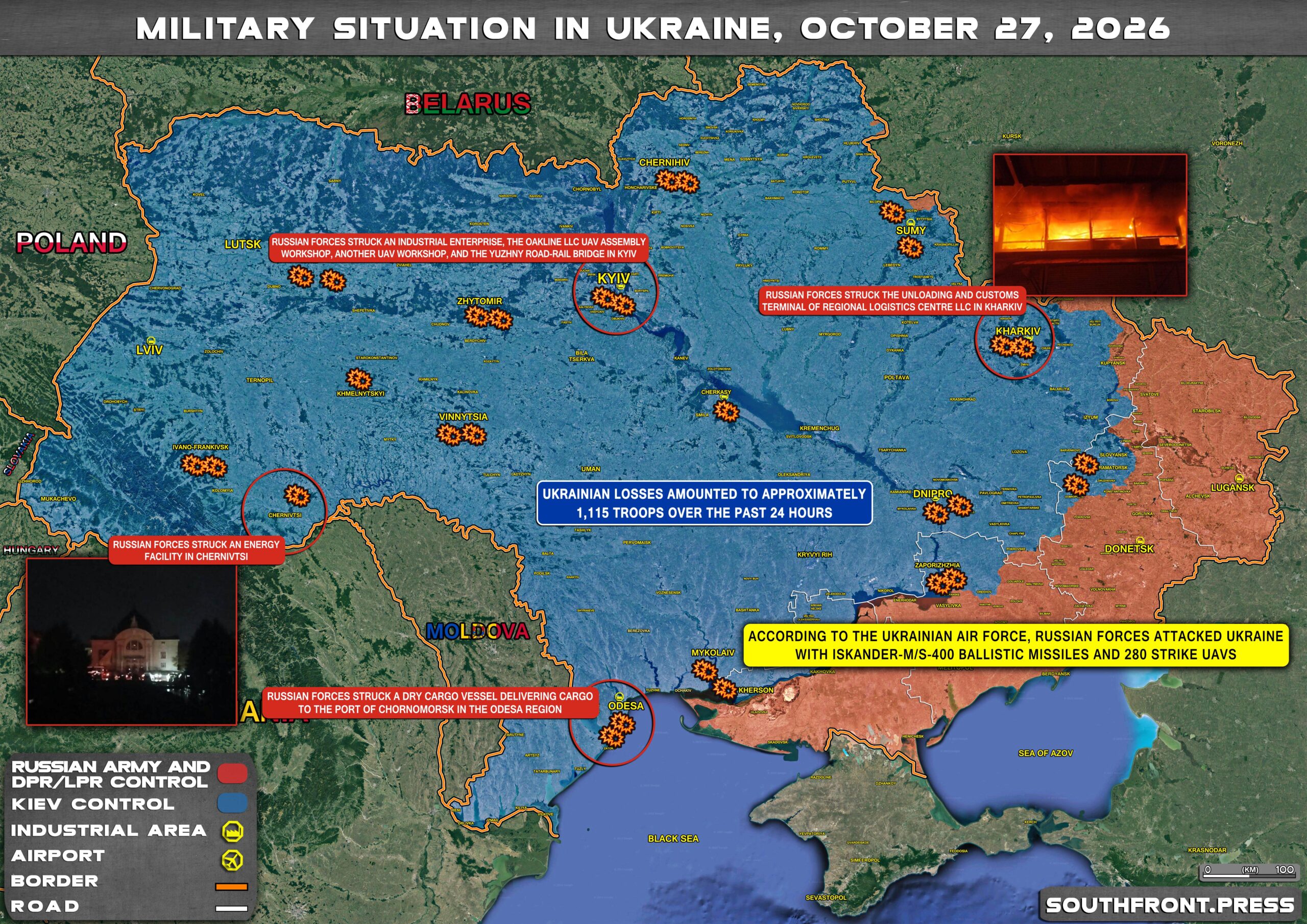
Russian strikes hit targets in the Sumy, Kharkiv, Zaporizhzhia, Dnipropetrovsk, Kherson, Kyiv, Vinnytsia, Zhytomyr, Ivano-Frankivsk, Odesa, Rivne, Khmelnytskyi, Cherkasy, Chernihiv regions, and the DPR;
According to the Ukrainian Air Force, Russian forces attacked Ukraine with Iskander-M/S-400 ballistic missiles and 280 strike UAVs;
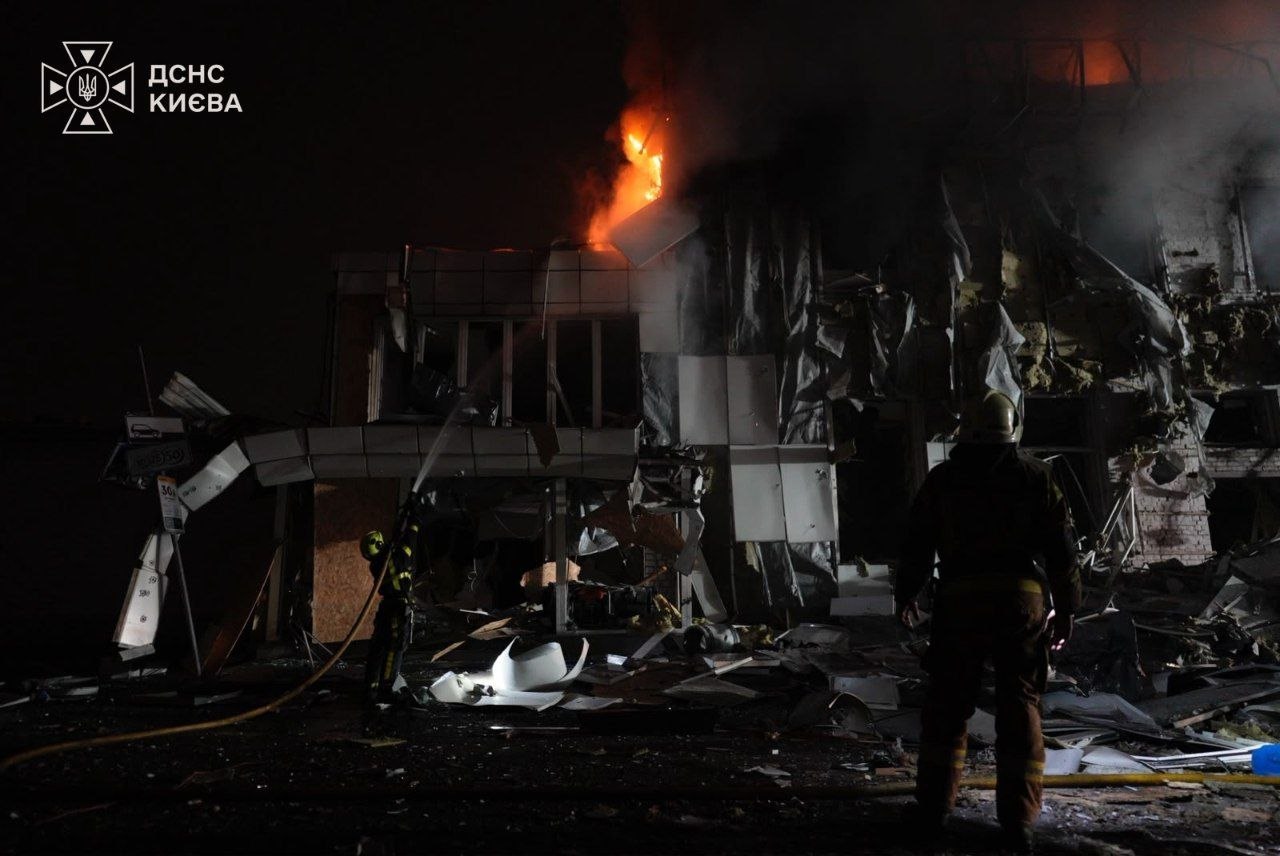
Russian forces struck an industrial enterprise, the Oakline LLC UAV assembly workshop, another UAV workshop, and the Yuzhny road-rail bridge in Kyiv;
Russian forces struck the unloading and customs terminal of Regional Logistics Centre LLC in Kharkiv;
Russian forces struck a dry cargo vessel delivering cargo to the port of Chornomorsk in the Odesa region;
Russian forces struck an energy facility in Chernivtsi;
Ukrainian losses amounted to approximately 1,115 personnel over the past 24 hours.
Click to see the full-size image
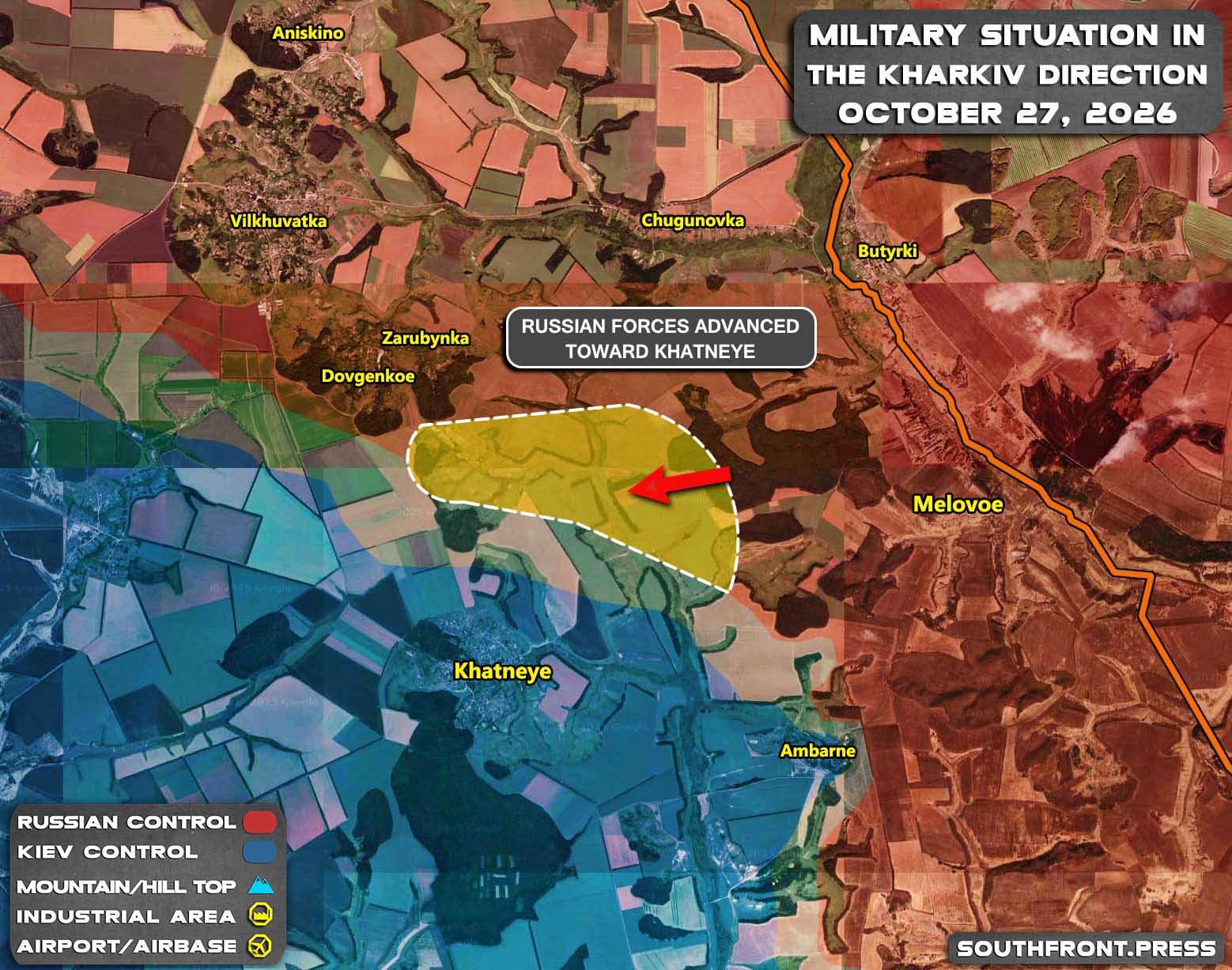
Russian forces advanced toward Khatneye.
Click to see the full-size image
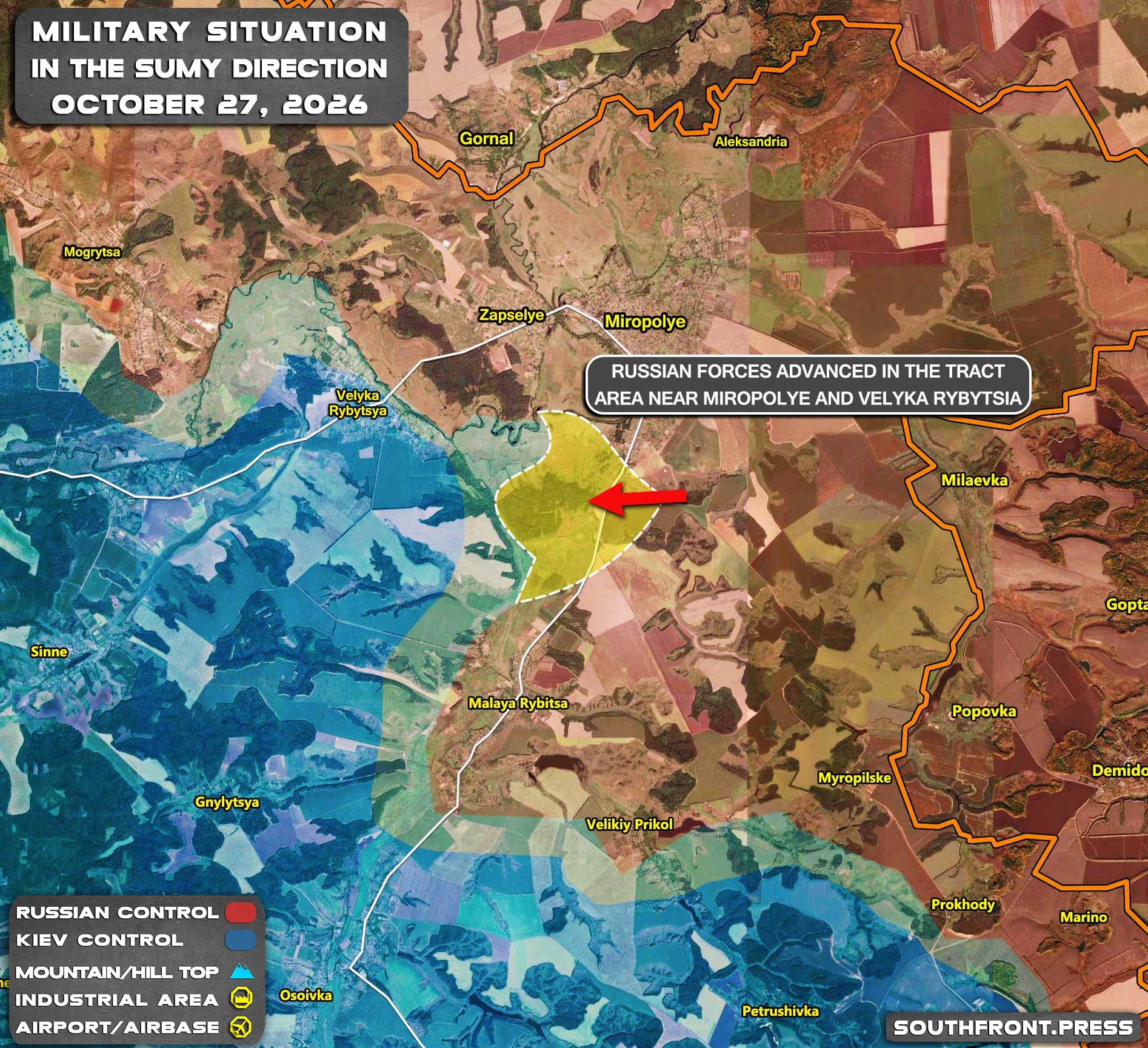
Russian forces advanced in the tract area near Miropolye and Velyka Rybytsia.
Click to see the full-size image
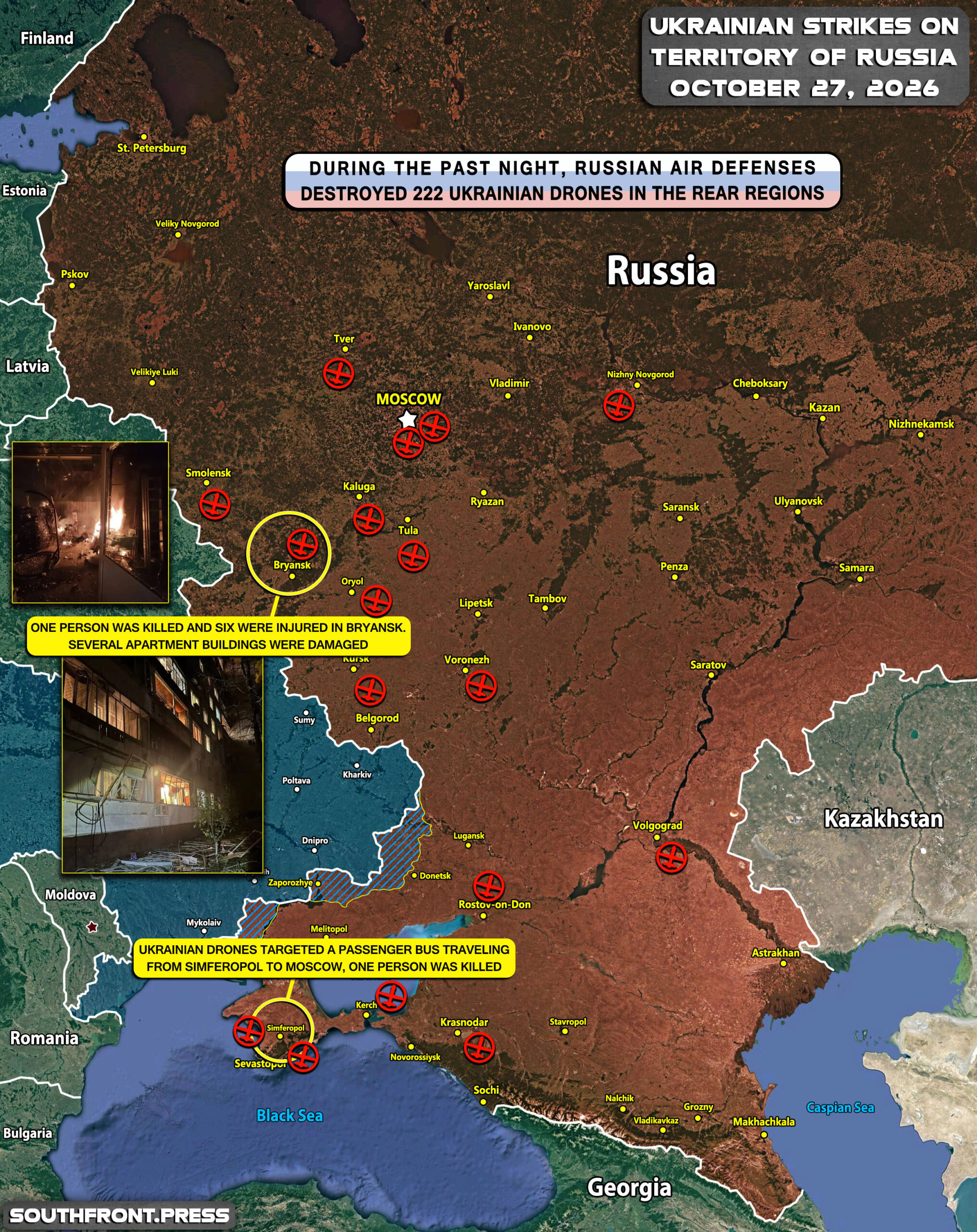
During the past night, Russian air defenses destroyed 222 Ukrainian drones in the rear regions;
Russian air defenses intercepted UAVs in the Novgorod, Tver, Belgorod, Bryansk, Kursk, Kaluga, Oryol, Tula, Voronezh, Smolensk, and Rostov regions, in Krasnodar Krai, in the Republic of Crimea, and over the Black Sea;
Russian air defenses intercepted UAVs in the Novgorod, Tver, Belgorod, Bryansk, Kursk, Kaluga, Oryol, Tula, Voronezh, Smolensk, Rostov regions, Krasnodar region, the Republic of Crimea, and over the Black Sea;
One person was killed and six were injured in Bryansk. Several apartment buildings were damaged;
Ukrainian drones targeted a passenger bus traveling from Simferopol to Moscow, One person was killed.
Ukraine’s leadership is wrestling with a problem that no speech or summit can solve: finding enough soldiers. The issue surfaces in the news at irregular intervals, but it never goes away, and the latest government proposal suggests that the search for a solution is becoming more desperate.
The pool of volunteers dried up several years ago. Since then, forced mobilization has been the main tool for keeping the army at a tolerable strength. Even so, losses often outpace the incoming replacements. Two factors explain much of the gap: the dense saturation of the battlefield with drones, and a command structure that critics describe as wasteful with its own manpower.
Getting to the front is itself an ordeal. Conditions in territorial recruitment centers are reportedly sometimes worse than in prisons. The same is said of training centers, where recruits are delivered in prison transport vans to prevent escape.
Many men have responded by taking jobs at defense plants and other critical facilities, hoping that employment will shield them from the draft. That shield is now being reshaped.
Prime Minister Serhiy Koretsky on October 26 outlined the government’s new approach at the Kyiv International Economic Forum. Under the proposed model, companies would be allowed to reserve their employees from mobilization. In return, they would have to guarantee a predictable flow of manpower into the army. By December 1, the Cabinet intends to present a new contract on mobilization and reservation. At the same time, the government plans to toughen penalties for draft evasion.
The consequences deserve a closer look. Company managers would effectively decide which employees go to the front, and for those selected, that choice may amount to a death sentence. Such a system could hand President Volodymyr Zelenskyy a new lever of control over large industrialists, whose commercial interest lies in surrendering as few workers as possible.
Big business, meanwhile, would gain nearly unlimited authority over its staff. Workers will tolerate almost any conditions to keep their exemption. Wage cuts and higher productivity demands are the obvious costs, and they will fall on ordinary citizens, who have the least power to refuse.
The result is a mobilization model built on fear at every level. The state fears the front will run out of men. Employers fear losing either their workforce or the government’s favor. Workers, in turn, fear the draft office more than their bosses. A system that runs on fear can fill the ranks for a while, but it cannot restore the trust that a long war quietly consumes.
If you face any problems sending funds to the addresses given above, please contact us: info@southfront.press and southfront@list.ru. Also be aware that many email services such as Hotmail, Yahoo etc. may block correspondence from info@southfront.press and some others put it in spam.
If you want to support SouthFront but have no opportunity to do it via cryptocurrency, please contact us: info@southfront.press and southfront@list.ru.
SouthFront: Analysis and Intelligence
NOW hosted at southfront.press
Previously, SouthFront: Analysis and Intelligence was at southfront.org.
The .org domain name had been blocked by the US (NATO) (https://southfront.press/southfront-org-blocked-by-u-s-controlled-global-internet-supervisor/) globally, outlawed and without any explanation
Back before that, from 2013 to 2015, SouthFront: Analysis and Intelligence was at southfront.com
On the night of October 27, the Russian Armed Forces carried out a massive combined strike across Ukrainian territory. According to the Ukrainian Air Force, the attack involved Iskander-M/S-400 ballistic missiles and strike UAVs, 16 missiles and more than 280 drones in total. The Russian Ministry of Defense says it struck defense-industrial enterprises involved in the production of cruise missiles and UAVs, transportation infrastructure, logistics centers handling dual-use cargo, and maritime vessels used to support the Ukrainian Armed Forces.
Strikes by Region
Kyiv and Kyiv Region
• Southern Road-and-Rail Bridge. A key piece of transportation infrastructure in the capital used for the transit of cargo by road and rail. Ukrainian sources confirmed damage to the crossing, which led to a partial suspension of service on the Green Line of the metro and major transport disruption at Darnytsia Station. • UAV assembly workshop of LLC Oakline. A production site that assembled and stored Fire Point’s FP-1 and FP-2 long- and medium-range unmanned aerial vehicles. • Industrial facility producing and storing long- and medium-range UAVs. Another Kyiv site struck during the overnight attack; its specific name has not been disclosed. • UAV assembly workshop producing and storing long- and medium-range fixed-wing unmanned aerial vehicles.
Kharkiv Region
• Unloading and customs terminal of the Regional Logistics Center company. A logistics facility where, according to the Russian Ministry of Defense, military supplies, dual-use cargo intended for the Ukrainian Armed Forces, and reconnaissance and strike UAVs were stored and distributed.
• Electronics manufacturer LLC NTP Ukrspetssvyaz, in the settlement of Nadtochii. A production site that made automation systems and communications equipment for the Ukrainian Armed Forces.
• Gas production infrastructure. Naftogaz reported a morning strike on gas production infrastructure in Kharkiv Region. The available information does not identify specific fields or facilities.
• Budmen home-improvement store in Kharkiv. A facility reportedly struck, according to local Telegram channels.
Odesa Region • Bulk carrier bound for the port of Chornomorsk. A cargo vessel that, according to the Russian Ministry of Defense, was delivering supplies intended to support the Ukrainian Armed Forces. • Bulk carrier bound for the port of Odesa. Another cargo vessel en route to Odesa with military cargo; it was struck in the daytime wave of attacks.
Chernivtsi Region • Energy infrastructure facility. Local sources said the target was a substation; Chernivtsioblenergo warned of possible large-scale emergency outages. In Chernivtsi, trolleybus service was suspended, power was lost in several districts, and water was supplied at reduced pressure.
Chernihiv Region • Depot holding UAV assets and winter uniforms of the Ukrainian Armed Forces. According to monitoring channels, a UAV strike sparked a large fire that destroyed unmanned systems and winter uniforms belonging to Ukrainian troops.
Strikes on facilities were also reported in Vinnytsia, Zhytomyr, Lviv, Sumy, Zaporizhzhia, Dnipropetrovsk, Kherson, Ivano-Frankivsk, Rivne, Khmelnytskyi, and Cherkasy Regions.
The nature of the October 27 strikes points to a continued systematic campaign against Ukraine’s strike-UAV production chain and the logistics hubs supplying its armed forces. Within this framework, the overnight wave combined strikes on Kyiv’s assembly facilities with damage to the Southern Bridge, affecting both drone production and its delivery channels. The strikes on the logistics terminal in Kharkiv Region and on cargo vessels off Chornomorsk and Odesa serve the same purpose: cutting off routes for dual-use cargo and components. The damage to the energy facility in Chernivtsi Region was limited in scale and did not involve major power-generation capacity, unlike earlier attacks on thermal and hydroelectric power plants.
Ukraine’s response is shifting toward scaling output rather than quality: Defense Minister Oleksii Khmara discussed with Western partners the transfer of 10% of their Patriot and IRIS-T missile stockpiles, as well as the possibility of doubling Ukrainian drone production by 2027 with sufficient funding. This aligns with Fire Point’s acknowledgment that the Flamingo missile mattered more as a political signal than as a “superweapon.” According to company head Iryna Terekh, the project was primarily intended to demonstrate Ukraine’s ability to conduct long-range strikes against Russian territory. The company also acknowledged the economic trade-off: delivering a 200-kilogram warhead over 300 kilometers by ballistic missile costs about $600,000, whereas a drone can deliver a comparable payload over 380 kilometers for $40,000-$50,000.
It is precisely this economic logic that explains why strikes on FP-1 and FP-2 assembly capacity and logistics hubs are becoming increasingly significant: drones remain Ukraine’s most numerous and affordable means of long-range strike, and this segment is also the most vulnerable part of its program. In the medium term, Russian strikes are likely to continue prioritizing enterprises that produce components for UAVs and cruise missiles, as well as transportation routes linking Ukraine’s central and western regions to the front line.
Concelho onde mais de 40% do emprego se concentra na indústria transformadora, Guimarães quer diversificar o tecido empresarial, tornando-o mais competitivo e reforçando a capacidade de inovação e internacionalização. O foco da autarquia está no reforço da produtividade e elevação do nível salarial.
“A inovação é mesmo chave para o nosso futuro. É o elemento mais relevante para que possamos acrescentar valor ao produto ou serviço”, afirmou, no arranque da quarta edição do Mês da Economia de Guimarães, o presidente da Câmara de Guimarães, Ricardo Araújo.
Para o autarca, eleito a 12 de outubro de 2025, é necessário conjugar a economia com a academia, para elevar o poder empresarial de Guimarães. O social-democrata frisa: “não me resigno a estar num concelho que tem um salário médio abaixo da média nacional e regional”.
A entrada é livre, mediante inscrição prévia e sujeita à lotação da sala. Participe neste espaço de discussão e inscreva-se aqui.
Depois de um intenso programa ao longo de outubro, a iniciativa da autarquia vimaranense termina com uma conferência que reunirá campeões do tecido empresarial do Minho, a academia e a Associação Empresarial do Minho. O presidente desta, Ramiro Brito, estará no painel “Empresas que projetam território”, juntamente com a CEO do Grupo TMG, Isabel Furtado, o presidente do Conselho de Administração do DST Group, José Teixeira, e o diretor da Tekever para a Europa do Sul, Rui Lobo.
Neste painel serão debatidos temas da atualidade como a construção industrial, para fazer face à crise na habitação, e o contributo da tecnologia para o esforço de guerra no leste europeu.
A manhã de discussão sobre o futuro do município, da região e do país incluirá o contributo do professor universitário Pedro Santa Clara na talk inicial, após a abertura feita pelo diretor do ECO, António Costa, terminando com cinco apresentações dedicadas ao tema das “tendências que vão transformar a economia portuguesa até 2035”.
Estas estarão a cargo da CEO da Sciencentris, Ana Maria Fangueiro, de Alexandre Silva, diretor do curso de Engenharia Aeroespacial da Universidade do Minho, do cofundador da Sentinel, Joel Alves, e ainda de Luís Oliveira, diretor executivo da Fibrenamics, e de Miguel Amador, cofundador e diretor de Inovação da Complear.
“Não me resigno a estar num concelho que tem um salário médio abaixo da média nacional e regional”, diz Ricardo Araújo, presidente da Câmara Municipal de GuimarãesRicardo Castelo/ECO
As conclusões e encerramento da 4.ª Edição do Mês da Economia de Guimarães serão assumidas por Ricardo Araújo, presidente da autarquia minhota, que desenvolverá com o presidente da Comissão de Coordenação e Desenvolvimento Regional (CCDR) do Norte, Álvaro Santos, ideias para o futuro desta região de onde se exportam mais de 1,5 mil milhões de euros de produtos e serviços.
A Conferência ECO – 10.º Aniversário, dedicada ao futuro económico fora dos grandes centros, decorre nesta quarta-feira na Sala da Duquesa, nos Paço dos Duques.
Fighter jets, including F-16s, Mirage aircraft, and MiG-29s, play a significant role in intercepting Russian jet-powered drones, according to the General Staff.
Ciudad de México, 27 oct (Prensa Latina) Los consejeros del Instituto Nacional Electoral (INE) de México nombraron hoy a Blanca Cruz como presidenta provisional, tras la renuncia de Guadalupe Taddei, señalada por irregularidades en contrataciones y conflictos de interés.

 Login