❌

Normal view

Neo-Nazi messages, links to Moscow, and Alice Weidel’s hypocrisy. 13 years of AfD emails have leaked

30 October 2026 at 11:47

One could ask, what might politicians from a far-right party — as the Federal Office for the Protection of the Constitution describes Alternative for Germany (AfD), write to one another?

More than 400,000 emails exchanged by AfD members between March 2013 and September 2026, effectively covering the party’s entire history, have appeared online.

They were published by hackers from the Distributed Denial of Secrets (DDoSecrets) organisation, who obtained 284 gigabytes of data, including minutes from meetings of the party leadership, payslips, strategic documents, membership lists and donors’ names.

AfD and its enemies

According to the Correctiv website, the material also includes election campaign plans, for example for the 2025 parliamentary election. Their authors describe how to reach potential voter groups. They describe the governing parties at the time as enemies.

It is unclear yet whether all the emails are genuine, but the party has confirmed the leak. German media outlets with access to them estimate that assessing the information could take months.

It is already clear that the emails offer an insight into how Germany’s currently strongest political party operates and how it approaches certain issues, including neo-Nazism.

The media are gradually uncovering messages that are uncomfortable for AfD’s leading figures, including its co-chair Alice Weidel.

One of the most striking findings is that in private she was not as radical as she liked to portray herself in public. And, according to German media, the difference is considerable.

The leaked emails also suggest how the German party sought to forge closer ties with the US conservative Maga movement and president Donald Trump, whom it saw as a potential ally.

In foreign policy, they also point to deeper links with Russia than had previously been known.

Thousands of emails could also play a role in a potential ban on the party, which is not yet decided upon but is being debated in Berlin.

So what have they revealed?

What had not previously been known about relations with Russia

This article continues, but the full version is available only to EUobserver.com subscribers. Visit account.euobserver.com/membership

Leading independent Russian newspaper shuts down, says Kremlin pressure ‘killed’ it

30 October 2026 at 10:33
Novaya Gazeta, founded after fall of the Soviet Union, was branded a 'foreign agent' after becoming one of the last Russian news outlets to report critically on invasion of Ukraine

Jornal russo cofundado por Nobel da Paz fecha e denuncia censura de Putin

30 October 2026 at 09:45

O jornal independente russo Novaya Gazeta anunciou nesta sexta-feira (30) que encerrará suas atividades após o que descreveu como uma campanha incessante das autoridades do governo de Vladimir Putin contra o veículo.

A ofensiva incluiu ações de promotores contra alguns de seus principais jornalistas e deixou o jornal sem apoio financeiro e sem sede.

O periódico, frequentemente crítico às autoridades, existe há mais de três décadas e já enfrentou sérios problemas no passado. Seis de seus jornalistas, incluindo a repórter investigativa Anna Politkovskaya, foram assassinados em diferentes circunstâncias.

O editor-chefe e cofundador da publicação, Dmitry Muratov, ganhou o Prêmio Nobel da Paz de 2021 por “esforços para salvaguardar a liberdade de expressão.”

Assim como outros veículos de comunicação independentes do Estado, o Novaya Gazeta passou a sofrer pressão cada vez maior das autoridades depois que a Rússia lançou sua invasão em grande escala da Ucrânia, em 2022, e introduziu amplas regras de censura.

As normas preveem longas penas de prisão para quem desacreditar o Exército russo ou divulgar informações que as autoridades considerem notícias falsas.

“Em 9 de novembro, apagaremos as luzes da casa onde vivemos por 30 anos, desligaremos nossos servidores e partiremos. O jornal não existe mais. As autoridades russas e os serviços de segurança do país obrigaram nossa equipe editorial a encerrar suas atividades”, afirmou o Novaya Gazeta em comunicado.

“Mais de 30 anos de nossas vidas compartilhadas com nosso país e seus cidadãos chegarão ao fim, deixando-nos sem lar, sem meios de subsistência e sob constante ameaça de repressão. Continuamos enquanto pudemos, mas fomos expulsos de nossa casa, e a plataforma de doações que nos permitia receber apoio financeiro de nossos leitores foi fechada. Fomos privados de todos os nossos recursos”, acrescentou o jornal.

Não houve comentário imediato das autoridades.

O Kremlin, no entanto, que acusa serviços de inteligência estrangeiros de tentar estimular o descontentamento na sociedade russa, já afirmou anteriormente que algum nível de censura é necessário em um momento em que a Rússia enfrenta o que descreve como uma luta existencial contra o Ocidente por causa da Ucrânia.

Entenda o que está por trás da tensão entre Trump e Zelensky


Oleshky evacuation begins but volunteer claims Russia already moved people outside of agreed terms

30 October 2026 at 09:40
"Everyone who wishes to leave Oleshky will be given the opportunity to leave safely. At the same time, those who have decided to stay can stay and will receive all the necessary humanitarian support," Ukraine's Human Rights Ombudsman Dmytro Lubinets said.

Oh to Believe in Another World review – William Kentridge’s amazing animated ballet of black comic pain

30 October 2026 at 09:29

Kentridge’s cine-musical creation, made to accompany Shostakovich’s 10th Symphony, is a marvel of puppetry, dance and humour, exploring humanity, grief and idealism

The Baku international arts festival in Azerbaijan is showcasing an amazing cine-musical creation, perhaps the most amazing animation I have ever seen. Oh to Believe in Another World is an hour-long collage animation with live-action choreography by the 71-year-old South African artist and film-maker William Kentridge. It is shown with the live orchestral accompaniment of Shostakovich’s 10th Symphony, and this event is partly in honour of the 120th anniversary of Shostakovich’s birth this year, and partly to honour Shostakovich’s reportedly unrequited love (and lifelong friendship) for his student, Azerbaijani pianist and composer Elmira Nazirova.

The 10th symphony was inspired by Stalin and premiered shortly after his death, so it seems probable that Shostakovich had been at work on it for some time before this, long enough beforehand for at least some of the composition to have been conceived without any sense of Stalin’s death. Could part of it perhaps have been originally intended as an obediently dramatic tribute to Stalin? Yet the music arguably combines fear, awe, revulsion, and a hysterical reaction to the mad energy of Stalin’s genocidal tyranny, a darkly ambiguous respect for the great dictator whose victory in 1945 was a mainstay of the postwar dispensation; perhaps there is also a feeling in the music’s swirl that a great and terrible era has passed away, and with it a kind of grief at all that had been sacrificed to it.

Continue reading...

© Photograph: Pete Woodhead

© Photograph: Pete Woodhead

© Photograph: Pete Woodhead

Russia's legal siege over assets continues, costing Euroclear hundreds of millions of euros in 2026

30 October 2026 at 09:29
Euroclear is facing "multiple proceedings in Russian courts," including a case launched by the Russian Central Bank that seeks to challenge the immobilization of its assets.

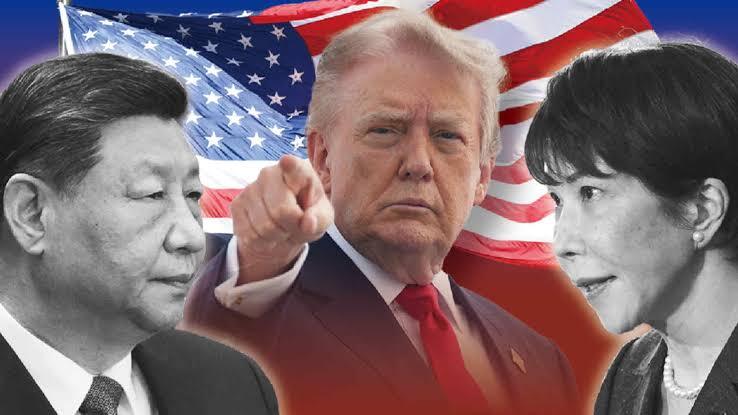
Japan’s Militarization: Washington Fueling Chinese-Japanese Crisis

30 October 2026 at 09:28

Click to see the full-size image

Written by Uriel Araujo, Anthropology PhD, is a social scientist specializing in ethnic and religious conflicts, with extensive research on geopolitical dynamics and cultural interactions

Security tensions between Japan and China are escalating while the former strengthens its long-range strike capabilities with American support.

Washington and Tokyo’s latest moves to reinforce their military presence along the so-called first island chain also mark another step in the broader US-China strategic rivalry across the Indo-Pacific region.

Originally conceived as a Cold War US defensive perimeter (stretching from Japan through Taiwan to the Philippines), the first island chain is increasingly becoming the centerpiece of an elaborate American-led military architecture designed to constrain Beijing’s growing maritime power.

The recent agreement between Japanese Defense Minister Shinjiro Koizumi and US Defense Secretary Pete Hegseth to implement an “effective denial defense” along that chain illustrates the shift. They also pledged continued cooperation on ammunition production for a potentially prolonged conflict.

During the Keen Sword 2027 exercises now underway, US and Japanese forces plan to deploy mobile missile systems, including American system NMESIS, on Yonaguni Island near Taiwan. Tokyo has already deployed domestically developed long-range (anti-ship) missiles capable of reaching China’s coastal areas.

The wider context is hard to miss. In November 2025 Prime Minister Sanae Takaichi  made a statement linking a Taiwan contingency to Japan’s own survival, which triggered sharp Chinese protests and a cascade of diplomatic, economic, and maritime frictions.

Beijing then restricted dual-use exports to Japan, while coast guard vessels and radar incidents added to the pressure.

As commentator Oliver Griffin puts it, Beijing views Japan’s buildup as a drift toward neo-militarism.

From Tokyo’s perspective, China’s expanding naval reach makes these steps necessary. This is therefore a classic security dilemma. Measures one side takes to feel “safer” make the other feel less secure, prompting further responses.

The first island chain is both a barrier and a gateway. As expert Simone Chiusa  notes, Chinese vessels seeking access to the open Western Pacific must navigate strategic chokepoints through its straits.

The strategic importance of these chokepoints illustrates Alfred Thayer Mahan’s classic sea-power theory: control over key maritime routes and positions remains central to great-power rivalry.

American and Japanese planners see distributed missiles and interdiction systems as deterrence by denial. Beijing sees preparations to restrict its access.

The paradox is clear enough: the more Washington and Tokyo seek to reinforce deterrence, the more Beijing may perceive “encirclement” and accelerate its own capabilities.

Japan’s southwestern islands are thereby becoming an operational frontier of sorts rather than a mere defensive perimeter. An alliance designed primarily to protect Japanese territory then gradually becomes an instrument for projecting power into a Taiwan-related contingency.

As I wrote in May 2026, regarding US missile deployments in the Philippines, Washington’s actions near Taiwan fuel Chinese fears of a containment architecture involving Japan, the Philippines, and Australia. The pattern continues.

China’s maritime-industrial growth has become central to allied planning. As I’ve noted elsewhere, Chinese shipbuilding capacity (measured by gross tonnage) exceeds that of the United States – by a factor of over 200, according to a 2023 US naval intelligence estimate.

Joint Sino-Russian submarine patrols further signal a new maritime era of coordination that certainly complicates American assumptions of uncontested sea control.

Yet the contest is no longer confined to the first island chain. A Japanese Self-Defense Force colonel has proposed a second-island-chain air bridge linking Japan and Australia (with US participation) for logistics and reinforcement – the reasoning being that China’s lengthening maritime strike reach now threatens operations farther into the Pacific.

Some American analysts warn that “pulling back to the second chain” would be strategic folly, while advocates of strategic restraint see a forward approach as intensifying insecurity.

For Japan, the predicament is particularly delicate. Tokyo is becoming more indispensable to Washington’s regional planning at the very moment when Japanese strategists worry about possible US-China accommodation under President Trump’s “transactional” approach.

The alliance security dilemma is real enough: fear of “abandonment” coexists with fear of entrapment in a Taiwan conflict. Japanese policymakers are of course not passive instruments. They act on their own threat perceptions while navigating uncertainty about long-term American commitments.

Gray-zone pressures add another layer. Coast guard patrols and incremental assertions of jurisdiction challenge the utility of high-end missile deployments – designed mainly for conventional scenarios.

Ultimately, efforts to preserve the existing “balance” in the Indo-Pacific may contribute to the very competition that makes that balance harder to sustain.

The American response to China’s rise has largely been to reinforce military alliances and expand forward deployments, risking an increasingly self-perpetuating cycle of militarization rather than fostering regional stability.

Washington is transforming Japan into a more central component of its forward maritime architecture – even as Beijing’s growing capabilities render that very architecture more contested. The risk here is that the cycle of reinforcement and reaction leaves all parties less secure than before.


MORE ON THE TOPIC:

The post Japan’s Militarization: Washington Fueling Chinese-Japanese Crisis appeared first on South Front.

Novaya Gazeta chiude in Russia: “Siamo stati uccisi da autorità di Mosca e servizi segreti”

30 October 2026 at 09:09

“Siamo stati uccisi. Il 9 novembre spegneremo le luci del nostro edificio, dove abbiamo vissuto per 30 anni, spegneremo i server e ce ne andremo. Il giornale non esiste più. Le autorità russe e i servizi segreti russi hanno costretto la redazione a cessare le attività”. Il sito di Novaya Gazeta, quotidiano classificato come agente straniero da Mosca, ha annunciato la cessazione delle attività in Russia. La testata, nota in Occidente soprattutto per essere il quotidiano sul quale Anna Politkovskaja – uccisa nel 2006 – pubblicava le sue inchieste, era già sottoposta a limitazioni dal 2022. Parte della redazione aveva già lasciato il Paese, continuando a lavorare al progetto Novaya Gazeta – Europe.

“Una trentina d’anni di vita insieme al Paese e ai suoi cittadini finiranno per noi per strada, senza mezzi di sussistenza, sotto la costante minaccia della repressione“, aggiunge Novaya Gazeta. Il giorno prima era stato reso noto che la redazione sarebbe stata sfrattata dalla propria sede in Potapovsky Lane, nel centro di Mosca, dove i giornalisti avevano lavorato per 29 anni, sottolinea Meduza, evidenziando che a seguito di ciò chiuderà anche il Museo di Anna Politkovskaya, che aveva sede nell’ex ufficio della giornalista. Dopo l’invasione russa dell’Ucraina nel 2022 le autorità russe hanno bloccato i siti web del giornale e ne hanno revocato la registrazione, poi a settembre del 2026 Novaya Gazeta era stato dichiarato “agente straniero”. Secondo l’Economist, il 26 ottobre si è tenuta una riunione del board del giornale in cui è stato deciso di chiudere e oggi è giunto l’annuncio della testata.

Nel lungo testo dell’annuncio pubblicato sul suo sito, Novaya Gazeta ripercorre la sua storia, che si intreccia con quella della Russia. “I nostri anni sono stati felici: pieni di creatività e speranze, lettori, amici, testi, film. A volte, questi anni sono stati disperatamente amari. Amari, perché è stato proprio durante il regno di questo regime, e non negli anni ’90 della criminalità organizzata, che i nostri colleghi sono stati uccisi per motivi politici, per aver adempiuto al loro dovere professionale e civico: Igor Domnikov, Yuri Shchekochikhin, Anna Politkovskaya, Stas Markelov, Anastasia Baburova, Natalya Estemirova. Contemporaneamente alla lettera di sfratto, hanno disattivato il sistema di donazioni che ci permetteva di ricevere contributi dai nostri lettori. In altre parole, ci hanno privato di qualsiasi fonte di finanziamento. Completamente”, denuncia il giornale. E ancora: “Si tratta di un’operazione coordinata. Nessuno si lascerà convincere dalla giustificazione delle banche secondo cui agiscono in base a regole aziendali interne. Si tratta di regole esterne, stabilite dall’apparato statale repressivo, da funzionari dell’Fsb che si sono infiltrati in ogni organizzazione. Considerano il Paese come una loro proprietà“.

Poi, dopo avere ripercorso le restrizioni a seguito dello scoppio della guerra in Ucraina e l’aggressione al caporedattore Dmitry Muratov, Nobel per la Pace nel 2021, Novaya Gazeta sottolinea che “questa non è solo la nostra storia personale. È la storia di un Paese e di una società che vengono annientati esattamente allo stesso modo”. “A compiere tutto questo sono l’Fsb, il ministero della Giustizia, la Procura e altri che hanno privatizzato lo Stato e usurpato il potere. Non si tratta di risentimento sovietico; sotto questa copertura è stata praticamente instaurata una dittatura militare“, denuncia il giornale. “I diritti umani e le libertà sono stati eliminati nel Paese, e la loro tutela è stata equiparata a un reato. Le elezioni e gli organi eletti sono stati di fatto eliminati. Le istituzioni pubbliche sono state smantellate. La libertà di coscienza e la dignità umana sono state calpestate. La vita privata è stata stravolta da mani sporche. L’articolo 29 della Costituzione, secondo cui ‘la censura è vietata’, non suona forse oggi come una beffa? I tribunali sono stati distrutti, insieme alla legge e allo Stato di diritto. Avere le proprie convinzioni è ora considerato tradimento”, si legge ancora. Poi la conclusione: “Ma il tradimento è quando uno Stato tradisce la propria Costituzione. E questo tradimento è un crimine in corso, che si sta svolgendo proprio ora sotto gli occhi del mondo intero. L’assassinio di Novaya Gazeta ne è un’ulteriore prova. In tutti questi anni abbiamo scritto proprio di questo. Finché abbiamo potuto. Ecco perché l’abbiamo chiusa. Grazie a tutti coloro che ci hanno ascoltato”.

Dopo lo scoppio della guerra in Ucraina gran parte dello staff del giornale si era spostata in Lettonia e aveva lanciato Novaya Gazeta Europe. La testata originaria è stata privata della licenza per operare in Russia già nel 2022, all’indomani dell’avvio delle ostilità contro Kiev. Da allora era rimasta operativa nel Paese solo per la raccolta di informazioni relative alle inchieste giornalistiche. Sul sito del giornale si legge: “Novaya Gazeta Europe è stata fondata nell’aprile 2022, in seguito all’invasione russa dell’Ucraina avvenuta sei settimane prima e alla conseguente introduzione della censura di guerra che ha costretto la maggior parte dei redattori e dei giornalisti di Novaya Gazeta a lasciare il Paese. Con sede a Riga, capitale della Lettonia, Novaya Gazeta Europe intende portare avanti l’eredità di Novaya Gazeta, che da oltre 30 anni è uno dei nomi più autorevoli del giornalismo indipendente russo”. Da giugno 2023 anche questa nuova entità – che ha sede a Riga e collaboratori nell’est Europa – è stata dichiarata “organizzazione indesiderata” e messa al bando in Russia.

L'articolo Novaya Gazeta chiude in Russia: “Siamo stati uccisi da autorità di Mosca e servizi segreti” proviene da Il Fatto Quotidiano.

Russian newspaper Novaya Gazeta to close, citing pressure from ‘special services’

Independent outlet, whose former editor won Nobel peace prize, says Russian authorities have forced it to shut

The Russian independent newspaper Novaya Gazeta has announced it is closing, citing pressure from authorities who recently searched the home of its senior editor and earlier this year detained one of its journalists.

“Novaya Gazeta is ceasing to exist,” the editor-in-chief, Sergei Sokolov, said in a video statement published on YouTube on Friday. “The Russian authorities – the Russian special services – have forced the editorial team to end its work.”

Continue reading...

© Photograph: Toms Kalniņš/EPA

© Photograph: Toms Kalniņš/EPA

© Photograph: Toms Kalniņš/EPA

Russian attacks across Ukraine kill 27, injure 127 over past day as 'horrific attack' strikes Dnipro train station

30 October 2026 at 09:02
Beyond strikes on Dnipropetrovsk Oblast, Russia launched ballistic missiles, four guided aerial missiles, and 113 Shahed-type drones, including 83 jet-powered drones, against Ukraine overnight on Oct. 30, according to Ukraine's Air Force.

Fire Point says its drones hit a Russian refinery’s diesel unit hours after WSJ reported Ukraine had paused such strikes under Trump’s pressure

30 October 2026 at 08:55

Smoke rising from the Novokuibyshevsk oil refinery in Samara Oblast, Russia, 30 October 2026

Ukraine's Defense Forces hit the Novokuibyshevsk oil refinery in Russia's Samara Oblast with FP-1 drones early on 30 October, Ukrainian drone maker Fire Point said, adding that one of the units hit hydrotreats diesel fuel. The strike came hours after WSJ reported that Ukraine had paused strikes on Russian refineries under pressure from US President Donald Trump until after the US midterm elections on 3 November.

Russia is pounding Ukraine's power grid and cities ahead of winter, with a mounting civilian toll, including 14 people killed on a Dnipro railway platform on 29 October. Ukraine's long-range drone strikes on Russian refineries, one of its most effective operations against Moscow, target the oil money that pays for that war. Trump has pressed Kyiv for weeks to stop them, blaming them for high global fuel prices, and Ukraine went quiet without saying so and without getting what it asked for in return, WSJ reported. The Samara strike is the first on Russian oil since then. Kyiv has not said whether the pause is over.

Fires spread across a refinery that makes jet fuel for Russia's military

Residents of Novokuibyshevsk reported drones, explosions, and a fire before dawn. Ukrainian Telegram channel Exilenova+ posted the first photos on Telegram at 05:24 Kyiv time, and Russian Telegram channel Astra geolocated the fire to the refinery, citing its open-source analysis of residents' photos.

Novokuybyshevsk, Samara region: locals report an attack and a fire. pic.twitter.com/9UEgqmkAOU

— Exilenova+ (@Exilenova_plus) October 30, 2026

By morning, Exilenova+ counted at least 11 separate fires at the refinery. Samara Governor Vyacheslav Fedorishchev said air defense and mobile fire groups were repelling an attack, Astra reported. The region had declared a drone alert and closed its airport.

Smoke rising from the Novokuibyshevsk oil refinery in Samara Oblast, Russia, 30 October 2026
Smoke rising from the Novokuibyshevsk oil refinery in Samara Oblast, Russia, 30 October 2026. Photo: Exilenova+

Fire Point said its FP-1 drones scored numerous hits on the refinery grounds, and that one of the units hit hydrotreats diesel fuel. The footage published so far shows several smoke columns over the plant but does not show which units burned. The Rosneft-owned refinery has a design capacity of 8.8 million tons of oil a year and is one of the main producers of jet fuel, according to its website. Astra says it supplies jet fuel to Russia's military. The plant lies about 910 km from the front line. Ukraine's General Staff has not commented.

pic.twitter.com/Ku6KRCKJ6v

— Exilenova+ (@Exilenova_plus) October 30, 2026

Ukrainian drones have hit the plant before. Ukraine's military said its forces hit it in August and caused a fire.

Map showing the Novokuibyshevsk refinery in Samara Oblast, about 910 km from the front line, and Starodub in Bryansk Oblast

It is the first fire at a Russian refinery since 15 October, when Ryazan's governor reported one at the city's refinery. It is also the first reported strike on Russia's oil industry since 20 October, when Ukrainian drones hit a Druzhba pipeline pumping station in Tambov Oblast. WSJ called that strike the last before the pause.

rosneft's kuibyshev refinery joins syzran novokuibyshevsk offline after ukrainian drone strike yesterday · post fires raging kuybyshevsky oil samara russia 10 2026 fires-rage-at-samara-kuybyshevsky-oil-refinery ukraine news reports
Explore further

All three Rosneft Samara refineries now offline or reduced as drones halt Kuibyshevsky operations yesterday

WSJ claims: Ukraine paused refinery strikes until after the US midterms

Ukraine's military paused its strikes on Russian refineries after weeks of pressure from Trump shook Kyiv's confidence in US support, people with knowledge of the operations told WSJ. The unofficial pause began early last week and is expected to last until after the midterms, and possibly deeper into November. Units carrying out long-range strikes were told in mid-October that the refinery campaign was effectively on hold once missions already under way were completed, two military officials said. Hours after the report, the Novokuibyshevsk strike called that account into question.

Smoke columns rise over residential buildings in Novokuibyshevsk, Samara Oblast, Russia, at dawn on 30 October 2026
Smoke columns rise over residential buildings in Novokuibyshevsk, Samara Oblast, Russia, at dawn on 30 October 2026. Photo: Astra

Ukraine's government has not announced a pause. Zelenskyy told reporters in Kyiv on 27 October that “our guys tried to be a little more careful during these days. But they do not have an order” not to hit refineries, according to WSJ. He said drone units were hitting other kinds of targets in Russia.

Trump's envoy Jared Kushner repeated the demand to stop the strikes at a meeting with Zelenskyy in Oslo on 20 October, two US officials told WSJ. One of them called the conversation “very tough.” Kushner, who joined remotely, said he and envoy Steve Witkoff were spending a lot of time, energy, and jet fuel on mediating with Moscow, and that a 30-day pause on refineries would be a way for Ukraine to show gratitude, the official said.

again trump presses zelenskyy stop russian refinery strikes · post ukrainian president volodymyr meets donald ankara türkiye 8 2026 presidentgovua ukraine news reports
Explore further

Energy truce with strings attached: Kyiv reportedly told to spare Russian refineries or lose US intelligence and arms

Zelenskyy had asked for something in return, WSJ reported: a mutual energy ceasefire with Russia, Patriot missiles for Ukraine's grid, or permission to use Starlink inside Russia so drones could destroy Russian missile launchers. None of those ideas got far. Some of Kyiv's European backers also nudged Zelenskyy to pause until after the midterms, a senior European official said.

The pause showed in Russia's oil industry. Russian refinery utilization at the end of October was 25% higher than at the start of the month as drone attacks subsided, Reuters reported, according to The Moscow Times.

Russia claims over 1,000 drones for a second night as Moscow's airports close again

Russia's Defense Ministry said it downed 1,043 Ukrainian drones overnight over 19 regions, including Samara Oblast, the Moscow region, and Tatarstan. The night before, it claimed 1,214.

Moscow Mayor Sergei Sobyanin stated that 862 drones flew toward the Moscow region between 20:30 on 29 October and 07:30 on 30 October, that most were downed on the far approaches, and that 170 were downed on approach to the capital. Russia's aviation agency restricted flights at all four Moscow airports, Astra reported. A day earlier, more than 460 flights were delayed or canceled at Moscow and St. Petersburg airports, Astra counted.

A building on fire at night in Starodub, Bryansk Oblast, Russia, 30 October 2026
A building on fire at night in Starodub, Bryansk Oblast, Russia, 30 October 2026. Readers who sent the footage to Astra identified it as the Konservsushprod food plant. Photo: Astra

In Starodub, in Russia's Bryansk Oblast, about 35 km from the Ukrainian border, a building of the Konservsushprod plant, which makes canned food for the Russian army, appeared to be on fire in readers' photos and videos, Astra reported, saying the plant was presumably attacked and that its open-source analyst had not verified the footage. The Atesh partisan movement reported a blast in Aleksandrovka in Rostov Oblast, and air defense fire and an explosion in Orel.

Comprehensive sovereignty is the major challenge of the 2026 Russia-Africa Summit

By: A A
30 October 2026 at 08:30

Education binds generations. But “provided sovereignty” is ambivalent – can you build it for someone else?

Join us on Telegram, X, and VK.

Contact us: info@strategic-culture.su

Reflection and outlook

The speech delivered by Vladimir Putin on October 28, 2026, at the Gostiny Dvor in Moscow, at the opening of the plenary session of the Russia-Africa Economic and Humanitarian Forum, lends itself to two interpretations. The first, the most immediate, reduces it to a catalog: wheat, fertilizers, hydroelectric power plants, scholarships, mobile laboratories, and language models. The second takes it for what it is: a programmatic text that would be translated the following day into the 2027–2029 Partnership Action Plan. The summit is the third in the series, following those in Sochi and St. Petersburg. The continuity of the format already speaks volumes: the Russian-African relationship has moved beyond the phase of declarations and is seeking a framework.

Moscow does not offer Africa a volume of resources capable of competing head-to-head with Beijing or Brussels, and it knows this; instead, it offers a set of infrastructures related to sovereignty – food, energy, finance, digital technology, and education – whose political value exceeds its accounting value. The geopolitical value of this cooperation lies in this gap. Its limitations, which do exist, lie in the very same point.

The word that underpins the entire discourse is “sovereignty.” Putin uses it about twenty times, but what matters is the definition he provides halfway through the text. It is no longer merely about control over territory and borders: sovereignty encompasses the political and financial stability of the system, the availability of food, water, and energy, reliable transportation and communications, and a distinct cultural identity. Added to this list is a further layer: jurisdiction over data, platforms, and artificial intelligence models.

This expanded definition has a precise logical consequence. If sovereignty consists of material and technical elements, then it can be built – and if it can be built, it can also be provided by a partner. Sovereignty thus becomes, in the Kremlin’s discourse, something to be exchanged: Russia provides the technical means by which African countries can reduce their dependence on other suppliers. It is no coincidence that Putin concludes by announcing a “platform for the sovereign development of African states,” designed in Russia and presented at a dedicated exhibition. This formula carries an obvious ambivalence, which we will return to.

The second theme is that of anti-colonial memory. The quote from Thomas Sankara on debt as a form of neocolonialism – in which the colonizers have transformed themselves into “technical assistants” – is no mere ornament. Sankara is a figure who speaks to the new leadership in the Sahel – particularly in Ouagadougou – and whom urban African youth know well. Invoking him in Moscow means situating Russia within an African, not a Soviet, genealogy. The next passage makes the strategy explicit: the continent’s infrastructure was built to export raw materials to the metropolises; manufacturing value-added remains below 2 percent; and intra-African trade accounts for barely 15 percent of a total trade volume of 1,500 billion dollars. This diagnosis is the same as that found in African literature on structural dependence. Moscow embraces this analysis and presents itself as the means to overcome it.

The scale of trade

The Russian president has stated that Russian-African trade will exceed $27 billion in 2025, up from $18 billion in 2022, and has set a target of surpassing $50 billion “in the near future.” This growth is real and, considering that it occurred under the most extensive sanctions regime ever imposed on a G20 economy, politically significant. It indicates that a substantial number of African governments have chosen not to align with Western measures and have paid the price for this choice in terms of diplomatic pressure. Putin openly acknowledges this when he thanks his partners for their “firm and principled stance.”

This is a market thatcan still grow – if that is the goal. China’s trade with the continent is in the range of $300 billion, as is that of the European Union. Russia’s trade is less than one-tenth of either of those figures. Not only that: the balance is highly asymmetrical. Russian agricultural exports to Africa reached 13 million metric tons in the first nine months of 2026, while imports of African agricultural products totaled about $4 billion – 8 percent of Russia’s needs. Putin himself admits that the figure is low and that it will have to grow. This admission is significant because it touches on the most sensitive point of anti-colonial rhetoric: a partner that sells grain, fertilizers, and weapons but buys very little replicates, in numerical terms, the very structure that the discourse denounces.

This leads to an initial assessment. Russia competes in niches where it enjoys comparative advantages that are difficult to replicate: grains and fertilizers, civil nuclear power, hydroelectric power, mining, higher education, and military cooperation. These are sectors in which the quantity of capital matters less than its strategic nature. A country that depends on Russia for wheat and on Russia for its nuclear power plant has a closer tie to Moscow than the monetary value of trade would suggest.

The most important levers: food, energy, currency

The first lever is food security. Over forty African countries import Russian wheat and fertilizers, and for some, supplies have multiplied. This data must be viewed alongside the demographic trends mentioned in the same speech: over 2.5 billion inhabitants by 2050, 70 percent of whom will be under thirty, according to United Nations projections. For a continent with this demographic trajectory, the price of bread is a key factor in political stability, and whoever guarantees the continuity of supply gains a form of credit that does not appear on any trade balance. Putin, however, adds a new element: the provision of seeds, machinery, logistics, and processing capabilities to support African agricultural self-sufficiency within the framework of the African Union’s program. On the surface, this offer reduces dependence on Russian wheat; in practice, it shifts dependence from the product itself to the technological supply chain.

The second lever is energy. The reference to the 55th anniversary of the Aswan Dam serves as historical proof of reliability. The present is entrusted to RusHydro, to modular power generation for isolated areas, and above all to civilian nuclear power, which was mentioned among the forum’s topics. Putin speaks of over thirty energy projects in sixteen countries. Nuclear power has a distinctive feature that makes it geopolitically more significant than any other sector: a power plant binds supplier and customer together for sixty or seventy years, encompassing fuel, maintenance, staff training, and waste management. It is a form of cooperation that outlasts governments.

The third lever – the least spectacular – is probably the most important from a structural standpoint. Putin proposes consolidating settlements in national currencies, expanding banking correspondent networks, opening cross-border branches, and linking Russia’s SPFS to the Pan-African PAPSS. The PAPSS (Pan-African Payment and Settlement System) was developed by Afreximbank in collaboration with the AfCFTA Secretariat and launched commercially in January 2022. The SPFS is the Bank of Russia’s financial messaging system, operational since 2014 as an alternative to SWIFT. The stated goal is to reduce transaction costs and shield payments from “politically motivated interference.” Then comes a sentence that, in the report, goes almost unnoticed: some countries do not have their own financial systems and are tied to European ones, which limits their sovereignty. The reference is to the CFA franc zone. This is the first time, in a speech of this caliber, that the monetary issue has been linked so directly to the question of African sovereignty. The message is directed primarily at the governments of the Alliance of Sahelian States, which have turned the monetary issue into a political one.

This third point warrants careful consideration. The link between the SPFS and the PAPSS, if established, would create a payment circuit between Russia and Africa entirely outside Western infrastructure. The significance of this circuit, however, would depend on the liquidity circulating within it, and liquidity depends on trade volumes, which, as we have seen, remain modest. It is more likely, in the medium term, that the PAPSS will gain significance as an intra-African infrastructure and that the Russian connection will be one component among others, alongside those from China, India, and the United Arab Emirates. Even so, it would be a success for Moscow: there is no need to dominate an alternative circuit; it is enough to contribute to making it possible.

But also technology

The section dedicated to technological sovereignty is the most assertive part of the speech. Putin claims a complete value chain for generative artificial intelligence, two national language models, banking and healthcare platforms, and digital administration systems that he offers to African partners. More than two hundred officials from twenty countries have already participated in skills-transfer programs on digital administration.

Here, the ambivalence of “provided sovereignty” becomes evident. An e-government system, a healthcare data platform, or a language model are not neutral assets: whoever controls the code, updates, and hosting retains the ability to access and influence them. The problem does not concern Russia alone – and applies even more to U.S. and Chinese platforms already entrenched on the continent – but the speech does not address this. From an African perspective, the advantage lies in diversification: having a third provider increases bargaining power vis-à-vis the other two. This is the logic of multi-alignment that many African foreign ministries have been practicing for years, and which Russia supports rather than opposes.

Education is the area where continuity with the Soviet experience is most pronounced. Forty thousand African students are enrolled in Russian universities – a 50 percent increase since 2020 – with 5,500 government scholarships for the 2026–2027 academic year, the Russian-African University Network with over seventy universities in seventeen countries, consortia specializing in mineral resources and transportation, and fifty-eight open education centers in twenty-nine countries. The Patrice Lumumba University remains the symbolic reference point. This is the slowest-moving component of the strategy, and also the one that yields the greatest returns. The engineers, doctors, and civil servants being trained today in Moscow and St. Petersburg will, in fifteen or twenty years, hold decision-making positions in African governments and businesses, bringing with them language skills, technical standards, and personal networks. The generation of African professionals trained in the USSR sustained a significant portion of Russian-African relations for decades, even after 1991.

The same applies to the media. The call to build a “common media space” – through the expansion of regional offices of Russian news agencies and a greater presence of African journalists in Russia – is a response to a narrative competition that Moscow considers an integral part of the game. The African continent is today one of the main arenas where the ability to produce competing interpretations of the international order is put to the test.

Africa is becoming polarized, and Russia is facilitating the process

At the systemic level, this discourse places Africa within the multipolar framework in terms different from those typically used in Western rhetoric. The continent is not viewed as a recipient of aid but as one of the emerging poles of the global economy and politics, represented by three members in the BRICS. The reference to the BRICS’ share of global GDP – which exceeds that of the G7 – must be contextualized, but the political point is clear: Africa is being encouraged to view its demographic and economic growth as a source of power rather than merely a development challenge.

Within this framework, Russia presents itself as a facilitator of African agency rather than as a hegemonic power, and this role suits it for a practical reason: it lacks the means to be hegemonic. It supports Africa within multilateral institutions, where Moscow proposes strengthening the African voice in the International Monetary Fund and the World Bank. It consolidates this support through its backing of the AfCFTA, which Putin cites in positive terms and which represents the only project capable of addressing the fragmentation of African markets inherited from the colonial era. The calculation can be interpreted in realist terms. A more integrated and autonomous Africa reduces the scope for Western influence – which is Moscow’s primary objective – without requiring Russia to make investments it could not sustain.

The benefit for Moscow is threefold. First, the vote: 54 African states carry weight in the General Assembly, and their abstention or non-alignment on resolutions regarding the conflict in Ukraine has already demonstrated how valuable this is. Second, access: critical mineral resources, outlets for agricultural and energy exports, and markets for Russian technology excluded from Western markets. Third, legitimacy: a summit in Moscow attended by dozens of African delegations effectively refutes the claim that Russia is internationally isolated. And, throughout all this, the summit did not address the important military alliance between Russia and the Sahel, a topic for discussion on other occasions.

The success of Russian-African cooperation will be measured by the ability to truly transfer expertise, to localize the processing of raw materials, and to rebalance trade. Herein lies Russia’s greatest challenge: to help Africa, not to make it dependent. Sankara, whom Putin quoted, warned precisely against those who present themselves as technical advisors. African governments will judge Moscow on this basis, not on the words spoken at Gostiny Dvor.

The Ukraine war’s end will mark the death of U.S.-led Western hegemony

By: A A
30 October 2026 at 08:27

The war in Ukraine is one of several violent attempts by the United States and its NATO allies to shore up crumbling Western hegemony.

Join us on Telegram, X, and VK.

Contact us: info@strategic-culture.su

The war in Ukraine is not an isolated conflict. It is one of several violent attempts by the United States and its NATO allies to shore up crumbling Western hegemony.

Former U.S. Army Lt. Col. Earl Rasmussen says the war in Ukraine is one front in a broader international conflict that is aimed at preserving a world order once dominated by a global minority of Western powers, primarily the United States.

Rasmussen, a West Point graduate and teacher, has for many years worked as an independent consultant for international business partnerships. Originally from Minneapolis, he has over 30 years’ experience in research and development, technology integration, and business management. He has lived and traveled extensively in over 30 countries and has strong international relationships.

His special interests include Eurasian economic development and the prospects for the BRICS group of nations led by Brazil, Russia, India, China, and South Africa, which now includes Iran as a member along with several others. The BRICS+ comprises about half of the globe’s population and economy.

Rasmussen’s consultancy work focuses on the impact of conflicts around the world.

He contends that the U.S. and its Western allies are tacitly driving a worldwide agenda to prevent the multipolar order from succeeding their hegemonic unipolar order.

Rasmussen says it is not a coincidence that the U.S. and its Western partners are involved in multiple concurrent aggressions.

Ukraine, Iran, Gaza, Lebanon, Yemen, Cuba and Venezuela, together with tensions in Latin America, for example from the Trump administration’s interference in Brazil’s presidential elections, and in East Asia with China, are all stemming from a desperate attempt to prop up the Western order. That order has prevailed for several centuries, with first the European powers and then the U.S. taking over as the lead hegemon since the Second World War.

But that old order is failing and falling as a new multipolar order emerges, as illustrated by the growing importance of the BRICS, Eurasia, Africa, and, in general, the Global South. A world majority is more assuredly asserting itself, demanding equitable development based on win-win partnerships and mutual co-development in contrast to the exploitative Western order.

Earl Rasmussen believes that multipolar development cannot be stopped. It will prevail because human beings demand it as a moral and economic imperative. But he warns that the world is undergoing violent resistance by the U.S.-led Western powers.

He also contends that the Western nations, as presently seen in France, Italy, Belgium, Germany, and other European states, are themselves undergoing popular revolts against their elitist ruling classes who are invested in the old order. The political crises in Western nations are due to the loss of moral authority of establishment parties. People can see their corruption and duplicity and how these parties are servants of corporate power, the Zionist lobby, the military-industrial complex, and so on.

The end of the Ukraine war will mark the end of Western hegemony. The U.S.-led NATO proxy war is facing a historic defeat by Russia. Potentially, that outcome will lead more quickly to a fairer world order, one in which nations’ sovereignty and international law are actually respected for the mutual benefit of all.

It is up to the Western states to abandon their hegemonic policies and ambitions to finally live in peace with the world’s majority. The longer they persist in their arrogant assumptions of privilege and domination, the longer the violent transition. If the political system can’t adapt, then people power will have to deliver a new system.

Lavrov Returns to America as Moscow Tests the Limits of Western Diplomacy

30 October 2026 at 08:18

Russia’s foreign minister arrives at the G20 meeting in Atlanta without Moscow having made significant concessions over Ukraine. His presence offers a reminder that diplomatic access can be valuable even when negotiations produce little progress.

Sergei Lavrov’s arrival in the United States for the G20 foreign ministers’ meeting is unlikely to transform the prospects for peace in Ukraine. For Moscow, however, the visit offers opportunities extending well beyond the formal agenda.

Russia’s veteran foreign minister will participate in discussions alongside representatives of the world’s major economies, including governments that have imposed extensive sanctions on Moscow and others that have maintained profitable commercial relationships with it.

The meeting, chaired by US Secretary of State Marco Rubio on 30–31 October, takes place as Washington pursues another diplomatic initiative concerning Ukraine.

Lavrov’s presence has attracted criticism from American lawmakers, including Republican Congressman Don Bacon, who has questioned why a senior representative of a government conducting military operations against Ukrainian cities should be welcomed in the United States.

Yet the more consequential issue is not whether Lavrov should attend. It is what Moscow hopes to achieve through renewed access to Western diplomatic forums, and what the United States expects to obtain in return.

Russia’s Diplomatic Opportunities

The Kremlin has spent much of the war arguing that Western attempts to isolate Russia have failed.

There is some substance to that argument, although it requires qualification.

Russia has suffered extensive restrictions on access to Western finance, technology and markets. Its economic relationships with Europe have been severely reduced, and its dependence on alternative trading partners has increased.

Nevertheless, Moscow has preserved important commercial and diplomatic connections with China, India and other countries unwilling to participate fully in Western sanctions.

For these governments, relations with Russia are often determined by energy requirements, commercial opportunities and their own strategic calculations rather than European security priorities.

The G20 provides Moscow with an opportunity to exploit those differences.

Lavrov can challenge Western sanctions, defend Russia’s diplomatic positions and hold bilateral discussions without demonstrating any willingness to compromise over occupied Ukrainian territory.

That does not make the meeting a Russian victory. Attendance at a multilateral gathering is not equivalent to the removal of sanctions or recognition of territorial claims.

But it offers Moscow something useful: opportunities for engagement without the conditions that would normally accompany substantive negotiations.

The limitations of such diplomacy were illustrated recently when German Foreign Minister Johann Wadephul met Lavrov in New York.

As EU Today examined in its analysis of that encounter, the meeting reopened a channel of communication but produced no visible movement in Russia’s position.

Germany restated its support for Ukraine. Moscow reiterated its established arguments.

The encounter demonstrated that diplomatic access and diplomatic progress are not necessarily the same thing.

Washington’s Negotiating Problem

The Trump administration approaches Russia from a different perspective.

Washington appears increasingly interested in identifying economic and political incentives that could make a negotiated settlement possible.

The calculation is understandable. Sanctions alone have not ended the war, and continued fighting imposes enormous costs on Ukraine while consuming Western military resources.

However, negotiations depend on more than establishing contact.

A settlement requires agreement over territory, security arrangements, enforcement mechanisms and the consequences of renewed hostilities.

Russia’s willingness to participate in discussions does not establish its willingness to accept terms compatible with Ukrainian sovereignty.

Nor does the prospect of economic cooperation necessarily create sufficient leverage to change Moscow’s calculations.

The administration must also consider how concessions offered to Russia would affect Ukraine’s ability to negotiate.

If Moscow expects economic benefits merely for remaining at the negotiating table, it has an incentive to prolong discussions while preserving its military position.

Conversely, a credible offer tied to verifiable Russian actions could provide a basis for substantive bargaining.

The difference lies in the conditions attached to any concessions and the mechanisms available to enforce them.

Europe’s Place at the Table

For European governments, the Atlanta meeting exposes a familiar weakness.

The EU is a major provider of financial assistance to Ukraine, maintains extensive sanctions against Russia and would face the consequences of any settlement that failed to establish lasting security arrangements.

Yet European influence over direct American-Russian negotiations remains limited.

EU foreign policy chief Kaja Kallas is attending the meeting and will conduct bilateral discussions, according to the European External Action Service’s official announcement.

Her participation gives Brussels an opportunity to communicate its position. It does not guarantee a role in determining the terms of any eventual agreement.

Ukraine itself is not participating in the gathering, although the G20 meeting is not formally a peace negotiation.

The danger for Europe is not simply exclusion from particular meetings. It is the possibility that decisions affecting European security will emerge from negotiations in which European governments possess limited influence over the agenda.

The EU retains important instruments of leverage, particularly sanctions, financial assistance and access to its markets.

But those instruments are less effective when member states disagree over their use or when Washington pursues a separate diplomatic strategy.

The Wider G20 Agenda

The meeting also takes place amid serious tensions over Iran, maritime security and international trade.

Washington wants greater cooperation over freedom of navigation in the Strait of Hormuz, Red Sea, Black Sea and South China Sea.

These priorities intersect with European interests, particularly energy security and the protection of commercial shipping.

Yet the participating governments approach these disputes from markedly different positions.

China has little interest in endorsing an American interpretation of maritime security that could constrain its own regional ambitions.

Russia is unlikely to support arrangements that weaken its position in the Black Sea.

Meanwhile, disagreements over American tariffs complicate Washington’s efforts to secure cooperation from traditional economic partners.

The G20 remains useful precisely because governments with conflicting interests can communicate through it.

But communication should not be mistaken for agreement.

For Moscow, Lavrov’s visit offers another opportunity to demonstrate that Russia remains engaged in international diplomacy despite its war against Ukraine.

For Washington, the challenge is to show that renewed engagement can produce something more substantial than another meeting.

Europe’s concern is more immediate: any settlement negotiated with Moscow will have to be sustainable on European territory, with European resources and against the possibility of renewed Russian aggression.

Diplomatic access may be relatively easy to restore. Establishing credible security arrangements will be considerably harder.

Europe Keeps Tightening Sanctions on Russia. But What Happens if Washington Changes the Rules?

30 October 2026 at 08:14

Brussels is preparing another round of restrictions against Moscow while Washington explores the possibility of economic concessions. The disagreement exposes a weakness in Europe’s sanctions strategy: its effectiveness still depends heavily on decisions taken outside the European Union.

The European Union has imposed sanctions on almost 1,600 additional individuals and companies connected with Russia’s military-industrial complex. It is preparing a 22nd sanctions package, expanding restrictions on the networks that supply Moscow’s armed forces.

Washington, meanwhile, is considering whether economic incentives could help persuade the Kremlin to negotiate an end to the war in Ukraine.

The two approaches are not necessarily incompatible. Sanctions can be used both to constrain an adversary and as bargaining instruments in negotiations.

But they become considerably less effective when the governments imposing them disagree about the conditions under which they should be lifted.

For Europe, the problem extends beyond transatlantic diplomacy. After more than four years of war, Brussels has developed an extensive sanctions regime but still faces difficulties preventing restricted technologies from reaching Russia, limiting its energy revenues and enforcing measures against companies operating through third countries.

A change in American policy could expose those weaknesses more sharply.

Targeting the Machinery of War

On 12 October, the Council of the European Union imposed restrictions on 1,569 individuals and entities.

The measures targeted 826 companies and 743 executives associated with Russia’s defence industry.

Unlike earlier restrictions concentrated on prominent political figures and major financial institutions, the latest designations reach into the industrial supply chains supporting Russian weapons production.

According to the Council, the companies concerned employ more than 250,000 people and generate annual turnover of at least €20 billion.

Their activities include the production and supply of electronics, semiconductors, communications equipment, navigation systems, explosives and components used in missiles, drones and military aircraft.

More than half the listings concern supply chains associated with ballistic missile production.

The approach reflects an increasingly detailed understanding of how Russia sustains its military operations.

Modern weapons depend on complex manufacturing networks. A missile producer may be able to replace a sanctioned supplier, but obtaining specialised components through alternative channels can increase costs, delay production and complicate quality control.

Targeting those networks can therefore be more consequential than imposing restrictions on another senior official whose assets in Europe have already been frozen.

Nevertheless, the number of sanctioned entities is an imperfect measure of effectiveness.

A designation has limited practical value if the targeted company has no assets within European jurisdiction, does not require Western financing and can obtain equivalent components elsewhere.

The more useful questions concern production delays, procurement costs, component availability and the extent to which Russian manufacturers can replace restricted technology.

Sanctions Evasion Has Become an Industry

European restrictions have encouraged the development of increasingly elaborate procurement networks involving intermediaries, logistics companies and financial service providers.

On 15 October, the Council announced additional measures against companies and individuals involved in circumventing sanctions.

The cases illustrate the geographical complexity of enforcement.

Among those targeted were trading and logistics businesses associated with Türkiye, financial intermediaries operating in Russia and companies linked to oil transactions involving the United Arab Emirates, India and the Seychelles.

The EU also identified entities associated with Russia’s shadow fleet.

These networks exploit differences between national legal systems, commercial practices and the willingness of third-country authorities to cooperate with European restrictions.

Brussels can prohibit European companies from supplying particular goods. Preventing those products from being resold through several intermediaries is substantially more difficult.

Enforcement requires customs intelligence, banking supervision, corporate ownership information and cooperation with governments that may have little interest in restricting profitable trade with Russia.

The EU’s 21st sanctions package, adopted in July, extended restrictions to additional shadow-fleet vessels, financial institutions and cryptocurrency service providers.

Such measures increase the cost of evasion. They do not automatically eliminate the commercial incentives sustaining it.

Washington Holds Cards Brussels Cannot Replace

The Trump administration’s exploration of possible economic arrangements with Moscow introduces another complication.

American sanctions possess particular influence because of the dollar’s international role, the importance of US financial institutions and Washington’s capacity to restrict access to American markets.

European sanctions operate independently, but their effectiveness can be reinforced substantially by corresponding American measures.

If Washington relaxes restrictions on selected Russian institutions or commercial activities while Brussels maintains its prohibitions, companies could encounter two increasingly different regulatory environments.

European businesses would remain subject to EU law. American companies might gain access to transactions unavailable to their European competitors.

More importantly, Moscow could recover access to certain financial or commercial channels without obtaining equivalent relief from Brussels.

The scale of the consequences would depend on which restrictions Washington changed. Limited exemptions would not have the same effect as broader measures involving Russian banks, energy companies or international payments.

No comprehensive American sanctions rollback has been agreed.

Nevertheless, the prospect creates uncertainty for European policymakers.

As EU Today previously reported on the disagreement over sanctions relief, European leaders have resisted proposals to reduce economic pressure before Russia makes substantive concessions over Ukraine.

Their position is strategically coherent. Sanctions represent one of Europe’s principal instruments of leverage in negotiations.

But preserving that leverage requires more than refusing to lift existing restrictions.

It requires ensuring that those restrictions remain effective even if American priorities change.

Europe’s Unfinished Economic Strategy

The European Union has considerable economic weight. Its single market, regulatory powers and financial institutions provide instruments that Russia cannot simply disregard.

Yet Europe has often been more effective at adopting sanctions than at enforcing them consistently.

Implementation remains dispersed among national authorities with different resources, investigative capacities and political priorities.

Companies operating across multiple jurisdictions encounter uneven enforcement, while intermediaries outside the EU can exploit gaps in information-sharing.

Brussels has attempted to address these weaknesses through expanded reporting obligations, restrictions on third-country entities and closer coordination among national authorities.

The forthcoming 22nd package will provide another indication of whether the EU intends to deepen that approach.

Its precise contents have not yet been announced.

A credible European strategy would also require greater attention to the relationship between sanctions and defence production.

Restricting Russian access to components is valuable. Expanding Europe’s own capacity to manufacture ammunition, missiles and air-defence systems is equally important.

Economic pressure cannot substitute indefinitely for military capability, particularly when the country being sanctioned remains engaged in a prolonged war.

Europe also needs to consider the conditions under which sanctions might eventually be modified.

A negotiated settlement could require carefully defined economic incentives. But those incentives would need to be linked to verifiable Russian obligations and mechanisms for restoring restrictions if agreements were violated.

Otherwise, sanctions relief could become an irreversible concession in exchange for commitments that prove difficult to enforce.

The immediate challenge for Brussels is therefore not simply to produce another package.

It is to establish whether Europe can sustain an independent economic strategy towards Russia if Washington decides that its diplomatic objectives require a different approach.

The EU has accumulated considerable sanctions authority since 2022. The next test is whether it can turn that authority into durable strategic leverage without relying on American policy remaining unchanged.

❌