❌

Reading view

Brits pull back, Israelis pour in — Cyprus tourism ends August €20m down

Cyprus tourism revenue fell by 3.4 per cent year-on-year in August to €562 million, as fewer tourists and shorter stays weighed on earnings despite an increase in average daily spending, according to figures released by the statistical service (Cystat) on Friday.

Revenue stood at €581.8m in August 2025, meaning the sector earned €19.8m less than a year earlier, as tourist arrivals declined from 602,026 to 581,880.

The latest figures also show that tourism revenue for the first eight months of 2026 reached €2.32 billion, down 6.2 per cent from €2.47bn during the corresponding period of 2025.

The August decline follows a stronger performance in July, when tourism revenue increased by 4.6 per cent to €536.5m, supported by higher visitor spending despite slightly lower arrivals.

In August, however, average expenditure per tourist remained almost unchanged at €965.81, compared with €966.41 a year earlier.

Although the average length of stay declined from 9.2 days to 8.9 days, tourists spent more each day, with average daily expenditure increasing from €105.04 to €108.52.

The United Kingdom remained Cyprus’ largest tourist market, accounting for 30.5 per cent of total arrivals, followed by Israel with 23.3 per cent and Poland with 6.3 per cent.

British arrivals fell from 193,091 in August 2025 to 177,603 this year, while the average length of stay shortened from 10.6 days to 10.2 days.

Spending by British visitors also declined, with average expenditure per person falling from €1,195.02 to €1,062.12, while daily spending decreased from €112.74 to €104.13.

Israel, meanwhile, recorded a substantial increase in arrivals, rising from 105,597 to 135,628, strengthening its position as Cyprus’ second-largest source of tourists.

Israeli visitors stayed for an average of five days, compared with 5.2 days a year earlier, but their expenditure increased considerably.

Average spending per person rose from €792.69 to €892.20, while daily expenditure climbed from €152.44 to €178.44, considerably higher than the average for the tourism market as a whole.

Poland remained the third-largest market, although arrivals declined from 41,844 to 36,622.

Polish tourists stayed slightly longer, with the average visit increasing from 7.7 days to 7.9 days, but spending per person fell from €740.38 to €729.93. Daily expenditure also declined from €96.15 to €92.40.

German arrivals decreased from 27,665 to 25,823, while the average stay shortened from 10.5 days to 10.2 days.

Despite this, German visitors spent more, with average expenditure per person increasing from €987.97 to €1,084.18 and daily spending rising from €94.09 to €106.29.

Sweden followed a similar pattern, with arrivals declining from 18,636 to 17,441, although the average stay increased from 8.4 days to 8.8 days.

Average spending among Swedish tourists rose from €876.21 to €1,024.42 per person, while daily expenditure increased from €104.31 to €116.41.

Danish arrivals also fell slightly, from 9,984 to 9,733, while visitors shortened their stays from 8.8 days to 7.7 days.

Their average expenditure per person declined from €836.78 to €780.74, although daily spending increased from €95.09 to €101.39.

Norwegian arrivals moved in the opposite direction, increasing marginally from 7,896 to 8,006. However, Cystat did not publish reliable expenditure or length-of-stay figures for this market.

Arrivals from Greece declined from 15,294 to 13,810, with the average stay falling from 10.5 days to 10.2 days.

Greek visitors also spent less, with average expenditure per person decreasing from €484.94 to €466.29, while daily spending slipped from €46.18 to €45.71.

Visitors from the US recorded one of the most striking increases in spending, with average expenditure per person almost doubling from €849.70 to €1,691.60.

American arrivals increased from 8,597 to 9,665, while the average length of stay rose sharply from 12.2 days to 16.7 days.

Daily expenditure also increased substantially, from €69.65 to €101.29, with the longer stays contributing to the considerable increase in spending per visitor.

Austrian arrivals fell from 11,935 to 10,389, although visitors stayed considerably longer, with the average duration increasing from 7.4 days to 9.1 days.

Average expenditure among Austrian tourists rose from €899.80 to €1,116.79 per person, while daily spending increased slightly from €121.59 to €122.72.

Swiss arrivals also declined, from 7,277 to 6,739, but the average length of stay increased from 8.9 days to 9.2 days.

Swiss visitors remained among the highest-spending tourists, with average expenditure per person rising from €1,254.87 to €1,423.77, while daily spending increased from €141 to €154.76.

Arrivals from the Netherlands fell from 7,672 to 6,331, although Dutch visitors extended their average stay from 9.7 days to 10.9 days.

Despite spending more time in Cyprus, their average expenditure per person declined from €1,103.80 to €1,062.19, while daily spending fell from €113.79 to €97.45.

France recorded one of the sharpest declines among Cyprus’ main European tourism markets, with arrivals falling from 15,663 to 8,453.

French tourists nevertheless stayed longer, with the average visit increasing from 9.4 days to 11.2 days.

Their average expenditure per person rose from €979.40 to €1,034.62, although daily spending declined from €104.19 to €92.38.

Belgian arrivals, meanwhile, increased from 3,342 to 4,475, accompanied by a substantial rise in the average length of stay from 10.2 days to 13.3 days.

Average expenditure by Belgian tourists increased from €918.56 to €1,064.54 per person, although daily spending fell from €90.05 to €80.04.

Finnish arrivals declined from 4,018 to 3,431, with tourists spending an average of €1,105.20 per person and €120.13 per day, based on an average stay of 9.2 days.

Italian arrivals also fell sharply, dropping from 11,173 to 6,282, while the average stay shortened from 8.5 days to 8.1 days.

However, Italian tourists increased their average expenditure from €773.38 to €928.95 per person, with daily spending rising from €90.99 to €114.69.

Finally, arrivals from Lebanon declined from 5,745 to 5,085.

The cumulative figures show that the sector has yet to recover the revenue lost during the earlier months of 2026, with tourism earnings for January to August remaining €153.1m below the corresponding period last year.

  •  

Cooper-thieves triggered explosion with 6 dead in Athens; 3 arrests

A month after the explosion in historical center of Athens, in Plaka, where 6 people were killed, the Fire Service Arson Crime Division identified three suspects: cooper-thieves who had cut off a pipe of natural gas, thus triggering the explosion on September 25.. Authorities issued arrests warrants against three men, aged 34, 37 and 55, […]

The post Cooper-thieves triggered explosion with 6 dead in Athens; 3 arrests appeared first on Keep Talking Greece.

  •  

Cyprus unemployment holds at 4 per cent, well below EU average

Cyprus’ unemployment rate remained at 4 per cent in September 2026, unchanged from August and below the 4.2 per cent recorded a year earlier, while youth unemployment stayed at 11.3 per cent, according to figures published by Eurostat on Friday.

The number of unemployed people in Cyprus stood at approximately 21,000 in September, down from around 22,000 in September 2025, as the labour market continued to perform better than the European Union average.

The figures also showed that youth unemployment in Cyprus declined over the past year, with the number of unemployed people aged under 25 falling from approximately 4,000 in September 2025 to 3,000 in June 2026, where it remained through September.

Across the EU, however, unemployment increased over the year, with the overall rate reaching 6.2 per cent in September, compared with 6 per cent in the same month of 2025.

The euro area unemployment rate stood at 6.5 per cent, unchanged from August but higher than the 6.3 per cent recorded a year earlier.

Eurostat, the statistical office of the European Union, estimated that 13.773 million people were unemployed across the EU in September, including 11.555 million in the euro area.

Compared with August, the number of unemployed people increased by 105,000 across the EU and by 122,000 in the euro area.

On an annual basis, unemployment rose by 471,000 across the EU and by 420,000 in the euro area.

Cyprus unemployment remains below EU average

Cyprus’ unemployment rate declined from 4.2 per cent in September 2025 to 3.8 per cent in June 2026, before edging up to 3.9 per cent in July and reaching 4 per cent in August, where it remained in September.

The number of unemployed people followed a similar pattern, falling from approximately 22,000 in September 2025 to 21,000 in June and July 2026.

The figure increased to around 22,000 in August before returning to approximately 21,000 in September.

The latest figures place Cyprus’ unemployment rate 2.2 percentage points below the EU average and 2.5 percentage points below the euro area rate.

While the EU and euro area have experienced an increase in unemployment over the past year, Cyprus’ rate has declined, indicating comparatively favourable labour market conditions.

Youth unemployment remains lower in Cyprus

The unemployment rate among people aged under 25 in Cyprus stood at 11.3 per cent in September 2026, unchanged from July and August and below the 12.9 per cent recorded in September 2025.

The rate had fallen to 11.8 per cent by June 2026 before declining further to 11.3 per cent in July.

The number of unemployed young people also decreased over the year, from approximately 4,000 in September 2025 to 3,000 in June 2026, remaining at that level through September.

The figures compare favourably with the wider European picture, where youth unemployment continued to rise.

Across the EU, the youth unemployment rate reached 15.5 per cent in September, up from 15.4 per cent in August.

In the euro area, the rate increased to 15.4 per cent from 15.1 per cent in the previous month.

Eurostat estimated that 3.022 million people aged under 25 were unemployed across the EU in September, including 2.469 million in the euro area.

Compared with August, youth unemployment increased by 44,000 across the EU and by 69,000 in the euro area.

Compared with September 2025, the number of unemployed young people rose by 45,000 in the EU and by 80,000 in the euro area.

Unemployment among women and men

The unemployment rate for men in Cyprus stood at 3.7 per cent in September 2026, unchanged from July and August, after declining from 4 per cent in September 2025 to 3.6 per cent in June 2026.

Among women, the rate reached 4.3 per cent in September, down from 4.4 per cent a year earlier.

Female unemployment had fallen to 4.1 per cent in June 2026 before increasing to 4.2 per cent in July and 4.4 per cent in August, then edging down in September.

The figures show that the unemployment rate for women remained higher than that for men in Cyprus, although the difference narrowed slightly in September.

Across the EU, the unemployment rate for women stood at 6.4 per cent in September, while the rate for men was 6 per cent, with both unchanged from the previous month.

In the euro area, female unemployment remained at 6.7 per cent, while the male rate increased to 6.4 per cent from 6.3 per cent in August.

European unemployment rises over the year

The wider European figures showed a gradual increase in unemployment compared with September 2025, despite rates remaining stable between August and September 2026.

In the euro area, the unemployment rate rose from 6.3 per cent in September 2025 to 6.4 per cent in June 2026, before reaching 6.5 per cent in July and remaining at that level through September.

The number of unemployed people in the euro area increased from 11.135 million in September 2025 to 11.555 million in September 2026.

Across the EU, the unemployment rate increased from 6 per cent in September 2025 to 6.2 per cent in June 2026, remaining at 6.2 per cent through September.

The total number of unemployed people across the bloc rose from 13.302 million to 13.773 million over the same period.

The latest figures therefore highlight a contrast between Cyprus, where overall unemployment and youth joblessness remained below their levels a year earlier, and the wider EU, where both the number of unemployed people and the overall rate increased.

  •  

Parliament staff complain of disrespectful behaviour by MPs

Parliamentary staff have expressed strong dissatisfaction over the behaviour of certain MPs, both inside parliament and through public statements and social media posts, warning that disparaging remarks are undermining their professional dignity and working relationships.

In a letter dated October 27 to House president Annita Demetriou, members of the Pasydy parliamentary employees’ branch called for a working environment based on mutual respect and institutional decorum.

The employees said they carried out their duties daily with professionalism, responsibility and discretion, providing administrative, scientific and organisational support to MPs, their parliamentary associates and the House’s various bodies.

They stressed that their primary responsibility was to ensure the smooth functioning of parliament and protect the credibility and dignity of the institution.

However, they warned that behaviour and public comments which belittle employees, undermine their work or collectively assign blame without considering their institutional role and demanding working conditions “harm both their professional and personal dignity”.

“At the same time, they create a climate of disappointment and insecurity and undermine the fundamental relationship of cooperation between MPs and parliamentary staff in the future,” the letter said.

The employees acknowledged MPs’ right to criticise, raise concerns and seek explanations about parliamentary operations, but stressed that criticism should distinguish between institutional or administrative disagreements and personal attacks on staff.

“The public expression of disagreements must not become a means of targeting, assigning sole responsibility or belittling parliamentary staff,” they said.

The union branch called for measures to prevent similar behaviour and remarks in the future.

“The smooth functioning of parliament and the effective support of parliamentary work require relationships of cooperation, trust and mutual respect between MPs and staff,” the letter concluded.

  •  

Education appointments bill expected in parliament by early December

A bill introducing a new teacher appointment system is expected to be submitted to parliament by late November or early December, Education Minister Athena Michaelidou said on Friday.

Speaking to the Cyprus News Agency (CNA) after presenting her ministry’s 2027 budget to the House finance committee, Michaelidou said the government intended to move ahead with the proposed changes despite objections from teachers’ unions.

Asked about the unions’ declaration that negotiations had reached a deadlock, their letter to President Nikos Christodoulides and the possibility of escalating industrial action, she described the unilateral declaration of deadlock as “somewhat problematic”.

“Nothing changes on this issue. We have already demonstrated our willingness to help, support and accommodate demands concerning an issue that was settled in 2015, 11 years ago,” she said.

She criticised the lengthy transition period introduced under the 2015 legislation, which provided for the abolition of the existing appointment list.

“The legislation in 2015 stipulated that the appointment list would be abolished, and a transitional period of almost 12 years was, criminally, allowed. During this period, many distortions emerged, which we have acknowledged,” she said.

Michaelidou said the government had agreed with unions that teachers who had worked during the transitional period should not be disadvantaged, but stressed that those who passed the appointment examinations must also be treated fairly.

“We agreed with the trade unions that people who worked during these years should not be treated unfairly, and that is what we are doing through our proposal. On the other hand, those who pass the examinations and will continue to sit them cannot be treated unfairly either,” she said.

She added that the ministry had listened to concerns and submitted an updated proposal, but one issue remained unresolved.

“The issue and demand for permanent appointments without examination is in conflict with the law. Therefore, we cannot dismiss or undermine the entire effort simply because not all the demands raised by the trade unions have been met,” she said.

The minister said the next steps would involve immediate public consultation, followed by approval from the cabinet and submission to parliament, where further discussions could take place.

Asked when the bill would reach parliament, she said it was expected by late November or early December.

“We want it passed as soon as possible, before March 2027, so that it can be implemented from the new school year,” Michaelidou said.

  •  

Cyprus household electricity prices remain above pre-crisis levels

Household electricity prices in Cyprus fell to €0.26 per kilowatt-hour in the first half of 2026, according to Eurostat data, easing from their energy-crisis peak but remaining significantly above pre-crisis levels as electricity costs continue to weigh on consumers.

The latest figures show that prices, including all taxes and levies, have declined steadily since reaching €0.37 per kilowatt-hour in the first half of 2023, although households are still paying considerably more than they did before the energy crisis.

When adjusted for differences in purchasing power, Cyprus recorded 29.9 purchasing power standard (PPS) units per 100 kilowatt-hours in the first half of 2026, providing an indication of the relative burden of electricity costs on households.

Across the European Union, average household electricity prices fell by 2.2 per cent in the first half of 2026, declining to €0.28 per kilowatt-hour from €0.29 in the second half of 2025.

Despite the decrease, prices remained well above levels recorded before the 2022 energy crisis, indicating that households continued to face higher electricity costs than before the energy market turmoil.

Taxes and levies also declined slightly as a proportion of household electricity bills, falling by 0.5 percentage points, from 28.9 per cent in the second half of 2025 to 28.4 per cent in the first half of 2026.

Cyprus electricity prices peaked in 2023

Eurostat data show that household electricity prices in Cyprus followed a relatively stable pattern between 2015 and 2020, before surging during the energy crisis and subsequently easing.

During the initial period, prices fluctuated between €0.15 per kilowatt-hour in the first half of 2016 and €0.22 in the second half of 2019, before falling to €0.16 in the second half of 2020.

The subsequent energy crisis brought a sharp increase in household electricity costs, with prices reaching €0.37 per kilowatt-hour in the first half of 2023, more than double the level recorded in late 2020.

Prices then began to ease, declining to €0.32 per kilowatt-hour in the first half of 2024 before continuing their gradual downward trajectory.

By the first half of 2026, the price had fallen to €0.26 per kilowatt-hour, representing a substantial reduction from the 2023 peak but remaining well above the levels recorded before 2021.

The trend highlights the persistence of the energy crisis’ impact on household electricity bills, even as prices have retreated from their highest levels.

Ireland records highest electricity prices

Ireland recorded the highest household electricity prices in the EU during the first half of 2026, at €0.39 per kilowatt-hour, followed by Germany and Belgium, where prices stood at €0.36 per kilowatt-hour in both countries.

Six member states recorded household electricity prices exceeding €0.30 per kilowatt-hour, while five countries reported prices below €0.20.

The lowest nominal prices were recorded in Hungary, at €0.11 per kilowatt-hour, followed by Malta and Bulgaria, where households paid €0.13 per kilowatt-hour.

However, comparisons based solely on euros do not fully reflect the financial burden electricity bills place on households, as purchasing power and general price levels differ between countries.

When electricity prices were adjusted using the purchasing power standard (PPS), Romania recorded the highest costs, at 46.9 units per 100 kilowatt-hours, followed by Poland at 41.1 and the Czech Republic at 34.3.

Cyprus recorded 29.9 PPS units per 100 kilowatt-hours, while the lowest purchasing-power-adjusted prices were observed in Malta, at 13.8, Hungary at 14.7 and Luxembourg at 15.5.

The PPS measure allows comparisons between countries by accounting for differences in purchasing power, offering a clearer indication of the relative cost of electricity for consumers.

Electricity prices move sharply in several countries

Although the EU average declined in the first half of 2026 compared with the second half of 2025, national trends varied considerably when prices were compared with the same period a year earlier.

Using comparisons in national currencies, Eurostat found that household electricity prices increased sharply in Romania, rising by 51.6 per cent compared with the first half of 2025.

Ireland recorded the second-largest increase, at 19.8 per cent, followed by Finland, where prices rose by 18.4 per cent.

In contrast, Denmark registered the largest decrease, with household electricity prices falling by 31.7 per cent, while Luxembourg recorded a decline of 24.1 per cent.

The figures illustrate the uneven evolution of electricity costs across Europe, despite the overall reduction in average EU prices during the first six months of 2026.

For Cyprus, the combination of the historical price trend and the latest purchasing-power-adjusted figures shows that, although household electricity costs have fallen considerably from their 2023 peak, prices remain elevated compared with the period before the energy crisis.

  •  

Cyprus tax-to-GDP ratio edges higher but remains below EU average

Cyprus’ tax-to-GDP ratio rose to 36.3 per cent in 2025 from 36 per cent a year earlier, according to Eurostat, as tax and social contribution revenues increased across most European Union member states.

The figures show that Cyprus remained below the EU average, where the overall tax-to-GDP ratio climbed to 40.7 per cent in 2025 from 40.2 per cent in 2024.

Across the euro area, the ratio increased more sharply, reaching 41.3 per cent, compared with 40.7 per cent in the previous year.
The tax-to-GDP ratio measures the combined revenue governments collect from taxes and net social contributions as a share of gross domestic product (GDP), providing an indication of the relative size of tax revenues in an economy.

In absolute terms, EU revenue from taxes and social contributions increased by €401 billion in 2025 to reach €7.68 trillion, compared with the previous year, Eurostat reported.

Despite the overall increase, significant differences remained between member states, reflecting variations in national tax systems, social contribution arrangements and the size of government revenue relative to economic output.

France recorded the highest tax-to-GDP ratio in the EU at 46 per cent, followed by Belgium at 44.7 per cent, Denmark at 44.3 per cent and Austria at 43.9 per cent.

At the other end of the scale, Ireland registered the lowest ratio at 22.7 per cent, followed by Romania at 29.3 per cent, Malta at 30.3 per cent and Bulgaria at 30.6 per cent.

Cyprus’ ratio of 36.3 per cent placed it below the EU and euro area averages, although its increase from 2024 indicated that tax and social contribution revenues had risen relative to the size of the economy.

Tax ratios rise across most EU countries

Eurostat said the tax-to-GDP ratio increased in 19 EU member states in 2025 compared with the previous year.
Germany recorded the largest increase, with its ratio rising from 40.3 per cent in 2024 to 41.4 per cent in 2025.

Malta followed, with an increase from 29.3 per cent to 30.3 per cent, while Spain’s ratio climbed from 37.2 per cent to 38.1 per cent.

In contrast, the ratio declined in eight member states, with the largest decreases recorded in Sweden and Latvia.

Sweden’s tax-to-GDP ratio fell from 41.8 per cent in 2024 to 41.2 per cent in 2025, while Latvia’s declined from 34.9 per cent to 34.2 per cent.

The figures underline the differing trends in government revenue across the bloc, with the overall EU and euro area ratios increasing despite reductions in several individual countries.

For Cyprus, the rise from 36 per cent to 36.3 per cent represented a comparatively modest increase, leaving the country’s ratio below the European averages in 2025.

  •  

I.D Construction Connects University of Cyprus Students with Careers in Construction

I.D Construction, a leading construction company in Cyprus, took part in Career Day at the University of Cyprus, joining an initiative aimed at helping undergraduate and postgraduate students better understand career opportunities, employment prospects and potential pathways into the professional world.

At its stand, the I.D Construction team introduced students to the company’s work and spoke with them about career paths and the realities of working in the construction sector.

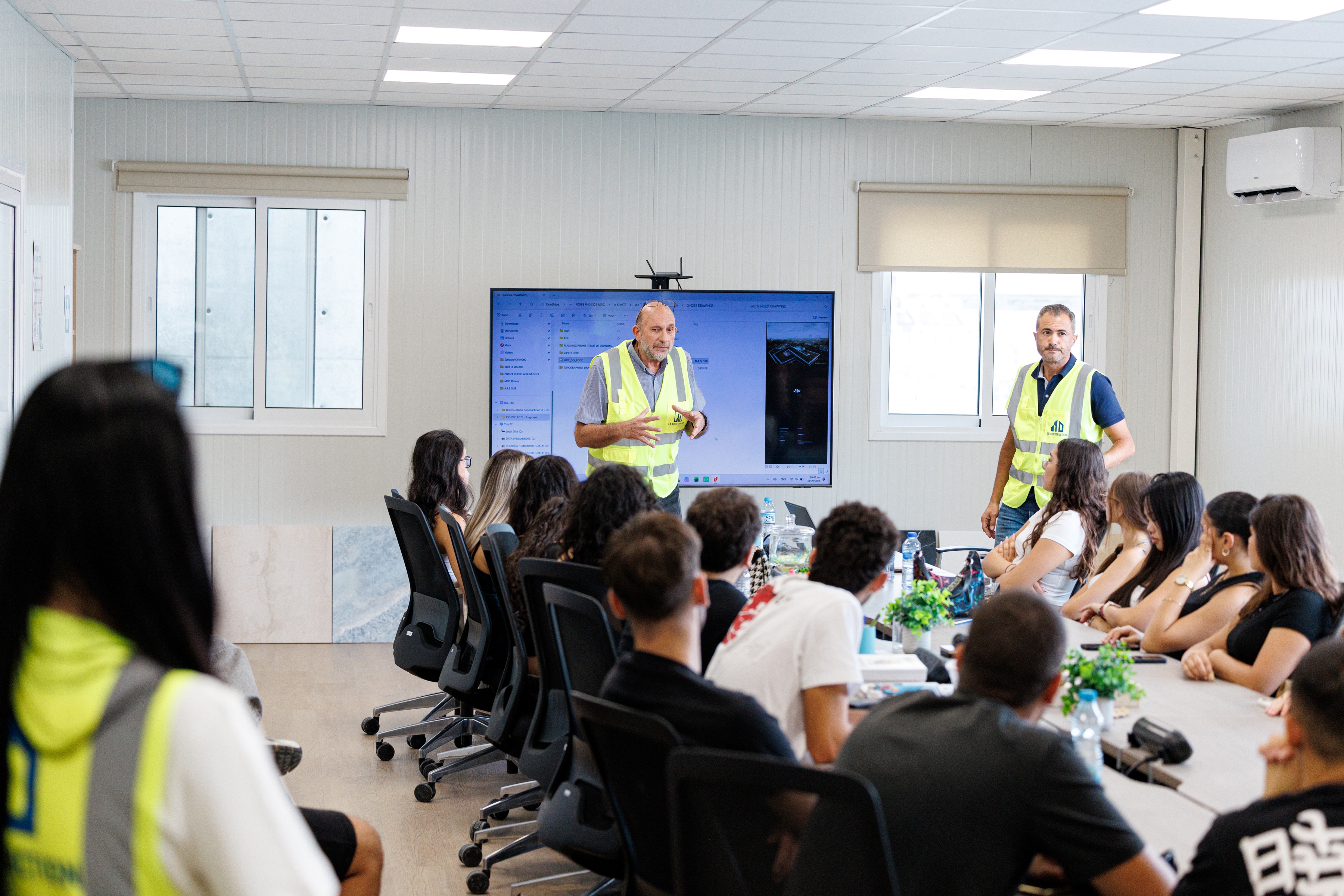
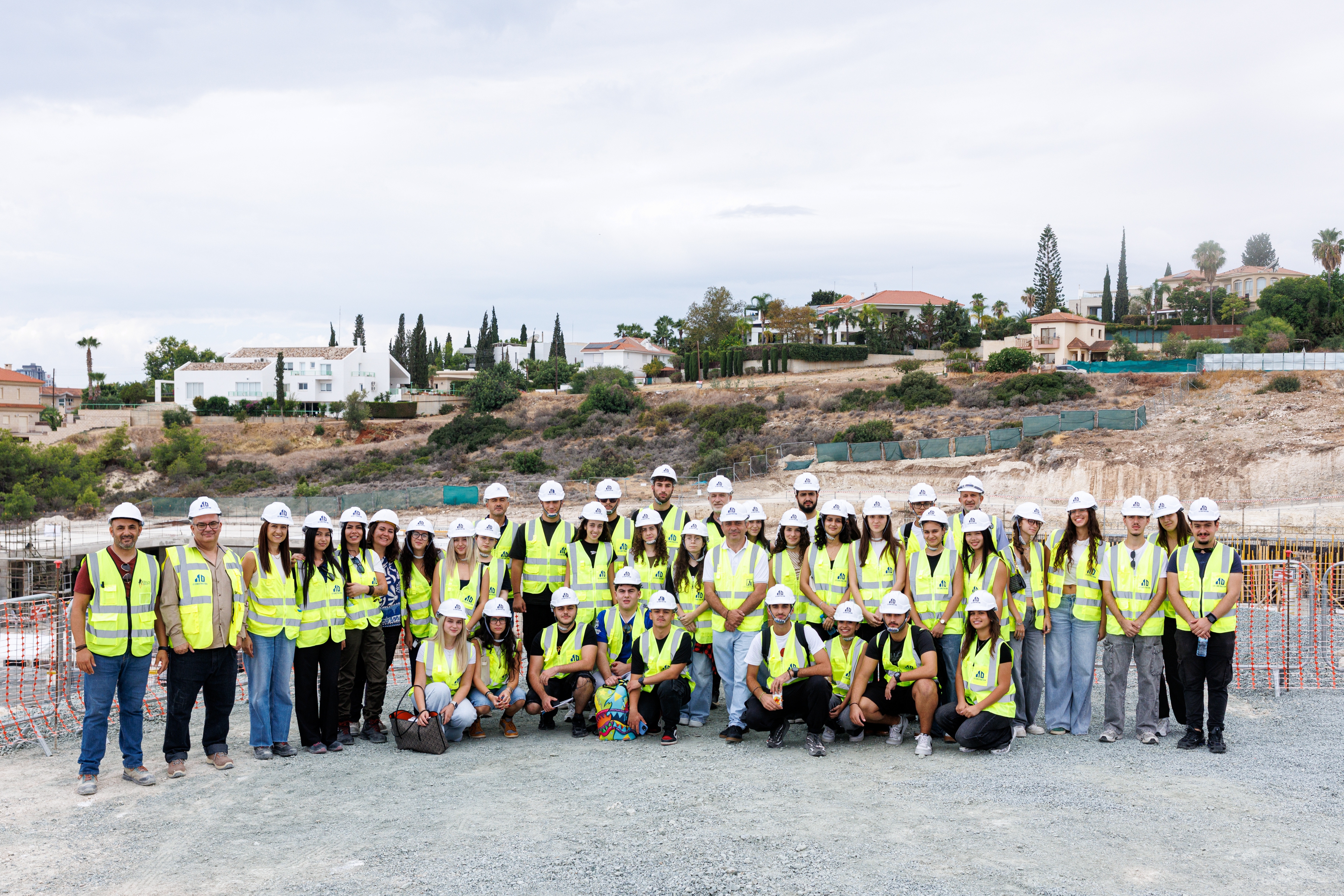
The company continued the initiative by inviting University of Cyprus students to visit one of its construction sites. During the visit, the team shared practical insights into construction processes, workplace safety and the day-to-day realities of delivering a project, giving students an opportunity to experience the industry beyond the classroom.

“Engaging with students is an important part of how we see our role in the industry. We want young people not only to hear about career opportunities, but also to understand how construction works in practice, what skills the sector requires and what paths are open to them. By sharing our experience, we hope to help the next generation make more informed career choices and see the opportunities available within the industry,” said Ilias Demourtsidis, CEO of I.D Construction.

Through initiatives like these, I.D Construction aims to strengthen connections between education and the labour market and to share practical industry knowledge with future professionals.

More information about I.D Construction is available on the company’s official website and on Instagram, LinkedIn and Facebook.

  •  

Leapmotor brings a new era of smart electric mobility to the market

China’s Leapmotor is making a bigger push into Europe, with a clear ambition to bring advanced electric-car technology within reach of more drivers, without the hefty price tag often associated with it. And with the backing of automotive giant Stellantis, the relatively young manufacturer is already making considerable headway.

Founded in 2015, Leapmotor has built its business around technology, developing electric systems, advanced software and digital features while keeping prices competitive. According to the company, the thinking behind this approach is that modern technology should not be reserved for expensive cars, but should be something far more motorists can enjoy.

Its European ambitions received a considerable boost in 2023, when Stellantis invested in the Chinese carmaker, leading to the creation of Leapmotor International. The joint venture is 51 per cent owned by Stellantis and 49 per cent by Leapmotor, giving the brand access to an extensive European sales and after-sales support network.

That matters, particularly for a manufacturer still establishing its name in Europe. Buying a car from a relatively unfamiliar brand is one thing, but knowing there is an established network to provide servicing and support is just as important.

The company’s growth figures tell their own story. According to Leapmotor, more than 600,000 vehicles were sold worldwide in 2025, while total deliveries since its establishment have passed the one million mark. The brand is now present in more than 40 markets, with a global network approaching 1,700 sales and service locations.

European drivers were first introduced to Leapmotor through the compact electric T03 and the larger C10 SUV. Since then, the range has grown to include models such as the B10 and B05, giving customers more choice across different vehicle categories.

And for those who like the idea of electric driving but are not quite ready to rely entirely on battery power, Leapmotor has also developed Range Extender technology. It offers another option for motorists considering the switch, rather than limiting them to fully electric models.

The company’s ties with Europe have been growing in other ways, too. In March 2026, Leapmotor opened its first Innovation Centre outside China, in Munich, bringing the manufacturer closer to European design and engineering expertise.

For a company founded just over a decade ago, the expansion has been remarkably quick. Its approach brings together smart technology, practical cars, competitive prices and an extensive support network, all of which are central to the brand’s ambitions.

And that, according to Leapmotor, is precisely the point. Making modern electric driving more accessible, rather than something reserved for those with the biggest budgets.

  •  

Nurses’ unions oppose proposed changes to hiring from third countries

Nurses’ trade unions have insisted that collective labour agreements protecting the rights and benefits of both existing and future nursing staff, including those recruited from abroad, are non-negotiable.

In a joint statement following Thursday’s House health committee discussion on proposed legislative amendments concerning the employment of nurses from third countries, SEK, PEO, Pasydy and Pasyno reiterated their position that staffing needs could be met by Cypriot nurses.

The unions said regulating employment conditions through collective agreements would help attract staff and prevent further departures from the profession.

They also stressed that language proficiency was primarily a matter of patient safety and quality of care, arguing that requirements must reflect the responsibilities of nursing staff and ensure effective communication with patients and other healthcare professionals.

The unions expressed strong dissatisfaction with the health ministry for failing to convene a meeting with trade unions, nursing representatives and employers’ organisations, despite having been given 15 days to facilitate dialogue on a comprehensive solution.

They said discussions before the House health committee had demonstrated that the conditions for a consensus did not exist and that the proposed legislative amendment should not proceed to the House plenum in its current form.

The unions also dismissed claims made by employers’ federation OEV and the private hospitals’ association (Pasin) as unsubstantiated, arguing that they did not contribute to addressing the nursing sector’s problems.

They warned that they would act as “a barrier to any attempt to downgrade the nursing profession or introduce any regulation that could endanger the quality and safety of care provided in Cyprus’ hospitals”.

The unions concluded that addressing healthcare staffing shortages required serious planning, reliable evidence and meaningful dialogue, alongside policies protecting healthcare standards and strengthening the nursing profession.

  •  

Rookie vs. superstar rematch in spotlight as Warriors host Lakers

The NBA’s flopping controversy figures to come to the forefront Friday night when the Los Angeles Lakers and Golden State Warriors duel in San Francisco.

The longtime rivals met on opening night in Los Angeles, with the Lakers riding 28 points from Luka Doncic and a perfect shooting night from Walker Kessler (12-for-12, 26 points) to a 127-105 home win on Oct. 21.

The victory was overshadowed by postgame remarks made by Warriors rookie Yaxel Lendeborg, who had spent most of his NBA debut matched up with Doncic.

Lendeborg made national news when he claimed he “lost all respect” for the NBA superstar after “seeing all the whining and complaining” on a night when the rookie was whistled for four fouls and Doncic, a six-time first-team All-NBA selection, went to the free-throw line nine times and made every attempt.

Warriors coach Steve Kerr jumped on the flopping bandwagon two nights later when he accused the Memphis Grizzlies of baiting the referees into numerous foul calls by intentionally stumbling and sometimes falling following contact made by a Golden State screener.

The Warriors lost an opportunity to take a lead in the final seconds of a 111-108 defeat to Memphis on Oct. 23 when Draymond Green was assessed one such offensive foul while setting a screen for teammate Stephen Curry.

“It’s a better game when guys aren’t flopping, guys aren’t grabbing each other, hooking each other, running into screens and looking like they got hit by a car,” Kerr said after the loss. “It’s just a better game when the officials have the ability to just say, ‘No. We’re not buying into that.'”

Kerr had no such complaints when the Warriors, after opening the season 0-3, wrapped up a three-game trip with wins at Denver on Monday and Minnesota on Wednesday. Lendeborg contributed 57 points and 21 rebounds to the victories.

Golden State takes that two-game winning streak and a thirst for revenge up against a Lakers team that opened 3-0 before taking a 136-129 home loss to the Portland Trail Blazers on Tuesday.

The Lakers responded by defeating the Los Angeles Clippers 103-87 on Wednesday, getting 23 points from Quentin Grimes and 21 from Collin Sexton. Doncic sat out the second night of a back-to-back, with back tightness stated as the official reason for the night off.

Kessler, in his first season with Los Angeles, has been a consistent force in the middle during the team’s fast start. He was acquired from the Utah Jazz in July for two first-round picks (2031, 2033) and the right to two other first-round pick swaps (2028, 2030) as the Lakers awaited the pending loss of superstar LeBron James, who signed with the Philadelphia 76ers later that month.

Kessler has contributed 14.8 points per game on 75.0% shooting, and he is averaging 8.2 rebounds and 2.4 blocks.

The 25-year-old’s play has been heartily applauded by Doncic, and his few subpar moments have been criticized … by himself. He wasn’t happy with his production in the loss to Portland on Tuesday despite collecting 13 points, eight rebounds and two blocks.

“It’s on me. I take responsibility for that,” he said after the setback. “I didn’t perform tonight. We shouldn’t have lost (when) scoring 130. Giving up almost 140 is not acceptable.”

Kessler went on to say, “I’m glad we play tomorrow,” a reference to the second half of a back-to-back set on Wednesday. He totaled 11 points, nine rebounds, two steals and a block in the game as the host Clippers were held to 87 points.

  •  

CBC governor warns prolonged energy shock threatens inflation outlook

Patsalides says Cyprus must remain vigilant as inflation risks rise

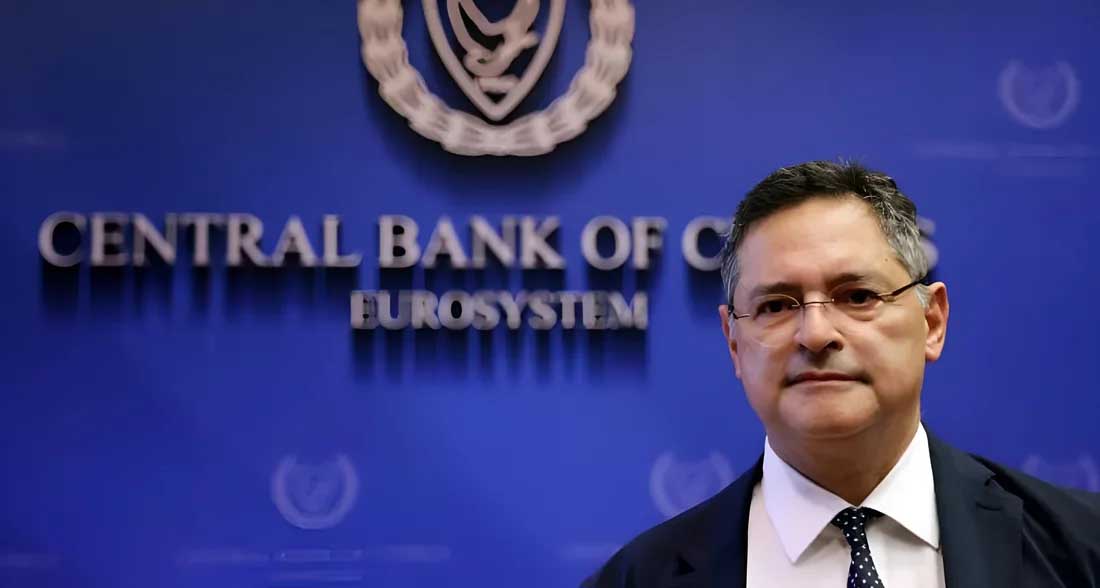
Central Bank of Cyprus governor Christodoulos Patsalides has warned that a prolonged energy shock is intensifying inflationary pressures and increasing risks to the economic outlook, as the European Central Bank (ECB) keeps interest rates unchanged and Cyprus continues to experience elevated price growth.

In a statement following the ECB’s monetary policy decision on Thursday, October 29, Patsalides said the euro area faced a more prolonged period of elevated inflation, while Cyprus’ economic resilience, sound public finances and strong banking sector were helping the country withstand the effects of rising prices.

“The prolongation of the energy shock, the deterioration in the inflation outlook and the ECB’s commitment” were the defining features of the current situation, he said.

The ECB’s Governing Council decided to leave its three key interest rates unchanged, with the deposit facility rate at 2.50 per cent, the main refinancing rate at 2.65 per cent and the marginal lending facility rate at 2.90 per cent.

The decision followed September’s 0.25 percentage point increase, as the conflict in the Middle East continued to push energy prices higher and threaten both inflation and economic growth.

Patsalides said geopolitical tensions and the associated energy shock were continuing to intensify price pressures, with euro area inflation rising to 3.8 per cent in September from 3.2 per cent in August, largely because of higher energy prices, particularly petroleum products.

According to the ECB, energy inflation in the euro area climbed to 18.9 per cent in September from 14.3 per cent in August, while inflation excluding energy increased to 2.3 per cent from 2.1 per cent.

Services inflation also edged higher, reaching 3.2 per cent, compared with 3 per cent in August, while food inflation rose to 1.3 per cent from 1.1 per cent.

Diesel and petrol prices reached new peaks during September, partly reflecting higher refining margins, adding to the pressure on households and businesses.

Despite the deterioration in the inflation outlook, Patsalides said the tightening of financial conditions was helping to contain the extent to which energy-related price increases were spreading throughout the wider economy.

This tightening reflected both the transmission of previous monetary policy rate increases and a significant rise in long-term government bond yields, amid growing concerns about the sustainability of global public debt.

“So far, the indirect effects of the energy shock have remained relatively limited, while meaningful second-round effects have yet to emerge, as reflected in the latest developments in wage indicators,” he said.

Inflation expectations in international financial markets and relevant surveys also remained broadly contained, particularly over the medium and longer term, he added.

The ECB similarly said underlying inflation had remained broadly stable and wages had not yet shown a material response to the energy shock.

However, it warned that the increasing magnitude and duration of the energy shock could eventually drive inflation higher and weigh on economic growth through indirect effects and further price and wage increases.

Economic activity across the euro area had continued to demonstrate resilience, Patsalides said, although elevated uncertainty and more restrictive financing conditions were expected to weigh on growth in the period ahead.

The ECB has reiterated its commitment to bringing inflation back to its medium-term target of 2 per cent, while emphasising that future interest rate decisions would depend on incoming economic and financial data rather than a predetermined path.

“In light of the new data and our overall assessment, we judged that maintaining the key interest rates at their current levels allows the ECB to manage the prevailing uncertainty effectively, while remaining firmly committed to returning inflation to, and maintaining it at, the medium-term target of 2 per cent,” Patsalides said.

Cyprus faces elevated inflation

Turning to the domestic economy, Patsalides said Cyprus continued to demonstrate remarkable resilience despite heightened geopolitical uncertainty, supported primarily by robust domestic demand, favourable labour market conditions and sound public finances.

Nevertheless, inflation remained elevated at 5.2 per cent in September, driven largely by significant increases in energy prices and services costs.

Energy prices rose by 21 per cent, while services inflation reached 7.1 per cent, reflecting persistent pressure in these components of the domestic price basket.

There were also signs that underlying price pressures were beginning to ease, with core inflation, which excludes energy and food, declining to 3.9 per cent in September from 4.5 per cent in August.

Despite this moderation, Patsalides warned that risks to the inflation outlook remained tilted to the upside, underlining the need for continued vigilance and close monitoring of developments.

“In an environment of persistent inflationary pressures, economic resilience becomes a factor of critical importance, acting as an essential buffer against the cumulative effects of rising prices and helping preserve the economy’s growth momentum,” he said.

He identified several ways in which economic resilience could help Cyprus withstand the effects of inflation, beginning with the strength of the labour market and the high level of employment.

These conditions support household disposable incomes, allowing private consumption to remain an important driver of economic activity even as rising prices put pressure on purchasing power.

Sound public finances also provide an important safeguard, Patsalides said, because a resilient economy helps maintain a stable flow of tax revenues.

This gives the government the flexibility to introduce targeted support measures for vulnerable groups without placing excessive pressure on public finances.

He also highlighted the importance of the banking sector’s strong capital and liquidity positions, which reinforce financial stability and support banks’ capacity to finance economic activity effectively.

The resilience of the financial system is particularly important when tighter financing conditions threaten to constrain borrowing and investment, both of which are essential for sustaining economic growth.

Another source of strength is the broadening of Cyprus’ productive base, particularly through the development of dynamic sectors such as information and communication technologies.

A more diversified economy is better equipped to absorb external shocks and offset pressures affecting industries that are more exposed to elevated inflation, Patsalides said.

He added that this resilience, together with recent sovereign credit-rating upgrades, was strengthening Cyprus’ attractiveness as a reliable investment destination, supporting continued foreign capital inflows and improving the economy’s growth prospects.

Prudent policies remain essential

Patsalides stressed that economic resilience alone would not eliminate inflationary pressures, making the consistent implementation of prudent economic policies essential.

“In an environment characterised by global challenges, the consistent implementation of prudent economic policies remains the most effective way to shield the economy from the erosion caused by inflation,” he said.

The governor warned that the combination of upside risks to inflation and intensifying threats to the global economy made a comprehensive and disciplined policy approach increasingly important.

For the ECB, the challenge is to prevent the energy shock from becoming embedded in broader price and wage developments without unnecessarily undermining economic activity.

For Cyprus, the priority is to preserve the domestic conditions that have supported growth while limiting the effects of persistent price increases on households, businesses and public finances.

Patsalides’ assessment underlined the importance of maintaining economic stability, protecting purchasing power and strengthening the economy’s capacity to absorb external shocks as uncertainty over energy prices and the wider geopolitical outlook continues.

  •  

Binance $6.3bn hack explained: How it happened and where the money went

Hackers stole $6.3 billion from Binance, the world’s biggest cryptocurrency exchange, in a record digital asset theft.

How was Binance hacked?

About $6.3 billion of cryptocurrencies were drained from wallets that Binance uses to process transactions, according to the exchange and expert analysis of blockchain records.

Binance said in a statement on X that it initially thought the attack involved a compromised laptop. “However, our subsequent investigation has uncovered additional points of breach,” it added, without elaborating.

The exchange operates a secure asset fund for users, a $1 billion bitcoin reserve designed to protect customers in the event of a security breach, according to its website.

Co-CEO Richard Teng said losses would be covered by the fund and company resources.

According to US blockchain analytics firm TRM Labs, the attackers compromised Binance’s “signing infrastructure”, which authorizes transactions, allowing them to issue instructions that emptied the affected wallets.

The bulk of the heist unfolded in about 20 minutes, blockchain records show, beginning shortly after 2000 GMT on Thursday.

Once the funds were moved, the attackers raced to shift them beyond the reach of Binance counterparties and stablecoin issuers, which have frozen roughly half of the stolen assets.

An unusual feature of some cryptocurrencies, including major stablecoins such as Tether’s USDT and Circle’s USDC, is that their issuers can freeze them remotely.

“In layman’s terms, the attacker may not have stolen the vault key, they may have hijacked the system that tells the vault to release money,” said Joshua Chu, a Hong Kong lawyer who works on crypto cases.

Who is suspected of carrying out the Binance hack?

Several US blockchain analysis firms said the attack bears similarities to previous operations attributed to North Korean hackers.

Teng said Binance’s investigation had not yet identified the attackers, while North Korea routinely denies involvement in cyberattacks and cryptocurrency thefts. North Korea’s mission in Geneva and embassy in China did not immediately respond to requests for comment.

TRM said the breach shared characteristics with last year’s attack on crypto exchange Bybit, which the FBI attributed to North Korean hackers. The firm said it was highly confident the same group was behind the Binance theft.

Chainalysis said funds stolen in an attack last month on Bitget were being mixed with proceeds from the Binance breach.

Where did the stolen $6.3 billion go?

About half the stolen assets were stablecoins that have since been frozen by issuers including Tether, Circle, Ripple and World Liberty Financial, the Trump family’s crypto venture.

That doesn’t mean the coins will be returned to Binance, but it significantly limits the attackers’ ability to convert them into cash.

TRM said some of the funds had already been posted as collateral to borrow ether and estimated that about $2.4 billion worth of bitcoin and ether is beyond reach.

“No company issues bitcoin or ether and no company can freeze either one,” said Patrick Tan, general counsel of ChainArgos, a blockchain intelligence firm in Singapore.

“The bitcoin and ether can be stopped only if the attacker sends them to a crypto-asset exchange or broker that is able and willing to freeze them, or if law enforcement obtains the private keys.”

Market participants said the attackers would likely mix the stolen coins with other assets or use lesser known coins and exchanges to try to move the proceeds.

“The more time passes, the less likely they will be able to fold those funds into other exchanges or payment providers — they essentially get blacklisted,” said Bernardo Brites, CEO of Trace Finance, a stablecoin infrastructure company.

“In reality a lot of the proceeds of hacks … (can only be laundered) in the first few hours, but after that happens, you have a lot of different players who know those are marked funds … and they usually sit there for years.”

What happens next after the Binance hack?

The theft is the latest in a series of major digital asset breaches. Attackers stole $2.9 billion of cryptocurrency across nearly 150 incidents last year, according to TRM Labs.

The attack has also rattled confidence in the sector. Cryptocurrencies fell on Friday and the total market value of stablecoins declined, suggesting investors were pulling money from digital assets.

  •  

Support programmes staff to strike indefinitely over unpaid wages

Workers in the support programmes of the education ministry will begin an indefinite strike on Monday, after unions cited many colleagues have gone five months without pay.

Trade unions SEK and PEO said the ministry has still not fully implemented legislation passed by the House on April 21 which regulates employment in specific programmes.

According to the unions, the law sets out staffing procedures, but these are not applied to every programme, which has left a number of workers without a job.

They also claim that posts meant for fixed-term staff are being filled by employees already on the permanent roll, who work overtime to cover them.

The unions further accused the government of repeatedly postponing a political decision on paying employees whose contracts have not been terminated.

They said the delay has left these workers with no income and no right to unemployment benefit.

“Workers remain unpaid for five months,” the unions said, describing the situation as the result of “continuous postponements” by the government.

The strike marks an escalation of measures the workers have taken over the unresolved labour issues, with a protest march planned for next Thursday, starting at the finance ministry and heading towards the presidential palace.

The unions have called on workers to turn out in large numbers for both the strike and the march, and have insisted action would continue until “substantive solutions” are provided to the problems they have raised.

  •  

Irish government to scope out possibility of unity with Northern Ireland for first time

Ireland will set up a government body that would for the first time undertake research and preparations for the possibility of future unity with British-run Northern Ireland, Prime Minister Micheal Martin was quoted as saying on Friday.

Martin told the Irish Times that the new body would be tasked with scoping out the models and challenges for different potential outcomes, including Northern Ireland remaining part of the United Kingdom or maintaining its devolved entity but as part of a united Ireland.

He was fleshing out an idea first referenced in a speech this week, when he said a new approach was required to carefully address the need for an “independent and dispassionate base of knowledge on which you can have a credible discussion about constitutional futures.”

“What has concerned me about this push for a border poll since Brexit is that it’s partisan, it’s a one-sided advocacy approach,” Martin told the Irish Times.

“It’s sort of putting forward the idea that this would be easy and that it’s inevitable and our time has come. And it’s almost that this would be a victory for nationalism, as opposed to an approach which genuinely seeks to hear all voices.”

Under the terms of the 1998 Good Friday peace agreement, the British government is obliged to call a referendum on Irish unity if it appears likely that a majority of Northern Irish voters would back it.

While opinion polls consistently show a majority in favour of remaining in the UK, the gap has narrowed since the UK voted to leave the European Union a decade ago and Irish nationalist parties like Sinn Fein stepped up calls for a referendum.

Martin’s proposal, the first steps of which he said he would bring to cabinet before the end of the year, is the latest gradual move by the dominant government parties south of the border to consider what a united Ireland might look like.

His government partner Fine Gael will publish what it has described as a blueprint for a unified island at its annual conference next week.

  •  

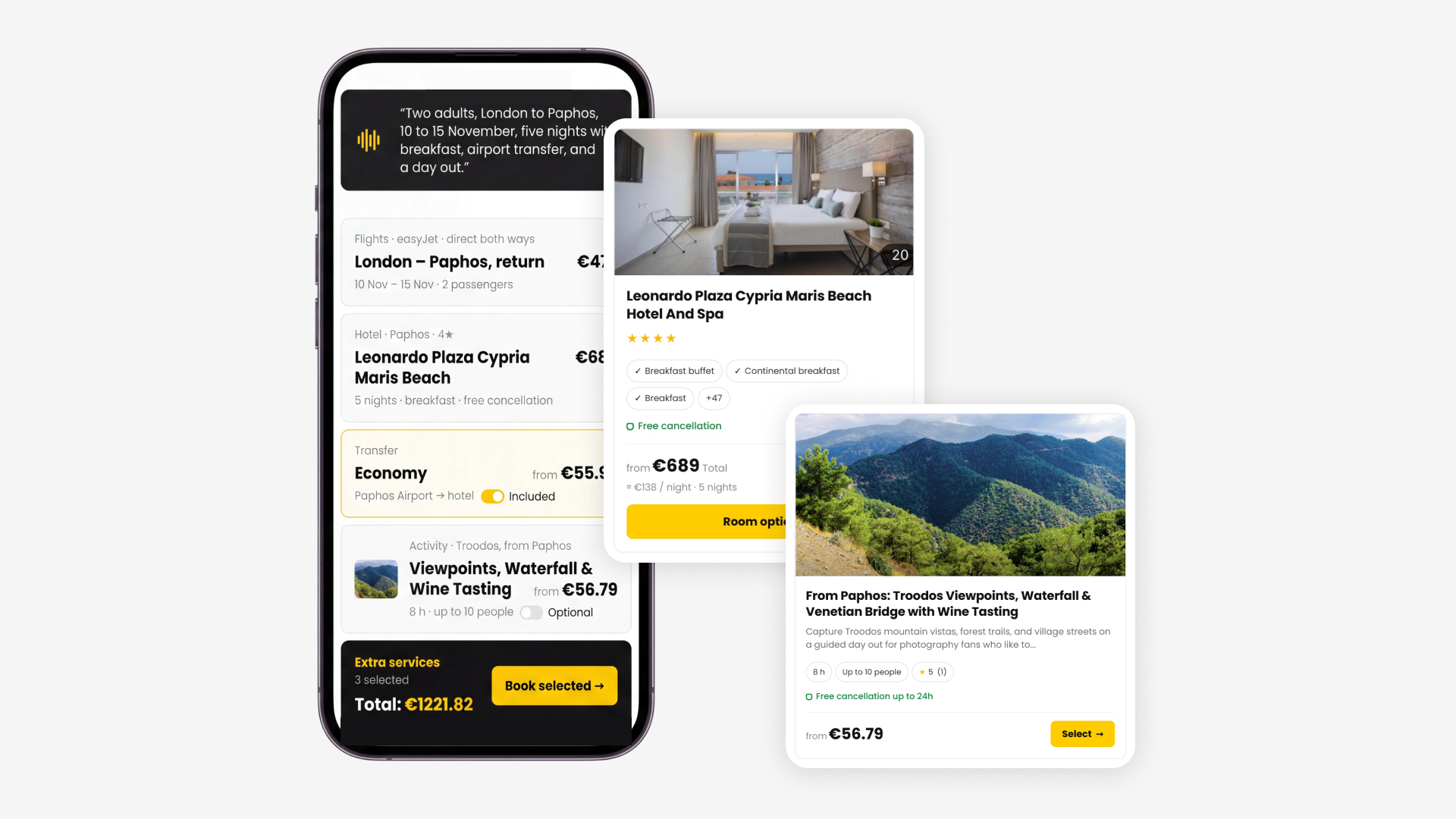
GetOffers.com: Making business travel simpler

Before GetOffers.com, I worked in travel tech for several years. I started in customer support and later moved into sales. In both roles, I kept hearing the same complaints from business clients: a service fee was added to every ticket, and companies paid it because nobody had offered them another way to book.

Smaller firms had it worse. Most corporate travel tools were designed for large organisations, so a company of 40 people would end up booking through consumer websites. At the end of the quarter, the finance team had no clear picture of what had been spent or why.

There is no shortage of flights or hotels. What companies were really paying for was a chain of intermediaries, each adding its own margin, with no one competing for the booking.

We launched GetOffers.com this year to give businesses net rates. A company describes the trip in one message, and competing offers from suppliers come back in the same conversation, alongside approval rules and reporting. Because we started recently, we could build the product around an AI assistant from the beginning.

A model for three markets

Large online travel agencies are built for people booking holidays. Established corporate platforms mostly serve large enterprises, with the pricing and implementation time that come with that. A mid-sized company that travels frequently but has no travel manager doesn’t really fit either model.

We work with three groups. Companies get net rates and can set travel policies, approve trips and see reports in the same place. Connecting is free, and in our standard model, we don’t add a GetOffers booking fee. We make our money through agreements with suppliers, including revenue sharing. The customer should see the full price and the supplier’s terms before approving the trip.

Travel agencies use the platform to build trips from net rates. The assistant assembles the whole trip from competing supplier offers, usually the most time-consuming part of a manager’s work, and the agency keeps its margin.

Hotels can offer guests transfers, excursions and eSIMs directly, without paying commission to an intermediary.

For clients, this mainly means lower prices and less time spent on bookings. For us, it means we don’t depend on a single type of customer.

Where AI helps

You can speak to the assistant or type to it at any time. A typical request might be: “I have a meeting in Limassol on Tuesday morning, I need to be back on Wednesday evening, and it has to be within our policy.”

The assistant puts competing offers side by side and highlights the one that fits best. Once the traveller or their manager agrees, it books everything, including the flight, hotel and airport transfer.

Before booking, though, it should ask about things you might not have mentioned. Are you taking equipment with you? Will you be arriving at the hotel late? Those answers could change what it recommends. I’d rather it asked than left you to sort out a problem when you get there.

At the moment, it’s most useful for routine work: searching, comparing prices, combining several services into one trip and checking everything against company rules. When a trip is complicated or something unusual comes up, a person still needs to make the decision. We tell clients that from the start.

Over the next five years, I expect assistants to do more before and after booking. If a team is going to a trade fair and nearby hotels are filling up, the assistant should warn them while rooms are still available.

With cancellations, it gets harder. A replacement flight might get you to the right city, but too late for the meeting. The hotel and transfer may need changing, too. That’s the work I’d like the assistant to take on, with the traveller agreeing to any changes in price or booking conditions.

Expense reporting will change as well. Most reports should be generated from booking data, so employees don’t have to collect receipts after every trip.

I don’t expect travel agents to disappear. Those who use these tools will be able to handle more clients, putting pressure on those who don’t.

Earning clients’ trust

GetOffers.com launched this year, and we’re not publishing figures yet. It’s too early for the numbers to say much.

The hardest part so far is getting companies to trust us with their travel. Some have used the same agency for years. Their agent knows who prefers an early flight, who approves the budget and who to call when plans change. I understand why they wouldn’t switch on price alone. We have to show we understand how they work and that moving their bookings to us won’t mean more work for them.

Working with three types of clients also makes growth harder to plan. Companies come to us for prices and choice, while suppliers want to see booking volume before offering good rates. We’ve already signed agreements with several major wholesalers, which lets us offer competitive prices before volume builds up.

Every client comes to us through direct conversations, and each one teaches us something about the product. The clients most open to trying it are independent agencies, whose managers spend hours assembling trips by hand, and mid-sized firms that travel internationally but have no one dedicated to travel. Both feel the problem most directly, so that is where we are focusing.

Growth plans and Cyprus

In three years, I’d like GetOffers.com to be the first place a travel agency or a company without a travel department goes when they need to put together a trip.

We’re currently concentrating on the product and our first clients. We’ll consider raising money when there’s a clear need for it, and we’re happy to talk to investors who know the travel sector. We plan to expand into new markets as client demand appears, rather than following a fixed timetable.

On the product side, we want the assistant to handle more of the trip after booking. That includes dealing with delays and cancellations, recording expenses automatically and connecting through our API to the accounting and HR systems companies already use.

Cyprus is an important market for us. It has been a difficult year for tourism here, and hotels are looking closely at every source of revenue. Services beyond the room, such as transfers or activities, can make a real difference. Hotels should be able to sell them without giving a large share to intermediaries.

The hotel association has just called for AI to become part of the national tourism strategy. I agree, but for smaller hotels, the tools have to be affordable and simple to set up. Otherwise, only the large chains will benefit.

Business travel is the other part of the picture. Limassol and Larnaca are home to many international companies whose staff travel constantly and the government is now supporting conference tourism outside the summer months. Business trips and events help hotels fill rooms in the quieter season, and that is where we would like to be useful.

https://getoffers.com/

  •  

Reservoir levels rise to 35.1% after rainfall

Reservoir levels in Cyprus have increased to 35.1 per cent due to recent rainfall, amounting to 101.9 million cubic metres of water, which is over three times last year’s capacity.

At the same time last year, the levels had reached 10.7 per cent capacity, or 31.3 million cubic metres.

Approximately 220,000 cubic metres of water flowed into the reservoirs on Thursday alone.

Water development department executive engineer Alexios Frangeskou said the largest inflows occurred at the Kouris and Arminou reservoirs.

Additional inflows were noted at reservoirs that are supplied by the southern conveyor project, which is mainly located in the Limassol and Larnaca districts, as well as at Asprokremmos and Evretou reservoirs.

Frangeskou said the inflows were encouraging for this time of the hydrological year, but they were not sufficient to make a significant change to the overall water balance.

He warned that reservoirs were still only about one-third full and that there should be no complacency.

Continued rainfall, especially during the winter months, could lead to further inflows, he pointed out.

Last year, water started entering reservoirs much later because the catchment areas had nearly dried out.

In the meantime, water development department projects are ongoing, with the mobile desalination unit at Episkopi expected to become operational soon.

The department also intends to initiate tenders for several other major projects, according to Frangeskou.

  •  

What online founders should know before choosing a Seychelles company

Across Europe, entrepreneurship increasingly happens on a laptop. Online sellers, freelancers, consultants, traders and software founders can serve customers in any country, yet the legal home of their business is still a choice they must make. For many of them, that choice is a Seychelles International Business Company (IBC).

Before comparing jurisdictions, it is worth separating marketing from mechanics. A company structure is a legal tool. Whether it suits a particular business depends on how that business operates, where its owners live and which rules apply to them.

How a Seychelles IBC works

Seychelles companies are governed by the International Business Companies Act 2016 and supervised by the Seychelles Financial Services Authority (FSA). Incorporation is handled through a licensed registered agent, who also provides the company’s registered office in Seychelles.

The basic requirements are comparatively light:

  • a minimum of one director and one shareholder;
  • no requirement for a local resident director;
  • no statutory minimum share capital; and
  • registered shares only, as bearer shares are prohibited.

Directors and shareholders may be individuals or corporate entities, and may be of any nationality or residency.

Beyond holding companies: why online businesses are choosing Seychelles

Seychelles has long been used for traditional holding structures, but its profile has changed. Today it has become a popular choice for internet-based businesses. E-commerce sellers and dropshippers use Seychelles companies to contract with suppliers and sell through global online storefronts. Freelancers, developers and digital agencies use them to invoice international clients and bring their income into a single business entity. Online traders and Web3 teams use them to manage treasuries and digital assets, while shipping, import-export and intellectual property businesses use them alongside the classic holding company.

The reasons are practical. Incorporation can often be completed within a few business days, set-up and renewal costs are modest, and a single person can act as both director and shareholder. There is no minimum share capital and no requirement for local premises or staff. For a founder whose customers, suppliers and platforms are spread across many countries, a lean, remotely managed company is a natural fit. Seychelles also generally does not tax the income of an IBC that is earned outside the country, although, as outlined below, a founder’s home country may still apply its own rules.

It is not a shortcut for every model. Operating a custodial crypto exchange or wallet from Seychelles requires a regulated licence, payment platforms and marketplaces apply their own documentation checks, and sellers remain responsible for VAT in the countries where their customers live.

Transparency is part of the picture

A common misconception is that offshore companies operate without oversight. In practice, Seychelles has strengthened its framework in line with international standards. Under the Beneficial Ownership Act, the individuals who ultimately own or control a company must be identified to the registered agent, and that information is reported to a secure national database. It is not part of the public register, but it is available to authorities.

Companies must also keep proper accounting records that explain their transactions and financial position, and retain supporting documents for at least seven years.

Economic substance

Economic substance rules do not apply to every Seychelles IBC. They primarily affect companies carrying out defined “relevant activities”, such as headquarters, financing, shipping, distribution or fund management. Companies in scope must demonstrate genuine activity in Seychelles. Pure equity holding companies face lighter requirements. Founders should confirm early whether their activity falls within the rules.

What Cyprus-based founders must consider

For readers living in Cyprus, the most important point is that forming a company abroad does not remove obligations at home. Individuals who are tax resident in Cyprus are generally taxed on worldwide income, and a foreign company that is managed and controlled from Cyprus may itself be treated as having a Cyprus tax presence. Reporting and disclosure rules can also apply to owners of foreign entities.

Banking is a further practical consideration. Banks and payment providers carry out their own due diligence on ownership, activity and source of funds, and applicants should expect detailed questions regardless of where a company is registered.

For these reasons, founders are well advised to take independent tax and legal advice before incorporating, and to match the structure to genuine commercial needs.

Choosing a provider

Because incorporation must run through a licensed registered agent, the choice of provider matters. Founders should check that the agent is licensed, that fees are clearly stated, that annual renewal costs are explained and that ownership information is handled securely. An independent company formation agent can now complete the process fully online for non-residents, but speed should never replace compliance.

Conclusion

A Seychelles IBC is a practical, low-cost vehicle for e-commerce, freelance and other online businesses, but it is not a way around the rules. Understood properly, with its transparency and substance requirements, it is one of several options available to international founders. Those ready to proceed can start a Seychelles company online.


DISCLAIMER – “Views Expressed Disclaimer – The information provided in this content is intended for general informational purposes only and should not be considered financial, investment, legal, tax, or health advice, nor relied upon as a substitute for professional guidance tailored to your personal circumstances. The opinions expressed are solely those of the author and do not necessarily represent the views of any other individual, organization, agency, employer, or company, including NEO CYMED PUBLISHING LIMITED (operating under the name Cyprus-Mail).

  •  

Chemonics in Syria: A Damascus office and 14 years of locally led partnership

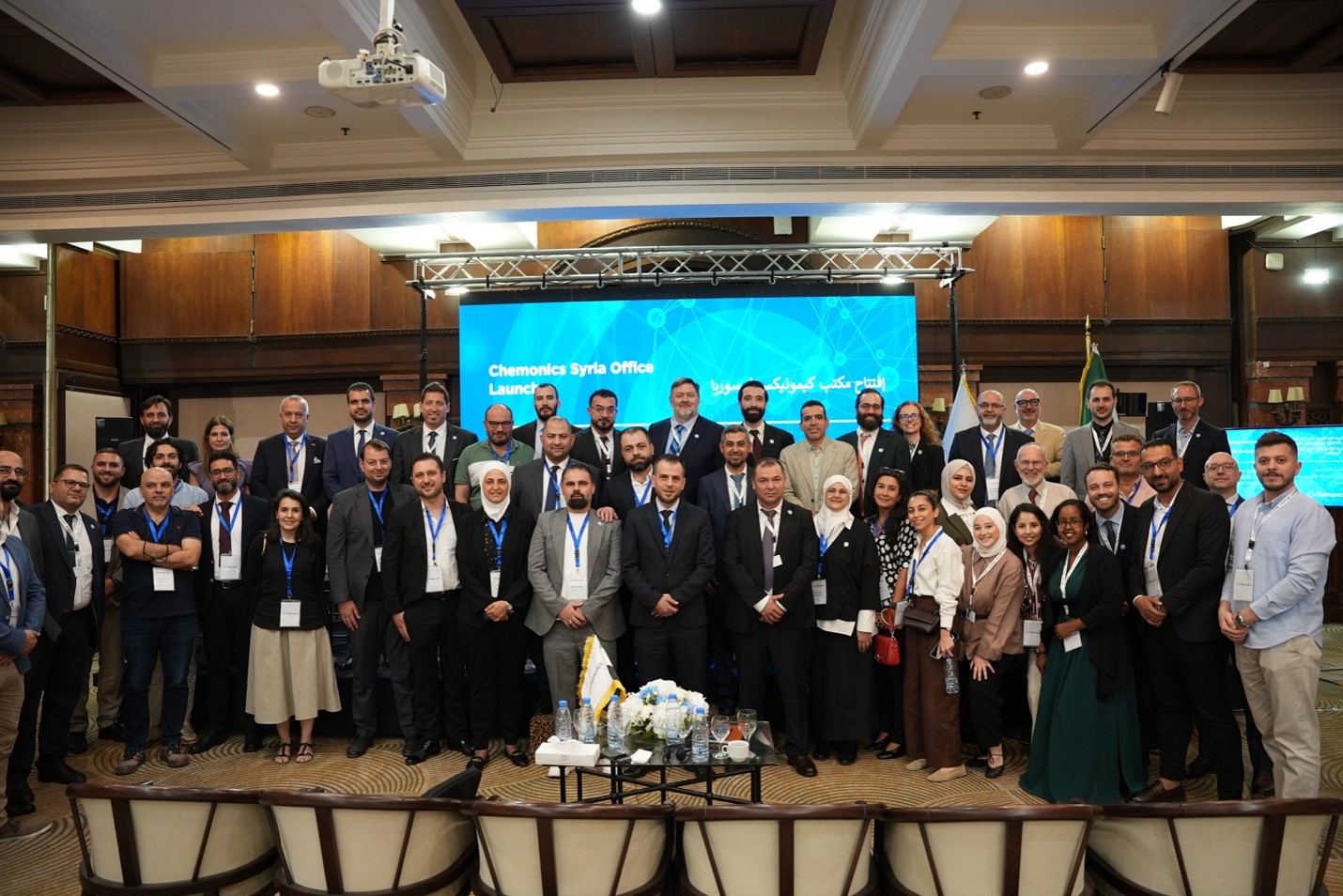
Chemonics International opened its office in Damascus on July 5, 2026, and used the occasion to mark 14 years of work in Syria. Syrian leaders, partner organizations and program alumni attended. The agenda they set out runs well past emergency relief, into education, essential services, livelihoods, economic recovery, and the institutional capacity needed to support Syria’s new government, private sector and civil society.

Jamey Butcher, the company’s chief executive officer and chair, said: “Today is a celebration of what Syrian people have achieved through some of the hardest years their country has known. For 14 years, Chemonics has been honored to stand alongside Syrian communities, organizations, and institutions — and the opening of our Damascus office reflects our continued commitment to Syrian-led recovery as Syria builds its future.”

14 years of Chemonics’ work in Syria

The Syria portfolio dates to 2012. Chemonics puts the value of that work at more than $572 million across 24 projects, figures the company gave the Syrian Arab News Agency, and says nearly 600 local Syrian organizations have benefited.

Those projects have names that mean more inside Syria than outside it: Idarah, the Syria Regional Program, the White Helmets Assistance Program, Manahel and Injaz. Through Idarah and the Syria Regional Program, Chemonics worked with Syrian partners to reach more than one million peopletogether reached more than one million people. Together, the two programs sustained essential services, strengthened local governance and civil society, and rehabilitated critical infrastructure in communities across the country.

Chemonics’ work in education: the Manahel program

Manahel takes its name from the Arabic word for fountains. The Syria Education Programme it names is funded by UK aid and implemented by Chemonics.

Its first phase ran from 2018 to 2023 and reached more than 600,000 children across Idlib and Aleppo. A second phase opened in 2024. Chemonics reports that Manahel has now reached more than 950,000 students and works alongside education directorates in Aleppo and Idlib.

The program’s remit runs across the school system. It covers teacher compensation, curriculum development, child protection, girls’ education, psychosocial support, literacy and numeracy instruction, and accommodations for students with disabilities.

In Northeast Syria, a separate program, Injaz, worked in post-ISIS areas through learning, vocational training, educator development and school rehabilitation. It supported more than 12,300 children and provided psychosocial support to more than 19,000 people.

Emergency response and the Syria Civil Defense partnership

Chemonics’ emergency response work is organized around rapid analysis, procurement and logistics, emergency financing, and crisis communications. In Syria, the clearest expression of it has been the long-standing partnership with the Syria Civil Defense, the volunteer rescue organization known internationally as the White Helmets.

Chemonics helped strengthen training, operational systems and institutional capacity for more than 3,000 Syrian responders. Those responders are credited with saving over 127,000 lives.

Raed al-Saleh, Syria’s minister of emergency and disaster management, spoke at the Damascus event. “Chemonics believed in the capabilities of the Syrian people and their determination to confront and overcome challenges,” he said at the Damascus event. “This belief has had a tangible impact on the lives of millions of Syrians and has left a lasting mark on the landscape of humanitarian and development work over the past years.”

On the next phase, he said: “What began as collaboration under exceptional humanitarian circumstances is evolving into a broader partnership that supports early recovery, strengthens institutional capacities, drives sustainable development, and empowers communities to build a more stable and prosperous future.”

Locally led development as the operating model

Nearly 600 local Syrian organizations have been part of this work. Partnerships on that scale depend on people on the ground and relationships built over many years.

Taj Alkaisi, a deputy team lead for Chemonics, said: “Syria’s recovery requires long-term commitment, trusted partnerships and practical delivery. We are proud to continue working alongside Syrian partners to strengthen institutions, support communities and help create the conditions for a stable and prosperous future.”

What the Damascus office signals about Syria’s recovery phase

Bahjat Hajjar, representing the Ministry of Social Affairs and Labor, told the event that cooperation among government institutions, civil society, the private sector, and international partners is essential to Syria’s recovery and reconstruction. He cited the government’s Syria Without Camps initiative, which aims to help displaced Syrians return home safely, as an example of where that cooperation is needed.

Helping families return home touches housing, schools, clinics, water, documentation and livelihoods, and brings many ministries and partners together at once.

Chemonics’ work in Syria has been building toward that transition for some time. Teacher training and curriculum development inside the education programming, Syrian responders trained through civil defense work, and a partner network built inside the country all point the same direction. With an office in Damascus, Chemonics can work more directly alongside the Syrian institutions, partners and communities leading the country’s recovery.

Chemonics enters this phase with 14 years of work alongside Syrian colleagues, partner organizations and institutions, and a commitment to supporting Syria’s new government, private sector and civil society through the transition. Its new office in Damascus brings the company closer to the Syrian institutions, partners and communities leading the country’s recovery.


DISCLAIMER – “Views Expressed Disclaimer – The information provided in this content is intended for general informational purposes only and should not be considered financial, investment, legal, tax, or health advice, nor relied upon as a substitute for professional guidance tailored to your personal circumstances. The opinions expressed are solely those of the author and do not necessarily represent the views of any other individual, organization, agency, employer, or company, including NEO CYMED PUBLISHING LIMITED (operating under the name Cyprus-Mail).

  •  

RE/MAX Cyprus recognised among the Best Real Estate Agencies in Europe at the European Property Awards 2026–2027

Two prestigious 5-Star Awards and a nomination for Best Real Estate Agency in Europe reinforce RE/MAX Cyprus‘ position as one of the most trusted real estate agencies in Cyprus.

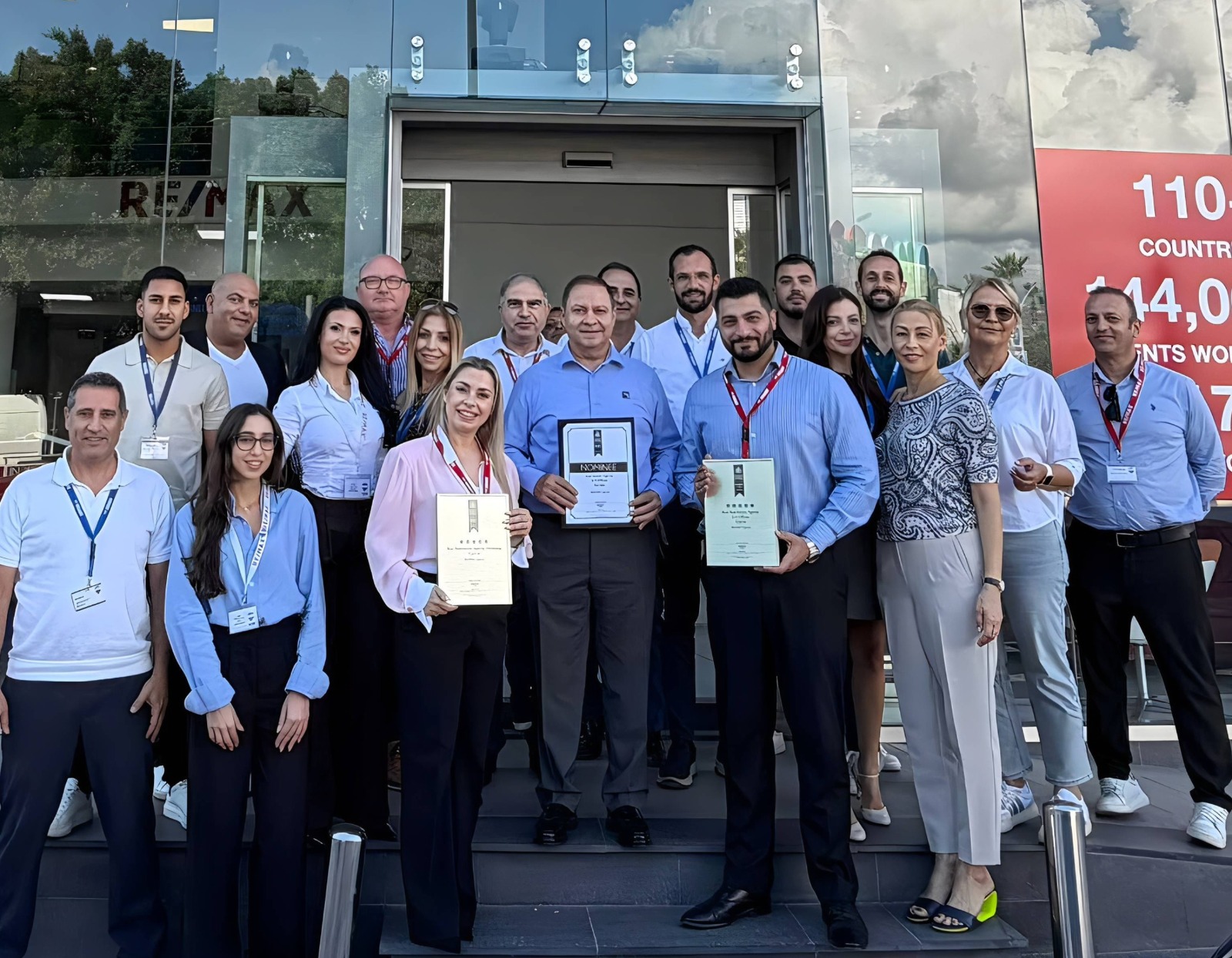
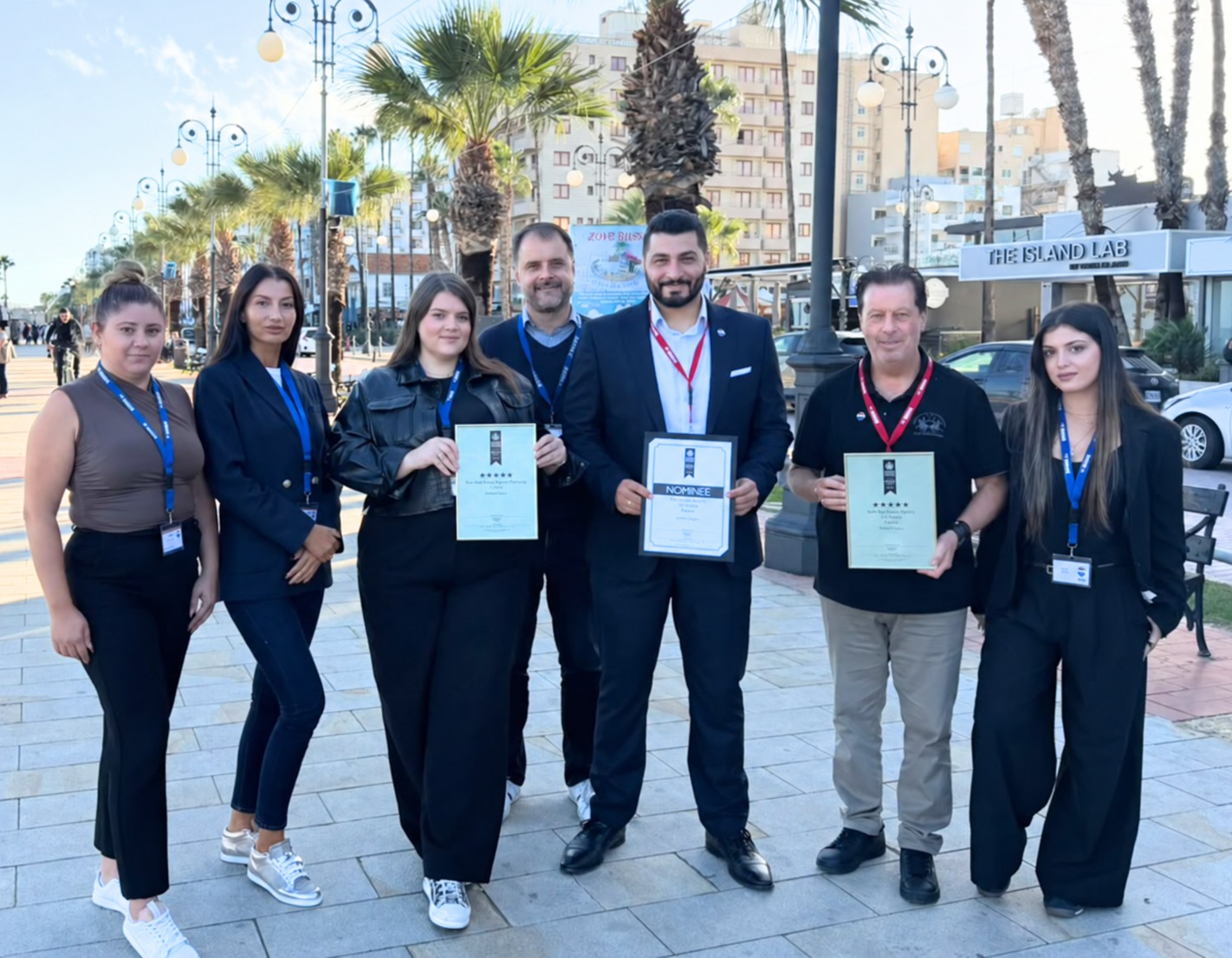
RE/MAX Cyprus has achieved a major international milestone, winning two prestigious 5-Star Awards at the European Property Awards 2026–2027, held in London.

The company received the highest distinction in two categories:

• Real Estate Agency (2–4 Offices) – Cyprus, recognising excellence in real estate services.

• Real Estate Agency Marketing – Cyprus, recognising innovation, strategy and marketing effectiveness.

Additionally, RE/MAX Cyprus secured a nomination for Best Real Estate Agency in Europe, placing the company among Europe’s leading real estate agencies.

Setting New Standards in Cyprus Real Estate

With four offices across Limassol, Nicosia, Larnaca, and presence in Paphos, RE/MAX Cyprus continues to strengthen its position as a top real estate agency in Cyprus, combining local market expertise with the strength of the global RE/MAX network.

Christos Nicolaou, Owner & Regional Director of RE/MAX Cyprus, commented:

“These awards represent a historic achievement for our organisation. Our vision has always been to raise industry standards through exceptional people, continuous education and innovation.

This international recognition proves that a Cypriot real estate company can compete among Europe’s finest. Above all, this success belongs to our people.”

Investing in People, Technology and Excellence

RE/MAX Cyprus continues investing in artificial intelligence, digital marketing, professional training and agent development, delivering effective property marketing and exceptional client service.

Beyond international recognition, the company’s mission remains clear: to attract, develop and empower real estate professionals while providing outstanding property services across Cyprus.

RE/MAX Cyprus is not simply focused on growth. It is building an environment where real estate professionals can succeed, excel and build rewarding careers.

International recognition. Even greater ambitions.

RE/MAX Dealmakers – Tel 00375 25507001

https://www.remax.com.cy

  •  
❌