An employee for an accountant’s office in Paphos lost €6,000 when she received an email, appearing to be from a bank, asking her to update her personal details.
The police said on Friday that the woman followed the instructions and soon afterwards found the sum had been taken from her bank account.
She immediately filed a complaint with the police.
Following the incident, the police have repeated warnings against following links and uploading personal details.
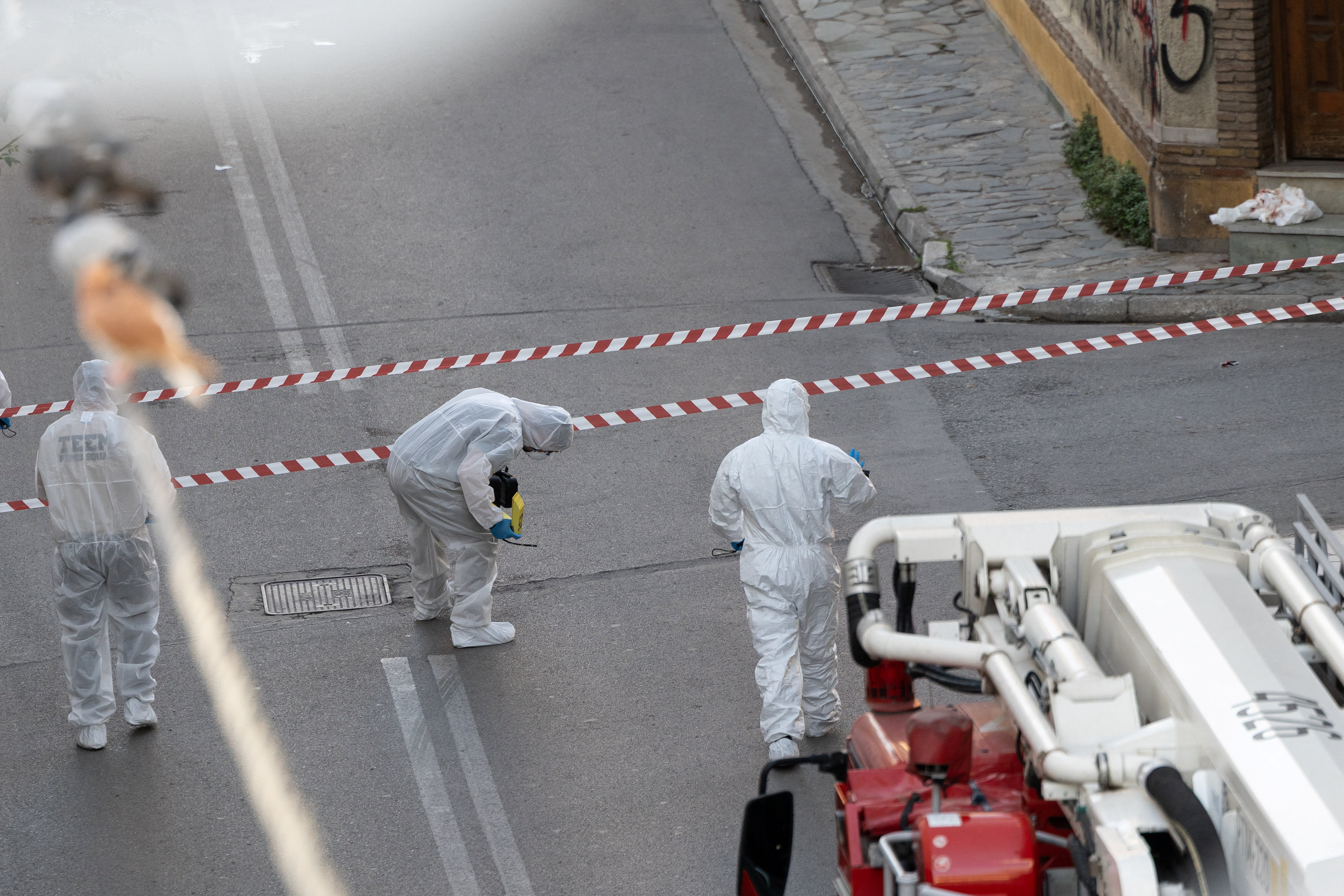
Greece has arrested two Greek men and an Albanian national suspected of stealing copper gas pipes from a building, causing a leak that led to a deadly explosion in central Athens last month, authorities said.
Six people were killed during the September 25 blast in the tourist district of Plaka, four Americans among them.
Following an investigation, experts with the fire brigade’s crime investigation unit concluded that hours before the blast the suspects damaged the two-storey building’s main natural gas supply infrastructure as they removed the copper pipe parts, fire brigade officials said late on Thursday.
The explosion occurred early in the morning when one of the residents turned the light on.
The suspects are expected to appear before a prosecutor on Friday.
The Republic of Cyprus has reiterated its position that the 2019 Turkey-Libya MoU on maritime delimitation is “null and void”.
Speaking during a UN Security Council open debate on emerging technologies and maritime security, Cyprus’ representative Maria Michail said “this purported agreement is null and void, does not comply with international law and, in particular, the rules pertaining to the conclusion of treaties as well as UNCLOS.”
“Geography cannot be changed, nor can the sovereign rights of states be disregarded through arbitrary maritime delimitations,” she said.
Michail added that “article 121 of UNCLOS clearly establishes the regime of islands and their entitlement to maritime zones.”
She stressed that the UN Convention on the Law of the Sea is fundamental to maritime security, legal certainty and the peaceful settlement of disputes, adding that its provisions reflecting customary international law are binding upon all states.
“The Mediterranean is our common sea. Its security and stability depend on good neighbourly relations grounded on respect for international law and the sovereign rights of all coastal states,” she said.
Addressing the main theme of the debate, she reaffirmed Cyprus’ position that “technological progress must remain anchored in international law”, particularly the UN Charter and UNCLOS.
‘Tis the season to get spooked, and these upcoming film screenings promise to do just that. Evenings all about the dark, mysterious and spine-chilling forces are coming up this weekend and throughout the first week of November, extending the Halloween spell.
Motherwitch
From October 30 to November 4, Premier Cinemas at the Nicosia Mall will screen Cyprus’ first horror and folk-gothic film, Motherwitch, directed by Minos Papas.
Set in 1882, the film follows Eleni, who reaches into the shadows to resurrect her lost children, but instead summons the ancient Kalikantzari of Cypriot lore. She must now confront the storm of her grief and anger, and lift the curse.
CyFi Fest Halloween Double Feature
On Saturday, October 31, CyFi Fest gets into the mood for its next edition next year and organises a pop-up Halloween Film night, featuring two movies at Apollon Cinema in Limassol.
The night begins with a celebration of the 25th Anniversary of Donnie Darko, Richard Kelly’s iconic cult sci-fi classic.
Then, in a dark turn, the supernatural techno-horror film Bloat, directed by Pablo Absento, is screened, starring Ben McKenzie and Bojana Novakovic.
Introducing the film is producer Maria Zatulovskaya, whilst after the screening a live Q&A will take place.
Scary movie lovers are encouraged to attend dressed in their best Halloween or cosplay costume to win a special gift.
The Rocky Horror Picture Show
In Larnaca, a Halloween film night is planned for October 31 at the Municipal Market.
This is another cinema evening by the Larnaca Cinema Society, which presents this classic film that blends music, comedy and horror.
The screening begins at 8pm and has free entrance, shown in the original English language.
Little Shop of Horrors
STYX Film Encounters brings another cult horror-musical special screening as soon as November arrives. The night of November 6 at Pantheon Theatre in Nicosia will feature a film screening of the 1986 film, Little Shop of Horrors, a live discussion and a themed pop-up flower shop.
The premise of the film begins in a rundown flower shop on Skid Row, where Seymour Krelborn, a shy and awkward assistant, discovers a mysterious plant that promises to transform his fortunes. As the strange plant attracts attention and brings unexpected success, Seymour discovers that keeping it alive requires increasingly disturbing sacrifices.
Packed with dark humour, songs and an extraordinary man-eating plant, the film has become a cult classic.
But that’s not all the event has in store. STYX collaborates with Groundt Plant Store to bring the film’s Mushnik’s Flower Shop to life. Plus, a post-screening discussion will invite musician Arsenis Agisilaou to the stage.
Audience members who come dressed up, either as characters from the film or in a Halloween costume, get in for free and enjoy priority entry.
Talk about immersive events this Halloween season!
Motherwitch
Cypriot folk gothic film, directed by Minos Papas. October 30-November 4. Premier Cinemas, Nicosia Mall. 7.45pm and 10pm. www.premiercinemas.com.cy
CyFi Fest Halloween Double Feature
Two film screenings: Donnie Darko and Bloat. October 31. Apollon Cinema, Limassol. 7.30pm. €5. www.geekotopos.org
The Rocky Horror Picture Show
Film screening of cult horror-musical-comedy film. October 31. Municipal Market, Larnaca. 8pm. Free admission. In English, with Greek subtitles
A 50-year-old woman was injured in a collision involving two cyclists and a car in Polis Chrysochous on Thursday afternoon, and police are searching for the second cyclist who left the scene.
The collision happened at around 3.30pm on the Polis Chrysochous to Androlikou road, police said.
An 80-year-old man was driving the car when it collided with a bicycle travelling ahead of it.
The bicycle was then pushed into a second cyclist riding alongside, causing both women to fall onto the road.
One cyclist left the scene and is being sought by police.
The other, aged 50, was taken first to Polis Chrysochous hospital and later transferred to Paphos general hospital for further treatment.
Doctors found she had suffered an orbital fracture and leg injuries. She remains in hospital for further treatment.
Police said the injured woman was residing illegally in Cyprus.
The 80-year-old driver was taken to a police station and questioned.
Investigations into the circumstances of the collision are continuing.
When Turkey’s opposition made big gains in local elections in March 2024, its leaders believed they had finally found a way to defeat long-serving President Tayyip Erdogan.
More than two years later, the opposition’s leading presidential challenger is in prison, its main party has been split by a court ruling and some of the opposition figures who were elected as mayors have defected to Erdogan’s AK Party.
The opposition remains defiant. It says it retains faith in democratic elections and that voters will reject what they see as a politically motivated legal crackdown on government opponents in the next national elections, due in 2028.
The opposition now faces a challenge to harness and sustain people’s anger until then over what they say is government coercion under Erdogan, who has been in power as prime minister and then president for 23 years.
“I do not believe this anger has disappeared,” said Seren Selvin Korkmaz, co-founder and co-director of the IstanPol Institute, an Istanbul-based think tank.
“However, unless this anger is channelled into political energy or organisational energy, it will fade away. It may evolve into disappointment, hopelessness or apathy.”
The government denies the legal cases against its opponents are politically motivated and says the judiciary operates independently.
IZMIR MAYOR’S DEFECTION
Few places capture the opposition’s challenges better than Izmir in western Turkey on the Aegean coast.
The AK Party has never managed to win Izmir, the country’s third-largest city with about 4.5 million residents, at the ballot box, but this month Mayor Cemil Tugay, who was elected on an opposition ticket in 2024, defected to Erdogan’s party.
Tugay’s defection represents a significant symbolic setback in what has long been regarded as the heartland of Turkey’s secular, social democratic opposition.
Tugay says he did so because it was “in the best interests of Izmir” and Erdogan has dismissed as slander opposition allegations that Tugay switched parties under pressure.
But the opposition New Party’s head in Izmir expressed confidence that voters in the city would show their opposition to Tugay’s move and what he depicted as government coercion when they vote in the next national elections.
“The government believes it can steer this process through coercion, but it will realise that it has made a grave miscalculation in the election,” Cagatay Guc, the New Party’s head in Izmir, told Reuters.
The New Party, which is led nationally by politician Ozgur Ozel, staged protests before Tugay’s defection and believes many local voters oppose his change of allegiance.
In interviews with Reuters, many Izmir residents criticised Tugay’s decision.
“It was Tugay who joined the AK Party, not the people of Izmir,” said a 50-year-old man who gave his name only as Koray for fear of recriminations. “The AK Party can never win over the people of Izmir.”
A 67-year-old woman who gave her name only as Halide said: “We have never voted for that side (the AK Party) anyway … and now we’ll vote for Ozgur Ozel.”
Some residents said they agreed with Tugay that Izmir, one of the largest industrial and trade centres of Turkey, might receive more municipal services under a mayor representing the governing party.
“As a resident of Izmir, I want to see more municipal services in our city… With the necessary support from government, this city will be rebuilt, I hope,” said a 46-year-old man, who gave his name only as Isa.
One resident suggested Tugay had “no other choice” than to switch parties.
“He would either end up in Silivri, or carry on by switching parties,” said 53-year-old Alpay, referring to a prison west of Istanbul where many opposition figures are jailed.
LOSING FAITH IN CHANGE?
Inmates at Silivri include Istanbul Mayor Ekrem Imamoglu, who is regarded as Erdogan’s chief rival. In the 2024 local elections, Imamoglu was elected mayor of Istanbul for a second term from the Republican People’s Party (CHP), which won 37.8% of the vote and also retained Ankara, Izmir and many other big cities.
Those successes encouraged the opposition to view control of Turkey’s biggest cities as a platform from which to challenge Erdogan nationally.
Dozens of mayors and hundreds of municipal officials are now in jail along with Imamoglu, who is awaiting trial on corruption charges which he denies.
The CHP has been split after a court ruling ousting Ozel as its leader and reinstating former leader Kemal Kilicdaroglu. Ozel, a close ally of Imamoglu, launched the New Party in response, hoping to sustain voter anger over the pressure on the opposition.
“If voters lose faith that change is possible, why would they bother to vote?” said Tanju Tosun, a political science professor at Ege University in Izmir. “Voter turnout in the general election may fall slightly, particularly amongst voters of the opposition parties.”
Turkey’s next presidential and parliamentary elections are scheduled for May 2028 but a presidential adviser said this month that the elections would probably be held slightly earlier than expected. Doing so would allow Erdogan to sidestep constitutional limits and run again for office.
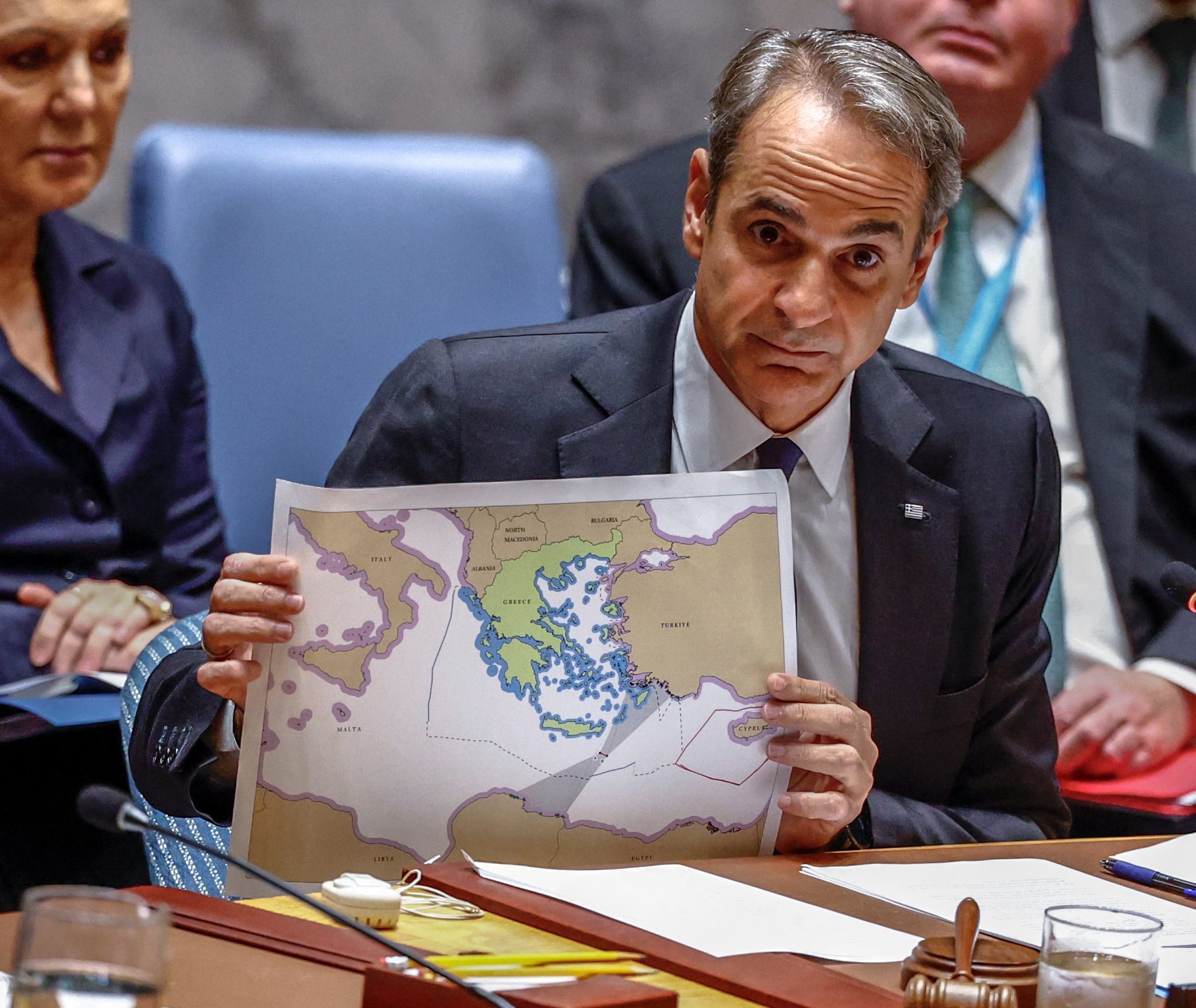
Greek Prime Minister Kyriakos Mitsotakis said that the recently signed maritime deal between Libya’s eastern parliament and Turkey was “blatantly illegal, null and void,” adding that it “completely disregards the geography.”
Mitsotakis, speaking to Reuters as Greece ends its UN Security Council presidency, also called for an urgent “international truce” to protect shipping in the Black Sea after the sinking of a Greek-owned container vessel on Wednesday.
Greece challenges maritime boundaries agreement
Libya’s eastern parliament last week approved a maritime boundaries deal with Turkey, drawing condemnation from Athens, but also Egypt, Bahrain and the United Arab Emirates, as a threat to regional security and international legal order.
“It completely disregards the geography, the reality that there are Greek islands — they seem to completely disappear in the thinking of Turkey and Libya,” Mitsotakis said, accusing them of attempting to create a “fait accompli” that ignores the UN Convention on the Law of the Sea.
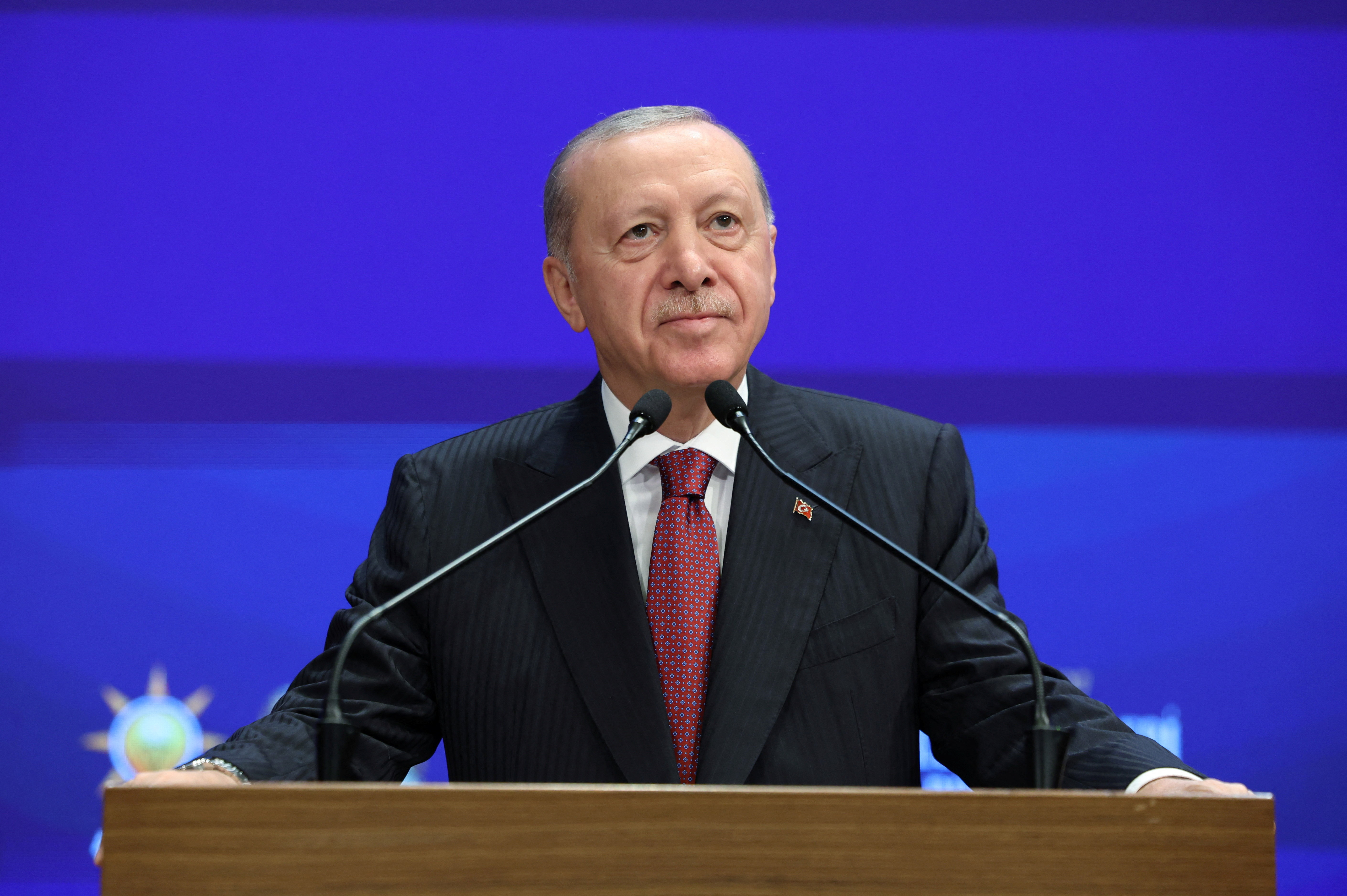
Turkish President Tayyip Erdogan has said that reactions from the EU and others to the approval of the agreement, originally agreed in 2019, had no legitimate basis, defending Ankara’s policy in the eastern Mediterranean.
Since the 2019 Libya-Turkey deal, Greece has awarded a license to a consortium led by Chevron CVX.N to look for gas off the island of Crete and has sought a separate agreement with Libya on demarcating their maritime zones.
Mitsotakis assured “there’s no risk that these explorations will be in any way challenged.”
Athens urges Libya to negotiate directly
Referring to Libya and Greece as “natural neighbors,” Mitsotakis, who first became prime minister in 2019 and is in his second term, urged the African country to negotiate directly with Athens and take the discussions “very, very seriously.”
Mitsotakis, 58, spoke to Reuters after chairing a council debate on maritime security, only hours after a Greek container ship sank after being hit by naval drones off Bulgaria in the latest strike on ships in the western Black Sea this month.
Greek-operated ships are among the world’s largest fleets of tankers and are pivotal for trade across the Black Sea region, whose waters are shared by Bulgaria, Georgia, Romania and Turkey, as well as warring Russia and Ukraine, which Moscow invaded in February 2022.
“We do need some sort of international truce when it comes to the freedom of navigation,” said Mitsotakis, adding that it was of “utmost priority” to allow for exports of grain from the region into the world through the Black Sea.
“Greek shipowners would be the first to resume trading in the Black Sea, also from Ukraine, assuming a safe passage is guaranteed,” he said, stressing the rising costs of shipping as chartering and insurance expenses have “gone through the roof.”
It was not immediately clear who had carried out the attack, which added to growing concerns about the impact of Russia’s war in Ukraine on commercial shipping in the area.
Mitsotakis said that Ukraine was financially dependent on exports of its products: “They had a bumper harvest, but the grain is now sitting in silos, in danger of rotting.”
“Unfortunately, for the moment, Russia doesn’t seem to be interested in engaging in a substantive discussion,” he said.
Greece seeks stronger EU naval presence in Red Sea
Mitsotakis also called on the European Union to bolster its naval mission to protect shipping in the Red Sea called Aspides, which was launched in 2024 to protect from attacks by Yemen’s Iran-aligned Houthis.
Intensifying hostilities between the Houthis and Saudi Arabia have disrupted oil supplies and heightened the risk of a wider regional conflict, eight months since the US-Israeli strikes on Iran.
“My argument is simple: the European Union has an interest in having a concrete presence with hard assets in this part of the world, and we need more countries to participate in Aspides,” Mitsotakis told Reuters.
He said Greece, Italy and France have deployed “assets” as part of the mission and that was “clearly not enough.” Diplomats told Reuters as of late September there were six warships operating as part of the operation.
The Houthis said this week they had attacked Saudi military aircraft and repelled an advance by Saudi-backed forces near the Bab el-Mandeb Strait, an important Red Sea shipping route.
“If we really want to send the message also to the Gulf countries that we take their security seriously, but we also protect the critical arteries and waterways that are absolutely indispensable for European trade, we should be willing to deploy more assets to this part of the world,” Mitsotakis said.
Athens backs continued sanctions on Russia
Asked about US President Donald Trump’s move earlier this month to lift sanctions on Russian diesel exports, Mitsotakis reaffirmed Greek support for sanctions on Moscow.
“We believe that we need to put economic pressure and impose more financial pain on Russia to send a very clear signal that as long as they prolong this war, they will suffer very specific economic consequences,” he said.
The Cyprus Animal Party has urged the education ministry to promote healthier food in schools and reconsider events such as Tsiknopempti, which are associated with meat consumption.
In a statement marking World Vegan Day on November 1, the party said schools should practise the healthy eating habits they teach pupils, rather than promote excessive meat consumption.
It cited findings presented to parliament on October 29 concerning meals provided to National Guard soldiers.
Meat is served seven times a week in military kitchens, eight times in frozen meals and nine times through catering, it said.
The party said it was not seeking to abolish traditions or impose vegan diets, but wanted more plant-based options, highlighting Cyprus’ locally available legumes and other plant foods.
It also called for greater emphasis on health, animal welfare and the environment.
Investment platform Wealthyhood has recorded a five-fold increase in investors and an eight-fold rise in client assets in Cyprus between June and September 2026, with data from its partnership with the Bank of Cyprus pointing to growing interest in local shares, exchange-traded funds and accessible long-term investing.
The figures, published in ‘Wealthyhood’s Cyprus Investor Pulse 2026‘ report, cover anonymised and aggregated data from clients resident in Cyprus between June 1 and September 30, with the findings highlighting how lower entry costs and simpler account funding can encourage participation in financial markets.
Alexandros Christodoulakis, co-founder and chief executive of Wealthyhood, told the Cyprus Mail that the response from Cypriot investors had exceeded expectations in terms of the quality of their engagement.
“People in Cyprus didn’t need to be convinced that investing matters. What they were missing was a simple, trusted way to start, and once that existed, they moved quickly,” he said.
The report found that 88.6 per cent of clients who deposited money went on to buy a stock or exchange-traded fund (ETF), compared with 80.4 per cent among clients who signed up in Greece during the same period.
Christodoulakis said the company was encouraged by the extent to which customers were continuing to invest after opening their accounts, rather than simply registering and leaving the platform.
“Of those who joined in June or July and invested, 88.9 per cent were still invested on September 30,” he said.
“Seven in ten (70.3 per cent) have never sold an investment, and six in ten (59.1 per cent) made a second deposit within 30 days of their first,” Christodoulakis continued. “People are not trying the app once and walking away; they are building a habit.”
He added that four months of activity remained an early snapshot, but that the quality of engagement had been particularly encouraging.
Low entry barriers foster early activity and habit-building
The report also found that 58.4 per cent of new investors made their first investment within 7 days of signing up, while 14.4 per cent invested on the same day.
The typical first deposit was €100, while the typical first investment amounted to €55. Almost two-thirds of investors, or 64 per cent, started with €100 or less, suggesting that many were entering the market with relatively modest sums.
More than half, or 56.8 per cent, made their first investment in an ETF, which allows investors to buy into a collection of companies through a single product.
The most popular first investment was the Vanguard S&P 500 ETF, accounting for 16.6 per cent of first investments, followed by Bank of Cyprus shares at 10.2 per cent.
Christodoulakis said traditional barriers to investing included high minimum investment requirements, fees that eroded smaller amounts, paperwork and complicated terminology.
“Faced with that, many people who could invest simply never start. Not because they don’t care about their future, but because the first step looks expensive, complicated and opaque,” he stated.
Wealthyhood aims to address these obstacles by allowing customers to invest in international and local markets from €1, with zero commission and fractional shares, alongside an education hub containing more than 50 guides.
The platform also offers Autopilot, an automated investing service through which users can make regular investments without having to manage each transaction manually. The typical Autopilot user invests €150 a month, according to the report.
Christodoulakis said access to financial markets needed to be accompanied by a better understanding of investment products and their risks.
“Access alone isn’t enough, though. People also need to understand what they’re buying and why, which is why education sits at the core of the app, not in a corner of it,” he said.
Investor demographics reveal mature and higher-earning profile
The report’s demographic findings challenge the assumption that investment applications primarily attract younger users.
The typical investor in Cyprus is 40 years old, works full-time and declares an annual income of between €30,001 and €50,000. The largest age group is 35 to 44, accounting for 31.7 per cent of investors, followed by those aged 45 to 54 at 25.9 per cent and those aged 25 to 34 at 25.3 per cent.
People under 30 account for 19.3 per cent of investors.
Income levels were also higher than those recorded among investors in Greece. Some 31 per cent of Cypriot investors declared annual incomes above €50,000, while 24 per cent reported incomes below €20,000, compared with 58 per cent of investors in Greece in the latter category.
Full-time employees account for 86.5 per cent of investors, while 4.7 per cent are self-employed.
Finance and insurance is the most common industry, employing 31.5 per cent of investors, followed by information technology at 10.5 per cent and the public sector at 8.1 per cent.
Nicosia district accounts for 50.5 per cent of investors, followed by Limassol at 25.6 per cent, Larnaca at 14.9 per cent, Paphos at 5.1 per cent and Famagusta at 3.9 per cent.
Christodoulakis said the available data was not yet sufficient to establish how the investor profile had changed over time or to draw reliable conclusions about customers’ previous investing experience.
However, he said the behaviour observed so far pointed towards a cautious, long-term approach, characterised by small initial investments, ETFs and limited selling.
“One number I’d like to see change: about one in six new investors is a woman. Closing that gap is one of the biggest challenges for retail investing, in Cyprus and beyond,” he said.
He added that the market was increasingly being shaped by working people seeking greater control over their long-term finances, rather than traders attempting to profit from short-term market movements.
“As cost and complexity keep falling, I expect that profile to broaden, especially to younger people and to women,” he said.
Domestic shares drive engagement alongside global ETFs
The availability of domestic shares has also helped attract investors to the platform, with the Bank of Cyprus emerging as its most-bought individual stock.
Cypriot and Greek shares became available through Wealthyhood on July 17, allowing customers to hold domestic investments alongside international stocks and ETFs.
Customers can access Bank of Cyprus shares and 8 other companies listed on the Cyprus Stock Exchange, namely Vassiliko Cement, Demetra Holdings, Logicom, Cyprus Cement, Petrolina, Atlantic Insurance, Pandora Investments and GlobalWealth Group.
Within less than 3 months of the launch, 29.2 per cent of buyers had purchased at least 1 Cypriot share.
The Bank of Cyprus was bought by 35.8 per cent of stock investors, ahead of US technology company NVIDIA at 21.3 per cent and SpaceX at 12.6 per cent.
Among investors who purchased Cypriot shares, 82.6 per cent chose the Bank of Cyprus, followed by Vassiliko Cement at 16 per cent, Petrolina at 12.3 per cent and Logicom at 8.2 per cent.
The report found that domestic shares were bringing new participants into the market. For 52.8 per cent of investors holding Cypriot shares, a local company had been their first investment on Wealthyhood, compared with just 1.8 per cent among other investors.
Those holding Cypriot shares also had larger portfolios, with a typical portfolio 1.8 times the size of those held by other investors and containing 3 investments rather than 1.
Christodoulakis said familiar domestic companies could provide an accessible entry point for people who were less comfortable with international markets.
“People invest more readily in companies they know, and familiar local names are often the bridge into the market,” he said.
However, he stressed that local shares were complementing rather than replacing international investments.
The report found that 8.6 per cent of money invested since July 17 had gone into Cypriot shares, while Greek shares accounted for 12.3 per cent. Some 18.9 per cent of buyers had purchased at least 1 Greek share.
Across portfolios, 37.6 per cent of invested money was allocated to the United States, 21.1 per cent to global ETFs, 16.5 per cent to the rest of Europe, 11.3 per cent to Greece and 8.9 per cent to Cyprus.
The figures also showed the importance of ETFs in investors’ portfolios. The Vanguard S&P 500 ETF, which tracks the 500 largest US companies, had been purchased by 42.7 per cent of ETF investors and was held by 24.4 per cent of all investors on September 30.
Other popular ETFs included the Vanguard LifeStrategy 80 per cent Equity fund, purchased by 13.6 per cent of ETF investors, the SPDR MSCI World at 13.1 per cent and the iShares Nasdaq 100 at 11.9 per cent.
Among investors who still held investments on September 30, 42.5 per cent held only ETFs.
Dual exchange listings and long-term literacy goals
The report also examined access to shares listed in Athens. On September 30, 25.6 per cent of investors held at least 1 stock listed on Euronext Athens, including the Bank of Cyprus, while 7.6 per cent held a stock listed on the Cyprus Stock Exchange and 4.2 per cent held shares listed on both exchanges.
Athens-listed stocks accounted for 17.1 per cent of invested money, while Cyprus Stock Exchange-listed shares represented 2.1 per cent.
After the Bank of Cyprus, the most widely held Athens-listed stocks were Eurobank, at 5.1 per cent, followed by Allwyn and Alpha Bank, each at 2.8 per cent. Half of the 10 most widely held names were banks.
Christodoulakis said the company’s priorities in Cyprus were to improve financial education, encourage customers to turn initial investments into regular habits and expand the role of automated investing.
He said Wealthyhood and the Bank of Cyprus shared a responsibility to help close the financial literacy gap, particularly among younger people and women, by improving understanding of risk, diversification and the importance of time in investing.
“Giving people access to markets is only half of the job; helping them understand risk, diversification and time is the other half,” he said.
The company also wants to build on existing customer behaviour through services such as Autopilot, which can make regular investment contributions easier to maintain.
Christodoulakis said the first months of activity had demonstrated a clear appetite for accessible investing in Cyprus, but that the next challenge was to turn the initial momentum into sustained participation.
“Four months in, Cyprus has shown us the appetite is real. Now the work is to turn that early momentum into a generation of long-term investors,” he said.
A 22-year-old man was arrested in Engomi on Thursday after police seized around 6.4kg of cannabis linked to alleged drug importation and possession with intent to supply.
The investigation, initiated with the customs department, followed the arrival of a 2.56kg cannabis package in Cyprus on October 26.
On the same day, a 62-year-old taxi driver was detained after he collected a package he believed was for a customer, unaware of its contents.
Investigations led to the 22-year-old suspect, whose vehicle search revealed cannabis packages weighing about 100g, along with an additional 3.836kg found in a separate search.
Police also confiscated €4,330 and five mobile phones. The taxi driver was released due to lack of evidence.
The 22-year-old is scheduled to appear before the Nicosia district court on Friday as police seek a detention order.
Paphos honoured journalist Sevgiul Uludag in an event on Thursday, for her contribution efforts to establish the fate of people who went missing in Cyprus.
Uludag’s investigative reporting, which aided in locating graves of Greek Cypriots and Turkish Cypriots, was celebrated at the Paphos literary and arts centre for Cyprus Missing Persons Day.
Uludag, who died in June at the age of 67, was remembered for promoting truth, humanity and justice across dividing lines.
The programme included a screening of a film by Panicos Chrysanthou about the journalist and an address by centre president Stelios Sofokleous.
In a career which spanned over four and a half decades, Uludag devoted herself to the cause of Cyprus’ missing, the more than 2,000 people left unaccounted for after intercommunal violence in the 1960s and the Turkish invasion in 1974.
She became the first Cypriot to be awarded the international courage in journalism award in 2008, while also winning the European citizen’s prize in 2014 and being nominated for the Nobel peace prize in 2019.
President Donald Trump’s administration filed a revised lawsuit on Thursday seeking to block Alaska’s election results if Republican incumbent Dan Sullivan narrowly loses and, according to a person familiar with the matter, issued more than 40 subpoenas and document requests in its probe.
The revised complaint by the US Justice Department cited a New York Times report that Democratic operatives recruited another candidate named Sullivan who could siphon votes from the incumbent. The Justice Department said the effort was intended to mislead voters and help elect Democratic candidate Mary Peltola.
The suit raises the prospect of a messy fight over a contest that could determine US Senate control in next Tuesday’s midterm elections. Republicans hold a 53-47 majority, while Democrats need a net gain of four seats.
“They orchestrated his sham campaign for the purpose of misleading Alaskan voters and getting Peltola elected,” lawyers for the Justice Department wrote in their amended complaint, referring to a retired teacher named Daniel J. Sullivan Jr., who is on the ballot without a party affiliation.
Alaska Governor Mike Dunleavy also called for a state investigation into the allegation and said in an interview with News Nation that any finding of illegality “may in fact impact whether someone is seated in the US Senate.”
Peltola’s campaign did not immediately respond to the amended complaint but has previously said it had “no involvement with either Sullivan campaign.”
Dispute over candidates sharing Sullivan surname
The Times reported on Wednesday that Peltola aides worked with campaign lawyers and staff at the Democratic Senatorial Campaign Committee to recruit two candidates who could siphon votes from the incumbent Republican Sullivan, including Daniel J. Sullivan Jr.
Peltola’s former campaign manager, Elisa Rios, who was fired in August, told the Times that Peltola was aware of the effort.
The DSCC has denied involvement and accused Republicans of propping up candidates of their own in other races. Reuters was unable to independently verify the Times report.
Daniel J. Sullivan has previously denied in interviews with US news outlets that his aim is to cause confusion or divert votes from Dan S. Sullivan.
Trump presses legal challenge ahead of vote
Trump, who for years has sowed doubts about the fairness of US elections, had pushed the Justice Department to bring the Alaska case even before the Times report, seeking to preemptively block Alaska from certifying Peltola, a former congresswoman, if she were to win the election.
Trump told reporters earlier on Thursday: “It’s hard to believe that she could even be allowed to run. Frankly, I don’t know how you can allow somebody like that to run. It’s so unfair.”
Jessica Levinson, a professor who specializes in election law at Loyola Law School in Los Angeles, said that as long as Daniel J. Sullivan, the challenger to the incumbent, didn’t conceal financial support, his campaign likely didn’t break any laws and political parties are allowed to mislead the public.
Policing such behavior would open the door to the government investigating why candidates choose to run and why voters support them, she said. “To the extent that people are uncomfortable with two Sullivans, I would offer you’re probably going to be uncomfortable with a really high level of government intrusion into our elections as well.”
Justice Department also investigates California voting
The Department of Justice has also escalated another legal campaign in California, where it has been investigating alleged voting by noncitizens.
The Los Angeles County Registrar-Recorder’s office received grand jury subpoenas as part of the probe, according to copies of subpoenas seen by Reuters on Thursday.
The subpoenas, dated last week, seek records related to the county’s response to prior letters from the Trump administration warning of evidence that noncitizens are on the state’s voter roll. They also seek documents about the county’s efforts to prevent noncitizens from voting.
California has previously said the state’s safeguards against noncitizen voting are robust.
A Justice Department spokesperson declined to comment.
Trump and Democrats intensify final campaign push
As campaigning enters its final few days, the White House has shelved plans for Trump to appear on Saturday in Kansas, the site of an unexpectedly competitive Senate campaign, a Republican campaign official said.
“I don’t feel like I have to go to Kansas,” Trump told reporters.
Instead, the president will participate in more than 20 virtual campaign appearances before Tuesday, a White House official said.
Trump held a rally in Rock Hill, South Carolina, on Thursday, his second visit in two weeks to a state where opinion polls show an unexpectedly close Senate race between Republican Darline Graham and Democrat Annie Andrews.
Speaking about the hotly contested Michigan Senate race, where progressive Democratic nominee Abdul El-Sayed holds a small lead in most polls over Republican Mike Rogers, Trump continued his identity-based attacks on El-Sayed, a Muslim, by saying at the rally that “if you’re Black or if you’re Jewish, and if you vote for Abdul, you’re crazy.”
With control of the Senate at stake, both parties are deploying their biggest names in the closing days of the campaign, with Trump stumping for Republicans and former President Barack Obama and former Vice President Kamala Harris campaigning for Democrats in competitive races.
Harris stumped in Macon, Georgia, at a get-out-the-vote effort. Democrats are aiming to reelect Senator Jon Ossoff, who leads in polling, and hope that Keisha Lance Bottoms, locked in a tight race, can become the first woman elected as governor in the state.
Trump’s approval rating stood at 32% in a Reuters/Ipsos poll completed on Monday, near a record low, as Americans sour on the high cost of living and the war with Iran.
More than 44 million Americans had already voted as of Thursday evening, according to the University of Florida’s Election Lab. A total of 45.9 million voted early in the 2022 midterms.
Four people were arrested during nationwide police operations on Thursday night for offences including motorcycle theft, assaulting and insulting a police officer, and handling stolen goods, authorities said on Friday.
Police stopped and checked 467 drivers and 99 passengers, while 26 inspections of premises resulted in two complaints.
Traffic checks led to 285 reports for various offences, including 85 for speeding.
Four traffic violation cases are also under investigation, and three vehicles were impounded.
Officers also carried out 112 alcohol tests, resulting in nine complaints.
Operations to prevent and combat crime would continue daily, police said, with increased patrols and targeted checks to protect the public and maintain order.
UN envoy for Cyprus Maria Angela Holguin is currently in Cyprus and will be meeting with President Nikos Christodoulides on Friday at 12.30pm.
Holguin will also be meeting with Turkish Cypriot leader Tufan Erhurman on Monday, and hold a tripartite meeting with both Christodoulides and Erhurman on November 9.
On Tuesday, Christodoulides said both he and Erhurman had agreed to make “no further statements” on matters of substance related to the Cyprus problem ahead of Holguin’s trip.
Pentagon officials have in recent weeks asked several NATO countries to tone down their rhetoric regarding the threat posed by Russia, arguing that some statements by European leaders and officials have undermined continental security, four people familiar with the matter said.
Among the nations that have received messages urging them to keep public statements in check are Lithuania, Latvia and Estonia, said the people, who spoke on condition of anonymity. It was not clear if the messages, which were delivered in bilateral meetings, were conveyed to other European governments.
The US requests come as the Trump administration restarts an effort to press for a negotiated end to the full-scale war in Ukraine, now well into its fifth year. The latest push has blended incentives for Russia – including sanctions relief – with pressure on Ukraine to halt its attacks on Russian energy infrastructure.
Asked for comment, a Pentagon official said: “Private conversations among allies are just that, so we will not comment on these allegations.”
Among the comments that have drawn US officials’ attention are suggestions by European leaders that Russia is cornered and resorting to increasingly desperate measures as its invasion of Ukraine slows to a crawl, one of the people said.
Pentagon policy chief Elbridge Colby, a key figure in an ongoing review of US troop levels in Europe, was one of the US officials delivering the message, the people said. Reuters could not determine what other officials were involved.
None of the people, who include three European officials and a US official, suggested the advice was communicated in a confrontational manner.
US urges allies not to provoke Moscow
The US messages reflect a debate within NATO regarding how to publicly address the threat of an increasingly assertive Russia.
Some Western officials have argued that emphasizing the threat posed by Moscow could play into the hands of the Kremlin, which they say seeks to sow fear and undermine support for Ukraine.
Others argue European governments must be transparent to show their electorates that sacrifice and resources are needed to keep Moscow at bay. That is especially true as Russia appears to accelerate a covert campaign of sabotage throughout the continent.
Russia has denied that it is pursuing such a campaign.
Baltic states face pressure over public warnings
One of the people familiar told Reuters that Colby told a Baltic official recently that there should be no “poking” directed at the Russians.
The person said Colby pointed to Europeans publicly suggesting that Russia was “cornered like a rat” as an example of unhelpful rhetoric.
It was not clear what specific statement Colby was referring to. However, Estonian Prime Minister Kristen Michal referred to Putin as a “rat in a corner” in late September, suggesting the Russian leader was resorting to sabotage efforts in Europe as Russia had become increasingly bogged down in Ukraine.
“We are helping you. The Americans are there,” said a separate European official, describing the Pentagon’s recent private messaging. “Just don’t be loud. Don’t make noise.”
In a separate recent meeting, the Pentagon urged an Estonian delegation to be “measured” in its communications, according to a person briefed on the encounter, though the person did not say Pentagon officials complained about any specific statement.
The defense ministries of Lithuania, Latvia and Estonia did not respond to requests for comment, while NATO declined to comment.
Russian sabotage fears divide NATO allies
One of the European officials said that the Pentagon’s advice, while cordial, was baffling, given that intelligence services in the Baltic states have in recent months consistently played down the probability of Russia testing NATO’s mutual defense provisions.
Other NATO intelligence services, by contrast, have publicly warned that Russia could dramatically ramp up its sabotage campaign in the near future.
The Pentagon messages to NATO officials come at a fraught time for European security.
Moscow has recently intensified its campaign of deniable attacks on NATO countries, Western intelligence officials have said.
On Wednesday, German prosecutors said two Belarusians were arrested for allegedly planning to set fire to a building or critical infrastructure facility in the Nuremberg area. In September, the German government blamed Russia for an attempted drone attack at Leipzig/Halle Airport, allegations Moscow has denied.
At the same time, US officials have been discussing potential business deals with Russia as part of the Trump administration’s push for peace in Ukraine. Those efforts have drawn mixed reactions from European officials, many of whom are pushing for the Kremlin’s continued economic isolation.
US reviews military presence in Europe
Pentagon planners, meanwhile, are reviewing Washington’s force posture in Europe, a process that could see a sharp drawdown in America’s troop presence on the continent.
US officials have said European NATO members need to assume more responsibility for their own defense, particularly as the US focuses on threats in the Middle East, Latin America and East Asia.
Hackers stole $6.3 billion from Binance, the world’s largest cryptocurrency exchange, in what analysts say is the biggest crypto hack ever, an attack that could prompt investors to rethink the risks of owning digital assets.
The hackers behind the raid were from North Korea, according to US blockchain analysis firms TRM Labs and Chainalysis. The attackers targeted Binance wallets on 10 blockchains and shifted most of the funds in about 20 minutes, TRM Labs said in a statement.
Binance said it worked with partners to freeze the affected assets with about $3 billion located so far. It did not mention the status of the remaining $3.3 billion, and its co-founder Yi He said the exchange would cover “all hacking losses”.
Binance said its deposits were unaffected and it expects to resume withdrawal services in the next 48 hours.
TRM said several features of the attack matched earlier heists linked to North Korea, including a 2025 hack of crypto exchange Bybit that the US Federal Bureau of Investigation had attributed to Pyongyang.
“We make this judgment with high confidence,” it said in a statement.
North Korea’s mission in Geneva and its embassy in China did not immediately respond to Reuters requests for comment.
The incident could be the world’s biggest crypto heist, according to analytics firm Chainalysis and other industry experts.
“It’s the biggest hack in history,” said Aravind Srinivasan, head of large crypto market maker GSR’s systematic OTC business.
Bitcoin tumbles as crypto markets react
Bitcoin BTC= dropped more than 3% to a six-week low of $76,368 and ether ETH= fell more than 3% to a two-month low of $2,178. BNB BNB=CCCL, a token originally launched as Binance Coin that can be used to pay Binance fees, was down 5% over the past 24 hours at $709.70, according to market aggregator CoinGecko.
Shares in crypto exchange Coinbase Global COIN.O slid 4.8% while those of bitcoin buyer Strategy MSTR.O fell nearly 6% in extended US trading.
Hacked laptop may have triggered breach
An initial investigation suggested the breach may have started with a hacked laptop belonging to one of its engineers, which let an attacker gain access to one of its systems and make unauthorized withdrawals, Binance said.
“The incident stems from multiple factors. Our security team is tracing the full attack path through the compromised computer which may be the entry point of the incident,” Binance said.
Beyond the potential loss of assets, the security breach was likely to have wider ramifications for crypto, which had already been under pressure due to higher US interest rates and softer demand from exchange-traded fund buyers, analysts said.
“It may further dampen risk appetite and prompt investors to reassess the safety of assets held on centralized exchanges, as well as counterparty, solvency and liquidity risks,” said Tim Sun, senior researcher at HashKey Group, based in Hong Kong.
Binance, which allows users to buy, sell and trade digital assets, has 335 million registered users globally and had about $162.8 billion in assets under custody as of the exchange’s 2025 annual report.
“User funds remain safe,” Binance said in a statement.
Binance moves to protect customer funds
Binance runs a secure asset fund for users, which is a reserve held entirely in bitcoin that is intended to protect user assets in cases of security breaches, according to its website.
“It’s becoming very hard to counter hacks as AI can find vulnerabilities faster than you can fix them,” said Bernardo Brites, CEO of Trace Finance, a payments and stablecoin infrastructure company.
“My view is that users will move away from smaller and medium-sized exchanges, (it is) becoming too risky to park your money somewhere that couldn’t cover a hack of meaningful size.”
Crypto firms freeze billions in stolen assets
Stablecoin issuer Tether said it had frozen nearly $1.57 billion in assets linked to the incident, while Circle froze more than $800 million.
World Liberty Financial, a crypto company linked to US President Donald Trump and his family, said on Thursday it had worked with cryptocurrency custodian BitGo to freeze funds stolen in what it described as a Binance hack. Binance’s Yi said $27 million in stablecoins and about $2 million worth of World Liberty tokens had been frozen.
Crypto firm Ripple also froze roughly $200 million in funds, Yi said. Jack McDonald, senior vice president of stablecoins at Ripple, said the company was closely monitoring reports of a potential exploit involving Binance and was freezing affected funds and coordinating with relevant parties.
Record theft adds to growing crypto security fears
Miguel Morel, CEO of blockchain intelligence firm Arkham, said data indicated that billions of dollars appeared to have been hacked from Binance by an unknown actor.
The incident adds to a string of crypto thefts. Last year, attackers stole $2.9 billion worth of cryptocurrency across nearly 150 attacks, according to researchers at TRM Labs. In September, cryptocurrency exchange Bitget said roughly $350 million in crypto had been stolen from its platform, underscoring the industry’s vulnerability to hackers.
Authorities have warned that organised crime groups are increasingly using cryptocurrencies to move funds across borders outside the traditional financial system.
Binance.US, a separate cryptocurrency exchange, said it was not affected by the security incident.
Coinbase COIN.O said it was unaffected and was monitoring the situation.
In an unrelated incident earlier on Thursday, prediction market operator Polymarket temporarily halted trading after a security incident involving a third-party provider. It later resumed trading and said it would fully reimburse affected traders.
Where Binance’s $6.3 billion breach ranks in crypto’s biggest hacks and heists
Time period
Company
What was stolen
What happened
February 2025
Cryptocurrency exchange Bybit
Digital tokens worth $1.5 billion
The crypto was taken from a “cold wallet” – a digital wallet usually stored offline and so supposedly more secure – that was used for ether tokens.
March 2022
Ronin Network, a network that allows transfer of crypto coins across different blockchains
Roughly $540 million from a blockchain project linked to the popular online game Axie Infinity
Hackers stole some 173,600 ether tokens and 25.5 million USD Coin tokens.
February 2022
Wormhole, a DeFi site
$320 million
Hackers making off with 120,000 digital tokens connected to the second-largest cryptocurrency, ether. The crypto arm of Chicago-based Jump Trading, which had the year before acquired the developer behind Wormhole, later replaced the funds.
August 2021
Poly Network, a platform that facilitates peer-to-peer token transactions
$610 million (Hackers behind the heist later returned nearly all of the stolen funds)
The hack underscored vulnerabilities in the burgeoning decentralised finance, or DeFi, sector, where users lend, borrow and save in digital tokens, bypassing the traditional gatekeepers of finance such as banks and exchanges.
January 2018
Tokyo-based exchange Coincheck
$530 million
The thieves attacked one of Coincheck’s “hot wallet” – a digital folder stored online – to drain the funds, drawing attention to security at exchanges.South Korea’s intelligence agency said at the time that a North Korean hacking group may have been behind the heist.
Between 2011 and 2014
Tokyo-based bitcoin exchange Mt. Gox
Bitcoin worth close to $500 million was stolen in one of the earliest and most high-profile crypto hacks.
Mt. Gox, which once handled 80% of the world’s bitcoin trade, filed for bankruptcy in early 2014 after the hack was revealed, with some 24,000 customers losing access to their funds.
The Enterprise Europe Network (EEN) in Cyprus will hold an online information session on November 19, 2026, to present funding opportunities available to businesses and organisations under the European Innovation Council’s (EIC) 2027 work programme.
The event, announced by the Cyprus Chamber of Commerce and Industry (Keve), which coordinates EEN activities in Cyprus, will explain the main funding instruments available under the programme and outline the most important changes and new developments planned for 2027.
The session is aimed at businesses and organisations seeking European funding to support innovation, develop new technologies and scale up their operations.
Participants will receive information on the EIC Pathfinder, EIC Transition and EIC Accelerator programmes, as well as the Strategic Technologies for Europe Platform (STEP) Scale Up initiative.
These instruments support different stages of innovation, from early-stage research and the development of technologies towards commercialisation to the growth of businesses seeking to expand their operations.
The event will also feature EEN2EIC, which will present its activities, services and tools designed to help innovative small and medium-sized enterprises (SMEs) and start-ups access EIC funding opportunities.
The special session will also explain how EEN2EIC supports businesses in improving their investment readiness, helping them prepare to attract funding and pursue opportunities under the European innovation funding framework.
Interested businesses and organisations can register through the event’s registration link provided by the organisers.
The plans were discussed in Busan, South Korea, where Shipping Deputy Minister Marina Hadjimanolis met India’s Minister of Ports, Shipping and Waterways, Sarbananda Sonowal, as part of a wider round of meetings aimed at bringing the two countries’ maritime industries closer together.
At the centre of their talks was the Cyprus–India Maritime Business Forum, which will take place in Mumbai on November 23, 2026, during Hadjimanolis’ visit to India.
Sonowal confirmed that India was ready to welcome the Cypriot delegation and support the forum, with both sides keen to see businesses make the most of the opportunity.
The China-Cyprus Subnational Exchange and Cooperation Forum and Business Forum, organised by Keve in cooperation with the Chinese embassy and the Cyprus-China Business Association on Tuesday, brought together business representatives, local authority officials and institutional representatives from both countries to discuss closer economic cooperation and opportunities for commercial partnerships.
In his opening address, Keve secretary general Philokypros Roussounides said the countries’ longstanding friendship, founded on mutual respect and trust, provided a strong basis for expanding economic ties.
The island has been named one of Europe’s ten best winter-sun escapes by the international travel publication, just as separate research by Britain’s Post Office Travel Money puts Paphos 14th among 24 destinations worldwide for value.
And while Cyprus may not be winning the battle on price, it has been collecting some impressive international endorsements of its own, from American travel writers to European tourism rankings.
In its latest guide, released earlier this week, Lonely Planet describes Cyprus as ‘Best for the warmest Mediterranean winter’, placing it fifth among ten recommended European destinations.
The community was created by TechIsland, the largest technology association on the island, as a dedicated platform for CTOs, CIOs, CISOs, technology architects, software developers, DevOps and platform engineers, data and AI specialists, cybersecurity professionals, UX experts and digital transformation leaders.
Its purpose is to give these professionals a space to meet peers outside their own organisations, exchange practical experience, discuss the challenges they are facing and build stronger connections across Cyprus’ technology ecosystem.
The regulator on Thursday announced that it took part in the international initiative for the eighth consecutive year, focusing on emerging digital investment risks, strengthening financial resilience and helping the public make informed investment decisions.
World Investor Week is an initiative of the International Organisation of Securities Commissions (IOSCO), which seeks to raise awareness of investment risks and promote responsible investing.
CySEC’s campaign placed particular emphasis on fraudulent practices involving misleading online advertisements, false investment recommendations and deceptive content generated using artificial intelligence (AI).
The lender confirmed the change this week, following a share capital increase approved by its board of directors on September 30 and registered with the General Commercial Register on October 13.
The increase resulted from the implementation of the bank’s stock options plan, under which eligible participants exercised options granted to them during the September 2026 exercise period.
Following the increase, Alpha Bank’s share capital stands at €654,351,248.35, divided into 2,256,383,615 ordinary shares, each carrying voting rights and having a nominal value of €0.29.
The latest seasonally adjusted quarterly data from the EU’s statistical office show that household real income per capita in the euro area continued to grow at the same modest pace as in the first quarter, when it also increased by 0.1 per cent.
Household real consumption per capita, meanwhile, rose by 0.3 per cent in the euro area, following a stable reading in the previous quarter.
Across the EU as a whole, household real income per capita increased by 0.1 per cent in the second quarter, slowing from growth of 0.3 per cent in the first 3 months of the year.
The event, held on October 8, brought together business owners, directors and technology specialists to explore how companies can integrate AI into their operations, with demonstrations of practical applications and discussions on the foundations needed to make the technology effective.
ClickUp, an American software company valued at $4 billion and known for its project management, task management and AI capabilities, held its first event on the island in partnership with essere.ai, which is ClickUp’s official and certified partner in Cyprus and the only partner it works with directly on the island.
Zisiadou explained that e-commerce has fundamentally changed the way consumers search for, compare and purchase products and services. Consumers now have more choice and easier access to products across different markets, while businesses can reach customers beyond the geographical boundaries of their operations.
The scale of this growth is reflected in the figures. According to the United Nations Conference on Trade and Development (UNCTAD), business e-commerce sales across 43 developed and developing economies were estimated at nearly $27 trillion in 2022.
The bank announced the completion on Thursday, following the receipt of the necessary regulatory approvals and the fulfilment of the relevant closing conditions.
The transaction involved the acquisition of 80 per cent of Eurolife FFH Life Insurance Single Member Société Anonyme Company, which operates under the name Eurolife FFH Life Insurance SA, from entities controlled by Fairfax Financial Holdings Limited.
Under the decision, approved during an extraordinary general meeting, the board is now authorised to acquire shares in the company during the 12-month period following the meeting.
The number of shares acquired must not exceed 10 per cent of the company’s issued share capital or 25 per cent of the average value of transactions traded on the Cyprus Stock Exchange (CSE) during the 30 days preceding each purchase, whichever limit is lower.
President Elpi Petraki outlined the association’s achievements over the past year at its Annual General Meeting in Kuala Lumpur this week, emphasising growing membership, closer ties with international maritime organisations and new opportunities for companies to become involved.
The meeting formed part of the WISTA International AGM and Conference 2026, taking place from October 28 to 30 under the theme ‘Bridging Borders, Driving Change: Asia Shaping the Future of Maritime and Trade’.
Co-hosted by WISTA Malaysia, WISTA Singapore and WISTA Hong Kong SAR China, the gathering brings together shipping executives, policymakers and industry professionals to examine the future of maritime trade, technology, sustainability and leadership.
The changes are intended to strengthen the group’s management structure and support its next phase of development and growth across its main areas of activity.
Christakis Charalambous will become non-executive chairman of the board on January 1, 2027, succeeding Demetris Demetriou, who will remain a member of the board.
Charalambous is already a board member and chairman of the board executive committee. He also serves on the board of Hermes Airports, the Nicosia Chamber of Commerce and Industry (Evel) and the Cyprus Employers and Industrialists Federation (Oev).
The board expressed its appreciation to Demetriou for his contribution during his tenure as chairman.
The dividend amounts to €0.25984252 per share, before tax withholding, according to the investment services company’s announcement.
Shareholders registered in the Cyprus Stock Exchange (CSE) register on November 20, 2026, will be entitled to receive the interim dividend.
The company’s shares will trade without the right to the dividend from November 19, meaning investors buying shares from that date will not qualify for the payment.
Investors who purchase shares by the close of trading on November 18, the final date on which shares will trade with the dividend entitlement, will qualify for the distribution.
Businesses can reduce duplication, improve efficiency and gain better insight from their data by connecting their tax compliance functions, according to Varnavas Nicolaou, partner,taxandlegal at PwC Cyprus, who argues that increasing regulatory demands, greater scrutiny and continued pressure on resources are making traditional compliance models increasingly difficult to sustain.
Nicolaou explained that, for many businesses, tax compliance has traditionally developed around individual obligations. Corporate income tax, VAT, transfer pricing, Pillar Two and other reporting requirements may involve different teams, different processes, different technologies and, often, repeated requests for overlapping data.
“That model is becoming increasingly difficult to sustain,” he said, referring to the growing pressure businesses face to manage costs, address resource constraints and obtain better insight from their data as regulatory requirements expand and tax authorities increase their scrutiny.
He also identified fragmented and low-quality data, increasing regulatory demands, rising audit activity, limited visibility and cost pressures among the challenges facing clients today.
According to Nicolaou, the question for tax leaders is therefore changing. It is no longer simply “How do we complete each compliance obligation?” but increasingly “How do we connect compliance so that the same data, processes and controls work harder for the organisation?”
He explained that connecting tax compliance does not mean removing the technical expertise required for individual taxes or jurisdictions. Rather, it means creating an operating model in which people, processes, data and technology work together rather than in parallel.
At the centre of that model, he added, is data.
Traditionally, similar financial and operational information may be collected several times to support different tax obligations. A connected model seeks to capture data intelligently, standardise and enhance it, and make it available for multiple compliance purposes.
As an example, Nicolaou referred to PwC’s Connected Tax Compliance approach, which describes a model of acquiring, enhancing, using and reusing data across areas including corporate income tax, statutory financial statements, indirect taxes, Pillar Two, transfer pricing and other tax services.
“This apparently simple change has significant implications,” he pointed out, identifying efficiency as the first benefit.
When compliance processes operate independently, organisations can find themselves maintaining multiple workflows, reconciling similar datasets and responding to repeated information requests. Connecting these activities, he explained, creates opportunities to standardise inputs, automate routine processes and eliminate duplication.
At the same time, Nicolaou stressed that “The technology should support the process, rather than become another layer of complexity.”
He noted that PwC’s approach combines workflow, data gathering, collaboration, progress reporting, governance, controls and analytics within a connected technology environment.
Importantly, he clarified that increased automation does not mean removing people from tax compliance.
Instead, Nicolaou described the emerging model as “technology- and AI-powered but human-enabled”, explaining that routine activities can increasingly be automated while professional judgement remains focused on areas where technical interpretation, risk assessment and business understanding matter most.
“That distinction is critical,” he stressed, adding that “The objective is not automation for its own sake.”
The aim, he explained, is to free scarce tax resources from repetitive administration and allow them to concentrate on higher-value activities.
Beyond efficiency, Nicolaou identified visibility as another important benefit of connecting compliance functions.
As he explained, a connected compliance environment gives management something that fragmented processes often struggle to provide.
Instead of managing obligations through separate spreadsheets, email trails and local processes, a connected model can provide central oversight of status, responsibilities, data and risk.
In this respect, he referred to PwC’s Connected Tax Compliance methodology, which provides for end-to-end visibility across workstreams, centralised governance and digital audit trails, supported by technology for oversight and coordination across jurisdictions.
This matters particularly for multinational and multi-entity businesses, Nicolaou noted, as management needs to understand not only whether a return has been filed, but where information is incomplete, where risks are emerging and where intervention may be required.
He also drew attention to the measurable benefits of technology investment beyond tax, citing PwC’s Global Compliance Survey,2025.
According to the findings he presented, organisations investing in technology and data for compliance reported benefits including better visibility of risks and risk-management activities, 64 per cent, faster identification and response to compliance issues, 53 per cent, and more insightful reporting, 48 per cent.
Other benefits included faster or more confident decision-making, 46 per cent, and increased productivity, efficiencies and cost savings, 43 per cent.
For Nicolaou, these findings illustrate how visibility changes compliance from a retrospective reporting exercise into a more active management process.
The third opportunity, which he described as perhaps the most important, concerns using compliance data to see more.
He explained that businesses already invest substantial effort in gathering, validating and analysing information for tax compliance. Once that information is structured and connected, the organisation has an opportunity to use it for more than producing returns.
Connected data and analytics, he added, can help identify trends, risks and opportunities that would otherwise remain buried across individual compliance processes.
Nicolaou again referred to PwC’s Connected Tax Compliance approach, highlighting potential insights around cash tax savings, tax-efficient strategies, tax controls, tax risks, deal readiness and the implications of regulatory change.
This, he argued, represents a fundamental shift in perspective, as “Compliance becomes not only an obligation to satisfy, but a dataset from which the business can learn.”
To illustrate the point, he explained that information collected across entities and jurisdictions may expose inconsistencies requiring attention, while common datasets can support several reporting requirements.
Similarly, dashboards can concentrate management attention on exceptions rather than every individual process.
He added that information historically examined only when preparing a return can contribute to earlier conversations about tax risk and business decisions.
In the same context, Nicolaou cited PwC’s Global Compliance Survey, which notes organisations rationalising data sources to create a “single version of the truth” and mapping controls where common controls can address multiple reporting obligations.
For organisations considering this journey, Nicolaou stressed that the starting point should not necessarily be a new technology platform.
Instead, he called for an examination of the whole compliance ecosystem, beginning with the questions “Where are we requesting the same data more than once?” and “Which processes are genuinely different and which have simply developed separately?”
He also raised the question “Which activities require specialist human judgement, and which can be standardised or automated?” alongside “Can common controls support several compliance obligations?”
Equally important, he noted, is whether management has a clear view of compliance status and emerging risk across the organisation.
Finally, Nicolaou asked “are we using the information generated through compliance to identify opportunities and support better business decisions?”
The appropriate answer, he explained, will differ between organisations.
A connected model can support different delivery models, from insourcing and co-sourcing through outsourcing and managed services.
“What matters is that the components operate as part of a coherent system rather than as isolated solutions,” he stressed.
Looking beyond the tax return, Nicolaou maintained that the future of tax compliance is not simply about completing the same processes faster.
“It is about connecting them,” he said, explaining that connecting data reduces duplication, while connecting technology and processes creates efficiency and control.
Connecting teams, he added, provides clearer accountability, while connecting the resulting information gives tax leaders an opportunity to turn compliance activity into insight.
For businesses facing more regulation, greater scrutiny and continued pressure on resources, Nicolaou stressed that this distinction matters.
“The organisations that gain most from compliance will not necessarily be those that do more compliance,” he concluded, adding that “They will be those that connect it better.”

 Login